Author: Syrine Gladys Podadera

  • Don’t Let January Kill Your Sales: How to Beat the Post-Holiday Slump

    Don’t Let January Kill Your Sales: How to Beat the Post-Holiday Slump

    The holiday season is one of the most anticipated periods for business owners. The shopping rush, the spirit of generosity, and shoppers’ fear of missing out all help boost sales and revenue just before the end of the year.

    Because of this, many businesses invest heavily in marketing and promotional efforts to capture the attention of generous holiday shoppers. 

    However, everything comes to an end, and as with any other year, the next challenge is how to survive, or even thrive, during the post-holiday slump.

    So, as we approach 2026 and welcome January, let’s explore some post-holiday sales strategies to maintain the momentum.

    Read on to know more. 

    Why January Sales Feels Like a Sales Black Hole 

    While every new year brings new opportunities, it can be challenging for business owners coming off the highs of the holiday season. 

    In fact, for many businesses, January becomes a sobering wake-up call after the adrenaline rush of Christmas and Boxing Day.

    The Holiday Hangover Effect 

    The psychological shift from December 31 to January 1 can be jarring. 

    Customers are no longer excited to shop until they drop. The majority are no longer interested in gift bundles and other promotional stunts that worked so well during the holidays.

    Reduced Consumer Spending Power in January

    After months of making spending decisions on gifts, travel, and events, customers often enter a state of “spending paralysis” by January. By then, the need for new purchases is far less appealing, especially as many people adopt “No-Spend Challenges” during this month.

    It also doesn’t help that much of the festive season is fueled by credit. 

    When the holiday cheer fades and statements arrive in mid-January, reality sets in for many households. As a result, they often shift into a “repayment-only” mode, cutting back on dining out and “unnecessary” purchases.

    Why Q1 Sets the Tone for the Year 

    Customers’ fear of spending at the start of the year can be particularly challenging for small and medium-sized businesses (SMBs). For many, boosting Q1 sales serves as the strategic foundation for the rest of the year for the following reasons:

    • Inventory Correction – January is the “great clearing,” when businesses manage excess inventory and determine their cash flow for the rest of the year.
    • Data Gathering – The behavior observed during a slow January serves as a “stress test” for your marketing. If you can convert customers during this month, the same strategy can be applied in the succeeding quarters.
    • Pipeline Building – Although people don’t buy as much in January, they often use this time to research big-ticket items for later. Your visibility during this month puts your brand on their shortlist when they’re ready to make a purchase.

    10 Proven Strategies to Reignite Sales in January 

    The January slump is expected. However, it doesn’t – and shouldn’t – mean that businesses should simply wait it out. 

    While you can’t change customers’ natural tendency to hold back on spending, you can shift your focus. Instead of the hard-selling approach that worked during the holidays, reframe your efforts to emphasise problem-solving.

    Here are some strategies to do just that.

    #1. Launch a “New Year, New You” Promotion 

    Customers are focused on their New Year’s resolutions, so align your brand with their desire for self-improvement. Position your product or service as a tool for a fresh start.

    For example, if you run a local café, offer a “Healthy Habits” loyalty card, where every fifth green smoothie is free.

    #2. Push Gift Card Redemptions With Upsells 

    Many customers may still have gift cards remaining or have recently received them. Maximise this opportunity by running an email or social media campaign encouraging them to cash them in. 

    To keep it aligned with the “no-spend January” mindset, position the offer as a way for them to spend less – or avoid wasting their gift card – while it’s still valid.

    #3. Use Scarcity-Focused Flash Deals 

    At this time, month-long clearance sales are likely still ongoing. To stand out from the crowd, consider launching a 24-hour flash sale instead.

    Include a countdown timer in your social media posts or email headers to highlight the flash sale. For example: “30% off for the next four hours” – and provide a specific code customers can use to redeem the offer.

    #4. Offer Bounce-Back Post-Holiday Discounts 

    Beyond posting a message of gratitude, reward the customers who kept you busy over the holidays. Send a “Welcome Back” offer to anyone who made a purchase in December. 

    As a tip, make the discount valid only during the last two weeks of January, typically the slowest period of the month.

    #5. Target Repeat Buyers With Thank You Offers 

    Repeat customers generate more business, and it’s generally easier to retain them than to acquire new ones. Segment your email list, if you haven’t already, and identify your VIPs, typically those who shopped more than three times last year.

    Then, send a “Founder’s Thank You” note along with an exclusive credit. You can also ask your website developer to create “Members Only” landing pages to keep these deals private and high-value.

    #6. Pivot to “Back-to-School/Work” Essentials 

    January is also the peak of many Back-to-School promotions. If your business isn’t in the education sector, find an alternative angle that resonates with the need for new routines. 

    For example, a home décor brand could launch a “Home Office Refresh” bundle, while a beauty brand might promote a “5-Minute Work Morning Routine” makeup set.

    #7. Host an Interactive Social Media Challenge 

    Social media continues to be a key part of your New Year marketing campaigns, especially during the post-holiday slump. Use January to strengthen your community by running challenges related to your niche.

    For example, if you run a gym, start a fitness challenge. If you’re in real estate, launch a campaign featuring a 21-day checklist on how to do home improvements for the new year.

    #8. Optimise for “Near Me” Local SEO 

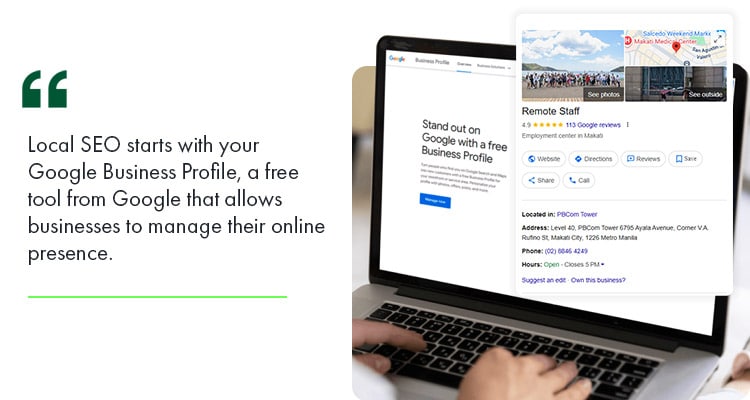
    Use this time to boost your local search engine optimisation (SEO), as many shoppers will still be searching for stores and services near them.

    Update your Google Business Profile with your post-holiday hours and information about any in-store exclusive clearance items.

    #9. Introduce “Buy Now, Pay Later” (BNPL) Options 

    Credit card debt can be a major source of stress for many customers in January. Thus, focus on addressing customers’ fear of overspending in January by highlighting flexible payment options. 

    This includes Buy Now, Pay Later packages, which let them pursue their New Year plans while spreading the cost over several months.

    #10. Run a “Mystery Bag” or “Warehouse Clear-out” 

    Lastly, clear your inventory. 

    Jump on the “Mystery Boxes” trend, where you package random items in a box at a fixed price. Showcase some of the possible product combinations to entice customers to take a chance, driving excitement and high open rates.

    When executed correctly, this approach can quickly clear shelves and make room for new inventory in the next quarter.

    Revamp Your Email and SMS for January Conversions 

    It’s also important to revisit and recalibrate your campaigns across different platforms, particularly email and SMS marketing.

    Here are some tips on how to do it. 

    Send “We Miss You” Campaigns to Holiday Buyers 

    A large portion of your December sales are from one-time holiday shoppers. Without deliberate touchpoints to engage them and build a connection, these customers are likely to churn.

    To address this, set up an automated “We Miss You” or “Checking In” sequence 15 to 30 days after a customer’s last December purchase. 

    You can also use engaging copy like: “The decorations are down, but the perks aren’t. Here’s a little something to brighten your January.”

    Include Product Reviews to Reinforce Trust 

    December is a high-sales month, while January serves as its high-research counterpart. This is when customers plan and prepare for their purchases for the year ahead.

    During this period, consumers are more cautious with their spending and prefer to purchase items that feel like an investment. Thus, pivot your email and SMS content from being sales-heavy to showcasing user-generated content and 5-star reviews. 

    You may send an email titled, “What Everyone’s Saying About Their New Year Gear,” featuring a carousel of your products or services alongside their top-rated reviews.

    Segment Lists Based on December Purchase Behaviour 

    It also helps to review your customer lists and segment them based on their holiday purchases. Typically, they fall into two groups: gifters and self-shoppers.

    For gifters, send personalised emails and suggest items they might want for themselves now that the holidays are over. 

    On the other hand, recommend “Complete the Look” items to self-shoppers to complement their December purchases.

    Leverage Returns Season as a Sales Opportunity

    Many businesses also view January as the “Returns Tsunami,” when customers return or exchange items. While this may seem stressful, it can actually present opportunities.

    Here’s how.

    • Offer Exchange Incentives (Not Refunds) – Your primary goal in January is revenue retention, and whenever possible, avoid issuing refunds. For example, instead of offering a cash refund, give customers the option to exchange the item or receive store credit. You can also include an additional $5–$10 store credit or a 10% discount on their next purchase.
    • Promote Clearance and Overstock from Holiday Inventory – Customers who frequently visit your site or store to initiate a return are still engaging with your brand. Use this moment as an opportunity to clear out your holiday overstock. You can place “Sale” bins near the returns counter, or feature them on your e-commerce site with copy like: “While you’re here, check out our Last-Chance Clearance items at discounted prices.”
    • Bundle Returns With Add-On Offers – If a customer is returning an item due to size or color preferences, use the exchange as an opportunity to increase their total basket value. You can create a “Perfect Pair” recommendation. For example, if a customer is exchanging a sweater, suggest a matching scarf or a cleaning kit at a one-time discounted rate.

    Social Media and Paid Ads: Start the Year with the Right Energy 

    Unlike most Western countries, which are blanketed in snow at the beginning of the year, January marks the peak of summer in Australia. 

    It’s the height of the tennis season and the final stretch of the school holidays. This creates numerous opportunities for social media campaigns, allowing brands to stay relevant after the holiday season.

    • Refresh Creatives with Summer + New Year Themes – Swap out tinsel and festive reds for poolside blues, beach yellows, and crisp whites. Shift away from gift-focused messaging and instead highlight “summer living” or “get things done” campaigns to start the year on a positive note.
    • Retarget Holiday Visitors with January-Specific Offers – Revisit your “window shoppers” from November and December. Show them the exact items they viewed and include a copy like: “Still thinking about it? Start your year right with the [insert product] you had your eye on—now at discounted rates.”
    • Launch January Giveaways to Boost Engagement – When spending is low, engagement becomes your next most valuable currency. This is where giveaways come in to keep your brand top of mind. For example, you can run a “Summer Essentials” or “Resolution Starter Kit” giveaway. Ask your followers to tag a friend, comment their #1 goal for the year, and share the post to opt in.

    Smart Move in Slow Months: Try Remote Staff to Power Growth 

    The new year, especially January, is also an ideal time to reflect on your growth and plan for the year ahead. 

    For many SMBs, this includes finding the right staff and securing the right support from outsourcing providers like Remote Staff.

    Access to Full-Service Ecommerce and Marketing Support 

    During the quiet weeks of January, you will be busy focusing on retargeting after holidays, reviewing year-end sales performance, and planning for the upcoming quarters. Hence, it can be hard to track the non-core functions, especially the administrative part. 

    This is where Remote Staff comes in, providing you with skilled remote workers who can take care of the following tasks: 

    • Ecommerce order management; 
    • Customer service for returns; 
    • Campaign production; 
    • Data cleanup and inventory tagging; and 
    • Social media scheduling and moderation. 

    Remote Staffing Partner 

    For the past 18 years and counting, Remote Staff has partnered with over 3,000 Australian SMBs and business owners. They provide English-proficient Filipino professionals who are skilled and ready to help you prepare your business for the year ahead.

    With the four-hour time difference between the Philippines and Australia, your Filipino remote team is online exactly when you are. They’re also available based on your needs – whether for a one-off project, part-time work, or a long-term engagement.

    More importantly, Remote Staff offers transparent pricing and onboarding packages. 

    You can hire remote workers directly through them, or leverage their Employer of Record services. Either way, they provide upfront costs to help you determine which options best suit your needs and budget.

    Frequently Asked Questions

    Here are some of the frequently asked questions about the post-Christmas sales recovery.

    #1. Why Does Ecommerce Slow Down in January in Australia?

    Families are redirecting their remaining budgets toward essentials, such as back-to-school needs. Many Australians also receive their credit card statements in mid-January, which are often high, prompting an immediate slowdown of discretionary spending.

    #2. How Can I Improve January Conversion Rates? 

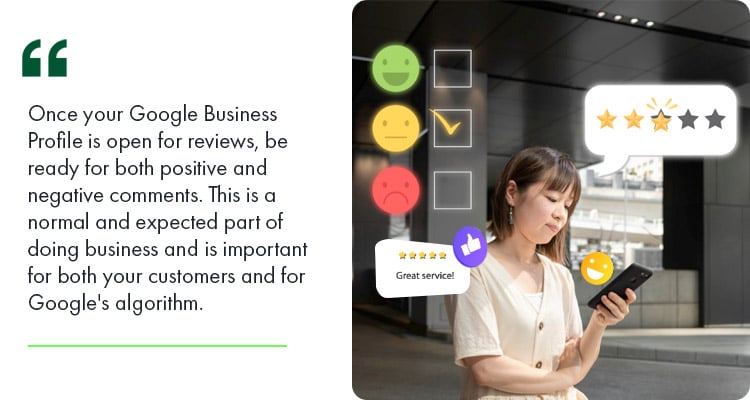
    Use the quiet period to showcase reviews from December shoppers. Seeing that others had a positive experience can help build the trust needed to convert hesitant January buyers.

    #3. Should I Lower My Prices or Focus on Customer Experience? 

    You can use price drops to manage inventory, such as excess holiday-themed items. 

    At other times, focus on value-added offers – free shipping, extended warranties, or flexible payment options – to ease the financial burden on customers without cutting into your margins.

    #4. What Kind of January Promos Work in AU Retail? 

    The AU market usually love: 

    • Bundle and Save – Bundle complementary products (e.g., yoga mat with a water bottle) to increase the average order value. 
    • Mystery Boxes – Aussies love a “deal” and the gamified nature of a mystery box can drive high engagement on social media. 

    #5. Can Remote Teams Really Help During Slow Sales Seasons? 

    Yes! Although sales are relatively low, your administrative and creative needs are often at peak due to returns and seasonal sales planning

    Fortunately, a Filipino remote team can help by: 

    • Handling the influx of January returns and customer inquiries; 
    • Building your marketing calendar for the rest of the year; 
    • Cleaning up your mailing list; and 
    • Optimising your SEO. 

    Conclusion: January Doesn’t Have To Be a Sales Graveyard 

    January doesn’t have to be a period of stagnation. It can be a fresh start and an opportunity for your business to plan for the year ahead.

    It’s the perfect time to stop working in your business and start working on it. Clear out your inventory, re-engage with your customers, invest in your local SEO, and personalise your marketing efforts.

    Every action you take now helps build the momentum needed for a successful first quarter – and, ultimately, a successful year.

    For more information on how to get all of this done quickly and efficiently, call us today or request a callback now.


  • Philippine Labour Law Guide for Foreign Employers: How to Avoid Costly Mistakes When Outsourcing Overseas

    Philippine Labour Law Guide for Foreign Employers: How to Avoid Costly Mistakes When Outsourcing Overseas

    Many Western countries prefer to hire Filipino workers in healthcare, hospitality, and customer service because they are skilled, hardworking, fluent in English, and known for their go-getter attitudes.

    As a result, they hire Filipinos abroad, open offices in the Philippines, or work with PH business process outsourcing (BPO) to handle administrative work, customer support, and other non-core functions. Meanwhile, a growing number of companies with distributed teams also hire Filipino remote workers directly.

    Regardless of the setup, understanding Philippine labour laws is essential, as it allows you to tap into skilled Filipino talent without risking fines, worker claims, or other administrative complications from misclassification.

    Read on to know more. 

    Can Foreign Companies Hire Workers in the Philippines Without a Local Entity?

    As a general rule, foreign companies that want to do business in the Philippines (PH) must register a local branch, subsidiary, or regional headquarters with the Securities and Exchange Commission (SEC).

    This approach gives the foreign company full operational control, including the ability to hire Filipino professionals directly for various business functions. 

    However, it can be very time-consuming and costly, as the PH government requires a substantial capital investment and extensive administrative compliance. In addition to the SEC, you must also register with several other government agencies, such as:

    • Bureau of Internal Revenue (BIR);
    • Social Security System (SSS);
    • Home Development Mutual Fund (HDMF) or Pag-IBIG Fund; and
    • Philippine Health Insurance Corporation (PhilHealth).

    Common Hiring Models Available to Foreign Employers 

    Due to the difficulty and cost of setting up a local entity or branch, many Australian small and medium businesses (SMBs) prefer alternative hiring models, such as:

    • Independent Contractor Model – They engage freelancers, also known as independent contractors, through a service contract. In this arrangement, the foreign company pays an invoice for services rendered, and the contractor is responsible for their own taxes and benefits.
    • Employer of Record (EOR) – They work with a third-party provider, the EOR, which acts as the legal employer of the remote worker in their home country. Under this setup, the EOR assumes all legal liability for local compliance, including payroll taxes, mandatory benefits, and employment contracts. 

    EOR v. Contractor: What’s Legally Permissible? 

    Both setups are legally allowed. However, the difference lies in who becomes liable if the worker’s status is questioned.

    • Contractor – A service contract with an independent contractor is legally permissible only when the relationship is genuinely a business-to-business arrangement. For example, this applies when you need specialised expertise for a short-term project that your company cannot provide.
    • EOR – On the other hand, if you plan to work with a remote worker long-term, an independent contractor arrangement may not be sufficient. You will need to engage an EOR to protect your company from potential liability for misclassifying a worker – even if they’re based in the Philippines.

    The first option may seem cost-effective, but the line between an independent contractor and a regular employee blurs very easily, as this distinction is determined by law based on a fixed set of conditions, regardless of what your contract actually says.

    For example, classifying a remote worker as an independent contractor when they are, under Australian law, performing the duties of a regular employee can lead to significant penalties from the Fair Work Commission (FWC) and the Australian Taxation Office (ATO).

    Thus, many AU companies prefer to partner with an Employer of Record instead. 

    foreign employer

    Overview of Philippine Labour Laws for Foreign Employers 

    The Philippine Labour Code defines the Filipino worker’s rights and employer prerogatives. 

    Foreign employers operating in the Philippines – whether through local branches or subsidiaries – generally abide by local labour standards as a guide for fair treatment, workplace policies, and employer responsibilities.

    While Australian SMBs with Filipino remote workers are not required to follow the Philippine Labour Code, it’s still helpful to understand Filipino workers’ legal entitlements under the Code for better context.

    Let’s take a closer look. 

    Core Labour Code Provisions

    The PH Labour Code is built on the principle of social justice and looks at the labour force as the backbone of the country’s economy. Hence, it mandates the following minimum standards: 

    • Security of Tenure 
    • Wages and Compensation
      • 13th Month Pay 
      • Overtime Pay 
      • Premium Pay for Holiday
      • Night Shift Differential
    • Working Conditions 
    • Paid Leaves 
    • Labour Relations 
      • Collective Bargaining
      • Right to Self Organization 

    What Applies to AU Employers Hiring Remotely?

    Australian employers are only required to provide these minimum benefits if they have a registered office in the Philippines. Without one, they are not covered by the Philippine Labour Code.

    However, SMBs must still follow AU’s National Employment Standards (NES) when hiring remote Filipino workers, especially if those workers qualify as regular employees under Australian law. These include:

    • Maximum of 38 hours per week
    • Leave Entitlements
      • Annual leave; 
      • Personal/carer’s leave; 
      • Family and domestic violence leave
      • Parental leave; 
    • Termination 
      • Minimum notice of termination
      • Redundancy pay 

    Employee Classification: Contractor v. Employee 

    An employee’s classification depends on several factors. In the Philippines, a worker is considered a regular employee if the Four-Fold Test is met, which looks at:

    • Selection/Engagement 
    • Payment of Wages 
    • Power of Dismissal 
    • Power of Control 

    So if the employer hires the worker, pays their salary, can dismiss them, and controls how the work is done, that worker is considered a regular employee under Philippine law.

    The Risk of Misclassifying a Worker 

    The Four-Fold Test does not apply to Australian SMBs hiring Filipino workers remotely under a service contract. However, the FWC may still classify your remote worker as an employee under Australian law. This was the issue in the infamous Joanna Pascua case.

    In 2025, Pascua made headlines when the Fair Work Commission ruled that she was an employee, not an independent contractor, for an Australian company. As a result, the company had to pay heavy fines, super charges, legal costs, and deal with public backlash.

    Thus, the question: how can you tell if your remote “independent contractor” is really one?

    Key Criteria Defined by the Fair Work Commission

    Because of the Pascua case, the FWC reminds Australian employers to carefully classify employees using the “Whole of Relationship Test,” which looks at the following:

    • Real Substance 
    • Practical Reality 
    • True Nature of the Relationship 

    To find out these three factors, the FWC will look at all parts of the relationship between the parties, including the terms of the contract and what actually takes place in practice.

    Hence, they will review: 

    • The amount of control over how work is performed; 
    • Financial responsibility and risk;
    • Who supplies the tools and equipment; 
    • Ability to delegate or subcontract work; 
    • Hours of work; and 
    • Expectation of work as a going concern. 

    If the worker meets all these criteria, they are considered an employee of the Australian business. The company must then provide all minimum benefits and withhold taxes under Australian law, even if the worker is based in another country.

    Mandatory Employee Benefits for Remote Workers 

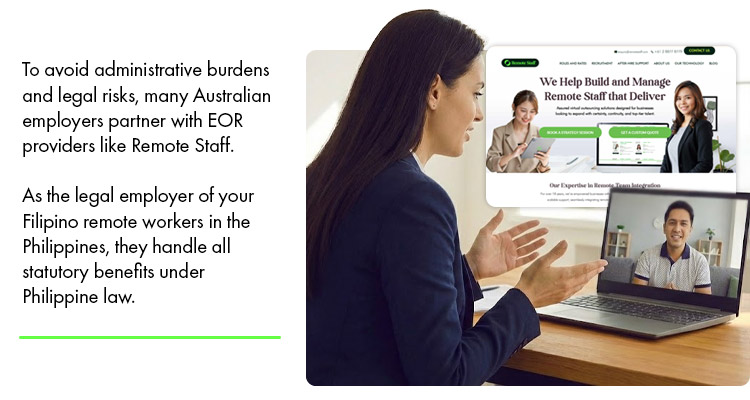
    To avoid administrative burdens and legal risks, many Australian employers partner with EOR providers like Remote Staff.

    As the legal employer of your Filipino remote workers in the Philippines, they handle all statutory benefits under Philippine law. The EOR cost will cover: 

    • Employee’s direct compensation; 
    • Statutory costs; and 
    • EOR service fee. 

    [wpforms id=”31142″ title=”false”]
    Here’s the breakdown of the statutory costs, as required by the PH Labour Code. 

    SSS, Pag-IBIG, and PhilHealth Contributions 

    SSS is the mandatory national insurance program that provides retirement, sickness, maternity, disability, and death benefits. Meanwhile, Pag-IBIG provides affordable housing loans, short-term cash loans, and a savings plan.

    PhilHealth, on the other hand, is the Philippines’ national health insurance, covering hospitalization, professional fees, and certain medical and surgical procedures.

    13th Month Pay and Leave Requirements 

    The statutory cost also includes the 13th-month pay, an extra payment for employees who worked at least one month in the year. It is paid annually, on or before December 24.

    Philippine employers (or in this case, the EOR) must provide five days of paid Service Incentive Leave (SIL) to employees who have worked for them for at least one year. Any unused SIL is converted to cash and paid at the end of the year.

    How Employer-of Record Services Handle These For You 

    Australian SMBs using EORs don’t need to worry about these statutory requirements. The EOR, as the legal employer, handles compliance, and the cost is included in their fees.

    Here’s a typical list of all the compliance matters they take care of so you won’t have to: 

    • Handle statutory contributions;
      • Registration
      • Calculation and Remittance 
      • Filing 
    • Administering 13th month pay; and
      • Accurate accrual 
      • Timely disbursement 
      • Tax compliance 
    • Managing leave requirements;
      • Service Incentive Leave 
      • Other statutory leaves 
        • Maternity 
        • Paternity 
        • Solo Parent 

    Simply put, the EOR handles most administrative and legal tasks, while SMBs focus on growing their core business, with the help of remote workers legally employed by the EOR.

    Payroll Tax Obligations for Foreign Employers Operating in the Philippines

    Foreign companies are only liable for Philippine taxes if they are considered to be doing business in the country. 

    Under the Foreign Investments Act, a company is “doing business” when it has a continuing commercial presence or carries out activities that show active business operations in the Philippines.

    Thus, an AU company is not liable for Philippine taxes just for hiring remote workers, as long as its operations remain based in Australia.  

    However, for AU companies that do operate there, here’s what they have to comply with: 

    • Withholding Taxes – Foreign companies with local branches are required to deduct the correct income tax amount from the employee’s monthly salary. The withheld taxes must then be remitted to the Bureau of Internal Revenue (BIR).
    • BIR Form 2316 & 2307 – Companies must file the employee’s annual tax return using BIR Form 2316, showing total pay and income tax withheld for the year.

    On the other hand, the BIR requires foreign companies to issue Form 2307 for payments to independent contractors, service providers, or suppliers in the Philippines. The recipients use the tax credit on this form to offset their own income tax.

    Labour Law Enforcement: What Foreign Employers Need to Know 

    The Department of Labour and Employment (DOLE) is the Philippine counterpart to Australia’s Fair Work Commission. It serves as the primary agency responsible for enforcing labour laws and protecting employees’ rights in the Philippines.

    When you partner with an EOR like Remote Staff, they handle all DOLE compliance requirements on your behalf.

    DOLE Inspections and Remote Worker Claims 

    The DOLE has the authority to conduct inspections in Philippine-based workplaces to ensure compliance with general labour standards, including wages, benefits, and leave.

    They also handle illegal dismissal complaints filed by aggrieved employees, including claims for backwages, reinstatement, and separation pay.

    How Remote Staff Minimises Your Legal Exposure 

    The benefit of partnering with an EOR is not to avoid Philippine laws – especially since AU employers with no business operations there are not directly liable for PH tax or labour regulations in the first place.

    Rather, the EOR acts as a legal safeguard that protects Aussie employers under Australian laws, particularly by preventing employee misclassification. 

    By formally designating your remote workers as employees of the EOR, you avoid the risk of the Fair Work Commission or the ATO probing your business for tax or labour compliance issues.

    Remote Staff’s Solution: Compliant Hiring Without an Entity 

    For the last 18 years and counting, Remote Staff has been supporting Australian employers with their remote staffing needs. As an EOR, they offer the following:

    Contractor-on-Record for Project-Based Talent 

    A Contractor-on-Record (COR) is a business-to-business arrangement where Remote Staff assists you with the payroll and documentation requirements of your independent contractor. The focus is primarily on compliance, including:

    • Managing payroll;
    • Issuing the necessary tax documents to assist the contractor with their tax returns; and
    • Fulfilling other administrative compliance requirements.

    Under this setup, the AU employer remains liable if the independent contractor is later deemed an employee under Australian law.

    EOR Basic for Long-Term, Full-Time Staff

    On the other hand, if you want a full-time arrangement with your remote workers, using Remote Staff’s EOR services is the better option. 

    Remote Staff becomes the legal employer of your staff in the Philippines. This means your Filipino remote workers are officially employees of Remote Staff, enjoying full job security and statutory rights under the Philippine Labour Code.

    They will handle and ensure compliance with the following:

    • Processing monthly payroll;
    • Calculating and remitting all taxes and mandatory contributions; and
    • Ensuring employees receive 13th-month pay and other mandatory paid leaves.

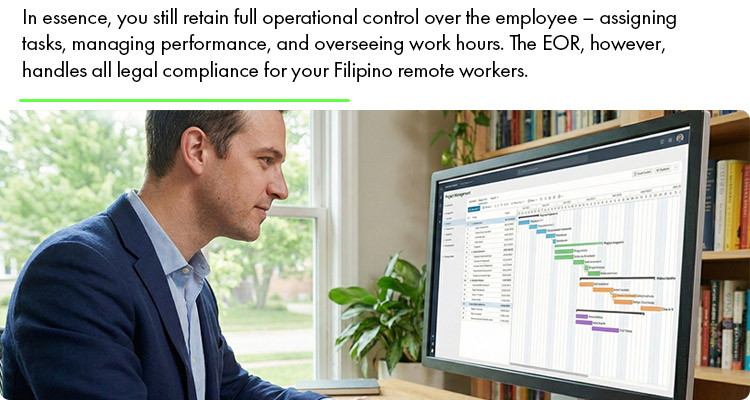
    In essence, you still retain full operational control over the employee – assigning tasks, managing performance, and overseeing work hours. The EOR, however, handles all legal compliance for your Filipino remote workers. 

    Fast Setup and Full Payroll Compliance 

    Since you already have remote workers, implementing an EOR setup is faster than an arrangement where Remote Staff would need to recruit and hire employees for you.

    Here’s how it works:

    1. Sign up and specify your requirements.
    2. Indicate the number of employees you need covered.
    3. Receive a quote from Remote Staff for a monthly or percentage-based EOR service fee per employee. 
    4. Choose the setup that works best for you.
    5. Remote Staff will then handle onboarding, administrative tasks, and payroll compliance. 

    Frequently Asked Questions (FAQs) 

    Here are some frequently asked questions regarding tax and labour matters for Australian employers hiring Filipino remote workers.

    #1. What Labour Laws Apply to Filipino Remote Workers Hired by AU Companies?

    If a remote worker is employed directly by an Australian company, Australian labour laws apply. However, if the worker is employed through an EOR, Philippine labour laws govern their employment.

    #2. Can I Hire a Contractor Instead of An Employee To Save Costs?

    Yes, however, this can expose your company to the risk of employee misclassification. In the recent Pascua case, the plaintiff was hired as a contractor, but the nature of her work resembled employment rather than a service contract.

    As a result, the Australian company that hired her was held legally liable for unpaid taxes and superannuation contributions, in addition to fines and legal costs. While hiring a contractor may seem cost-effective initially, it can become expensive over time if you aren’t careful.

    #3. Am I Responsible for Payroll Taxes as a Foreign Business?

    No, not if you have an EOR in place. As the legal employer, the EOR handles withholding and remittance of income taxes in the Philippines. 

    You also don’t need to worry about Australian laws, since the arrangement is between you and the EOR, not directly with the remote worker.

    #4. What Happens If I Misclassify a Remote Worker?

    Under Australian laws, you will be liable for the following: 

    • Penalties and fines; 
    • Back payments; 
    • Superannuation with administration fee and nominal interest; 
    • Leave entitlements; and
    • Unpaid payroll tax.

    These are on top of the reputational damage resulting from the negative media coverage and public backlash. 

    #5. How Can I Ensure I’m Compliant Without Opening a PH Entity? 

    Australian employers are increasingly shifting from direct hiring to partnering with an EOR like Remote Staff. Since the EOR is registered in the Philippines, this fulfills the legal requirement for an employer to operate within the country.

    Moreover, you can be confident that your Filipino remote workers are paid accurately and legally, without your company being liable for misclassification in either the Philippines or Australia.

    Stay Compliant with Labour Laws – Without the Legal Headaches 

    Filipino professionals continue to be among the most in-demand employees, regardless of their location. Despite the distance, many Australian employers prefer to work with them due to their quality and cost-effectiveness.

    Fortunately, there is a legal and ethical way to achieve this, without any undue hassle or stress on your part.

    Through Employers of Record such as Remote Staff, you can take comfort in knowing that you are providing your remote workers with job security under Philippine law, while simultaneously protecting your company from any legal issues under Australian law.

    For more information about EOR services, book a free consultation now

  • The Foreign Employers’ Guide to Payroll Taxes in the Philippines

    The Foreign Employers’ Guide to Payroll Taxes in the Philippines

    Table of Contents

    Many Australian employers prefer hiring Filipino professionals for several reasons.

    The Philippines is home to more than 115 million people, most of whom are proficient English speakers. Moreover, its predominantly young population offers a large pool of skilled and work-ready talent, providing SMEs the world over with a competitive and reliable labour force.

    However, hiring overseas involves substantial paperwork and legal processes. Australia and the Philippines, for instance, each have their own laws governing labour rights and taxation requirements.

    In this guide, we provide a comprehensive overview of the payroll taxes you must comply with when hiring employees directly from the Philippines — and how you can significantly reduce the stress and administrative burden involved.

    Payroll Taxes You Must Know When Hiring Filipino Workers

    The tax requirements and statutory contributions for individuals and companies in the Philippines differ significantly from those in Australia.

    Let’s take a closer look at some of them:

    Philippines’ Income Tax Withholding Requirements (BIR 2307)

    The Philippine Bureau of Internal Revenue (BIR), imposes the following tax obligations:

    • Employer as Withholding Agent – The employer is legally required to act as the withholding agent, deducting the correct amount of income tax from the employee’s salary before payment and remitting it to the Philippine government. This obligation underscores the need to register as a business entity in the country.
    • Progressive Tax Rates – Individual income tax in the Philippines is calculated based on a graduated, progressive tax schedule. Those with an annual income of Php 250,000 or less are exempt from paying taxes, while higher earners are subject to progressively increasing rates, up to 35%.
    • Taxable Income Basis – Withholding Tax on Compensation (WTC) is applied to the employee’s taxable income, which is calculated as the gross salary minus mandatory contributions required by the Philippine government.

    Mandatory Contributions: SSS, PhilHealth, Pag-IBIG

    In addition to withholding taxes, employers are required to deduct the following mandatory contributions from their Filipino employees’ gross income.

    • Social Security System (SSS) – The law requires employers to deduct approximately 4.5%–9.5% of the employee’s monthly salary as contributions for retirement, disability, sickness, maternity, and death benefits.
    • Philippine Health Insurance (PhilHealth) – Employers are required to contribute a portion of the employee’s salary—part of a 5% total contribution, shared between employer and employee—to the Philippine government’s mandatory health insurance program, which covers hospitalization and medical services.
    • Home Development Mutual Fund (Pag-IBIG Fund) – An additional 2% of the employee’s basic monthly salary must be contributed to Pag-IBIG, the Philippine government’s affordable housing program, which also provides short-term loans and tax-free savings.

    13th Month Pay and Other Statutory Benefits

    The Philippines is one of the few countries that legally requires employers to pay a bonus equivalent to one month’s salary, to be given no later than December 24 each year.

    This bonus is tax-exempt up to Php 90,000; any amount exceeding this threshold is subject to income tax.

    In addition to the 13th-month pay, the Philippine government also requires employers to provide the following benefits, subject to certain conditions:

    • Service Incentive Leaves (SIL) – Five days of paid leave annually for employees who have rendered at least one year of service;
    • Holiday Pay – Employees are entitled to pay for all regular holidays even if they do not work;
    • Overtime Pay – Work performed beyond 8 hours must be compensated at an additional rate of at least 25% of the regular hourly rate;
    • Night Shift Differential – An additional compensation of at least 10% of the regular rate must be paid for work performed between 10PM and 6AM.
    • Maternity Leave – Female workers are given 105 days of paid leave during or after pregnancy, plus an optional 30 days without pay. There is an additional 15 days if the worker is a solo parent.
    • Paternity Leave – Married male employees are also entitled to 7 days of paid leave for the first four deliveries of their legitimate wife.

    Tax Responsibilities for Independent Contractors

    Independent contractors, also known as freelancers, handle their own income tax filings and work directly with businesses through service contracts.

    Under this setup, the contractor works independently and is not considered an employee of the company. They generally control the means and methods of their work, while the client only specifies the output they require.

    Should Foreign Employers Withhold Tax from Contractors?

    Foreign companies that work with independent contractors are not legally required to withhold taxes on their behalf.

    Since there is no employer–employee relationship and the company has no legal presence in the Philippines, both parties are treated as separate and independent from each other.

    However, this does not protect the company from employee misclassification issues, especially since the line between an independent contractor and a regular employee can easily be blurred in many remote work set-ups.

    What Happens if Contractors Don’t File Properly?

    Filipino independent contractors are required to file and pay their taxes both quarterly and annually. If a contractor fails to file on time, they may incur a penalty equivalent to 25% of the tax due for late filing or payment.

    While the direct penalties fall on the contractor, the foreign employer may still face indirect risks.

    For example, authorities may scrutinise the contractor’s records and discover that they are receiving income from a foreign entity that is not registered in the Philippines – thus leading to further investigation.

    PayPal, Wise, and Bank Transfer: Are These Compliant?

    Foreign companies typically use international payment platforms such as PayPal, Wise, or direct bank transfers to pay their independent contractors.

    Thus, the obligation to pay income taxes arising from legitimate professional and business transactions remains solely with the contractor.

    Still, AU businesses should take precautions when hiring and/or compensating their remote Filipino workers, which brings us to….

    The Problem with Paying Contractors “Off the Books”

    It may be tempting to pay independent contractors without documentation, contracts, or proper tax reporting to avoid withholding obligations.

    However, this “off the books” approach can be far more detrimental and may significantly increase legal and financial risks.

    Risks of Misclassification and Non-Compliance

    The cost of directly hiring Filipino workers goes beyond the upfront payment of salaries and benefits. For some Australian employers, it can also mean incurring legal costs for failing to properly classify their independent contractors vis-à-vis their regular employees.

    A classic example is the infamous case of Joanna Pascua, a Filipino remote worker who was classified by the Doessel Group (her employer) as an independent contractor.

    During a legal dispute that closely examined the nature of their working relationship, the Fair Work Commission ruled in Pascua’s favor. She was declared a regular employee based on her work responsibilities, her relationship with the company, and several other factors.

    As a result, the foreign company was heavily fined and faced tax obligations arising from the misclassification. Worse, it suffered reputational backlash — which is arguably even more costly.

    Audit Risks and Employer Liability with Regulatory Bodies

    Following the Pascua controversy, the FWC has reminded AU employers about the importance of proper classification of their distributed teams.

    If the FWC deems a remote contractor to be an employee under Australian law, the AU company will be immediately exposed to:

    • Superannuation Liability – The employer would be liable for compulsory Superannuation Guarantee (SG) contributions for the entire period of employment;
    • Super Guarantee Charge (SGC) – If these payments were not made quarterly, the employer is subject to the punitive SGC, which includes:
      • Unpaid superannuation amount;
      • Nominal interest component;
      • Administration fee per employer per quarter.

    Business Reputation and Worker Trust Issues

    Failing to comply with labor and tax laws can result in serious consequences for any Australian company.

    For example, in the Pascua case, many disgruntled workers were highly vocal, often sharing negative experiences on social media, which can significantly impact their employer’s reputation.

    Left unchecked, this can damage your brand’s reputation, especially in the age of #cancelculture.

    Ultimately, any shady allegations pertaining to how you treat your workers makes it much harder and more costly to attract high-quality talent in the future.

    Can Foreign Companies Hire Filipino Workers Without a Local Entity?

    As a general rule, foreign companies must set up local branches or subsidiaries in the Philippines before they can hire Filipino employees.

    Various laws and regulations, such as the Foreign Investments Act, require foreign entities to obtain a License to Transact Business in the Philippines from the Securities and Exchange Commission (SEC) before they can legally operate a branch or representative office.

    However, this can be costly, if not time-consuming, especially if you’re only planning to hire one or two Filipino employees. So, what’s the appropriate legal remedy?

    Many Australian companies prefer hiring Filipino workers for their skills and professionalism — even without establishing a local branch in the Philippines — through the following arrangements:

    • Independent Contractor Agreement – They directly hire Filipinos through a service contract. In this setup, the worker is paid for a specific deliverable or service, and is responsible for filing and paying their own taxes.
    • Employer of Record – Other Australian employers prefer hiring through an Employer of Record (EOR), wherein the latter acts as the legal employer of the Filipino remote workers. In this arrangement, the EOR handles all official responsibilities, including payroll processing, taxes, and other mandatory government contributions.

    EOR and COR: Tax-Compliant and Commitment-Friendly Alternatives

    Partnering with an EOR allows foreign companies to hire skilled remote Filipino workers without the risk of legal complications.

    Aside from an EOR, companies may also choose a Contractor-on-Record setup.

    Let’s examine the difference between the two:

    What Is a Contractor-on-Record?

    A Contractor-on-Record (COR) is another solution for foreign companies looking to hire global talent. While an EOR operates under a statutory employment model, a COR facilitates a service contract. They:

    • Ensure the legal compliance of a business-to-business relationship; and
    • Manage invoicing and proper tax documentation.

    However, unlike an EOR setup, there is no employer–employee relationship between the COR and the remote workers. As a result, the foreign company may still be held liable for employee misclassification.

    What Does an EOR Handle for Foreign Employers?

    The EOR takes care of the following legal and administrative matters:

    • Legal and Contractual Compliance
      • Drafting employment contracts;
      • Ensuring accurate employee status;
      • Registering the employee with all necessary PH agencies; and
      • Handling all termination procedures with the mandatory due process.
    • Payroll and Tax Administration
      • Handling payroll;
      • Withholding and remitting the correct taxes;
      • Remitting all mandatory contributions;
      • Issuing the necessary year-end tax forms; and
      • Ensuring the 13th month pay is correctly calculated and paid.
    • Benefits and HR Administration
      • Managing mandatory employee benefits;
      • Administering optional benefits;
      • Constantly monitoring changes in PH labour and tax laws.

    When to Use EOR vs. Contractor-on-Record

    Both EORs and CORs have their place, but the right choice depends on your company’s needs. Here’s a quick guide to help you decide.

    Contractor Onboarding (1-5 Hires)

    If you’re a small business or a startup still testing the market, it’s best to start with the COR model for greater flexibility and lower upfront costs.

    For example, if you’re an Australian startup, you may need two specialised professionals: a freelance graphic designer for a three-month campaign and a part-time marketing consultant.

    With only two remote workers, it’s more practical to use a COR, which can handle invoicing, payment processing, and verifying that each contractor has the proper documents and tax identification.

    Full-Time Remote Team Expansion (5+ Hires)

    As your workforce grows, roles become more defined throughout the team. Consequently, risk mitigation and stability become increasingly important.

    Consider an Australian tech company with 10 full-time software developers and customer success managers based in the Philippines. Given the nature of their work and the company’s growing demands, these roles now require fixed schedules, company-provided equipment, and ongoing supervision.

    This is where the EOR model becomes valuable. The EOR assumes the complex employer liabilities for 10 or more staff, including payroll and the remittance of mandatory contributions.

    More importantly, this model ensures that your company remains free from legal liability related to compliance, as the EOR is the legal employer of the remote workers on paper.

    Hybrid Workforce Models for Growing Businesses

    For hybrid teams, this table shows which option works best.

    Workforce Segment Role Type Model Rationale
    Core Operations
    • Full-time managers
    • Developers
    • Sales staff
    EOR These roles require integration, control, and retention and the EOR will guarantee legal compliance on your behalf.
    Special Projects
    • One-off consultants
    • Specialised auditors
    • Translators
    COR The roles are temporary, results-focused, and fully independent, so a COR will generally be sufficient.
    Initial Market Entry
    • First 1-2 hires to gauge market
    COR The COR can help you guarantee compliance to establish legal clarity and attract top talent quickly.

    How Remote Staff Manages Payroll Taxes End-to-End

    As an EOR and COR service provider, Remote Staff offers Australian businesses a fast, legally compliant, and hassle-free way to pay their Filipino employees.

    Since they are the legal employer, they assume all payroll risk and liability and manage the entire deduction process. They also provide a single, consolidated invoice covering the employee’s salary, benefits, taxes, and service fee.

    This streamlines compliance into a single monthly payment so SMBs can focus on managing performance, not paperwork.

    Remote Staff’s 18-Year Expertise in Philippine Compliance

    Remote Staff has spent the last 18 years helping Australian companies connect with skilled Filipino professionals remotely.

    Designed for AU & US SMEs

    Remote Staff understands that most small and medium enterprises (SMEs) don’t have dedicated legal teams to set up local entities for hiring overseas professionals.

    Thus, they handle compliance requirements to protect SMEs from misclassification and other labor and tax-related legal issues.

    Compliance with Philippine labor and tax laws, in addition to Australian regulations, can be time-consuming and costly if Australian companies have to manage both themselves.

    Fortunately, Remote Staff has a dedicated team of Filipino accountants, HR managers, and legal professionals who are well-versed in Philippine labor laws, tax rates, and mandatory contributions.

    They handle all statutory requirements, including withholding taxes, statutory benefits, and other legally mandated entitlements for your Filipino remote workers under Philippine law – so you can focus on making the most out of your offshore team without worries.

    Transparent Pricing and Fast Setup

    Remote Staff’s EOR services are transparent, with a simple monthly fee that can be fixed or based on a percentage, according to your preference.

    This monthly fee covers the employee’s salary, statutory contributions (SSS, PhilHealth, Pag-IBIG), and the EOR service fee. Their upfront pricing also helps you plan and budget according to your requirements.

    [wpforms id=”31142″ title=”false”]

    Frequently Asked Questions (FAQ)

    Here are some frequently asked questions about tax responsibilities when directly hiring remote workers vis-a-vis using an EOR.

    #1. Do I Need to Pay Payroll Tax in the Philippines If I Hire a Remote Worker?

    No, you don’t have to pay PH payroll taxes when you work with an independent contractor. Under Philippine law, independent contractors are responsible for filing their own taxes quarterly and annually.

    #2. Am I Liable for SSS or PhilHealth If My Worker Is A Contractor?

    No. Just like filing income tax returns, Filipino independent contractors are required to voluntarily pay their SSS, PhilHealth, Pag-IBIG contributions.

    #3. Can I Deduct Tax From A Contractor’s Pay?

    As a foreign company without a local entity (non-resident foreign corporation), you are not legally required to withhold taxes from your Filipino contractor’s pay.

    However, if that independent contractor meets the AU labour law definition of a “regular” employee, you will be required to withhold Pay As You Go (PAYG) income tax.

    #4. What Are the Penalties for Non-Compliance?

    If the AU courts or the FWC find that your “independent contractor” qualifies as a regular employee, your company may face significant penalties from both the Australian Taxation Office (ATO) and the Fair Work Commission.

    Under the ATO rules, aside from PAYG, you will also be liable for the Superannuation Guarantee (SG) charge of 12% of the employee’s earnings for each missed quarter.

    The SGC includes:

    • Unpaid SG amount;
    • Nominal interest (10%); and
    • Administration fee.

    For FWC-related penalties, the Australian company will be required to pay the difference between the worker’s actual pay and the applicable minimum wage or award rate.

    In addition, the deliberate misclassification of an employee as an independent contractor may result in fines of up to AUD $99,000, and up to AUD $495,000 for major corporations.

    #5. How Do I Switch From Freelance for a Compliant Model?

    A lot of AU employers are shifting from direct hiring to partnering with an Employer of Record that becomes the legal employer of their remote workers.

    This process is generally faster because there’s no need for vetting or interviews since the employees are already in place. Remote Staff will:

    • Assess your need;
    • Provide a quote (fixed monthly fee or a percentage-based rate); and
    • Handle all administrative and regulatory responsibilities.

    Ready to Hire in the Philippines Without the Tax Headaches?

    The way we work is changing fast.

    Talent is no longer confined by location, giving you the opportunity to work with skilled professionals worldwide at the most competitive rates.

    By partnering with Employers of Record like Remote Staff, you can offer opportunities to your remote workers while ensuring compliance with both AU and PH laws. Most importantly, you can do so legally and ethically in both countries.

    So, what are you waiting for?

    Check out our EOR calculator or book a free consultation now for more information and assistance.

  • Employer of Record Pricing and Calculator (Philippines & Global)

    Employer of Record Pricing and Calculator (Philippines & Global)

    Remote hiring has become one of the most practical options for employers today. Thanks to the internet, talent is no longer confined to a specific location. No matter where you are, you can access world-class professionals at highly competitive rates.

    However, the blurring of time zones and jurisdictions has led to legal confusion. Which tax rules should apply? How should remote workers be classified when they work for a foreign employer but remain based in their home country?

    This is where an Employer of Record (EOR) comes in as the legal solution to numerous global hiring challenges.

    In this article, we will explore why and how EORs make it easier for small and medium-sized businesses (SMBs) to hire globally – legally and ethically.

    Read on to know more. 

    What is an Employer of Record (EOR)? 

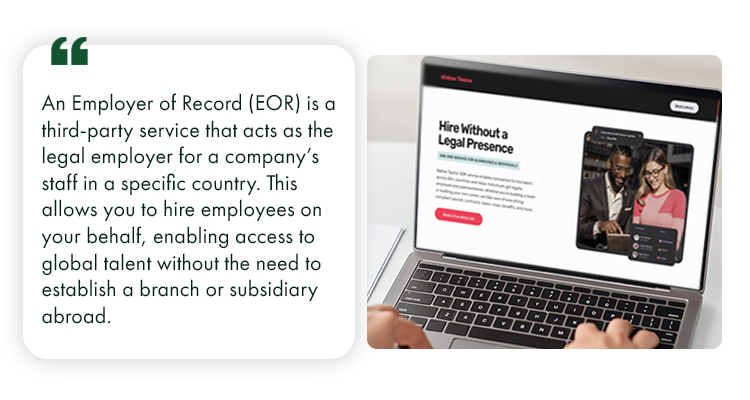
    An EOR is a third party that serves as the legal employer of remote workers. As such, it manages key administrative functions, including payroll, benefits, taxes, labour requirements, and other regulatory compliance.

    How Does an EOR Work for Global Hiring? 

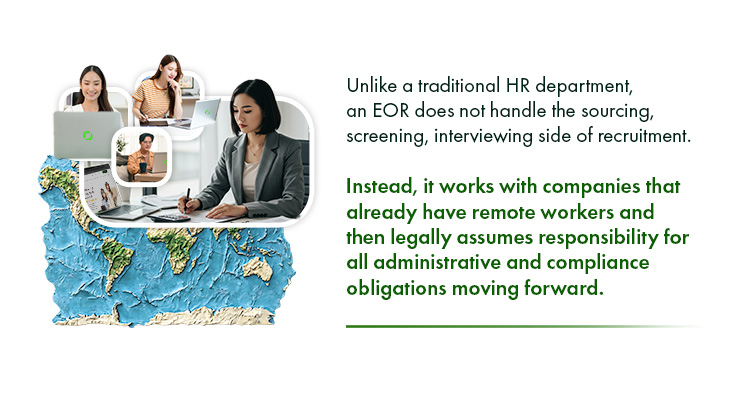
    Unlike a traditional HR department, an EOR does not handle the sourcing, screening, interviewing side of recruitment. 

    Instead, it works with companies that already have remote workers and then legally assumes responsibility for all administrative and compliance obligations moving forward. 

    This creates a tripartite relationship among the business, the remote employee, and the EOR. The business retains day-to-day management, while the EOR handles all legal and administrative complexities.

    For example, an Australia-based tech company may hire a software developer in the Philippines even without having a local office there. Instead of setting one up or letting the employee go, the company can tap an EOR in the Philippines to serve as the developer’s legal employer – while the AU company still manages the developer’s tasks and performance.

    Why do companies consider hiring under an EOR Model? 

    1. Legal Compliance Without the Legal Headaches

    Each country has its own rules for employment, taxation, benefits, leave entitlements, and termination. For businesses without a local entity, even a small compliance error can lead to penalties, audits, or legal disputes.

    An EOR absorbs these risks by ensuring every hire complies with the worker’s local labor laws.

    2. Faster Global Hiring Without Setting Up a Local Entity

    Setting up a company abroad requires months of paperwork, government registrations, legal consultations, and ongoing reporting obligations.

    An EOR removes that barrier by serving as the local employer—allowing companies to hire immediately and legally within days, not months.

    3. Reduced Costs and Administrative Burden

    Managing payroll, statutory contributions, government filings, employment contracts, and HR administration across multiple countries is costly and time-consuming.

    EORs consolidate all of these into one streamlined process so businesses can focus on productivity, not bureaucracy.

    4. Risk-Free Workforce Expansion

    Companies often want to “test” a market or remote role before committing long-term.

    An EOR allows them to scale up or down without the financial exposure that comes with establishing foreign subsidiaries or misclassifying workers.

    5. Protection From Worker Misclassification

    Globally, many companies unknowingly violate labor regulations by classifying full-time workers as contractors.

    An EOR ensures proper classification, preventing disputes, back-pay obligations, tax issues, and reputational harm.

    6. Better Employee Experience and Retention

    Remote workers hired through an EOR receive the correct benefits, statutory contributions, compliant contracts, and timely payroll.

    This builds trust, improves engagement, and enhances retention—especially in competitive markets.

    7. Seamless HR and Payroll Operations Across Borders

    An EOR becomes the single point of contact for payroll, timekeeping validations, government remittances, and documentation.

    This eliminates the operational load on internal HR teams and ensures smooth, predictable workforce management.

    EOR vs. PEO vs. Contractor-on-Record: What’s the Difference?

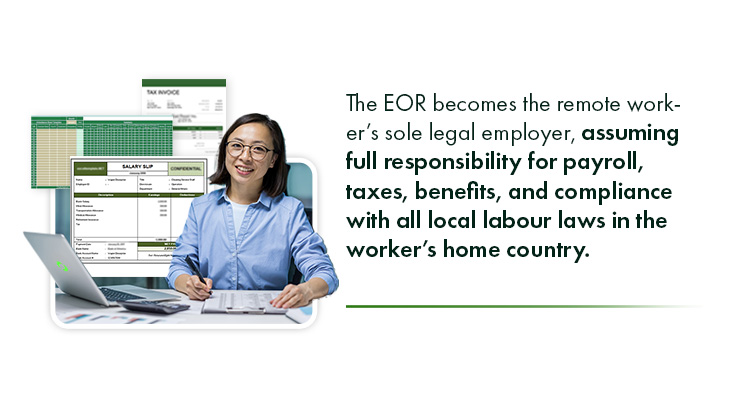
    The EOR becomes the remote worker’s sole legal employer, assuming full responsibility for payroll, taxes, benefits, and compliance with all local labour laws in the worker’s home country.

    On the other hand, a Professional Employer Organization (PEO) operates under a co-employment model. This means your company must already have a legal entity in the country where your remote worker is based and will remain the official employer. The PEO simply shares HR responsibilities, such as payroll and benefits administration.

    Meanwhile, a Contractor-on-Record (CoR) manages the engagement and payment of independent contractors. There is no employer-employee relationship, but the CoR ensures the worker is correctly classified as a contractor, helping prevent legal misclassification like in the Joanna Pascua case.

    In other words, the EOR assumes full legal responsibility, a PEO shares certain administrative duties, and a CoR ensures compliance with regulations.

    Why Pricing Transparency Matters in EOR Services 

    The efficiency and practicality of EORs have led many companies to shift legal responsibilities to third parties. However, this is easier said than done, particularly because finding the right EOR, especially at the right price, can be challenging.

    Hidden Fees in Traditional EOR Models 

    EOR tasks can be complicated, especially for SMBs unfamiliar with legal and labour requirements. As a result, business owners may struggle to determine which pricing model is the most suitable.

    Many third parties use complex, non-transparent pricing with hidden fees. They may advertise low costs to attract companies, only to later charge higher expenses due to undisclosed fees covering:

    • Setup or onboarding fees; 
    • Currency exchange markups; 
    • Termination or offboarding fees; and 
    • Benefits administration fees. 

    Cost Implications of Non-Compliance in the Philippines

    Thousands of SMBs in Australia are hiring skilled remote workers from the Philippines. However, direct hiring can be tricky, particularly if the Australian company misclassifies the remote worker.

    In the Pascua case, the company classified Pascua, a Filipino remote worker, as an independent contractor

    However, the Fair Work Commission ruled that she was, in fact, a regular employee based on her tasks, relationship with the company, and other factors. This led to hefty fines, a costly legal battle, and negative publicity for the company.

    Similarly, non-compliance with Philippine labour laws can lead to severe costs and legal risks. Direct hiring without following the proper legal process may result in penalties, back wages, and legal fees in the Philippines and even in Australia. 

    As a result, many Australian employers partner with Remote Staff, an EOR that has been helping Aussie companies work with Filipino workers for over 18 years. 

    Acting as the legal employer of your remote workers, Remote Staff ensures compliance with Philippine labour laws, including expanded maternity leave and contributions to SSS, PhilHealth, and the PAG-IBIG Fund.

    EOR Pricing Breakdown (Philippines) 

    Here is a breakdown of typical pricing when partnering with an EOR for remote workers in the Philippines:

    Common Pricing Models Used by Providers 

    The EOR industry typically uses two primary pricing models.

    Fixed Monthly Fee Percentage of Gross Payroll
    The company pays a fixed monthly fee per employee. 

    For example, AUD $599 per employee per month.

    The EOR charges a percentage, typically 10–20% of the employee’s total gross monthly compensation.

    For example, a 15% EOR fee on an employee earning AUD $3,000 per month would be AUD $450.

    A fixed monthly fee makes budgeting easy since it doesn’t change with raises or bonuses. However, it can be high for lower-salaried roles or in low-cost markets.

    On the other hand, the percentage model scales with the employee’s salary, making it cost-effective for junior or lower-paid roles. However, costs can become unpredictable since the fee rises whenever the employee gets a raise or bonus.

    What’s Included in EOR Fees (vs. Not Included) 

    The standard EOR service fee covers the following: 

    • Legal employment liability;
    • Onboarding and offboarding; 
    • Monthly payroll administration; 
    • HR support and guidance; and 
    • Tax filing and compliance. 

    However, the following fees are shouldered by the AU company: 

    • Gross salary; 
    • Statutory employer taxes; 
    • Employee benefits; 
    • Expense reimbursements; and 
    • Currency conversion (FX) fees. 

    Average Cost Ranges for Hiring in the Philippines

    The total cost of hiring Filipino remote workers through an EOR consists of two main parts: the EOR service fee and the statutory costs (pass-through).

    As mentioned earlier, the Employer of Record pricing depends on whether you choose a fixed monthly fee or a percentage-based model. Meanwhile, statutory costs under Philippine law include:

    • Gross monthly salary; 
    • 13th month pay; 
    • Social security; 
    • PhilHealth; 
    • Pag-IBIG Fund; and 
    • Income tax. 

    EOR Pricing Comparison (Philippines vs. Global) 

    Here’s how Philippine-based EORs like Remote Staff compare with those in other countries:

    Philippines vs. India, LATAM, and Eastern Europe 

    Filipino workers are among the most in-demand remote talent, alongside professionals from India, Latin America, and Eastern Europe, as shown in the following matrix:

    Philippines India LATAM Eastern Europe

    Primary
    Focus Skill
    Voice-based BPO, customer service, virtual assistants, finance/accounting IT outsourcing, software development, data analytics, engineering  Nearshoring tech talent, digital marketing, customer success Software development, engineering, research and development 
    Time Zone Alignment -3 to -4 hours behind AU -4.5 to -5.5 hours behind AU -12 to -15 hours behind AU -8 to -9 behind AU

    How Location Affects Pricing and Compliance 

    While other countries also offer competitive talent, many Australian employers prefer Filipino remote workers because of the small time difference of 3–4 hours. 

    This means workers don’t have to work night shifts, unlike in Latin America or Eastern Europe, which also helps reduce costs when hiring through a Philippine EOR.

    How Remote Staff Offers a Competitive Edge 

    Remote Staff has supported over 3,000 business owners with their staffing needs. Drawing on its expertise in both the Australian market and Philippine labour laws, it has expanded to provide EOR services.

    18 Years of Local Expertise 

    As a Philippine-based EOR with strong ties to Australia, Remote Staff has a deep understanding of the nuances of both Philippine and Australian laws and regulations.

    Its working model has been tested and refined since the early days of global remote work. 

    With nearly two decades of experience, Remote Staff has mastered the legal requirements of both countries, with particular expertise in Philippine labour laws and taxation.

    Hybrid EOR and Contractor Conversion Solutions 

    Remote Staff offers hybrid EOR and contractor conversion solutions to ensure legal compliance for tax purposes while reducing the risk of employee misclassification, a common issue in global hiring.

    The hybrid model streamlines operations instead of needing separate vendors for: 

    • Payroll processing; 
    • Legal employment; and 
    • Contractor payments. 

    Moreover, its contractor conversion service allows you to transition your current independent contractor into a full-time employee under Remote Staff’s EOR model.

    This dual approach greatly reduces administrative burdens and legal risks under both Australian and Philippine law, as Remote Staff serves as the legal employer of your remote workers in the eyes of both countries.

    Full Compliance with Philippine Labour Laws 

    The Philippine government, through the Department of Labour and Employment (DOLE), oversees companies’ compliance with the country’s Labour Code.

    Consequently, as the EOR and legal employer, Remote Staff ensures your remote workers receive all legally mandated benefits and entitlements.

    Frequently Asked Questions (FAQs) 

    Here are some frequently asked questions about working with EORs.

    #1. What Does EOR Cost Include? 

    The total cost of employment through an EOR includes the EOR service fee (either a fixed monthly rate or a percentage) and pass-through costs such as the employee’s gross salary, statutory contributions, and taxes.

    #2. Are There Setup Fees for Using an EOR in the Philippines?

    It depends on the provider. 

    For example, Remote Staff typically charges an all-inclusive fixed EOR monthly fee breakdown (Philippines) and provides a transparent pricing breakdown, so you know the cost of services upfront of hiring Filipino remote workers. 

    #3. How Is the Total Cost Per Employee Calculated?

    Generally,  the total cost per employee is calculated by adding the employee’s direct compensation, statutory costs, and the EOR service fee.

    For example, if an Australian company hires a Filipino worker with:

    • AUD $1,000 – Monthly salary
    • AUD $150 – Statutory contributions (SSS, PhilHealth, Pag-IBIG)
    • AUD $200 – Fixed EOR monthly fee

    The total cost for the company would be AUD $1,350 per month for this specific employee.

    #4. How Long Does Onboarding Take?

    The onboarding process with an EOR is much faster, as there’s no need for vetting or interviews. The employees are already in place, and you simply transition their employment status to the EOR.

    With Remote Staff, the Australian company only needs to specify its requirements. They provide suitable options and quotes, and once approved, handle all administrative and regulatory responsibilities, typically within 1–2 weeks, depending on the agreement and turnaround times.

    #5. What Happens If I Want to Convert My Contractor To an EOR Employee? 

    The EOR assumes the employment relationship by first assessing the worker’s current role. It then calculates and proposes the appropriate rate per employee. 

    Once approved on your end, the EOR drafts a new employment contract with itself as the employer. After the remote worker signs the contract, the EOR legally becomes the employer of record, taking on all associated legal responsibilities.

    Conclusion: Choose the Right EOR Partner 

    The internet has made it easier to take businesses global, making international hiring essential for competition. Fortunately, working with diverse teams across physical and digital spaces has become easier to manage.

    With EOR providers like Remote Staff, you don’t need to decide between setting up a local entity or hiring a candidate closer to home. 

    Now, you can hire top talent at competitive rates without worrying about legal requirements. 

    This reduces your mental load, letting you focus on growing your business while ensuring your remote workers receive all legally mandated benefits – without the stress falling on you.

    So, what are you waiting for? 

    Book a free consultation now for a transparent EOR cost breakdown.

  • ATO Crackdown 2026: What Every Business Owner Should Know About Data-Driven Audits

    ATO Crackdown 2026: What Every Business Owner Should Know About Data-Driven Audits

    Artificial intelligence (AI) is seeping into every corner of modern life, from image generation to work processes and even taxation compliance and risk assessment.

    On this note, the Australian Taxation Office (ATO) is undergoing a major transformation, setting stricter compliance requirements powered by AI and algorithms. This means millions of financial records can now be checked automatically, and almost instantly.

    In this article, we will discuss what this means for Aussie business owners in the next fiscal year – and the necessary steps they should take to prepare for these data-driven audits.

    Read on to know more. 

    What is the ATO’s New Data-Driven Audit System?

    As Australia’s principal revenue collection agency, the ATO uses various measures to maximise and speed up the collection process. Beginning in 2026, it will strengthen these efforts by using AI and machine learning. 

    Why the 2026 Crackdown is Different 

    Unlike previous simple data-matching methods, the ATO will begin using sophisticated AI models trained on historical data. This will help the agency establish benchmarks for specific occupations and industries.

    As such, when a taxpayer lodges a return, the system will instantly compare their claims, such as work-related expenses and income-to-asset ratios, against those of their peers.

    Then, the AI-driven system, combined with machine learning, will use historical data to check for any significant or unusual deviations from these benchmarks. If it detects one, it will trigger an instant risk score.

    new system

    Where the ATO Gets Its Data 

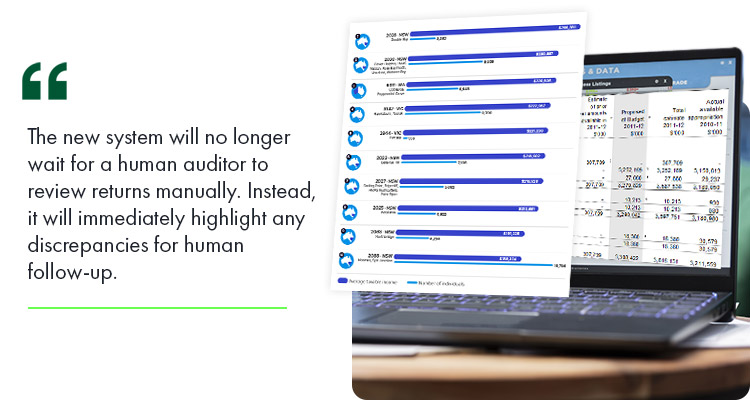
    The new system will no longer wait for a human auditor to review returns manually. Instead, it will immediately highlight any discrepancies for human follow-up. 

    So, where will the ATO get the data it uses as a benchmark?

    The government agency will rely on various sources, cross-referencing an interconnected network of over 60 data-matching programs, including:

    • Banks and Major Lenders – The ATO receives mandatory reports on all interest income paid and all international money transfers above specified thresholds. 
    • POS Systems and Payment Platforms – Payment platforms like Stripe and PayPal, along with POS systems like Square and Tyro, also report transaction data, giving the ATO an almost real-time view of gross sales.
    • eCommerce Platforms – Even major platforms like Amazon, eBay, and Shopify provide the ATO with comprehensive data on sellers, including total annual turnover and transaction volumes.
    • Payroll and STP Phase 2 – Meanwhile, Single Touch Payroll (STP) Phase 2 requires employers to break down an employee’s gross income into detailed components. This covers salary, allowances, paid leave, and bonuses, making it easier to detect errors while ensuring payroll compliance auditing.
    • B Crypto Exchanges – Lastly, the ATO’s Crypto Asset Data-Matching Program legally requires Australian crypto exchanges to report detailed transaction information. This includes historical and current data on all trades, deposits, and withdrawals. This allows the ATO to calculate Capital Gains Tax (CGT) liabilities and identify other unreported income.

    Top Audit Triggers the ATO is Watching Closely in 2026 

    With all these information sources, the Australian Taxation Office can easily monitor compliance and flag transactions that appear suspicious based on its benchmarks. 

    Consequently, any errors or miscalculations can be costly for a business, as non-compliance or violations may lead to significant financial or legal problems.

    So, what steps should every business take to prepare?

    Clean Up Bookkeeping and Reconciliation 

    Daily or weekly reconciliation is now essential. 

    Infrequent bookkeeping creates the very discrepancies that machine learning systems are designed to flag. Thus, it’s best to conduct regular bookkeeping to correct duplicates, resolve mismatches, and locate missing invoices.

    Regularly cleaning up your books ensures that reported data is accurate, helping prevent AI from flagging your business for unnecessary audits. 

    Align All Data Sources 

    Machine learning and AI algorithms look for a “perfect alignment” between all reporting systems for your income and your official tax filings. 

    Logically, any discrepancy is immediately flagged as a high-risk anomaly. Therefore, make sure all your data sources, from POS systems to e-commerce and payroll platforms, are aligned and consistent.

    Otherwise, any discrepancies will trigger tax compliance alerts, prompt investigations, and become an immediate red flag for an ATO auditor.

    Review Deductions and Substantiation 

    Keep receipts for everything. 

    Always maintain valid tax invoices or receipts for every claimed expense. Use digital scans or cloud storage to ensure you have supporting documents for every dollar in case of an audit.

    In addition to receipts, keep contemporaneous logs to justify the business-related portion of each expense. 

    For example, for motor vehicle expenses, a continuous 12-week period each year is required to establish the business use percentage of your vehicle. AI systems are highly effective at cross-checking declared fuel and maintenance costs against the reported business percentage, so it’s essential to have accurate data and logs to support your claims.

    Ensure Correct Worker Classification

    The recent Joanna Pascua controversy also brought worker classification into focus for the Australian Taxation Office. 

    In that case, Pascua was classified as an independent contractor but performed the duties of an employee. When she filed a complaint, the Fair Work Commission (FWC) ruled in her favor, leading to costly tax and compliance issues for her employer.

    The ATO identifies misclassifications by cross-checking payments reported to contractors against missing Superannuation Guarantee (SG) contributions and absent STP reporting. 

    As a result, in addition to proper accounting and bookkeeping, many Aussie employers use Employers of Record, who act as the legal employer for their remote workers.

    How to Stay Fully Audit-Ready in 2026 

    Aside from understanding the trigger factors, you also need to focus on proactive issue identification by taking the following measures:

    Step 1: Automate Where Possible.

    Manual processes are prone to errors and can create data lags, which the ATO’s real-time systems are designed to detect and penalise.

    Therefore, automating your core financial tasks can help ensure your records align with the data the ATO receives, using the following:

    • Xero Bank Feeds and Equivalent Systems – Using platforms like Xero, QuickBooks, or MYOB allows you to automatically import daily transactions from your bank account, reducing the risk of missing entries or transcription errors.
    • Auto-Reconciliation Tools – Use tools provided by these accounting platforms to automatically match bank transactions with invoices or bills, ensuring more accurate monthly reconciliations.
    • Real-Time Payroll Systems – Use modern, cloud-based payroll systems like Xero Payroll or MYOB to transmit payroll information to the ATO in real time with every pay run.

    ato audit

    Step 2: Conduct Quarterly Internal Reviews.

    Stay ahead of the ATO’s continuous, AI-driven monitoring by conducting quarterly internal compliance and having structured data reviews. Here’s how:

    • BAS Accuracy – Before lodging each Business Activity Statement (BAS), carefully cross-check the reported gross income and GST collected or paid against your accounting software’s ledgers and the data reported by third parties.
    • Payroll Compliance – Conduct a detailed review of your STP data and Superannuation Guarantee obligations each quarter. Verify that the correct amounts have been withheld, SG payments are made on time, and employee classifications in your payroll system align with the data reported to the ATO.
    • Deduction Legality and Substantiation – Review a sample of your largest expense claims each quarter to ensure they are genuinely business-related and supported by the necessary logbooks and receipts. This way, you can immediately identify and remove any unsupported claims before submitting them in a BAS or annual tax return.

    Step 3: Hire Skilled Remote Finance Staff.

    The ATO’s 2026 crackdown guidelines can be time-consuming, given all the cross-checking and referencing required. For small and medium business (SMB) owners, keeping track of everything can be challenging while also managing day-to-day operations.

    Thus, many SMBs choose to outsource accounting and bookkeeping to skilled professionals who can manage these tasks efficiently. These include: 

    • Accountants and Bookkeepers – They manage bank feeds, code transactions accurately, and perform the real-time reconciliations needed to prevent AI from flagging errors.
    • Payroll Specialists – They ensure every worker classification is correct, payments are calculated accurately, and all data is transmitted to the ATO correctly and on time.
    • Data and Reconciliation Admins – They are responsible for aligning data feeds from third-party sources, ensuring that gross sales reported by POS systems match the figures in the accounting software.

    Together, these professionals allow your business to comply with all ATO requirements without the hassle – and reduce the risk of audits.

    Frequently Asked Questions (FAQs)

    Here are some frequently asked questions about the ATO audit crackdown coming in 2026. 

    #1. What Industries Will Be Targeted First?

    The ATO will primarily focus on sectors with high cash transactions or those where income is often under-reported, such as:

    • Gig and sharing economy; 
    • Construction and trades; 
    • Hospitality and retail; 
    • Cryptocurrency.

    #2. Are Small Businesses More At Risk Than Big Ones?

    Yes. Small businesses make up the largest share of unpaid taxes in Australia, making them a key focus for the ATO’s compliance efforts.

    Thus, SMBs must ensure their bookkeeping and reporting systems align with all submissions to avoid audits and scrutiny, especially now that the ATO will use industry benchmarks.

    #3. Will the ATO Audit Cash Businesses More Aggressively?

    Yes. With AI, the ATO becomes more aggressive and effective in targeting the “shadow economy” – income that is not reported or taxed.

    For example, if a cash-based takeaway shop reports a profit margin or wages expense significantly below the industry average, AI will instantly flag this discrepancy as high risk for undeclared cash income.

    #4. How Often Does the ATO Check eCommerce Accounts?

    With AI, the ATO will shift from annual reviews to near real-time compliance checks.

    Once the annual data is collected, the ATO’s AI and machine learning engine will perform continuous, automated cross-checks. 

    As soon as you lodge your BAS or annual tax return, the AI will instantly match your declared income against the total turnover reported by your platforms.

    In short, although the source data is collected annually, AI algorithms enable continuous checks against your lodgments.

    #5. Do I Need A Tax Agent AND A Bookkeeper?

    Yes. A bookkeeper is your first line of defense, providing audit insights and ensuring the data monitored by AI is accurate. The tax agent acts as the second line of defense, making sure the final return is legally correct and offering strategic advice.

    However, if your budget is limited, you can outsource a bookkeeper for the time being or hire a remote accountant with tax filing experience. This allows you to address both accounting and tax compliance.

    Conclusion: Staying Ahead of the ATO’s Data-Driven Future

    Artificial intelligence is becoming a part of everyday life, and now it’s extending to tax compliance. Thus, businesses, like other sectors, must adapt.

    By preparing for an AI-driven audit, your business is more likely to stay compliant with the stringent monitoring coming in 2026. Keep receipts, double-check transactions, use automation, and hire skilled professionals to manage these processes.

    Don’t wait until tax time to start preparing. Hire skilled bookkeeping and ATO compliance specialists now to secure your data and safeguard your future.

    If you’re unsure where to start, call us today or request a callback so we can help you get started.

  • The Legal Grey Zone of Remote Work Contracts—And How EORs Solve It

    The Legal Grey Zone of Remote Work Contracts—And How EORs Solve It

    A growing number of employers are hiring remote professionals for various roles. 

    Many Australian firms, for example, outsource marketing, customer service, social media management, and other non-core functions, allowing their in-house teams to focus on core business tasks.

    This mixed office setup often leaves many businesses unsure how to manage remote workers alongside in-house employees. As more Australians hire offshore talent, the line between “independent contractor” and “employee” becomes increasingly blurred – and that grey area could cost your business thousands.

    Let’s take a closer look – and explore how an Employer of Record (EOR) can help you successfully navigate the legal complexities involved.

    The Rise of Remote Work and the Legal Complexities It Brings 

    Managing employees can be challenging. 

    You need to handle contracts, payroll, insurance, and other benefits while also monitoring productivity and ensuring employee satisfaction. Global hiring isn’t all that different. 

    The Acceleration of Global Hiring 

    There’s been a great shift Down Under, wherein many employers are hiring remotely as part of their growth strategies. 

    This expansion fundamentally reshapes human resources. HR teams must now navigate complicated measures, such as: 

    • Labour Law – Employment contracts must comply with the labour laws of the employee’s home country.
    • Tax Obligations – Companies must accurately calculate and withhold income tax and social security contributions in accordance with the laws of the employee’s country of residence. 
    • Currency and Payment – Processing payments in an employee’s local currency requires managing constant currency fluctuations and ensuring compliance with local banking regulations.

    legal advice

    Why Legal Clarity Matters More Than Ever

    Without proper guidance, global hiring significantly increases legal risks, often due to costly misclassification errors. This typically occurs when a business treats a worker as an independent contractor, even though local laws require them to be classified as an employee.

    When this happens, businesses can face severe penalties, including back payments, fines, or interest, as tax and labour authorities actively scrutinise these arrangements to recover lost revenue and protect worker rights.

    For example, in Australia, the Australian Taxation Office (ATO) and the Fair Work Ombudsman (FWO) actively enforce compliance. Penalties for serious violations of the Fair Work Act can reach as high as AUD $4.69 million.

    Recently, the Joanna Pascua case made headlines. Although she was classified as an “independent contractor” by her Aussie employer, she worked regular hours and reported to supervisors. Thus, when she filed a complaint against her employer, the Fair Work Commission ruled in her favor, recognising her as a regular employee. 

    This is a landmark case reflecting the complexities of a globalised workforce – and the blurred lines of employment law and how cutting corners can cost you. 

    The Legal Grey Zones Every Australian Employer Should Know 

    To avoid another Joanna Pascua controversy, here are some legal matters and grey areas every Australian employer should be aware of:

    Misclassification: When Contractors Are Actually Employees 

    In Australia, if a worker is employed by a business and operates under the employer’s direction and control, they are entitled to statutory rights such as fair pay, paid leave, and protection against unfair dismissal and discrimination. 

    Conversely, contractors are considered independent from the business if they have control over how and when they perform their work.

    While this may seem straightforward, the line often blurs when businesses exercise full control over a worker’s tasks and performance yet still classify them as independent contractors.

    Thus, the FWO and the ATO use the “Whole Relationship Test” to determine a worker’s true employment status, as demonstrated in Pascua’s case. This test transcends the written contract and considers factors such as the employer’s level of control, financial risk, ability to delegate tasks, and the expectation of ongoing work.

    Consequently, misclassifying an employee as a contractor is illegal under Australian law and can lead to serious financial and legal consequences.

    Tax Residency Complications 

    Tax considerations add another layer of complexity.

    While taxes are already complicated on their own, hiring an employee directly from another country makes them even more challenging. This setup can easily trigger dual tax residency for remote workers, while the company must also account for corresponding tax liabilities in its own country of operation.

    Generally, an Australian company is not required to withhold Pay-As-You-Go (PAYG) tax, pay the Superannuation Guarantee (SG), or remit payroll tax in Australia if the contractor performs all services outside the country.

    However, legal risks arise when the full-time nature of the arrangement causes a remote worker to be classified as an employee under the Whole Relationship Test. 

    In such cases, Australian government agencies may require the employer to comply with the applicable tax obligations mentioned above. Failure to do so could result in compliance violations or legal penalties.

    Compliance Pitfalls in Cross-Border Hiring 

    Ignorance of the law is not a defence for employers in any jurisdiction. 

    Similarly, the Australian government penalizes businesses that fail to meet statutory requirements, particularly those related to tax and labour laws.

    This complex web of regulations often discourages employers from directly hiring remote workers. The sheer volume of additional tasks can be overwhelming, particularly when managing the day-to-day demands of running a business.

    To overcome these challenges while still enjoying the benefits of remote work, savvy businesses turn to outsourcing – or, better yet, partner with an EOR. This strategy allows them to hire globally without managing legal complexities or risking non-compliance.

    How Employer of Record (EOR) Services Solve These Legal Challenges 

    Remote work is a win-win for both employers and employees. Employers gain access to skilled professionals at competitive rates, while workers can earn competitive salaries from working for international companies without leaving their homes.

    However, like any work arrangement, remote work comes with its challenges. In global hiring, a key issue is legal compliance, as grey areas often require expert guidance to navigate.

    This is where an EOR can help.

    What Is an Employer of Record (EOR?)

    An Employer of Record (EOR) is a third-party service that acts as the legal employer for a company’s staff in a specific country. This allows you to hire employees on your behalf, enabling access to global talent without the need to establish a branch or subsidiary abroad.

    As the legal employer, the EOR takes on all the administrative and legal burdens associated with employment. This includes: 

    • Ensuring compliance with complex labour laws; 
    • Drafting legally sound remote employment contracts
    • Running compliant multi-currency payroll; and 
    • Calculating and remitting taxes and social contributions. 

    With this model, companies retain day-to-day control over employees’ work, performance, and tasks, while the EOR handles all legal responsibilities and administrative paperwork. Crucially, this setup also minimises the risk of employment misclassification.

    Compliance Without the Red Tape

    An EOR ensures companies like yours can comply with the legal requirements without the administrative burdens of setting up legal entities in other countries. Thus, they take care of: 

    • Legal Documentation – They draft and execute employment contracts that include all mandatory provisions on probation, notice periods, and statutory leave, reducing the risk of future legal disputes.
    • Tax Filings and Contributions – They also handle all mandatory withholdings, including the remote employee’s income tax and the employer’s share of social contributions (pension, insurance, and healthcare). They then process payments and file all required reports on your behalf.
    • Employee Benefits – They manage statutory benefits to ensure compliance with local requirements for healthcare and paid time off. This ensures that all employees receive the full entitlements mandated by their country’s laws.

    Reducing Risk Through Local Expertise 

    Instead of setting up a branch or subsidiary, it’s more practical and cost-effective to partner with an EOR that can handle all the legal and financial risks of hiring overseas. 

    Their local expertise in laws and regulations also helps ensure full compliance with statutory requirements.

    For example, an EOR like Remote Staff has a dedicated network in the Philippines that provides on-the-ground legal support. This means they have in-depth knowledge of Philippine labour laws, tax regulations, and social security requirements for your Filipino remote workers.

    Real-World Scenarios: How EORs Solve Compliance Problems 

    Here are some examples of how Employers of Record can help your business. 

    Case Study #1: The Misclassified Remote Marketer 

    Many small and medium-sized businesses (SMBs) hire remote workers for non-core functions. For instance, if you’re a Sydney-based SMB, you can directly hire a content marketer from the Philippines.

    To keep things simple and cost-effective, you classified your remote worker as an independent contractor and stated this clearly in the contract. The agreement also outlined basic job details such as fixed working hours, direct reporting, and the use of company-issued software.

    The Compliance Problem

    If this working relationship is audited, your company could face legal issues because, under the Whole Relationship Test, the “independent contractor” would actually be considered an employee under Australian law.

    The EOR Solution

    By partnering with an Employer of Record instead of hiring directly, you can eliminate the risk of worker misclassification. The EOR will legally employ the content marketer on your behalf and will:

    • Draft a fully compliant local employment contract; 
    • Calculate and remit all mandatory taxes and social contributions in the Philippines; and 
    • Manage the required statutory leave and benefits. 

    Case Study #2: The Dual Tax Dilemma 

    On another note, suppose you’re a tech company looking to hire a highly skilled software developer. However, the developer works remotely from the Philippines for half the year and spends the rest of the time in Australia.

    The Compliance Problem

    The developer’s situation creates a dual tax residency issue, as he meets the residency criteria for both the Australian Taxation Office and the Philippine Bureau of Internal Revenue (BIR) for tax purposes.

    As his direct employer, you would then face conflicting tax obligations, including:

    • Australian Payroll – When the developer works in Australia, you must withhold PAYG tax and remit Superannuation Guarantee contributions as required.
    • Philippine Payroll – However, when he works in the Philippines, his income for that period may be subject to Philippine income tax, and you might need to register with the BIR to comply with local withholding requirements.
    • Double Taxation – Additionally, the employee risks being taxed on the same income in both countries if the AU-Philippine Double Taxation Agreement (DTA) tie-breaker rules are not correctly applied. 

    The EOR Solution 

    Fortunately, you can still hire the skilled software developer without the hassle or stress by using an EOR, which will handle:

    • Correct Withholding and Registration – The EOR will register the developer in the Philippines and ensure correct withholding according to local income tax rates while he is working there. They will also handle all mandatory Philippine social security contributions.
    • DTA Application – The EOR’s tax experts will structure the employment to correctly apply the DTA, ensuring the developer avoids improper double taxation. In short, the EOR manages compliance between the two tax systems.

    With this approach, the developer receives a single, compliant pay slip for all work, regardless of location. More importantly, your company stays compliant with both the ATO and BIR without needing to set up a costly, complex HR and tax entity in two countries.

    #3. Case Study 3: Cross-Border Contracting Made Simple

    Say you’re a fast-growing digital marketing agency in Brisbane that just secured a major international client, requiring you to quickly and compliantly hire three skilled marketing professionals — a graphic designer, a copywriter, and a video editor — each based in a different country.

    The Compliance Problem

    It’s back-breaking, not to mention financially draining, to set up legal entities in three different countries just to stay compliant with labour and tax laws. 

    And even if you somehow had the time and energy, dealing with three separate systems for payroll taxes and social contributions is rarely worth the stress. To make things worse, you’d still need to prepare three different employment contracts, each compliant with local rules on minimum wage, mandatory leave, and termination procedures.

    The EOR Solution

    An experienced EOR can take all these tasks off your plate. You can rely on them to:

    • Draft all employment contracts and ensure immediate compliance with local laws;
    • Handle the entire payroll cycle, including proper withholding and tax remittance;
    • Administer local employee benefits and manage mandatory annual leaves.

    This way, your agency avoids the cost, time, and risk of setting up three foreign subsidiaries just to hire the talent you need. 

    More importantly, you can onboard all employees within a week or two, allowing you to focus entirely on their output while the EOR handles 100% of the compliance requirements across all borders.

    Why Australian Businesses Shouldn’t Ignore the Legal Grey Zone

    Business and legal matters always go hand in hand.

    Whether you like it or not, you must understand and comply with various laws and regulations to keep your business running smoothly. While this can be complicated, it doesn’t have to be difficult, especially when you have an EOR supporting you.

    Financial and Legal Risks 

    Employee misclassification can happen even if it’s unintentional. But this mistake can be costly, especially in cross-border remote arrangements – as seen in the Joanna Pascua case.

    Such a mistake can lead to serious financial and legal risks, not to mention reputational damage, which is often even more costly in the long run. 

    That’s why legal compliance should be a non-negotiable part of your global hiring strategy. And if you don’t have the time or expertise to manage it properly, it’s best to partner with an EOR.

    Brand Reputation and Trust 

    Customers, investors, and potential partners often see companies with compliance breaches as unethical and unreliable. 

    This is even more true today, in an era of backlash and #cancelculture, where a company can be “cancelled” not only for its products but also for how it treats its employees.

    Existing employees may also lose trust in the company if they see a colleague exploited or subjected to non-compliant arrangements, leading to lower morale, reduced productivity, and ultimately, higher turnover. 

    Opportunity Cost of Non-Compliance 

    SMBs might hesitate to partner with an EOR because of the upfront cost. But the fines and legal fees from cross-border compliance mistakes can end up being far more expensive.

    When an Australian company faces an audit, the cost goes beyond legal fees and penalties. 

    Senior leaders, including the CEO and managers, may spend countless hours – or even months – responding to government inquiries, coordinating with lawyers, and calculating back-pay liabilities. 

    This diverts attention from core business activities like product development, sales strategy, and market expansion, leading to stalled growth and a loss of competitive advantage. Ongoing compliance issues also create stress and distraction across the organisation, lowering morale, productivity, and innovation.

    How Remote Staff Helps You Stay Legally Compliant

    For the last 17 years and counting, Remote Staff has helped over 3,000 Australian businesses legally hire skilled Filipino professionals – hassle-free.

    Remote Staff serves as the legal employer for your Philippine-based remote workers, handling HR management, compliance monitoring, and payroll and tax obligations. 

    This setup allows you to retain full control over their tasks and performance, while Remote Staff takes care of all administrative and compliance responsibilities, reducing the risk of misclassification and tax issues.

    Frequently Asked Questions (FAQs) 

    Here are some frequently asked questions about EORs and the services they provide.

    #1: What’s the Difference Between An EOR and a Recruitment Agency?

    A recruitment agency focuses on sourcing and vetting talent to fill open positions. Once a candidate is hired, the agency’s role ends, and the client assumes all employer responsibilities.

    In contrast, an EOR like Remote Staff not only sources and vets talent but also legally employs the chosen candidate on the client’s behalf. 

    They handle payroll, tax filings, benefits, and all local labour compliance, while the client focuses solely on managing the employee’s day-to-day work.

    #2. Can An EOR Protect Me From Tax Misclassification?

    Yes. The EOR framework is specifically designed to protect companies from the significant risks of tax and employment misclassification when hiring internationally.

    Since the EOR is the legal employer, they issue the required local employment contract and ensure the worker receives all statutory benefits. They also take responsibility for all mandatory local payroll and tax obligations.

    #3. How Much Does An EOR Service Cost?

    EOR service fees typically range from AUD $350 to $800 per employee per month, though costs may vary depending on the complexity of services provided.

    On average, EOR providers have two pricing models: 

    • Flat Monthly Fee – A fixed monthly fee per employee, regardless of their salary; and
    • Percentage of Payroll – The fee is calculated as a percentage of the employee’s gross monthly salary.

    #4. Is It Legal to Hire Full-Time Remote Workers Overseas Under An EOR?

    Yes. The EOR model addresses two major legal challenges in international hiring: setting up a local entity and ensuring employment compliance.

    Legally, the EOR is the official employer, responsible for meeting all government employment requirements. Additionally, the EOR maintains a registered legal entity in the employee’s country, ensuring the arrangement is fully compliant and shielding your Australian company from liability.

    Conclusion: Stay Compliant, Stay Competitive 

    Remote work is here to stay, and so is global hiring. 

    The business landscape has gone beyond borders, and to stay competitive, SMBs need to build a global workforce of skilled professionals from diverse backgrounds.

    However, this is easier said than done. With overlapping time zones and varying jurisdictions, it’s easy to get lost in the legal complexities. But with an Employer of Record, remote hiring can be safe and hassle-free.

    With the right EOR, businesses in Australia no longer have to worry about legal grey areas. By letting EORs like Remote Staff handle the legal responsibilities, Aussie SMBs can compete, scale, and grow their business – legally and ethically.

    So, what are you waiting for? Call us today or request a call back now. 

  • 25 Christmas Marketing Plays to End 2025 on a High (and Outshine Your Competition)

    25 Christmas Marketing Plays to End 2025 on a High (and Outshine Your Competition)

    Every business looks forward to the holiday season, when customers splurge and shop ‘til they drop. It’s the one time of the year when spending feels guilt-free – whether it’s for loved ones or for themselves.

    Thus, many brands spend thousands of dollars on marketing and advertising campaigns, confident that, when done right, these efforts will generate greater revenue for their business.

    However, successful holiday campaigns aren’t planned during the holiday season. In fact, the groundwork starts long before the Christmas trees go up– as early as October. 

    So, if you haven’t started our holiday campaign-planning yet, read on. Let’s explore different Christmas marketing plays you can use to wrap up the year on a merry and profitable note.

    Why Christmas Marketing Matters for Australian Businesses 

    Christmas is a big deal in Australia, as are Boxing Day celebrations.

    Since Christmas Down Under happens in the middle of summer, Aussies celebrate the holiday season a little differently — which also calls for a unique approach for businesses operating there.

    Relaxed, outdoor, and family-focused themes are more relevant and a white Christmas is out of the question. More importantly, the shopping season starts earlier, thanks to the growing popularity of Black Friday and Cyber Monday in late November. 

    This means that if you want to boost and maximise your sales, the work should begin as early as now. 

    But, how do you stand out and get started?

    Festive Marketing Plays for the Holiday Season 

    We’ve put together a list of 25 ideas — each with its own benefits, ideal timing, and the industries they’re best suited to — to help you kick things off.

    Set the Scene: Create a Festive Customer Experience

    It’s important to launch early-bird holiday promotions as soon as possible. For some businesses, October’s the best time to roll out holiday music and/or summer-themed decor.

    Ideas Best For When to Start
    Summer- Themed Decor 

    Bright colours, native florals, or beach imagery

    • Retailers 
    • Cafes 
    • Service businesses
    Early November
    Upbeat In-Store Music Playlists 

    Focus on summer-friendly, energetic holiday tracks

    • Retailers 
    • Cafes 
    • Restaurants
    Mid-November
    Subtle Festive Scents 

    Use refreshing scents like citrus, coconut, or pine

    • Retailers
    • Spas 
    • Salons
    Mid-November
    “Gifts on Ice” Stations

    Offer complimentary iced water or a small ice cream or gelato

    • Retailers with long queues
    • Pop-up shops 
    Late November

    For retailers, this could mean investing in summer-themed décor such as native flora or coastal motifs, adding refreshing scents throughout the store, or simply offering complimentary drinks and sweets to customers.

    Specialty homeware store Alfresco Emporium makes use of a Coastal Christmas theme. Meanwhile, retailer David Jones is known for using sun-drenched colours, native flowers, and Australian animals as part of its summer backdrop — a refreshing twist on the traditional dark green and red holiday palette.

    Offer Limited-Edition Products or Curated Gift Bundles 

    Bundling items or offering limited-edition products is also an effective way to drive sales. Many product-based brands, for example, launch Advent Calendar–themed products featuring one product for each day in the month-long countdown to Christmas.

    By creating a set time frame or a unique opportunity, you build a sense of urgency that motivates customers to take advantage of the promotion while it lasts.

    Ideas Best For When to Start
    Festive Packaging or Ribbon Service 

    Include an optional gift-wrapping service using unique holiday designs

    • Product-based businesses
    • eCommerce
    Mid-November
    “Aussie Summer Essentials” Bundle

    Offer group-related products like sunscreen, hats, picnic gear, or beach reads

    • Product-based businesses
    • Tourism
    Mid-November
    “12 Days of Early Deals” Promo

    Come up with a different, small discount each day leading up to Black Friday

    • Product-based businesses
    • eCommerce
    Early November

    Whether you’re selling online or through a brick-and-mortar store, consider offering bundled or premium purchase options by mid-November.

    You can offer customers free gift-wrapping services, especially for premium purchases, similar to what luxury retailer MECCA does. You can also pre-package bundles in festive wrapping to make them more gift-ready and appealing.

    Moreover, brands like MooGoo Skincare offer a “Summer Essentials Pack” featuring travel-sized skincare products — a great idea you can replicate if you have items that can be bundled as Christmas gifts, such as makeup, stationery, summer outfits, and more. 

    Aside from bundling, you can also offer daily discounts in the days leading up to the holidays to encourage customers to drop by your store regularly and take advantage of limited-time offers.

    Build an Emotional Connection Through Storytelling 

    Successful holiday campaigns are about more than just discounts, colourful packaging, or limited-time offers. More importantly, they tell stories that capture the true spirit of the season and connect with customers on an emotional level.

    Ideas Best For When to Start
    “Holiday Origin Story” Content 

    Share an authentic story about your product or brand’s best holiday season

    • Brands with strong mission or visuals
    Mid-November
    Customer Spotlight Videos

    Feature short clips of customers using your products in their summer holiday setting

    • Lifestyle brands
    • Fashion
    • Food and beverage
    Late November
    Staff Holiday and Gratitude Messages 

    Post short, personal videos from team members thanking your customers 

    • All businesses, especially service-based ones
    Early December

    Christmas is a sentimental holiday, symbolising gatherings and reunions among family and friends who’ve been apart for most of the year. 

    Emotions run high during this season, making it the perfect time for brands to share their own stories and connect with customers on a deeper, more personal level. 

    Australia Post, for instance, humanises logistics by tapping into the emotions of long-distance connections — telling stories of how packages help bring families closer together

    Additionally, you can feature customers who have supported your brand over the years as a way of showing appreciation. If your staff are open to it, you can even share a heartfelt message from them, thanking your loyal customers for their continued support throughout the year.

    Run an Engaging Holiday Giveaway or Challenge 

    You can also organise a giveaway or challenge — such as raffle draws, most shares, best comments, or tag-a-friend contests — and choose a winner to receive your products or services for free. 

    This is a great way to boost engagement and increase exposure to potential customers, whether or not they join the giveaway.

    Ideas Best For When to Start
    Festive Quiz or Poll

    Run short, fun polls on Instagram or Facebook about Aussie Christmas traditions

    • Social media-focused brands
    Mid-November
    Hashtag Photo Contest

    Ask users to share their “Best Summer Christmas” photo with your branded hashtag

    • Brands wanting to grow their reach on social media
    Early December
    “12 Days of Giving” Giveaway 

    Partner with a charity or give away prizes over the 12 before Christmas

    • Brands wanting to grow their reach on social media
    Early December

    One good social media campaign can boost your holiday promotions by a great deal. 

    By late October or early November, you can already start mapping out strategies to drive user-generated holiday content.

    Hashtag photo contests or quizzes and polls are always a great way to gain visibility. For instance, eCommerce brands like Hampers Galore encourage their customers to post and use the hashtag #ChristmasGiveawayAU for a chance to win prizes. 

    If you run a local boutique or online store, you can donate a portion of your daily sales or give away a product bundle for 12 days, each day supporting a local charity. Customers today are more likely to support brands that care about their communities.

    Make Your Emails Personal and Purposeful 

    While social media and in-store marketing may seem enough, don’t overlook the power of email marketing. Despite the rise of digital platforms, this more traditional channel still delivers strong results — with the right campaign.

    Ideas Best For When to Start
    Early Access for Loyalty Club Members

    Offer first dibs on limited-edition bundles to your most loyal, top-tier customers

    • eCommerce 
    • Food and beverage
    • Skincare
    October for early access planning
    “Shipping Deadline” Countdown

    Send clear, repeated emails detailing key shipping cut-off dates

    • Product-based businesses
    • eCommerce 
    • Customised orders
    Mid-November
    Abandoned Cart Emails 

    Tweak the email copy to emphasise that the item makes a “perfect gift” for the holidays

    • eCommerce
    Weekly reminders through December

    Email marketing is a high-ROI channel, especially for eCommerce businesses.

    For example, major online stores like Adore Beauty send regular emails reminding customers of the final dates for standard and express delivery during the busy Black Friday period through to December. 

    The brand also offers Adore Rewards, which gives members early shopping access and exclusive limited-edition Christmas gift sets. They also send gentle reminder emails with messages like, “You left something behind” to encourage customers to complete their purchases.

    When done tastefully, this consistent communication creates a sense of urgency and presses into customers’ fear of missing out. 

    Collaborate with Other Small Businesses

    If you can’t afford to do giveaways on your own, you can always tap a local business that offers complementary products or services.

    Ideas Best For When to Start
    Joint Gift Guide

    Create a shared digital guide featuring products from 3-5 complementary local businesses

    • Local makers
    • Online brands with overlapping audiences
    October
    Cross-Promotion Vouchers

    Include a discount voucher for a partner business in every Christmas order

    • Local makers
    • Service providers
    Early November

    Collaboration is a smart and cost-effective Christmas or Black Friday marketing strategy, especially for small and medium-sized businesses (SMBs) and online brands.

    If you run a boutique, you can include a 10% voucher for a complementary local service, such as a nearby beauty salon. In return, the salon can offer a discount for your clothing store — giving customers a complete “Holiday Prep” experience through your combined services.

    Optimise Your Website for Seasonal Search

    Everyone searches online for the best gifts — and if you’re offering them, it’s time to focus on your local SEO

    Every Aussie SMB should invest in website and mobile commerce optimisation so their products and services appear at the top of search results when ready-to-buy customers are looking for what they offer.

    Ideas Best For When to Start
    Summer-Specific Call-to-Action

    Use CTAs like “Shop Now for Beach Days” or “Get Your Holiday BBQ Today”

    • Online stores 
    • Content-led businesses
    October
    Dedicated “Under $50 Gifts” Landing Page

    Create a highly searchable and easy-to-navigate page for budget shoppers

    • Online stores
    • Product-based businesses
    October 

    Search engine optimisation is essential, especially if you want to capture high-intent search traffic early. At this stage, customers prefer websites and landing pages that showcase a variety of gift ideas and products in one place — without the need to browse through multiple sites or tabs.

    If you’re offering limited-edition Christmas bundles, consider working with an SEO specialist to optimise your blogs or landing pages dedicated to your holiday deals. 

    Avoid using generic CTAs like “Buy now.” Instead, make them more festive and engaging — for example, “Tick off your gift list today” or “Start your holiday shopping now.”

    Offer Click-and-Collect or Local Delivery Options 

    Shipping and delivery can be stressful during the holidays for both businesses and customers. 

    Offer hassle-free or early delivery options to assure buyers that their orders will arrive before the holiday rush.

    Ideas Best For When to Start
    Express Local Delivery Window

    Offer a premium, guaranteed delivery slot for the final 72 hours before Christmas

    • Brick-and-mortar shops
    • Service areas
    Late November 
    Curbside Collection Promotion 

    Clearly signpost and promote quick, contact-free pick up

    • Brick-and-mortar shops
    Mid-November

    Many customers are willing to order early to avoid the Christmas rush. You can encourage this even more by offering a premium delivery option — allowing customers to place orders as early as October and have them delivered within the final 72 hours before Christmas.

    If your customers are within the vicinity, encourage them to place their orders in advance and pick them up at their preferred time. You can also offer an additional 5% discount to those who order early as an incentive to start their holiday shopping sooner.

    Don’t Stop at Christmas Day 

    Many businesses go all out in the days leading up to Christmas. However, to make the most of the holiday season, keep the momentum going even after December 25. Take advantage of Boxing Day and carry the excitement into the new year to keep your customers engaged.

    Ideas Best For When to Start
    Boxing Day “Gift Card Blitz” 

    Offer a discount specifically for customers spending a gift card

    • Brands with repeat purchase potential 
    • eCommerce
    Plan in December, promote December 26
    New Year’s Resolution Promotion

    Tie your product to post-holiday goals like fitness, organisation, or travel

    • Service businesses
    • Brands with repeat purchase potential
    Promote after Christmas

    Major retailers like Myer and David Jones lead the post-Christmas sales with heavy discounts to clear holiday stock. 

    However, SMBs can also stay competitive by offering extra discounts or cashback when customers pay with gift cards. This strategy not only encourages gift card purchases but also drives quicker redemptions — allowing businesses to capture full-price sales value upfront.

    You can also tie your post-Christmas promotions to New Year’s resolutions to inspire and support customers looking for a fresh start. 

    For example, if you run a fitness business, you could launch a “2026 Body Goals” starter package for customers who sign up during the first week of January.

    Measure Performance and Stay Flexible 

    The Australian retail market is highly competitive, so it’s crucial to ensure your campaigns bring in more customers than you spend on ads. 

    The key is to reach the right audience and to give them what they want – so you can achieve the results you’re aiming for.

    Idea Best For When to Start
    Daily ROAS and Engagement Review 

    Monitor your Return on Ad Spend (ROAS) and engagement rates daily

    • Any business running ads or email campaigns 
    Before first campaign launch, regularly after that

    Always track the engagement of your ads to see which ones are performing well and which ones should be optimised or removed. 

    For example, if an Instagram ad starts converting better than a Facebook ad, your marketing team can quickly reallocate the budget from the underperforming campaign to the one that delivers stronger results.

    This requires daily monitoring to maximise conversions and ensure that your top-performing ads make the most of your limited campaign budget.

    Holiday Marketing Timeline: When to Launch in Australia

    The AU holiday season requires early planning. Starting early allows businesses to secure inventory, refine messaging, and avoid the Christmas rush. 

    For reference, here’s a rough timeline of key dates and the campaign focus you should have during each period:

    • Late November – Black Friday and Cyber Monday mark the peak spending period for gift shopping, thanks to massive sales. So, as early as the first week of November, focus on promoting discounts, limited-edition bundles, and express delivery options.
    • December 1-24 – When December arrives, shift your focus to high-urgency tactics. Many customers are still ticking off their shopping lists at this stage, so highlight:
      • Shipping deadline countdowns;
      • Share last-minute personalised gift guides, and 
      • Promote local pickup options.
    • December 25 – Expect minimal sales on Christmas Day, but don’t pause your marketing efforts entirely. Instead, schedule a heartfelt holiday greeting that reflects your brand’s story and values.
    • December 26 – Aside from Boxing Day, December 26 marks the start of the post-Christmas sales surge. This rise in activity is driven by aggressive clearance sales and the Gift Card Blitz aimed at clearing stock and capturing immediate revenue. Therefore, continue promoting your limited-edition offers through the year’s end to maintain momentum.
    • January – When the holiday season ends, your focus should shift toward customer retention. Customers shouldn’t just be for Christmas. The long-term goal is to keep them engaged by aligning your products with their New Year’s resolutions -and even beyond that.

    Additional Holiday Promotion Tips 

    In addition to those mentioned above, you can also explore the following ideas to stay ahead of the competition this Christmas season. 

    Personalisation: Tailor Offers and Stories 

    During the holiday season, customers are always on the lookout for thoughtful gifts that express affection and appreciation for their loved ones – often forgetting to buy something for themselves. 

    Brands can take a more personal approach by offering Christmas or Cyber Monday deals that match each buyer’s style and preferences based on AI-driven personalisation, past browsing and purchases. Even a small gesture, like adding the customer’s first name to an email, can make a big difference compared to sending generic promos.

    You can also include a line like, “Don’t forget to buy a gift for yourself this holiday season — you deserve it.” This simple yet heartfelt message adds a personal touch and shows that your brand genuinely values its customers.

    Local Focus: Delivery, Aussie Summer Language 

    Capitalise on the idea of a summer Christmas feast. Use bright summer hues. Swap reindeer or snowmen for backyard BBQs or surfboards to create a truly unique and personal holiday experience for every Australian customer.

    Moreover, focus on making delivery a smooth and positive experience despite the holiday rush. As early as November, remind customers about local delivery options and cut-off dates for express post. 

    To reduce logistical strain on your end, offer a Click-and-Collect option, especially if your business is in a high-traffic area or in a central business district.

    Automation: Email Flows and Scheduled Posts 

    It can be overwhelming to handle the influx of messages and orders as December approaches. However, this is a good problem to have – and it can be easily managed through automation and scheduling.

    You can ask your virtual assistant to set up automated abandoned cart sequences that include reminders about upcoming Christmas delivery deadlines. Meanwhile, your social media manager can pre-schedule holiday-themed posts leading up to the New Year. 

    This way, even if you’re on holiday (especially on Christmas or Boxing Day), your brand remains visible and active.

    Storytelling Over Discounts: Use of Emotional Pull 

    Lastly, don’t forget to tell stories that matter. After all, Christmas is all about celebrating with the people who matter most — and storytelling is what sets great brands apart.

    So, instead of relying only on red discount banners, take inspiration from brands like Coca-Cola and Australia Post. Focus on the emotional value of connection and family rather than product price. Highlight the joy of giving and receiving, not just the act of buying or shipping.

    At the end of the day, customers’ holiday purchases are driven by emotion — and when you tap into that, sales naturally follow.

    Frequently Asked Questions (FAQs) 

    Here are some frequently asked questions about Christmas marketing strategies in Australia.

    #1. When Should Australian Businesses Start Christmas Marketing?

    Ideally, you should start planning in October and launch your campaigns by early to mid-November. This aligns with the peak gift-buying season, which begins around Black Friday and Cyber Monday in late November.

    #2. How Can Small Businesses Compete with Bigger Brands?

    Focus on personal connection, localisation, flexibility, and authenticity. Customers are more likely to support businesses that humanise their brand. 

    Hence, show the faces behind your team and highlight your connection to the Australian community. Be flexible with rush orders when possible, and focus on emotional connection rather than simply offering the lowest price.

    #3. What Are the Best Christmas Campaigns for eCommerce?

    Give your loyal customers early access to Black Friday or Christmas deals to encourage more sign-ups before the public sale.

    You can also create a dedicated landing page for your Christmas offers, making it easier for customers to find items suited for the holidays or summer celebrations. Additionally, set a clear spending threshold for free shipping — this encourages customers to add more to their carts to qualify.

    #4. How Can I Make a Holiday Campaign Stand Out Locally?

    Skip the snow and use Aussie summer themes like beaches, BBQs, native flowers, and local slang in your ads and displays.

    You can also partner with a local organisation for holiday charity campaigns such as a “Donation per Purchase” program — a great way to boost sales while giving back to your community.

    Conclusion

    If you want to stand out this holiday season, start preparing now.

    By late October or early November, launch your loyalty campaign to capture high-value sales before Black Friday. Promote express and local delivery options, use authentic Aussie themes, and share heartwarming stories that connect with your audience.

    Don’t wait until December to start your marketing. The earlier you begin, the better your chances of ending the year strong.

    For more information on how to create effective marketing campaigns, call us today or request a callback so we can connect you with the right team.

  • October is Mental Health Month – How to Practice Healthy Mindfulness While Working Remotely

    October is Mental Health Month – How to Practice Healthy Mindfulness While Working Remotely

    Earning a living once meant being stuck in office cubicles and missing out on life. 

    Today, it can mean working on your goals without having to miss out on important moments like traveling or spending time at home with loved ones.

    However, working remotely without the right systems in place can also feel isolating. With the line between work and home blurred, many find themselves continuing to work even after hours, which can lead to stress or burnout. 

    In this article, we’ll explore how remote professionals can make the most of remote work without burning out – especially as we celebrate Mental Health Month Down Under this October.

    Why Mental Health Month Matters in Australia 

    The conversation around mental health has grown significantly over the past decade. 

    Conditions such as depression, eating disorders, and post-traumatic stress disorder, among others, have gone from being taboo to mainstream topics for public discourse.

    A growing number of people are opening up about their struggles, but the fight against the stigma attached continues. This is why October 10 is recognised as World Mental Health Day, and the whole month is observed as Mental Health Month.

    In Australia, the AU government reported that one in five Australians aged 16-85, or roughly 4.3 million, experienced a mental disorder

    Thus, the country observes Mental Health Month to validate the growing public conversation about systematic reform, promoting access, and community action as a reminder that mental health is just as important as physical health. 

    remote worker

    Challenges Remote Workers Face with Mental Health

    Remote work is work

    Whether you’re at home or by the beach, it doesn’t remove the stress and challenges of making decisions, attending meetings, and producing deliverables throughout the day.

    Moreover, remote work also comes with a unique set of challenges that every remote professional can relate to. 

    #1. Isolation and Lack of Social Interaction

    Working remotely is a haven for many introverts. Conversely, it can be very challenging for extroverts who prefer working onsite amidst their colleagues. 

    However, prolonged isolation can lead to increased stress, anxiety, and burnout either way. 

    Without regular face-to-face check-ins, remote professionals may find it harder to: 

    • Share struggles;
    • Receive emotional support; or 
    • Benefit from team collaboration. 

    #2. Blurred Work-Life Boundaries

    Traditionally, leaving the office signaled the end of the work for the day. 

    Now, with “leaving the office” reduced to simply closing a laptop, fully switching off has become more complicated. Without a commute or a separate workspace enforcing boundaries, work responsibilities can often bleed into personal time.

    Moreover, the loss of an office routine can make it harder to maintain daily structure, with many feeling pressured to overwork or remain constantly available to prove their productivity. 

    This is especially true for business owners, who often put in longer hours simply because their work is always within reach.

    #3. Increased Stress and Burnout 

    The combination of an intense workload, poor boundaries, and isolation can really affect one’s emotional and physical health. It also doesn’t help that many remote workers stay at their desks the entire time, without much opportunity for physical exercise. 

    Research consistently shows that without a healthy work-life balance routine, many remote professionals experience burnout – often at higher rates than their in-office counterparts. 

    This highlights the need for remote employers to prioritise mental health support and encourage boundary-setting to build a truly productive workplace.

    Practical Tips to Protect Your Mental Health While Working Remotely 

    More and more Australian employers and business owners are shifting to blended or fully remote setups for both practical and strategic reasons. 

    Yet while remote work has a lot of advantages, it’s not without its challenges. It can sometimes feel isolating, especially for a distributed team – making them vulnerable to mental health challenges, which can get in the way of:

    • Higher productivity; 
    • Retention; 
    • Overall business success. 

    That’s why adopting the right practices is essential to make remote work truly work for all parties involved. 

    daily routine

    Tip #1: Create a Healthy Work-from-Home Routine 

    A structured daily routine is non-negotiable as it restores the structure and boundaries lost when you bring work into your home. 

    So, how does this work? Simple: be very clear about when work should start and when it should stop – and fiercely uphold this.  

    • Fixed Work Hours – Define and communicate specific start and end times. Beyond that, resist the urge to check emails or “one last thing” to prevent the “always-on” mentality. 
    • The “Commute” Ritual – Since there’s no more train ride home to catch, create a transition ritual to separate home life from work life. This could be a short walk before and after work, meditating, a quick yoga session, or even just changing out of pajamas into “work clothes” – and vice versa.
    • Physical Separation – Designate a specific workspace that is not your bed or couch. This way, entering and leaving this designated workspace signals to your brain that the work day is about to begin and/or is over. 

    Tip #2: Prioritise Health and Movement

    Treat lunch and short breaks as non-negotiables. 

    Use this time to prioritise your physical health, whether by going for a quick walk, preparing a healthy meal, or simply taking a real pause (without scrolling through social media), which is essential for mental rest.

    Undeniably, remote work leads to significantly increased time in front of a screen. Hence, your breaks should ideally incorporate the 20-20-20 rule: 

    • Look at something 20 feet away; 
    • For 20 seconds; 
    • Every 20 minutes. 

    Moreover, always take a full lunch break free of distractions. Stepping away from your computer creates a clear boundary, promotes mindful eating, and supports the psychological detachment needed to return to work refreshed.

    Tip #3: Set Clear Work-Life Boundaries 

    Limit work-related communication to your scheduled hours. Once you’re done with work, turn off notifications (e.g., email, Slack, Teams) on your phone. 

    Communicate your working hours to your family members so they know when not to disturb you, unless there’s an emergency. Conversely, let your remote workers know when you’ll be getting off work know so you can keep your boundaries clear and your schedule on track. 

    Just as you block time for meetings, it’s equally important to schedule personal activities in your calendar. For example, you can ask your virtual assistant to add time for going to the gym or exploring a new hobby.

    quality time with family

    Tip #4: Stay Connected with Colleagues and Friends 

    Don’t forget to spend quality time with family and friends no matter how busy you are. 

    Spontaneous interactions with friends or colleagues are invaluable for nurturing both professional and personal relationships. While calls or messages help, video chats or in-person meetings are often more meaningful.

    Make an extra effort to schedule regular time with friends, family, and social groups outside of work hours. A strong support network is essential for maintaining work-life balance, reminding you that there’s more to life than work. 

    Tip #5: Seek Professional Support When Needed

    More importantly, recognise when you need professional support. Acknowledging that you need help is not a sign of weakness, but an act of self-care.

    If chronic stress, anxiety, or persistent loneliness starts to interfere with your daily life, work performance, or sleep, it may be time to seek professional help. Mental health challenges often affect physical health as well, leading to:

    • Unrelenting exhaustion; 
    • New or worsening headaches; 
    • Stomach issues; or 
    • Insomnia. 

    Mental health professionals can give you the right guidance for establishing healthier work-life boundaries through counseling, therapy, and other treatment methods.

    How Employers Can Support Mental Health in Remote Teams

    While the shift to remote work has reduced costs, it also challenges employers to build a responsive work environment that supports the overall well-being of their remote workers (and themselves, by extension):

    • Employee Assistance Programs – These include offering immediate, confidential counseling and referrals for issues like stress, anxiety, or burnout. 
    • Dedicated Mental Health Days – Mental health days or “recharge days” give remote workers time off and encourage them to rest by stepping away to avoid burnout.
    • Flexible Time Off – Managers should also encourage and promote flexible workdays whenever the nature of the job allows.
    • Lead by Example – More importantly, openly discuss your own boundaries, the importance of taking breaks, and mental health. This transparency helps destigmatise struggles and makes it safer for team members to do the same.

    Australian Resources for Mental Health Support 

    Australia has various initiatives that offer free, confidential, and specialised mental health support for those in need, including:

    • Lifeline (13 11 14) – Australia’s leading crisis support and suicide prevention service that provides free, 24/7 confidential phone line for anyone experiencing emotional distress or crisis; 
    • Beyond Blue (1300 22 46 36) – Provides support for people affected by anxiety, depression, and suicide through online chat and extensive peer support forums; 
    • Headspace (1800 650 890) – Supports young people aged 12-25 by providing free or low-cost support across physical health, mental health, work and study advice, and alcohol and other drug issues; 
    • Better Access Initiative – This Medicare-funded program allows a General Practitioner to create Mental Health Treatment Plans with Medicare rebates for up to 10 sessions per calendar year. 
    • Medicare Mental Health – Government-funded resources that offer free advice, online tools, and connections to local mental health services. 

    Top 5 Mental Health Apps in AU 

    A growing number of Aussies are also downloading the following apps to help them meditate, and reduce stress, among others. 

    • Smiling Mind – This app is completely free and focuses on mindfulness and meditation for all ages. Developed by Australian psychologists and educators, it offers hundreds of guided meditations with tailored programs for adults, kids, families, and workplaces.
    • Headspace – Headspace offers an extensive library of guided sessions, sleep stories, and ambient music designed to improve sleep and ease daily anxiety. It’s ideal for anyone looking to improve sleep quality, reduce stress, and practice guided meditation.
    • MindSpot Clinic – Funded by the Australian government, MindSpot provides free online assessments and clinically guided treatment courses for adults experiencing anxiety and depression. It’s best suited for those seeking a structured, professional treatment program. 
    • THIS WAY UP – This app is an online cognitive behavioural therapy (CBT) program developed by researchers at St. Vincent’s Hospital and the University of New South Wales (UNSW). It offers targeted courses for conditions such as depression, generalised anxiety, and social anxiety.
    • myCompass – myCompass is a free self-help program developed by the Black Dog Institute for individuals who prefer a flexible, self-guided approach to managing early symptoms of low mood or stress. It uses a modular structure to help users build resilience and develop psychological skills at their own pace.

    Frequently Asked Questions (FAQs) 

    Here are some frequently asked questions about maintaining mental health while working remotely. 

    #1. What Is Mental Health Month in Australia? 

    Mental Health Month is a national awareness campaign celebrated every October to: 

    • Improve awareness and public understanding of mental health issues; 
    • Encourage open and honest conversations about mental well-being; 
    • Promote support services and self-care coping strategies; and 
    • Encourage connection through community engagement and social connection. 

    consistent work hours

    #2. How Can Remote Workers Stay Mentally Healthy? 

    Remote professionals should establish and strictly maintain consistent work hours and daily rituals into the day. Moreover, they should set clear work-life boundaries. 

    Additionally, it’s important to schedule regular, short breaks away from the screen to reduce eye strain. These breaks can include quick runs, yoga exercises, or reading your favourite book. 

    #3. What Resources Are Available for Mental Health Support

    The AU government has various government-funded initiatives such as Mental Health Treatment Plan and Medicare Mental Health. There are also 24/7 emergency and crisis support that can provide free mental health support for yourself and your loved ones.

    #4. How Can Employers Help Support Staff During Mental Health Month

    Employers can introduce dedicated days off for mental and emotional recovery, separate from sick leave. If you have the budget, you can also offer stipends or subscriptions to mindfulness apps or fitness programs. 

    More importantly, encourage open conversations. Set examples of setting boundaries and host educational workshops on: 

    • Burnout prevention; 
    • Stress management techniques; or 
    • Overall mental wellness

    #5. Is Working Remotely Bad for Mental Health Long Term? 

    Not necessarily. Many remote professionals thrive on the flexibility of remote work, especially when they have: 

    • Work-life boundaries; 
    • Social interactions away from work; 
    • Physical exercise; 
    • Mental health breaks; and 
    • Access to support services. 

    mental health

    Conclusion 

    Mental health is just as important as physical health. What the mind experiences often reflects on the body. That’s why it’s crucial to take care of what we feed our mind – starting with how we manage our surroundings and work life.

    Work is important; however, productivity suffers once stress and burnout set in. 

    Without proper boundaries, regular breaks, social connections, and a reliable support system, it becomes difficult to maintain a positive outlook and mental resilience, especially when challenges inevitably arise in business.

    Thus, as we celebrate Mental Health Month this October, it’s wise to take proactive steps to protect your well-being by taking breaks and delegating non-core business functions to skilled professionals.

    After all, mental health matters all year round, not just in October.

    So, what are you waiting for? Call us today or request a call back now. 
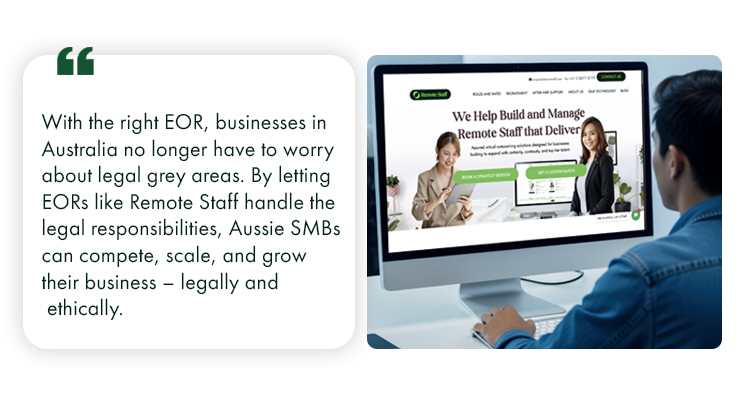
  • Mastering Local SEO: A Step-by-Step Guide for Australian Small Businesses

    Mastering Local SEO: A Step-by-Step Guide for Australian Small Businesses

    Businesses thrive on customer recall and referrals. Satisfied customers bring repeat business, which adds more to a company’s bottom line than one-off purchases. Hence, the need to make sure customers are happy with the service so they come back.

    You can market your business using traditional methods like print ads, outdoor advertising, and telemarketing. Alternatively, you can invest in digital marketing through search engine optimisation (SEO), social media, and email campaigns. 

    Due to the rise of artificial intelligence (AI), businesses are increasingly investing in digital marketing. In particular, there’s growing interest in local SEO, especially for small businesses operating in a specific city or locality.

    This article will explore some basic concepts of local SEO and explain why brick-and-mortar and service-area businesses in Australia can gain a significant competitive advantage in their local area by mastering it.

    Read on to know more. 

    Introduction: Why Local SEO Matters for Aussie SMBs

    According to the Australian Small Business and Family Enterprise Ombudsman (ASBFEO), small and medium-sized businesses (SMBs), with 0-19 employees, make up 97.2% of the country’s businesses. 

    However, a 2024 report found that only 42% of Australian local businesses have optimised for local search. This is a stark contrast to the approximately 81% of customers who begin their research online before purchasing products or services near them.

    Thus, to address this gap, a growing number of AU SMBs are including local SEO in their marketing strategies. 

    What is Local SEO and How Does It Work?

    Local SEO is the practice of optimising your online presence to attract more customers in your geographic area. 

    For example, if you have an accounting firm, you can optimise your online presence to appear in local search results and map-based searches whenever someone types in “accounting firms near me” or “accounting firms in (your city).”

    This feature is especially critical for brick-and-mortar and service-area businesses that rely on customers visiting their physical locations. Customers, both local and foreign, may not know where to go and will search online for options. This makes having an online presence essential for local businesses, as it ensures they’re among the first options potential customers see.

    basic seo terms

    Local SEO vs. Traditional SEO 

    SEO can seem intimidating, but it simply means optimising your company website to rank higher in search results. 

    Traditionally, brands have invested in their websites through keyword research, on-page and off-page optimisation, and content marketing to rank highly in national or even global search results. This allows Aussie stores, for example, to receive orders from other countries.

    Local SEO, on the other hand, is its organic, specialised counterpart. Instead of targeting international customers, local SEO for small businesses is designed for brick-and-mortar stores or service-area businesses that serve a local community. 

    It makes use of Google Business Profile (GBP) optimisation wherein you add your business name, phone number, opening hours, photos, and services. It also makes use of localised keywords that include a location, such as “real estate companies in Sydney” or “coffee shops near Byron Bay.”

    How Google Ranks Local Businesses

    There are approximately 16.4 billion searches on Google every day, and many of these are from people looking for products or services nearby. 

    With all these searches, Google ensures that relevant results reach the right audience by prioritising three main factors for local searches: relevance, distance, and prominence.

    • Relevance: How well a business matches a user’s search query;
    • Distance: How far a business is from the user’s current location; and
    • Prominence: How well-known and reputable a business is. 

    In short, if your business is relevant, nearby, and well-known, Google can show it to potential customers more readily.

    Key Benefits for Local Business Owners 

    Given its targeted nature, local SEO is a powerful advantage for local businesses, especially in areas where competitors are not yet fully utilising it.

    Increasing your local digital presence means: 

    • Attracting the right audience; 
    • Capturing the attention of customers who are already searching for what you offer; 
    • Building trust and credibility through online reviews; and 
    • Strategically competing with big brands through a more affordable form of marketing. 

    setting up google business profile

    Getting Started: Your Local SEO Checklist 

    While local SEO might seem complex, a virtual assistant skilled and/or specialising in SEO can make it easier for your business to appear in local search results and on Google Maps:

    #1. Set Up and Verify Your Google Business Profile

    Local SEO starts with your Google Business Profile, a free tool from Google that allows businesses to manage their online presence. It helps customers: 

    • Find businesses; 
    • Get contact information; and
    • Avail services. 

    Conversely, it also allows businesses to interact with their customers by responding to reviews, posting updates, and showcasing their products or services. 

    Here’s how you can set it up: 

    1. Go to Google Business Profile Manager and create your profile. 
    2. Verify your ownership either via phone call, email, or postcard. 
    3. Complete your profile by adding the following:
      • Business name, address, and phone number (NAP); 
      • Primary and secondary categories that describe your business; 
      • Business hours; 
      • High-quality photos of your storefront, products, team, and work; 
      • List of services and/or products offered; 
      • Business description; and 
      • Q&A section to answer common customer questions. 

    #2. Ensure Consistent NAP (Name, Address, Phone) Across Directories 

    It’s also important to have a consistent name, address, and phone number across all your online profiles. Google’s algorithm monitors these details to confirm the legitimacy and accuracy of your business information.

    After listing your business on key directories like Yelp, Yellow Pages, Facebook, Apple Maps, etc., ensure that your NAP are identical on all platforms, down to the smallest details. 

    For example, if you used “Street” instead of “St.” on one platform, it should be the same on all the others. Even minor inconsistencies can confuse search engines and hurt your local rankings. 

    #3. Optimise Website Pages with Local Keywords

    In addition, you also need to set up and optimise your website. 

    While your Google Business Profile (GBP) helps you appear in local search results, your website helps you rank in the organic search results below the local pack.

    So, how is this done? 

    Start by doing local keyword research. You need to think like your customer and figure out what they would type into Google to find your services, such as:


    “Best plumber in Perth” 

    “Dentist near me” 

    “Bookstore in Brisbane” 

    “Surf shop bear Bondi Beach”


    After keyword research, you should integrate these keywords into your website. Place them in key areas like blogs, landing pages, and service descriptions. You should also use them in your website’s title tags, meta descriptions, and H1 headings to improve your SEO.

    #4. Include Location-Specific Schema Markup 

    Local SEO also needs a schema markup, a type of code added to your website’s HTML to help search engines understand its content and context more effectively. 

    It tells Google exactly what your business is, where it is located, and how to get in touch. You can either manually add the code to your website or use a plugin or an online generator. Thus, unlike SEO optimisation, this requires some technical knowledge. 

    Because of this, many Australian small business owners hire outsourcing providers like Remote Staff to find skilled marketers or website developers to tap into their expertise.

    content marketing strategy

    Content Marketing for Local Reach 

    Local SEO doesn’t stop once you’ve created your Google Business Profile and optimised your website.

    Aside from filling out your Google Business Profile, you also need to build your reputation and authority in your community through a strong content marketing strategy. 

    Here’s how.

    Creating Localised Blog and Landing Pages

    Google’s algorithm prioritises businesses that are relevant, nearby, and prominent. To be prominent, your brand should consistently create valuable content, showcasing your expertise and how you engage with your local audience. 

    Your website content is what helps you rank high on the organic search results. This is usually done through: 

    • Localised Landing Pages – If your business serves multiple cities, you can create a specific landing page for each location. For example, a home services company in Sydney could create individual pages for “plumbing services in Bondi” and “plumbing services in Manly.” Each page should contain unique, high-quality content that addresses the specific needs of customers in that area, not just information duplicated from other pages. You can further enhance these pages by including testimonials from local customers and a locally-modified call to action.


    • Localised Blog Posts – Blogs are still a crucial part of SEO and an excellent way to provide value to your local community. The key is to publish the right kind of content. For instance, a café could write a blog post titled “The 5 Best Study Spots in Brisbane CBD,” or a real estate company could release a post about “What the New City Council Zoning Means for Homeowners in Perth.” These articles create valuable content that answers questions and strategically positions your business as a knowledgeable and engaged member of the community.

    Writing About Local Events, News, and Partnerships 

    In addition, highlighting your community involvement builds trust. Content that shows your local engagement tells both customers and search engines that you are a legitimate and valued local entity.

    • Community Involvement – If you sponsor a local little league game, participate in a community cleanup, or host a charity drive, write a blog post about it. Don’t forget to include photos and quotes from the participants.
    • Local News – Offering a unique perspective on a local issue is also a great way to create content. For example, a financial services company could share insights on local tax exemptions or how a new government budget will impact SMBs.
      This strategy demonstrates your expertise and connects your business to local conversations.
    • Collaborations – Moreover, content about partnerships is an excellent local SEO strategy because it helps both businesses reach a wider audience and build their network of local links. For example, a bakery partnering with a local coffee roaster can announce the collaboration on its blog. This is newsworthy content for the local community and can lead to a mutually beneficial exchange of backlinks and social media shares.

    Using Testimonials from Local Customers 

    Brick-and-mortar stores as well as service-area businesses rely heavily on word of mouth marketing and referrals. 

    However, you should also back this up with online reviews and testimonials by creating a dedicated page for them on your website or by incorporating them directly into your website content.

    • Dedicated Testimonials Page – Consider creating a dedicated “Testimonials” page on your website where customers can read positive feedback. To build trust and credibility, include the customer’s full name, suburb or city, and a photo (with their permission).
    • Embed Reviews and Ratings – In addition to creating a dedicated page, you can use widgets to embed recent reviews from your GBP or other platforms directly onto your website. This provides a live, dynamic feed of your reputation, which encourages new customers to trust your business.
    • Video Testimonials – Encourage happy customers to provide short video testimonials about your business. Video is highly engaging and is a compelling way to showcase your products or services. You can then embed these videos on your website’s home page, landing pages, or a dedicated “Success Stories” page.

    building online authority

    How to Build Local Citations and Backlinks 

    Building your online authority requires a combination of your business’s reputation, online mentions, and links from other websites. Together, these elements demonstrate your credibility, encouraging potential customers to learn more about what you offer:

    #1. Submit Your Info to Australian Business Directories

    It’s crucial to get your business listed on online directories. These listings, also known as citations, help Google’s algorithm confirm that your business is legitimate. The most prominent and widely-used business directories in Australia include: 

    • Yellow Pages 
    • TrueLocal 
    • Hotfrog 
    • Yelp 

    There are also local-specific directories tied to your city or neighbourhood, such as a local chamber of commerce or a community business association. 

    #2. Partner with Local Bloggers and Media

    A backlink is a link from one website to another. Backlinks are fundamental to SEO because they signal to search engines like Google that your content is credible, valuable, and trustworthy.

    But how do you get another website to feature yours? 

    • Offer Expert Insight or Guest Post – You can reach out to local media outlets or bloggers in your industry to offer an expert quote for an article they’re writing or suggest a guest post on a topic you know well. For example, a real estate company could write an article with simple tips on how to design a property to maximise light and space. Within that article, they can subtly link to their own products or services, directing readers back to their website. 
    • Become a Resource – Meanwhile, some businesses create a resource on their own websites that local bloggers or news sites will link to. For example, a news outlet reporting on energy efficiency might link to a business’s blog that features articles about green energy and energy conservation in Australia. In some cases, these business owners get interviewed or invited as resource speakers, which leads to them being featured in news articles and online magazines. These publications often link back to the business’s website, which helps with their online authority.

    #3. Sponsor Community Events or Charities 

    Since many SMBs are known and well-positioned in their communities, they often sponsor local events or charities. Sponsoring these gatherings is not only good for the community but can also be a valuable source of local backlinks.

    When you sponsor an event, your business name and website link are often featured on the event’s website. This creates a powerful, geographically relevant citation that helps Google’s algorithm see your business as a trusted and prominent local entity, leading to higher rankings and more customers.

    Therefore, when you provide sponsorship, be sure to ask for your business to be featured on their website with a link back to your homepage. This creates a win-win situation: local organisations get the support they need, and your business can systematically build its online reputation and authority.

    Leveraging Online Reviews for Local SEO 

    Online reviews can make or break your business. 

    They act as a powerful form of social proof that directly influences how your business is perceived, especially by Google’s local search algorithm. This is crucial because almost all customers now research products and services online before making a purchase.

    Encourage Customer Reviews on Google and Facebook 

    While small business owners often ask for feedback in person or through surveys, for local SEO, your main focus should be on getting reviews on your Google Business Profile. 

    Additionally, Facebook reviews are also highly valuable for social proof and building brand credibility. Here’s how:

    • Ask Directly – Ask customers directly for a review, either at the point of sale, via a follow-up email, or through a text message. 
    • Make It Easy – Make it as simple as possible for customers to leave a review. For instance, you can generate a direct review link from your GBP and share it on your receipts, website, email signature, and social media. 


    online reviews

    How to Respond to Positive and Negative Reviews 

    Once your Google Business Profile is open for reviews, be ready for both positive and negative comments. This is a normal and expected part of doing business and is important for both your customers and for Google’s algorithm.

    Responding to reviews shows that you are an engaged and attentive business owner. Regardless of what you receive, here’s how you can deal with them:

    • Positive Reviews – When you get a positive review, always thank the customer for their feedback. A simple “Thank you for your kind words, we appreciate your business” goes a long way. To make your response more authentic, mention the specific product or service they enjoyed, which also shows you’ve read and valued their comment. You can even strategically and naturally include a relevant keyword for SEO purposes without sounding forced or unnatural. 
    • Negative Reviews – It can be disheartening to read negative reviews, however, you can always look at it as an opportunity to improve. More importantly, this is where your professionalism comes into play.

      When responding, you have to:  

      • Stay calm and professional; 
      • Never respond emotionally or defensively; 
      • Apologise for their negative experience without invalidating their feelings; 
      • Offer to resolve the issue privately by providing an email or phone number; and 
      • Be transparent, especially if there was a mistake on your end. 

    Bad Reviews and the Legal Risks of “Review Gating” in Australia 

    Many businesses fear bad reviews, which leads them to delete negative comments on social media. Some take this to an extreme by using review gating, a practice where they only ask customers with positive experiences to leave a public review.

    For example, a business might send an email asking for feedback. If a customer rates them highly, they’re sent to a public review site like Google. If they give a low rating, they’re directed to a private feedback form instead. While this practice might seem clever, it is actually considered misleading and deceptive under Australian Consumer Law, and may be subject to legal actions. 

    The Australian Competition and Consumer Commission (ACCC) has made it clear that businesses must not encourage or ask for only positive reviews. The principle is simple: all customers, regardless of their experience, should have an equal opportunity to provide a public review.

    Tracking and Improving Your Local SEO Performance

    Once you build your local SEO, the work is still far from over. Like any other marketing strategy, you need to: 

    • Regularly track your performance; 
    • Identify areas for improvement; and 
    • Adapt your strategy. 

    Fortunately, there are many tools and software to help you. 

    Best Free Tools for Local SEO 

    Aside from your Google Business Profile, Google provides entrepreneurs with two powerful, free tools that are essential for local SEO.

    • Google Search Console – This shows you how your website is performing in search results, including which keywords you rank for and what position you hold. For local SEO, Search Console can reveal the geographically-modified searches that are driving traffic to your site, helping you refine your keyword strategy. It also alerts you to technical issues, such as broken links or mobile usability problems.
    • Google Analytics – On the other hand, Google Analytics tells you what people do on your site. It provides valuable insights like:
      • How long visitors stay on your site; 
      • Which pages they visit most often; and 
      • Where they are located.

    This tool is critical for local businesses, as it allows you to segment your audience by location. More importantly, it helps you understand if your local SEO efforts are attracting the right audience and if your website is effectively engaging them. 

    Local Rank Tracking Tools 

    To complement Google’s free SEO tools, you can also invest in some specialised local rank trackers which offer more detailed, localised data. These include: 

    • BrightLocal – BrightLocal is a comprehensive local SEO platform that allows you to monitor and improve local Google rankings for specific keywords in different locations. For example, you can see if you rank #1 for “plumber in Perth” and also monitor your ranking for “plumber in Sydney.”
    • Whitespark – Meanwhile, Whitespark’s local citation finder allows you to track your own rankings as well as those of your top competitors. This is a great tool for competitor analysis, as it helps you identify opportunities and refine your strategy to outrank them.

    When to Hire SEO Help

    While this guide provides many local SEO tips, planning and launching a full-scale strategy can be overwhelming and time-consuming for small business owners who’ve got other things to do. 

    Thus, many Australian entrepreneurs find it more productive to learn the basics and then delegate the planning and implementation, especially in the following instances: 

    • When the Work Gets Too Complex – You can start with the basics, like setting up your Google Business Profile. However, you may eventually need help with more technical tasks, such as website audits, implementing schema markup, or running sophisticated link-building campaigns.
    • When You Need to Scale – If you’re expanding to new locations or facing increased competition, it helps to have a specialist who can scale your efforts efficiently while you focus on core business functions. This is where outsourcing providers like Remote Staff come in. For over 17 years, Remote Staff has been helping Australian businesses with their marketing campaigns by providing skilled specialists in:
      • SEO writing
      • Web development
      • Digital marketing
      • Content marketing

    Moreover, these specialists can handle everything from keyword research to link-building campaigns. By delegating tasks remotely, you get expert help without the overhead costs that come with hiring a full-time employee, making it a cost-effective solution for growing business. 

    Common Local SEO Mistakes and How to Avoid Them 

    Local SEO can be challenging, especially when you’re just starting out. To help you navigate these challenges, here’s a list of the most common mistakes small business owners make and how to avoid them.

    #1. Ignoring Mobile Optimisation

    Historically, SEO was focused on desktop computers. However, with the boom of smartphones, a significant number of local searches, particularly those using “near me” or “nearby,” are now conducted on mobile devices. This shift to mobile-first search has made optimising for mobile devices a crucial part of any local SEO strategy.

    Because of this, businesses also have to focus on mobile optimisation. This means designing or updating their websites to be responsive, so they automatically adjust to fit any screen size, from a large desktop monitor to a small phone screen.

    In addition, you should focus on site speed, which can be improved by: 

    • Compressing images;
    • Using fast hosting; and 
    • Avoiding unnecessary code. 

    You can also use Google’s free Mobile-Friendly Test and PageSpeed Insights tools to check your website’s speed and performance and get actionable recommendations for improvement.

    duplicate listing

    #2. Duplicate Listings and Inconsistent Info 

    When businesses change their name or phone number, they often create new online profiles instead of updating the old ones. However, this approach often creates duplicate listings, where a business has conflicting information across different online directories.

    For example, a bakery called “Cakes by Marie” at 123 Main Street in Perth moves and rebrands as “Marie’s Bakery” at 456 Oak Avenue. Instead of updating the old listing on Google and other directories, the owner creates a completely new profile for “Marie’s Bakery.” This leaves two separate listings online, which can confuse both customers and search engines.

    Thus, it’s important to regularly audit your online presence by:

    • Searching for your business name and all its variations;
    • Reporting any duplicate listings to the platform they’re on so they can be removed or merged; and
    • Using a centralised platform to update all of your listings at once, ensuring your information is consistent everywhere.

    #3. Overlooking Negative Reviews 

    It can be tempting to delete or ignore negative reviews, but this can actually be more harmful to your business. Leaving a negative review unanswered can make your business appear unresponsive, uncaring, and untrustworthy.

    In fact, Google encourages business owners to respond to negative feedback as it’s an opportunity to address a customer’s concerns publicly. When handled correctly, it can potentially turn a negative experience into a positive one – and also help cultivate trust.

    How Small Businesses in Australia Can Benefit from Local SEO 

    Small businesses are the heart of the Australian economy. 

    To support them, the AU government provides various opportunities for growth. However, it’s also necessary for SMBs to invest in strategic marketing, such as local SEO.

    The Competitive Edge Local SEO Offers 

    Small businesses can’t match the massive marketing budgets of large corporations. However, local SEO allows them to appear at the top of search results and in the crucial Google Maps “map pack,” often outranking much larger competitors.

    This is because Google’s algorithm prioritises a small cafe’s location and positive local reviews over a large national chain’s overall website authority. By mastering local SEO, your business can capture the attention of nearby customers who are ready to make a purchase.

    Local SEO as a Long-Term Growth Strategy 

    It’s also important to remember that local SEO isn’t a one-time campaign. Rather, it’s a continuous investment in your business’s future. 

    The work you put in today will determine your search rankings in the weeks and months to come, making it an asset that pays dividends for years. As consumer behavior continues to shift toward online research and the use of artificial intelligence, a business with a strong online presence is well-equipped to handle the change. 

    Many of the most impactful tasks – like optimising your Google Business Profile and responding to reviews – are completely free. In other words, local SEO is a cost-effective marketing strategy, making it ideal for small businesses. 

    Conclusion: Boost Your Local Visibility with Smart SEO 

    Running a business requires constant innovation and adaptation while keeping a close eye on your marketing expenses. This is especially true for small business owners, who must find the most cost-effective ways to maximise every revenue opportunity.

    Thanks to local SEO, this can all be a reality. 

    You can get your business in front of customers who are ready to buy, whether they are a local resident or a foreign tourist, all without a massive budget for TV ads. You just have to:

    • Set up your Google Business Profile; 
    • Optimise your website; 
    • Add some keywords; 
    • Respond to reviews, and
    • Consistently produce relevant and valuable content.

    But if managing these tasks feels overwhelming, don’t worry. 

    Many successful Australian business owners learn the basic SEO terms and then partner with Remote Staff for their staffing needs. This way, you can continue building your business offline while a remote worker ensures that your hard work is visible online, especially in search results.

    Ready to set up your Google Business Profile and take your business to the top of search results? Call us today or request a call back now

  • How GPT’s Share Feature Exposed The Secrets of Businesses and Individuals (And What to Do If You’re One of Them)

    How GPT’s Share Feature Exposed The Secrets of Businesses and Individuals (And What to Do If You’re One of Them)

    OpenAI’s text-generating AI chatbot, ChatGPT, took the world by storm when it was publicly launched in 2022. 

    You want a good caption? Ask ChatGPT.
    Need advice? Ask ChatGPT.
    Looking for tips on how to write a resignation letter? Ask ChatGPT. 

    The platform quickly became so mainstream that most users mindlessly reach for it when drawing up everything from business decisions and expansion plans to sorting out far more personal concerns.

    However, a new feature may make users think twice. 

    Recently, over 100,000 private chats were leaked through GPT’s share feature, exposing conversations containing both confidential business information (e.g., plans for upcoming product innovation, marketing plans, customer records, etc.) and even private data from what users thought were private chats. 

    So, in this article, we’ll look at what and why it happened — and how AI users can protect their business and personal information.

    GPT’s Controversial Searchability Feature Explained 

    It all started when OpenAI added a share button so users can pass on chats quickly. 

    A developer, for example, could ask ChatGPT for cleaner code and share it with the team. Instead of copy-pasting, he just hits the upward arrow icon, and ChatGPT makes a link he can send – an easier way to spread knowledge or the right prompts and output.

    But what if users shared confidential information – without knowing it could reach the wrong people or the whole internet? 

    Unintended Consequences for Users and Businesses 

    Here’s another complication: some people treat ChatGPT as a safe space, asking about everything — from relationship advice and family issues to marketing strategies and product development. And for a while, these conversations initially remained within the app.

    Unfortunately, not everyone realised that using the share feature would make their chats searchable on Google and visible to anyone online. Many assumed the link would remain private and only accessible to those they shared it with directly.

    As a result, many business owners, employees, and individuals ended up at risk of sharing more than they intended.

    Why It Sparked Widespread Privacy Concerns 

    The share feature was designed to make AI-generated conversations more accessible and to prevent the same team from having to figure out prompts when someone already figured out the best way to get desired output – and also so distributed teams could pick up where they left off more easily.

    By allowing users to share specific conversations, OpenAI aimed to encourage people to spread: 

    • Helpful responses; 
    • Coding solutions; 
    • Creative prompts; 
    • Research summaries; and 
    • Other important matters. 

    But what OpenAI did not fully consider was that users would see ChatGPT as a personal space — used for everything from writing emails to talking about mental health. 

    Sometimes, users also shared sensitive details like birthdays, addresses, names, and other private information that shouldn’t be made public. Thus, when news broke that ChatGPT conversations could be found online, users went into full panic mode. 

    The worry wasn’t just about what had already been leaked, but what could be leaked in the future, especially in the event of breaches, cyberattacks, or hacking. 

    How GPT’s Searchability Might Put Your Business at Risk 

    More businesses are now using AI to automate tasks. 

    With the right prompts, they can cut down on manual work and make their processes faster and more efficient. 

    However, this also means entering business details like company data, sales figures, management decisions, and other strategic information that may be private and confidential.

    Now, how do leaks like those caused by GPT’s controversial searchability feature affect businesses, particularly Down Under?

    Data Privacy and Confidentiality Risks 

    Many employees, even business owners, turn to ChatGPT to: 

    • Write emails; 
    • Generate client proposals; 
    • Create reports; or 
    • Plan campaigns. 

    While it’s convenient, this can be risky. It raises concerns not just about originality, but also about accidentally including sensitive or internal data in the chat.

    For instance, you might inadvertently include: 

    • Client names; 
    • Project timelines; 
    • Pricing structures; 
    • Employee details; and
    • Log-in credentials. 

    As a result, internal discussions meant only for the team might end up accessible to competitors, clients, or anyone on the internet who looks up related keywords on a search engine.

    Ghibli-fication of photos

    Impact on Intellectual Property and Proprietary Information 

    Aside from privacy and confidentiality, businesses can also face intellectual property (IP) issues, especially when they use ChatGPT for: 

    • Idea generation;
    • Product development input; or
    • Early drafts of branding materials.

    The Ghibli-fication of photos in early 2025, for example, raised questions about whether AI-generated art is a tribute to its original creators or a copyright violation. 

    As a result, Western countries like Denmark have started drafting laws to protect their citizens’ likeness – their face, voice, and body – from potential AI misuse.

    And Australia might follow suit. 

    Potential Regulatory and Compliance Issues in Australia 

    While Australia doesn’t have a specific law on AI abuse yet, it already has rules in place to deal with related data breaches.

    Under the Privacy Act of 1988, businesses that collect, use, or store personal data must protect that information. So if client data or other personal details are accidentally leaked through GPT chats, the company could still be held legally responsible.

    Moreover, the AU government also has a mandatory rule called the Notifiable Data Breaches (NDB) scheme. It requires businesses to inform affected individuals and the Office of the Australian Information Commissioner (OAIC) if a serious data breach occurs. 

    Given these measures, Australian businesses must treat AI use with the same caution they apply to other platforms and digital tools. Otherwise, a mistakenly shared conversation could trigger investigations, penalties, and public backlash. 

    Public Backlash and Industry Reactions 

    Unsurprisingly, OpenAI faced strong backlash from the public, especially from professionals and business owners.

    What was once seen as a powerful productivity tool quickly became a potential privacy risk. Users grew concerned about what they had asked GPT to generate — especially those who had treated the chatbot as a safe space for their personal and professional concerns. 

    User Concerns Around Personal and Business Data Security 

    For individuals, the accidental exposure of sensitive information can be problematic as many share their: 

    • Names; 
    • Addresses; 
    • Health issues; or 
    • Legal concerns. 

    Meanwhile, businesses are worried about: 

    • Client data; 
    • Confidential strategies; and 
    • Intellectual property. 

    Either way, the recent fiasco over the searchability feature had many users questioning whether AI tools like ChatGPT are truly safe and reliable. 

    Response from AI Developers and Regulators 

    Fortunately, OpenAI and other AI companies were quick to respond. 

    OpenAI updated the share feature by adding clearer warnings and giving users the option to turn it off completely. They also added privacy settings that let users disable chat history or use temporary chats.

    Meanwhile, regulators in Australia and other countries have started paying closer attention, sparking discussions on AI transparency, data protection, and user consent. They’re also considering updates to existing privacy laws to address AI-specific risks.

    Steps Businesses Are Taking to Mitigate Risks 

    On the other hand, businesses are beginning to take AI use more seriously. They have started to acknowledge the importance of clear rules and guidelines on what information should and shouldn’t be shared with AI. 

    Instead of banning ChatGPT or AI completely, companies are: 

    • Training staff or virtual assistant not to enter client data, personal details, or business secrets into AI tools;
    • Using AI platforms designed for businesses with stronger privacy and data controls;
    • Involving legal teams to check contracts and ensure data law compliance; and
    • Strengthening cybersecurity to protect devices and prevent security risks. 

    secretly recorded conversations

    Can Your GPT History Be Used as Court Evidence? 

    Courts are strict about what counts as evidence. 

    In many jurisdictions, for example, secretly recorded conversations cannot be used as evidence. Moreover, documents must also be properly identified and confirmed before a court will accept their content.

    However, recently, courts in various countries, like the Philippines, have ruled that chat histories can be used as evidence. The same rule applies to Australian courts, subject to certain conditions.

    Thus, it begs the question: Do ChatGPT conversations fall into this category?

    Legal Precedents Around Digital Communications 

    To be considered in a decision, digital evidence must be: 

    • Relevant – The content must be directly related to the case;
    • Authentic – It must be proven that the content is genuine and unaltered; and
    • Admissible – It must not be illegally obtained or prohibited under the rules of evidence. 

    In many jurisdictions, chat histories from messaging platforms like WhatsApp, Messenger, and Slack, have already been presented and accepted. 

    Thus, there’s a strong possibility that AI-generated chats – including those with GPT – can also be used as evidence if properly documented and authenticated. 

    How Stored AI Chat Data Could Be Subpoenaed 

    Courts can issue subpoenas — legal orders that require a person to appear in court or provide documents, or face legal consequences.

    In the case of GPT, courts can issue subpoenas to legally request users to share their chat history in situations such as:

    • Employment Cases – Where an employee used GPT to draft sensitive emails or discuss confidential issues; 
    • Defamation or Harassment Cases – Where a user may have asked the AI to generate harmful content; or
    • Intellectual Property Disputes – Where AI chats document early versions of ideas or inventions. 

    In these situations, a subpoena could request: 

    • Screenshots or exports of the chat history from the user; 
    • Records from the AI platform; and/or
    • Testimony verifying that the chat logs are accurate and unaltered. 

    Implications for Professional or Official Use of GPT Tools 

    Because of these changes, businesses need to be careful with AI-generated content – even with something as simple as an AI-written email. The risks may include:

    • Data Leaks – If an employee enters confidential client data into GPT and that chat is later shared, the company could be held liable for data privacy violations. 
    • IP Exposure – Using GPT for idea generation could unintentionally leak trade secrets or create disputes about originality. 
    • Inconsistent Messaging – Left unchecked, AI-generated drafts might contradict with official company policies or public statements. 

    possible risks AI

    Best Practices for Businesses Using GPT and Similar AI Tools 

    Despite the possible risks, AI remains a powerful (and indispensable) tool for improving workflows. However, to ensure efficiency and security, businesses need to take certain precautions.

    Internal Guidelines for Safe AI Usage

    Companies should set clear, company-wide rules so employees know what’s allowed, what’s risky, and what to avoid when using tools like GPT:

    • Data Restrictions – Prohibit the input of:
      • Personal data (names, phone numbers, addresses); 
      • Client information; 
      • Proprietary strategies; and 
      • Other confidential content.
    • Tool Access – Specify which AI tools are allowed and with what settings (e.g., chat history turned off). 
    • Approved Use Cases – Clearly define what AI can be used for, such as: 
      • Content drafting; 
      • Summarising documents; or 
      • Language translation.

    Conversely, it must also outline what tasks should remain outside AI’s purview, like: 

    • Legal advice; 
    • Client communications; or 
    • Financial forecasting.
    • Data Storage – Advise employees to avoid downloading sensitive information to their devices. Instead, these should remain in secure company databases. 
    • Sharing and Collaboration – Set guidelines on what content can be shared or uploaded on AI tools, whether they come with a search feature or not. 

    Employee Training on Data Security 

    In addition to setting guidelines, companies should regularly  train employees so they clearly understand and remember the rules:

    • The Basics of AI – Explain how tools like GPT work, what happens to the data shared, and the difference between temporary and saved chats. 
    • Data Classification – Help staff identify what types of data are considered sensitive, confidential, or restricted under laws like the Privacy Act of 1988. 
    • Case Studies – Share real-world examples of data leaks or lawsuits involving AI misuse and abuse to emphasise the risks and raise awareness. 
    • Safe Prompting Techniques – Teach employees how to phrase prompts without revealing private or identifying information. 
    • Incident Reporting – Lastly, provide a clear process for what to do if someone accidentally inputs sensitive data into an AI tool. 

    Reviewing AI Provider Terms and Privacy Policies 

    It’s important for businesses to carefully review the terms of service, data use policies, and privacy agreements of the AI provider. 

    Hence, you should be able to answer these questions when evaluating the tool: 

    • Does the provider store your inputs or use them to train their models?
    • Where is the data stored?
    • Can you turn off history or delete past chats?
    • Is the provider compliant with data regulations?
    • Is there a business or enterprise plan? 

    It’s also a good idea to check in with your legal team or data protection officer before using AI tools to handle sensitive business information.

    data

    Frequently Asked Questions (FAQs) 

    Here are some of the frequently asked questions about GPT and its security.

    #1. Does GPT Keep My Data Forever? 

    GPT does not keep your data forever by default. However, your data may be stored temporarily or used to improve the model unless you opt out. 

    If chat history is turned on, your conversations are saved on your account and may be reviewed. OpenAI keeps conversations for a limited time, typically for 30 days, for safety checks. After that, they are deleted unless flagged. 

    However, you can opt out of this by disabling chat history in settings. This creates “temporary chats” that are not stored in your history or used to train models. 

    #2. How Can I Delete My GPT History? 

    You can delete your entire ChatGPT history by following these steps: 

    1. Sign in to your account; 
    2. Click your avatar or username; 
    3. Go to Settings > Data Controls; 
    4. Click “Clear Conversations” or “Delete All Chats”; and 
    5. Confirm by clicking “Confirm deletion.” 

    If you only want to delete a single conversation, just: 

    1. Open the specific chat in the sidebar; 
    2. Click the “Trash/Delete” icon next to it; and
    3. Confirm deletion when prompted.

    #3. Is Using GPT in the Workplace Legally Safe? 

    It depends on your usage. It’s generally safe when: 

    • You’re using GPT for general research; 
    • No sensitive, personal, or confidential data is shared; and 
    • You consider company policies and privacy laws. 

    However, you should avoid:

    • Inputting confidential client or employee info or any content covered by NDAs; 
    • Encoding business strategies, financial info, or product plans; 
    • Generating content based on copyrighted materials.

    #4. What Industries Are Most At Risk From AI Data Issues?

    Industries that deal with personal, sensitive, or confidential data face the most risk, since even small data leaks or misuse can cause legal, financial, or reputation problems. These include: 

    • Healthcare 
    • Legal Services 
    • Finance and Banking 
    • Technology
    • Research and Development 
    • Marketing and Advertising
    • Education 
    • E-Commerce 
    • Government 

    Hence, these sectors must approach AI tools with strict safeguards, privacy controls, and targeted training to avoid serious data risks. 

    Conclusion: Balancing Innovation With Privacy and Legal Awareness

    Technology is quickly evolving, and AI tools are only getting better. 

    So the real question isn’t whether to use AI, but how to use it responsibly – without running into legal, ethical, or privacy problems. Therefore, businesses should see GPT-based tools not just as smart text generators, but as data processors that can store, learn from, and possibly leak the information users provide.

    However, instead of fearing or banning AI, the smarter approach is to train responsible and informed users who can use it to improve workflows safely. Read up on current laws and regulations about AI misuse so your business can take proactive steps. 

    At the end of the day, embracing technology and its innovations offers more benefits – especially since AI is here to stay. 

    Keep your business up to date with the latest tech with help from our dedicated remote professionals. Call us today or request a callback now.