Author: Vaune Cura

  • What Is the Same Job Same Pay Bill: Labour Hire Changes in Australia

    What Is the Same Job Same Pay Bill: Labour Hire Changes in Australia

    Australian SMEs need to hire workers: the understatement of the decade. A phrase that hits closer to home these days and will keep knocking on doors in the coming years.

    The Same Job Same Pay legislation isn’t waiting in the wings, but has already flown in. For business owners, it just made hiring locally more complicated than it used to be.

    SJSP reforms have implemented increases for casual and labour hire workers. That’s a good thing, just not for companies working within a certain budgeting scheme.

    Then there’s Payday Super on top of it, too.

    What does SJSP change? Should you be worried? How will it affect hybrid or remote teams?

    How is offshoring turning into the workaround, but much more than that, for AU SMBs?

    What does Same Job Same Pay mean?

    Key Takeaway // Quick Answer

    Same Job, Same Pay is an Australian workplace law that can require labour hire workers to receive at least the same pay they would earn if they were directly employed by the host business under its enterprise agreement. It does not automatically apply to every labour hire worker or arrangement; the Fair Work Commission must make a Regulated Labour Hire Arrangement Order before the requirement takes effect.

    SJSP, or Same Job, Same Pay, requires labour hire workers to receive at least the pay rate they would get if they were directly employed under the host business’s enterprise agreement. But there are intricacies to it, in that this is true only when a qualifying Fair Work Commission order applies.

    In effect, this immediately implies that the rules are now different for businesses relying on labour hire. The “cheaper labour-hire” pay rate is no longer allowed in certain circumstances, since labour workers doing the same work as employees under the host’s enterprise or employee pay agreement are to be paid equal pay. The same wage.

    Some numbers to note in different sectors after SJSP:

    • Kmart’s Lytton distribution centre: some casual warehouse workers got an $8 to $12 bump in their hourly pay
    • Queensland meatworks: labour hire workers get 25% pay increases under the same reforms

    Meanwhile, superannuation also rose. The Superannuation Guarantee went from 11.5% to 12% on 1 July 2025. Another cost on top of wages.

    Target the exact phrases people search: “what is same job same pay Australia,” “same job same pay explained.”

    [rcb_show_form]

    Where Did Same Job, Same Pay Come From?

    It’s an offshoot of changes made to Australia’s workplace laws under the Fair Work Legislation Amendment (Closing Loopholes) Act. It’s also an offshoot of questions that needed answering: “Can a company pay different wages for the same job?” “Is it ilegal to pay less for the same job?”

    The change in Australia’s workplace rules ran in two stages between late 2023 and early 2024.

    How Does Same Job Same Pay Work: The Process

    A labour hire worker under the RLHAO (Regulated Labour Hire Arrangement Order) can ask to be paid the same as an employee doing the same job for the host business.

    Since SJSP applies specifically to labour hire arrangements, it covers workers supplied by an agency who work inside a host business, on the host’s site, and under the host’s direction.

    Get Matched AI Recruiter Banner

    What Same Job Same Pay Doesn’t Include

    It doesn’t automatically apply to every way a business can bring someone in. Not for every type of work arrangement. What falls within its reach?

    Where a Fair Work Commission order is made and specific conditions are met. Here are the sectors almost immediately hit:

    • Mining
    • Aviation
    • Warehousing
    • Meat processing
    • Construction
    • Civil contracting (Inside Construction reports a wave of enterprise agreement reviews across major contractors)

    Which Businesses Does It Apply To?

    Where a business has labour hire workers on site. And that the same workers are doing the same work as staff who are directly employed and covered by an enterprise agreement.

    Is Same Job Same Pay the Same as Equal Salary for Equal Work?

    No. Equal Pay for Equal Work has been a long-standing anti-discrimination tenet that has to do with gender and workplace equity, and clarifying grey areas in labor-hire policies (that may be used to exploit workers in Australia).

    Does Same Job Same Pay Apply to Small Business?

    Key Takeaway / Quick Answer

    It doesn’t if small operators don’t have an enterprise agreement in place, or don’t use labour hire. They’re outside the direct scope of SJSP.

    Granted, higher wages across the industry can still make hiring more expensive.

    How Will Same Job Same Pay Change in 2026?

    How Will Same Job Same Pay Change in 2026

    The Closing Loopholes Act is currently in review (by former Fair Work Commission member Susan Booth). For reference, these “loopholes” are as follows:

    The first Closing Loopholes Act introduced the Same Job Same Pay policy labour-hire rules.

    Second Act dealt with other workplace issues, such as casual employment, the right to disconnect after work, independent contractors, and protections for gig workers.

    Will Labor Costs Increase Because of Same Job Same Pay?

    Apart from the increases implied by SJSP, throw in superannuation, payroll tax, workers’ compensation, and leave entitlements, and a $90,000 hire will cost somewhere around $112,000 to $121,000 during the first year.

    Whatever you see on job or salary ads and websites, and the cost calculated by reality, tells you that that’s a 25% to 35% increase. Most of it stems from three sources:

    Cost component
    What it adds

    Superannuation Guarantee
    12% of ordinary earnings (effective 1 July 2025)

    Payroll tax
    4.85%–6.85% above the state threshold, varies by state

    Workers’ compensation and leave entitlements
    Mandatory, calculated on top of base salary

    Not “new” news. It just so happens that a fourth factor as come into play, impacting businesses that are reliant on labour hire.

    Another Complication in Labour Hiring

    We’ve discussed the rising cost. The other issue SMEs are facing due to SJSP is inflexibility. Rather, an inflexibility between paying enterprise agreement rates for temporary work or restructuring how they staff those roles altogether (The Recruitment, Consulting & Staffing Association).

    Illustration: Before a Brisbane construction subcontractor could bring in three labour hire workers for six months, they now need to check whether the workers need to be paid under the enterprise agreement or not. The old labour hire rate’s no longer relevant.

    If so, the higher rate has to be factored into the job somehow. The company will have to make the difference, whether that means taking the hit on profit or finding another way to cover the work.

    operational excellence

    Unsure Where to Start?

    Find the Role That Owns Support Work.

    Hire a Remote Staff specialist to support operations while you focus on scaling your core business vision.

    Trusted by 3,000+ businesses to scale remotely since 2007.

    What Roles Are Australian SMEs Moving Offshore?

    Businesses are finally answering this question honestly: Does this, or that work need to happen on-site? Within Australia?

    Roles tied to physical presence, from direct client contact to on-site coordination, or roles that require hands-on work with machinery and equipment, are definitely, and ought to be, local.

    All other tasks, especially those that are platform-dependent and digitally-driven? They’re transferred offshore to specialists who don’t need to be physically present to do their jobs well.

    Roles Australian SMEs Are Moving Offshore

    • Bookkeeping and financial reconciliation
    • Administrative and executive support
    • Customer service
    • Digital marketing execution (content, creatives, campaign management, ad support)
    • Software engineers, graphic designers
    • Data entry and back-office processing

    Now? AU SMBs are rushing to outsource even roles that require specific skill sets:

    • Estimators
    • Engineers
    • Legal staff
    • Project managers
    • Supply chain coordinators
    • Business Development Managers

    As long as they can be done on a computer, they’re being offshored. Confidently and reliably.

    These are the functions where output or productivity can be measured regardless of where the person is. Needless to say, they’re often the ones offshored first.

    How Remote Staff Helps AU SMEs Manage Rising Hiring Costs

    Same Job, Same Pay applies to labour hire arrangements under Australian jurisdiction. This legislation doesn’t apply to offshore staffing, since the latter operates under a different framework entirely.

    That doesn’t mean offshore hiring is risk-free by default. That’s why businesses are partnering with Remote Staff. We’ve been supporting Australian businesses through reliable, sustainable staffing. Candidates aren’t only experienced. They’re able to adapt to your operations, like they’re a part of your team.

    At the same time, we help you with compliance. That way, you don’t miss anything when outsourcing professionals. Payroll, admin tasks, and onboarding are also on us, for a genuinely seamless outsourcing experience.

    We also want to support you on the compliance side of your operations. Here’s a breakdown of Modern Slavery Australia and Payday Super Rules Guide.

    FAQs


    How much does it cost to hire someone in Australia in 2026?

    Base salary is at 70% to 75% of the real cost. Add another 25% to 35% for Superannuation (12%), payroll tax, workers’ compensation, and leave entitlements. To give it a number, a $90,000 base hire actually totals to around $112,000 to $121,000 during the first year.

    When does Same Job Same Pay Start? (When did Same Job, Same Pay come into effect?)

    The rules became available in December 2023, but the first orders only really took effect on November 1, 2024. Now, former Fair Work Commission member Susan Booth is reviewing the Closing Loopholes laws. Her draft report ia due on 15 May 2026 and the final report is expected by 15 June 2026.

    How do I know if Same Job, Same Pay applies to my business?

    The rule is aimed at businesses using labour hire workers who are doing the same kind of work as employees covered by the business’s enterprise agreement. Small businesses or any business that don’t have labour hire arrangements are excluded.

    Is offshore staffing affected by Same Job, Same Pay?

    No. Same Job, Same Pay applies to labour hire arrangements under the Fair Work Act 2009. That means its reach is only over work performed within Australia. Though how the engagement is structured is still important, for other compliance reasons.

    Which industries are most affected by the Same Job, Same Pay reforms?

    Mining, aviation, warehousing, meat processing, and construction have applied the most pay adjustments so far. Kmart’s Lytton distribution centre raised casual warehouse pay by $8 to $12 an hour. Queensland meatworks recorded 25% pay increases for labour hire staff under the SJSP reforms.

    Same Job, Same Pay, Different Conclusion

    You have a local team. If you’re working within a budget where hiring doesn’t take the cake, you know bringing in more local professionals isn’t the best decision. But you need to grow. Your workforce needs to grow.

    So bypass the legalities of SJSP Australia the legal way: look offshore. Outsource the roles you need, and keep your strategy, finances, and elsewhere in tact. All while still pursuing the goal of growth.

    Find your offshore professionals now. Call us or Request a Callback.

    ↑ Back to Top

  • What Is Tree Change & Regional Migration Australia: Higher Demand for Staffing Outside Cities

    What Is Tree Change & Regional Migration Australia: Higher Demand for Staffing Outside Cities

    More and more people are moving from Australia’s capital cities to regional towns than the other way around. The Movers Index pins that number at nearly 30% more, and up from 26% in the previous comparable period. They’re calling it Tree Change.

    What is tree change? And what is this regional migration Australia’s trekking toward?

    This was once a pandemic and a post-pandemic oddity of an occurrence. But no longer. It’s becoming a recurring demographic and migration pattern.

    Are you among those making the move? Do you run a business in regional Australia and you’ve been given the heads-up to absorb the incoming population? Either that, or you’re only now reading about it, and you’re getting ready.

    What does Tree Change mean for your business, and what does its acceleration have to do with staffing in towns now welcoming this population influx?

    What Is a Tree Change in Australia?

    Key Takeaway // Quick Answer

    A tree change in Australia means moving from a capital city or urban area to a regional or rural community, usually in search of more space, lower living costs, and a different pace of life. It’s often associated with leaving the city for a smaller town or regional centre, rather than moving somewhere completely remote.

    What Does Tree Change Mean in Australia?

    Tree Change is a coined phrase that means relocating from a capital city or urban area to a regional or rural setting. Reasons can include anything from affordability to a shift from a fast- to slow-paced lifestyle, from business or financial practicality to something as simple as a change of scenery.

    “Tree” and “change” because it’s a relocation from a concrete “jungle” to one where jungle grows actual trees, and much, much more of them. Where there are more canopies than high-rises and grey lanes.

    Not Necessarily Off-Grid

    This doesn’t mean resettling to some obscure town where the population’s so small, everyone knows each other by name. Although this does happen, and it’s becoming quite the attractive option for Aussies who now want a simpler, quieter, away-from-it-all kind of life.

    What tree change spans is everything from a commuter-belt regional centre, whether it’s right inside a capital or an hour away from it, to a genuinely rural town hours away.

    What is the difference between tree change and sea change?

    Key Takeaway / Quick Answer

    A tree change means moving from the city to a regional or rural area for more space, a quieter pace, or a different way of life. A sea change is similar, but the move is specifically to a coastal area, usually for the beach, climate, and seaside lifestyle. In short: tree change = city to the country; sea change = city to the coast.

    Is Tree Change Still Happening in 2026, or Did It Fade After COVID?

    Yes, it’s still happening. It faded shortly after COVID, before picking up again.

    The March 2026 Numbers

    The Regional Movers Index for that quarter came in as the strongest since tracking started back in 2021:

    • Up 20.1% on the December 2025 quarter
    • Up 4.7% compared to the same time last year
    • For every person moving back into a capital city, almost 30% more made the opposite move
    • Sydney alone accounted for 55% of everyone who left a capital city that quarter

    Given what rent looks like in Sydney right now, the last bullet point above shouldn’t come as a surprise.

    [rcb_show_form]

    A Growing, Constant Momentum

    Back in September 2025, capital-to-region moves were already running 26% ahead of the reverse. But some reporting from around that time called it a slowdown, even claiming it had dropped to its lowest point since COVID.

    Then March 2026 landed and beat every previous quarter on record.

    So which version is true? Both, really. Tree change has quiet stretches, and it has surges. What matters is the direction over the long run, and that direction has been pointing upward for years now.

    Did You Know?

    The term “tree change” has been around longer than most think, and has been used decades before it became more prominent during COVID and after. Thus, marking it as something more than a pandemic-born trend or a short-lived movement.

    One More Number That Backs This Up

    Close to one in three Australians say they’re planning to buy, invest in, or rent something in a regional area, according to Westpac’s Home Ownership Report.

    A third of the country’s actively thinking about a life outside the capitals.

    If you’ve been working off the assumption that tree change was a pandemic thing that’s since cooled off, the data says otherwise. It built momentum, and 2026 is the strongest proof of that yet.

    Why Are Australians Leaving Sydney and Other Capital Cities? (The Regional Move Boom Today)

    Why Are Australians Leaving Sydney and Other Capital Cities in Regional Migration Australia and Tree Change

    Housing costs are at the top of most of the whys.

    More than half of everyone leaving Australia’s capital cities came from Sydney alone: 55%, as of March 2026. Considering what renters are paying in Australia’s most populous city, it’s really not much of a surprise. The same is true of the rest of the big cities

    • Sydney: AUD$824/week in rent
    • Melbourne: AUD$675/week in rent
    • Brisbane: AUD$726.75/week (about AUD$725 to 730/week) in rent

    Australians are now stashing away at least 33.4% of their pre-tax income for rent, nationally. The threshold’s 30%, which defines “rental stress.” One can only imagine how “stressed” big-city dwellers are at present.

    Not to mention how, on top of that, household budgets are absorbing somewhere around $176 in cost of living, additionally. Higher, once more, than in previous years. And cutting spending’s not doing much to ease the strain on families or businesses.

    Regional Property Costs Meaningfully Less

    Here are a few examples:

    • Aberdeen, NSW Hunter Valley: median house price around $495,000
    • Seymour, VIC: median house price around $455,000
    • Atherton, QLD: median house price around $466,000

    A fraction of what the same budget gets you in Sydney or Melbourne.

    What Do Tree Changers Want? (Not Just Rent Prices and Lifestyle)

    Australia wasn’t quick to adopt remote work during COVID. But it has been among the strongest to do so since. Remote and hybrid work diminished the need to live near or inside a capital city in order to be as close to offices as possible. A company or site based in Sydney or Melbourne will have employee addresses away from the city centre, or even outside the city border.

    Trading Rush Hours For More Grounded Living

    Lifestyle is consistently a reason for the migration. Too much traffic. Too much noise. The daily grind and rushing to and fro. So many people and so many things happening all around.

    The opposite, which has to do with quality of life and the green, quiet appeal of regional living, along with stronger community ties, is luring more people out of metropolitan hubs.

    Cost is usually the most important reason, followed by the pace of everyday living. The latter, the more meaningful, lasting motivation.

    Illustration: Tessa’s an owner of a small marketing consultancy in Sydney’s inner west. After 10 years, she’s ready to move their headquarters; rent has doubled in three years. Not just office space, but residential, too. Three of her five staff have asked for hybrid work schedules, since they’ve moved out of Sydney to find cheaper residential spaces.

    She scouted around and did the math, finally deciding on Bendigo as their new main operations hub.

    operational excellence

    Unsure Where to Start?

    Find the Role That Owns Support Work.

    Hire a Remote Staff specialist to support operations while you focus on scaling your core business vision.

    Trusted by 3,000+ businesses to scale remotely since 2007.

    Which Australian States Are People Moving To?

    Top Regional Migration Hotspots

    Once again, the golden rays are on the Sunshine Coast, the coastal region in southeast Queensland. Net migration here has increased, and continues to increase, taking the top spot away from Greater Geelong a year prior. Both remain the two most consistently popular destinations for migration.

    But the fastest growth isn’t happening in the places you’d expect:

    Region
    State
    Growth Figure

    East Pilbara
    WA
    Up 311% annually, the largest increase of any tracked region

    Albury
    NSW
    16-fold increase in net migration from capital cities, FY2024-25

    Hinchinbrook
    QLD
    Among the five fastest-growing migration destinations nationally

    Murrindindi
    VIC
    Among the five fastest-growing migration destinations nationally

    Greater Shepparton
    VIC
    Among the five fastest-growing migration destinations nationally

    Kalgoorlie
    WA
    Dwelling values up 7.6% in a single quarter

    Wagga Wagga
    NSW
    Highest-performing individual property market nationally: dwelling values up 8.1% in the quarter, 14.9% annually, median price $665,026

    Queensland’s share of Australians moving from capital cities to regional areas grew from 19% in the June 2024 quarter to 28% in the June 2025 quarter. It’s the second most popular destination behind New South Wales at 32%.

    Home prices in regional Western Australia rose, inevitably, and faster than anywhere else in the country:

    6.1% higher in just three months.

    Movers Are Noticing the Migration, Too

    Movers or moving companies are realigning their routes as they anticipate wide regional relocations other than the famous three: Sunshine Coast, Greater Geelong, Lake Macquarie (Regional Australia Institute).

    The biggest percentage increases are coming from smaller regional areas like East Pilbara and Albury, which aren’t the places that used to top the list in previous decades.

    Direct Channel

    Have questions? Drop our team a line anytime.

    Copy Email:inquiry@remotestaff.com

    Is Tree Change Only for Retirees and Baby Boomers? Who Are Tree Changers?

    This is the common assumption, and it’s, in fact, a misconception. Here’s what the data shows about who’s relocating out of capital cities in Australia:

    Research rebuts the stereotype that migration out of urban hubs is confined to retirees. It’s never been the case, even historically.

    What’s the demographic consistently pointed to in terms of the ongoing urban exodus?

    Families, and more and more today, millennials:

    • Millennials are the single largest cohort moving from capital cities to regional Australia; 59% up from pre-COVID’s %49
    • People aged 24-40 are at the head of the tree change movement Australia

    Is Tree Change Appealing to Young Australians?

    Millennials are now in their late 20s to early 40s, meaning many are buying their first home or raising young children. Some families today are their generation’s first tree-changers and want that change of scenery, culture, and community atmosphere.

    Migrants have also been contributing meaningfully to regional population growth. In some regions, migrants account for over 50% of local growth. Between 1996 and 2016, that was just 26%.

    “Tree changer” isn’t a synonym for “retiree.” Today’s Australian families, millennials, and migrants are moving to the regions by choice. Some are downsizing, avoiding the high costs of city living. But many long for a lifestyle change, away from the hustle and bustle of the capitals.

    What Does the Regional Population Boom Mean for Business Owners and Staffing?

    The regional population boom is tagging alongside it a labour problem, and trailing behind that, a housing one.

    Regarding the first, here are findings that describe a business environment absorbing population growth without the workforce to match it (COSBOA, CommBank Small Business Perspectives Report):

    • 87% of regional small businesses that tried to recruit in the past year had difficulty filling roles (skilled trades and specialist occupations)
    • 87% reported rising business expenses
    • 18% of businesses expect profit to improve in the year ahead (rising costs)
    • Over 50% say the lack of housing is making it harder to hire and keep staff
    • 77% reported business-related stress or anxiety in the past year

    Are Regional Businesses Still Struggling to Find Staff?

    National data answers that with a yes: there’s a worker shortage, and it’s sharper in these very areas. Areas outside the capitals.

    Jobs and Skills Australia‘s fill rate figures show regional areas filling open roles at 59.4%, compared to 66.7% in metro areas.

    Regional Population Growth and the Economy

    The difference between these figures will only grow wider over time. Country areas are feeling the weight more because they can’t simply hire someone from the next suburb or across town like businesses in big cities can.

    Regional business owners are dealing with rising local demand, a shrinking pool of available workers, and a housing shortage that affects both new residents and the staff local employers are trying to hire.

    What To Do: Split your open roles into two lists. One for work that requires someone on-site in your town. The other, for everything else: admin, bookkeeping, customer service, marketing coordination, and scheduling.

    The second list is where you have the most flexibility to hire right now, with offshore market pools turning up with faster responses.

    Get Matched AI Recruiter Banner

    What Should You Weigh Up Before Making the Move?

    Think, plan, think again, and re-plan. Here’s what you need to know as you contemplate moving to regional Australia.

    Housing Supply

    Tight in popular regional destinations. Ballarat, Bendigo, Geelong, Albury, and Wodonga have vacancy rates at an alarming 1%. The notion of affordability isn’t what it is because of simple supply and demand.

    The less housing available, the more rents rise.

    Internet Connectivity Has Improved, But Not Everywhere

    Some areas are catching up. Coverage still differs depending on location. The bright side is that the NBN regional rollout and programs like the Regional Connectivity Program ($370.3 million awarded across 300 projects) are evidence that infrastructure is being supported, though some parts continue to deal with mobile black spots and patchy coverage.

    Government Incentive Programs Exist In Some States/Regions

    Relocation support exists in a number of regions, like state-based regional business support grants. Check what’s available in the state you’re considering to make sure such programs are still running, or if changes have been made to them.

    Income and Client-Base Disruption

    Moving your business means developing new connections with new communities. You’ll be adjusting to how people hire, work, how much they charge for work, what the norms are when it comes to business transactions, etc.

    How Remote Staff Helps Regional and Tree-Changing Business Owners Build Their Team

    The migration concern from cities to the regions is an opportunity. Hiring locally is proving difficult. Hiring from cities is costlier now, because of their own ongoing worker shortages.

    Regional business who are ahead of their competitors by miles are hiring offshore professionals through managed providers like Remote Staff.

    Remote Staff has been pairing regional Australian SMBs with remote professionals for over 18 years. We’ve been monitoring the worker shortage, as well as population migration, for over a decade. We know where the squeeze is with staffing, and which industries.

    With our team’s support, you don’t need to wait months before making a decision on your final hires. We do the vetting and make sure you have candidates who know the role, carry the experience, and are ready to join your team today. Since we value long-term relationships, you’re placed with professionals who’ll grow with your business for the long run.

    Even better, as your business expands, we’ll be with you as you continue to bring in new offshore specialists at every new stage of growth.

    We’re also here to help you with compliance. Here are articles that talk about Payday Super Rules Guide and Modern Slavery Australia.

    FAQs

    Why are more Australians leaving cities for regions?

    Rising rent and mortgage costs in major cities are the biggest reason. Next is quality of life (slower, quieter pace against capital city rush), and finally, an increase in the adoption of remote and hybrid work.

    People also prefer less congestion, more space, and stronger community ties, which aren’t typically found in bigger cities.

    Where is the cheapest but nicest place to live in Australia?

    If you’re looking for a regional town, Albury-Wodonga, Bendigo, Orange, and Launceston are the top picks. They offer more affordable homes without giving up everyday conveniences.

    If you’d rather stay in a capital city, Adelaide is widely considered Australia’s most affordable. Just remember that “cheaper housing” isn’t everything and is subjective (differing prices per location). Consider job opportunities, healthcare, and other essential services on top of where the cheapest rent is.

    Is housing available in regional areas where Australians are moving to?

    Not always. This is one of the growing concerns that arrives with an influx of city dwellers into the regions. Vacancy rates below 1% are becoming the norm in several fast-growing towns and non-urban places, including Ballarat, Bendigo, Geelong, Albury, and Wodonga.

    Affordability (and quality of life) is drawing Australians out of the metropolitan cities. But the regions aren’t up for the demand, or are only trying to adapt to this new reality. And since demand is high while vacancies are low, rent is higher compared to recent years, though still comparably lower than rent in capital cities.

    Does a growing local population translate into more business for existing regional shops and services? How can population change affect business?

    Generally, yes, but not automatically, and not for all businesses. Regions with strong population growth, like Geelong, are seeing business numbers rise together with the growing population.

    Businesses that are doing better now (in the context of migration) are those that have the staff and capacity to serve the increasing demand. At the same time, only businesses where populations spend locally are the ones reaping the benefits.

    How long does relocating a business to a regional area take? How hard is it to move a business?

    There’s no fixed timeline. The time it will take and how difficult it will be (or otherwise) depends on how the business operates, along with business size. Service-centred or digital businesses can typically complete the move within a few months; the main work has to do with people, such as client and staff communication.

    Such businesses that don’t rely on heavy machinery, physical inventory, or infrastructure are generally faster and easier to move. Businesses with a storefront or that are infrastructure-dependent will take longer.

    Related Read: With the surge in regional migration in Australia is a shortage of professionals. Learn about how to outsource Property Management Virtual Assistants.

    Business Opportunity in Regional Migration

    …but only if you approach it the right way. And that’s “ready.” Ready with staffing, with the capacity to handle the influx, without going above your operating limit.

    This relocation is happening, and it’s more than an overflow being absorbed by non-urban areas. It’s a culture and a lifestyle shift, and will continue to be, as cities become too crowded, too loud, too expensive.

    Whether you’re a business owner in regional Australia or are moving your business from capital cities, strategy is where it’s at. And staffing the smarter way, when hiring locally is becoming more and more difficult as shortages play out.

    Ready your operations with a remote workforce of professionals who can join your team today. Call us or Request a Callback.
  • Outsourcing Property Management VA: The Property Manager Shortage Australia’s Facing Isn’t Easing Soon

    Outsourcing Property Management VA: The Property Manager Shortage Australia’s Facing Isn’t Easing Soon

    Agency principals are seeing it more often now: senior property managers are handing in their notices. They’re overworked, what with the never-ending stream of constant tenancy compliance changes and a seemingly relentless workload that isn’t letting up.

    So, like any smart agency, you, too, are looking into outsourcing property management virtual assistants, because on-site replacement isn’t getting you very far.

    The market’s in a knot. Agencies across Australia are fishing from a diminishing talent pool, and they’re calling in the Property Manager Shortage in Australia:

    Kolmeo’s analysis of SEEK job listings found more than 5,300 property management roles sitting vacant nationwide in April 2026, while salaries have continued climbing without solving the retention problem.

    Salaries have risen without fixing retention, so it’s not about the pay. And behind all this, the workload keeps increasing, while the workforce shrinks.

    How do you address your own hiring concerns in time? What do property management VAs do, and why are more and more companies outsourcing them?

    Do I need to hire a property management virtual assistant?

    Key Takeaway // Quick Answer

    You may need a property management virtual assistant if your licensed property managers spend more time on repetitive administration than on landlord relationships, compliance, inspections, and complex tenancy matters. Tasks such as lease paperwork, maintenance coordination, inspection scheduling, and arrears follow-up can often be delegated, freeing local staff to focus on work that requires licensing and professional judgment. If recruitment is taking months, workloads continue to grow, or your team is showing signs of burnout, a property management VA can help increase capacity without replacing the need for licensed Australian property managers.

    Why Australia’s Property Manager Shortage Keeps Getting Worse

    An April 2026 report from Kolmeo’s analysis of Seek job listings couldn’t have summarized the problem better: only 1 in 5 property management vacancies are being filled. There are currently 5,300 vacant property manager roles in Australia. Victoria’s one of the heavier weights, with their 1,100 unfilled positions.

    What’s baffling is that the property manager salary in Australia’s on a high. They’re presently advertised at up to $120,000.

    Property Manager Exodus in Australia

    The REIQ points to what’s driving managers out: the sheer volume of work, legislative updates that are in the habit of constantly changing, difficulty securing tradies, and fewer property managers left to share the load.

    Their busyness has become year-round. Seasonal spikes used to be accompanied by seasonal lulls, which were once relied on for workload relief.

    The increase in compensation’s not enough to outweigh the heavier burden of legislative and regulatory reforms. Not enough to encourage local managers to throw their resumes in.

    Analysts are now more certain than before that throwing money into it isn’t loosening the knot.

    Illustration: Elise is licensee-in-charge of a ~350-property rent roll in Toowoomba. Two of her four property managers resigned within six months of each other. The senior property manager of the remaining two has expressed wanting to leave as well.

    Each replacement search took over three months. The new hires needed months longer to learn how her team works and reach full productivity with little supervision. That entire timeline means they were technically understaffed for most of the year,

    What To Do: Count how many property manager resignations your agency has processed in the past 18 months. Or if you’re in the hiring phase, count how long it’s been since you got yourself a good resume, if any were even submitted.

    All in all, it’s “value” that you’re losing (and possibly experienced property managers who once loved their jobs), along with what the shortage is costing you.

    [rcb_show_form]


    Which Tasks Actually Need a Licensed Property Manager?

    Why Are Property Managers Getting Burnt Out: The Workload Reality

    It’s clear, and it’s been announced on news cycles and on socials, that headcount isn’t the main culprit in the shortage. It’s the result of a more serious problem.

    To understand what Australia property managers are contending with daily, here’s a rundown of the same overloaded mix of tasks on their already full plates:

    Requires the licence and judgment
    Administrative and repeatable

    Landlord communication and advice
    Lease renewal paperwork

    Complex tenant disputes
    Condition report drafting and filing

    Decisions tied to tenancy legislation
    Maintenance request logging

    Listing updates

    Inspection scheduling (not the inspection itself)

    View Our Roles and Rates

    The left column has to be in the hands of a local property manager. No excuses. The right column doesn’t need a licensed property manager doing it, yet, by default, that list is the same licensed PM responsibility. The workload? Enough to bring in one or two more roles to handle them regularly.

    The Real Estate Institute of Queensland reveals inefficient systems and a lack of support as named drivers of burnout in the sector, alongside workload volume and legislative reform.

    Simply adding another property manager without changing how the work is divided doesn’t solve that problem.

    However, this statement isn’t to understate the issue. Agencies will still need to hire more property managers as portfolios grow. They shouldn’t be hired merely to keep up with administrative work that someone else should attend to, day after day.

    What To Do: What are your property managers’ recurring tasks in a typical week? Divide them into two: L for “requires a license or relationship,” and A for “repeatable, administrative.” How long the A side is will tell you it’s time to hire a property manager virtual assistant, and not another local, licensed PM.

    Extra Read: For another role AU businesses are hiring offshore and quickly, here’s What Does a Project Manager Do?


    What Does a Property Manager Virtual Assistant Do in Real Estate?

    Daily Responsibilities of Property Management VA

    What Does a Property Manager Virtual Assistant Do in Real Estate

    #1. Tenant and Lease Administration

    From lease renewals to rent review paperwork and tenancy agreements, the workflow stays largely the same regardless of the property. Once the process is in place, it’s repeated from one tenancy to the next, exactly the kind of repeatable work that doesn’t need to stay on a licensed property manager’s desk.

    • Drafting and sending lease renewal offers and rent increase notices within legislated timeframes
    • Processing new tenancy applications and reference checks
    • Preparing tenancy agreements and lodging bond paperwork
    • Updating tenant and lease records across the property management system as terms change

    What To Do: Identify which lease-related documents look as though they can be templatized. Ones that follow a similar process every time. These belong to the delegation tray and can be fully transferred to a remote property management virtual assistant.

    Ones that don’t involve direct negotiations with a landlord.

    #2. Maintenance Coordination

    Maintenance coordination is about keeping the process moving. Logging requests, organising contractor quotes, scheduling the work, and following jobs through to completion. Tasks that are largely a matter of staying organised and making sure everything’s always on track.

    • Taking maintenance requests from tenants
    • Getting and comparing contractor quotes
    • Booking repairs and arranging access with tenants
    • Keeping track of repairs until they’re finished and updating the system

    What To Do: Hand the logging and follow-ups over first. That’s usually where property managers lose the most time between everything else they’re juggling.

    #3. Inspections and Condition Reports

    Someone still has to be at the property to carry out the inspection. But the booking, reminders, paperwork, and follow-up don’t have to belong to that same person.

    • Scheduling routine, entry, and exit inspections
    • Confirming appointment times with tenants
    • Preparing condition report templates ahead of the visit
    • Filing completed reports and flagging discrepancies against the previous report
    • Sending reminder notices ahead of scheduled inspection dates

    What To Do: An inspection comes with plenty of work before and after the visit. The only part that has to happen on site is the inspection itself. Everything else, from scheduling and paperwork to confirmations, can be done offsite (and from anywhere else in the world).

    #4. Arrears Follow-Up and Rent Reconciliation

    Rent arrears follow a fairly predictable sequence. Someone checks the ledger, then sends the next reminder. The same person records any payments. The process is repeated until the account is up to date.

    • Monitoring rent payments as they come in (and against the ledger)
    • Following up on overdue rent, according to schedule
    • Reconciling and logging payments
    • Identifying cases that need to be escalated (overdue cases, tenants haven’t responded)

    What To Do: Most rent arrears can follow the usual process. But once formal notices, tribunal applications, or disputed arrears come into the picture, there should be no confusion about when the property manager takes over again. Whoever handles the routine work should already be familiar with your software.

    Illustration: Warrick runs a 9-person property management agency in Wollongong. He handed maintenance-request logging and contractor follow-up to an offshore VA, including chasing quotes and confirming job completion with tenants.

    His two senior property managers stopped personally fielding routine repair calls. Within the following quarter, each took on two additional landlord accounts they hadn’t had capacity for before.

    Extra Read: An insider take on Understanding the Role of Estimators in Australia.

    Direct Channel

    Have questions? Drop our team a line anytime.

    Copy Email:inquiry@remotestaff.com


    Property Management Software Tools:

    When screening candidates, property management experience is a good filter. Especially if the candidate’s fulfilled the same role remotely. But tools are a more precise gauge. What you want to know is if the virtual assistant has used the same platforms your agency does.

    Platform
    What it’s used for
    Common in

    PropertyMe
    Cloud-based property management, tenant and owner portals
    Independent agencies, small to mid-size rent rolls

    PropertyTree
    Trust accounting, lease management, reporting
    Mid-size to larger agencies

    Console Cloud
    End-to-end property management and trust accounting
    Agencies across most portfolio sizes

    Inspection Manager
    Routine, entry, and exit inspection scheduling and reporting
    Used alongside a core PM platform

    REST Professional
    Property management, trust accounting, tenancy records
    Established, larger rent rolls

    What To Do: Give candidates time to tell you about a previous workflow, like logging a maintenance request. Ask them to explain how they did it using the platform your agency uses (if they’ve used the same one).

    Time Zone Overlap and the Compliance Questions Agencies Actually Ask

    There are two major elements many AU agencies wrestle with as they step over and onto the line of outsourcing real estate VAs and property management VAs.

    Time zone. There’s a 0 to 3-hour time difference between the Philippines and Australian states, with Australia ahead in local time. A VA’s Philippine-based schedule overlaps with that of the local team, with only as little as two hours of an offset.

    No reason for communication lags or delays. Meetings can be scheduled during overlapping hours. No need to wait for one time zone’s evening before work resumes the next morning in another.

    The second is compliance. Compliance questions are more specific, and these are the ones agencies frequently raise before committing to a remote hire.

    Get Matched AI Recruiter Banner

    Who’s liable if the VA makes an error in a tenancy notice or condition report?

    This risk falls within the agency’s boundaries, in direct contracting. In managed outsourcing, the outsourcing partner themselves takes on the responsibility, since they typically serve as the hire’s professional representative. Though this should be confirmed with the managed provider.

    Can an offshore VA access the trust account or tenant financial data?

    Not always, since most agencies limit VA access to data entry and reconciliation support. Access to direct trust accounts is usually within the licensed property manager’s domain.

    Does this affect the agency’s obligations under tenancy legislation?

    No matter who drafts the paperwork, the legislative obligations are the licensed property manager’s. Virtual assistants can prepare a notice without a hitch, but cross-checking and correcting it is up to the property manager.

    How is tenant and landlord data protected?

    This is a data-handling question the agency should raise directly with whichever partner or contractor they engage, since practices vary by provider.

    Worth Noting: This isn’t legal advice, but the above section is a basis for agency-specific engagement structure. Legal responsibility for tenancy compliance is under the licensed property manager’s watch. Fully. The rest of the tasks can be entrusted to property management virtual assistants.

    When the Property Management Task List Needs Another Manager

    It can be daunting, hiring an offshore property manager, especially if this is your first time doing it. You’ve never even hired out-of-state. But to assure you, proof of the fact that this works – bringing in remote property managers to join your local team – has been out there for decades.

    How can you tell? Because growing agencies continue to outsource the role. The difference, though, is how they do it. If you go the freelance route, everything’s your responsibility, from candidate vetting to payroll. But with managed providers like Remote Staff, that part’s ours.

    We’ve been matching Australian property management agencies with the ideal property manager virtual assistants for over 18 years. And we don’t leave you be after hiring. We remain your constant support for payroll, HR, and admin work. Our team will also support you in other parts of your operations— here’s how you can stay compliant in staffing: Modern Slavery Australia.

    FAQs

    What property management tasks should an agency outsource first?

    The administrative side: lease renewal paperwork, maintenance request logging, inspection scheduling. Start with these, since they follow the same process every time and don’t require a property manager’s licence. In other words, start with tasks that don’t require anything involving compliance, in-person landlord negotiation, or legal notices.

    Is it legal for an Australian property management agency to outsource to the Philippines?

    Yes, outsourcing or offshoring to the Philippines is legal. Property management agencies commonly do this through direct contracting, with many partnering instead with a managed outsourcing partner. Legislative responsibility for tenancy compliance remains with the local licensed property manager.

    Can a virtual assistant conduct property inspections?

    No. The inspection itself has to be done in person, with someone physically in Australia. The VA can schedule the appointment and prepare and file the condition report template. Attending the property in person is always a local task.

    How many hours apart are Australia and the Philippines?

    The Philippines sits 0 to 3 hours behind Australian states (depending on which state you’re comparing). Daylight saving time adds an hour to that time difference.

    What software experience should a property management VA already have?

    Use your own agency’s platforms as the reference. Most property management agencies use PropertyMe, PropertyTree, Console Cloud, or REST Professional. Ask VA candidates about their workflow inside these tools.

    There’s a Shortage. Outsourcing Is Part of the Answer.

    …and it’s been proven. The role exists offshore for a reason: Australia’s property management agencies are facing a shortage that isn’t stopping.

    It’s been confirmed time and again that in Australia’s property manager shortage of Australia, pay raises aren’t the way out. Workload continues to rise. Local property managers’ plates are overflowing.

    More of those still hanging on are thinking of leaving the profession altogether, understandably.

    Your competitors are already offshoring their property manager VAs so their licensed managers can focus on what they’re supposed to do. The number of properties under management is growing. It’s time to find your property management and real estate virtual assistant Australia… offshore.

    Call us or Request a Callback today.

  • How to Choose No Code Website Builders for Small Businesses: It Depends on What You Sell

    How to Choose No Code Website Builders for Small Businesses: It Depends on What You Sell

    You’re looking at a global top-20 list of the “best no code website builders for small business Australia.” You’re reading through each web page. Comparing details. Writing them down. Then you notice something that makes your eyes roll:

    Everything you’ve come across so far is in USD. Or the currency isn’t defined. No Afterpay option. Everything’s a “.com” domain.

    97% of all Australian businesses are considered small businesses. COSBOA’s (Council of Small Businesses Australia) figure puts that at 2.59 million. Out of that total, 85% now rely on at least one digital tool for their daily operations. Many more are going the no code route.

    But not all SMBs need the same kind of no code platform.

    Here’s a guide that tells you why you can’t use what you think everyone else is using, which one’s better for your business, and why DIY-ing it isn’t the best option.

    What does “no code website” mean?

    Key Takeaway // Quick Answer

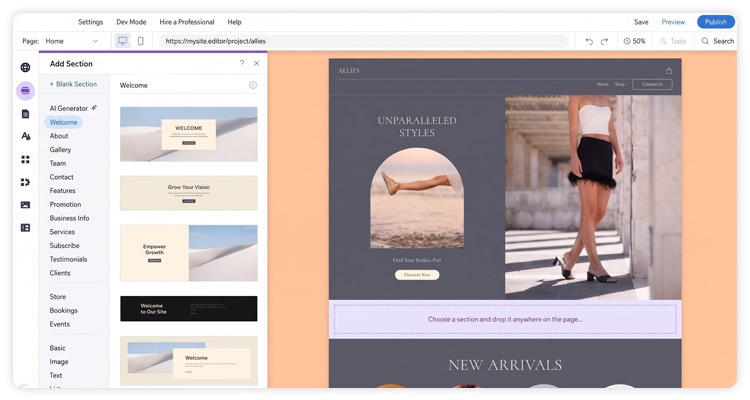
    A no code website is a website built using a visual website builder instead of writing HTML, CSS, JavaScript, or other programming languages. You create pages by dragging and dropping elements such as text, images, contact forms, and buttons into place. Platforms like Wix, Squarespace, Shopify, and WordPress with page builders let small businesses launch and manage websites without needing to code, although more advanced projects may still benefit from a developer.

    Don’t Just Ask “What Are the Best Website Builders?”

    Lists won’t match what you’re building. Most global comparisons for no code website builders lump “small businesses” together in one bucket, so they’re explaining to a general audience. They don’t differentiate between a tradie taking phone bookings and a consultancy firm that has offices in various Australian states and mainland territories.

    When an AU owner sinks into the rabbit hole of the best website builders for no code, they’re greeted by advertised pricing frequently shown in USD by default, for international visitors.

    Which means GST (Goods and Services Tax) and currency conversion aren’t counted in the price they’re posting.

    Tick on the conversion tab to get the AUD equivalent. That’s it, right? Well, currency’s a tiny component of it. The more pressing concern is not knowing what kind of no code you need. And many times, owners don’t.

    Illustration: Callum, an Adelaide-based electrician, follows a “top website builders 2026” list and signs up, assuming $17 covers everything. Then GST and a currency conversion fee show up on his card statement, and he’s left staring at the screen, surprised.

    But that’s just the first domino. The next piece is that the tool he’d purchased has nothing to do with his service-based company. He didn’t need a full-blown e-commerce no code builder.

    [rcb_show_form]

    Four Things to Check Before You Compare Any Website Builder in Australia

    Before comparing any builder by name, the following decide which one works for your business. Skip these, and you’ll end up picking based on price alone, which is how businesses end up locked into the wrong tool for a year’s subscription.

    Four Things to Check Before You Compare Any Website Builder in Australia

    Check the Currency the Price Is Shown In

    Global comparison sites are often the top pages on SERP. AI Overviews pull from them, unless you specifically prompt AI to convert the prices in AUD. Wix, Squarespace, and Shopify all bill Australian accounts in AUD, but only after you sign up. US-based reviews also rarely mention currencies; they’re generally, and automatically, in USD.

    Add GST (10%) on top of whatever price you’re quoted, since major builders don’t frequently include it in the advertised rate for Australian customers.

    Confirm .com.au Domain Support

    Major builders allow for custom domain linking. Sometimes, though, the catch is an additional fee after the first year on paid plans. Read the fine print. Read what the renewal guidelines include and don’t include.

    After the first year, domain renewal usually adds another AUD $12 to $17 annually. Wix does that, and similar ranges are advertised elsewhere.

    A small cost, but worth double-checking anyway.

    Match the Payment Gateway to How Your Customers Pay

    Everything might look similar up to this point. For online or e-commerce stores, this section can narrow your shortlist without having to think too hard about it:

    • Shopify has Afterpay and Zip built into its checkout; it provides a direct connection to Australia Post for shipping
    • Squarespace supports Stripe and PayPal in Australia; Afterpay’s available but works through a less integrated setup than Shopify’s; Zip support is limited
    • Wix supports Afterpay through app integrations rather than a fully native checkout.

    If your customers expect to pay in instalments at checkout, and a growing share of Australian shoppers do, this decides your shortlist before you check out design templates.

    Know Whether GST Gets Calculated For You (Or By You)

    GST is generally calculated automatically in Shopify and similar renowned e-commerce platforms. To give you a heads-up, it appears at checkout. You won’t immediately see it on the product page.

    Wix and Squarespace can both handle GST, but you’ll have to set it up yourself. Manageable for ten or fewer products.

    Extra Read: Understand what makes the Best No Code App Platforms, and what No Code or Vibe Coding is— No Code Development Australia Guide.

    operational excellence

    Find the Role Behind No Code Development.

    Hire a Remote Staff specialist to support operations while you take care of your business vision.

    Trusted by 3,000+ businesses to scale remotely since 2007.

    The Best No-Code Website Builder in Australia in 2026 (By Business Type)

    Quick disclaimer: there’s no single best builder that outshines them all. What is there is the best builder for your business. Let’s break down vibe-coding tools by business type.

    Wix: If you’re a tradie or run a local service business

    For small to medium businesses, Wix is one of the Best No Code Website Builders in Australia

    The strongest starting point for electricians, plumbers, landscapers, and similar local service businesses. You get to quickly launch a mobile-friendly site, ready with features tailored to your services.

    Visual polish isn’t the main sell for Wix. It’s more about how people can reach you and avail of your services the easiest way possible: a clickable button when someone lands on a page. Location pages specific to the suburbs your service covers, with directions.

    Customers who reach your website want to get in touch with the professional, and aren’t there to skim photos. They’re more likely to go over customer feedback, too.

    Why it works for this business type:

    • Click-to-call setup takes minutes; traditional coding not needed
    • Templates are mobile-first by default; significant since research shows that local searches happen on a phone more often than not
    • Once you’ve built one service page, you don’t have to keep starting over for every suburb
    • Booking forms and quote request forms are built in (Core plan and above)

    Light plan: around $16-17 AUD/month, enough for a simple site with no booking form

    Core plan: around $29 AUD/month, unlocks booking tools and basic e-commerce (at least you know if ever you’ll need it, it’s there)

    A Perth-based electrician using Wix would create the home page, no frills. A separate page for each suburb they service. Nothing else. Just pages that let customers make the call as smoothly and redirect-less as possible.

    Shopify: If you sell physical products

    One of the Best No Code Website Builders for E-Commerce is Shopify

    If you’re shipping products anywhere in Australia, Shopify is it. Don’t squeeze an online store into a website builder later.

    Shopify wears the crown for this category because of these things working together: Afterpay and Zip are built into checkout. GST is calculated automatically. Shipping connects to Australia Post.

    Why it works for this business type:

    • Customers can pay in instalments at checkout; any manual setting up not required
    • GST gets added and reported correctly; you don’t need spreadsheets
    • Shipping labels and rates connect to Australia Post; manual rate checks aren’t needed
    • Inventory, order tracking, and customer accounts are handled on the platform itself

    Basic plan: around $42 AUD/month on annual billing (around $56/month billed monthly)

    Grow plan: around $114 AUD/month on annual billing (for stores doing higher volume and wanting lower transaction fees)

    A homewares seller shipping nationally from Newcastle would move to Shopify; customers were abandoning carts when Afterpay wasn’t available at checkout on their old platform. A common enough pattern among those who use platforms with no BNPL (Buy Now, Pay Later) option.

    Squarespace or Wix Studio: If you run a consulting or service-based business:

    Squarespace for Best No Code Website Builders for SMBs

    Anything service, consulting, or coaching-based is best supported with these two platforms. The website’s job is to earn and build trust. The bigger job is to get someone to place a booking. Squarespace‘s templates do more of that work for you, and won’t require you to have design skills of any sort.

    Why it works for this business type:

    • Templates naturally make room for storytelling, helping boost credibility; suits a service that needs further explaining
    • Adding online bookings is straightforward
    • Content publishing (blog posts, case studies, resources) is simple enough to manage yourself, even after the site goes live
    • A clean, professional, organized design entices people to keep scrolling

    Core plan: around $23-28 AUD a month on annual billing (covers booking integrations, lead capture forms, and content publishing)

    Transaction fees (around 2-3%) on Squarespace’s entry-level Basic plan go away once you upgrade to the Core plan and above.

    When to consider Wix Studio as an alternative? If you expect to need more layout flexibility down the line, services offered branching out, adding service packages, etc.

    All in all, Squarespace is the simpler choice for most consultants and coaches.

    Squarespace or Framer: If you’re a creative business, or if showing your work is a big part of winning customers

    For photographers, architects, interior designers, and visually-driven small businesses. You get more design quality for every AUD from Squarespace’s templates than from a general-purpose, standard drag-and-drop builder.

    Why it works for this business type:

    • Templates are designed by professional designers; nothing generic-looking
    • Image-heavy layouts (galleries, full-bleed photos, portfolios) are built in
    • Framer lets you add more motion without going over the top; has a smaller support community in Australia than Squarespace at present

    WordPress with WooCommerce: If you’re building your website with long-term growth in mind

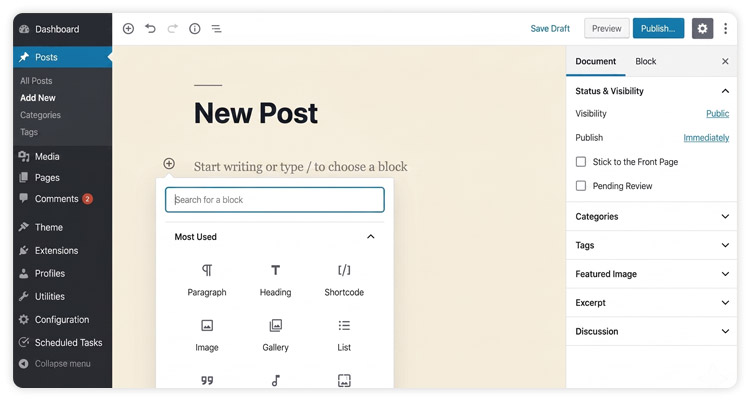
    WordPress is one of the Best No Code Website Builders for small businesses

    WordPress gives you more control over how your website performs in Google. It takes more work to set up, and you’ll spend more time getting everything right, since the learning curve’s steeper. Worth it, in the long run.

    Why it works for this business type:

    • More freedom to optimise your website for Google; other builders restrict or simplify away
    • You can add almost any feature later without rebuilding your website
    • Works with more Australian payment and shipping providers than most other platforms
    • Content and data can be exported and moved more easily than from a closed platform like Wix or Squarespace, since you own the hosting

    The software is free. You pay for a domain ($15-30 AUD a year) and hosting ($10-100+ AUD a month). Rates change depending on your provider and website traffic.

    WordPress is much easier to use today than it used to be. Tools like Elementor let you build pages without writing code. Even so, having someone who knows WordPress can save you a lot of time, especially if your site isn’t set up properly.

    Quick Comparison Table for the Best No Code App Platforms

    Builder
    Best For
    Approx. AUD Pricing
    Afterpay/Zip
    GST

    Wix
    Tradies, local services
    $16-49/month
    Via app integration
    Manual setup

    Shopify
    Product sellers, e-commerce
    $42-149/month
    Native at checkout
    Automatic

    Squarespace
    Coaches, consultants, creative brands
    $23-62/month
    Afterpay available, Zip limited
    Manual setup

    WordPress + WooCommerce
    Long-term SEO, content-heavy sites
    Domain + hosting, roughly $25-130/month all-in
    Widest support via plugins
    Via plugin

    When It’s Worth Bringing In Someone to Build and Maintain the Builder for You

    Pick the right platform, and you’re halfway there. But don’t throw in your lot, DIYing it. Many SMBs have tried, and they’ve not only failed. They paid more than they would’ve had they hired the specialist.

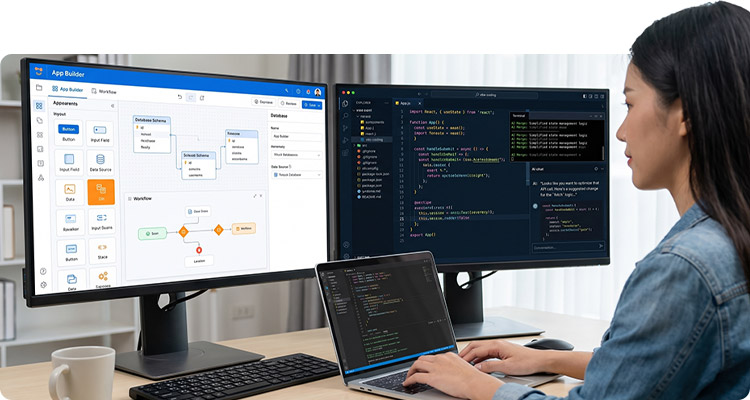
    You need a remote no-code developer, a.k.a. vibe coder. Remote Staff places these specialists with Australian businesses to work inside Wix, Shopify, Squarespace, and WordPress, setting sites up correctly the first time and maintaining them afterwards. The cost is a lower ongoing rate than that of a local freelancer or local retainer.

    Even better, any other remote professional you’ll need from here on out, we can match you up with.

    Whatever you need, whether you’re okay with templates or require something more custom, no matter the type of business you run and the platform you’ll be bringing, we’re here to provide you with the right specialists.

    We’ll also help you stay compliant in other parts of your business. Here’s something about the Payday Super Rules Guide and Modern Slavery Australia.

    FAQs

    What is the cheapest website builder for small business?

    Wix Light monthly subscription is AUD ~$16-17, and WordPress self-hosted offers theirs at $25-40/month all-in (domain with basic hosting). These are the best no-code tools in terms of budget. But note that WordPress needs more setup time in exchange for the lower ongoing cost.

    Do I need a developer if I use a no-code website builder? (Can I build my own website without a website builder?)

    Not for a simple website. But if your business needs online bookings or if you’re running a large online store, having someone who knows the platform will save you time and plenty of frustration. Regular updates are also better left to the specialist.

    Which website builder works best with Afterpay and Zip?

    Shopify, with integration at checkout. Squarespace supports Afterpay, but less seamlessly, and Zip support is limited.

    Can I move my website to a different builder later without losing everything?

    You can. On WordPress, moving content’s done quite smoothly, since it’s self-hosted. Moving a Wix or Squarespace website to another platform will take more work, like rebuilding pages, checking layouts, and reconnecting features.

    Is Wix or Squarespace better for SEO in Australia? (Does Squarespace or Wix have better SEO?)

    Both do a good job with SEO for most small businesses. WordPress gives you more flexibility if SEO is something you want to invest in over time.

    Extra Read: Before jumping in, learn about the Limitations of No Code, and match the benefits to what you need in your business.

    Even the Best No Code Website Builder Requires a No Code Developer

    Those platforms that top online lists? They’re great, but they’re not necessarily the best among the rest of the tools.

    And it’s not just the platform either. Because no code tools need the developer, and you, the owner, or anybody else currently on your team can’t DIY it away.

    Match the builder tool to what your business sells or offers and how your customers pay. Then match the tool with the right vibe coder.

    The setup and maintenance can be offshored. Choosing the wrong platform? That’s much harder to undo.

    Call us or Request a Callback to find the ideal no-code developer for your no-code website builder today.

  • Business Development Manager Salary Guide in Australia: Base Pay, OTE & Remote Options

    Business Development Manager Salary Guide in Australia: Base Pay, OTE & Remote Options

    AU SMBs seem to be getting nowhere with phrases like “Business Development Manager Salary Australia,” or questions like “How much does a BDM cost?”

    Or they’re getting nowhere close to numbers that are current (and real). Not online, anyway.

    Been there?

    Then you know what it’s like to open online job boards and close them just the same: they’re not exactly clear on why this salary range is what it is for this BDM or that BDM.

    We won’t even get into the different salary ranges (we’ll get to that in the sections below).

    According to SEEK, job ads with a visible salary (or salary range) receive 36% more applications, on average.

    When you’re in the “maybe we need a BDM” phase, salary’s not something you can “take their word for it.”

    Here’s a Business Development Manager cost guide in detail, along with tips about hiring a remote BDM.

    How much should a Business Development Manager be paid? (How much does a BDM earn in Australia?)

    Key Takeaway // Quick Answer

    In Australia, the average base salary for a Business Development Manager (BDM) ranges from $85,000 to $125,000 AUD per year (excluding Superannuation, commission, and OTE performance bonuses). Senior or enterprise BDMs in major cities like Sydney and Melbourne average $130,000 to $160,000+ AUD. Offshore BDM talent and sales development VAs (such as in the Philippines) provide equivalent lead-pipeline and account-growth support starting at $18,000 to $36,000 AUD per year ($1,500–$3,000 AUD/month).

    Why BDM Salary Ranges Vary Online (SEEK vs. Glassdoor)

    Online salaries for Business Development Managers are all over the place. That’s being nice and curt about it. The confusion’s real, and it’s not that hard to see why Australian businesses are caught in the runaround. Average BDM salaries in Australia are posted like so:

    SEEK: $105,000–$125,000 average base

    Indeed: $103,865 average

    Glassdoor: $135,000 average (typical range of $104,700–$221,000; 90th percentile)

    PayScale: $90,482 average (10th-to-90th percentile spread of $65,000–$139,000)

    No explanation whatsoever. Don’t count on reading about why this number is different from that number when they’re all for the same role. Something this article will lift the lid on, so that you finally understand why numbers and salary ranges are the way that they are.

    What is the average salary for a Business Development Manager (BDM) in Australia? (Basic Salary)

    Key Takeaway / Quick Answer

    The average base salary for a Business Development Manager in Australia is around AUD $100,000 to $105,000 per year, before commissions, bonuses, or other incentives. Those with little to no BDM experience generally start on AUD $80,000–$90,000, while experienced professionals can earn AUD $120,000 or more in base pay alone.

    The difference is largely because of this: some figures are base salaries. Others are the total package. Commission and bonuses, the works. Others, though they’re frequently without disclaimers, have to do with industry and industry requirements.

    Business Development Management compensation structures vary so much because the role is experience, expertise, and performance-based.

    There’s no single baseline, no single salary template for a Business Development Manager, remote or in-office.

    AU BDM Onshore Costs vs. Remote Offshore Rates:

    BDM Experience Level
    Onshore AU Base Salary
    Onshore Total OTE Range
    Remote Offshore (Philippines)
    Monthly Cost (Offshore)

    Junior / Sales Development BDM
    $65,000 – $85,000 AUD
    $80,000 – $105,000 AUD
    $14,400 – $21,600 AUD
    $1,200 – $1,800 AUD

    Mid-Level BDM (SME Focus)
    $85,000 – $115,000 AUD
    $110,000 – $150,000 AUD
    $21,600 – $31,200 AUD
    $1,800 – $2,600 AUD

    Senior / Strategic Account BDM
    $120,000 – $155,000+ AUD
    $160,000 – $220,000+ AUD
    $31,200 – $48,000 AUD
    $2,600 – $4,000 AUD

    What To Do: Already comparing your budget to any published average? Don’t just yet. Zoom in for any commentary or fine print about what that comprises. If they don’t have any such footnotes, hold on to those numbers loosely for now.

    Related Read: Need to get back to what the role is? Here’s What is the Role of a Remote Business Development Manager?

    [rcb_show_form]

    How Much Is BDM Salary in Australia by Experience Level? (Average Base Salary Only)

    We’re doing base salaries first, and by source, because most job boards bundle together base-only postings with total package figures. For this section, we’re zeroing in only on base (from SEEK, Indeed, Glassdoor, and PayScale). Add-ons of any kind, not included.

    Average BDM Base Salary By Experience Comparison Table:

    Experience Level
    Years
    Base Salary Range (AUD)

    Junior/Associate
    0–2
    $70,000–$90,000

    Mid-level
    3–5
    $90,000–$125,000

    Senior
    6+
    $125,000–$160,000

    National/Senior Leadership
    8+
    $155,000–$240,000+

    Where the job is based also affects salary variances. Sydney and Melbourne roles are at 6 to 10% above the national average. Brisbane’s close to the national midpoint; AUD $110,000 to 120,000 base.

    What Are On-Target Earnings (OTE)? (What is Included in On-Target Earnings?)

    OTE is base salary plus the commission an employee is expected to earn based on targets. It isn’t about those one-off bonuses, but is the realistic expectation of yearly earnings whenever they meet key performance indicators (KPIs).

    Companies usually offer higher earning potential when they’re asking a BDM to step into something new, instead of getting hired for an established one.

    What is a Fair Commission for a Business Development Manager?

    Typical OTE Multipliers By Seniority:

    Seniority
    Commission Potential (on top of base)

    Junior
    15–25%

    Mid-level
    30–50%

    Senior / Market Entry
    Up to 100% (OTE can reach 2x base)

    What To Do: Budget cash flow around OTE. Do a flexible one. To give it some structure, here’s another example: a BDM hired at $100,000 base with a realistic $150,000 OTE should be planned for at $150,000. That’s the expected cost/projected cash outlay.

    Extra Read: Here’s what you need to know about How to Calculate Outsourcing Cost in Australia, as you use our Free Outsourcing Calculator Tool below to see your own numbers:

    Free Outsourcing Calculator(Click, scroll inside, move the toggles, or change the numbers)
    Can’t see the numbers? Use a desktop browser or scroll within the box for the best experience.

    Salary vs. Commission-Only vs. Hybrid: Which BDM Salary Structure Works?

    Business Development Manager Fixed Salary (No Commission)

    Weak to zero performance incentives, and a predictable cost; a fixed salary makes the most sense when the role is focused on opening conversations and building relationships. Closing deals? Not so much; leave that to the Sales Department. Lead generation, contract negotiation, and proposal development may fall within the BDM’s turf. Or they work on these with solutions consultants and senior decision-makers. Stakeholder engagement and relationship management? Those go further down the line as well, and under someone else’s responsibility.

    Experienced BDMs lean more towards jobs where good performance can lead to higher earnings through commission.

    Base Salary Plus Commission (Hybrid)

    This is the most common structure for AU SMBs, especially for those hiring their first BDM. Base salary means genuine, stable employment. Commission encourages and rewards performance without the scare factor of closing every sale.

    What To Do: If your BDM’s role is to find new leads and open doors, don’t base their commission only on completed sales. Reward them for finding the right customers, and not just for the final sale or deal close.

    Business Development Manager Commission Structure

    Compared to the first two, this is riskier than most business owners think. Legally. The Fair Work Act 2009 states that commission-only pay should still meet or exceed the national minimum wage every pay period. As of July 2026, Australia’s national minimum wage is AUD $1,004.90 per week ($26.44 per hour).

    If the commission they earn during a pay period doesn’t reach that amount, the employer must make up the difference.

    Comparing BDM Pay Structures Based on Incentive and Compliance:

    Structure
    Cost Predictability
    Incentive Alignment
    Compliance Risk

    Fixed salary only
    High
    Low
    Low

    Base + commission (hybrid)
    Moderate
    High
    Low

    Commission-only
    Low
    Highest
    Requires minimum wage top-up

    How to Write a Business Development Manager Job Description: Attract the Right Candidates

    How to Write a Business Development Manager Job Description

    Here’s how and what to include in a job post tailored to get on the radar of the ideal BDM candidates.

    The Core Sections for a BDM Job Description:

    Role Purpose

    Tell candidates exactly why you’re hiring and what they’ll spend most of their time doing. On the daily. About bringing in new business, less about growing partnerships that are already in the sales pipeline.

    Example:

    Managing our existing customer accounts isn’t part of the job. You’re responsible for finding and winning new business opportunities in the logistics business.

    Target Industries or Customers

    Who will they be selling to? Detail this part, and you’re more likely to get responses from candidates with relevant experience.

    Example:

    As our company’s BDM, you’ll represent us in reaching out to mid-sized logistics and freight companies throughout Queensland and NSW.

    Salary and Commission

    It’s okay to post exactly what the pay will be. AU SMBs tend to be less comfortable in doing so, worried that they’ll receive more resumes that are mismatched with what they’re looking for, simply because of a generous salary.

    But follow this hiring checklist, and you’ll already be able to avoid the wave of unsuitable applicants.

    Example:

    AUD $95,000–$110,000 annual base salary, plus commission. With an annual OTE of AUD $150,000+.

    Who They’ll Work With

    Describe how they’ll fit in the team by letting them know who they’ll be working with and reporting to. This one’s more than another part of the job description; be sincere with how you explain this, so that it sounds more like a genuine invitation to be a part of your workforce.

    Example:

    You’ll report directly to our Head of Sales. That means you’ll be in a team that values fresh ideas and celebrates wins together. We believe everyone does their best work when they feel supported, trusted, and heard.

    Tools They’ll Use

    List the tools they’ll be using every day. This helps candidates understand what they’re walking into and whether they’re already familiar with your systems. It narrows down candidates who are familiar with, but haven’t really used, said tools extensively in previous work experiences.

    Example:

    HubSpot CRM for tracking leads and customer interactions

    LinkedIn Sales Navigator for finding and connecting with prospects

    Apollo for prospecting and contact research

    Weekly pipeline updates to review new opportunities and progress

    Monthly performance reviews to discuss results, goals, and areas for growth

    Their First Milestone

    Sales goals? They’re good to include. They can also be discussed during the interview. Remember to tell candidates what a great first 60 to 90 days will be like; just a more welcoming way of introducing expectations.

    Example:

    We’d love to see you feeling confident in the role and building a solid pipeline of new opportunities before your first 90 days are up. You’ll have the support you need to settle in and make a meaningful impact from the start.

    What To Remember: Publish your compensation range, even a broad one, directly in the ad. Many experienced BDMs skip job ads that don’t include salary details. Either they believe the pay isn’t worth it, or that the job description goes beyond what’s in the post itself.

    Related Read: Name Confusion: BDM vs. Sales Rep vs. Account Manager

    Get Matched AI Recruiter Banner

    How to Interview and Screen BDM Candidates

    Who can work for my company and bring us new business?

    That’s what interview questions should lead to. It’s to narrow the list down to BDMs who have the skills and experience that align with what you need.

    #1. Don’t Mistake Sales Experience for Business Development Experience (and Market Intelligence)

    Sales experience is someone else’s responsibility. Interestingly, it’s a named experience in many resumes submitted for BDM job posts. But experience in working with warm inbound leads isn’t the main thing.

    Cold outreach. Relationship-building, not even with “new customers” but with strangers. These are what you want from your BDM.

    What To Do: Ask them to explain what the last new relationship they built with someone (or a business) who’d never heard of their company was like. How did they open the conversation, and how did they keep it going?

    #2. See (Ask about) How They’d Handle the Job

    You have a general overview of what the candidates say they’ve done: their resumes. Now, the more crucial point: how do they think? What approach do they take in a prospecting problem? How to break into a market they’ve never sold to before? Look for organised, logical thinking.

    Illustration: Bradley owns a logistics and freight brokerage business in Brisbane. He gave every shortlisted BDM candidate a fictional target market. He asked them to explain (live and on the spot) how they’d shortlist prospects, identify decision-makers, and structure a first outreach sequence.

    The exercise highlighted candidates who understood the actual mechanics of the role.

    #3. Ask For Examples and Numbers

    A strong BDM should be able to talk confidently about the results they’ve delivered. They don’t need to remember every detail, but they should be able to expound on opportunities they created and the size of the deals they headed.

    What To Do: By the final interview, ask whether they can share examples of their past results. No need for candidates to share confidential client names or company information.

    #4. Check They Understand Your Industry’s Compliance Requirements

    Does the BDM’s role involve sending cold emails and SMS? Will they be handling customer information? Ask how they’ve stayed compliant in other roles. The ideal candidate should understand the basics of the relevant Australian laws: the Spam Act 2003 and the Australian Privacy Act 1988. They should know how to apply them to day-to-day-work.

    In case they haven’t worked with an Australian client before, what similar compliance requirements did they have to learn and be knowledgeable about so that their work and customer interactions followed relevant rules?

    Illustration: Sienna, a Sydney-based business owner, has her own boutique wealth advisory firm at the heart of the city. She works with Australian clients in a highly regulated industry, and needs a BDM who understands the Spam Act and other industry-specific compliance requirements.

    Why AU Businesses Are Structuring This Hire Remotely

    Because most of a BDM’s day is spent researching prospects, reaching out, building relationships, and following up online or over the phone, there’s rarely a need to be in the office full-time. The very reason why AU SMBs are looking for remote professionals to fill the role.

    Remote Staff has always been, and continues to be, a reliable managed provider, matching the best remote professionals with Australian businesses. For over 18 years, we’ve been vetting candidates, checking their background and expertise, and seeing to it that they’re not just the best at what they do:

    We create the bridge between you and ideal candidates to meet your specific business or industry requirements, and also adapt to your team’s work culture.

    You choose your engagement model, while we handle payroll, onboarding, HR, and admin work. This strategic partnership removes the compliance and structuring intricacies that would otherwise turn into budgeting complications.

    We want to help you stay compliant in other areas of your business as well. Read through the Modern Slavery Australia article and Payday Super Rules Guide.

    FAQs: How Much Does a Business Development Manager Get Paid

    What is a good starting salary for a Business Development Manager in Australia in 2026? (How much is the basic salary of a Business Development Manager?)

    For a junior (or coming in fresh with little experience) to mid-level hire, that base is AUD $80,000 to $110,000 as of 2026 (SEEK and Indeed). If you’re hiring a senior BDM to break into a new market or industry, consider not only base, but a realistic OTE (On-Target Earnings/commission) for that experience level; AUD $200,000 and above.

    Should I pay my BDM commission-only? (How much should a Business Development Manager be paid in commission?)

    You can. It’s legally possible. But every pay period or cycle should still meet the national minimum wage after commission (for local hires). If not, you (employer) need to “top up” the remainder to meet the requirements under the Fair Work Act 2009. A lot of AU SMBs follow a base plus commission formula instead. Many of them are also choosing a hybrid engagement model, if not fully remote. It’s a way to reduce compliance risk, while still genuinely wanting to reward performance.

    What is OTE vs base salary for a Business Development Manager? (What’s the difference between base salary and OTE for a BDM?)

    Base salary is the guaranteed fixed amount paid on a regular payout date. It’s the amount paid regardless of performance. OTE (On-Target Earnings) is base salary plus the commission a BDM can earn if they hit their performance targets. The latter is a more realistic total pay if your business’s pay structure budgets for bonuses on top of the guaranteed rate.

    How do I know if I’m paying my BDM enough to keep them? (What is the ceiling for a BDM role?)

    Go back to your total package and compare it against the salary tables above. Feel free to go over SEEK, Glassdoor, and Indeed listings, too. Find the equivalent seniority and industry averages. A BDM earning below standard reference points is more likely to leave when they find a better, fairer salary structure elsewhere.

    Extra Read: There’s so much going on in Australia’s booming sectors, and so much opportunity waiting for those who get there first— Solar Farm Lease Guide Australia and Solar Panel Disposal Cost.

    Your Next BDM Hire Is Out of Reach Only When Numbers Aren’t Clear

    Remote BDM roles are available. Demand for the role is high and continues to increase. You’re ready to start hiring. But where AU SMBs are stopped in their tracks: at the compensation-structuring stage, after basing their numbers on general averages online.

    A misaligned salary structure does a lot to hinder you from finding the right Business Development Manager. It happens as early as application submissions, when the best candidates skip your job post because you aren’t clear about how much they’ll be paid.

    But getting this right isn’t as complicated as it sounds. Not when base, OTE, and structure are separated clearly.

    Let us help you structure your job post and role compensation, and plan to hire Business Development Managers the right way. Call us or Request a Callback today.

  • Labour Day Australia 2026: One Holiday With Four Dates, Its History, and What It Means For Work

    Labour Day Australia 2026: One Holiday With Four Dates, Its History, and What It Means For Work

    When is Labour Day Australia 2026? What is the origin of Labour Day in Australia?

    Sentences that get massive search volume on the AU Search Engine a month or two before October.

    But it gets strangely confusing:

    Australia’s Labour Day isn’t pinned to that one month. The holiday is observed on four different dates across Australia, and with three different names!

    First Monday in March – Western Australia

    Second Monday in March – Victoria and Tasmania

    First Monday in May – Queensland and the Northern Territory

    First Monday in October – New South Wales, South Australia, and the Australian Capital Territory

    That’s a four-way headache Australian business owners get lumbered with.

    To make things even more confusing, Queensland celebrates the same October 5 public holiday. They call it a different name: King’s Birthday.

    If your team’s working from more than one state, which Labour Day are you actually planning around, and how do you handle leave entitlements and payroll? What happens if your employees are in states that don’t call it Labour Day at all?

    Before getting to it, here’s the story behind the celebration.

    When is Labour Day? (Is 1st May a holiday in Australia, and is it also Labour Day?)

    Key Takeaway / Quick Answer

    Labour Day in Australia isn’t celebrated on one nationwide date. Instead, each state and territory observes it on a different Monday throughout the year. Likewise, 1 May isn’t a public holiday across Australia: Labour Day in Queensland and May Day in the Northern Territory. Other states celebrate the occasion in March or October.

    Labour Day Australia History: Where and When It All Began

    Before we plough our way through why Labour Day, really, should be in the plural in Australia (“Labour Days”), let’s wind the clock back to where, and when, the first stone was laid.

    When Did the 8 hour Work Day Start in Australia? 1856, Melbourne Stonemasons, and the Eight-Hour Day

    On April 21, 1856, stonemasons and building workers made history. They stopped work at the University of Melbourne construction site and stormed their way over to Parliament House. They demanded one thing: an eight-hour workday. No pay cuts.

    This was at a time when 10- to 14-hour shifts and six-day work weeks were the norm.

    James Stephens, president of the Operative Stonemasons Society in Melbourne, led the march. And within months, employers agreed to the terms. The 10-hour workday would be cut down to 8. But that was just one brick in the wall. The next real triumph came after; workers would continue earning 10 hours’ pay for eight hours’ work.

    It was unprecedented, and the workers celebrated it with a 4-kilometre procession from Carlton Gardens all the way to Cremorne Gardens. The date? May 12, 1856. They were joined by 700 professionals from 19 different trades.

    The 1856 Melbourne Labour Day is widely recognised as one of the first times in the world that organised workers won an eight-hour day without a reduction in pay around the world.


    [rcb_show_form]

    Why Does NSW Celebrate Labour Day in October? 1855: Who Was First, Really?

    But there’s another version of these events. A contested claim to the question of who was first. Also by stonemasons, in a coincidental twist of history.

    NSW stonemasons had apparently been working on the Holy Trinity Church and the Mariners’ Church when they reportedly secured the same eight-hour workday before Melbourne. One year before, on October 1, 1855.

    This date is often cited as the reason New South Wales later settled on an October date for its own Labour Day.

    1858–1874: The Eight-Hour Day Spreads
    Other colonies gradually won the eight-hour day, too:

    • New South Wales: 1856
    • Queensland: 1858
    • South Australia: 1873
    • Tasmania: 1874

    Each colony eventually chose its own day to commemorate that victory. Queensland initially marked Eight Hours Day in March before later moving it to May. Other colonies followed their own paths. Those decisions are why Australia still celebrates Labour Day on different dates today.

    1891: The Barcaldine Shearers’ Strike

    Central Queensland became the stage for thousands of shearers going on strike over poor conditions (employers slashed wages and forced them to sign individual contracts that stripped away union protections) and pay.

    Did You Know?

    May 1, 1891 was the culmination, when one of the world’s first May Day marches took place, with around 1,340 people marching in Barcaldine.

    The Australian Labor Party points to the Barcaldine Shearers’ Strike as an important catalyst in its founding. The movement reshaped Queensland’s public holiday tradition, with the state shifting its Eight Hours Day celebration from March to May.

    The change was formally adopted two years later.

    1903 and The “888” Slogan

    These strikes became a movement. The movement adopted the slogan, “Eight hours labour, Eight hours recreation, Eight hours rest.” Hence, “888.”

    Labour, Recreation, Rest.

    It became a common symbol on union buildings across the country, and it crowned Melbourne’s Eight Hour Day Memorial, unveiled on Spring Street in 1903 to commemorate the movement.

    1948: The Eight-Hour Day Becomes Law Nationwide

    This eight-hour day was seen as a custom or an agreement specific to those places. Not by uniform law. Finally, after nearly a century, the Commonwealth Arbitration Court signed it into law on January 1, 1948, approving a 40-hour, five-day working week for the entire country.

    (The Commonwealth Court of Conciliation and Arbitration is a federal Australian court established in 1904 to settle industrial disputes and set fair wages and working conditions across state borders.)

    operational excellence

    Thinking of Growing Your Team This Coming Labour Day and Beyond?

    Hire a Remote Staff specialist to support operations while you take care of your business vision.

    Trusted by 3,000+ businesses to scale remotely since 2007.


    Why Do We Have Labour Day in Victoria? (Where Each State Landed)

    After World War II, to put longer intervals between public holidays, several states moved Labour Day from May. A reason for, and the origin of, the current Victoria and Tasmania dates.

    Queensland experimented with moving Labour Day to October between 2013 and 2015. Briefly. Then reverted to the first Monday in May from 2016 onward.

    What Are the Current Labour Day Dates?

    key takeaway / Quick Answer
    Labour Day Dates by State & Territory:

    • Western Australia: First Monday in March, since 1948
    • Victoria: Second Monday in March, renamed “Labour Day” in 1934 (previously called Eight Hours Day)
    • Tasmania: Second Monday in March, still called “Eight Hours Day” (Eight Hours Day Tasmania)
    • Queensland: First Monday in May, officially named “Labour Day” by 1912
    • Northern Territory: First Monday in May, called “May Day” (May Day Northern Territory)
    • New South Wales, South Australia, Australian Capital Territory: First Monday for an October long weekend, called “Labour Day”

    What is May Day and Why is it Celebrated? (Why Is May Day a Holiday?)

    May Day is an international workers’ holiday observed on 1 May in many countries to recognise the labour movement and the push for fairer working conditions. In Australia, the holiday overlaps with Labour Day. A cause of confusion to many. But the timing’s its own. While most states moved their celebrations to different Mondays over time, the Northern Territory kept the name “May Day”.

    Labour Day Queensland continues to be celebrated on the first Monday in May. That’s why you’ll hear both terms used. One event, celebrated on four different dates on the Australian calendar today. A single Monday in October isn’t the same public holiday elsewhere.

    So, when you’re asked, “Are you closed for Labour Day?”, how do you go about it?

    Get Matched AI Recruiter Banner


    Is Labour Day a Thing in Australia? What Business Owners Need to Understand About the Four-Date Holiday

    Here’s a summary of the wheres and whens Labour Day is celebrated in different parts of Australia, and what they’re called in those regions.

    Labour Day Australia 2026 Date Comparison Table (State-by-State)

    State/Territory
    2026 Date
    Local Name
    Western Australia
    Monday, 2 March
    Labour Day
    Victoria
    Monday, 9 March
    Labour Day
    Tasmania
    Monday, 9 March
    Eight Hours Day
    Queensland
    Monday, 4 May
    Labour Day
    Northern Territory
    Monday, 4 May
    May Day
    New South Wales
    Monday, 5 October
    Labour Day
    South Australia
    Monday, 5 October
    Labour Day
    Australian Capital Territory
    Monday, 5 October
    Labour Day

    Every one of these dates traces back to the same 1856 eight-hour-day movement. The official reform that took place after decades was which government picked which Monday to officially recognize it.

    Whether it’s for reasons of tourism spacing. Whether it’s a historical coincidence. Or seasonal convenience.

    Labour Day Long Weekend: It’s Always a Longer Time-Off

    Wherever it’s observed, Labour Day creates a long weekend because the holiday always falls on a Monday. 3 days, back-to-back. In every state. In every territory that celebrates it. The only thing that gets many confused is which Monday it falls on.

    October 5: Where This Gets More Confusing

    Four Australian jurisdictions (states and territories) have this public holiday on the same date: October 5, 2026, Monday. Out of the four, one doesn’t call it Labour Day: Queensland.

    Which States Have a Public Holiday on October 5, 2026 (What They Call It)

    Queensland’s Labour Day already happened on the first Monday in May. For them, October 5 is King’s Birthday.

    “King’s Birthday” officially celebrates the birthday of the reigning monarch, even though it is not held on the King’s actual birthday.

    This is a very specific problem for any business with staff across these jurisdictions. A shared team calendar with Labour Day marked as October is accurate for NSW, SA, and ACT employees. But it can be misleading for Queensland staff.

    What this means in practice:

    • Payroll records, leave systems, and internal calendars need to reflect the correct holiday name per employee; some awards and enterprise agreements reference holidays by name rather than by date
    • Don’t tell everyone, including your clients, you’re closed for Labour Day when part of your team knows the day by another name.

    A Further Complication Is Coming (But Not Yet)

    In September 2025, the Western Australian Government announced plans to shift WA’s Labour Day to the second Monday in March and move WA’s King’s Birthday to June, effective from 2028. As if the dates and jurisdictions aren’t already making it complicated.

    That change doesn’t apply to the 2026 calendar. However, businesses building their holiday calendars more than a year or so early should account for it now. Keep it flexible, and don’t assume current WA dates will hold indefinitely.

    The Practical Takeaway: Go beyond knowing the date. Take note of the holiday’s name in each jurisdiction and the legislation that comes with it. The latter differs from state to state, even when they appear identical, and are on the same square on an Australian calendar.

    Something Extra: Find out what your numbers are as you grow your remote team. Use our Outsourcing Calculator below to see the numbers yourself.

    Use the Remote Staff FREE VA Calculator and see real numbers, actual costs on your screen.

    OUTSOURCING CALCULATOR tool

    Annual Savings vs. Onshore

    $73,680

    Per VA • Per Year


    ONSHORE$7,040/MO
    FILIPINO VA$900/MO

    Cost Reduction: 87%

    VA CALCULATOR PRO


    Getting Labour Day on Your Public Holidays 2026 Calendar Wrong? 

    Public holiday entitlements in Australia are shielded by the Fair Work Act 2009 and the National Employment Standards (NES). These mandate that every employee, full-time and part-time, is to be officially away from work on a public holiday that falls on a date they’d normally be logged in.

    With pay, regardless of which state the holiday is named for. This holds so long as the state is linked to the employee’s registered work location.

    The Compliance Risk For Businesses With Employees In Different States

    Incorrectly applying (or denying) public holiday entitlements is a breach of the Fair Work Act. As of 2024, civil penalties can reach:

    • Up to $18,780 per contravention for individuals
    • Up to $93,900 per contravention for corporations

    ***These amounts can change over time and are not a fixed penalty, so use them only as a guide.

    Pay rates depend on the applicable award or agreement. There’s no single national rule about it.

    Generally:

    • If an employee would normally work on a public holiday but doesn’t: paid their ordinary base rate for the hours they would have worked
    • If an employee works on a public holiday: paid a higher penalty rate under their award or agreement (often around 225% to 250% of their normal hourly rate)

    The exact rate always depends on the specific modern award (the industry or occupation’s minimum pay and workplace conditions), enterprise agreement, or employment contract in place. No flat national percentage that applies across every industry.

    Payday Super: A New Wrinkle From 1 July 2026

    Payday Super introduces a seven-business-day window for employers to pay Superannuation contributions after each payday. It excludes weekends and public holidays.

    A pay run that falls near Labour Day (in the relevant state or territory) has fewer business days to work with than a typical week, and payroll schedules need to account for that.

    Here’s our guide on changes to the Payday Super Rules Guide for 2026 and beyond.

    Most common compliance mistake for multi-state or remote-team businesses:

    Applying one state’s holiday calendar to an entire team, based on where the head office is located. You need to check each employee’s individually registered work location.


    Hybrid, Remote, and Interstate Teams Aren’t the Exception Anymore

    Hybrid Remote and Interstate Teams Aren't the Exception Anymore in Labour Day Australia 2026

    Businesses with staff spread across more than one state, or working with remote or offshore teams, are already managing location-based variables for other things: Time zones. Tax obligations. Compliance frameworks.

    #1. Record Every Employee’s Work Location

    Public holiday entitlement follows the location tied to the employee’s contract. Not their time zone or their home address. Not wherever they happen to be working from on a given day.

    What To Do: Add a “primary work location” field to your payroll or HR system (if one doesn’t already exist). Redo your 2026-27 holiday calendar so that it’s based on that field. You can do away with the general company-wide list.

    #2. Separate Business Closures From Public Holiday Entitlements

    A business closing its office for a particular Labour Day date doesn’t automatically mean every employee is legally entitled to that specific date. The same is true with the reverse. An office staying open doesn’t remove an employee’s legal entitlement in their own state.

    Illustration: Renee runs a 15-person digital marketing agency with a head office in Sydney. She also has a small remote team in Perth and an extended team in Manila, Philippines. Her Sydney team gets Labour Day on October 5. Her WA-based employee, Dean, had his Labour Day entitlement back on March 2.

    When Renee’s office closes on October 5 as a company-wide “day off,” Dean’s technically not entitled to that closure under WA law, since his Labour Day already passed. Renee gives him the day off as a discretionary leave day instead of a public holiday. She records the decision in his employment file so payroll knows how to process it later.

    Her Manila team is on business as usual, so the work keeps going even with the rest of the team’s out-of-office

    #3. Explain the Different Holiday Names to Clients

    Clients assume “Labour Day” falls on the same date everywhere in Australia. Those who don’t know about the different dates aren’t aware of how they impact business functions. A short note or email, or a call, avoids missed deadlines or false assumptions about your workforce’s availability.

    A trivial thing, but your clients will thank you for it. You’ll earn their trust even more.

    What To Do: Send a one-line calendar note to clients ahead of any state-specific public holiday. Say clearly exactly which part of the team is affected and which isn’t.

    #4. Proactively Lock In Next Year’s Dates

    State governments confirm these dates well in advance. Though minor rules are added or slightly modified year to year, the pattern typically stays as is. Aside from WA’s confirmed changes starting in 2028.

    What To Do: As soon as the 2027 dates are confirmed by each state government, add them to next year’s planning calendar. Avoid doing so only when you’re weeks or days closer to the date.

    Reminder: Include public holiday entitlements in your existing payroll and leave system.

    Extra Read: Have employees outside Oz? Thinking to finally build your global workforce? Read about the Philippine Labour Law Guide for Foreign Employers.


    Why Distributed Teams Are Changing How Businesses Work Today

    Australian businesses managing a distributed team, a.k.a. a hybrid team, are already ahead of local-specific rules. They’re already used to thinking in different geography-related requirements and compliance calendars. To them, this isn’t a new problem.

    But for SMBs facing this concern for the first time (as an individual, you’ve always known about such holidays, but never accounted for how they could impact operations), it’s something that needs professional support.

    That’s where Remote Staff comes in, to pair AU SMBs with offshore specialists whom you need for your specific business workflows. We’ve been doing it for over 18 years. We vet candidates and make sure we’re matching you with the ideal specialists who bring value to your workforce. Payroll, onboarding, HR, and admin work are on us.

    You get the same quality talent, just from a different part of the globe. With a fully remote or hybrid team, you won’t get blindsided by this kind of location-centred problem again.

    We want to help you stay compliant in all areas of your business, Labour Day 2026 Australia or not— here’s something about Modern Slavery in Australia.


    FAQs: Is Labor Day the Same Day in All States in Australia?

    Is Labour Day the same date everywhere in Australia? (Is Labour Day the same date every year?)

    No. It falls on four different dates depending on the state or territory: 2 March (Western Australia), 9 March (Victoria and Tasmania), 4 May (Queensland and the Northern Territory), and 5 October (New South Wales, South Australia, and the Australian Capital Territory).

    The name also changes in some states, with Tasmania calling it Eight Hours Day, and the Northern Territory calling it May Day.

    Why does Queensland get a holiday on the same day as Labour Day in NSW?

    Because on the same day, Queensland also observes a holiday of its own, different from Labour Day. It’s called King’s Birthday. In QLD, Labour Day falls in May.

    Which state’s holiday applies to a remote employee?

    The employee’s designated or registered work location under their employment contract determines their entitlement, not their home address or where they’re physically working on a given day.

    What weekend is Labour Day in Victoria in 2026?

    In 2026, Labour Day in Victoria falls on Monday, 9 March, creating a long weekend from Saturday, 7 March to Monday, 9 March. It’s one of Victoria’s first long weekends of the year, with many employees taking additional annual leave to extend their break. Businesses should factor this into workforce planning, especially if they have staff across multiple Australian states observing Labour Day on different dates.

    Is Labour Day just in NSW? What day is Labour Day in NSW in 2026?

    No. Labour Day is observed across every Australian state and territory, but not on the same date. Labour Day in New South Wales falls on Monday, 5 October 2026, so the holiday is on that long weekend. It creates a long weekend from Saturday, 3 October to Monday, 5 October. NSW shares this Labour Day date with South Australia and the Australian Capital Territory, while other states observe the holiday earlier in the year.

    Does Labour Day affect Superannuation payments? (Do you get Superannuation on public holidays?)

    Yes, from 1 July 2026, Payday Super’s seven-business-day contribution window excludes weekends and public holidays, so a Labour Day date near a pay run can shrink your available processing time.

    Extra Read: There’s a lot of celebration going on even in sectors you won’t believe; renewables and solar. Here’s what market analysts say promise business opportunities in the coming decade— Solar Farm Leasing Australia and Floating Solar Panels.


    Four Labour Day Dates and One Payroll Strategy

    Labour Day has always been that holiday that wasn’t a one-day thing, but regardless of where it’s celebrated, they all share a common story. Four dates with at least three different names. For the past century.

    Yet through the business lens, it can get a bit confusing.

    Businesses that are location-aware and have adapted to creating hybrid teams aren’t having their operations tangled up. Those who aren’t thinking about where their people work are the ones who’ll be scrambling when this next public holiday rolls around.

    But it’s not too late. Even if you’re only reading this now, you’ve still got time to review payroll settings and be ready as Labour Day comes closer.

    While others get lost in finding budget friendly destinations, long weekend road trips, and long weekend beach camping, you’re getting ahead as you plan this public holiday better.

    Thinking about going hybrid with your workforce and having one less headache off your public holiday calendar dates each year? Call us or Request a Callback today.

  • Disadvantages of No Code Platforms: Before You Hire a Vibe Coder or No-Code Developer, Read This

    Disadvantages of No Code Platforms: Before You Hire a Vibe Coder or No-Code Developer, Read This

    Someone in your network built an app in a weekend. Maybe you saw the LinkedIn post like so:

    “I vibe-coded my SaaS to $10K MRR in 30 days. No developers needed.”

    Now you’re looking at your own product idea, and hiring one no-code builder or vibe coder looks like the obvious move. Cheaper than a dev team. Faster than a traditional build. The way you see it, and with all those comments on socials, everyone’s trying it out.

    Then, you come across: “Limitations of no code platforms.” “Disadvantages of vibe coding.” Only, it’s not very clear what the pages meant by that.

    Here’s what isn’t explained just as much: you’d be handing your entire product (the thing your business will depend on) to one person and an AI tool. You’ll be betting they can single-handedly cover architecture, security, integrations, testing, and years of maintenance.

    Is it all hype then? Not really. What no code is? It’s exactly what they say it is. It does what they say it does.  There’s just a mismatch of expectations, or a less-than-clear description of what happens after.

    So what are you actually signing up for when you hire a vibe coder or no-code developer instead of a team? Should you use no-code platforms? Let’s break down what the vague statements leaves out.

    When should you use no-code platforms, and when are they not enough?

    Key Takeaway / Quick Answer

    No-code platforms are ideal for validating ideas, building internal tools, and launching simple applications quickly without a large development budget. They become less suitable when your project involves complex integrations, sensitive customer data, advanced workflows, or long-term growth that requires greater flexibility. The right choice depends on your business goals, the complexity of your app, and how much you’ll need it to evolve over time.

    What Are the Limitations of No Code? (Disadvantages of Vibe Coding)

    You’ve heard some version of this: let AI tools or no-code app development platforms generate the code, and ship a working product in days (mobile app, workflow automation tool, etc.). The no-code development approach. No computer science degree required. No expensive dev team on payroll. Just you and a chatbot. And your vision.

    That’s the development process.

    Vibe coding’s a real term coined in early 2025 to describe building software by describing intent to an AI without writing code by hand. It has genuinely compressed the time it takes to get a rough prototype in front of users.

    No-code platforms offer, and have done, the same for years. Platforms like Bubble, Webflow, and Glide have let non-technical founders assemble simple apps through drag-and-drop interfaces and visual development. Cost-wise, a freelance vibe coder or no-code builder typically runs a fraction of what a development team costs.

    The no-code solutions pitch is half true. (Here’s our insider take on the advantages of No-Code Development)

    It’s true for a landing page or an internal tool. True for a scrappy prototype you’re using to test demand. It stops being true the moment your product needs to handle real, from customers, to money, to data. Traditional development / traditional software development. Exactly the point at which most SMB owners make the hire in terms of what the platforms often provide or lack, and what their business actually needs.


    [rcb_show_form]

    What Are the Pros and Cons of No Code: What You’re Getting When You Hire a “Vibe Coder”

    Vibe Coder. No Code Developer. What do the terms mean in practice?

    A vibe coder guides an AI model through natural-language prompts, reviews what it generates, and nudges it toward a working result, without necessarily reading or understanding the underlying code line by line.

    A no-code developer does something similar using visual builders instead of a programming language.

    Neither is writing software the way a trained engineer does. Both are directing a tool.

    No Code Developer vs Software Developer

    A trained developer can tell you why a piece of code will break under load or where a security hole’s hiding. How a database schema will hold up at 10,000 users.

    Vibe coders are often reviewing AI output without the background to catch what’s wrong with it. A large share of people doing this work today are non-developers: marketers, founders, designers, and product managers who’ve never shipped production software before.

    Illustration: Maxine, who runs a 12-person accounting firm, hires a vibe coder off a freelance marketplace to build a client portal where customers upload tax documents. They chose from no-code applications, and the vibe coder went to work. The demo looks great in the interview.

    Three weeks later, the portal is live. A client accidentally sees another client’s uploaded documents because the access permissions weren’t properly scoped.

    Maxine finds out from an angry email instead of from a bug report. Nobody on the build was equipped to catch it before launch.

    Related Read: Learn more about the role and what tools they use: Best No-Code App Development Platforms.

    Layers the No Code Hype Conveniently Skips (Plus What to Ask a No Code Developer)

    Layers the No Code Hype Conveniently Skips in Understanding the Limitations of No Code

    Is a real software product one layer? What are the challenges and limitations of no code development tools? It’s several, stacked on top of each other, each one requiring a different kind of expertise.

    Here’s what a single vibe coder or no-code developer is being asked to cover alone, and why that’s a heavier lift than the pitch admits.

    1. Architecture and Data Modeling

    Every app is built on decisions about how data is structured, stored, and connected. Decisions that are cheap to make correctly on day one; brutally expensive to unwind later. A prototype doesn’t expose bad architecture, but growth does.

    What To Do: Before any building starts, ask whoever’s building your product to explain, in plain terms, how they’re structuring your core data (users, transactions, records). Ask why. If they can’t answer clearly, that’s your answer.

    Illustration: A retail startup’s no-code inventory app worked fine with 200 SKUs. At 3,000 SKUs and multiple warehouses, the flat data structure the builder used couldn’t represent stock-by-location. So, the founder had to pay for a full rebuild. This time, with a developer who modeled the data correctly from the beginning.

    2. Security and Compliance

    Recent analysis of AI-generated code found a large share contains real vulnerabilities. Hardcoded secrets. Injection flaws. Access-control gaps. That AI-written code is meaningfully more prone to these issues than code written by an experienced engineer who’s reviewing for them.

    What To Do: Require a security checklist before launch: encrypted data storage, proper authentication, role-based access controls, and a documented answer to “what happens if this account gets compromised?” If your build process has no answer to that question, don’t launch yet.

    Illustration: A wellness clinic’s booking app is built entirely through a no-code platform. However, it stored patient notes in a field visible via a public API endpoint nobody had locked down. It went unnoticed for four months, until a routine review by a new hire caught it.

    3. Integrations and Future Expansion

    Your app needs to talk to your payment processor, your CRM, your email tool, and maybe your accounting software. No-code platforms handle simple integrations well. The moment you need custom logic, real-time syncing, or high transaction volume, they struggle.

    What To Do: Map every system your product needs to connect to today. Include every system you’re likely to need in 18 months. If more than two or three involve custom business logic, you’re outside what one no-code builder can comfortably support.

    4. Quality Assurance and Testing

    Someone who builds fast rarely has the bandwidth or the training to test thoroughly. Formal testing (edge cases, load testing, regression checks after every change) is its own discipline, distinct from building.

    What To Do: Ask directly who is testing the product. Follow it up by asking who built it. “I tested it myself,” from the same person who wrote it, is not a QA process.

    5. Ongoing Maintenance and Technical Debt

    The build is the beginning, not the end. Every update, every new feature, every platform change creates a chance for something to break. Vibe-coded and no-code products in particular tend to accumulate what’s best called “invisible debt” — quick fixes stacked on quick fixes, invisible until the whole thing buckles.

    What To Do: Ask what happens when your builder is unavailable. If the honest answer is “nobody else can maintain this,” you don’t have a product. You have a dependency.

    Extra Read: No code is making waves. But so is Australia’s renewables sector. Find business opportunities in— Solar Farm Lease Australia Guide and Floating Solar Panels Australia.

    operational excellence

    Unsure Where to Start?
    Find the Role That Owns Support Work.

    Hire a Remote Staff specialist to support operations while you take care of your business vision.

    Trusted by 3,000+ businesses to scale remotely since 2007.

    What Are the Risks of Vibe Coding, Really? (Three Ways This Goes Wrong)

    The Weekend Wizard. This is the builder who’s genuinely talented at fast prototypes and gets hired for a production system anyway. The demo’s dazzling. But the foundation underneath is a house of cards. You find out the hard way that speed and durability aren’t the same skill.

    The Vanishing Vibe Coder. Freelance vibe coders and no-code builders are often solo operators juggling multiple clients. When they move on (and they do), you’re left with a system nobody else can read. A system no one in your team can understand, or safely modify.

    The No-Code Ceiling. This one doesn’t look like failure. Not at first. Everything works, right up until you need a feature that the platform simply can’t support. Real-time data processing. Custom machine learning logic. Complex permission structures. You discover the ceiling only after you’ve built your business on top of it.

    Your speed got you to market. Shortcuts, a working demo. But your ceiling? It’s what stops you from ever growing past it.

    Related Read: Find out what your numbers really are as you plan the hire. Use our Free Outsourcing Calculator below:

    When a Vibe Coder or No-Code Tool Is the Right Call

    What Are the Benefits of No-Code Platforms?

    None of this means the tools are bad, only that they’re being sold as something they’re not.

    Vibe coding and no code platforms are genuinely excellent for validating an idea before you spend real money. Before building an internal tool that nobody outside your team will ever touch. They’re the way in prior to standing up a marketing page in an afternoon.

    If the cost of that system failing is “we redo it,” a single builder is a smart, cheap way to move fast.

    When trying to get the right answers to “vibe coding vs traditional development” or “no-code developer vs software developer,” it boils down to this:

    The moment customer data, payments, compliance requirements, or business-critical operations enter the picture, the calculation changes. What was a smart shortcut for a prototype becomes a serious liability for a product.

    Find out what your numbers really are as you plan the hire. Use our Free Outsourcing Calculator below:

    Use the Remote Staff FREE VA Calculator and see real numbers, actual costs on your screen.

    OUTSOURCING CALCULATOR tool

    Annual Savings vs. Onshore

    $73,680

    Per VA • Per Year


    ONSHORE$7,040/MO
    FILIPINO VA$900/MO

    Cost Reduction: 87%

    VA CALCULATOR PRO

    Matching Your Projects With the Right Talent

    There’s a middle path most SMB owners never get shown when it comes to choosing between an expensive in-house engineering department and a solo vibe coder. In fact, choosing a side isn’t it at all.

    A properly staffed, fully managed remote team that covers the layers a single builder can’t. All without the overhead of a full local hire.

    That’s where Remote Staff comes in. Instead of betting your product on one person’s availability and one person’s blind spots, you get matched with vetted remote developers, QA specialists, and project managers built around what your app actually needs.

    At a fraction of the cost of a local team. With none of the recruitment legwork on your end.

    Extra Read: Stay compliant in all areas of your business. Find out about Modern Slavery Australia and Payday Super Rules.

    ↑ Back to Top


    FAQs About the Limitations of Vibe Coding Tools

    Can a vibe coder really build my entire app by themselves? (what are no-code platform limitations?)

    They can build a working version, especially for something simple. What they usually can’t do alone is secure it, scale it, integrate it properly with your other systems, and maintain it for years; those require different, often multiple, skill sets.

    What’s the difference between a no-code developer and a professional software developer? (Is a software developer the same as a coder?)

    A no-code developer assembles pre-built components inside a visual platform. A professional developer writes and architects custom code and understands what’s happening underneath the interface. Developers can diagnose problems drag-and-drop tool will ever surface.

    Is no-code good enough for a revenue-generating business? (Can no-code support any business?)

    It can be, for simple internal tools or early-stage MVPs. It’s rarely enough once you’re handling customer payments, sensitive data, or workflows that need to scale past a few hundred users.

    How do I know if I need to use no-code platforms or no-code solutions? (What are the disadvantages of no code platforms for businesses?)

    If your product touches money, personal data, multiple third-party integrations, or needs to serve more than a few hundred concurrent users, it’s past the point where one person on one tool can safely cover everything.

    What should I ask a vibe coder or no-code developer before hiring them? (Questions to ask when choosing a no code developer)

    Ask who handles security review. What happens if they become unavailable? How do they test before launch, and whether they’ve shipped something with similar requirements in size and complexity?

    What is low-code development? (What are low-code development platforms?)

    Low-code development or “low code development’ uses visual tools, drag-and-drop components, and a small amount of coding to build software faster than traditional development. Low-code development platforms help developers and technical teams create custom applications while still allowing them to write code when advanced features or integrations are needed. Unlike no-code platforms, low-code tools are designed for projects that require greater flexibility and customisation.

    What is the difference between low-code and no-code development? (Are low-code and no-code platforms the same?)

    No-code platforms are designed for users with little or no programming experience, building applications using visual, drag-and-drop tools. Low-code platforms also use visual builders but require some coding to customise features, integrations, or complex workflows. In general, no-code is best for simpler applications. Low-code offers more flexibility for larger or more complex projects.

    Related Read: No Code or Vibe Coding isn’t the only new thing making waves in and out of the tech market today. Explore these other topics— What Is a Marketing Automation Specialist and Queensland Construction Worker Shortage.

    Your App Isn’t a Weekend Project

    The no-code hype was never wrong about the demo. Everything after, possibly, because there isn’t one side.  It isn’t just about the limitations of no-code or the benefits of no-code. There’s middle ground in the confusion, and that’s your advantage.

    A vibe coder or no-code developer can get you a fast prototype; a real team is what turns that prototype into something your business can actually stand on.

    You’ve got the idea. Now make sure the team behind it can carry the weight.

    Request a Callback from Remote Staff to talk through what your project actually needs.

  • Online Business Manager Salaries in Australia: Average Cost and Business Owner Guide

    Online Business Manager Salaries in Australia: Average Cost and Business Owner Guide

    You’ve been staring at quotes for “Online Business Manager Salary in Australia.” You scroll through numbers online, and it’s looking more and more like a complicated riddle with no satisfying end:

    One has it at AUD $90/hour (15,600/month). Another at AUD $3,000/month retainer.

    That can’t be right. Can it? A variation of AUD $12,000?!

    As if this bit isn’t enough, you see the word “cheaper” attached to offshoring averages. “Cheaper” by how much? What’s the baseline? How were they able to get to those averages?

    There’s no standard pricing structure for this role because the job description is so broadly defined and is different per business. That’s why the quotes you’re comparing vary so much. There’s also more sitting on top of those base figures that aren’t advertised so clearly.

    Learn about how pricing works for OBMs in this article (we’ve included instructions for our free outsourcing calculator) to know what your numbers are.

    Before getting there, here’s why online comparisons won’t work, and what you should be doing instead.

    How much does an Online Business Manager cost in Australia? (How much does a Business Manager charge?)

    Key takeaway / Quick Answer

    An Online Business Manager in Australia can cost anywhere from AUD $70 to $120 per hour. Highly experienced OBMs may charge up to AUD $250 per hour. Monthly retainers generally range from AUD $1,500 to $5,000, with larger strategic engagements reaching AUD $10,000+ per month. AUD $97,000–$165,000 a year for a full-time local employee before employment on-costs. The amount you pay in total depends on the engagement model, scope of work, dedicated hours, and whether you hire a local or remote OBM. Hiring locally means you’ll have to factor in Superannuation, along with leave entitlements, onboarding, and training, on top of the base amount.

    Comparing OBM Quotes Side-by-Side Doesn’t Work

    We’ll start with the truth most don’t care to post online or on socials: you can’t shop for OBM pricing online the way you would any other role. There are several interlaced factors, making it difficult to look at one rate and contrast it with another simply due to:

    Business size and need. Niche or industry. Retainer band. Package. If they’re independent OBM consultants, that hourly rate will be different from another person’s. Then there are those who price not by the hour but by project, or weekly, and monthly. There’s experience and expertise to consider. Engagement model, too, from part-time, or part-time that’ll transition to full-time after X expectations are met, or after X weeks.

    There’s another factor: role descriptions online sometimes get interchanged. The title says Online Business Manager. But click those links, and they’re job descriptions for a Virtual Assistant. Tasks listed are for Project Management. Not the right ones to price OBM salaries in Australia.

    It’s a lot, we know. A $250/hour rate from one consultant might mean 5 hours/month. A $2,000/month retainer from another could be 15 hours/month.

    Those hours could differ even more depending on client needs and priorities.


    The True Cost of Hiring OBM Remotely

    The True Cost of Hiring OBM Remotely in Online Business Manager Salaries in Australia

    One thing’s for sure: working with a remote online business manager will be lighter on your pocket than hiring a local OBM. And don’t let negative posts convince you into thinking you’re getting “lower-tier” skills. There are ways to comb through candidate pools and narrow down based on quality talent and relevant experience.

    But you’re already past the stage of understanding how the scales tip in favor of remote vs local hiring based on pricing. The next step is to learn about an undisclosed cost unique to roles such as OBMs.

    A Cost Rarely Discussed (Without Asking)

    Besides the factors mentioned earlier, there’s another variable that isn’t laid on the table unless you really dig into it, or ask about it:

    Hiring full-time means something else in numbers compared to hiring someone with a separate client load. The one who does the latter will have more than 3 or 4 clients on their roster, which changes their hourly charge.

    Illustration: Lucas and his wife, Ayla, own a Perth-based renovation supply business. They started with 3 and are now growing to 16. They hire an independent OBM consultant on a $2,500 retainer. The founder-couple didn’t know that the specialist would only be dedicating around 9 hours’ worth of attention every two weeks, since the specialist was also working with 5 other clients.


    [rcb_show_form]


    The Engagement Model Comparison

    Online Business Managers are generally divided into three working arrangements in Australia. Each engagement model works differently, and so does the way it’s priced. Before comparing costs, here’s how each one is set up.

    OBM Consultant

    A sole operator who owns their own consultancy. They are their own asset and work with several businesses or clients at once. Bills are either by the hour or via a monthly retainer (fixed monthly fee for ongoing services).

    Since they’re owners themselves, they set their own caps. They have to, because they manage their client load hands-on, and yours, should you choose this route. Load management gets the final say from them alone.

    OBM Average Salary Breakdown (Hourly):

    Pricing Model
    Typical Rate (AUD)
    What It Usually Covers
    Hourly
    $70–$120/hr
    Ad hoc or project-specific support, no ongoing commitment
    Monthly retainer (entry)
    $1,500–$2,000/month
    Limited hours, narrower scope, suited to smaller operations
    Monthly retainer (mid-range)
    $2,000–$5,000/month
    Ongoing operational support; most common for AU SMBs
    Monthly retainer (upper)
    $5,000–$10,000+/month
    Broader scope, more hours, sometimes includes team management

    Much like the OBM role, retainer pricing isn’t standardised. Hence, the night-and-day difference from top to bottom in this table.

    Consultants offer flexibility and no employment overhead. You can dial things up or down without renegotiating a contract or writing up a new one.

    What You Don’t Get: Guaranteed exclusivity. OBM professionals work with four to eight retainer clients simultaneously, so you can expect that their time isn’t reserved only for your daily operations.

    Most independent OBM consultants manage between four and eight retainer clients at a time to make their business model work. Your business is one of several competing for their attention in any given week.

    You don’t get continuity either. If your consultant says they aren’t available when you need them, or takes an extended break, there’s no process for handover. There’s nobody on your team to hand over their tasks to.

    Full-Time OBM (Local)

    The traditional employment route goes this way: an OMB is brought onto the payroll as a full-time team member. A “regular employee,” as it’s conventionally phrased. For this full-time role, the base salary ranges from $97,000 to $165,000 a year.

    Variations have to do with experience and the scope of the job offered. After that, you have the loaded cost: Superannuation (click here to find out what the newest changes to Payday Super Rules Guide are, and what applies from this year onward). Leave entitlements. Payroll tax and onboarding. Other business-specific add-ons like training, tools, etc.

    The lot of it comes down to 25 to 35% more on top of the base figure.

    Full Time Online Business Manager Salary Breakdown:

    Cost Component
    Amount (AUD)
    Notes
    Base salary (mid-level)
    $110,000–$130,000
    Varies by experience and location
    Superannuation (12%)
    $13,200–$15,600
    Mandatory from July 2025
    Payroll tax
    4.85%–6.85% above threshold
    Varies by state
    Leave entitlements
    Mandated under NES
    Annual, personal, long service
    Recruitment fees (if agency)
    15%–25% of first-year salary
    One-off, but common
    Estimated year-one loaded cost
    $140,000–$210,000+ loaded
    Before onboarding downtime

    Working with an online business manager full-time means that the hire becomes your “employee”. However, it’s typically the most expensive of the three. By a wide margin.

    The Vetted Remote OBM

    This is a dedicated, full-time or part-time remote hire who works exclusively for you. They aren’t splitting their attention and effort as OBMs with other clients. They don’t have the pressure of managing their own firm, and can focus on their responsibilities as a member of your workforce.

    Same work structure as a local full-time hire, sidestepping the local salary band and the extras mounted over Australian employment.

    With a managed provider, the arrangement’s almost always put front and centre. No ad hoc hourly billing. No sudden changes because there’s a contract. You get to write what’s in it.

    Offshore Online Business Manager Salary in AU:

    Cost Component
    Local Full-Time Hire
    Offshore Remote OBM
    Superannuation (12%)
    Yes
    No; covered by local statutory contributions in talent’s country
    Payroll tax
    Yes
    No
    Leave entitlements overhead
    Yes, under NES
    No AU obligations
    Recruitment and onboarding
    15–25% of salary, plus downtime
    Handled by placement agency
    Dedicated hours
    Full-time, exclusive
    Full-time or part-time, exclusive
    Estimated annual cost (AUD)
    AUD $140,000–$210,000+ loaded
    AUD ~$39,000–$50,000 all-in (salary + statutory costs + agency fee)
    Cost vs. local equivalent
    Baseline
    Approximately one-third of loaded local cost

    It boils down to this: you can use online averages for a glimpse into what OBM salaries comprise. A general baseline. What’s important is that at the back of your mind, you know you’ll have to do the maths yourself.

    Here’s how the three engagement models compare side by side:

    Engagement Type
    Typical Monthly Cost (AUD)
    Hours You Actually Get
    What Drives the Real Cost
    Independent local consultant
    AUD $1,500–5,000/month typical; up to $10,000+ for larger strategic engagements.
    Capped, shared across other clients
    Headline rate hides actual hours delivered
    Full-time local hire
    AUD $9,500–$13,500+ (loaded)
    Full-time, but mixed with lower-value tasks
    Salary band plus super, leave, payroll tax
    Vetted remote OBM
    Set by engagement scope, no AU on-costs added
    Full-time or part-time, dedicated and exclusive
    Cost of living difference, not capability difference

    What To Do: Before comparing prices, use these tables to know which engagement model works best for you. Be direct when asking consultants, individuals, and providers to detail what they offer: How many hours are guaranteed in writing? What’s the arrangement for being away from the office/work (sick leave, time off, etc)? Any other add-ons apart from the rate being quoted?

    Don’t leave any stone unturned. It’s completely okay to ask for the details; don’t hesitate to do so.

    Use the Remote Staff Free Outsourcing Calculator below to see your numbers:

    Use the Remote Staff FREE VA Calculator and see real numbers, actual costs on your screen.

    OUTSOURCING CALCULATOR tool

    Annual Savings vs. Onshore

    $73,680

    Per VA • Per Year


    ONSHORE$7,040/MO
    FILIPINO VA$900/MO

    Cost Reduction: 87%

    VA CALCULATOR PRO


    Four Metrics of the Best OBM: What Are The Signs of Good Management in Your New Online Business Manager?

    For business owners who are new to hiring an OBM, they have no reference point for what to watch out for. Whether in job descriptions or in salary ranges.

    A certification or two doesn’t prove real expertise or experience. Mentions of involvement in the International Association of Online Business Managers? Same thing.

    Owners bring the person into their team. A few months pass, and it seems like they’re doing alright. Operations are smoother than they were last year. Owners can only weigh things as they go, because they’ve no way to evaluate if the operational improvement matches what they’re paying for.

    These four measurements give you a concrete read on whether an OBM is creating value within your team:

    Owner Time Won Back

    How many hours do you personally spend on operational tasks, without an OBM? How about approvals and dealing with escalations? Go back to that number 60 to 90 days after onboarding an Online Business Manager. An OBM should be lowering those percentages within the first quarter of onboarding.

    Business owners work an average of 49.4 hours a week, while preferring 41.7. Only 32% of actual time goes toward strategic work, against a preferred 73%. (Alternative Board)

    How Long Decisions Are Stalled

    Observe how quickly (or slowly) it takes for decisions to turn from meeting notes to action. With an OBM, these stay idle in the owner’s mental queue or a handful of scraps of paper somewhere on their desk, or in an app.

    The OBM’s doing the job right if most of the decisions that don’t need the owner’s stamp are leaving the queue and being passed on to the assigned persons or teams the moment they’re ready.

    Project And Launch Completion Rate

    Count their share of projects and how many of those hit the original deadlines in their first 60 to 90 days of joining your team. The first three to four months are an adjustment period, and founders deliberately leave room for hiccups. “After” is when the real work begins.

    If the workload’s really too much, the ideal OBM won’t think twice about raising the concern. Expectations are a two-way street after all.

    McKinsey research puts the global average project on-time delivery rate at around 35%.

    If project and launch management are part of their job, more projects should be reaching the finish line now than they used to.

    Team Escalation Frequency

    One of the clearest signs your OBM’s settling in well. Fewer escalations for your approval or instructions. The OBM should be resolving these, or a majority of them anyway, long before anything urgently calls for your attention.

    Something to bear in mind: if this hasn’t happened within the first 60 days, it’s likely not the fault of the OBM. You need to revisit the role together. It’s possible that authority and scope haven’t been defined as clearly as they should’ve been.

    What To Do: Use these four metrics in assessing your operations. One column has to do with how said metrics move before hiring the OBM, and another column, after. By the end of the first quarter, go back to the columns. More improvements mean you’ve got the ideal professional Business Manager.

    Operational Excellence

    Find The Right Online Business Manager.

    Hire a Remote Staff specialist to support operations while you take care of your business vision.

    Trusted by 3,000+ businesses to scale remotely since 2007.


    Removing the Problem of Hiring Wrong and Dealing With Continuity

    By now, it’s well understood that planning for an OBM hire is no small feat. It isn’t like hiring for straightforward job descriptions, where responsibilities are the same across businesses and industries. Where performance is quantifiable and measurable.

    Many AU SMBs learn that the hard way. Now, business owners are turning to managed providers to avoid the costly hits and misses involved in the hiring process and the aftermath of a wrong hire.

    This is where we step in. Remote Staff has been pairing Australian SMBs with remote professionals for over 18 years. When we vet candidates, we zoom in on real work experience and expertise, while screening for role compatibility with your exact business and industry needs.

    Onboarding, payroll, HR, and admin work are on us, so you’re not left hanging after the hire. Our support goes on, so you remain focused on business vision and leadership. Because that’s what you need to continue doing.

    Related Read: Stay compliant in all areas of your business and learn about Modern Slavery Act Australia and Payday Super Rules (not totally applicable to remote hires – hello Super – but just so you know what’s been going on).


    Frequently Asked Questions About Business Manager Salary in Australia

    How much does an Online Business Manager cost in Australia? (How much does an Online Business Manager charge?)

    There’s no single salary template for Online Business Manager Salaries. They vary greatly depending on business operations (what will be required of the OBM to do) and engagement model, among others. That said, the general average is as follows:

    Independent consultants charge AUD $1,500–5,000/month; up to $10,000+ for larger strategic engagements. AUD $1,500 to $10,000 a month in retainers. A full-time local hire runs AUD $97,000 to $165,000 in base salary, before super and on-costs. These numbers go down when comparing against remote Online Business Manager costs.

    Is it cheaper to hire an OBM hourly, on retainer, or full-time? (What is retainer vs hourly rate for Online Business Managers?)

    There’s no “cheaper” hire based on the engagement model. You have to consider the actual rate put out first of all. It’s more about what your business needs are. Most choose to hire part-time first, and then transition the role to full-time after the first quarter. Other SMBs, especially those who are more familiar with what the role entails, hire full-time straight away.

    The “cheaper” alternative mostly has to do with whether you hire locally or offshore.

    What’s the difference between an online business manager and a business consultant?

    A business consultant is usually brought on temporarily, for the duration of a project or an initiative. The OBM is hired for day-to-day operations. They’re hired on an ongoing basis, since their role has more to do with managing systems and priorities daily (or according to a regular, ongoing timeline), instead of managing a deliverable.

    These roles are not interchangeable.

    How many clients can an Online Business Manager have? (How many clients should a consultant have?)

    Many independent OBM consultants have four to eight retainer clients on their management list. It’s part of their business model, where they don’t work full-time for these clients, but are on “retainer.” They charge a fixed monthly fee to provide ongoing operational support. Not necessarily by-the-hour either.

    Asking for the exact number of other active clients an OBM has is a good way to know if this professional will be an ideal fit for your business.

    Should I hire a remote or local Online Business Manager? (Is a local online business manager more reliable than a remote one?)

    Reliability depends on your business needs and whether they match the engagement model for your OBM hire. Hiring locally or remotely has nothing to do with the OBM’s efficiency. The work happens online, so no office space or in-person presence is required to improve an OBM’s role.

    What does an Online Business Manager do? (What is an Online Business Manager?)

    An Online Business Manager (OBM) oversees the day-to-day operations of a business, making sure projects, people, systems, and priorities move forward without requiring constant input from the owner. They coordinate teams, improve workflows, manage deadlines, and keep operations running efficiently so business owners can focus on growth and strategic decisions.

    Extra Read: Analysts and experts are seeing a demand surge in these sectors. The first ones there get their hands in business opportunities before the competition — Solar Farm Lease Australia Guide and Floating Solar Panels.


    The Cost of an OBM, Measured Differently

    It seems like the practical thing to do, looking online and comparing OBM salary ranges. Just remember that there’s more than meets the eye when it comes to the total cost.

    The engagement model is one variable that adds to that total. Dedicated hours. And that’s after counting the rate of the OBM based on years of experience and expertise within your type of business and industry. Then, you’ve got local vs remote salary differences to think about.

    Few Australian businesses have noticed the online salary disparity, but they’re acting fast. They’re working with managed providers, so they don’t have to go through the grueling task of comparing and contrasting role costs locally.

    Don’t fall into the trap of hiring an OBM without knowing what the cost is after everything else is stacked on the first quote.

    Call us or Request a Callback. Let Remote Staff help you find the Online Business Manager for your business, so you don’t have to.
  • Remote Business Development Managers: Why Hire a BDM for Sustainable B2B Business Growth

    Remote Business Development Managers: Why Hire a BDM for Sustainable B2B Business Growth

    Are you a business owner? Then you were the person opening every door to new business.

    Or since you’re reading this article, chances are… you’re still the one making it happen. Along with growth planning and keeping operations aligned to how and where you want your business to be.

    It’s hitting you now:

    No specific person doing dedicated market research and first-touch outreach leads to growth that feels like a foot-dragging “I’ll get to it tomorrow” endeavor.

    Networking strategies and events. Building pipelines. Referral partnerships. Opportunity sourcing for market expansion. Just four out of a number of other responsibilities that bring in new business. And they all answer: “What is a Business Development Manager?”

    76% of small to medium-sized businesses say their founder or owner closes the most deals.

    What does the person who’s supposed to be doing that actually do every day? Here’s a breakdown of their responsibilities, what other roles “BDM” is often interchanged with but are separate functions, and the benefits of a BDM to Australian SMBs.

    The facts detailed in this article may very well be the push you need to finally hire one.

    What does a Business Development Manager do?

    Key Takeaway / Quick Answer

    A Business Development Manager (BDM) identifies new markets, builds relationships with potential clients and partners, and creates qualified opportunities that support long-term business growth. Rather than focusing on closing sales, a BDM develops a steady pipeline by researching prospects, initiating outreach, and uncovering strategic partnerships before handing opportunities to the sales team. For many Australian SMEs, a BDM also reduces the founder’s workload by making business growth a dedicated function instead of an owner-led responsibility.

    What Is A Business Development Manager?

    A Business Development Manager is responsible for finding and opening new revenue opportunities for your business. In other words, they find people and businesses that could become your next customers or partners. They don’t close the sale. That’s the sales team’s job. But they do start the conversation and make sure there are always new people to sell to.

    You’ve probably searched “What is the role of Business Development Manager?” and dug up a slew of other roles that seem to do the same thing. Strategic partnerships. Market share. Revenue growth.

    What roles are specific to a BDM, then?

    The Australian Bureau of Statistics classifies this role as:

    One that plans, coordinates, and directs business development activity, both inside your business and out in the market.

    — Australian Bureau of Statistics
    Role Classification

    Their job is to make sure new businesses don’t begin and end with the owner. Although that’s also true of a number of other remote professions. What separates the duties of a BDM is this:

    They find opportunities that aren’t there yet. To see to it that your next lead isn’t your last. They do research. Outreach. Relationship-building with people who’ve never heard of you (and in other cases, you’ve never heard of them).

    The Part Many Don’t Know Goes Ahead of the Sales Process

    It happens before any type of lead is classified and won over (and many times while lead generation is in progress). Before any conversion strategy’s put to the test.

    Every deal your business ever wins goes through a typical sequence: Find the opportunity. Qualify it. Close it. Manage it after signing.

    The first step’s all on the BDM.

    Illustration: Arlo has grown his Adelaide-based industrial equipment supply business from 3 to 14. But even now, every square one is on him, from distributor relationship building to closing. He’s the one making the first phone calls. Cold or through people he already knew personally.

    He has no qualms about the sales team. But opening new accounts? It doesn’t belong to them. Or to any other team. They’re in a slowdown when he’s the one doing them. The only one.


    [rcb_show_form]


    Name Confusion: Business Development Manager vs Sales Rep and Business Development Manager vs Account Manager

    Ever thought of business development in a Hunter – Closer – Farmer perspective or context? It’s a popular and widely recognised thought framing that explains the 3 main roles in sales in a straightforward way:

    Who finds new customers according to your Ideal Customer Profile (ICP), who seals the deal, and who looks after the relationship afterwards. It describes how new business comes in and sticks around.

    The line-up works like this:

    • BDM (the Hunter or Scout) – works upstream of the sales pipeline; researches markets, identifies who to talk to, opens the first conversation, builds relationships before there’s a deal on the table
    • Sales Rep (the closer)- takes a qualified opportunity and converts it into a signed deal; steps in after someone’s ready to buy and sees the deal through
    • Account Manager (the farmer): looks after the relationship from the moment the contract is signed; focused on retention and expansion of existing accounts

    Role Comparison: Business Development Manager vs Sales Representative vs Account Manager

    Dimension
    BDM
    Sales Rep
    Account Manager
    Primary focus
    New markets, new relationships
    Converting qualified leads
    Retaining and growing existing clients
    Measured by
    Opportunities opened, pipeline built
    Deals closed, quota hit
    Retention rate, upsell revenue
    Works with
    Cold and warm prospects, decision-makers
    Warm, qualified leads
    Existing signed clients
    Time horizon
    Long-term, strategic
    Short-term, transactional
    Ongoing, relational

    What To Do: Who found your last 7 to 10 new clients or partnerships? Was it you? For every single one? Then you know this isn’t your team’s oversight. You need a BDM to handle that part of your business.

    When Should You Hire More Salespeople and When You Shouldn’t

    Let’s cut to the chase: more sales representatives isn’t the issue here.

    Hiring a sales rep, or two, or more when you don’t have a Business Development Manager is creating roles where they’ll have nothing to do. If there are no new opportunities created, there’s nothing to close.

    Among businesses with less than $1 million in revenue, the 76% number of founders doing BDM duties goes up to 94%.

    Illustration: Mia’s commercial cleaning contracting business is in Hobart. She grew it to a 20-person workforce last year. Naturally, she hired a sales rep, expecting new contracts to start coming in within a quarter.

    Things didn’t pan out, and it wasn’t the rep’s fault. When the sales rep came in, leads had already been found. When those ran out, leads coming in were slow. Mia went hands-off. She thought that was the Sales Rep’s job.


    What Exactly Does a Business Development Manager Do Daily?

    What Does an Online Business Development Manager Do Day by Day?

    What Does an Online Business Development Manager Do Day by Day

    It’s time you see what fills a Business Development Manager’s calendar. It’s also a wake-up call, in a way, as you take a look at BDM responsibilities you’ve been covering (but should’ve, in fact, hired a BDM for).

    You’ll understand why a BDM can complete their daily duties outside the office, and answer “Is BDM a good position?” with a resounding “YES.” Even from another country entirely. Here’s what their work generally demands, explained by function.

    #1. Researching Who’s Worth Pursuing

    A BDM does the opening play. They figure out and learn which industries and buyer or company profiles are worth pursuing. Before anyone from sales hits send on that first outreach email. Before anyone sends a single email, a BDM figures out which industries, company sizes, or buyer profiles are genuinely worth your time. They cross off markets that are dead ends, while sifting out promising as well as good opportunities and marking places or gaps where your competitors don’t have much of a foothold yet.

    What To Do: Ask BDM candidates to tell you how they’d shortlist ideal prospects from a broad market (you can create a fictional market or use a sales campaign from your archives). Reaching out to “everyone” is a reply that shouldn’t move the resume forward.

    #2. Building a List of Real Decision-Makers

    Not contacts. A BDM doesn’t collect names. They’re skilled in identifying the person to reach out to inside a target company. The one who has the authority to say yes or no to a proposal, and ultimately, a deal and a working relationship.

    What tools do BDMs use here? Most go through LinkedIn Sales Navigator, Apollo, or ZoomInfo. They then check those against your CRM (Customer Relationship Management tool) to avoid contacting someone your business has already been in touch with.

    #3. Making First Contact With People Who’ve Never Heard of You

    Never underestimate cold email sequences (most businesses today think it’s a retired strategy). Said email sequences, LinkedIn outreach, phone calls, and introductions at industry events remain a reliable foot-in-the-door conversation starter.

    And a quick tip: never randomly send an email blast to EVERYONE, with no context or customisation.

    Illustration: Naomi runs a 20-person commercial cleaning contracting business in Hobart. She hired a sales rep last year, expecting new contracts to start rolling in within a quarter. Nothing changed. Her rep had nothing to work with. Every lead reaching the rep had already been found and half-convinced by Naomi herself before he was ever looped in.

    She hired someone to open doors that weren’t being opened, an expert BDM.

    Compliance Note: Any commercial email or SMS outreach needs consent. It also needs a clear, factual sender identity and a working unsubscribe option under the Spam Act 2004.

    The Do Not Call Register exempts calls made to business numbers. However, if a sole trader uses their personal mobile for work (especially in AU SMBs), a BDM should know that extra protections may still apply.

    #4. Chasing Down Partnerships

    A Business Development Manager goes after partnerships that can bring in a steady stream of new business. Referral arrangements. Reseller relationships. They channel partners that generate ongoing deal flows. The cut where high-value opportunities potentially are.

    Not so much single-lead, individual prospecting.

    Instead of starting from zero with every new prospect, a BDM establishes relationships that continue opening doors on your business’s behalf. A “slow” approach, but it’s a tried-and-tested method when it comes to a BDM’s function. Years-long positive impact on your operations.

    #5. Qualifying the Opportunity

    …and not the lead. Lead or prospect qualification is a down-the-line function, and it belongs to sales. Qualifying opportunities has to do with how a BDM checks budget, need, timeline, and authority (of the prospect) when a prospect shows interest. They accomplish all this before storing all that info in your CRM. Before passing the details on to the next role.

    Their job on that specific opportunity doesn’t continue to negotiations. That’s deliberate.

    #6. Reporting on What’s Going On in Your Market

    Business Development Managers keep a close eye on competitors and pricing shifts, in addition to tracking pipeline conversion rates and how many conversations turn into real opportunities.

    They report these back, so your team’s next step is based on what’s true now, instead of data that’s outdated or context that’s no longer applicable today.

    What To Do: Ask how a prospective hire has reported pipeline activity with previous businesses or clients. This takes a bit more prompting to distinguish between those who haven’t been held accountable to numbers before and those who have. First contact to qualified opportunity.

    Summary of BDM Function and Breakdown:

    #
    Function
    What It Involves
    Where It Happens
    1
    Market and Prospect Research
    Identifying which industries, company sizes, or buyer profiles are worth pursuing, and ruling out the ones that aren’t
    Desk research, market data, competitor analysis
    2
    Decision-Maker Mapping
    Identifying the specific person with authority to say yes, not just a general contact
    LinkedIn Sales Navigator, Apollo, ZoomInfo, cross-checked against CRM
    3
    First Contact and Outreach
    Starting a conversation with a prospect who has no existing relationship with the business
    Cold email, LinkedIn outreach, phone calls, industry events
    4
    Partnership and Channel Development
    Building referral arrangements and reseller or channel relationships beyond individual prospects
    Direct relationship-building with partners, not one-off leads
    5
    Opportunity Qualification and Handoff
    Checking a prospect against budget, authority, need, and timeline, then logging and handing off to close
    CRM logging, handoff to sales rep or owner
    6
    Market and Pipeline Reporting
    Tracking competitor activity, pricing shifts, and conversion rates, then reporting findings
    Weekly or monthly reporting cycles


    Before The BDM Starts Reaching Out (AU Compliance)

    Is being a BDM a stressful job? Not when the BDM has working knowledge as one. Less stressful if they’re aware of compliance mandates.

    Compliance is a key factor that the best Business Development Managers should have no problem learning to have a handle. It’s okay to look for industry-specific BDMs. But note that as long as the BDM is able to go over and consistently apply your industry’s compliance requirements, niche backgrounds aren’t that significant an issue when choosing one BDM over the next.

    The main Australian compliance requirements include:

    • Spam Act 2003 – mandates about commercial electronic messages (email/SMS outreach); requires consent, clear sender ID, working unsubscribe
    • Privacy Act 1988 / Australian Privacy Principles – how prospect data is sourced and stored during research
    • Do Not Call Register Act 2006 – largely exempts calls to business numbers; a BDM should still know where a sole trader’s personal mobile might be covered by residential protections

    What To Do: Before hiring, ask any BDM candidate how they’ve built compliant outreach sequences in a previous role. It’s possible that they may not have any experience with national compliance requirements, especially if they’ve worked with businesses outside Australia. In that case, try asking how they approached any kind of compliance issue, and what the results were.

    Operational Excellence

    Find Not Just the Best BDM. The Right One.

    Hire a Remote Staff specialist to support operations while you take care of your business vision.

    Trusted by 3,000+ businesses to scale remotely since 2007.


    What Does a Business Development Manager Cost in Australia?

    Ready to post your job ad for a Business Development Manager? Give it a minute. You need to know the number closer to “real.” That number’s above base salary averages.

    Here’s what the AU market’s paying:

    Business Manager Salary in Australia Comparison:

    Source / Level
    Base Salary Range
    SEEK national average
    $105,000–$125,000
    Glassdoor national average
    $120,000–$135,000
    Glassdoor typical range
    $85,000–$170,000
    Glassdoor 90th percentile
    $220,000–$225,000
    Sydney average
    $125,000–$126,000
    Melbourne average
    $120,000
    National/senior-level average
    $155,000
    Senior-level top end
    $240,000+

    Location (local) changes the numbers above. Sydney averages around $125,000 to $126,000. Melbourne follows closely behind at around $120,000.

    Seniority has a heavier price tag, too. National or senior-level BDM roles average around $155,000. It’s common to encounter numbers as high as $240,000 for senior hires, and that’s factoring in bonuses and commission structures, which, of course, differ from business to business.

    “Total” Can Mean Something Else

    Whatever base salary you put your finger on, remember that it doesn’t include the Superannuation Guarantee (check updated Payday Super Rules in this article). Super’s at 12% as of 1 July 2025. Again, that’s just Super. Payroll tax, leave entitlements, onboarding, and training are to be added on top.

    What To Do: Use the base salary you’re considering and multiply it by 1.25 to 1.35. That range is the number closest to your first-year cost of a local Business Development Manager. Because of this, you’ll see why the next section talks about how Australian SMBs are going about their hiring.

    Related Read: Learn about other roles Australian businesses are hiring remotely— What Does a Project Manager Do, and What is the Difference Between a Chief of Staff vs Operations Manager.


    AU SMBs Are Hiring Remotely: How to Hire a Business Development Person?

    A BDM’s responsibilities aren’t tied to an office or a site. Everything they do can be done from anywhere. That’s as literal as that statement gets. The role is fully platform-based (research, outreach, CRM work); physical presence adds nothing to whether they’re doing a good job or not.

    Local BDM talent is competitive, and salaries are climbing because experienced Business Development Managers are in short supply. So, businesses are turning to offshore talent through managed providers like Remote Staff.

    Remote Staff has been pairing AU SMBs with the best remote BDMs for over 18 years. We take candidate vetting seriously. We review work experience and knowledge plus alignment in terms of niche and industry.

    More than that, we take care of the process from onboarding, payroll, HR, and admin work, and you get to choose the engagement model that matches your business needs.

    We’re here to help you stay compliant in all areas of your business as well. Here’s what you need to know about the Modern Slavery Act Australia.


    FAQs About What Is a BDM

    Is a business development manager a salesmean? (Is a business development manager the same as a salesperson?)

    No. A BDM finds new opportunities; a salesperson converts those newfound opportunities into new accounts. Some small businesses combine both functions in one hire, or expect that hiring one automatically leads to fulfilling the role of the other. But the responsibilities are actually distinct.

    Is BDM higher than Sales Manager? (Sales Manager vs Business Development Manager: Who is higher, Sales Manager or Business Development Manager?)

    No. There’s no general hierarchy in terms of whether a BDM or a Sales Manager carries a “higher” position than the other. In larger companies, such a hierarchy isn’t a point of contention at all since both roles generally report to the same person. In smaller companies where there are fewer leadership roles, the BDM tends to report to the Sales Manager.

    Still, this role “ranking” is more dependent on the responsibilities of each one, and how each business decides to structure its team/s.

    How much does it cost to hire a business development manager in Australia? (What are Business Development Manager Hourly Rates in Australia?)

    Base salaries range from $105,000 to $135,000. Senior roles usually reach $155,000 or higher. To get the real (or as close to it as possible) first-year cost with Superannuation, payroll tax, and onboarding, add around 25 to 35% on top of the base salary. The numbers go down significantly with a remote BDM.

    Can a business development manager work remotely? (Can a business development manager work from home?)

    Yes. The entirety of a Business Development Manager’s responsibilities is done through research tools, CRM platforms, and outreach channels like LinkedIn and email. Video calls and meetings, and cloud-based collaboration tools, also make it easy to build relationships and work closely with the rest of the team from anywhere.

    Do you need a Business Development Manager or a Sales Rep? (How do I know if my business needs a BDM instead of another salesperson?)

    If new clients or partnerships currently trace back to you, the founder or business owner, you need a BDM. That’s their responsibility (not a business owner’s). Following through and closing those new opportunities is for Sales Representatives.

    Extra Read: Learn about the surge happening in Australia’s clean energy and renewables— Solar Farm Lease in Australia, and Australia’s Solar Panel Recycling Problem.


    The New Hire That Brings New Opportunities In

    You’re the business owner. The founder. In your mind, it makes sense that bringing new customers, new business, is your responsibility. But when talking about efficiency and moving business one rung higher on the ladder every time, the owner should be focused on leadership, and not on these responsibilities.

    They’re a Business Development Manager’s must-dos. That’s their ground to cover for Lifetime Value (LTV).

    Don’t let revenue growth stop because you’re the only one looking for new partnerships and references, and you’ve put on hold your owner responsibilities, like leading your team and actually running the business.

    Growth rarely comes when everything’s channeled to one person. Even if that person’s the business owner.

    Hire a remote Business Development Manager and let them find new opportunities for your business. Call us or Request a Callback today.

  • What Is an Online Business Manager (OBM)? Role, Duties & AU Business Impact

    What Is an Online Business Manager (OBM)? Role, Duties & AU Business Impact

    Your business has been getting more of so many things recently. More clients. More staff. Tons of moving pieces. Definitely more wins.

    That’s always welcome news.

    The ripple effect? More things wind up piling on your already full desk and online calendar, from approvals that need your stamp to snags that need untangling. It’s almost as if the business now depends entirely on you to stay on its feet every day.

    That may sound like it’s the right pace of things. But the goal shouldn’t be to become more involved as your business grows. It’s to be less indispensable to its day-to-day inner workings.

    Often, that means not only seeing your workforce increase in number, but also hiring a specific specialist. Hiring for the role of Online Business Managers.

    What does an Online Business Manager do? What are this role’s key responsibilities that help lift daily operations from your desk?

    Let’s first understand what this professional does.

    What is an Online Business Manager Australia? (What is an OBM?)

    Key Takeaway / Quick Answer

    An Online Business Manager (OBM) in Australia is an operations professional who helps growing businesses run more efficiently by coordinating people, systems, and priorities behind the scenes. Australian business owners often hire an OBM when daily approvals, projects, and team management begin limiting the time available for strategy and growth. An OBM may work locally or remotely, supporting businesses across industries through operational leadership, process improvement, and accountability. For many Australian SMEs, the role provides experienced operational support without requiring the owner to oversee every moving part personally.

    What Is The Role Of An OBM? The Straightforward Definition

    An Online Business Manager, or OBM for short, runs the operational side of a business, freeing up time and attention from the owner, who can then focus on business vision and growth decisions. This operational side includes documenting workflows and standard operating procedures, managing product launches and cross-team rollouts, leading weekly accountability meetings, and turning business performance data into clear recommendations for the owner.

    The Visionary and the Integrator: Which One’s the OBM?

    The framing here is taken from the Traction/ EOS model by Gino Wickman (American entrepreneur, business coach, and the creator of the EOS itself—Entrepreneurial Operating System).

    It’s a mental model familiar to many AU SME owners. Most just don’t know it has a name.

    The Visionary is basically the owner. You. Generating ideas and charting the course. The one who builds relationships.

    The Integrator is the OBM. This specialist sees those ideas and directions through, turning them into accountability and timelines across the team.

    Most business owners are natural Visionaries. Their minds are wired for it. Ideating and envisioning where those ideas go, or where current plans should be, is second nature to them.

    That takes a lot of mental room and sustained mental effort. The kind of thinking that should be, if it can be helped, uninterrupted. Which is why few are wired, or have the time, to also be the Integrator.

    Get Matched AI Recruiter Banner

    Online Business Manager vs. Virtual Assistant: Key Differences (What an Online Business Manager Is Not)

    So many roles sound so alike because of the overlap that sometimes occurs among different tasks. Understand what an OBM is by recognizing what it isn’t.

    Not a Virtual Assistant (VA)

    Managing emails, updating a website, booking appointments, and preparing meeting notes are a general VA’s turf.

    The OBM decides what needs to get done operationally. They delegate work where it should be and follow through until completion. Instead of being accountable for individual tasks, they’re responsible for making sure the business and its functions keep moving.

    Not an Executive Assistant (EA)

    An Executive Assistant manages an executive’s schedule. Anything from correspondence to travel. Anything along the lines of administrative tasks like documentation and record-keeping, processing expense claims, preparing presentations and reports, etc.

    Not a Project Manager (PM)

    A Project Manager is responsible for seeing to it that projects are completed within an agreed scope. That they’re in lockstep with the budget and timeline.

    The OBM oversees the business’s operational priorities, including people and processes. They align these without requiring constant direction from the owner.

    Not an Operations Manager (OM)

    Operations Managers typically oversee the day-to-day performance of a department or business function.

    An OBM works directly with the business owner. The bridge between the owner’s vision and the team’s daily execution. They make sure the owner doesn’t have to explain the same priorities over and over again.

    How the Roles Differ at a Glance:

    Comparison Table
    Online Business Manager
    ➔ Open Blueprint

    Reports To / Works With: The business owner directly

    Owns: Whether the business’s operations, people, and projects stay aligned without the owner repeating direction

    Doesn’t Own: Calendar logistics, individual task execution, single-project delivery

    Executive Assistant
    ➔ Open Blueprint

    Reports To / Works With: The owner or executive

    Owns: Scheduling, travel, correspondence, expense processing, presentation prep

    Doesn’t Own: Decisions about what work happens or who’s accountable for it

    Virtual Assistant
    ➔ Open Blueprint

    Reports To / Works With: Whoever assigns the task

    Owns: Execution of specific, assigned tasks: emails, bookings, website updates

    Doesn’t Own: Deciding what needs to happen next or following it through to completion

    Project Manager
    ➔ Open Blueprint

    Reports To / Works With: The project sponsor or owner

    Owns: One project’s scope, budget, and timeline

    Doesn’t Own: Priorities outside that project, the business’s operations as a whole

    Operations Manager
    ➔ Open Blueprint

    Reports To / Works With: A department head or function

    Owns: Daily performance of one department or function

    Doesn’t Own: Cross-functional alignment between the owner’s priorities and every team

    Illustration: Take Priya, who runs a 14-person e-commerce brand in Melbourne. She’s the only one who knows how her inventory system and fulfilment partner’s portal works. Even their email marketing platform is hers to keep a close eye on. Her operations coordinator keeps orders moving, and her marketing contractor runs campaigns.

    But when the stock stops syncing or a process breaks, everyone turns to Priya because no other person in the team knows what connects to what. Six weeks after hiring a remote OBM, the program went live. What changed was that someone else took on those responsibilities. One who specializes in the role, so Priya can center her attention on business leadership.

    Extra Read: Learn about other roles growing in demand in Australia today— Best Industries for Project Management.

    What Does an Online Business Manager Do Day-to-Day? Core Skills to Look for in an OBM

    What Does an Online Business Manager Actually Do and OBM Responsibilities

    An OBM’s work falls into four core areas. Most cover all four to some degree, though the balance tips to what your business needs most (and what industry it’s in).

    #1. Operations Management

    The foundation of the role. An OBM improves the way work gets done, in teams and departments, and documents it. In practice, this is the work of converting informal habits and knowledge, and unwritten ways of thinking into standard processes.

    Should anything be amiss or anyone not be available at any given moment, anyone can go back to those processes and know what to do next.

    It also includes ongoing maintenance: updating SOPs as the business changes and retiring processes that no longer serve a purpose before they become dead weight.

    Typical daily responsibilities:

    • Writing and maintaining SOPs for recurring tasks (order processing, client onboarding, refund handling)
    • Setting up and managing tools like Asana, Notion, or a CRM to support daily workflows
    • Auditing existing processes to find gaps, bottlenecks, or steps that rely on one person’s memory
    • Standardising how recurring decisions get made so the same question doesn’t keep landing on the owner’s desk
    • Reviewing and updating SOPs as the business changes, so documentation doesn’t go stale

    #2. Project and Launch Management

    Not the same responsibilities as a Project Manager’s job description. For OMBs, it isn’t about a project’s movement to completion. Instead, OBMs turn plans into work. They don’t simply monitor, but follow through with business priorities from launch to wrap-up. A product launch. Website rebuild. System migration.

    It has to do with specialising in breaking a goal into smaller, specific goal posts. It’s assigning accountability for each task to the right person and tracking progress and potential roadblocks against deadlines. Without the owner personally checking every step.

    The distinction from operations management? In project launch and management, the work ends with the deadline. It’s not a permanent fixture in business operations.

    Typical Daily Responsibilities:

    • Breaking a launch (new product or service, website rebuild) into milestones with owners and deadlines
    • Planning and coordinating the move from different business systems
    • Coordinating a new hire’s onboarding plan across the first 30, 60, and 90 days
    • Tracking a marketing campaign rollout comes together as intended
    • Flagging blockers early and reassigning tasks before a deadline passes

    #3. Team and Vendor Coordination

    The OBM is the point of contact between the business owner and everyone else carrying out day-to-day work. Everyone, from internal staff to external contractors and vendors.

    This function removes the owner as the first stop for day-to-day questions. With an OBM in place, traffic gets absorbed and resolved before it lands on the owner’s agenda. Except where it’s more complex and requires the owner’s response.

    Typical Daily Responsibilities:

    • Weekly check-ins with team members to track progress; surface issues where there are
    • Checking on work that’s still in progress; checking on loose ends so the owner won’t have to chase after them
    • Helping team members resolve everyday disagreements and friction so they won’t necessitate the owner’s arbitration
    • Negotiating vendor contract terms and renewal dates
    • Reviewing supplier or vendor invoices, spotting errors before payment goes through

    #4. Metrics and Reporting Oversight

    Whether it’s revenue, conversion rates, project timelines, team productivity, or customer retention, OBMs regularly review data, the numbers that show how the business is performing. They interpret and present the owner with a recommendation rather than just placing raw data in front of the owner.

    Founders don’t have time to zoom in on a dashboard and work out what all that data implies. The OBM does the analysis beforehand: what’s underperforming and what’s nailing targets. They then create a decision shortlist where the owner’s judgment is required.

    Typical Daily Responsibilities:

    • Pulling weekly or monthly reports on revenue, conversion rates, retention, etc.
    • Flagging underperformance in operations early; doesn’t wait until they’re too far along to adjust
    • Building a simple dashboard, the owner can understand at a glance
    • Going through all the raw data first, then bringing the owner only what needs their attention
    • Tracking project completion rates against deadlines to catch slippage patterns early

    What To Do: Take a good look at these areas in your business. Look at the four core responsibilities. Is there someone taking charge of them, so you don’t have to? More than one without a dedicated person is your signal. You need an OBM to look after all four.

    Operational Excellence

    Find the Right Offshore Professionals.

    Hire a Remote Staff specialist to support operations while you take care of your business vision.

    Trusted by 3,000+ businesses to scale remotely since 2007.

    The Cost of Carrying the Business Alone: What Happens If I Don’t Have an OBM?

    “Overwhelmed” sounds like a staffing problem, right? Not always. It may be coordination. Or the absence of someone responsible for bringing all those people together. Hiring several sets of hands is just more headcount, more headaches, while functions and operations somehow still find their way back to the owner.

    The owner’s still the only one who can give the nod. That’s the cost, which also becomes the gridlock of stuck operations, unable to proceed to the next phase, because they need owner approval. One by one.

    The Data On Where An Owner’s Time Actually Goes:

    The Alternative Board surveyed business owners on how they actually spend their work week versus how they’d prefer to spend it.

    Finding
    Figure
    Actual average work week
    49.4 hours
    Work week owners say they should have
    41.7 hours
    Owners working more than 50 hours/week
    63%
    Time spent working ON the business (strategy, growth)
    32%
    Time owners say they’d prefer spent on strategic work
    73%
    Time spent on tasks that are both urgent and important
    34%

    Owners know where their time should go. Almost none of them are getting there, because the urgent work, the emails, and the approvals, constantly steal the place of priority over strategic work meant to grow the business even more.

    What this costs, in numbers:

    Every hour an owner spends approving a refund, chasing a vendor, or resolving a scheduling conflict is an hour not spent on the work that grows the business.

    • Owner’s time valued at AU$150/hour
    • 10 hours a week lost to tasks that should belong to someone else
    • AU$78,000 a year in displaced strategic capacity

    That figure doesn’t include the slower decisions, the missed opportunities, or the team’s own loss of momentum while waiting on approvals that didn’t need to wait.

    Once too much of the business is encased inside one person’s calendar, hiring more people underneath them rarely fixes the problem.


    How Much Does an Online Business Manager Cost in Australia?

    By the hour. Retainer. Contract. These are generally what dictate the salary difference of an Online Business Manager in Australia. Although rates may vary slightly per business size and niche, the numbers below are what most Australian businesses can expect to see.

    Online Business Manager Cost in Australia Comparison Tables

    Contract and Freelance:

    Engagement Type
    Typical Cost (AUD)
    Hourly rate
    $100–$120/hour
    Entry-level monthly retainer
    From $350/month
    Mid to higher service tiers
    Scales with weekly hours and scope

    Most AU OBMs work on a retainer or set hours per week rather than a fixed salary. The role is usually brought in part-time before it becomes full-time, as performance is evaluated before the contract ends.

    Full-time Business Manager Salary (Payrolled):

    Source
    Average Annual Salary (AUD)
    PayScale
    $97,282
    Indeed
    $112,987
    Glassdoor
    $124,456
    SEEK
    $110,000–$130,000
    ERI SalaryExpert
    $138,735


    The typical range is from $87,958 (25th percentile) to $164,704 (75th percentile). Top earners reach $238,000 at the 90th percentile. (Glassdoor data). Sydney-based roles are roughly 6% above the national average.

    The Full First-Year Cost of a Local Hire

    Base salary isn’t the total. It’s not the full cost of hiring locally, and full-time. You’ve got Superannuation Guarantee to think about, and that’s at 12% as of July 1, 2025 (here’s an article for the Payday Super Rules Guide).

    Bring payroll tax into the equation, which varies by state. Special mentions are leave entitlements and onboarding, along with training and tools specific to your operations.

    A $110,000 base salary jumps to $140,000–$150,000 in first-year cost.

    What This Means For Budgeting

    Full-time or part-time, these aren’t the main deciding factors. For many AU SMBs, they’re getting the same quality talent at a friendlier rate. They’re hiring outside local market pools. They’re going remote for their OBMs.

    Extra Read: Take a look at how Solar Land Lease Australia and Floating Solar Panels are booming in the renewables sector.


    [rcb_show_form]

    Why Australian SMBs Are Hiring Their OBM Remotely

    To be straightforward, it’s the practical thing to do. Online Business Managers are on the low end in terms of local supply, yet are in high demand. And as the economic principle follows, salaries for OBMs are in a much higher tier now than it was a few years ago.

    That’s why AU SMBs are choosing to hire remotely with partners like Remote Staff. We’ve been matching businesses with offshore professionals based on real experience and expertise. We do the candidate vetting, making sure they aren’t only qualified as OBMs, but can also adapt to business needs specific to yours.

    Onboarding, HR, payroll, and admin work are on us, too.

    Why is the cost lighter than that of a local hire? It’s a different market pool and cost of living. But you get the same quality talent and specialisation. In most cases, as with our partners, we also vet for a strong work ethic and team collaboration for fruitful long-term working relationships.

    Related Read: We want to help you stay compliant in all corners of your business. Learn about the Modern Slavery Act Australia.

    FAQs

    What are the differences between an OBM and a VA? (VA vs OBM or Virtual Assistant vs Online Business Manager)

    A VA is the tactical doer, completing the work assigned to them, such as updating your website, managing your inbox, or preparing documents. An OBM is the strategic planner who coordinates people, systems, and priorities so the business stays on track without the owner having to oversee every detail and step.

    What is the difference between a Business Manager and an Operations Manager?

    An Operations Manager spends most of their time keeping work organised so people can get on with their jobs. A Business Manager has a wider brief, keeping an eye on everything from staffing and finances to sales and the overall direction of the business. One is concerned with how the business works each day; the other with how the business is doing overall.

    How much does an Online Business Manager cost in Australia? (What are the Online Business Manager Salaries in Australia?)

    Experience tends to be the first rung of the salary ladder. Then there’s the scope of work. The size of the business and the industry it’s in, which can involve OBM responsibilities specific to it, are the next filter.

    In Australia, experienced Online Business Managers commonly charge around AUD $70–$120+ per hour. Ongoing monthly retainers often start from AUD $1,000–$3,000+ for businesses needing regular operational support.

    How many hours a week do I need an OBM for?

    The answer differs from business to business. Some Australian SMBs only need an OBM for 10 to 15 hours a week to coordinate projects and manage day-to-day operations, which is considered part-time. Others hire part-time first, then transition the role to full-time as the business grows.

    It depends on how much of the day-to-day work you want to take off your own plate, and how large your team is becoming (about to become).

    Can an OBM work remotely for an Australian business?

    Yes. In fact, that’s how most Online Business Managers work. Using collaboration tools, video meetings, and cloud-based business systems, an OBM can manage teams, oversee operations, coordinate projects, and support Australian businesses from anywhere, provided communication processes and expectations are clear.

    Extra Read: Here’s another niche gaining traction as Australian business owners race towards opportunities therein— What Is a No Code Platform?

    Beyond the Owner’s Desk

    Daily maintenance isn’t your responsibility. Especially not when your business is growing (or you see it growing even more). Your role as the business owner is “direction.”

    Don’t exchange your leadership and time as the Visionary for tasks that are better handled by someone who specialises in doing the coordination and management. How do you let each room know what’s going on when you shouldn’t have every task approval and movement on your desk? Bring in an Online Business Manager.

    The local market pool is scarce. Local SMBs, with too-high price tags. AU SMBs know this, and they’re working with managed providers to match up with remote OBMs. You should, too.

    Find your OBM with Remote Staff today. Call us or Request a Callback.