Category: Case Studies

  • Business Restructuring: Here’s What You Need to Know

    Business Restructuring: Here’s What You Need to Know

    There are many ways to improve business performance. There’s product differentiation, pricing strategies, or research and development.

    However, there are companies that take it to the next level by restructuring their business’ financial, legal, or operational structure. Whether it’s small business restructuring or shaking thingsg at an enterprise level, companies are faced with the same questions:

    Why do they restructure? Is there a Deed of Company Arrangement that needs looking over? And is it the next logical step for YOUR business? Read on to know more.

    What Does Business Restructuring Mean?

    It’s important to understand why a company enters such a phase of restructuring business operations in the first place.

    It may be because of poor profitability, insolvency, excessive debt, or other similar reasons. Thus, companies generally restructure to boost their profits and to remain competitive.

    Definition and key concepts

    Business restructuring is when a business significantly overhauls its company structure to streamline its performance, such as using an employer of record.

    What are the types of business restructuring? (operational, financial, organisational)

    Most businesses restructure the following:

    • Operational Restructuring. They streamline processes by simplifying workflows and leveraging technology for efficiency. They also optimise logistics, improve inventory management, renegotiate contracts with suppliers, and reduce unnecessary expenses.

    • Financial Restructuring. On the other hand, financial restructuring focuses on redirecting resources towards profitable areas. It doesn’t always mean there’s financial distress, though it often is a deciding factor. It may include selling assets, renegotiating loan terms, as well as managing debts (debt restructuring, restructuring proposals) and improving cash flow; ensuring financial health.

    • Organisational Restructuring. Meanwhile, some companies also resort to changing their organisation’s reporting structures for improved communication and accountability. They also create new teams, merge existing teams, and assess leadership posts to ensure effective and productive management.

    What Are the Reasons for Business Restructuring?

    Companies restructure for the following reasons:

    Responding to financial difficulties

    Businesses dealing with persistent losses restructure to regain profitability instead of shutting down the company. Here, restructuring their operations or finance processes involves adjusting payment terms, reducing costs, and improving cash flow. You can also restructure your debt management by extending loan terms, negotiating lower interest rates, or issuing new equity to raise capital.

    All these allow businesses to increase profitability, building financial reserves to weather future challenges.

    Adapting to market changes

    Businesses also restructure to remain competitive.

    Emerging competitors can push businesses to adapt new technologies, enter new markets, and adjust their processes to stay relevant.

    Restructuring allows businesses to integrate technology when automating processes. A brick-and-mortar store, for instance, can build a strong e-commerce presence by automating its inventory and sales funnel online. In addition, business restructuring enables you to adjust to new laws or regulations impacting operations or products. In some instances, it also involves finding new ways to operate within the new regulatory landscape.

    Mergers and acquisitions

    Integrating acquired businesses also requires business restructuring for more unified operations.

    The primary goal is to combine overlapping functions, consolidate facilities, and integrate operations to create a more inclusive and productive work environment. Restructuring can be useful when preparing for a merger and/or acquisition. It plays a crucial role in integrating different cultures, operations, and systems.

    Companies merge to gain a stronger market position or to eliminate duplication of efforts, allowing them to streamline operations and reduce cost. In other times, it means consolidating a leadership team, where directors remain, and a a Chief of Staff is brought in to be the Chief Executive Officer’s right hand.

    Thus, careful planning and execution for restructuring is necessary for any successful merger.

    Strategic realignment for growth

    In some cases, businesses restructure to enable company growth.

    Evolving customer demands, new competitors, and technological advancements require them to adapt to and capitalise on these emerging opportunities. Restructuring is also quite practical when a company’s direction shifts and there’s a need to better align the organisation with its new goals. In other cases, businesses restructure to address labor issues related to high turnover, employee dissatisfaction, or unionisation. Regardless of the reason, the common goal of every restructuring effort is to improve the company’s overall performance and long-term viability.


    [rcb_show_form]

    Restructuring entails significant changes requiring legal and financial considerations, including the potential for restructuring debt, altering corporate governance, and renegotiating contracts. Such transformations often necessitate thorough due diligence to identify and mitigate risks associated with liabilities, regulatory compliance, and potential impacts on stakeholder relationships.

    Business restructuring involves the review and renegotiation of existing contracts, loan agreements, and leases, among others. These require several permits as well as compliance with relevant laws and regulations. From a legal perspective, it’s essential to conduct a comprehensive audit of all contractual obligations to identify any provisions that might be affected by restructuring activities, such as change of control clauses, anti-assignment provisions, or termination rights. This review helps in understanding the legal ramifications of restructuring decisions and in strategizing the renegotiation or termination of contracts in a manner that minimizes legal and financial risks.

    Managing debt and financial obligations

    In addition, restructuring requires financial modeling to assess its impact on cash flow, profitability, and debt-servicing ability.

    You may also need professional valuations of assets or liabilities depending on your restructuring approach.

    Tax considerations

    There are also tax implications to consider, such as deductions and potential tax liabilities. The same goes for tax credits associated with mergers, sales, and other restructuring activities. In addition to these aspects, businesses must be aware of changes in tax laws that could affect their tax strategy and compliance requirements. This means staying informed about local, state, and federal tax regulations and understanding how these can impact various transactions. Proper planning and consultation with tax professionals can help mitigate risks and leverage opportunities for tax savings.

    Businesses also typically secure the assistance of professional accountants to help them maximise and save on taxes.

    View Our Roles and Rates

    Human Aspect of Restructuring

    Financial and legal considerations are crucial, but the human aspect is just as important.

    Communicating with employees

    Be transparent about the challenges and uncertainties that come with the restructuring process. Inform employees about your goals and be open to questions, concerns, and feedback.

    Managing layoffs and reassignments

    Business restructuring is often viewed in a negative light due to inevitable, yet necessary, layoffs and reassignments. You can manage this by developing fair and objective selection criteria for layoffs such as performance, tenure, and skillset.

    It’s also important to offer outplacement services to laid-off employees, which may include resume writing, interview coaching, and job search assistance.

    A Guide to the Business Restructuring Process

    Here’s what you need to know (and do) if you’ve decided to restructure your business:

    Initial assessment and planning

    Conduct a thorough assessment before diving into the actual restructuring process. You can do this by:

    • Defining the need for restructuring;

    • Evaluating your company’s current state;

    • Benchmarking against competitors;

    • Exploring potential restructuring options; and

    • Analysing potential risks and mitigation strategies.

    Identifying areas for change (operations, management, finance)

    Once done with your initial assessment, you can proceed by identifying what areas need to change.

    Here’s how you can do it:

    • Operations. For operations, you have to analyse the current processes and consider potential changes.

      • Are there repetitive tasks or redundant processes?

      • Which systems would you like to upgrade?

      • What is the ideal operational structure we are working towards?

      • What resources are needed?

      • Are the employees equipped to manage the change?

      • What are the legal and regulatory implications?

    • Management. When it comes to management, start by evaluating your organisational structure, particularly what needs to be changed.

      • Are there excessive layers of management?

      • Is there a need to flatten hierarchies or restructure teams based on skills, project needs, or expertise?

      • What are the desired outcomes after restructuring the management team?

      • How will the change impact company culture?

      • What does the ideal management structure look like?

      • How will the transition be managed?

    • Finance. Lastly, analyse your financial performance and how you can improve it.

      • Are your costs exceeding your revenue?

      • What cost-cutting measures can you implement without compromising service or quality?

      • Are there other opportunities for improving efficiency or cost-effectiveness?

      • What are the potential risks involved?

      • How will the change impact other departments?

      • What are the desired outcomes after restructuring your finance department?

    By thoroughly considering these questions, you can gain a clearer understanding of whether restructuring is a strategic move or not.

    The goal is to create a well-equipped overall framework for efficient operations, productive management, and transparent finances.

    Get Matched AI Recruiter Banner

    Implementation strategies

    Here are some key strategies to consider to restructure your business successfully:

    • Clear Communication. Be transparent with all your stakeholders, i.e. your employees, managers, investors, etc. Communicate the rationale behind the restructuring, estimated timeline, and target goals. Explain the challenges faced by your business and how restructuring will address them without sugarcoating the situation. More importantly, don’t delay the announcement. Once the decision to restructure has been made, communicate it to your employees. Avoid technical jargon and convey the restructuring plan clearly and concisely. This way, you can maintain employee morale, minimise disruption, and increase the chances of a successful restructuring.

    • Phased Approach. Implement the restructuring in phases. Start with less disruptive changes before moving on to bigger and more complex ones. For instance, have a detailed plan for each restructuring activity, breaking it down into smaller, actionable steps. You can also provide training to help employees adapt to the new processes. You can also consider piloting certain restructuring aspects in a small department before moving on to full-scale implementation. A gradual rollout can deliver early wins and help identify previously unforeseen issues. This way, your teams can easily adjust and adapt to the process.

    • External Support. It’s equally important to seek expert advice from other business owners who successfully restructured their companies. You can also reach out to outsourcing providers such as Remote Staff in case you need additional manpower or specialists. External support can be invaluable, providing an objective perspective on the different challenges and opportunities facing your business. Bringing in external advisors will also add credibility to your restructuring efforts, strengthening your negotiating position with partners, lenders, and other stakeholders. With the right team supporting you, your business restructuring efforts have more chances of working out as they should.

    Monitoring and adjusting the plan

    There’s no one-size-fits-all approach when it comes to restructuring. Hence, it’s crucial to monitor and adjust your plan accordingly.

    Here’s how:

    1. Track Progress. Identify key performance indicators (KPIs) such as market share, revenue growth, and cost reduction. It also helps to set clear milestones for each phase, identifying delays and challenges early on.

    2. Gather Feedback. Get insights from your stakeholders to assess the restructuring’s overall impact. You can also conduct surveys, individual interviews, or focus group discussions to analyse what needs further improvement.

    3. Adjust the Plan. Check feedback, performance data, and KPIs. Prepare to make adjustments as needed. Better yet, consult with a corporate restructuring practitioner to develop better and more effective adjustments moving forward.

    Case Studies for Successful Restructuring

    Restructuring is challenging, but many businesses have been able to make it work to their advantage.

    Let’s take a look at some of them.

    Example 1: A tech company pivots to new markets

    Telstra, for instance, was focused on traditional fixed-line phones, pay TV, and mobile services. However, the AU telecommunications market has become more competitive since.

    Hence, they decided to implement a major restructuring program by streamlining operations and investing in new areas such as cybersecurity, cloud computing, and the Internet of Things (IoT)

    Since the restructuring, Telstra made progress in reducing its debt, improving its financial performance.

    Example 2: Retail chain restructures for online growth

    Meanwhile, Myer’s traditional department stores were losing sales to fast fashion chains and online retailers.

    Thus, it embarked on a comprehensive restructuring program, investing in its online presence, streamlining product selection, and introducing click-and-collect services.

    Now, their online business continues to grow, helping Myer remain competitive in a very dynamic retail environment.

    Lessons learned and key takeaways

    Both Telstra and Myer restructured their operations and improved profitability and financial stability as a result.

    They also successfully adapted to changing market dynamics, especially when technology and the internet came into play.

    In other words, restructuring their business models and product offerings kept them competitive since they were able to cater to changing consumer shopping habits.

    Challenges and Solutions in Restructuring

    Restructuring processes are rarely smooth sailing, with many challenges that arise. Fortunately, there are also plenty of tried and tested solutions.

    Common pitfalls in restructuring efforts

    Employers usually face the following challenges when restructuring:

    1. Employee Resistance. Potential job losses due to restructuring tend to generate resistance and fear among employees. The same goes for relocating businesses.

    2. Loss of Institutional Knowledge. It’s also inevitable to lose experienced employees, especially those who aren’t open to relocating. As a result, your company can lose valuable knowledge and expertise in the process.

    3. Implementation Difficulties. Planning restructuring is one thing. However, the execution itself is a more complex task that requires coordination across different functions.

    4. Short-Term Disruption. Expect temporary disruptions due to changes in systems, workflows, and structures.

    Strategies for overcoming obstacles

    Fortunately, there are things you can do to make the transition easier:

    1. Employee Engagement. Involve your employees in the restructuring process. Address their concerns while offering the necessary support in case of retrenchment or job relocation.

    2. Knowledge Transfer. You can also implement knowledge transfer programs before your key personnel leave. This way, you can retain expertise and ensure a smooth handover.

    3. Project Management. Develop a detailed restructuring plan and flowchart with clear objectives, milestones, and deadlines. You can also have a virtual assistant or an admin assistant help you keep track of these.

    4. Change Management. Embrace change management practices such as constant communication, support, and training to maintain employee productivity and adaptability.

    Future-Proofing Your Business Post-Restructuring

    Business restructuring often brings your company a renewed focus.

    However, it doesn’t stop there. You still need to proactively build on your new foundation for long-term sustainability, growth, and innovation.

    Sustaining growth and innovation

    It’s important to foster a culture of adaptability and continuous learning. To do this, you must encourage your employees to upskill and reskill.

    Provide opportunities for self-directed learning by offering training programs and employee development initiatives.

    Continuous improvement and adaptation

    Your improvement efforts shouldn’t stop after restructuring and you should continue to monitor your company’s progress.

    This way, you can recognise achievements and milestones while enabling continuous development.

    Building resilience against future disruptions

    Lastly, prepare for future disruptions by developing contingency plans for economic downturns, technological shifts, or supply chain disruptions.

    It also helps to refine your contingency plans along the way to ensure their effectiveness.

    FAQs About Business Restructuring in Australia

    Here are some of the frequently asked questions about business restructuring:

    What is the first step in a business restructuring process?

    Start by identifying the need for restructuring. This means conducting internal assessments, defining triggers, and identifying external factors that can help establish the right direction. In addition, the following tips can also guide you in:

    • Setting clear goals and objectives;
    • Aligning goals with strategy; and
    • Conducting thorough assessments.

    Can a business survive without restructuring?

    Businesses that don’t adapt and evolve will have difficulty surviving. The same goes for companies that don’t actively seek alternative solutions or fail to anticipate challenges on the horizon.

    How do employees benefit from restructuring?

    Restructuring is often associated with retrenchment or relocation. However, when implemented right, it can deliver potential employee benefits such as:

    • Enhanced skills and knowledge;
    • A more productive work environment; and
    • Stronger company culture.

    In other words, a successful restructuring can actually lead to improved employee performance.

    Conclusion

    Ultimately, how you restructure depends on your company’s overall goals.

    While business restructuring is complex, it’s also one proven way to stay competitive in a dynamic business environment.

    If you’re currently considering restructuring your business, look no further.

    Remote Staff has been providing AU SMEs and entrepreneurs with insights from our partners on how they can restructure their businesses. Contact us here.

    Remote Staff also provides efficient remote workers who can provide administrative or technical assistance during restructuring and beyond.

    Whether you need to outsource accounting tasks, delegate non-core business functions, or strengthen your IT support for the entire process, we’ve got you covered.

    Call us today or Request a Callback now.

    [rcb_show_form]

  • Remote Staff Case Study: 10 Challenges Faced by the AU Marketing Industry and the Remote Staff Solution

    Remote Staff Case Study: 10 Challenges Faced by the AU Marketing Industry and the Remote Staff Solution

    Marketing, especially digital marketing, is essential to every business, with or without the COVID pandemic. No matter how good you think your products and services are, without proper introduction and promotion to the market, they will not convert to revenue. 

    It is undeniable that the role of digital marketing has significantly increased in importance within the last two years due to the pandemic. Consumers were forced to make drastic lifestyle changes, which also changed their shopping and spending behaviours. In order to keep up with customer expectations, companies offering marketing services had to come up with better strategies.  

    phone showing increasing marketing and advertising spend

    In Australia alone, the digital marketing landscape is developing quickly. Since 2018, digital marketing has represented more than 53% of the total Australian ad market, which was expected to rise in the next five years.

    Come 2020, the total investment in digital advertising was at AUD 9.5 billion, a 2% increase from 2019.

    Australia’s advertising spend will continue to grow into 2022 off the back of a positive growth experienced in 2021, albeit at moderate rates.

    Major Challenges Faced by the Marketing Industry

    Despite the predicted continuous growth of the marketing industry in Australia, it has long been plagued by challenges due to the changes in market behaviour and preferences and technological advancements over time.

    Yes, solutions are provided here and there, but businesses are having a hard time keeping up and learning about each of them and choosing the best solution for specific problems.

    Among the biggest challenges faced by the marketing industry include: 

    1. Measuring Marketing Success

    hand writing return on investment on a white background

    Return on investment (ROI) is a measure of marketing campaign success or progress. Knowing how well a marketing campaign is doing, especially if it is doing well based on ROI, gives you the confidence to make budget decisions to invest in more marketing programs and tools.

    However, monitoring ROI is not as easy as it may seem. Sales reports do not reflect marketing effectiveness. The number of people who have read, let’s say, an article about your product or service does not automatically tell you how many of its readers purchased your products or subscribed to your services.

    2. Managing Multiple Marketing Platforms

    man holding tablet showing logos of communication apps

    New content marketing channels continue to surface despite the pandemic, but the problem lies in producing enough demand for content. Marketing content is fighting for market attention with more and more platform options available for use to publish content, making it harder to increase traffic and leads.

    Focus is another challenge. With more available platforms to use in publishing content, it is getting harder to know where to focus your efforts. Studies can be conducted, but time is of the essence. The more time spent on doing research, the more traffic and leads are lost. Without knowing where to put up content for business promotion, efforts go down the drain and desired results are not met. 

    3. Upgrading Websites

    desktop monitor showing the word website and data in tabulated form

    Your website plays a huge role in attracting and converting leads. The content you put up on your website somehow influences the decision of potential leads to purchase your products or try your services. Therefore, it needs constant upgrades for faster and better performance in terms of SEO ranking.   

    Upgrading a website is a laborious process because it requires you to constantly put up new content and optimise it and think of ways to improve its overall look and feel without drowning out your brand’s voice. With so much content online, it is challenging to come out on top of the marketing game. It is even harder without the right marketing team and tools and support from the management. 

    4. Budgeting

    man typing budget planning on his laptop

    Marketing campaigns require a budget, but with businesses trying to survive the pandemic, allocating budget for marketing efforts has become a huge deal. Even if you come up with an income-generating idea, you cannot put it to good use without financial support.

    These days, marketers are left to do their best with minimal or even without financial support, which affects their ability to conduct marketing campaigns. In effect, less content is published. What’s worse is that it is published on less effective platforms.

    5. Training Marketing Staff

    man and woman looking at the screen of a laptop

    Marketing concepts, tools, and technology continue to evolve, and training your team on how to effectively use them is becoming a greater challenge. However, if you want to scale your business, it is an investment worth making.

    Time and budget are two of the main factors that make training such a challenge. Allocating more time and budget to training staff deprives other aspects of your business of much-needed resources. If you train your staff yourself, you have less time to do what you do best, that is, to run your business.

    6. Targeting Audience

    a man showing a hologram of people

    If you are aiming to gain more volume in your business, you should consider marketing internationally. However, going global requires effective audience targeting.

    With a global audience in mind, there are more people to analyse and identifying buyer personas can take too long. Another challenge here is even though you have already determined your international audience, you still need to figure out the best ways to market your products and services as marketing internationally is a totally different game.

    In addition, expanding internationally will require you to organise and optimise your website for different countries. Without enough resources, this can be a long and arduous process.

    7. Applying Account-Based Marketing Strategy

    Account-based marketing with accompanying arrow

    In the past, marketing was done by the marketing team alone. However, the trend nowadays is a collaboration between the marketing and sales teams. This growth marketing strategy is called account-based marketing (ABM). The goal of ABM is to personalise the buying experience, which ironically, is the challenge of the strategy.

    If you want to utilise an account-based marketing strategy, there isn’t a lot of software to choose from. However, if you choose to go manual, a lot of data gets lost in the process.

    Currently, what you can do is to work out a process that works best for your business. You will be doing a lot of experimentation, and the process may lead to disappointing results.   

    8. Attracting High-quality Talent

    magnet attracting people

    There is also higher demand for marketing talent due to the new opportunities presented by the pandemic. With more remote work opportunities offered nowadays, more marketing talent is available online.  

    However, sourcing the right marketing talent can take weeks if not months, especially if you are looking for the best of the best. It is becoming a struggle to look for marketing talent that possesses the right balance between creative skills and technical skills. At the rate the demand for marketing talent is going, you are forced to make quick hiring decisions. As a result, you only get the next best thing–not exactly the one with the technical, creative, and business skills required of a successful digital marketer.

    9. Keeping Up with Consumer Expectations

    hand holding the words consumer expectations

    Let’s face it. COVID is still real.

    Despite the ongoing vaccination efforts, we have not completely defeated the coronavirus, and this will continue to affect the marketing industry. Consumer expectations and behaviours have changed in the past couple of years and will continue to change even if the COVID pandemic finally ends.  

    Businesses are trying to stay relevant by remaining flexible at the moment. However, constant fluctuations are making it harder to think of long-term marketing decisions. All they can do is to adapt to changes as they happen. 

    10. Standing Out

    magnifying glass magnifying white image of a person

    With more and more businesses turning to digital marketing and producing online ads, it is getting harder to stand out. What’s even more challenging is coming up with more unique ideas to really make consumers notice their businesses.

    The market is already saturated as it is, but with the pandemic, more people are starting their own businesses to try and survive. These businesses will continue to crowd the market, and this year, marketers will have to push themselves to the limit in order to come up with fresh and effective marketing strategies. 

    The Remote Staff Solution

    Fortunately, remote work is becoming an integral part of businesses all over the world. It has become easier to grow your team and scale your business with the help of more people coming from diverse backgrounds lending you their marketing genius.

    One of the countries to which you can easily outsource marketing tasks is the Philippines. The country is home to professionals who can speak fluent English and are experienced in marketing. All you need is an agency that can help you find the right person for your business.

    At Remote Staff, we help you gain a valuable team member who does not only support you in achieving your business goals, but also aims to contribute more to the success of your business.

    Here are the most in-demand remote work roles within the marketing industry offered by Remote Staff and what they can do for you:   

    Finance and Admin Specialist 

    man holding a laptop

    • monitors transactions
    • monitors compliance
    • oversees human resources, security, transportation, IT, communication, procurement, office space, and equipment
    • safeguards the company’s assets 
    • provides support in ensuring timely and effective implementation of activities
    • performs accounting, budgeting, and reporting tasks
    • oversees the quality of office administrative functions
    • serves as financial management resource

    Content Producer

    woman typing on her laptop

    • edits content for various platforms
    • writes blogs, articles, product information, and other types of writing for websites
    • researches topics prior to writing

    Data Manager

    man wearing eyeglasses with his hands on top of each other

    • accesses, validates, and stores data needed for research and business operations
    • develops and oversees data-orientated systems

    Graphic Designer

    woman drawing on her tablet

    • communicates ideas to gain the attention of consumers through images, words, or graphics
    • creates design concepts using specialised graphic design software

    Operations Coordinator

    man wearing a headset

    • coordinates business budget
    • interacts with corporate personnel
    • manages departments that runs a business
    • plans purchases
    • negotiates contracts

    Web Designer and Developer

    man looking at his desktop computer

    • maintains and updates existing websites
    • does website design, layout, and coding
    • responsible for the technical and graphical aspects of websites

    PHP Developer

    man looking at his laptop

    • supports front-end developers by integrating their work with the application
    • develops and integrates plugins
    • writes server-side web application logic
    • develops back-end components
    • connects the application with other web services

    SEO Specialist

    woman writing on her notebook

    • inserts keywords into websites
    • researches and analyses data to improve a website’s ranking on search engines
    • finds the most popular and relevant keywords used in search engine queries

    Digital Marketing Specialist

    woman typing on her laptop

    • evaluates the needs of the market
    • researches about consumer trends and demands
    • develops strategies used in marketing a company’s product or service online
    • creates online promotions and emailing campaigns
    • comes up with other ways of reaching customers via the Internet
    • helps increase brand awareness
    • promotes company products or services
    • drives prospect conversions
    • effectively communicates via different technology platforms
    • initiates effective online marketing campaigns

    Digital Ads Specialist

    woman sitting in front of her laptop

    • places targeted consumer ads on digital platforms
    • optimises strategies and implements ads for different markets
    • conducts performance analyses of ads
    • creates and coordinates advertising campaigns
    • discusses goals and needs for advertising campaigns
    • designs ads

    What Our Numbers Are Saying

    Aside from our list of in-demand roles, we have graphs that show the increasing interest and demand for remote work in the marketing industry. 

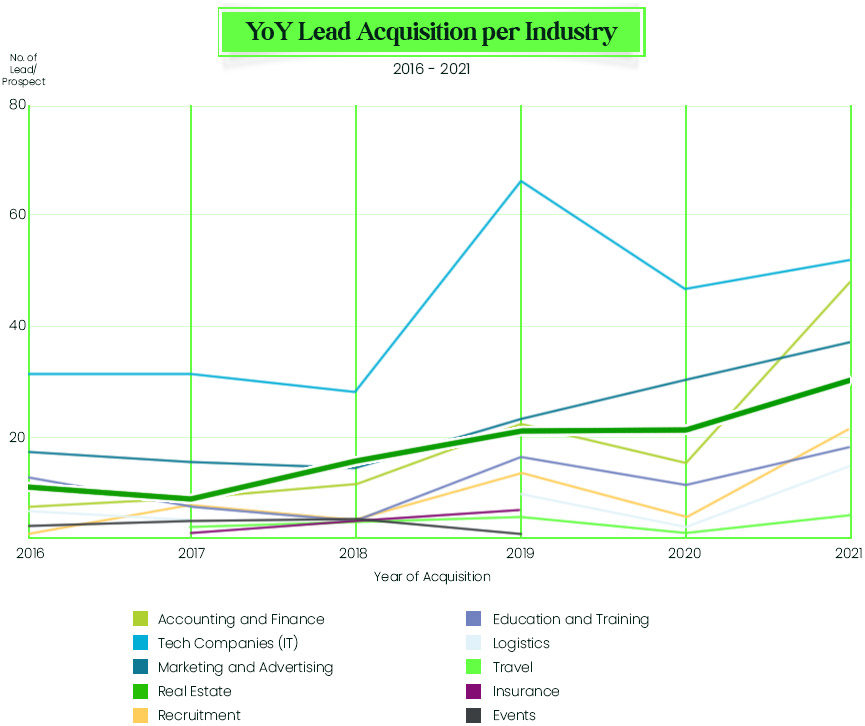
    YoY Lead Acquisition chart

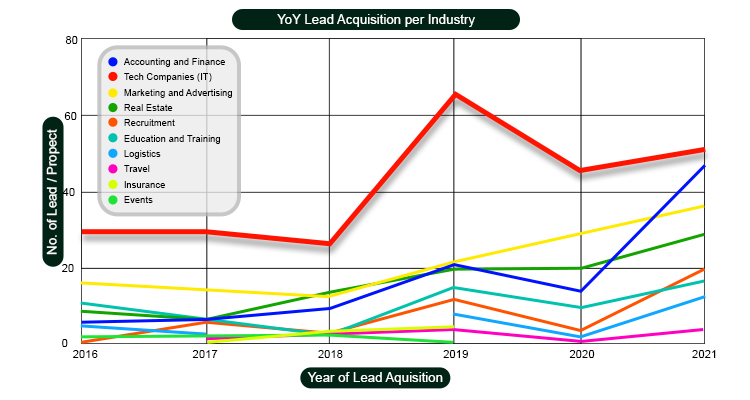
    As you can see in the graph above, the marketing industry showed increasing interest in remote work from 2018 to 2021. 

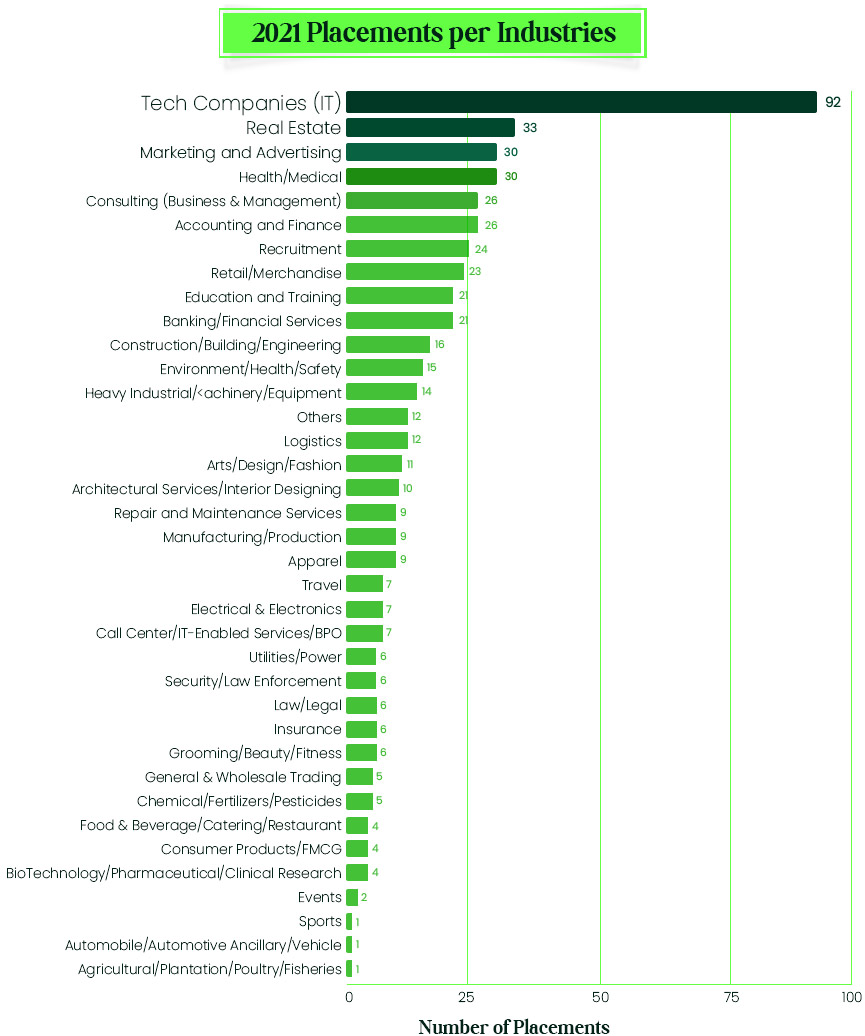
    2021 Placement per Industry chart

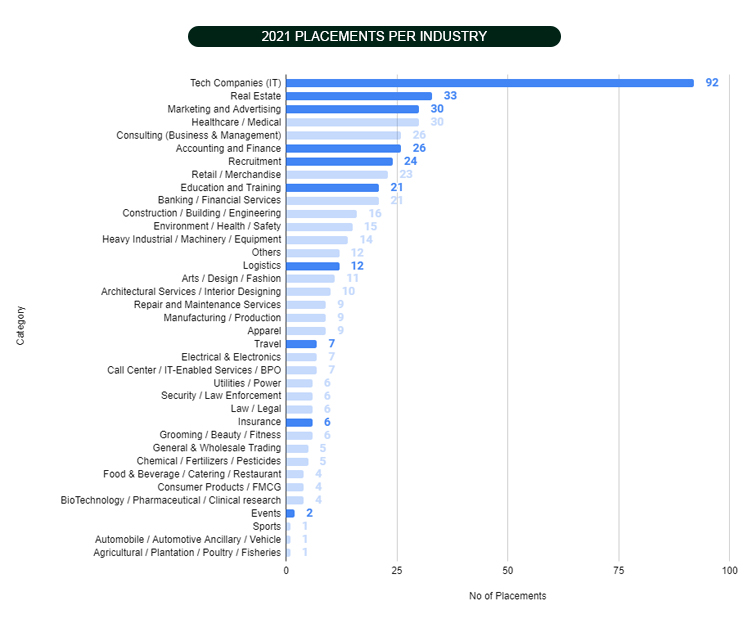
    In terms of placement, the marketing industry ranks third, along with the healthcare industry. Both industries made a total of 30 placements each in 2021.

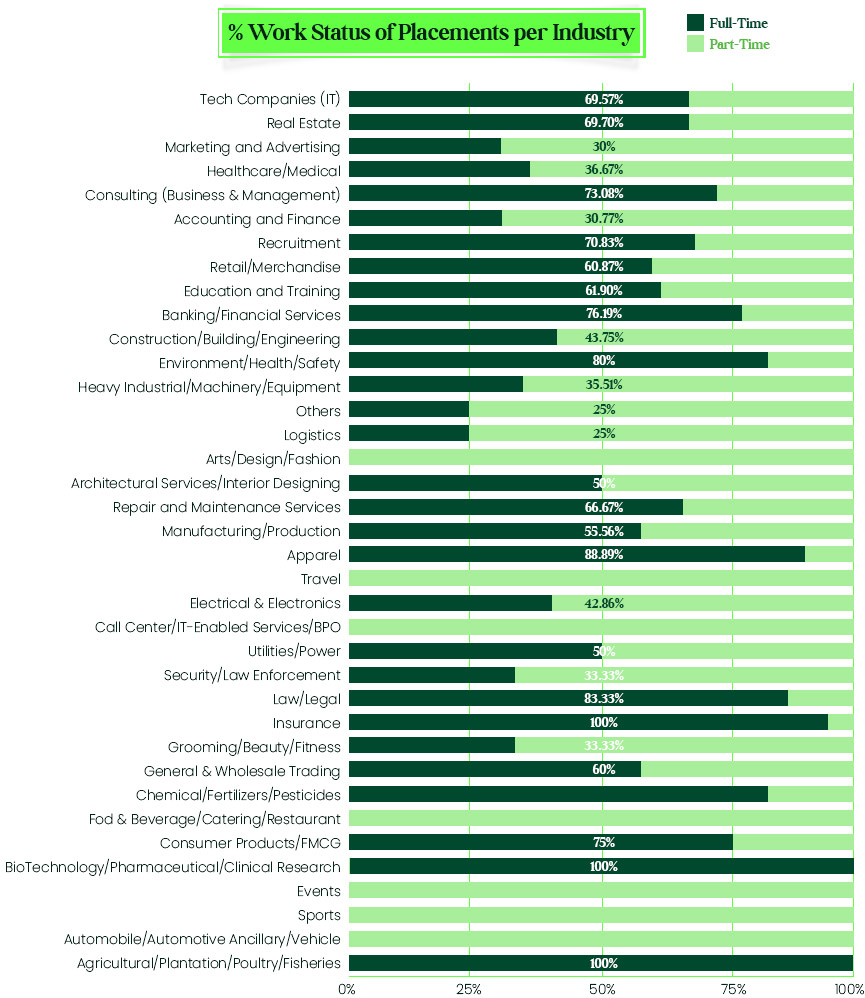
    Work Status of Placements chart

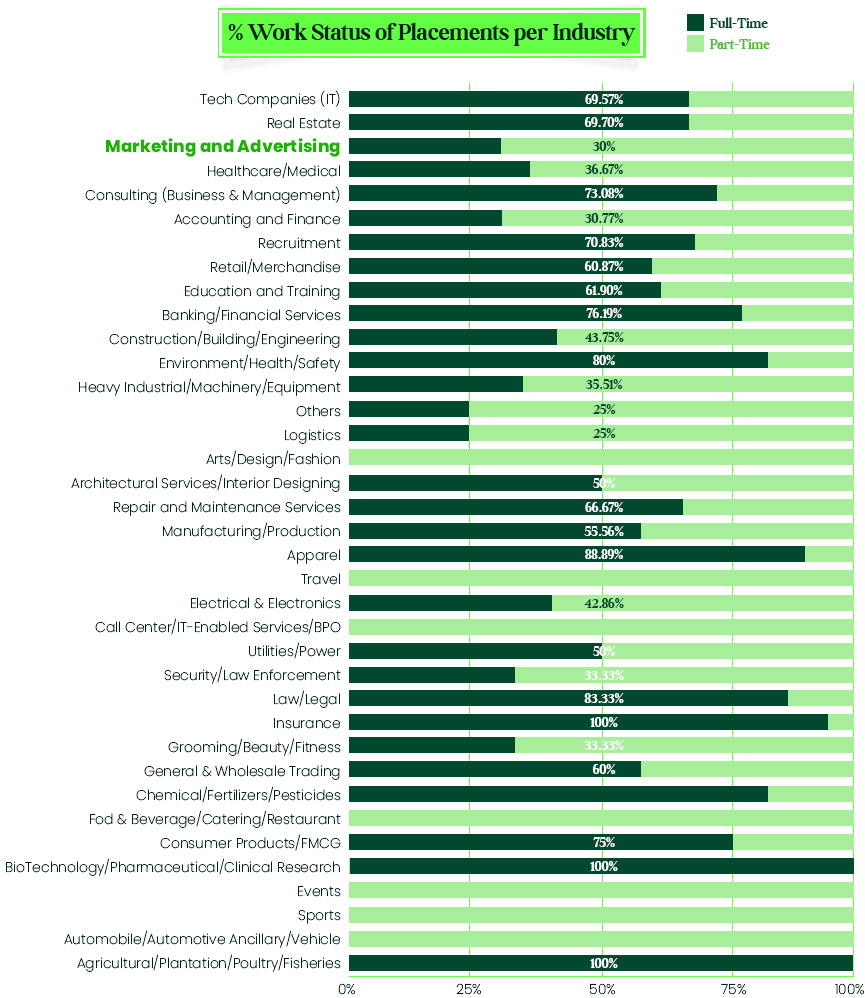
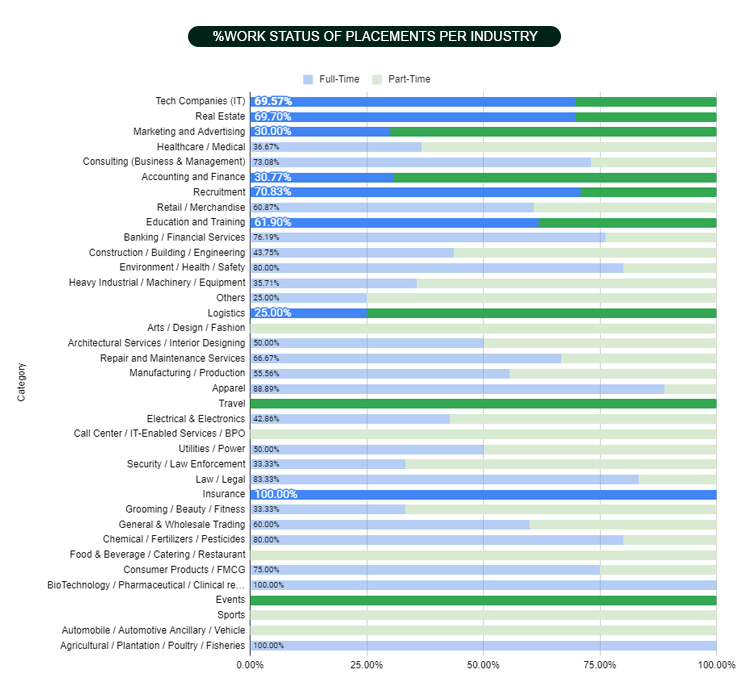
    Out of the 30 remote workers contracted by businesses in the marketing industry, 70% are part-timers. This shows that Filipino marketing professionals prefer to do part-time marketing work to do the kind of varied work they want. Thirty percent of the contractors are full-time workers, which means that remote work is not only a temporary fix. Businesses are making remote work a permanent business solution.  

  • 10 Challenges of the Accounting Industry and How Remote Work Can Solve Them

    10 Challenges of the Accounting Industry and How Remote Work Can Solve Them

    As we face the hurdles of the pandemic, the accounting industry has been the backbone of every business. Knowing what’s happening with your finances and managing them well determines your survival during these challenging times. 

    The accounting industry comprises mainly of the following services:

    • Auditing services
    • Tax agent services
    • Accounting services
    • Bookkeeping services

    At the start of the pandemic, major players did measures for cost-cutting such as redundancies, hiring freezes, and wage cuts. But as new opportunities and demand arise, most of these cost-cutting measures were reversed.

    Growth Opportunities Amidst COVID

    The demand shifted because of the evolving needs during COVID. Firms are diversifying from traditional accounting services to offering tax consulting services, property advisory, and even cybersecurity consulting. 

    With this, the Australian accounting industry’s 26.2 Billion market size is expected to grow by 1.2% this 2022. Market share comprises roughly 70% of small to medium-sized players. And 30% is accounted for the industry’s big four.

    On the brighter outlook, the industry will experience continuous growth in the coming years amidst uncertain economic conditions. But as new opportunities arise, new challenges emerge. 


    More Disclosure Requirements Due to Economic Impacts of COVID

    Financial reports and statements are here to guide stakeholders in key financial decisions. And with the uncertainties of the pandemic, more disclosure requirements are mandatory for all Australian companies.

    New estimates and allowances are required to account for financial market volatility, liquidity concerns, restructuring, government intervention, decreasing product demand, going concern issues, and more.

    Some additional disclosures include separate line items for material expenses such as restructuring provisions, inventory spoilage, credit losses, impairment losses, and more. 

    It also includes declaring impactful events after the end of the reporting period because COVID-related microeconomic and macroeconomic changes may happen rapidly or unexpectedly. Sometimes, waiting for another reporting period to disclose the effects is too late for the stakeholders.

    The impact of these changes on the financial position and comprehensive income should be expressed to the stakeholders. It allows them to make sound financial decisions as timely as possible. 

    Moving forward, accounting firms should take into account future changes like the aforementioned in the International Financial Reporting Standards (IFRS).


    Requirements for Taxation Laws and Reliefs

    With the economic downturn, the Australian Government provided tax relief to support businesses. Some are:

    But not all companies can fully understand and comply to take advantage of it. And during these trying times, most should utilize all resources and remedies available.

    Accounting firms are entrusted to be updated with these remedies and to put their utmost diligence to exhaust advantageous tax avoidance and reliefs for their clients.


    Upskilling Additional Services Outside Traditional Accounting

    Upskilling Additional Services Outside Traditional Accounting

    With the uncertainties of the pandemic, it’s not enough to offer just traditional accounting. Upskilling is a must to provide additional services for the new demand. 

    Skills such as financial forecasting, financial analysis, and cash flow projection equip practitioners for the economic risks today. Also, mastering the ever-changing tax laws like the ones listed in the previous section will provide much-needed guidance for their clients.

    With this, accounting firms can offer more relevant services during these trying times.


    Automation and AI

    Automation and AI

    Accounting programs are getting sophisticated by the minute. What was once a job for a few staff can now be done by just a computer program. Jobs like collecting transactions and compelling bills to financial statements are now automated. 

    And with machine learning and AI, who knows what else can be replaced?

    With this, another challenge is IT literacy. Most AI can’t perform analytic and creative thinking towards solving a problem. That’s our edge.

    Accounting practitioners should now have IT literacy to use this automation as a tool for their analysis instead of a threat. They should incorporate it with relevant skills to provide the best services possible.


    Understanding Blockchain and Cryptocurrency

    Understanding Blockchain and Cryptocurrency

    The emergence of new financial instruments poses new challenges for the accounting industry. And blockchain and cryptocurrency are on top of the list.

    Blockchain is like an open-source ledger of transactions that hold records on multiple computers. It’s integrated with cryptocurrencies like Bitcoin, Ethereum, and others. 

    All transactions are transparent, and no one can just “print” cryptocurrency without linking it to the blockchain. No government agency can directly dilute the value of the asset through minting. Although not a perfect hedge, even inflation won’t directly affect cryptocurrencies.

    It makes cryptocurrency a secure medium for trade. The decentralized nature attracts companies that don’t want hefty transaction fees or foreign translation losses across countries. 

    Also, with its finite nature bounded by its mathematical algorithm, it can be used as a long-term store of value for investing, similar to Gold. 

    But the market is extremely volatile. Even one tweet from an influential person can create unfavourable or favourable price actions in just hours, especially for lesser stable cryptocurrencies. For example, a tweet by Elon Musk about Dogecoin (a cryptocurrency) increased its price by 20% overnight.

    That’s why accounting practitioners should understand the concept and be updated with the treatment of cryptocurrency in their client’s comprehensive income and financial position.


    Cybersecurity

    Cybersecurity

    With many companies transitioning to a hybrid remote workplace, computers are heavily utilized to transfer confidential data. 

    Unscrupulous individuals may intercept these data to their advantage. Some hack into computers to infect and ask for a ransom. Some steal trade secrets for competitors. While others, just want to test their hacking abilities. 

    Additional safeguards are also required when holding cryptocurrency because they may be secure by themselves but a simple phishing website can hack away your seed phrase access.

    A company should have robust cybersecurity. Financial data and assets should be protected from these online risks.


    Collection of Payment

    Collection of Payment

    With the pandemic, most businesses are one emergency away from being bankrupt. And this can affect even businesses running for decades already. One lockdown announcement or another containment rule can make or break even the strongest companies.

    Collection of payment is now a major risk. And some receivables might take a while before turning into cash. Or worse, it might even turn into bad debts expenses. 


    Marketing Strategies

    Marketing Strategies

    With the increase in demand, there’s also a surge in competitors in the accounting industry. 

    That’s why marketing strategies are another challenge for accounting firms. What can you offer that other companies can’t? One aspect is the skills of your staff and how updated you are in this field. But it doesn’t matter if it doesn’t reach your audience.

    It’s not enough to just offer relevant services. Accounting firms should know how to entice their target market to avail of their services. And with the technical nature of accounting firms, most are challenged with creative marketing strategies to turn the tables around.


    Hiring and Retaining Talented Employees

    Hiring and Retaining Talented Employees

    In the accounting practice, how talented your people are will determine how good your operations will be. After all, the main product is their services and skills. 

    But then, accounting firms are notorious for high turnover rates. People experience burnout from long working hours and very tight deadlines, especially during reporting periods. 

    Hiring and retaining talented employees remains one of the top challenges in the industry. And with the onset of the pandemic, most highly qualified prefer working-from-home.

    Accounting firms clamour to hire the best and retain the brightest in their roster. And they need to offer compelling salary packages, incentives, and working setups to do so.  


    Hiring Remote Staff as a Solution

    Hiring Remote Staff as a Solution

    At the start of the pandemic, most accounting firms build hybrid work arrangements to continue operating during the pandemic.

    But as remote work became the new normal, most big players are seeing more value in this setup. The big four namely, Deloitte, EY, KPMG, and PwC are offering remote working arrangements even before the pandemic. 

    And they are planning to extend this setup to most of their employees afterwards to retain top talents, not only in Australia but also around the world. That’s why most smaller Australian accounting firms are following suit. 

    But not all accounting firms have the manpower or the expertise to recruit the best around the globe. That’s why a partner agency is a great solution for hiring Remote Staff.


    Working with Remote Staff

    Working with Remote Staff

    Remote Staff accelerates business growth by helping entrepreneurs recruit and onboard skilled remote talent from the Philippines. With over a decade of experience, Remote Staff has successfully matched remote talents for accounting firms. 

    From 2020 to 2021, leads from the accounting and finance industry increased by 235%. For the placements, 30.77% are full-time and 69.23% are part-time. By 2022, more and more are transitioning their current remote works from part-time to full-time as they see the sustainability of remote working.

    Most hire the following roles for their firm.


    Virtual Assistants

    Business owners and managers should focus on tasks that bring the most value to the company. But you can’t ignore administrative tasks for long. What you can do is delegate these tasks to capable virtual assistants.

    Virtual assistant jobs can range from appointment setting, scheduling, organizing files, research, and it can be extended to social media postings, real estate, and bookkeeping for specialized tasks. With this, you can free up time for the things you can do best.


    Data Entry Specialist

    Data Entry Specialist

    With the higher demand for new accounting services, how do you handle all the information coming in? With the thousands of financial data available, not everyone has the time to collate everything. That’s where data entry specialists come in. 

    Data entry specialists input information, verify its accuracy, correct invalid data, and manage data flow. Coupled with confidentiality, they handle sensitive information and present it in a digestible format.


    Bookkeepers & Accountants

    With accounting firms getting more clients, they hire additional bookkeepers and accountants to match the growing demand. Most accounting firms need additional manpower in:  

    • Processing financial transactions
    • Maintaining payroll systems
    • Maintaining subsidiary accounts and ledgers
    • Operating a computerised accounting system

    Some might hire for seasonal demand, especially if the reporting dates are approaching. But most retain and train their Filipino talents as permanent employees to sustain the growth. 


    Management and Organisation Analysts

    Management and Organisation Analysts

    On top of traditional accounting, more services are offered in these trying times. With more and more companies restructuring to keep up, management and organisation analysts are in-demand to do this job.

    They study a company’s organisational structure and then assist them to solve organisational inefficiencies like redundancies, unnecessary procedures, and systems. In this way, accounting firms can maximize their resources and can offer advisory services with the same intent for their clients.


    Financial Investment Advisers and Managers

    Financial Investment Advisers and Managers

    Financial management is a crucial process in this pandemic. After all, cash is the lifeblood of all businesses. That’s why financial investment advisers and managers are in-demand for accounting firms.

    Financial investment advisers and managers monitor the company’s assets to maintain a healthy balance sheet. Also, they assess available opportunities and allocate a percentage to invest in them.

    It strengthens the accounting firm’s financial position, and you can also offer the same services for their clients as well.


    Web Developers

    Web Developers

    Most accounting firms don’t have websites for the longest time. And the pandemic pushed them to create one for their business. With every company needing an online presence, web developers are in-demand to create eye-catching and easy-to-use websites for your clients. 

    Moreover, for some that do have websites, it’s outdated for the needs of today. It’s not optimized or innovative enough to attract clients. Web developers apply modern UI/UX design coupled with SEO integration to reach more people through search engines.

    Furthermore, robust cybersecurity practices are embedded on these websites to prevent unauthorized information leaks or website failure that will compromise operations. 


    Digital Marketing Specialist

    Digital Marketing Specialist

    Improving your services is just one aspect. Another essential process is your marketing because even the top-notch services wouldn’t matter if it doesn’t resonate with your target audience. Hiring digital marketing specialists solves this problem.

    Digital marketing specialists provide a systematic approach for a firm’s potential clients. They can utilize social media channels, Google ads, organic SEO, and more, depending on your needs. With the digital marketing strategies in place, you have a competitive advantage over the rest. 


    Testimonials

    Testimonials

    As for the Filipinos, full-time remote workers are earning an average of 49,398 PHP and part-time workers at 26,133 PHP. Contrary to the stigma of lowballing Filipino remote workers, the rates are similar to managerial rates in Metro Manila, the central business district.

    With this, Filipinos contracted with Remote Staff enjoy working from the comforts of their homes while earning similar or more than their office-based counterparts. Here’s a testimonial of our remote worker in the accounting and finance industry.


    Are you looking for your own Remote Staff? View our roster of candidates for your talent needs. 

    Focus on the things only you can do with the help of Remote Staff.

  • A Case Study on the Challenges Faced by Australian Tech Companies and How Remote Work Can Help Solve Them.

    A Case Study on the Challenges Faced by Australian Tech Companies and How Remote Work Can Help Solve Them.

    Introduction.

    One of the definite upsides of the global pandemic is the sudden growth and increase in popularity of remote working. And with this comes an increasing need for the services of Information and Communications Technology (ICT) and Computer and Software Retail Companies.

    These companies offer a wide variety of vital services for their clients. These services range from developing mobile applications to managing databases and company social media accounts. Aside from these fields, tech companies also serve an essential role in healthcare, education, and the digital economy.

    Market Size

    market size growth

    The necessity of shifting to a remote work setup during the pandemic has accelerated the growth and spending in the tech industry. According to Gartner, IT spending in Australia is projected to exceed $172.3 billion AUD in 2026, marking a significant increase of 8.9% from 2025.

    Despite its impressive growth, there are still many areas where the tech industry can improve. Fortunately, outsourcing jobs has opened new ways to improve your business’ success.

    Challenges Faced by Australian Tech Companies.

    As I alluded to earlier, Australian Tech Companies also face several challenges for their success. These challenges can keep them from fully taking advantage of the new developments in this sector. These are:


    Declining Life Cycle Stage.

    One of the primary challenges faced by Australian Computer and IT companies is their businesses are entering the decline stage. This stage is where a business’s sales and profits begin to fall. Two factors determine the rate a company enters this stage: how fast consumers’ tastes change and how fast the introduction of new products in the market is.

    Due to rapid developments in technology today, it is getting harder for tech companies to keep up with these changes and innovate. Additionally, customers are more likely to purchase up to date computers than old ones, for obvious reasons. After all, who would buy older model computers or laptops when new ones exist?

    Because of these factors, existing Australian tech companies are struggling to innovate and keep up with market demands. The declining life cycle stage of the tech industry also makes it difficult for new companies to enter the market.

    Stiff Competition Amongst Companies.

    Stiff Competition Amongst Companies

    Another primary challenge that Australian tech companies face today is stiff competition. Because of the growing demand for tech services and products, many companies are entering this industry to take advantage of this demand. This increase in competition leads to companies changing their business models to adapt and thrive.

    Unfortunately, not all tech companies can adapt to these changes and remain competitive today. New companies are having difficulty establishing their brands and finding their market niche. On the other hand, Older companies are struggling to maintain their brand and keep their market niche in the face of many competitors.


    Acquiring Skilled Employees.

    Connected to the previous two challenges is the competition to get skilled employees. As tech companies adopt new business models, technologies, and other measures to remain competitive, they’ll need competent and experienced employees. Because of this, there is an ongoing “talent war” as companies seek to hire the best employees today.

    This talent war happens because there aren’t enough skilled applicants applying for the tech companies’ vacancies. Without new applicants, companies risk stagnating as there are no fresh ideas to help push the company forward.


    Data Security, Management, and Privacy.

    In today’s digital age, data security and privacy are some of the primary concerns for tech companies. This concern comes from the fact that companies store most, if not all, of their data via cloud. This setup makes your data very vulnerable to hackers and other cyber threats.

    Having a data security breach in your track record will make potential customers wary of trusting your services and forever tarnish your company’s reputation. So if you want to avoid any issues, having excellent data security, management, and privacy setup is a must.


    Remote Work as a Solution to These Challenges.

    Fortunately, despite these challenges, the advent of remote work has opened new opportunities for Australian tech companies. In fact, big companies such as Apple, Google, and Microsoft have announced that their current hybrid setup is here to stay. Not only is a remote/hybrid work setup more flexible than a traditional one, but it improves worker productivity as well.

    An example of how remote work can help your business through helping you acquire more skilled employees. Because remote workers don’t need to work in an office, your available talent pool is potentially cheaper and goes beyond Australia. And one of the best countries to outsource work to is the Philippines.


    How Remote Staff Can Help Tech Companies.

    How Remote Staff Can Help Tech Companies

    For more than a decade, Remote Staff has helped Australian tech companies find the perfect remote worker for their needs. Tech companies that have contracted us since last year have outsourced the following jobs to Filipino remote workers:


    Web Developers.

    • Write well-designed, testable, and efficient code using the best software development practices.
    • Create website layout and user interfaces using standard HTML/CSS practices.
    • Integrate data from various back-end services and databases.
    • Gather and then refine specifications and requirements based on technical needs.
    • Maintain, expand, and scale your client’s website.
    • Coordinate with the web designers to match your client’s visual design intent.


    PHP Developers.

    • Write clean, functional, effective, and scalable PHP codes.
    • Build and edit efficient, testable, and reusable PHP modules.
    • Solve complex performance and architectural challenges.
    • Integrate user-facing elements developed by front-end developers.
    • Assimilate data storage solutions.


    Front-End Developers.

    • Ensure optimized UI/UX design.
    • Collaborate with back-end developers about the website’s features.
    • Develop engaging user interfaces.
    • Integrate the website’s design alongside the best SEO practices.
    • Develop website codes for campaigns.
    • Optimize the website for speed and scalability.
    • Implement designs for mobile sites.
    • Fix usability issues and bugs.


    Software Developers.

    • Proficient in systems and applications development.
    • Familiar with many development tools, programming languages, and methodologies.
    • Excellent understanding of coding methods.
    • Able to research software-related issues and products.
    • Good analytical and problem-solving skills.
    • Capable of troubleshooting problems specific to their area of expertise.


    Virtual Assistants.

    • Manage filing systems, update records, and organize documentation.
    • Answer and direct your client’s phone calls.
    • Answer emails.
    • Prepare and organize databases and reports.
    • Organize meetings, travels, and accommodations for your client.
    • Manage your client’s contact lists and organize their client’s calendars.


    Lead Generation Specialists.

    • Maintain the integrity of the company’s client database, ensuring that the data is accurate, current, and consistent.
    • Research on specific information regarding prospective clients.
    • Proficient in database navigation and data mining.
    • Able to complete any missing information (Name, Contact information, Address, etc.) in your database through research.
    • Put together and summarize data via excel or Google sheets.
    • Collaborate with the sales team to manage sales and marketing campaigns, including follow-up calls and setting up appointments.


    Technical Support Specialists.

    • Act as the initial point of contact for all technical or system-related concerns from clients or users.
    • Handle technical support concerns via phone and email submission.
    • Maintain a working log detailing all the required system updates, as well as their date of completion.
    • Assist in the creation of training materials for system troubleshooting and usage.


    Junior Data Analysts.

    • Interpret and analyze data using statistical techniques.
    • Develop and implement data analyses, collection systems, and other strategies that optimize statistical efficiency and quality.
    • Acquire data from either primary or secondary sources and maintain your client’s database.
    • Identify, analyze, and interpret trends or patterns in complex data sets.
    • Convert raw data into dynamic dashboards, tables, etc.
    • Collaborate with the management team to prioritize business and information needs.
    • Locate and define new process improvement opportunities.
    • Make sure that all deliverables are on time for their submission.
    • Responsible for ensuring that all data and information are kept confidential at all times.


    Remote Work in the IT Industry: What Our Numbers Are Saying.

    All these statements sound impressive on paper, but without concrete proof to back them up, these statements doesn’t mean anything. Fortunately, we have the evidence to support our claims and show the increasing demand for remote work in the IT industry.

    YoY Lead Acquisition per Industry

    When we analyze the numbers of our lead acquisitions from 2016 to 2021, we can see that the IT industry has consistently been the top industry that showed interest in remote work.

    In addition, we can see that there was an increase in lead acquisitions for the IT industry during 2018-2019. It dropped slightly in 2020, but rose again in 2021 because of the pandemic.

    2021 Placements per Industry

    Getting inquiries about our services is one thing; actually hiring remote contractors is another. As you can see from these graphs, The IT industry has tallied 92 placements during 2021, the highest of any industry that year.

    %work status of placements per industry

    Of these 92 contractors, 64 (69.67%) are full-time workers, while 28 (30.43%) are only part-timers. This statistic shows that, contrary to what some may think, remote work is not just a temporary measure until the pandemic is over. Many companies are now seeing the benefits that remote workers; and wish for it to continue after the pandemic.

  • Remote Staff Case Study: The AU Real Estate Industry

    Remote Staff Case Study: The AU Real Estate Industry

    Introduction

    Real estate is one of the most valuable assets you can own or trade. Just about anywhere in the world, the population increases while the amount of livable land remains the same. The rising demand thus guarantees the latter’s value going up over time. 

    So, aside from owning stocks or selling goods, brokering the sale of and/or renting out properties can be a great way to make money. In Brisbane alone, the property market is projected to grow further this 2022, the ongoing pandemic notwithstanding. 

    Australia has one of the world’s most urbanised populations. Majority of its citizens live in cities on the coast, which can be relatively expensive. However, this doesn’t stop locals (as well as other tourists and foreigners) from investing in real estate Down Under. 

    Introduction

    According to the most recent numbers, more than half of Australians are homeowners. And as with other developed nations, the percentage of home ownership increases with age. By the time people reach their mid-30’s, half of them already own their own place. 

    Right now, the median age of the Australian population is 37. This means that half of the population are more financially stable and are likely to be looking to buy their own homes, making them a good market for real estate businesses. 

    While it’s true that prices of homes have increased in the last 10 years, the demand is now higher than ever as the country slowly but surely recovers from the pandemic. 2021 was definitely a bumper year for real estate sales, for instance, what with record-low interest rates on housing loans, continuing restrictions on people’s movements, remote work steadily going mainstream, and additional government financial support compelling many consumers to allocate more of their income for housing.

    2022 will likely be another good year for the real estate industry.  The demand for residential real estate stabilised last year, but future lockdowns are no longer as big a threat with increased vaccination rates in the country. 

    Challenges in the Industry

    Vaccination rates are steadily rising throughout the country, but there’s no doubt that the COVID-19 pandemic will continue to disrupt the real estate industry regardless. Hence, its lasting impact is expected to ripple outwards for years to come. 

    To date, there are at least five emerging challenges the industry will need to address or work around:

    Weaker Demand Within the CBD Market 

    Weaker-Demand-Within-the-CBD-Market

    Social distancing measures and border lockdowns forced people to stay at home. These days, it’s become increasingly normal for families to study and work remotely. Consequently, a significant percentage of the population has moved to the rural areas for lower living costs and better quality of life, among other things. 

    With work and school becoming increasingly decentralised, Central Business Districts (CBD’s) face significant challenges in getting people to come back to the city. 

    Hence, we can expect urbanisation and growth in the CBD sector to slow down in the foreseeable future. 

    Distributed Property Demands 

    Distributed-Property-Demands

    Because of the pandemic, the Australian government offered various forms of financial support like lower interest rates and mortgage rates are now significantly lower. Conversely, the number of first-time buyers in the property market is currently higher as of this writing. 

    This presents both an opportunity and a challenge as most buyers might be looking for residential properties outside CBD’s. It’s highly possible that there will be an increase in demand for properties in rural areas, thus driving property prices in these areas upwards. 

    Instability of Property Prices

    Instability-of-Property-Prices

    The end of the pandemic won’t guarantee price stability in the property market. The global economy still has a long way to go before recovery, and there’s still a lot of uncertainty and volatility where property valuations are concerned. 

    Although the low-interest rates, favourable supply, and increasing demand has led to higher consumer confidence, lower income levels contribute to further disparity when it comes to home ownership. 

    High Unemployment 

    High-Unemployment

    Speaking of lower income levels, the pandemic’s devastating effect on various businesses and livelihoods continues. Although the demand for real estate is increasing, this is largely due to government-backed initiatives. Hence, there’s no telling if the demand will prove sustainable once the incentives are lifted. 

    Left unaddressed, the unemployment issues will inevitably affect most Australians’ ability to purchase or rent property. 

    Uncertainty for Office Spaces

    Uncertainty-for-Office-Spaces

    Remote work is clearly here to stay, so the demand for office spaces is likely to decrease. 

    However, there’s also an opportunity for repurposed work spaces. With the rise of the hybrid working model, there will still be a need for company offices, but there will likely be a preference for those with proper ventilation. The need for social distancing in these offices could possibly offset the decreased demand for larger working spaces as well.

    Co-working spaces could also replace the typical office, what with a good percentage of the population not having a good place to work at home due to factors like cohabiting with family, the lack of room, or numerous responsibilities that get in the way of productive work. 

    Remote Staff as a Possible Solution

    Remote-Staff-as-a-Possible-Solution

    While the real estate industry will remain relevant and profitable, the challenges ahead indicate that unconventional solutions could benefit any company that wants to scale sustainably post-covid. 

    As mentioned in the previous section, since the demand for office space is much lower these days, it doesn’t make sense for a leading real estate company to cling to a traditional workspace. 

    And since remote work opens up the possibility of hiring the best talent from anywhere in the world, Australian dollars will go much further when outsourcing key administrative tasks, such as the following:

    • Virtual Assistants
    • Sales Consultants
    • Graphic Designers
    • Content Writers 
    • Data Entry Experts 
    • Social Media Managers 

    With its vast pool of prequalified Filipino remote working talents, comprehensive skills development program for both clients and workers, and its uniquely-designed monitoring platform, Remote Staff can easily fill staffing requirements for both temporary and permanent arrangements in the real estate industry.

    Need a more specific role? So long as it can be done remotely, Remote Staff can also seek out suitable candidates for it.

    Tasks That Can Be Outsourced in the Real Estate Industry

    Virtual Assistants

    • Virtual Assistants

      • organise virtual meetings and real estate-related webinars;
      • manage contact lists and organise managers’ calendars;
      • create and review client spreadsheets and keep online records;
      • conduct market research about the real estate industry and report results;
      • prepare presentations featuring properties and other assets; and
      • help other remote employees with their administrative queries.

    Sales Consultants

    • Sales Consultants

      • sell real estate properties and assets that the company offers;
      • maintain and grow a strong client base;
      • find new business opportunities and maintain a healthy pipeline for future real estate deals and investments;
      • respond to new and current client bases regarding concerns and service enquiries of new and upcoming properties

    Graphic Designers

    • Graphic Designers 

      • developing concepts, graphics and layouts for real estate promotions, company posters, social media promotions, and website banners;
      • determining size and arrangement of copy and illustrative material, as well as font style and size; 
      • preparing rough drafts of material based on the property design;
      • reviewing final layouts and suggesting improvements for future concepts;
      • liaising with other creative team members to ensure deadlines are met and that marketing materials are rendered in the highest quality. Content Writers
    • Content Writers 

      • conducting research on any real estate-related topic 
      • writing website descriptions of real estate properties;
      • creating blog posts about the latest trends, architectural styles, and real life client feedback and expectations; and
      • developing style guides or suggesting changes in website and social media content to ensure brand message is consistent and clear among all channels. 

    Data Entry Experts

    • Data Entry Experts 

      • collecting and digitising previous data such as invoices, cancelled bills, client information, and financial statements;
      • maintaining a detailed and organised storage system of sold and rented property units to ensure data entries are complete and accurate; 
      • addressing data inconsistencies such as rental rates and property cost by working with administrative staff to verify or locate missing data;
      • attending to data queries and reporting any major data errors or inconsistencies to management; and 
      • adhering to best data management practises and maintaining a high standard of accuracy and efficiency. Social Media Manager
    • Social Media Manager

      • staying up to date with latest social media trends and hashtags to generate more interaction from followers, especially potential customers; 
      • working with copywriters and designers to ensure content is relevant, informative, and appealing;
      • measuring the success of every social media campaign and what can be done to further improve future engagements; 
      • monitoring SEO and user engagement and suggest content optimization to filter out the right audience; and 
      • communicating with real estate professionals as well as influencers via social media to create a strong network.

    Remote Work in the Real Estate Industry: What Our Numbers Are Saying

    Save for our client testimonials (more on that in the next section), we can’t really reveal much about our client’s remote operations and results (yet).

    But the numbers we do have undoubtedly reveal that the demand for remote work in the real estate industry has been slowly but steadily growing over the years:

    YoY-Lead-Acquisition-per-Industry

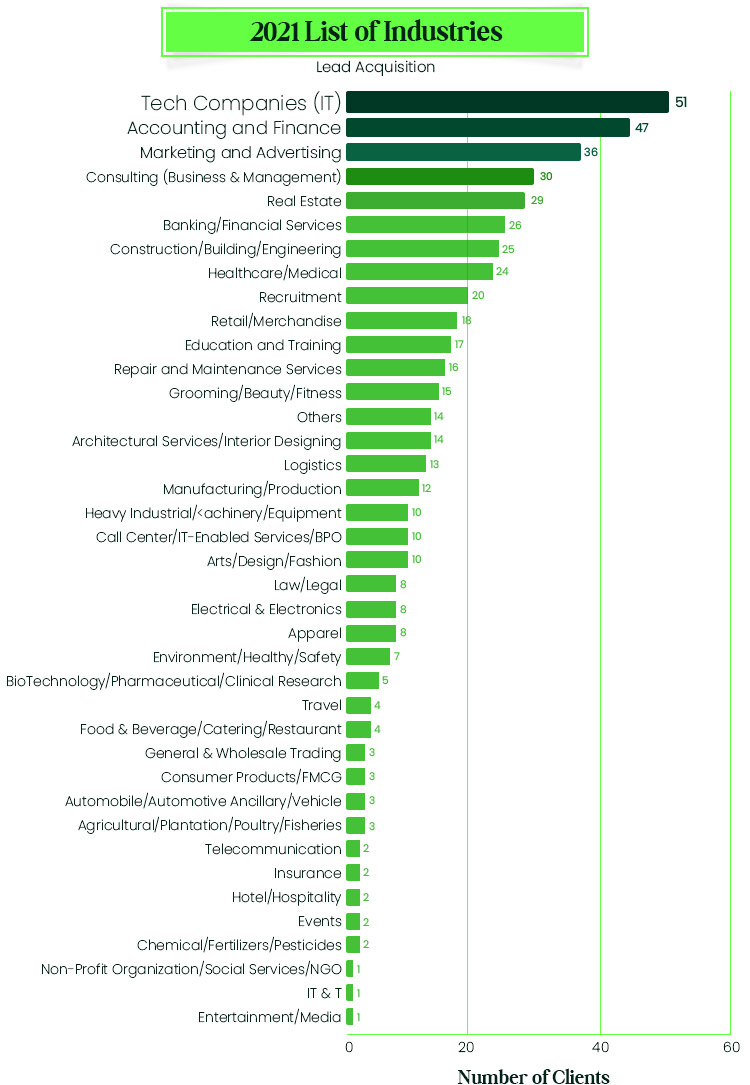
    And when we break down the lead acquisition numbers from last year per industry further, we can see that the real estate industry is in the top five industries that have expressed either a need or an interest in remote work:

    2021-List-of-Industries

    As for actual placements, the real estate industry places even higher. According to the chart below, the total number of actual placements in this industry last year was second only to that of the IT industry:

    2021-Placement-per-Industry

    Lastly, far from a temporary fix that most people consider it to be, the remote positions in the real estate industry are actually quite permanent, judging by the proportion of full-time positions versus the part-time ones.

    In the chart below, over 69.7% of our remote work placements in the real estate industry are full-time, even exceeding that of the IT industry’s by a very small margin:

    Work-Status-of-Placements-per-Industry


    Actual Client Testimonial

    Michael Uspensky founded and runs a company called National Rental Inspections, which specialises in rental property inspections on behalf of real estate agencies and property management companies. They carry out about 40,000 property inspections annually, and have been Remote Staff clients for more than eight years.

    Learn more about how Remote Staff’s rich pool of talented Filipino remote workers has helped his business grow over the years – along with his recommendations for making the most out of such an arrangement in the short video below:

    Looking for the right people to get your company ready for the digital future? Call us today or schedule a call back to view our available candidates

  • Marketing and Advertising Industry Case Study: Major Challenges and How Remote Working Can Help Them

    Marketing and Advertising Industry Case Study: Major Challenges and How Remote Working Can Help Them

    Marketing is essential in every business. Even with the best products in the world, you won’t be successful if you don’t get your product message out there.

    And it’s quite complicated, especially for new businesses. That’s why there will always be a place for marketing and advertising firms, especially digital marketing.

    Digital marketing is estimated to represent 53.2% of the total Australian Ad market last 2018, where video and mobile marketing taking 33% of the entire market.

    Challenges Faced by Marketing and Advertising Companies

    But the recent pandemic brought a dent to the declining market. It is expected that demand will substantially decline during the second quarter. This is due to businesses halting their marketing campaigns to reallocate most of the budget to business survival.

    And for those who will survive the economic downturn, there are numerous additional challenges they will face. Here are some:

    Lead-Generation-and-Spotting-Market-Trends

    Every sales funnel starts with a lead. It’s simple. If you get more leads, you get more chances to convert to customers.

    But getting quality leads is quite hard. Marketing and advertising companies need to continuously create fresh content that will resonate with their clients’ target audience. And spotting these new market trends is a constant demand for those in this industry.

    Quality-Traffic-from-Google

    Quality Traffic from Google

    Another source of leads is quality traffic from Google. Marketing and advertising companies need to devise ways to lead customers to their clients’ websites. It’s because the more website traffic, the more people might buy.

    It can be through Social Media campaigns, UI/UX website improvements, or SEO strategies. There are many ways, but the marketing and advertising firm should know what will deliver the best results for the client.

    Organizing-Data

    Organizing Data

    Technology allowed businesses to gather as much information as possible in their industries. But this is a double-edged sword. With all the information, how do you know which one is relevant for your client?

    Marketing and advertising agencies are challenged with organizing data. And picking up information that can be useful for decision making, especially for the next campaigns.

    Measuring-an-Effective-Campaign

    Measuring an Effective Campaign

    How can you say that a marketing campaign is successful? Is it the number of impressions? Is it the conversions? How do you measure an effective campaign?

    It’s a hurdle for marketing and advertising firms to properly set KPIs that will clearly benefit their clients. Setting KPIs that matter is essential for success in this industry. After all, your clients’ success is your success.

    Personalizing-Customer-Communications

    Personalizing Customer Communications

    In marketing today, you can automate most of the recurring tasks like email marketing or posting. But one thing is clamored by most customers, talking to a real person.

    It’s a struggle to find a balance between using technology and having that personal touch in customer communications. If they have problems, they don’t want to get auto-responders and templated messages.

    That makes personalizing customer communications a constant challenge for marketing and advertising companies.

    Adapting-to-New-Technology

    Adapting to New Technology

    Technology radically changed how we market our products today. Print ads and newspaper advertising are not that used so much compared to social media and Google advertising. And this shift in marketing practices is quite constant in the Marketing and Advertising industry.

    For example, voice search, messenger chatbots, and podcasting are growing tools that can be utilized by businesses today. Are you learning about them? Are you adapting to new technology?

    Knowing this, it’s essential to adapt to continuously grow your client base.

    Remote-Working-as-a-Solution

    Remote Working as a Solution

    Since most of the marketing efforts of companies are online, marketing and advertising firms can either have a full or partial remote operation. In fact, Australian players in the industry like Insil and BFJ Media are getting remote workers to help their team.

    Not only is this option cost-effective, but it can also be practical with the New Normal.

    Working with Remote Staff

    And you can also achieve the same benefits for your firm. You just need to find the best partner to connect you with the best remote workers out there.

    Remote Staff has over a decade of experience in helping marketing and advertising businesses prosper remotely. Here are some of the job roles companies contract with us that can help you as well:

    Virtual Assistants Roles

    Admin tasks can take up your precious time without you even knowing it. Focus on the things that only you can do by hiring Virtual Assistants. Virtual Assistant Roles that are frequently hired by marketing and advertising industries are:

    Executive Assistant

    Executive Assistant

    • Can help with taking calls and answering emails.
    • Can provide administrative and clerical support.
    • Can do scheduling and arranging travel itineraries.
    • Can prepare corporate documents.

    Customer Support

    Customer Support

    • Talks to clients over the phone or through chat for technical support.
    • Responds to queries over phone or chat.
    • Troubleshooting technical problems.
    • Asks for feedback relating to customer experience.

    Web Developers

    The website of your clients is like your storefront in retail. You need to make it enticing and attractive for customers to buy products. And on the back-end, they need to maintain the websites to function well. That’s why businesses hire web developers.

    Front-End Web Developers

    • Ensure optimized UI/UX design
    • Coordinate website features to back-end
    • Develop engaging user interface
    • Integrate web design to best SEO practices
    • Build website codes for campaigns
    • Optimize website for speed and scalability
    • Implement designs for mobile sites
    • Fix usability and bugs

    Additionally, you can hire backend developers to ensure that your website is running smoothly. Moreover, SEO specialists, copywriters, and social media managers can contribute to promoting your website to achieve significant and meaningful web traffic.

    Accounting and Bookkeeping

    Handling financial records takes up a lot of time. Why spend most of your time here when you can use it for other income-generating activities? For the marketing and advertising industry, an accountant or bookkeeper can be essential in tracking financial transactions for reporting purposes.

    Bookkeepers

    Bookkeepers

    • Help you manage your books for day-to-day transactions.
    • Can input data in accounting software.
    • Help generate reports.

    Accountants

    Accountants

    • Can prepare financial statements in accordance with the proper standards.
    • Can analyze financial statements for business solutions.
    • Can prepare reports to be compliant with Australian taxation laws.

    Remote Staff Testimonials


    Looking for your Remote Staff? Hire Remote Staff to focus on the things that only you can do. Feel free to view our candidates for possible talents today.

    [rcb_show_form]
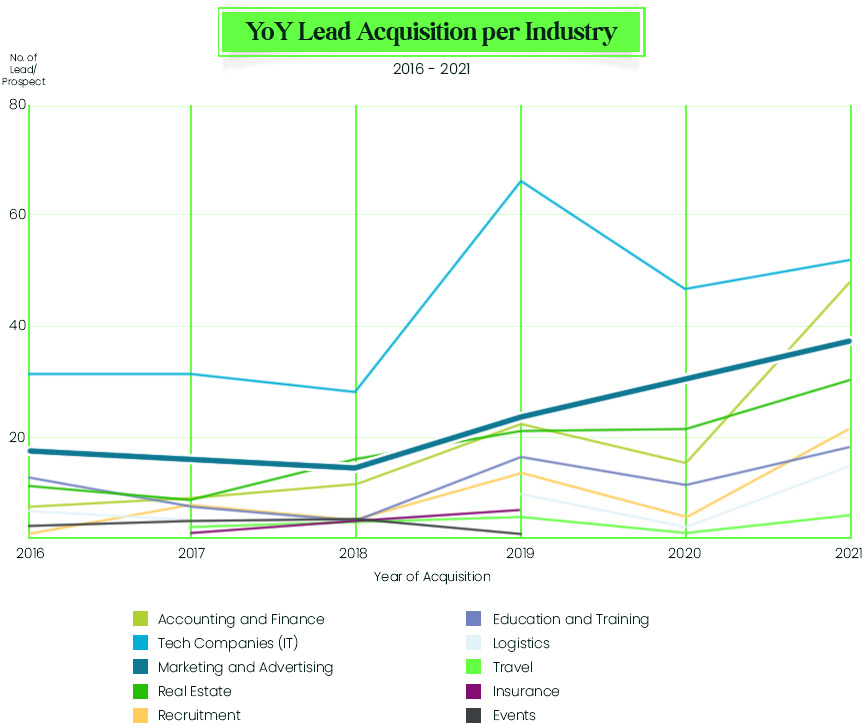
  • Education and Training Industry Case Study: Major Challenges and How Remote Working Can Help Them

    Education and Training Industry Case Study: Major Challenges and How Remote Working Can Help Them

    The Australian education and training industry is an essential field in the country. There is a need to upskill every individual to hopefully contribute to their communities. And in return, they can have a more marketable skill set for their career.

    It encompasses preschools, primary schools, universities, and multiple training institutions for further learning.

    And it doesn’t stop there. The world-class education Australia offers attracts foreign students, which a 2016 article pegs at $20 Billion export. It makes it the third-largest export service Australia offers.


    Content-Challenges

    Challenges Faced by the Education and Training Industry

    But the education and training industry is heavily hit by the pandemic. For the universities alone, it is expected that universities will lose $3 Billion and $4.5 Billion from the loss of international students. How much more for smaller players like tutorials and training businesses?


    Content-Dollar-Loss

    And for those who will survive, the New Normal will put a big dent in the profitability. Here are some of the current challenges faced by those in this industry.


    Content-Suspension-of-Classes

    Suspension of Physical Classes

    People want to be protected from COVID19. So multiple campaigns and guidelines for social distancing are in effect. Most physical classes are now halted for safety.

    But even if the restrictions were lifted, people are now wary to be in places with a lot of people. Especially now, the WHO says COVID19 can be airborne indoors. How can you service students without a physical classroom?


    Content-Online-Learning

    Ensuring Effective Digital Classes

    Most educational institutions adapted online classes for their students. Most, if not all, have no choice but to operate using online conferencing software like Zoom, Skype, or Google Meet. 

    The problem is, everyone is experimenting. There is no hard and fast rule to ensure effective digital classes.

    Some even encounter peculiar problems like students forgetting to log in. Or that casual background noises from dogs or their mother entering their room. Some teachers aren’t even trained to use online tools. 

    What are the standards to be followed? No one knows. It makes maintaining the same level of effective learning online a continuous struggle for those in the industry.  


    Content-Slow-Internet

    Slow Internet Connections

    How do educational institutions adapt to faulty internet connections? Australia might have a relatively faster connection compared to the rest of the world. 

    But sometimes, it might not be that stable, especially outside the CBDs. In fact, it ranks 68 among the OECD countries. A slow internet connection disrupts learning for your students. And educational institutions need to account for that.


    Content-New-Normal

    Adapting to the New Normal

    The weight of the pandemic is significant. We battle cash flow problems, operational disruptions, and many more. Businesses are lucky if they will survive the economic onslaught.

    Educational institutions are heavily hit, and adapting to the New Normal is a priority. Daily decisions and creative adjustments need to be made. 

    It can be flexible payment terms, prepaid class offerings, or new sources of income. It can be anything that can make your business still attractive today, even with the pandemic.


    Content-Remote-Working-Solution

    Remote Working as a Solution

    With the above challenges, adjusting is quite hard, but you need to accustom swiftly in order to survive. Hiring remote workers who are experienced with the setup already is an economical way to adapt.

    More than the affordable salaries, the lesser onboarding process, and the readily available expertise in a remote environment can streamline your processes and collaborations today. 


    Content-Working-with-RS

    Working with Remote Staff

    But it’s easier said than done. Looking for the best Remote workers is quite challenging, especially for first-time remote teams. How can you ensure that you get the best talents from the onset? 

    Well, you just need to find the best partner to connect you with high-calibre talents. And Remote Staff might be the partner you are looking for. 

    Remote Staff has over a decade of experience in helping education and training businesses thrive remotely. Here are some of the job roles companies contract with us that can help you as well:


    Content-Virtual-Asst

    Virtual Assistants Roles

    Admin tasks can take up your precious time without you even knowing it. Focus on the things that only you can do by hiring Virtual Assistants. Virtual Assistant Roles that are frequently hired by Education and Training companies are: 


    Content-Back-Office

    Executive Assistant & Back Office Administrator

    • Can help with taking calls and answering emails.
    • Can provide administrative and clerical support.
    • Can do scheduling and arranging travel itineraries.
    • Can prepare corporate documents.


    Content-Data-Entry

    Data Entry Specialist

    • Can input data accurately.
    • Can input orders in the system for tracking.
    • Can provide data analysis for certain reports.


    Content-Marketing-Asst

    Marketing Assistant

    • Support marketing campaigns 
    • Contribute to marketing strategy
    • Creating marketing collaterals such as images and banner ads
    • Maintaining social media platforms

    Take note; as long as these are administrative tasks, you can delegate them to your own virtual assistants.


    Content-Bookkeeper

    Accounting and Bookkeeping

    Business transactions can range from a handful to hundreds every day. You might need a helping hand in accounting and bookkeeping tasks. It’s no surprise that these businesses hire:


    Content-Accountant

    General Accountant

    • Can help you manage your books for day-to-day transactions.
    • Can input data in accounting software.
    • Help generate reports.
    • Can prepare reports to be compliant with Australian taxation laws.


    Content-Tech-Support

    Technical Support

    On top of the roles above, there is now a need for Technical support because educational institutions are pivoting to online classes. What will you do if tech problems arise when conducting classes? Rescheduling classes might mean lost revenue for most businesses.

    Here are some roles that you might consider.


    Content-IT-TechSupport

    IT Technical Support 

    • Maintains computer systems and networks.
    • Addresses technical issues when conducting classes.
    • Provides support like technical documentation.
    • Test current systems from exposure to threats.
    • Analyzes newfound vulnerabilities and safeguards the system from it.

    Remote Staff Testimonials

    Looking for your Remote Staff? Hire Remote Staff to focus on the things that only you can do. Feel free to view our candidates for possible talents today.

  • Accounting and Finance Industry Case Study: Major Challenges and How Remote Working Can Help Them

    Accounting and Finance Industry Case Study: Major Challenges and How Remote Working Can Help Them

    Cash flow is the lifeblood of all businesses. You need to have a healthy accounting and financing strategy to continuously sustain and grow your business. That’s why accounting and financing companies are still sustainable, regardless of the economic climate.

    In fact, the Australian accounting industry is one of the most resilient industries. The industry comprises firms providing taxation, financial reporting, and auditing. And even with the global pandemic, the onset of government tax and cash stimuli increased demand for their services.

    It is important to note though, that auditing and taxation services are on the rise. But the management advisory services might take a considerable hit.

    Also, the presence of the Accounting Big 4 doesn’t stop the growth of Accounting SMEs. They only embody 30% of the market share. It’s because the smaller accounting firms cater to SMEs across Australia.

    Alongside the accounting industry is the finance sector. According to the Treasury of the Australian government, the finance industry is the largest contributor to the GDP, with over $140 Billion in 2016 alone. 

    Australia’s big four financial institutions are part of the top banks in terms of market capitalization and the top 25 safest banks in the world. 

    And in these trying times, the collective power of the finance sector plays a pivotal role in the survival of the Australia industries from the pandemic. It makes it a sector that’s steadfast in a downward economy.

    Challenges Faced by Accounting and Finance Companies

    Although the demand for accounting and financing services is on the rise, there are still multiple problems faced by these institutions. Some of which are:


    REGULATION CONCEPT

    Changing Accounting Standards, Finance Regulation, and Tax Laws

    What you might practice now might not be the standard for the coming months. Accounting standards, financing regulations, and tax laws change every so often. These institutions need to be updated with their practices.


    Organizing-Data-2

    Organizing Data

    Accounting and financial institutions process loads of data every day. They need to have a solid foundation in data gathering and organization. It is not only to comply with regulations but also to have reliable data for financial decision making.


    Forecasting-and-Analysis-1

    Forecasting and Analysis

    And speaking of financial decision making, one of the primary purposes of these financial records is for future decisions to be made. Accounting and financing firms need to be adept in forecasting and analysis to give more value to their clients. 

    A next step should be made to capitalize on the current strengths or mitigate the weaknesses.


    Artificial-Intelligence-and-Accounting-Software-1

    Artificial Intelligence and Accounting Software

    Modern technology can help accounting and financing institutions to streamline other tasks for faster and more efficient output. But not all companies can adopt that quickly. It’s a challenge to incorporate these new technologies into their businesses.


    Cybersecurity-1

    Cybersecurity

    Alongside modern innovations, there are new threats in place, especially for those in the financial sector. Cybersecurity is a top priority for these institutions. You need to have protection against malicious online attacks to secure your data.


    Shortage-of-Talents

    Shortage of Talents

    The accounting and financing industry might have a high turnover rate because of its fast-paced nature. But you need to acquire consistent talent to continue operating at your peak. Another industry problem is the shortage of talents available.


    Remote-Working-as-a-Solution-2

    Remote Working as a Solution

    Coupled with the pandemic, accounting and financing institutions are more open to operate remotely. To survive, companies need to adapt to the new normal. And it can be done.

    Big companies like Ernst & Young, one of the top 4 auditing firms in the world, have announced a work-from-home setup for most of its employees. And financial institutions like Westpac and the Commonwealth Bank are following suit.

    The new normal forced people to adapt because the battle is far from over. Most institutions will need a skeletal workforce on-site and a thriving remote working team to drive the business daily. And those that will embrace this new setup will do well in the years to come.

    Working with Remote Staff

    Fortunately, this is not a new concept. Many companies are hiring remote workers. You can enjoy the same benefits big companies get while maintaining a healthy financial bottom line. You just need to partner with someone who is an expert with providing Remote Staff.

    Remote Staff has over a decade of experience in helping accounting and financial institutions thrive remotely. Here are some of the job roles companies contract with us that can help you as well:

    Virtual Assistants Roles

    Admin tasks can take up your precious time without you even knowing it. Focus on the things that only you can do by hiring Virtual Assistants. Virtual Assistant Roles that are frequently hired by accounting and financing institutions are: 


    Executive Assistant

    Executive Assistant

    • Can help with taking calls and answering emails.
    • Can provide administrative and clerical support.
    • Can do scheduling and arranging travel itineraries.
    • Can prepare corporate documents.


    Data Entry Specialist

    Data Entry Specialist

    • Can input data accurately.
    • Can input orders in the system for tracking.
    • Can provide data analysis for certain reports.

    Take note; as long as these are administrative tasks, you can delegate them to your own virtual assistants.

    Accounting and Bookkeeping

    Business transactions can range from a handful to hundreds every day. For the financing and accounting businesses, you might need a helping hand in accounting and bookkeeping tasks. It’s no surprise that these businesses hire:


    Bookkeepers

    Bookkeepers

    • Help your clients manage their books for day-to-day transactions.
    • Can input data in accounting software.
    • Help generate reports.


    Accountants

    Accountants

    • Can prepare financial statements for your clients.
    • Can analyze financial statements for business solutions.
    • Can prepare reports to be compliant with Australian taxation laws.

    IT Professionals

    The world today is driven by data. And financial records need to be reliable in order to produce reports that are valuable. So, with cybersecurity and protecting data integrity in mind, IT professionals are hired by those in the accounting and financing industries. 


    Implementation Analyst

    Implementation Analyst

    • Set up computer systems and software for the implementation of accounting needs.
    • Create software for data recording and analysis.
    • Design Workflow and integrate data for websites or applications.

    You can also hire IT Tech Support to maintain your data, prevent database crashes, and protect you from cyber-attacks.

    Remote Staff Testimonials

    Looking for your Remote Staff? Hire Remote Staff to focus on the things that only you can do. Feel free to view our candidates for possible talents today.

  • Tech Companies Case Study: Major Challenges and How Remote Working Can Help Them

    Tech Companies Case Study: Major Challenges and How Remote Working Can Help Them

    The emergence of technology brought many opportunities for businesses to prosper. Modern technology solved so many problems like instant communication, information technology, deeper data analysis, etc.

    Tech companies provide a wide array of services ranging from mobile applications, database management, social media channels, and more. It’s also present in almost all industries like healthcare, insurance, agriculture, and the list goes on.

    And it doesn’t stop there! The world continues to evolve, and we are yet to see the best advancements in technology moving forward.

    But there’s a lot of room for improvement in Australia’s tech industry. According to the economic advisory group AlphaBeta, the current trajectory of the industry is one of the worst-performing in the OECDs. It contributes around $83 Billion USD to the GDP and second last after Mexico.

    But as a silver lining, it can be a source of GDP growth if cultivated at the same rate as the U.S., U.K., and Japan.

    Challenges Faced by Tech Companies

    But this fast-paced evolution is a double-edged sword. There are opportunities but looming challenges for tech companies every day. Some of which are:

    Data-Security-Cloud-Management-and-Privacy

    Data Security, Cloud Management, and Privacy

    Tech companies should be wary of data security and privacy issues that can be used maliciously. Many companies faced PR nightmares because of the mishandling of data privacy like Facebook’s Cambridge Analytica Scandal. Data privacy is a delicate aspect that all tech companies need to handle carefully.

    Market-Relevance-and-Branding

    Market Relevance and Branding

    Ultimately, every business needs income to survive. Even with the best products and services on hand, a tech company needs to market themselves and strengthen their brand.

    They have to continuously show the market relevance of their products and services. It can be through different social media platforms or SEO optimized pages to get more sales.

    Innovation

    Innovation

    Lastly, many tech companies grow quickly. But they die down because they lack innovation. More and more problems are yet to be solved. And new and better solutions pop-up every once in a while.

    So tech companies need to be updated in their niche and explore other niches as well to provide better service. The good thing is, if they innovate, they thrive even further.

    Remote-Working-Staff-as-a-Solution

    Remote Working Staff as a Solution

    It’s evident that a fully remote team or a hybrid (both remote workers and office-based) team can be productive for your business.

    Tech companies are in the best position to take advantage of a remote working setup. Twitter announced that its team would permanently work-from-home while Facebook is also preparing for the same setup.

    Our homegrown tech giant Atlassian has closed down their Sydney offices due to COVID. But prior to this, they have started the remote working movement. They are hiring people outside Sydney to tap into a greater pool of quality talent at a potentially lower price.

    And some of these Remote workers are currently outsourced in the Philippines.

    Working with Remote Staff

    You can enjoy the same advantages these Big companies have through Remote Staff. Over a decade, Remote Staff has helped tech companies build their businesses to succeed.

    Tech companies who have contracted with us for over three years or more have outsourced the following roles to Filipino remote workers:

    Virtual Assistants Roles

    Admin tasks can take up your precious time without you even knowing it. Focus on the things that only you can do by hiring Virtual Assistants. Virtual Assistant Roles that are frequently hired by Tech companies are:

    Virtual Assistant

    Virtual Assistant

    • Can help with taking calls and answering emails
    • Can provide administrative and clerical support
    • Can do scheduling and arranging travel itineraries
    • Can prepare corporate documents

    Data Entry Specialist

    Data Entry Specialist

    • Can input data accurately
    • Can input orders in the system for tracking
    • Can provide data analysis for certain reports

    Web Developers

    Tech companies need to produce web content that’s not only pleasing to the eyes but can also generate sales.

    That’s why they need web developers code websites that have exemplary UI/UX. And on the back-end, they need to maintain the websites and software to function well. Here are some of the roles they hire.

    Front-End Web Developers

    Front-End Web Developers

    • Ensure optimized UI/UX design
    • Coordinate website features to back-end
    • Develop engaging user interface
    • Integrate web design to best SEO practices
    • Build website codes for campaigns
    • Optimize website for speed and scalability
    • Implement designs for mobile sites.
    • Fix usability and bugs

    Back-end Web Developers

    Back-end Web Developers

    • Integrates website elements with the server-side
    • Builds website codes
    • Optimizes website for speed and scalability
    • Implements storage optimizations

    Accounting and Bookkeeping

    Handling financial records takes up a lot of time. Why spend most of your time here when you can use it for other income-generating activities? For the tech industry, an accountant or bookkeeper can be essential in tracking financial transactions for reporting purposes.

    Bookkeepers

    Bookkeepers

    • Help you manage your books for day-to-day transactions
    • Input data in accounting software
    • Help generate reports.

    Accountants

    Accountants

    • Prepare financial statements in accordance with the proper standards
    • Analyze financial statements for business solutions
    • Prepare reports to be compliant with Australian taxation laws

    Tech Support and Customer Service

    No technology is perfect. There will be times when bugs or glitches are affecting your customers. So tech companies hire tech support and customer service representatives to help their clients with their concerns. Here are some roles they usually employ.

    Customer Support Representatives

    Customer Support Representatives

    • Talks to clients over the phone or through chat for technical support
    • Responds to queries over phone or chat
    • Troubleshooting technical problems
    • Asks for feedback relating to customer experience

    IT Technical Support

    IT Technical Support

    • Maintains computer systems and networks
    • Addresses technical issues
    • Provides support like technical documentation
    • Test current systems from exposure to threats
    • Analyzes newfound vulnerabilities and safeguards the system from it

    IT Help Desk Professionals

    IT Help Desk Professionals

    • Talks to clients over the phone or through chat for technical support
    • Responds to queries over phone or chat
    • Troubleshooting technical problems
    • Asks for feedback relating to customer experience

    Sales and Marketing

    Even with great products, you need an exemplary marketing strategy to put your technology out there. And a robust sales and marketing team is essential for that endeavor. Here are the common roles Tech companies hire for this function.

    SEO Manager

    SEO Manager

    • Keyword research
    • Setting up SEO tools and monitoring results
    • Submitting content to other websites
    • Researching backlinks
    • Editing website content
    • Improving the performance of your website

    Content Manager

    Content Manager

    • Build Brand Identity.
    • Managing Content from Blogs, Images, Video, and so on.
    • Build a social media presence.
    • Analyze website content and social media analytics

    TeleMarketer

    TeleMarketer

    Marketing Assistant

    Marketing Assistant

    • Support marketing campaigns
    • Contribute to marketing strategy
    • Creating marketing collaterals such as images and banner ads
    • Maintaining social media platforms

    Content Writer

    Content Writer

    • Write blog articles
    • Newsletter copy
    • Website copy
    • Whitepapers
    • Manuals and “how-to “ instructions
    • Advertising copy
    • Corporate communications

    Remote Staff Testimonial

    Looking for your Remote Staff? Hire Remote Staff to focus on the things that only you can do. Feel free to view our candidates for possible talents today.

    [rcb_show_form]
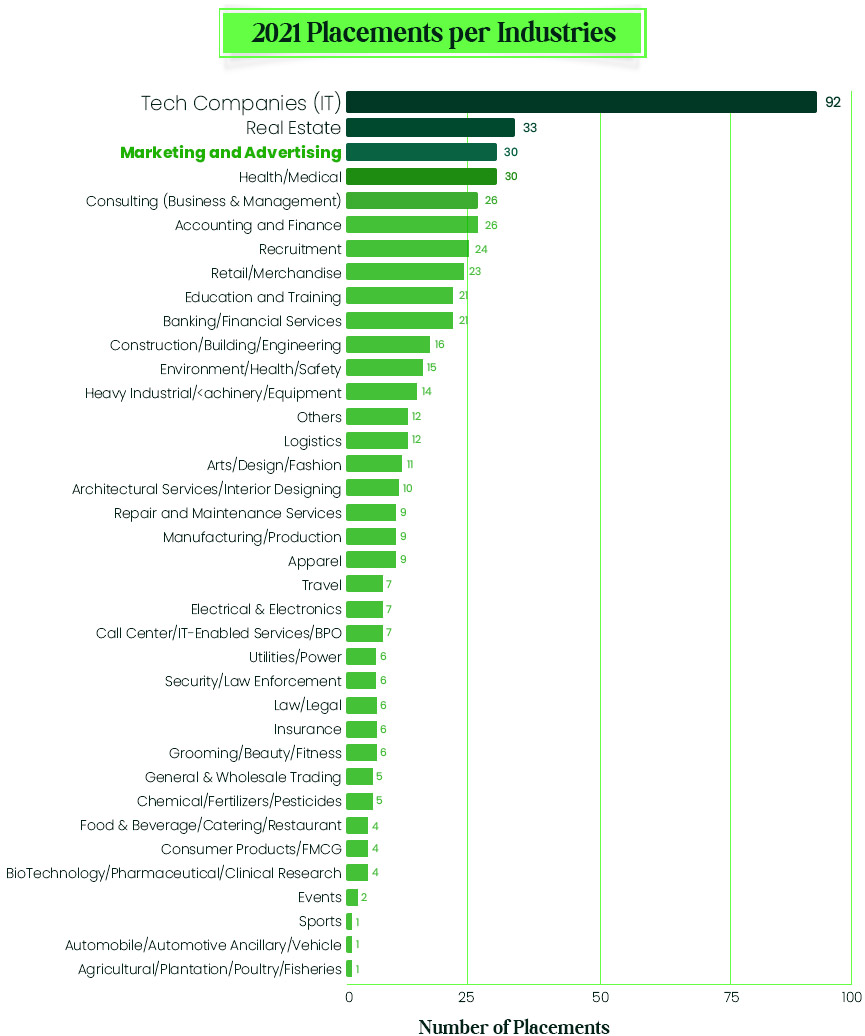
  • E-commerce Industry Case Study: Major Challenges and How Remote Working Can Help Them

    E-commerce Industry Case Study: Major Challenges and How Remote Working Can Help Them

    E-commerce is growing rapidly. The retail storefronts aren’t necessary now to generate a thriving business.

    Every generation knows that they can buy goods and some services online. You may want groceries, clothes, digital goods, furniture, appliances, and even doctor’s telehealth appointments.

    In fact, the Australian E-commerce industry stands to be one of the biggest markets in the world. To be exact, it’s top 10 last 2019. It’s projected to be roughly $26 Billion USD in 2020.

    Content-Au-MarketAnd there are no signs of stopping. The biggest gainers for 2019 are department and variety stores. But for 2020, essential goods might soar higher because of the pandemic.

    It’s further fueled by the consumer demand of almost every product online because of COVID19. Many people are now buying goods online (with most using their mobile phones) for safety reasons. Moreso, e-commerce is open for international consumers. So opportunities are global if done right.

    Content-Challenges-Ecommerce

    Challenges Faced in the E-Commerce Industry

    The E-commerce industry is surging with demand today, especially with the increase in online spending because of the quarantine. And a lot of stores are now transitioning to online selling.

    But it’s not that easy to sustain a starting or booming E-commerce business. Here are some challenges faced by the E-commerce industry.

    Content-Google

    Driving Traffic from Google

    Most ecommerce businesses drive traffic from Google to get more sales on their websites. With this, you need to utilize SEO techniques and churn out articles and content that might be relevant to your target keywords.

    You can also use Google AdWords to drive traffic. But these should be a consistent effort. And many businesses don’t know where to start.

    Content-SocialMediaMgt

    Social Media Management

    Another source of traffic is social media. Depending on what you sell, you should know where you can effectively market. Is it Facebook, Instagram, or LinkedIn? There are many choices, but ecommerce businesses need to know where their possible clients are.

    And it doesn’t end there. Next is you need to know how to use social media tools to target a customized audience. Many companies haphazardly boost their posts, not knowing that they’re wasting their money and time.

    If you found a working client targeting, it’s time to understand and consistently market to them well. When done well, social media management can be integral to the growth of an ecommerce business.

    Content-Quality-Leads

    Getting Quality Leads

    Driving traffic is one thing. But is this traffic converting to sales?. And it all starts with quality leads. Are your marketing efforts attracting quality leads?

    Ecommerce businesses are continuously challenged to craft social media and website collaterals that can continually convert.

    Content-Customer-Service

    Customer Service

    Now that you attracted possible leads, it’s time to close the sale. And sometimes, you only need to answer some questions for your potential customers to buy products. That’s when customer service comes in.

    Excellent customer service can nurture ideal prospects to buy products and services either now or in the future.

    And it’s not only for potential customers. Excellent customer service can drive repeat orders and recommendations from your current clients.

    Not knowing these benefits, not every eCommerce business invests in its customer service team.

    Content-Remote-Working-Solution

    Remote Working as a Solution

    Most of the operations of eCommerce businesses are online. Adding additional on-site staff might not be ideal for practical reasons. So if you’re planning to expand or strengthen your online business, remote working might be a solution for you.

    Remote workers are skilled in their craft and can be economical for lesser overhead. And practical for the New Normal we’re facing today. In fact, big companies like Amazon have hired 100,000 remote workers just last March 2020.

    Hiring a remote working team can help fill the essential gaps from your eCommerce operations.

    Working with Remote Staff

    And this setup is not new. You can also take advantage of the benefits the big companies are enjoying. You just need to find the right partner to help you in supplying the best talent.

    In fact, Remote Staff has over a decade of experience in helping eCommerce businesses prosper remotely. Here are some of the job roles companies contract with us that can help you as well:

    Content-WebDevelopers

    Web Developers

    The website of an eCommerce business is like your storefront in retail. You need to make it enticing and attractive for customers to buy products. And on the back-end, they need to maintain the websites to function well. That’s why businesses hire web developers.

    Content-Front-End

    Front-End Web Developers

    • Ensure optimized UI/UX design.
    • Develop engaging user interface
    • Integrate web design to best SEO practices.
    • Build website codes for campaigns.
    • Optimize website for speed and scalability.
    • Implement designs for mobile sites.
    • Fix usability and bugs.

    Content-Backend

    Back-end Web Developers

    • Integrates website elements with the back-end server side logic.
    • Builds website codes.
    • Optimizes website for speed and scalability.
    • Implements storage optimizations.

    Moreover, SEO specialists, copywriters, and social media managers can contribute to promoting your website to achieve significant and meaningful web traffic.

    Content-Tech-Support

    Tech Support

    E-commerce websites should be up 100% of the time because even 5 minutes downtime can mean hundreds or even thousands of missed orders. So eCommerce companies hire the best tech support to maintain the integrity of the websites.

    Content-IT-Tech-Support

    IT Technical Support

    • Maintains computer systems and networks.
    • Addresses technical issues.
    • Provides support like technical documentation.
    • Test current systems from exposure to threats.
    • Analyzes newfound vulnerabilities and safeguards the system from it.

    Content-IT-Helpdesk

    IT Help Desk Professionals

    • Talks to clients over the phone or through chat for technical support.
    • Responds to queries over phone or chat.
    • Troubleshooting technical problems.
    • Asks for feedback relating to customer experience.

    Content-Bookeeping-Accounting

    Accounting and Bookkeeping

    Business transactions can range from a handful to hundreds every day. For the eCommerce industry, an accountant or bookkeeper can be essential in tracking financial transactions for reporting purposes.

    Content-Bookkeeper

    Bookkeepers

    • Help you manage your books for day-to-day transactions.
    • Can input data in accounting software.
    • Help generate reports.

    Content-Accountant

    Accountants

    • Can prepare financial statements in accordance with the proper standards.
    • Can analyze financial statements for business solutions.
    • Can prepare reports to be compliant with Australian taxation laws.

    Remote Staff Testimonials

    Looking for your Remote Staff? Hire Remote Staff to focus on the things that only you can do. Feel free to view our candidates for possible talents today.

    [rcb_show_form]