Category: Outsourcing Insights

test

  • No Code Developer a.k.a Vibe Coder: Better Software for Less

    No Code Developer a.k.a Vibe Coder: Better Software for Less

    Your software developer quoted you $65,000 and six months. A no-code developer quoted less and had something working in seven weeks.

    That’s a variance, and it’s repeatable.

    No-code platforms, like Bubble, Lovable, Bolt.new, and Webflow, were built to cut development time and cost. But they don’t run themselves.

    Someone has to get inside them and drive the AI-assisted, prompt-driven development process: describing what needs to be built, and iterating until it works once it’s put to the test in a real business setting.

    Who is that person?

    A no code developer.

    In 2025, the industry started calling them “vibe coders.” Either way, same job.

    What they deliver spans no code web development, and no code automation, but way more: websites, apps, client portals, internal tools, dashboards, and workflows that do what they’re purposed to without manual input. Built in weeks, not quarters, at a cost that doesn’t need a business case the size of a software contract for validation.

    This guide covers what the role does day to day, which platforms they work across, what they cost in Australia, and which industries are already ahead on this hire.

    What is a no code developer?

    Key Takeaway / Quick Answer

    A no-code developer builds web applications, workflow automations, internal tools, business process automations, and client-facing digital products using AI-powered platforms, drag-and-drop app builders, and visual editors instead of traditional programming. They direct the build through prompts and platform logic, connect databases and third-party services, validate what the AI produces, and hand over something the business can actually use, typically in weeks rather than months.

    What Is No Code: What Does It Mean To Be A No-Code Developer?

    A no code developer or a “vibe coder” is someone who builds fully functional web applications, internal tools, automation workflows, and digital products. They do this using AI-powered platforms and visual development environments, without traditional programming as the foundation of the work.

    It’s a new way of building, shifting from writing code line by line (traditional development) to directing or “telling” AI tools and visual platforms what to do.

    The vibe coder prompts the AI, and the AI generates the output. The vibe coder re-prompts it, the cycle repeating until the intent is met.

    The no-code developer as a professional job title emerged around 2012, when platforms like Bubble and Webflow created demand for the role. The term itself has evolved significantly, so that in 2026, it has become loosely interchangeable with “vibe coder.”

    The process is conversational: app-building without coding. Vibe coders describe what they want built, much like a manager explaining a task to a very fast, very efficient superhuman. They connect what’s built to databases and third-party services, making sure it holds up against the demands of real business conditions.

    Illustration: Priya established her 12-person e-commerce business at the heart of Sydney. After some back and forth with her team about buying Bubble, she finally did. She tried prompting her way through the build, but to no avail, or to mediocre results.

    The development agency gave her a $AUD48,000 quote. After four months, the prompts produced something, but nothing her team could really use.

    She hires a vibe coder, and within weeks, her clients are tracking orders and submitting requests on their own.

    What Does a No-Code Developer Do? (What Is An Example of No-Code Development)

    More gets built by this non-traditional developer than most business owners anticipate. Here are some of their responsibilities.

    A business owner who's been helped by a no code developer or vibe coder.

    Building Web Applications, Dashboards, and Internal Tools

    Using AI app builders like Lovable, Bolt.new, and Replit, or visual app builders like Bubble, Softr, and Glide, a vibe coder builds the digital products your business runs on. These include client-facing portals, booking systems, dashboards, and internal tools your team uses daily.

    Turning Product Requirements Into Working Prototypes

    A vibe coder takes your product requirements and user stories and translates them into working prototypes using natural language prompts and visual editors. Once done, your team can immediately use what’s built upon handover.

    Automating Business Workflows

    Vibe coders connect your existing tools and build the trigger-based processes that put an end to manual work through Make, n8n, or Power Automate. They describe the logic. The AI builds the automation. They check that it works. End-to-end.

    After the integrations are built, everything takes care of itself.


    [rcb_show_form]

    Integrating Third-Party APIs, Databases, and Services

    Databases like Supabase, Firebase, and xano, payment gateways, CRMs, and any third-party service your business relies on are linked to the build. The vibe coder maps the steps that determine what happens when data is transferred between them, without writing the full backend code.

    Iterating on UI/UX Based on User Feedback

    After the first version goes live, the no code development professional refines it. They use no-code development tools like Cursor and v0 by Vercel, adjust interfaces, and improve flows. User feedback serves as the basis for what the initial build got right or not. The vibe coder responds to what users are doing inside the product accordingly.

    Since the build is in a platform that’s visual, changes are implemented quickly. No rebuilding from the ground up.

    Reviewing and Validating AI-Generated Outputs

    This is where the vibe coder’s expertise and judgment hold the center. Before anything goes live, the vibe coder evaluates what the AI produces for functional accuracy (if it behaves as designed), data integrity, and security risks.

    Studies show that 40-45% of AI-generated code contains security vulnerabilities.

    — Cybersecurity Research
    Code Quality & Risk Analysis

    Maintaining and Documenting the Build

    A vibe coder leaves your team with full visibility of what was built and how it works. They document what they build, the structure, the logic behind how things work, and how your team can maintain it themselves.

    Collaborating Across Teams

    Vibe coders clearly and plainly communicate the work done. They work alongside designers, engineers, and project managers to size up projects and translate what the business needs into what’s buildable on the platforms.

    What Are No-Code Tools List: Vibe Coding Platforms

    The platform choice usually comes before the hire. If your business is already on Airtable, look for someone who knows Airtable. The same applies across every category above.

    Vibe coders work across several platform categories depending on the build.

    Vibe Coding or No-Code Software Development Tools and Functions:
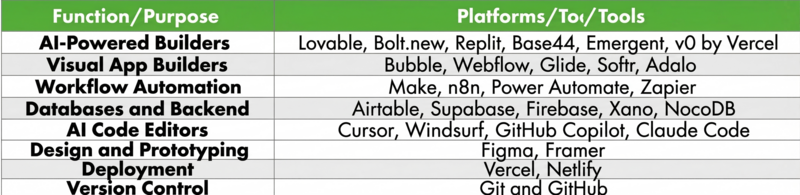
     

    Vibe coding or no code development software table.


    A vibe coder won’t cover every category, so hire according to the platforms your business is using.

    Types of No-Code Developers (Vibe Coders By Specialisation)

    The industry doesn’t follow a fixed taxonomy around the categories within this role. Vibe coders tend to specialise according to no-code development platform and use case.

    These are the most common specialisations AU businesses hire for:

    #1. No Code Automation Specialist

    Platforms They Use: Make, n8n, Power Automate

    This specialist spells out the automation logic in plain language and directs the tools to execute it. Trigger-action moments become automatic. A customer submits a form, and your CRM updates. You receive a notification for a product query, and the sender is sent a follow-up email.

    For many SMEs in Australia, this is the fastest hire-to-result timeline of any no-code specialisation.

    What To Do: Pick any tool your team uses daily and identify how many times a week someone manually copies data from it to another. More than five times means this hire should be on your team asap.

    #2. No Code Web Application Developer

    Platforms They Use: Lovable, Bolt.new, Bubble, Adalo

    In no-code app development, the developer builds client portals, booking systems, and SaaS MVPs using AI-powered builders and visual development environments. They detail product requirements using natural language prompts and visual editors in order to create working prototypes, completing the work that traditionally takes weeks to months.

    Data from 2025 and 2026 consistently reveal that developers complete tasks 25-55% faster with AI assistance.

    In Australia, it usually takes 3 to 12 months to build a fully functional one. A no-code web developer delivers a working, maintainable version in four to 10 weeks, at a friendlier cost.

    What To Do: Get a quote from a no-code web developer. The quote will be significantly different from what a software developer gives you.

    Illustration: Tom has a B2B consulting firm in Melbourne, and needs a portal where clients can submit briefs. His team would be tracking project status and approving deliverables on it.

    The developer’s quote was $AUD65,000, and a six-month timetable. The no-code web application developer’s quote was lower, and built a working Bubble portal in seven weeks.

    ℹ️

    While no-code development and vibe coding are technically distinct approaches, the lines have blurred significantly in 2026 as every major no-code platform has integrated AI. For practical purposes, the two terms are used interchangeably across the industry and throughout this guide.

    #3. No Code Website and CMS Developer

    Platforms They Use: Webflow

    For building design-precise, CMS-driven websites, a no-code website and CMS developer is the one to call in. This person directs the platform’s visual tools so your marketing team can update and publish content, and make changes on their own after launch.

    What To Do: Website update requests in backlogs are tasks your marketing team could’ve handled themselves without involving a developer. A vibe coder-configured Webflow site gives them that ability.

    #4. No Code Data and Internal Tools Specialist

    Platforms: Airtable, Supabase, Firebase, Xano, NocoDB

    No-code data and internal tools experts transform fragmented spreadsheets and systems into structured databases. They build the system and set up what each team sees inside it. They make sure the information stays current through automatic updates.

    This is a relevant hire for AU companies in the construction, logistics, professional services, and healthcare industries, because their operations are typically divided by function, across multiple disconnected spreadsheets.

    What To Do: Stop relying on a manual spreadsheet and avoid the risk of not knowing what to do next if items on it are deleted.

    Illustration: Daniel owns a freight logistics company. With a large main office in Brisbane, his dispatch team tracks jobs that are buried in three separate Google Sheets. Records are often duplicated, making real-time updating a problem. Jobs fall through during shift changes.

    A vibe coder prompts an Airtable build that consolidates all three sheets. They describe the job assignment logic in plain language and test that it works. It should be able to auto-assign jobs based on driver availability and send SMS notifications at status changes.

    No more lost jobs.

    #5. AI-First Developer

    Platforms: Cursor, Windsurf, GitHub Copilot, Claude Code

    An AI-first developer’s primary concern is the quality of what the AI produces. It’s the most technically specific specialisation within the vibe coder role, as they’re focused on output validation and security review.

    They update the interface as users engage with the platform.

    What To Do: If your business is building on Lovable, Bolt.new, or Replit, this expert does the final check before the build’s rolled out for real users.

    💡

    Did You Know?

    The term “vibe coder” was coined by AI researcher Andrej Karpathy in February 2025 and named Collins Dictionary’s Word of the Year for 2025.

    Where Do Vibe Coders Work? Industries That Hire This Role

    The demand for vibe coders is spreading across industries, business sizes, and use cases in Australia. Here’s where the hire is growing.

    Vibe Coders Across Industries:
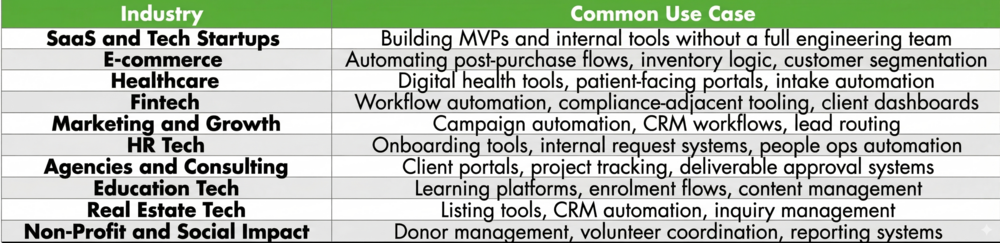
    Table showing role of no code developers in different industries.


    When You Might Not Need a Vibe Coder

    There are two situations where a different approach, or a different hire, makes sense:

    You’re Building For Very Large Scale

    The key benefits of no-code development are accessibility and speed. If your platform is faced with thousands of users simultaneously at any given time, traditional development is the better option. And the specialist to do it is a software developer.

    You Want Full Independence From Any Single Platform

    What gets built in a no-code platform stays inside it. Businesses where technology has a stake in business valuation (e.g. businesses prepped for merging) will match up more ideally with a software developer, so your business owns the code.

    Operational Excellence

    Build Faster Without Code.

    But don’t do it on your own, without the right support or the right expertise. Hire a Remote Staff specialist to build the systems that work while you sleep.

    Trusted by 3,000+ businesses to scale remotely since 2007.

    No Code Developer Skills & Qualifications (What Skills Do You Need For No-Code Developers When Hiring)

    Let’s take a look at what separates a capable vibe coder from someone who merely knows how to give prompts to AI like ChatGPT or Gemini:

    Experience

    At least 1-4 years building products with no-code or low-code platforms, with a demonstrated portfolio of shipped apps or tools.

    Technical Skills

    • Proficiency in at least two AI app-building platforms, evidenced through live builds
    • Data modelling – how they structure information, tables, relationships, and queries across records
    • REST API and JSON familiarity – understanding how your tools pass data to each other
    • Basic HTML, CSS, and JavaScript – enough to review and lightly edit AI-generated code
    • An eye for what users see and interact with, particularly in Bubble, Webflow, and AI-generated interfaces from Lovable or Bolt.new
    • Version control basics – familiarity with Git and platform-native version history tools

    AI and Automation Skills

    • AI prompt fluency – crafting clear, specific, iterative prompts that guide AI tools toward production-quality outputs
    • Automation fluency – experience designing multi-step workflows with conditional logic and error handling
    • Product thinking – the ability to figure out what should be built first and what can wait, and when buying is the better option than building

    Soft Skills

    Beyond the technical side, a capable vibe coder communicates clearly across teams and manages stakeholder expectations. They work even without a perfect brief to get started. They keep up with fast-moving platforms and can adapt to changes along the way.

    AU Compliance Awareness

    Any vibe coder managing automations that handle customer data or send commercial messages needs working knowledge of the Spam Act 2003 and The Privacy Act 1988.

    What To Do: Ask every candidate to show you a live build. The ones worth putting through the hiring process can explain exactly why they built it the way they did.

    No-Code Developer Salary: How Much Does a No-Code Developer Earn in Australia?

    You’re asking, “How much should I pay for a no code developer?” Available salary data below are from online job platform averages, and here’s what the numbers say as of 2025 to 2026:

    Vibe Coder Salary Range:
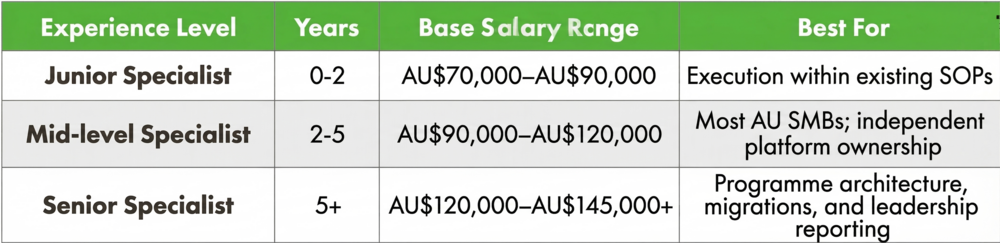
    Vibe coder or no code developer salary comparison table.

    When you consider the Loaded Cost, you’re adding payroll tax obligations in higher-threshold states, workers’ compensation, and leave entitlement to the base salaries in the table above. This 25 to 35% on top of the premium includes the 12% Superannuation (stay up-to-date with Payday Super 2026 Rules and beyond).

    Local Vs Remote Hiring

    The salary range of this role is strapped to a heavy price tag. This is why AU businesses are choosing to hire remotely. Understandably, businesses are setting their sights on the practical with regard to overall spend. Let alone a new hire.

    Hiring remotely lightens that load, while bringing you talent that’s no different from what you’d come across locally.

    Calculate the cost using your own numbers with our Outsourcing Calculator Tool (click, scroll, and type your actual numbers):

    Interactive Outsourcing Calculator (Click, scroll inside, move the toggles, and change the numbers)
    Can’t see the numbers? Use a desktop browser or scroll within the box for the best experience.

    How Remote Staff Helps AU Businesses Find the Right No-Code Developer

    Many are learning that in Australia, the demand for no-code developers is increasing. However, the local talent pool hasn’t kept pace.

    As a business owner, you shouldn’t carry the weight of the hiring process. Our team has been pairing Australian businesses with technical professionals across industries and business sizes for 18 years.

    With Remote Staff, every no code developer in your candidate list has gone through a vetting process. They’ve done the work, with project histories supporting their applications.

    Geography is what makes the cost workable. And despite the difference in location, there’s a cultural adaptability that allows for naturally cohesive working relationships between our specialists and business owners.

    The paperwork, onboarding, and HR side of the hire? We’ve got them covered. Hiring full-time, part-time, or per-project is completely up to you.

    Learn How to Calculate Outsourcing Cost in Australia and stay compliant in all parts of your business through the Modern Slavery Act Australia.

    FAQs

    Is no-code development a real profession, or is it a workaround for businesses that can’t afford a developer?

    It’s a real, skilled profession, and vibe coding is its most current form or name. It works in a different sphere than traditional development, involving AI-powered building and visual platforms like Lovable, Bolt.new, Bubble, and Webflow to set up the systems and automations where traditional programming isn’t required.

    What is the no-code developer definition, and what’s the difference between a no-code developer and a team member who “knows Make”?

    A team member who uses Make has learned a tool for specific tasks. A vibe coder crafts AI prompts that produce production-quality outputs and builds the rules that allow features to run automatically.

    Can a no-code developer replace a traditional software developer for my AU business? (Will no-code replace developers?)

    For most AU SMEs, a no-code developer covers the majority of digital build requirements at a lower cost and faster timelines. Highly complex systems are still meant for large-scale operations and require traditional development.

    How long does it take to see results after hiring a no code developer?

    With AI-powered builders, prototypes can be live within days, whereas production-ready builds with proper data architecture and security review take four to ten weeks, or more.

    No Code Doesn’t Mean No Developer

    Most AU SMEs aren’t suffering from a lack of AI-powered development software. They have the platforms. What they’re missing is the person who knows how to direct the AI within.

    Every platform you’ve purchased has been waiting for this person. So have you and your team.

    We’re here to help you find the right vibe coder, so that searching for your hire doesn’t become another project in your timeline.

    Call us today or Request a Callback, and let the AI in your tools meet the person who knows how to direct it.
    Trending, In-Demand Roles in Australia now
  • Data Privacy and Security Made Simple for Australian SMEs with Remote Teams in the Philippines

    Data Privacy and Security Made Simple for Australian SMEs with Remote Teams in the Philippines

    Remote work has transformed how Australian businesses operate and scale, but it has also expanded the attack surface for data breaches, compliance failures, and cybersecurity threats.

    According to Harvard’s Privacy Office, remote environments significantly increase risks related to unauthorised access, unsecured networks, and poor device security, making strong security protocols essential for distributed teams.

    Similarly, the London Governance & Compliance Agency (LGCA) notes that remote setups amplify vulnerabilities because organisations lose direct oversight of networks, devices, and user activity when teams work offshore.

    This has direct implications for Australian SMEs outsourcing to the Philippines, especially those handling financial data, health information, customer records, or proprietary IP.

    If you want to protect your business and your client’s privileged information, stay compliant with the Australian Privacy Principles (APPs), and confidently outsource to the Philippines under Data Privacy and Security best practices, keep reading!

    Why Data Privacy Is Crucial When Outsourcing to the Philippines

    As more Australian businesses rely on remote offshore teams, the value and sensitivity of the data exchanged daily has skyrocketed.

    Data breaches now incur financial penalties, reputational damage, operation downtime, and long-term trust issues.

    With cyberattacks rising globally, including phishing, ransomware, and identity theft, outsourcing without strong protections or protocols is no longer an option.

    To outsource safely to the Philippines, leaders must understand the types of risk involved and the strict legal responsibilities tied to data governance.

    Data Sensitivity in Remote Work

    Industries like finance, healthcare, and SaaS manage high-risk information such as medical files, payment details, customer identities, and proprietary algorithms.

    Remote workers accessing this data from home networks or personal devices increases exposure, making remote work cybersecurity essential.

    Filipino remote teams must handle these datasets with strict secure remote access practices supported by encrypted communication tools and endpoint security solutions.

    What Can Go Wrong Without Security Protocols?

    Without structured cybersecurity measures, businesses expose themselves to threats that can quickly escalate into financial or legal crises.

    Examples of risks include:

    • IP theft, where unauthorized users copy or resell confidential or proprietary output
    • Ransomware attacks exploit unsecured devices or networks
    • Cloud storage misconfigurations are exposing confidential databases
    • Password sharing, which weakens identity controls
    • Unmonitored access enables harmful or accidental data changes

    These risks underscore why offshore teams must use VPN for remote employees, enforce a password management policy, and follow proven cybersecurity best practices daily.

    Overview of Philippine Data Privacy Laws (DPA 2012)

    The Philippines enforces robust data governance through the Data Privacy Act of 2012 (DPA)—legislation designed to regulate personal information collection, storage, transfer, and access.

    Australian companies outsourcing to the Philippines must understand how the DPA applies to offshore teams handling sensitive or regulated data.

    The DPA is enforced by the National Privacy Commission (NPC), which has the authority to audit, penalise, and sanction private entities for violations.

    Key Responsibilities for Foreign Employers

    Regardless of location, foreign employers must meet specific obligations when Filipino remote staff handle personal or sensitive data to minimize their risk and exposure.

    Key responsibilities include:

    • Implementing organisational, physical, and technical safeguards for all stored or transmitted data
    • Limiting access to only those whose job classification legitimately requires it
    • Making sure of lawful data collection, retention, and deletion practices
    • Protecting end-user privacy through encryption and secure storage
    • Reporting breaches to the NPC when required
    • Providing training on cybersecurity best practices for remote teams

    These obligations apply whether the company has a local entity or hires through compliant outsourcing partners like Business Process Outsourcing (BPO) entities) or Employers of Record (EoR).

    Comparison to Australian Privacy Principles (APPs)

    Let’s take a look at the similarities and distinctions between the Philippines’ DPA Laws and Australia’s 13 Australian Privacy Principles (APPs) under the Privacy Act:

    Key similarities include:

    • APP 1 & DPA: Accountability & Governance — Both require internal policies, documentation, and safeguards.
    • APP 6 & DPA: Use and Disclosure — Personal information must only be accessed for authorised purposes.
    • APP 11 & DPA: Security of Personal Information — Organisations must protect data using reasonable technical measures.
    • APP 12 & DPA: Access and Correction — Individuals can request access to or correction of their data.

    High-Level Comparison Table

    Requirement

    Australian APPs

    Philippines DPA 2012

    Governance

    High

    High

    Consent Requirements

    Strong

    Strong

    Security Measures

    Mandatory

    Mandatory

    Breach Notification

    Required

    Required

    Cross-Border Controls

    Strict

    Strict

    Filipino remote workers are also governed by a similar set of data privacy laws, which can give SMEs some peace of mind that outsourced teams must also adhere to a set of data security standards.

    A remote professional satisfied with strong Data Privacy and Security practices.

    Common Security Risks When Managing Offshore Teams

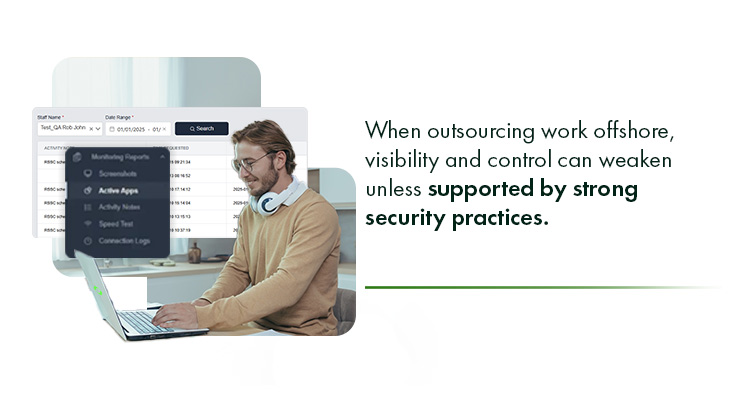
    When outsourcing work offshore, visibility and control can weaken unless supported by strong security practices.

    Many breaches happen not because of malicious intent, but because systems were unsecured or mismanaged.

    To cultivate a secure remote workforce, businesses must recognise common failure points and proactively prevent them.

    Unauthorized Access and Account Sharing

    Unauthorised access often occurs when remote workers share credentials, use weak passwords, or access sensitive files on unsecured devices.

    Without Zero Trust security models or multi-factor authentication (MFA) enforcement, it becomes difficult to verify who is accessing what, increasing exposure to insider threats or accidental misuse.

    Insecure Communication Channels

    Remote teams that rely on unencrypted messaging apps or public Wi-Fi expose data to interception.

    Without encrypted communication tools or a VPN for remote employees, messages, files, and login credentials can be easily compromised by cybercriminals monitoring unsecured traffic.

    Lack of Device or Network Monitoring

    Many offshore setups lack endpoint security solutions or device monitoring, leaving employers blind to risky behaviour such as unauthorised downloads, external drive usage, or access attempts at unusual hours.

    Without monitoring tools, it’s impossible to enforce data privacy and security consistently.

    How Remote Staff Protects Your Data and IP

    Remote Staff goes beyond standard outsourcing by embedding proactive, always-on security systems designed for distributed Philippine teams.

    Unlike unmanaged freelancers or generic global EORs, Remote Staff integrates technology, compliance, and HR oversight to give Australian SMEs continuous visibility and full legal protection.

    Encrypted Monitoring & Screen Capture Tools

    Remote Staff uses encrypted remote desktop security tools and DIWA monitoring software to help employers maintain compliance without invading privacy.

    These tools track productive hours, detect anomalies, and capture screens for accountability and to help prevent the misuse of sensitive information.

    Role-Based Access & Device Controls

    Role-based access guarantees that employees only view the information required for their duties. This aligns with secure remote access principles and the Zero Trust security model.

    Device requirements such as antivirus, patch updates, and VPN use help maintain consistent cybersecurity hygiene as well.

    Legal Protections (NDAs, CoR Contracts, Audit Trails)

    Every engagement includes NDAs, Contractor-on-Record agreements, and audit trails to protect confidential information and intellectual property.

    These legal protections reduce misclassification risks and secure the employment relationship with clear boundaries, benefits, and responsibilities.

    SOPs for Securing Data Privacy When Outsourcing to the Philippines

    Strong data security is not a one-time setup—it requires structured onboarding and ongoing compliance.

    The following SOPs help Australian SMEs build safe, predictable systems when working with Filipino remote teams:

    During Onboarding: Secure Setup Essentials

    Before work begins, businesses must guarantee their teams use protected systems and proper authentication.

    Best practices include:

    • Secure workstation configuration with endpoint security solutions

    • Enforced MFA

    • VPN setup for remote employees

    • Password management policy using encrypted vaults

    • Restrictions on BYOD (bring your own device) through approved BYOD security protocols

    • Cloud access segmentation by job classification

    Ongoing: Monitoring, Auditing, and Legal Coverage

    Long-term security requires continuous oversight, especially for remote workers handling sensitive data.

    Ongoing protections include:

    • Encrypted monitoring systems for secure visibility

    • Quarterly cybersecurity audits

    • Regular employee training on phishing and identity threats

    • Legal documentation updates (NDAs, access rights, termination procedures)

    • Audit logs documenting access, downloads, or policy violations

    • Encryption for all stored or transmitted work data

    Remote Staff vs Generic Freelancers and BPOs

    Choosing offshore talent is no longer just about cost savings—it’s about data privacy and security, legal compliance, and predictable outcomes.

    Australian businesses that rely on inexperienced freelancers or low-cost BPO vendors often face visibility gaps, vague accountability, and weak remote work cybersecurity standards.

    Remote Staff greatly mitigates (if not outright eliminates) these risks with structured oversight, secure remote access tools, and a compliance-first hiring ecosystem built for long-term stability.

    Remote Staff applying necessary Data Privacy and Security measures by using encrypted monitoring tools.

    Transparent Monitoring vs Unverified Workflows

    Many freelancers work without monitoring or supervision, so businesses may not be able to check how their data is accessed, stored, or shared.

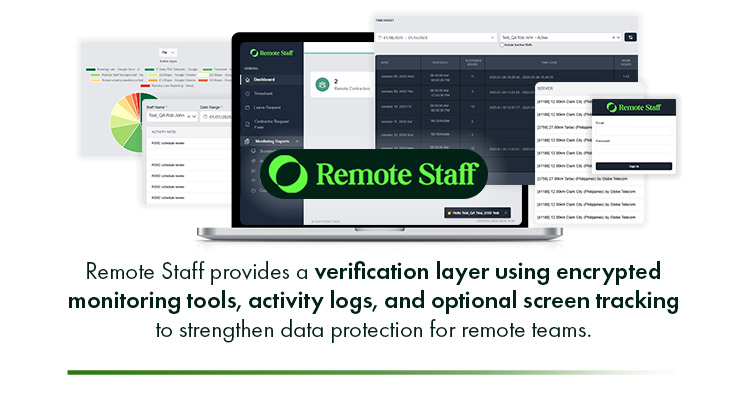
    Remote Staff provides a verification layer using encrypted monitoring tools, activity logs, and optional screen tracking to strengthen data protection for remote teams.

    This transparency supports stronger cybersecurity best practices and reduces exposure to unrecorded workflows or unsafe devices.

    Legal Accountability vs Risky Informal Contracts

    Freelancer agreements rarely meet the standards required for secure compliance for remote work, especially when handling sensitive information.

    In contrast, Remote Staff uses formal Contractor-on-Record and EOR-backed agreements that incorporate NDAs, intellectual property protection, and strict adherence to Philippine and Australian privacy standards.

    This protects businesses from misclassification risks and shields them from legal vulnerabilities tied to informal contractor setups.

    Scalable and Secure Hiring at Every Stage

    While BPOs may lock companies into rigid roles and long-term contracts, Remote Staff enables secure scaling across admin, finance, IT, marketing, and specialist roles.

    Each hire operates with secure remote access policies, MFA, endpoint security solutions, and clear data handling SOPs.

    Whether you need one worker or an entire team, you get a scalable system anchored in remote desktop security and Zero Trust security model principles.

    Frequently Asked Questions (FAQ)

    Hiring offshore talent raises understandable questions about data privacy and operational safety. Here are the concerns Australian SMEs bring up most often.

    Is it safe to outsource sensitive data to the Philippines?

    Yes. As long as you work with providers that follow the Philippine Data Privacy Act (DPA 2012), apply strict access controls, and implement cybersecurity best practices such as MFA, VPN for remote employees, and encrypted communication tools.

    Does outsourcing sensitive data to the Philippines violate Australian privacy laws?

    No. Cross-border processing is allowed under the Australian Privacy Principles (APPs) as long as the offshore provider provides the equivalent of required protections and the business establishes proper data handling agreements.

    How do I protect client data with offshore staff?

    Use secure remote access systems, enforce a password management policy, apply device restrictions or BYOD security protocols, and make sure staff operate under structured privacy SOPs paired with monitoring and audit trails.

    What’s the difference between Remote Staff and a BPO for security?

    BPOs centralise work but often limit visibility—Remote Staff provides individual hires with end-to-end compliance, activity monitoring, and role-based security controls, giving clients full oversight of their remote workforce.

    Can I monitor remote staff without violating privacy?

    Yes. Monitoring is allowed when workers provide consent, data is encrypted, and tools are designed for productivity tracking rather than personal surveillance, all of which Remote Staff incorporates into its processes.

    A remote VA following strict Data Privacy and Security protocols.

    Ready to Hire Securely and Stay Compliant?

    Modern remote hiring requires data privacy and security, airtight compliance, and strong cybersecurity frameworks that protect your business across borders.

    If you’re scaling a remote team, make sure you’re doing it with the right safeguards, policies, and partners in place.

    Request a call back to explore our privacy framework and see how Remote Staff keeps Australian businesses protected while giving them access to top-tier Filipino talent!

    • Want FREE AI Prompts for Different Areas of Your Business? Check out these 100 AI prompts
    • Curious About How to REDUCE Overhead Costs? Learn more here.
    • If you’re ready to experience the full advantages of working with a top global team, check out our 1,000 fully vetted and highly talented staff here.
  • Philippine Contractor Payroll Compliance: A Guide for Foreign Businesses who want to outsource

    Philippine Contractor Payroll Compliance: A Guide for Foreign Businesses who want to outsource

    Hiring in the PH provides skilled, cost-effective talent and easier team scaling. However, many foreign businesses struggle with compliance and contractor payroll in the Philippines, risking legal and financial issues.

    Misclassifying contractors, overlooking tax obligations, or ignoring statutory contributions can lead to disputes, fines, and unexpected costs.

    For example, in the high-profile Joanna Pascua case, a Filipino paralegal working remotely for an Australian firm was classified as an independent contractor, but the Fair Work Commission ruled she was in fact an employee, entitling her to full workplace protections.

    This guide explains what foreign companies need to know to legally hire independent contractors in the Philippines.

    Hiring Filipino Contractors- What You Need to Know

    Hiring Filipino Contractors: What You Need to Know

    Before engaging contractors, it’s important to understand the legal and compliance requirements that govern such arrangements in the Philippines:

    Are Independent Contractors Legal in the Philippines?

    Yes. Independent contractors are fully legal in the Philippines, provided the contractor has full control over how and when the work is done.

    The key is ensuring that their working arrangements do not satisfy the conditions that may qualify them as employees instead.

    If a contractor is treated like a regular employee—following fixed schedules, receiving direct supervision, or using company-provided tools—they MAY be legally reclassified, triggering statutory obligations and potential penalties.

    Contractor vs. Employee: What’s the Real Difference?

    Contractors are self-employed professionals who:

    • Determine their own workflow and schedule
    • Use their own tools and methods
    • Are usually paid per project, milestone, or deliverable
    • Do not receive statutory benefits such as SSS, PhilHealth, Pag-IBIG, or 13th-month pay

    Employees, in contrast:

    • Follow company rules, schedules, and supervision
    • Are entitled to statutory benefits and protections under Philippine labor law
    • Must have contributions made to government agencies and receive mandatory leaves and 13th-month pay

    Understanding this distinction early is essential.

    Misclassification can lead to legal challenges, fines, or retroactive payments—issues highlighted in cases like Joanna Pascua’s, where improper classification exposed the company to significant legal risk.

    Payroll Requirements for Contractors in the Philippines

    Payroll Requirements for Contractors in the Philippines

    When hiring Filipino contractors, understanding payroll obligations is crucial to stay compliant and avoid penalties.

    Contractors are generally responsible for their own taxes and benefits, but foreign companies must properly handle payments and reporting to meet Philippine regulations.

    Withholding Tax and Invoicing Rules

    Contractors in the Philippines typically issue official invoices for their services.

    Under Philippine tax law, the client (your company) is generally responsible for withholding a portion of the contractor’s income tax and remitting it to the Bureau of Internal Revenue (BIR).

    For foreign entities without a Philippine legal presence, you cannot remit directly to the BIR. In practice, this is often handled by:

    • Engaging a local partner or service provider (like an Employer of Record or payroll service) to manage withholding and tax remittances on your behalf.
    • Structuring the contract so the contractor is responsible for their own taxes, with clear terms in the agreement.

    Ensuring proper invoicing and tax handling, whether via a local partner or agreed to be handled directly by the contractor, prevents compliance issues and reduces the risk of fines.

    Should You Cover SSS, PhilHealth, and Pag-IBIG?

    Even though independent contractors are not employees, you can choose to offer benefits like SSS, PhilHealth, or Pag-IBIG as voluntary incentives or perks.

    For example, if you provide SSS contributions for a contractor, the safest way is to let the contractor remit the benefit themselves as voluntary contributions.

    However, your contract with them should explicitly state that they are responsible for their own SSS, PhilHealth, and Pag-IBIG payments.

    This ensures they remain legally independent and protects you from inadvertently qualifying as their de facto employer.

    To avoid confusion, your contract should clearly specify whether contributions are voluntary or the contractor’s responsibility, and that these benefits do not change their legal status as an independent contractor.

    Paying in PHP vs. Foreign Currency

    While contractors may prefer payment in foreign currency, local regulations generally require reporting income in Philippine pesos (PHP).

    Paying in PHP simplifies compliance with invoicing and tax rules, while foreign currency payments may require additional documentation and foreign exchange reporting.

    Contractor Compliance Risks for Foreign Employers

    Hiring Filipino contractors is straightforward, until compliance issues arise.

    Foreign companies, especially those without a local entity, face unique risks when contracts, tax handling, or working arrangements are not set up correctly:

    Misclassification Penalties

    Misclassifying a Filipino contractor as an independent worker when they function like an employee can lead to serious consequences.

    Penalties may include back pay, unpaid taxes, and potential legal or financial liabilities in your home country.

    Contractor Disputes and Legal Loopholes

    Contractors can raise complaints if they believe they were underpaid, misclassified, or unfairly terminated.

    While Philippine agencies like DOLE and the NLRC typically cannot enforce rulings against foreign companies without a local entity, these disputes can still create serious problems.

    Issues often escalate when a contractor presents evidence showing the setup resembled an employer–employee relationship. Red flags such as fixed schedules, daily supervision, long-term exclusivity, or company-provided tools can:

    • undermine the legitimacy of the contractor arrangement,
    • expose your business to claims for back pay, and unpaid taxes,
    • create compliance risks in your home country

    Clear contractor agreements and proper management practices are essential to avoid these loopholes.

    How to Stay Compliant Without a Philippine Entity

    Hiring Filipino contractors is possible even without setting up a local presence.

    However, staying compliant with tax rules, labor laws, service contractor requirements and payroll checklists in the Philippines would involve choosing the right setup.

    Below are the main options for hiring remote contractors in the Philippines:

    DIY Payroll

    You manage everything independently: contracts, contractor payroll, tax handling, and compliance with labor laws.

    In a DIY setup, the contractor is responsible for filing and remitting their own taxes because foreign companies generally cannot remit withholding taxes directly to the BIR.

    This option is risky because:

    • Foreign companies cannot legally remit taxes to the BIR without a Philippine entity, so the contractor must handle their tax compliance entirely.
    • One mistake in classification, invoicing, or documentation can still lead to penalties.
    • You must ensure the contractor agreements in the Philippines clearly state that the contractor is solely responsible for their tax filings.

    DIY only works if you already have strong legal and tax expertise in compliance laws in the Philippines.

    BPO (Business Process Outsourcing Provider)

    A BPO provides services through its own employees, managing their tasks, schedules, and performance internally, which keeps your business legally safe from employment risks for the workers provided by the BPO.

    However:

    • They do not take responsibility for any contractors you hire directly.
    • If you engage talents outside the BPO, you remain liable for classification, disputes, payroll, and tax compliance for contractors.
    • While a BPO can reduce administrative work, it does not shield your business from legal or tax risks for your independent contractors.

    Employer of Record (EoR)

    An Employer of Record is a third-party entity that postures as the official employer in the Philippines while you retain complete control over your remote team’s output and work.

    What Is an EoR?

    An EoR:

    • Handles contractor payroll, statutory benefits, and tax compliance on your behalf.
    • Ensures full alignment with labor laws in the Philippines, including proper employee classification.
    • Manages government registrations with SSS, PhilHealth, Pag-IBIG, and BIR.

    It’s the easiest and safest way to avoid misclassification, facilitate a smooth payroll process, and HR compliance in the Philippines.

    How an EoR Solves Your Tax and Legal Burdens

    Using an EoR such as Remote Staff removes nearly all compliance risks because we:

    • Become the legal employer on paper.
    • Handle all statutory benefits, government contributions, tax filings, and payroll regulations in the Philippines.
    • Prevent misclassification disputes like those seen in high-profile contractor cases.

    With Remote Staff as your EoR, you maintain control over day-to-day tasks and performance while the EoR carries the liability for the proper contractor payment process, documentation, and employee classification in the Philippines.

    When to Transition From Contractor to Employee (EOR Path)

    When to Transition From Contractor to Employee (EOR Path)

    As your team grows, it’s important to know when to transition contractors to employees under an EoR.

    Signs You’ve Outgrown Contractor Status

    You may need to move contractors to full employment if they:

    • Work full-time or exclusively for your company.
    • Follow a fixed schedule or detailed instructions from your team.
    • Require company-provided tools, systems, or training.
    • Need long-term stability or benefits to retain talent.

    These indicators show the relationship is more akin to that of full-time employment, and using an EoR ensures compliance while offering benefits and statutory protections.

    Hybrid Hiring Models (Contractor + EOR)

    Many businesses start with contractors and gradually move to a hybrid setup:

    Independent Contractors with Optional COR

    Independent contractors handle short-term, project-based work.

    Since there are still compliance risks, you can use a COR (Contractor-on-Record) provider to manage invoicing, tax reporting, and other administrative obligations on their behalf.

    A COR handles compliance and administration, but the main difference from an EOR is that the contractor remains an independent worker, not an employee under Philippine law.

    So they are not entitled to statutory benefits unless you voluntarily provide it to them.

    This makes COR a lower-cost solution, ideal for short-term contractors or project-based engagements.

    EOR-Managed Employees

    EOR-managed employees cover core functions, payroll, benefits, and full statutory compliance.

    This setup lets businesses scale flexibly while staying fully compliant with labor laws, payroll regulations, and tax compliance.

    Real Life Case Example: Scaling a 10-Person Remote Team

    Note: Real names have been withheld upon request.

    An Australian company started with three independent contractors in the Philippines for project-based work. As they expanded, they adopted a hybrid model:

    • Independent Contractors with COR: Short-term contractors managed through a Contractor-on-Record (COR) service to handle invoicing, tax reporting, and compliance without changing their employment status.
    • EOR-Managed Employees: Core roles transitioned under an Employer of Record (EOR) to handle payroll, statutory benefits, and labor law compliance.

    This setup allowed the company to scale to a 10-person remote team while maintaining proper classification and compliance.

    Why Choose Remote Staff for Contractor Payroll and Compliance

    Why Choose Remote Staff for Contractor Payroll and Compliance

    Looking for a reliable EOR or COR to manage your Filipino contractors? Remote Staff provides expert support to keep your team compliant and productive.

    Deep Local Experience and Infrastructure

    With 17+ years in the Philippines, Remote Staff has the local knowledge and systems to manage payroll, statutory contributions, and compliance efficiently.

    • Fully aligned with labor laws, payroll regulations, and tax compliance.
    • Trusted by 3,000+ SMEs across Australia and the US.
    • Local HR and legal team ensures smooth handling of contractor agreements.

    Seamless Contractor-on-Record Onboarding

    Remote Staff’s Contractor-on-Record model allows you to hire quickly while remaining compliant:

    • Onboard contractors within days.
    • Clear contracts specifying tax and statutory obligations.
    • Manage day-to-day work while Remote Staff handles payroll, benefits, and reporting.

    Designed for AU SMEs & Long-Term Compliance

    Tailored for Australian small and medium enterprises, Remote Staff ensures:

    • Long-term compliance with labor laws and tax compliance.
    • Efficient contractor payment process and payroll handling.
    • Reduced administrative burden, letting you focus on managing your remote contractors.

    Frequently Asked Questions (FAQ)

    Below are common questions foreign businesses ask about hiring Filipino contractors:

    Do I need to pay taxes for my Filipino contractor?

    Generally, contractors are responsible for their own taxes.

    As a foreign employer, you should specify this clearly in the contract to avoid being considered the de facto employer.

    Using an EOR or Contractor-on-Record service can help manage compliance safely.

    Is it legal to pay contractors via PayPal or Wise?

    Yes, paying through platforms like PayPal or Wise is legal, but you must ensure invoices are accurate, payments are properly documented, and any applicable taxes or reporting obligations are met.

    How can I prevent misclassification?

    Clarify in the contract that the worker is an independent contractor, set project, or output-based payments, avoid fixed schedules or daily supervision, and do not provide company tools unless necessary.

    An EOR can help enforce proper classification.

    What’s the difference between an EOR and Contractor-on-Record?

    An EOR and a COR are similar in that both handle payroll, tax reporting, and compliance, reducing your administrative and legal risks while letting you retain control over your team’s daily tasks.

    The main difference is that with an EOR, the worker becomes a legal employee under Philippine law and receives statutory benefits, whereas with a COR, the contractor remains independent and statutory benefits are optional.

    Do I need to file reports to BIR or DOLE?

    If you hire contractors directly, you may need to handle tax withholding and reporting.

    Using an EOR or Contractor-on-Record service ensures all BIR, DOLE, and other statutory obligations are properly managed, even without you establishing a legal entity in the country.

    Want a Hassle-Free Way to Stay Compliant When Paying Filipino Contractors_

    Want a Hassle-Free Way to Stay Compliant When Paying Filipino Contractors?

    Hiring Filipino contractors offers foreign businesses access to skilled, cost-effective talent and flexible team scaling.

    However, navigating contractor payroll, tax compliance, and labor laws can be complex, with risks of misclassification, fines, and legal disputes.

    Remote Staff provides a comprehensive contractor management guide for foreign businesses, offering both Employer of Record (EOR) and Contractor-on-Record (COR) services.

    We handle payroll, tax reporting, statutory contributions, and compliance with labor laws, while you maintain control over your team’s day-to-day work.

    This ensures a safe, efficient, and legally compliant setup for managing contractors or remote employees in the Philippines.

    Using these models lets you focus on growing your business while staying fully compliant, whether you’re hiring short-term contractors or scaling a remote team long-term.

    Take the next step: schedule a call with Remote Staff today

  • Planning to Outsource Work to the Philippines? A Guide to Independent Contractor vs. Employee

    Planning to Outsource Work to the Philippines? A Guide to Independent Contractor vs. Employee

    As more Australian SMEs turn to the Philippines for scalable remote talent, proper worker classification has become increasingly relevant—even critical.

    The stakes are high: the Australian Fair Work Commission (FWC) recently reaffirmed in Pascua v Doessel Group Pty Ltd (2024-2025) that overseas workers may still be considered employees, not contractors, if the employment relationship factors reflect employee-level control and integration.

    This case resulted in 15 weeks’ compensation for unfair dismissal, reinforcing how costly misclassification can be – even when the worker lives offshore.

    The Philippines also maintains certain enforcement standards under the Labour Code, DOLE, and BIR—each regulating benefits, taxes, and employment status.

    For Australian businesses, this means a worker engaged offshore must still be classified correctly under both jurisdictions to avoid liabilities.

    Let’s analyse how and why to truly determine whether your Filipino talent is an independent contractor or employee – and to avoid costly mistakes while still reaping the benefits of outsourcing global talent.

    IN THIS BLOG

    Why Worker Classification Matters – Even When You Hire From the Philippines

    Correct labour classification protects your business from penalties, backpay disputes, and compliance failures.

    It also determines whether the engagement is legally viewed as a contract for services (contractor) or a contract of service (employee).

    For Australian SMEs relying on Filipino talent, misclassification risks extend across both Australian and Philippine law.

    Misclassifying a Filipino worker who performs employee-like functions can expose Australian businesses to compliance issues, disputes, and financial liabilities.

    Key risks include:

    • Exposure to unfair dismissal claims if the worker is terminated without a valid reason or proper process
    • Liability for underpayment where contractor fees do not meet certain requirements
    • Requirement to pay entitlements normally owed to employees, such as leave, public holiday rates, or penalty rates, if the arrangement is deemed as misclassified
    • Breaches of contracting laws, leading to penalties

    Tax and Payroll Risks for Australian Employers Hiring in the Philippines

    Even if the overseas talent is based in the Philippines, some regulations Down Under will still apply if they’re found to be misclassified – creating risks around taxes, pay, and compliance.

    Australian SMEs face:

    • Incorrect tax treatment for payments classified as contractor fees but functioning as wages
    • Exposure during ATO audits if contractor arrangements resemble employment
    • Increased scrutiny under Australia’s sham contracting laws
    • FWC jurisdiction if the employment relationship factors tie the worker to Australia

    In Pascua v Doessel Group, Pascua successfully claimed unfair dismissal in Australia. The FWC ruled she was an employee, not a contractor, because:

    • Her hours followed Australian business schedules
    • The employer exercised day-to-day control over her tasks
    • She used company tools and systems
    • Her role was part of core business operations

    This ruling confirms that misclassification risks apply even when workers are offshore.

    What Is an Independent Contractor in the Philippines

    What Is an Independent Contractor in the Philippines?

    An independent contractor operates as a self-employed professional under a contract for services, offering their expertise with full autonomy and minimal supervision.

    They typically manage their own tools, taxes, and workflows. Contractors are appropriate only when the engagement type truly reflects independence.

    Indicators of a contractor engagement:

    • Paid per project, milestone, or invoice
    • Exercises control over schedule and execution
    • Works with multiple clients
    • Uses personal equipment and systems
    • No entitlement to government-mandated employee benefits

    Key Characteristics Under Labour Law

    According to most labour guidelines, a contractor must demonstrate independence from employer control.

    These typically include:

    • Autonomy over work methods and schedule
    • Responsibility for personal taxes and compliance
    • Ability to subcontract or delegate tasks
    • Operation as a business, not an individual employee
    • No integration into the client’s organisational structure

    When Is It Safe to Hire Contractors?

    Contractor engagements work best for projects that are:

    • Scope-based rather than hourly
    • Not central to core business deliverables
    • Flexible, creative, or specialised
    • Short-term or seasonal
    • Performed with minimal oversight or reporting obligations

    If your relationship requires daily supervision, fixed hours, or KPIs, your contractor likely functions as an employee, creating misclassification risks.

    What Defines an Employee in the Philippines?

    A worker becomes an employee when the company exerts control over their time, tasks, and work methods.

    This creates a contract of service, which mandates full labour benefits, proper payroll handling, and regulated termination processes.

    Labour Code Criteria for Employment

    When hiring offshore talent, Australian employers must follow Australian employment standards, not rely on contractor labels alone.

    The Pascua v Doessel Group Pty Ltd case proved this clearly: even a Filipino worker based overseas can be deemed an employee under Australian law if the business exercises control, sets fixed hours, or integrates the worker into core operations.

    This is where an Employer of Record (EOR) becomes essential. An EOR applies the correct classification from the start, making sure the engagement satisfies the standards set for contractors under the law, regardless of what the contract states.

    It also prevents sham contracting, protects the business from FWC disputes, and provides compliant employment conditions for the worker.

    Mandatory Benefits and Employer Duties

    Employees are entitled to statutory protections and benefits, including:

    • Contributions to government-mandated benefit or insurance programs
    • Guaranteed wage protections and minimum pay standards
    • Access to paid leave entitlements
    • Overtime and public holiday pay where applicable
    • Clear, lawful termination procedures
    • Compliance with local job classification and employment regulations

    Contractor vs Employee: What’s the Difference?

    Employee vs contractor differences influence payroll, taxation, benefits, operational control, and legal liability.

    The differences are significant and must match the actual employment relationship.

    Key distinctions include:

    • Legal Relationship: contract of service (employee) vs contract for services (contractor)
    • Control: employees follow employer-defined workflows; contractors retain autonomy
    • Tools: employees receive and utilize company tools; contractors use their own equipment
    • Payments: employees receive payroll with taxes withheld; contractors issue invoices and presumably take care of their own taxes
    • Benefits: mandatory for employees; none for contractors
    • Schedule: fixed hours for employees; flexibility for contractors

    Visual Comparison Table: Contractor vs Employee

    To make the distinction even easier to understand, here’s a side-by-side comparison that highlights the core differences between an independent contractor and an employee.

    Factor Independent Contractor Employee
    Engagement Type Contract for services Contract of service
    Control High autonomy Employer controls work
    Tools Uses own equipment Employer-provided tools
    Payment Invoice-based Payroll with taxes withheld
    Benefits None Mandatory benefits required
    Hours/Schedule Flexible Fixed or employer-set
    Risk for AU SMEs High misclassification risk Low risk under compliance

    Example Scenarios for Remote Teams

    Here are some examples of companies successfully running remote teams:

    • Atlassian has long embraced distributed teams and remote collaboration, proving remote work can scale globally.
    • Canva is an Australian-owned unicorn with staff across multiple countries, leveraging remote teams for design, tech development, and support.

    These global companies show remote teams work, but only when roles are classified correctly, tools are in place, and compliance is managed.

    Common Mistakes by Australian SMEs

    What Are the Risks of Misclassifying Remote Workers from the Philippines?

    Misclassification exposes Australian SMEs to liabilities even at home Down Under, where regulators increasingly scrutinise offshore contractor arrangements.

    Common Mistakes by Australian SMEs

    The Pascua v Doessel Group Pty Ltd case showed that certain practices commonly applied to offshore contractors can cause the FWC to classify them as employees instead.

    The most frequent misclassification mistakes include:

    • Imposing fixed daily working hours that follow Australian business hours
    • Supervising and directing daily work tasks as if managing an internal employee
    • Assigning ongoing operational or core business duties instead of project-based work
    • Providing company email accounts, signatures, or internal tools
    • Setting KPIs, performance metrics, or billable-hour requirements
    • Expecting exclusivity or long-term availability inconsistent with contractor autonomy
    • Integrating the contractor into the internal team structure, including training others

    Consequences may include:

    • FWC unfair dismissal claims (as seen in the Pascua case)
    • Breach of sham contracting provisions
    • Liability for backpay, leave, and superannuation (where applicable)
    • ATO penalties for incorrect tax treatment
    • Legal fees and reputational risk

    Penalties can include:

    • Retroactive benefit contributions under Philippine law
    • Salary differentials and overtime payments
    • Tax liabilities in both Australian and Philippine jurisdictions
    • DOLE compliance orders
    • FWC compensation or reinstatement
    • Contractual disputes escalating into cross-border litigation

    Contractor-on-Record: A Compliant Alternative

    The Contractor-on-Record model guarantees that arrangements with contractors remain legally compliant while maintaining their autonomy.

    A Contractor-on-Record model provides:

    • Legally compliant contract for services drafting
    • Contractor payments through compliant channels
    • Documentation and invoice record-keeping
    • Basic compliance checks to avoid wrongful control
    • Tax reporting support for contractors

    Benefits Over Direct Contractor Payments

    Advantages include:

    • Lower misclassification risk
    • Cleaner audit trails for both Philippine and Australian regulators
    • Consistent, accurate payment processes
    • Eliminates the need for international remittances
    • Scalability toward EOR if the role evolves

    Onboarding Process Through Remote Staff

    Remote Staff’s onboarding has speed, clarity, and proper job classification:

    • Role scoping to confirm whether the contractor status is valid
    • Skills and identity verification
    • Legally compliant contract preparation
    • Set up of local payment systems
    • Alignment on start dates and engagement type

    When Should You Use an EOR?

    EOR becomes essential when your engagement type begins to look less like an independent contractor arrangement and more like an employee setup.

    As soon as increased control over output, fixed hours, company tools, or ongoing responsibilities start reshaping the employment relationship, an EOR guarantees compliance while maintaining operational continuity.

    This section explains when it’s time to shift from contracting freelancers to a more structured and compliant model that protects both parties.

    Moving from Freelancers to Full-Time Remote Teams

    Many freelancers evolve into core contributors, taking on regular schedules, long-term responsibilities, and deeper integration into daily workflows.

    At this point, the employee vs contractor differences narrow, and the engagement begins reflecting a contract of service rather than a contract for services.

    Thus, an EOR makes sure the worker’s employment status is compliant – so that you won’t have to, even as you maintain control over their output and schedule.

    Combining Flexibility and Compliance

    Combining Flexibility and Compliance

    An EOR lets Australian SMEs maintain flexibility in how they build teams while conforming to proper labour classification.

    Companies still retain direct control over results and outcomes while the EOR manages legal obligations tied to employment.

    This creates a balanced structure where autonomy and compliance coexist safely.

    Case Example: AU SaaS Company Scaling Legally

    Here are real examples of Australian companies with remote teams, demonstrating legitimate distributed-work success:

    • Atlassian — Global Distributed Workforce. Atlassian is one of Australia’s largest SaaS companies and a global advocate for distributed teams. Their “Team Anywhere” policy allows them to hire remote talent across multiple countries, including the Philippines.
    • Xero — Remote Talent Across APAC. Xero, a leading accounting SaaS platform, operates with remote and hybrid teams throughout APAC, including offshore talent. They emphasise compliance and structured remote work arrangements in all hiring regions.

    These companies demonstrate that remote hiring still works, but always within the boundaries of proper worker classification, local labour laws, and well-advised compliance.

    How Remote Staff Helps You Stay Compliant

    Remote Staff provides the structure, guidance, and legal clarity needed to reduce misclassification risks when hiring Filipino remote workers.

    Our services help Australian businesses navigate the complex employee vs contractor landscape and select the right engagement type based on real employment relationship factors.

    Helping You Navigate Australian Compliance Around Remote Worker Misclassification

    We help businesses assess whether a role aligns with contractor autonomy or employee-level control, as with the Pascua case mentioned earlier.

    Our compliance checks make sure that job classification matches day-to-day realities, preventing disputes.

    By aligning workflows with Australian regulations, we help you avoid penalties linked to the misclassification of employment status.

    Tailored Hiring Models for AU Businesses

    Remote Staff offers multiple engagement options, from true independent contractor arrangements to hybrid EOR or full EOR employment, depending on your needs.

    We evaluate your operational structure, tools, supervision level, and workflow to recommend the right model.

    This guarantees your employment relationship remains compliant as your team grows.

    Our pricing models are designed to be simple and predictable, giving SMEs full clarity on payments, onboarding costs, and legal coverage.

    We manage contracts, payroll, and benefit administration, so you won’t have to.

    With our legal infrastructure in place, your business stays protected from the consequences of misclassification in Australia.

    Frequently Asked Questions

    Below are the most common questions Australian SMEs ask when navigating worker classification, remote hiring, and compliant cross-border engagements:

    How do I know if my Filipino worker is a contractor or employee?

    Look at how the work is actually performed. If you set hours, supervise daily tasks, provide tools, or integrate them into ongoing operations, the relationship resembles a contract of service.

    If they maintain autonomy and manage their own workflow, they may fit better into a contract for services arrangement.

    Can I hire a Filipino contractor through Upwork and be compliant?

    Yes, but only if the worker operates independently and the engagement reflects contractor-style control and autonomy.

    If your oversight or expectations resemble a full-time employee relationship, hiring through a platform does not remove misclassification risks.

    What are the penalties for misclassifying Filipino workers under Australian law?

    Penalties can include unpaid wages, backpay, incorrect taxes, sham-contracting fines, and exposure to FWC claims.

    If your “contractor” qualifies as an employee under the conditions set by the law, regulators may rule the arrangement invalid, regardless of their location.

    Can Remote Staff help with contractor payroll compliance?

    Yes. We manage compliant payments, documentation, and reporting through our Contractor-on-Record model.

    This reduces the risk of blurring the line between contractor and employee.

    What’s the difference between EOR and Contractor-on-Record?

    A Contractor-on-Record supports true contractors by managing invoicing and documentation while preserving their autonomy.

    An EOR becomes the legal employer when employment relationship factors indicate a contract of service, handling benefits, payroll, and compliance.

    Avoid Misclassification–Hire Legally with Remote Staff

    Avoid Misclassification–Hire Legally with Remote Staff

    Misclassification exposes your business to unnecessary financial, legal, and operational risks—especially when employee vs contractor differences are misunderstood.

    Whether you need an independent contractor, a compliance-managed contractor-on-record, or a fully supported EOR model, Remote Staff gives you the legal coverage and on-ground support to hire confidently.

    Request a call back now and build your Filipino team without the risk—and without the hassles and costs of setting up a local entity!

    • Want FREE AI Prompts for Different Areas of Your Business? Check out these 100 AI prompts.
    • Curious About How to REDUCE Overhead Costs? Learn more here.
    • If you’re ready to experience the full advantages of working with a top global team, check out our 1,000 fully vetted and highly talented staff here.
  • Hire in the Philippines Without a Local Entity

    Hire in the Philippines Without a Local Entity

    Hiring in the Philippines has never been more attractive for Australian SMEs.

    With rich talent pools, strong English proficiency, and a mature remote work culture, Filipino teams power thousands of Australian businesses across industries like e-commerce, SaaS, healthcare, engineering, logistics, and financial services.

    But here’s the part many business owners don’t hear upfront: it’s no longer as easy to hire a Filipino worker without navigating Philippine labour laws, tax requirements, and classification rules. And regulators are tightening oversight.

    According to L&E Global (2024), foreign companies hiring Filipino workers without proper structures may still be held liable under Philippine labour standards – even without a physical presence in the country.

    Remote work may feel borderless, but employment law is not.

    If you want to build a Filipino workforce without incorporating locally, you’ll need a compliant hiring strategy that keeps operations smooth and risks low.

    The insights ahead show you exactly how smart and successful Australian businesses do it WITHOUT shortcuts, confusion, and ending up on the wrong side of Philippine regulations.

    Can You Hire in the Philippines Without Setting Up a Company?

    Yes—foreign companies can hire employees in the Philippines, but only if you follow lawful engagement models.

    Hiring directly without an entity is legal only in very specific scenarios, and missteps can lead to misclassification, tax liabilities, or labour disputes.

    Before diving into solutions, it’s important to clear up the myths.

    Common Misconceptions About Overseas Hiring

    Many Australian SMEs begin with assumptions like:

    • “If they’re remote hires, Philippine labour laws don’t apply.”
    • “Contractors are always the safest option.”
    • “I don’t need to worry about benefits if they’re offshore.”
    • “Hiring on freelancing platforms = compliant hiring.”

    These assumptions are wrong. Philippine law protects remote employees under the Telecommuting Act (RA 11165), which mandates equal rights and benefits for remote workers.

    Workers are treated like employees but paid like contractors

    Philippines Remote Workforce Legal Requirements

    Even without a Philippine entity, certain obligations still exist:

    • Philippine labour standards may apply depending on the employment arrangement
    • Income tax and withholding rules must be honoured
    • Mandatory benefits (SSS, PhilHealth, Pag-IBIG) may be required
    • Contracts must follow Philippine labour guidelines
    • Termination rules must comply with local regulations

    Direct hiring often creates grey area arrangements where workers are treated like employees but paid like contractors. This leads to:

    • misclassification disputes
    • tax compliance failures
    • underpayment of benefits
    • costly labour claims
    • unintentional creation of a permanent establishment

    It’s legal to employ Filipino workers abroad, but only if done through recognised, compliant structures.

    [wpforms id=”31142″ title=”false”]

    What Are Your Options for Hiring in the Philippines Without an Entity?

    Australian SMEs essentially have three paths. Each comes with different compliance obligations, cost structures, and risks.

    Contractor vs. Employee: What’s the Difference?

    Engaging Filipino talent as a contractor may work for some roles, but only if the working relationship fits.

    In the Philippines, contractors must:

    • control their own time
    • provide their own tools
    • work for multiple clients
    • operate independently

    If the worker follows your schedule, uses your systems, and works exclusively for you, regulators may classify them as an employee even if their contract says otherwise.

    Misclassification is one of the biggest compliance red flags.

    Third-Party BPO vs. Employer of Record

    A BPO hires workers and assigns them to you, but you lose control over recruitment, culture, systems, and workflows. It’s great for customer service, but restrictive for specialised roles.

    An Employer of Record (EOR) legally employs Filipino workers on your behalf, giving you full operational control while the EOR manages payroll, benefits, HR, and compliance

    EORs eliminate nearly all offshore compliance risks without requiring you to set up a company.

    Pros and Cons of Each Hiring Option

    Contractor, BPO, or Employer of Record (EOR), each of these options has benefits—and serious limitations—depending on what the business needs.

    Here’s a more detailed, business-owner-friendly breakdown to help guide strategic decisions.

    Contractor Model

    Hiring Filipinos as independent contractors is usually the first instinct for SMEs because it feels simple and flexible. But it’s also the option with the highest compliance risk.

    Pros

    • Flexible engagement. Perfect for short-term tasks, project-based work, or test hires.
    • Fast onboarding. You can engage a contractor in hours with minimal paperwork.

    Cons

    • High misclassification risk. If the contractor works full-time hours, uses your tools, follows your schedule, or receives ongoing supervision, Philippine authorities may consider them an employee, not a freelancer. This can expose Australian businesses to wage claims, benefits liabilities, and tax issues.
    • No structured benefits. Contractors do not receive SSS, PhilHealth, Pag-IBIG, or paid leave. This impacts retention and can create future disputes.
    • Challenging for long-term retention. Skilled contractors often juggle multiple clients. If they get a better offer, turnover is high.

    Best for: Short-term or one-off tasks.

    Not ideal for: Permanent roles, recurring work, or roles requiring daily oversight.

    BPO (Business Process Outsourcing) Model

    BPOs hire the staff on your behalf but assign them to your company.

    This structure suits call centres and large-volume teams, but it’s less flexible for specialised roles or companies wanting direct relationships with their staff.

    Pros

    • Easy to deploy large teams. BPOs specialise in customer support, data entry, and similar repeatable roles.
    • Good for bulk hiring. If you need 20 customer service reps tomorrow, a BPO can deliver.

    Cons

    • Less control over hiring. The BPO decides who to hire. You typically cannot handpick the talent on your team or customise job roles much further.
    • Higher cost markup. You pay a premium because BPOs charge operational markups (overheads, management fees, facility costs). In some cases, only a small portion of what you pay reaches the worker.

    Best for: Large teams, customer service, or heavily systemised tasks.

    Not ideal for: Startups, SMEs needing niche talent, or businesses wanting full control of their remote staff.

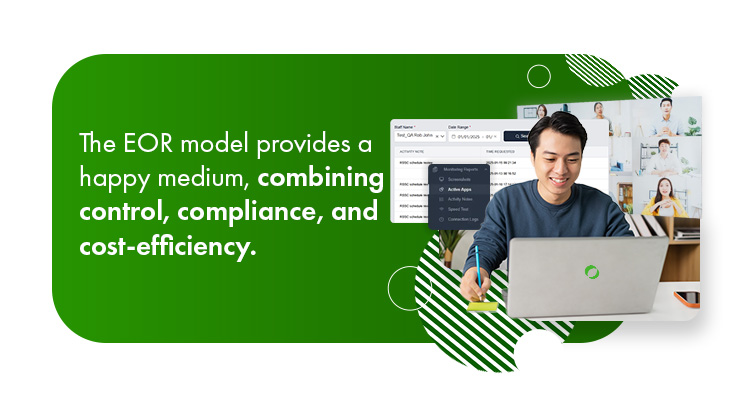
    The EOR model provides a happy medium, combining control, compliance, and cost-efficiency

    Employer of Record (EOR) Model

    The EOR model provides a happy medium, combining control, compliance, and cost-efficiency.

    The EOR becomes the legal employer, while you retain control over day-to-day management. This allows you to hire in the Philippines without setting up an entity and without the restrictions that come with a BPO.

    Pros

    • Full compliance. The EOR manages local labour laws, contracts, benefits, and statutory contributions, safeguarding you from misclassification and local labour disputes.
    • You choose and manage your talent. Unlike a BPO, you pick your staff directly, supervise them, integrate them into your workflows, and build long-term relationships.
    • Payroll + benefits handled for you. The EOR processes payroll, remits taxes, pays SSS/PhilHealth/Pag-IBIG, and handles leaves, HR matters, and documentation.

    Cons

    • Not ideal for physical office setups. If you want to operate a full Philippine office, incorporating locally may eventually be more appropriate.

    Best for: SMEs hiring 1 to 20 remote staff, long-term roles, skilled positions, compliance-conscious businesses.

    Not ideal for: Companies needing a physical Philippine branch or on-site workers.

    What Is an EOR in the Philippines?

    An EOR is a local organisation that legally employs your Filipino talent on your behalf. You retain full operational control, while the EOR handles compliance, payroll, contracts, benefits, and HR.

    Think of it as global hiring Philippines – no entity needed.

    How EOR Works for Foreign Employers

    EORs handle:

    • Employment contracts aligned with Philippine labour laws
    • Payroll processing and mandatory tax withholdings
    • SSS, PhilHealth, and Pag-IBIG contributions
    • Timekeeping and attendance monitoring
    • Government reporting and HR compliance
    • Local employee protections

    Benefits of EOR: Compliance, Payroll, HR, Legal Protection

    EORs remove the risk of misclassification and regulatory oversight by managing:

    • Philippines payroll compliance for foreign companies
    • Remote workforce Philippines employment law requirements
    • Local employee benefits and mandatory contributions
    • Termination procedures aligned with the Philippine Labour Code
    • Legal risk in case of disputes

    This guarantees you can hire remote Philippines staff legally and confidently.

    How Remote Staff Simplifies the EOR Experience

    Remote Staff has operated in the Philippines for 17+ years, supporting thousands of Australian SMEs with compliant offshore staffing.

    They provide:

    • End-to-end Philippines employer of record services
    • Pre-vetted Filipino talent across 150+ roles
    • Payroll, HR, and compliance handling
    • Local labour law expertise
    • Termination and dispute management
    • Real-time productivity tools
    • Transparent pricing — no hidden markups

    EOR offers fast hiring, legal certainty, and stable operations. It lets you test and leverage the Philippine talent market without committing to formal incorporation onsite.

    Key Compliance Considerations When Hiring Without an Entity

    Foreign businesses hiring in the Philippines must understand that local labour and tax rules may still apply, even without a physical presence.

    If a Filipino worker operates like an employee: with fixed hours, ongoing duties, and access to your systems, authorities may classify them as one and consider them qualified for tax withholding, SSS/PhilHealth/Pag-IBIG contributions, and proper termination procedures.

    Knowing these requirements helps Australian SMEs avoid misclassification, reduce legal risk, and build a compliant remote workforce.

    DOLE Registration, BIR Withholding, and SSS/PhilHealth Requirements

    Local compliance includes:

    • DOLE records and labour reporting
    • BIR tax withholding and monthly filings
    • Mandatory SSS, PhilHealth, and Pag-IBIG contributions
    • Proper computation of holiday pay, overtime, and 13th-month pay

    How EOR Eliminates Local Registration Headaches

    An EOR manages:

    • registering workers with government agencies
    • ensuring required contributions are paid
    • preparing compliant payslips
    • managing tax reporting
    • handling contract renewals and exits

    Basically, an EOR circumvents the need to register for a legal entity.

    What You’re Still Responsible For as an Employer

    You still call the shots for:

    • day-to-day tasks and performance
    • workload, KPIs, and training
    • culture, communication, and team integration
    • quality control and deliverables

    The EOR handles all legal and compliance matters, while you simply manage the team.

    Understanding Philippine labour law reduces perceived risk, builds trust, and prevents costly non-compliance errors.

    When to Use an EOR in the Philippines

    EOR is ideal for organisations that need speed, compliance, and flexibility when hiring in the Philippines. It allows Australian SMEs to build a remote team quickly without navigating the intricacies of a local entity setup, payroll rules, or labour regulations.

    Instead of juggling contracts, taxes, and government filings, an EOR handles the legal and administrative backbone while you stay focused on performance, training, and growth.

    This model gives businesses the freedom to scale up or down, test new roles, or enter new markets confidently—all while avoiding the misclassification and compliance risks that come with direct or contractor-based hiring.

    Hiring 1 to 20 Staff Quickly

    For many Australian SMEs, the real advantage of using an EOR is the operational stability it creates behind the scenes.

    Instead of juggling shifting labour rules, inconsistent contractor arrangements, or unfamiliar government processes, businesses gain a structured framework where employment, payroll, benefits, and HR administration are handled with precision from day one.

    This removes the bottlenecks that typically slow down offshore hiring, such as drafting compliant contracts, calculating statutory contributions, or resolving disputes.

    It also gives companies a smoother path to building long-term, high-performing teams.

    With less time spent troubleshooting admin issues, leaders can concentrate on integrating talent, strengthening culture, and driving projects forward.

    Exploring New Markets Before Committing

    Using an EOR makes it easy for Australian businesses to explore new markets because it removes the pressure to commit long-term before you’re ready.

    Instead of investing in incorporation, legal counsel, and local compliance systems, you can build a small team, run pilot projects, and validate whether the Philippine talent ecosystem supports your operational goals.

    This approach gives you real-time performance data: how fast work gets delivered, how well communication flows, and how effectively roles scale without locking your business into costly structural decisions.

    It’s a low-risk, high-learning model that lets you fine-tune your offshore strategy based on evidence, not guesswork.

    Converting Contractors to Compliant Employees

    Many Australian SMEs convert contractors to EOR-employed staff to avoid:

    • misclassification risk
    • incorrect tax treatment
    • benefit disputes
    • unstable retention

    Remote Staff has operated continuously in the Philippines since 2007

    How Remote Staff Helps You Hire in the Philippines

    Hiring in the Philippines without a local entity becomes dramatically simpler when you work with a partner that already has the infrastructure, legal presence, and operational maturity on the ground.

    Remote Staff has been supporting Australian businesses long before “borderless work” became a buzzword, giving SMEs a compliant, low-risk pathway to employ Filipino workers abroad without having to navigate the heavy regulations alone.

    With local HR teams, payroll specialists, and deep expertise in Philippine labour law for foreign employers, Remote Staff bridges the gap between global hiring and full compliance for each valued client.

    17+ Years of Experience with AU & US Businesses

    Remote Staff has operated continuously in the Philippines since 2007, supporting thousands of foreign companies that need offshore staffing for Filipino talents without establishing their own entity.

    Over this period, the company has become a trusted partner for Australian and US SMEs that want to scale quickly while staying compliant with the Philippines remote workforce legal requirements.

    Remote Staff’s long-term presence means it understands both the cultural nuances of Filipino professionals and the regulatory obligations facing foreign employers.

    This experience allows businesses to grow confidently, knowing they’re backed by a team that has mastered EOR Philippines hiring for foreign companies long before the model became mainstream.

    Legal Infrastructure, Local HR, and Payroll Teams

    Remote Staff provides the full Philippine infrastructure required to support a compliant remote workforce:

    • Local HR compliance experts who manage contracts, onboarding, and employee relations
    • Philippines payroll compliance for foreign companies, including tax withholding, SSS, PhilHealth, and Pag-IBIG
    • Labour law guidance for foreign companies that need clarity on benefits, leave, and termination rules
    • Real-time attendance and productivity monitoring tools
    • Dedicated account managers aligned with AU business hours

    This infrastructure allows you to leverage international recruitment in the Philippines with no setup cost or a lengthy entity formation process—a complete solution that lets you employ Filipino workers abroad safely and legally.

    Hybrid Models

    Remote Staff recognises that business needs vary, so it provides flexible hiring models beyond standard Philippines employer of record services:

    • Employer of Record (EOR) for full employees with complete benefits compliance

    • Contractor-on-Record for legally managed freelancers with optional HR support

    • Mixed teams for different departments (e.g., EOR for long-term staff, contractors for short projects)

    • Fast transitions from contractor status to full EOR employment to avoid misclassification risks

    These hybrid structures give businesses the freedom to scale while staying aligned with the remote workforce Philippines employment law.

    Frequently Asked Questions (FAQ)

    Hiring overseas can feel intimidating when you’re navigating it for the first time.

    Below are the most common questions Australian businesses ask when they want to hire Philippines without local entity requirements or legal worries.

    Can I legally hire someone in the Philippines without a company?

    Yes. Foreign companies can hire employees in the Philippines through a compliant structure such as an Employer of Record (EOR).

    This allows you to employ Filipino workers abroad without registering a Philippine entity.

    Do I need to pay Philippine taxes as a foreign business?

    Not directly. However, Filipino employees require tax withholding, mandatory contributions, and payroll compliance, which an EOR handles on your behalf to keep everything legal.

    What’s the fastest way to start employing from the Philippines?

    Using EOR services is the fastest method. You can onboard staff within days because the legal infrastructure already exists.

    No registration, no setup, and no waiting months for government approvals.

    Is hiring a freelancer the same as hiring an employee?

    No. Freelancers are not covered by mandatory benefits and follow different labour rules.

    Treating a freelancer like an employee can trigger hire Philippines contractors vs employees misclassification penalties. An EOR prevents this very issue.

    What is the cost of using an EOR?

    Costs vary based on role, seniority, and workload, but EOR pricing is generally far lower than establishing a local entity.

    You pay a transparent monthly fee that covers benefits, payroll, HR, and compliance. No hidden costs or government surprises.

    Building a compliant, high-performing Filipino team

    Ready to Hire Remotely in the Philippines?

    Building a compliant, high-performing Filipino team doesn’t require opening a company in the Philippines—just the right partner.

    With Remote Staff’s long-standing expertise, legal infrastructure, and proven EOR Philippines hiring solutions, Australian businesses can hire quickly, reduce risk, and scale confidently.

    Take the safer, smarter path to global hiring in the Philippines—with no entity required, no compliance headaches, and no uncertainty getting in the way of your company’s progress.

    • Want FREE AI Prompts for Different Areas of Your Business? Check out these 100 AI prompts.
    • Curious About How to REDUCE Overhead Costs? Learn more here.
    • If you’re ready to experience the full advantages of working with a top global team, check out our 1,000 fully vetted and highly talented staff here.
  • Top Free Invoicing Software for Australian Businesses (2025)

    Top Free Invoicing Software for Australian Businesses (2025)

    Australian businesses have access to several excellent free online invoicing software for small businesses in 2026. These solutions are designed for freelancers, startups, and established companies, offering features tailored to local compliance and business needs.

    Zeller logo, representing some of the best free invoicing software for Australian businesses.

    1. Zeller Invoices

    • Costs nothing to create and send unlimited invoices. Zeller allows you to generate professional invoices without any usage limits, making it perfect for small businesses that issue a high volume of invoices each month.
    • Mobile-first design for managing invoices on the go. The app is optimised for smartphones and tablets, enabling business owners and contractors to send invoices immediately after each job is completed, no matter where they are.
    • Compliant with Australian tax and GST requirements. Templates automatically include necessary GST fields and calculations, making sure every invoice you send meets local tax regulations.
    • No cost for basic invoicing; only pay a small fee if customers pay by card. You can use all core invoicing features for free. A transaction fee is applied, but only when customers pay with a credit card.
    • Suitable for freelancers, retailers, and service providers. Whether you’re providing bookkeeping services for small businesses or running a mobile retail operation, Zeller’s flexibility and simplicity would prove useful to many industries.

    ProfitBooks logo as one of the best free invoicing software in House.

    2. ProfitBooks

    • Intuitive interface designed for Australian businesses. The ProfitBooks dashboard is clean and intuitive, which means even users without an accounting background can navigate it with ease.
    • Create and send professional invoices quickly. You can generate polished, branded invoices in under a minute—a valuable feature for busy professionals juggling multiple client relationships.
    • Accept payments online (credit/debit cards, netbanking, e-wallets). Offering multiple payment channels improves your cash flow and gives customers more convenience at checkout.
    • Free plan available for small businesses and freelancers. Particularly useful for Xero bookkeepers for accountants and agencies who need a fast, lightweight billing solution for subcontracted work.

    One of the best free invoicing software for Australian businesses, represented by the Square logo.

    3. Square Invoices

    • Free for creating, sending, and managing invoices. All standard features, including reminders and status tracking, are included in the free plan—no trial period or strings attached.
    • Cloud-based with mobile access. Get instant updates on when an invoice is viewed, paid, or overdue, even while you’re managing virtual assessments or working remotely.
    • Integrates with Square’s POS and payment systems. Perfect for retail and hospitality businesses that already use Square terminals. All transactions sync automatically between sales and invoicing.

    Zoho logo, the brand is considered as among the best free invoicing software for Australian businesses.

    4. Zoho Invoice

    • Fully cloud-based and completely free. There are no surprise charges or limits on usage, even for advanced features like time tracking and expense logging.
    • Customisable templates that support email, WhatsApp, PDF, or iMessage delivery. Reach your clients through the channel they prefer, which improves communication and speeds up approvals and payments.
    • Real-time sync across devices. Your data is always up-to-date, whether you’re at your desktop, tablet, or phone—essential for business owners managing a team of personal assistants or freelancers.
    • GST-compliant with built-in automation features. Automates tax fields and calculations to reduce manual entry errors and maintain ATO compliance.
    • Part of a wider ecosystem. If your business grows, Zoho integrates easily with its other apps, such as Zoho Books, offering a seamless upgrade path for bookkeeping services for small businesses.

    The Invoicely logo, which represents some of the best free invoicing software for Australian businesses.

    5. Invoicely

    • Free invoicing tool with advanced features like recurring billing. You can automate recurring client payments, which is particularly helpful for subscription models or ongoing services like monthly virtual assessments.
    • Custom branding, tax/shipping discounts, and expense tracking. Personalise invoices with your company logo, offer discounts, and log associated expenses to keep finances in check.
    • Allows small business owners to manage reports and workflow in one place. View financial summaries, unpaid balances, and customer insights without separate tools or spreadsheets.
    • Scales well with growing businesses. Even though it’s free, Invoicely supports growth by offering upgrades for multi-user access and enhanced reporting, ideal for small teams or Xero bookkeepers for accountants managing several accounts.

    Among the best free invoicing software for Australian business, as shown by the Bildu logo.

    6. Billdu

    • Clean, fast invoice creation tailored for Australian businesses. A user-friendly layout helps you generate invoices within seconds, saving time during busy workdays.
    • Automatically calculates tax and supports multi-currency options. Whether you’re billing locally or internationally, it automatically factors in complex tax rules and currency conversion.
    • GST-ready and ATO compliant. Invoices come pre-formatted to meet Australian standards, reducing the risk of compliance errors.
    • Mobile app and desktop flexibility. You can start generating an invoice from your smartphone and finish it on your desktop computer, perfect for teams offering mobile bookkeeping services for small businesses.
    • Supports quick quotes and delivery notes. Ideal for professionals who need to send quotes ahead of invoices or attach delivery confirmations.

    Freeinvoice Builder representation, with the brand included in a few of the best invoicing software for Australian businesses.

    7. Freeinvoicebuilder.com

    • Australia-specific invoice templates for GST compliance. Templates are preloaded with ABN, GST, and invoice number fields—which you can all edit to suit your needs.
    • Built-in fields for mandatory invoice information and GST calculation. Takes care of line-by-line tax logic so you can bill with accuracy and confidence.
    • No registration required — generate invoices instantly. Great for freelancers, side hustlers, and personal assistants who need to bill quickly without creating an account.
    • Lightweight but effective. While it lacks some automation, this tool is excellent for one-off jobs or those just starting their business journey.

    Comparison Table: Key Features

    Software
    Free Plan
    GST/ATO Compliance
    Mobile App
    Online Payments
    Customization
    Invoice Limits
    Zeller Invoices
    Yes
    Yes
    Yes
    Yes
    Yes
    Unlimited
    ProfitBooks
    Yes
    Yes
    Yes
    Yes
    Yes
    Unlimited
    Square Invoices
    Yes
    Yes
    Yes
    Yes
    Yes
    Unlimited
    Zoho Invoice
    Yes
    Yes
    Yes
    Yes
    Yes
    Unlimited
    Invoicely
    Yes
    Yes
    Yes
    Yes
    Yes
    Unlimited (free tier)
    Billdu
    Yes
    Yes
    Yes
    Yes
    Yes
    Unlimited
    Freeinvoicebuilder
    Yes
    Yes
    Web only
    No
    Limited
    Unlimited

    Why Free Invoicing Software is Essential for Australian SMEs

    Running a small business in Australia comes with enough overhead costs.

    That’s why many SMEs, startups, and solo operators are turning to free invoice software to streamline their operations – without breaking the bank.

    Cost Efficiency for Small Businesses

    For businesses just starting out or operating on tight margins, even small monthly fees for software can add up. Free invoicing platforms help preserve cash flow without sacrificing professionalism or functionality.

    Built-in GST Compliance

    Invoicing software made for Australian users often includes automatic GST calculations, ABN fields, and ATO-compliant templates, which are crucial for avoiding costly tax errors.


    [rcb_show_form]

    Common Limitations of Free Invoicing Tools

    While free tools offer a great starting point, they come with trade-offs. Understanding these limitations helps you plan for upgrades as your business grows:

    • Limited support or customer service. Most free tiers don’t include live support or guaranteed response times.
    • May include branding on invoices. Some free tools place their logo on your invoices.
    • Payment fees still apply. Even when invoicing is free, platforms often charge transaction costs.

    When Should You Switch to Paid Invoicing Software?

    Consider switching when:

    • You need advanced features. Teams requiring project tracking or recurring billing often need premium tools.
    • You require integrations. As your tech stack grows, you’ll want tools that connect to your CRM or payroll.
    • You manage a team. Multi-user access is typically a paid feature.

    Related Read: Growing a business in Australia? Here’s Why You Need a Bookkeeper.

    A person using a laptop, showing on-screen text about invoicing software for Australian SMEs.

    Final Thoughts

    Free invoicing tools are a game-changer for Australian businesses, offering professional-grade features without the overhead.

    Ready for the upgrade, along with the specialist to help maintain your paid or free invoice apps? Learn how you can Calculate Outsouring Cost in Australia, and let’s find you the right software specialist. Call us or Request a Callback.

  • Getting Over the Fear of Outsourcing Xero Bookkeeping to a Virtual Assistant

    Getting Over the Fear of Outsourcing Xero Bookkeeping to a Virtual Assistant

    Many business owners feel nervous about outsourcing their Xero bookkeeping to a virtual assistant—and that’s completely normal.

    You might worry about mistakes, losing control, or leaking sensitive financial information. After all, your books are an important part of your business.

    However, outsourcing doesn’t mean giving up control over your processes—it means getting the support you need to manage your finances more efficiently.

    In fact, the fear often stems from common misconceptions rather than reality.

    Outsourcing Xero Bookkeeping Myths vs. Facts You Need to Know

    Outsourcing Xero Bookkeeping: Myths vs. Facts You Need to Know

    Let’s take a closer look at some of these fears—and uncover the facts behind them:

    Loss of Control

    Many worry that outsourcing means losing track of their finances. In truth, it can actually give you more control – for much less effort.

    A skilled virtual assistant can keep your records accurate and send you regular updates—like weekly reports and monthly summaries—so you always know what’s going on without handling every detail yourself.

    Security Concerns

    Worried about sharing sensitive financial data? That’s understandable.

    However, tools like Xero are designed to keep your info safe. They use encryption, two-factor login, and let you control what your virtual assistant can access.

    Also, if you outsource to reputable companies like Remote Staff, you get an extra layer of protection.

    These companies often screen their virtual assistants, have secure systems in place, and have methods to ensure that everyone follows strict privacy standards.

    Communication Barriers

    It’s normal to worry about time zones or language differences when it comes to communicating with offshore staff. However, these can be easily managed.

    By setting clear expectations and having regular check-ins, you stay connected. Using tools like Microsoft Teams or Slack also makes communication smooth and simple.

    With the right tools and planning, these barriers are easier to overcome.

    You can also check out these communication styles to help improve clarity and workflow with your virtual assistant.

    Quality of Work

    It’s normal to worry about the quality of work when outsourcing Xero bookkeeping especially if it’s your first time, but hiring offshore staff doesn’t mean they’re any less capable than their local counterparts.

    Many virtual assistants who specialize in Xero are trained professionals with years of experience. They know the software well, follow global bookkeeping standards, and use best practices to give you accurate, timely results.

    Some xero-trained VAs even bring industry-specific knowledge—like construction, e-commerce, or healthcare—which helps them tailor their work to your needs.

    In fact, outsourcing can actually improve your bookkeeping process.

    Instead of spending hours figuring out your numbers or trying to fix mistakes, your virtual assistant takes care of it—like setting up bank feeds, reconciling transactions, and preparing financial reports.

    You also get expert answers whenever you have questions.

    For example, a good Xero software expert might spot inconsistent entries in supplier invoices and flag them early—helping you avoid costly errors and keep your records clean.

    02 - Key Benefits of Hiring a Virtual Assistant for Your Xero Bookkeeping

    Key Benefits of Hiring a Virtual Assistant for Your Xero Bookkeeping

    Outsourcing your Xero bookkeeping and accounting to a virtual assistant can make a big difference for your business.

    Here are the key benefits:

    Cost Savings

    Outsourced bookkeeping services to a virtual assistant helps cut overhead costs. There’s no need to pay for their office space or equipment, for one thing.

    Plus, since the exchange rate is in your favor and with the lower cost of living, hiring from countries like the Philippines often means you get the same quality of work at a lower price.

    You only pay for the bookkeeping services you actually need, making it a more cost-effective choice.

    Access to Expertise

    A virtual assistant who already knows Xero can hit the ground running—no need for training.

    They understand how the software works and can apply best practices right away.

    Moreover, you also get access to experts with skills or industry knowledge that may not be easy to find locally—helping improve your bookkeeping and overall workflow.

    To illustrate, here’s what that might look like in different industries:

    • Construction – A VA familiar with project-based accounting, job costing, and progress invoicing in Xero can help track each project’s profitability more efficiently.
    • Medical or Healthcare – Someone experienced with patient billing, insurance claims, and health service coding can ensure your records stay accurate and compliant.
    • Foreign Tax & Compliance – If you work with international clients or vendors, a VA who understands foreign tax laws or multi-currency setup in Xero can help manage cross-border transactions smoothly.
    • E-commerce & Retail – Experts who know how to sync Xero with platforms like Shopify, Amazon, or Square can help automate sales tracking and simplify reconciliation.
    • Tech & Startups – A VA who understands SaaS billing, R&D tax incentives, or investor reporting can help early-stage companies stay compliant and organized.

    By outsourcing globally, you’re no longer limited to the talent pool in your immediate area. You can find someone who not only knows Xero—but also understands your industry and specific needs.

    Efficiency & Focus

    Outsourcing a virtual assistant for bookkeeping frees up your time and your team’s energy.

    Instead of spending hours on data entry, reconciliations, or figuring out Xero reports, you can focus on what matters most—growing your business, getting new clients, or improving your products.

    For instance, while your VA handles day-to-day bookkeeping using bookkeeping best practices, your operations team can concentrate on streamlining workflows or launching a new service, activities that actually move the needle.

    Basically, your virtual assistant takes care of the necessary yet tedious financial tracking, so you don’t have to. This helps you and your team avoid burnout, work smarter, and stay focused on high-value work.

    Scalability

    Outsourcing your Xero bookkeeping gives you flexibility. As your business grows or changes, you can easily adjust the level of support you need.

    For example, if you start selling in a new country and need help working with multi-currency transactions or tax rules, you can bring in a remote bookkeeper with that expertise—no need to hire a full-time specialist that will require a more immediate and higher level of commitment.

    This makes it easier to scale up during busy periods or scale down when things are slower, all without the stress (and considerable cost) of hiring or letting go of full-time staff.

    Accuracy & Compliance

    Professional virtual bookkeepers help keep your records clean and error-free. They’re trained to spot mistakes—like duplicate entries or missing receipts—and fix them before they cause bigger issues.

    Take Goods and Services Tax (GST) reporting, for instance—a skilled bookkeeper ensures it’s calculated correctly and submitted on time, helping you avoid penalties or audits.

    They also stay updated on tax laws and bookkeeping standards, so your records are always aligned with government requirements.

    By following a consistent bookkeeping workflow, they ensure that everything is organized, accurate, and submitted on time—giving you peace of mind as your business grows.

    03 - Overcoming the Fear of Outsourcing Step-by-step guidance

    Overcoming the Fear of Outsourcing: Step-by-step guidance

    Having reservations towards outsourcing your Xero bookkeeping is normal—but you don’t have to dive in all at once.

    Here’s a step-by-step approach to help you build trust, ease into the process, and gain confidence along the way.

    Start Small

    When outsourcing your Xero bookkeeping for the first time, you don’t have to hand over everything at once.

    Begin with smaller, low-risk tasks—like data entry, categorizing expenses, or reconciling one account.

    You can even have your virtual assistant work with tools like Excel for accountants initially or cross-check data before it goes into Xero.

    This lets you see how the virtual assistant works and helps build trust. Once they prove their mettle and you’re more comfortable delegating to them, you can slowly hand over the rest of the tasks and access to the required data.

    Vet Providers Thoroughly

    Before you outsource your Xero bookkeeping, take time to check the provider’s credentials, security measures, and client reviews.

    Make sure they have proven experience with Xero and a track record of reliability.

    For example, platforms like Remote Staff have tried and tested systems in place to vet candidates and also take extra steps to ensure you’re matched with qualified professionals, making it easier to find someone who’s both skilled and trustworthy.

    They also put strong data protection measures in place and offer ongoing support to help maintain a secure, smooth working relationship.

    Set Clear Expectations

    When you outsource your Xero bookkeeping, it’s important to clearly define what you need from the start. This means outlining roles, responsibilities, deadlines, and how you prefer to communicate.

    For example, lay out all the tasks your virtual assistant will handle—like reconciling bank statements, processing invoices, or preparing monthly reports.

    If they happen to have experience working as a financial analyst, you can also tap into their insights for budgeting or financial forecasting.

    Set deadlines for when you expect these tasks completed, and agree on how often you’ll check in (e.g., weekly meetings or daily updates via Slack or email).

    Clear expectations help prevent confusion, build accountability, and keep everything running smoothly from day one.

    Maintain Oversight

    Outsourcing doesn’t mean giving up control.

    Set regular check-ins with your virtual assistant—weekly or monthly—to stay updated on your finances. Go over reports together and ask questions when needed.

    You can also review key areas from time to time, like reconciliations or expenses, to make sure everything is accurate.

    Staying involved helps keep your bookkeeping on track and gives you peace of mind.

    Build Trust Gradually

    Trust takes time to establish, so it’s normal to feel a little uncomfortable when you’re working with someone new.

    Start by keeping communication open—be clear about what you need and encourage your virtual assistant to ask questions or give updates.

    Also, provide just enough context about your business and bookkeeping needs to help them do their job well.

    Trust builds faster when there’s full transparency on both sides. Being open, sharing updates, and asking the right questions will help you both grow into a fulfilling working relationship.

    04 - Getting Started Practical advice for a confident transition

    Getting Started: Practical advice for a confident transition

    Ready to outsource your Xero bookkeeping but not sure where to begin? Here are some practical tips to help you ease into the process with confidence

    Classify Access on a Need-to-Know Basis

    When working with a virtual assistant, it’s important to protect your financial data.

    Start by using cloud-based tools like Xero, which let you control user permissions and track activity. Grant access only to the features your assistant needs—nothing more.

    Also, use secure channels for communication and file sharing. Think password-protected documents or encrypted platforms.

    This keeps your information secure while giving your virtual assistant what they need to work efficiently and responsibly.

    Provide Training & Resources

    Even if your virtual assistant is experienced with Xero, every business has its own way of doing things. Take time to share your specific bookkeeping workflow, preferences, and expectations.

    This might include a quick walkthrough of how you categorize expenses, name files, or handle approvals. You can also provide reference documents, templates, or short video guides to make things easier.

    Regular Feedback

    Giving regular feedback helps your virtual assistant know what they’re doing well – and where they can improve.

    If something isn’t right, explain it as objectively and as clearly as possible. And when things go well, a simple “thank you” or compliment can boost motivation.

    This back-and-forth helps keep your bookkeeping accurate and your working relationship strong.

    05 - Ready to Get Started Here’s What’s Next

    Ready to Get Started? Here’s What’s Next

    Outsourcing your Xero bookkeeping to a virtual assistant may feel like a big leap, but with the right mindset and systems in place, it turns into a very strategic move.

    By starting small, setting clear expectations, and maintaining open communication, you can ease into the process while still staying in control of your finances. Over time, you’ll gain more confidence, save valuable hours, and benefit from professional bookkeeping support.

    However, if you’re unsure where to begin, working with trusted platforms like Remote Staff can help simplify the process.

    We can connect you with vetted, Xero-savvy professionals and provide ongoing support—so you don’t have to navigate everything alone.

    Ready to explore your options? Request a callback and we’ll help you find the right virtual assistant for your bookkeeping needs.

    • Want FREE AI Prompts for Different Areas of Your Business? Check out these 100 AI prompts.
    • Curious About How to SAVE and Maximize on Taxes? Learn more here.
    • If you’re ready to experience the full advantages of working with a top global team, check out our 1,000 fully vetted and highly talented staff here.
  • The Difference Between Appointment Setters, SDRs, and Cold Callers

    The Difference Between Appointment Setters, SDRs, and Cold Callers

    Looking to improve your company’s Business to Business (B2B) lead generation and generate more sales?

    If so, having the right team in place to generate, qualify, and convert leads is crucial to your success.

    Here’s where specialized outbound sales roles like Appointment Setters, Sales Development Representatives (SDRs), and Cold Callers enter the picture.

    Understanding the difference between these roles helps you find the best candidates for your business’s needs.

    So, here’s a detailed breakdown of each role and how each one can improve your sales lead generation.

    Appointment Setters

    Appointment Setters

    Let’s begin by discussing the role of appointment setters in business.

    Appointment setters are typically entry-level sales professionals responsible for scheduling meetings between prospective clients and your company’s sales representatives.

    They work with predefined lead lists or marketing-qualified inbound inquiries to maximize the number of qualified meetings for the sales team.

    Furthermore, while they handle the initial outreach and basic eligibility tests (i.e., confirming industry fit and availability), they do not perform in-depth needs analysis or budget assessment.

    Some companies merge the roles of an appointment setter and virtual assistant (VA), resulting in virtual appointment setters.

    These specialists handle lead research, CRM (Customer Relationship Management) updates, cold calling, calendar management, and follow-ups.

    Duties and Responsibilities

    An appointment setter’s responsibilities include:

    • Outbound Outreach:
      • Executing high-volume calling to contact potential clients and introduce the company’s offerings.
    • Appointment Scheduling:
      • Coordinating calendars to book consultations or demos between qualified prospects and account executives.
    • Basic Qualification:
      • Verifying simple eligibility criteria (i.e., geographic location, company size, and decision-maker availability) before booking.
    • CRM Management:
      • Logging all interactions, outcomes, and follow-up actions in CRM systems to ensure data accuracy and pipeline visibility.
    • Follow-Up and Reminders:
      • Sending confirmation emails and reminders to reduce “no-show” rates, which improves calendar utilization.

    Required Skills and Qualities

    When hiring a virtual appointment setter, look for the following skills and qualities:

    • Excellent Communication Skills:
      • Capable of speaking and writing clearly, confidently, and professionally.
      • Able to adjust their tone and messaging depending on the prospective client’s industry or their response.
    • Tech Savviness and Tool Mastery:
      • Able to operate multiple applications (i.e., CRMs, auto-dialers, scheduling tools, and collaboration apps) with ease to ensure seamless outreach and booking.
    • Self-Discipline and Time Management:
      • Capable of structuring their own schedule to hit call and booking targets, manage follow-ups promptly, and minimise downtime with little to no supervision.
    • Attention to Detail:
      • Able to accurately log call outcomes, appointment details (including time zones), and CRM updates to support downstream sales activities.
    • Persistence and Resilience:
      • Capable of remaining motivated despite frequent rejections and refining their objection-handling approaches.
    • Adaptability:
      • Able to quickly integrate feedback, update scripts, and adjust targeting criteria to pivot strategies effectively in response to performance data or market shifts.
    • Emotional Intelligence:
      • Capable of reading prospect cues without visual feedback, display empathy, and foster trust during brief interactions, thereby increasing appointment commitment.

    Tools and Technologies

    Here are some common tools appointment setters use to achieve their tasks:

    • CRM Platforms:
      • CRM systems centralise data from prospects, track interactions, and automate follow-ups.
    • Dialing Software:
      • Auto-dialers and virtual phone systems help accelerate call throughput and logging.
    • Scheduling and Calendar Tools:
      • Automated scheduling links eliminate the need for back-and-forth emails between appointment setters and prospective clients.
    • Call Analytics and Conversation Intelligence:
      • These insight platforms analyse call recordings and conversation data for coaching and optimisation.
    • AI-Powered Sales Enablement:
      • Generative AI assistants boost productivity by drafting outreach and surfacing real-time guidance.
    • Data Enrichment Platforms:
      • These tools enhance lead lists with firmographic and contact details to improve call relevance.
    • SMS and Multichannel Automation:
      • These enable businesses to send timely and targeted messages across text, email, and other channels without manual effort.

    Strategic Value to Businesses

    Having a skilled appointment setter in your team enables senior sales staff to focus on closing deals, boosting overall team productivity.

    In addition, leveraging appointment setter virtual assistants allows you to rapidly and cost-effectively scale your outreach without having to expand your closing teams.

    Finally, having them provide prompt follow-ups and clear communication to prospective clients fosters a positive first impression, setting the tone for successful sales engagements.

    Sales Development Representatives (SDRs)

    Sales Development Representatives (SDRs)

    Next, let’s take a look at Sales Development Representatives (SDRs).

    This sales qualification role acts as the bridge between marketing-generated interest and the closing expertise of account executives, ensuring the seamless hand-off of Sales-Qualified Leads (SQLs).

    Their focus is mostly on top-of-funnel activities like sales prospecting via cold calls, emails, and social touches to identify and engage potential customers who fit your company’s Ideal Customer Profile (ICP).

    SDRs also conduct brief discovery conversations, applying frameworks like BANT (Budget, Authority, Need, and Timeline), to qualify SQLs before handing them off to account executives.

    Duties and Responsibilities

    Sales Development Representatives are primarily responsible for:

    • Prospecting and Lead Identification:
      • Researching and building target lists using platforms like LinkedIn and data providers, focusing on prospects that match predefined ICP criteria.
    • Multi-Channel Outreach:
      • Executing coordinated sequences of cold calls, personalised emails, and social touches, often following a “touch cadence,” to maximise connection rates.
    • Lead Qualification:
      • Applying frameworks like BANT during discovery calls and emails to assess a prospect’s readiness and fit before advancing them.
    • Handoffs and CRM Management:
      • Scheduling qualified leads for meetings with account executives and meticulously logging all interactions in CRMs to maintain pipeline visibility.

    Required Skills and Qualities

    To find top SDRs, look for the following skills and qualities:

    • Communication and Rapport-Building:
      • Capable of crafting concise, compelling messages and adapting their tone across channels to engage diverse prospects.
    • Analytical and Data-Driven Mindset:
      • Able to interpret outreach metrics and A/B testing cadences for continuous optimisation of qualification processes.
    • Resilience and Persistence:
      • High rejection rates demand a resilient mindset and the discipline to follow up persistently without alienating prospects.
    • Coachability and Adaptability:
      • Capable of rapidly integrating feedback, updating scripts, and pivot targeting based on performance data and market shifts.

    Operational Excellence

    Unsure Where To Start?

    Find The Right Role For Your Team

    Hire a Remote Staff specialist to support operations while you take care of your business vision.

    Trusted by 3,000+ businesses to scale remotely since 2007.

    Tools and Technologies

    Here are some tools your SDR needs to accomplish their work:

    • Sales Engagement Platforms:
      • These allow SDRs to automate, track, and personalise a multi-channel outreach across email, phone, and LinkedIn.
    • Lead Intelligence and Intent Data Tools:
      • SDRs use these to find and prioritise high-intent leads based on company activity or buyer behavior.
    • CRM Advanced Features:
      • While appointment setters also use CRM tools to log calls or tasks, SDRs use deeper features like lead scoring, workflows, and pipeline forecasting.
    • Conversation and Intelligence Tools:
      • These tools record and analyse SDR sales calls for coaching and performance improvement.
    • Sales Enablement and Playbooks:
      • These platforms guide SDRs with the right talk tracks, content, and resources for every sales scenario.

    Strategic Value to Businesses

    A Sales Development Representative ensures higher conversion rates by using structured qualification frameworks to determine a lead’s readiness to take the next step.

    This, in turn, boosts sales efficiency as your account executives can more accurately identify and focus on high-quality leads.

    Furthermore, as they work at the top of the sales funnel, SDRs help your business scale lead generation more predictably.

    In addition, SDRs can help refine your messaging, product offering, and targeting by gathering and processing feedback from qualified leads.

    Finally, SDRs bridge the gap between marketing and sales, further improving your marketing’s return on investment (ROI).

    Cold Callers

    Cold Callers

    The last role we’ll discuss is cold callers.

    Cold callers place outbound calls to individuals or businesses who haven’t yet expressed interest in your offerings, with the primary aim to generate initial awareness and sound out potential leads.

    They prioritise quantity over depth, keeping conversations very brief (typically under two minutes) to maximise the number of connections.

    Thus, they don’t engage in consultative discovery or detailed needs analysis; instead, they probe for a single interest or pain point that justifies a hand-off.

    Their primary output is a basic lead profile or an appointment hand-off to SDRs or account executives for comprehensive qualification.

    Duties and Responsibilities

    A cold caller’s duties and responsibilities include:

    • High-Volume Outreach:
      • Executing hundreds of calls daily using auto-dialers or manual dialing setups to maximise contact attempts.
    • Scripted Pitches:
      • Following structured scripts that open with a brief introduction, a concise value proposition, and a clear call to action prompts.
    • Basic Qualification:
      • Capturing minimal criteria like the prospect’s name, role, company size, and expressed interest level before logging data.
    • Data Entry:
      • Accurately recording call outcomes, dispositions (“interested,” “not interested,” “call back later”), and any brief objections in the CRM app.
    • Appointment Scheduling:
      • Scheduling follow-up meetings on occasion or transferring warm prospects directly to calendar booking tools.

    Required Skills and Qualifications

    Skilled cold callers possess the following skills:

    • Resilience and Persistence:
      • The ability to remain comfortable with high rejection rates, as often over 80% of calls end without an affirmative response.
    • Clear Verbal Communication:
      • Delivering scripts smoothly, with a confident tone that engages prospects quickly.
    • Active Listening:
      • Possesses keen attention to prospects’ cues to capture any hint of interest or objection within a brief dialogue.
    • Time Management:
      • Skilled in maintaining call pace, handling wrap-up tasks, and moving swiftly to the next contact.
    • Detail-Oriented Data Entry:
      • Capable of precision in logging call outcomes, as small errors can lead to missed opportunities or duplicate outreach.

    Tools and Technologies

    Cold callers use many of the same tools that appointment setters and SDRs use for their daily work. These include:

    • Auto-Dialers and Power Dialers:
      • Platforms like PhoneBurner or RingCentral automate dialing and call logging, boosting call throughput.
    • Call Scripting Software:
      • These tools display dynamic scripts and next-step prompts based on call outcomes.
    • Basic CRM Systems:
      • Used for tracking call dispositions and scheduling follow-ups.
    • Calendar Integrations:
      • Simple booking links embedded in email follow-ups to capture warm prospect appointments.

    Strategic Value to Businesses

    Cold callers serve as the frontline of outbound sales, rapidly saturating new or untapped markets with minimal resource investment.

    In addition, they feed a constant stream of raw leads into your sales funnel, allowing your SDRs and account executives to focus on higher-value, consultative selling activities, further improving overall sales efficiency.

    Finally, since cold calling elicits immediate verbal reactions, cold callers provide real-time market feedback, enabling rapid iteration of scripts and outreach strategies for maximum effectiveness.

    Comparing Roles: Appointment Setter vs. SDR vs. Cold Caller

    While appointment setters, SDRs, and cold callers contribute to filling the sales funnel, there are several major differences between them.

    Here’s a table comparing the functions of each role:

    Table - The Difference Between Appointment Setters, SDRs, and Cold Callers

    Additional Notes:

    • Although appointment setters may use cold calling to generate leads, their main success metric will always be the number of meetings booked, not closed sales.
    • Due to their wider scope, which includes inbound and outbound lead qualification, SDRs may overlap with appointment setters in some organizations.
    • Cold callers can sometimes be considered a subset of appointment setters; that said, depending on the organization, their focus may be purely on generating leads or making direct sales.

    Hiring the Right Sales Expert for Your Business

    Hiring the Right Sales Expert for Your Business

    Choosing the right sales expert can be challenging due to the seeming overlap between appointment setters, SDRs, and cold callers.

    Fortunately, by understanding the points above, you’ll have an easier time differentiating the three and selecting the appropriate one for your current needs.

    After determining what sales role you need, the next step is to find qualified candidates.

    The best way to find top talent is by working with a trusted outsourcing company like Remote Staff.

    We’ll connect you with vetted appointment setters, SDRs, and cold callers and provide ongoing support – so you won’t have to navigate this process alone.

    Ready to start hiring a sales expert? Request a call back today, and we’ll be happy to assist you.

    [rcb_show_form]

    Quick Hire: Find the Role You Need
  • Transforming Healthcare Delivery: The Impact of Virtual Medical Assistants

    Transforming Healthcare Delivery: The Impact of Virtual Medical Assistants

    The Role of a Virtual Medical Assistant in Transforming the Healthcare Industry

    In recent years, the healthcare industry has witnessed a significant transformation, largely driven by technological advancements.

    One of the most impactful innovations in this sector is the emergence of virtual medical assistants.

    These digital helpers are revolutionising the way healthcare providers operate, as virtual medical assistants enhance patient care and streamline administrative tasks.

    This article explores the multifaceted role of virtual medical assistants or virtual healthcare assistants and their profound impact on the healthcare industry.

    What is a Virtual Medical Assistant and How Do They Operate?

    A virtual medical assistant is a remote professional who provides administrative, technical, and sometimes clinical support to healthcare providers.

    Unlike traditional in-office assistants, virtual medical assistants work remotely, leveraging technology to perform their duties efficiently and effectively.

    Understanding the Role of Virtual Assistants in Healthcare

    Virtual assistants in healthcare serve as a bridge between patients and medical professionals, ensuring a seamless connection with virtual patient services.

    They utilise various digital platforms and tools to manage office tasks that traditionally required physical presence, allowing proficient virtual medical assistants to enhance productivity in the medical office.

    This shift has allowed healthcare providers to focus more on patient care while ensuring that administrative duties are handled promptly and accurately.

    Key Responsibilities of a Medical Virtual Assistant

    The responsibilities of a medical virtual assistant are diverse and can include:

    1. Managing patient appointments and schedules
    2. Handling patient inquiries and providing information
    3. Processing medical billing and insurance claims
    4. Maintaining and updating electronic health records
    5. Transcribing medical notes and reports
    6. Coordinating with other healthcare professionals
    7. Assisting with telemedicine consultations
    8. Verifying patient insurance coverage
    9. Ordering prescriptions as directed by physicians
    10. Following up on patients’ test results
    11. Managing medical records
    12. Facilitating communication between patients and healthcare providers
    13. Conducting patient intake and registration
    14. Performing medical coding tasks
    15. Managing inventory and ordering supplies
    16. Handling email correspondence
    17. Conducting healthcare research and literature reviews
    18. Managing social media accounts for healthcare practices
    19. Assisting with remote patient monitoring (RPM)
    20. Providing virtual receptionist services
    21. Conducting patient satisfaction surveys
    22. Assisting with medical documentation and charting
    23. Preparing and generating various practice operation reports
    24. Conducting pre-authorisation for medical procedures
    25. Assisting with patient education and providing resource

    Differences Between In-House and Virtual Medical Assistants

    While both in-house and virtual medical assistants support healthcare practices, there are key differences:

    • Location. In-house assistants work on-site, while virtual assistants work remotely.
    • Availability. Virtual assistants often offer extended hours of support to ensure that virtual patient needs are met around the clock.
    • Cost-effective. Solutions are essential for practices looking to hire virtual assistants to efficiently manage their workload. Virtual assistants typically have lower overhead costs for the practice.
    • Scalability. It is a significant benefit of utilising medical virtual assistant services in a growing healthcare practice. Virtual assistant services can easily scale up or down based on practice needs.
    • Technology. Virtual assistants rely heavily on digital tools and platforms.

    How virtual medical assistant services enhance patient care.

    How Virtual Medical Assistant Services Enhance Patient Care

    Virtual medical assistant services have significantly improved patient care in several ways.

    By taking over time-consuming administrative tasks, they allow healthcare providers to dedicate more time to direct patient care.

    This increased focus on patients leads to better health outcomes and improved patient satisfaction.

    Moreover, virtual assistants facilitate better communication between patients and healthcare providers.

    They can quickly respond to patient inquiries, provide timely reminders for appointments and medications, and ensure that patients have access to their health information when needed.

    Why Should You Hire a Virtual Medical Assistant?

    Benefits of Hiring Virtual Medical Assistants for Your Medical Practice

    Hiring a virtual medical assistant can bring numerous benefits to your healthcare practice:

    1. Increased Efficiency. Virtual assistants can handle multiple tasks simultaneously, reducing bottlenecks in your practice’s workflow.
    2. Extended Availability. With virtual assistants, your practice can offer support to patients beyond regular office hours.
    3. Reduced Overhead Costs. By eliminating the need for physical office space and equipment, virtual assistants help reduce operational costs.
    4. Scalability. As your practice grows, virtual assistant services can easily scale to meet increased demands.
    5. Improved Focus on Core Medical Services. By delegating administrative tasks, healthcare providers can concentrate on delivering quality medical care.

    Cost-Effectiveness of Virtual Assistant Services

    One of the most compelling reasons to hire a virtual medical assistant is the cost-effectiveness of their services.

    Traditional in-office assistants require salaries, benefits, office space, and equipment. In contrast, virtual assistants typically work on a contract basis, eliminating many of these expenses.

    This arrangement allows healthcare practices to access high-quality support at a fraction of the cost of full-time, in-house staff.

    Improving Patient Satisfaction through Virtual Assistance

    Virtual medical assistants play a crucial role in enhancing patient satisfaction.

    They provide prompt responses to patient inquiries, ensure timely follow-ups, and facilitate smooth communication between patients and healthcare providers.

    This level of attentiveness and efficiency contributes to a positive patient experience, leading to higher satisfaction rates and improved patient retention.

    How Can Virtual Assistants Streamline Administrative Tasks?

    Handling Medical Billing and Insurance Verification

    Medical billing and insurance verification are complex and time-consuming processes that dedicated virtual medical assistants can simplify.

    Virtual medical assistants can efficiently handle these tasks, ensuring accurate billing, timely submissions, and proper insurance verification.

    This streamlined approach reduces errors, accelerates reimbursement processes, and improves the overall financial health of the practice.

    Streamlining Appointment Scheduling and Patient Communication

    Virtual assistants excel in managing appointment schedules and patient communications.

    They can:

    • Assist in various tasks that streamline medical office operations
    • Schedule and reschedule appointments
    • Send appointment reminders via text, email, or phone
    • Handle cancellations and fill vacant slots
    • Provide patients with pre-appointment instructions
    • Follow up with patients post-appointment

    This comprehensive approach to appointment management reduces no-shows, improves patient flow, and enhances the overall efficiency of the practice, showcasing how virtual healthcare can optimise operations.

    Efficient management of medical records.

    Efficient Management of Medical Records

    Maintaining accurate and up-to-date medical records is crucial for providing quality healthcare, and managing medical records is a key responsibility of virtual medical assistants in the medical office.

    Virtual medical assistants can efficiently manage electronic health records (EHRs), ensuring that patient information is accurately recorded, easily accessible, and securely stored, thus facilitating better virtual healthcare.

    This meticulous record-keeping supports better clinical decision-making and continuity of care.

    What Are the HIPAA Regulations for Virtual Medical Assistants?

    HIPAA (Health Insurance Portability and Accountability Act) regulations for virtual medical assistants require strict adherence to privacy and security standards when handling protected health information (PHI).

    Virtual assistants must implement robust security measures, including encryption of electronic communications, secure access controls, and proper disposal of outdated records.

    They must also sign a Business Associate Agreement (BAA) with healthcare providers, undergo comprehensive HIPAA training, and follow protocols for reporting potential data breaches.

    Additionally, virtual medical assistants are responsible for maintaining detailed audit trails and ensuring that all their activities align with HIPAA’s stringent guidelines for patient data protection

    Understanding HIPAA Compliance in Virtual Assistant Services

    The Health Insurance Portability and Accountability Act (HIPAA) sets strict standards for protecting patient health information, which is critical for medical scribes and virtual assistants in the medical specialty.

    Virtual medical assistants must adhere to these regulations to ensure patient data privacy and security.

    This compliance involves implementing robust security measures, maintaining confidentiality, and following strict protocols for handling patient information.

    The Importance of HIPAA Training for Healthcare Professionals

    Healthcare providers must ensure that their virtual assistants receive comprehensive HIPAA training. This training should cover:

    • Understanding of HIPAA regulations and their implications
    • Proper handling of protected health information (PHI)
    • Recognition and reporting of potential security breaches
    • Best practices for maintaining patient confidentiality

    Ensuring Patient Data Security with Virtual Medical Assistants

    To maintain HIPAA compliance and protect patient data, healthcare practices should ensure that their virtual assistants are equipped with the knowledge of medical terminology.

    1. Use secure, encrypted communication channels.
    2. Implement multi-factor authentication for accessing patient records.
    3. Regularly audit and update security protocols to ensure that virtual healthcare practices remain compliant and secure.
    4. Establish clear guidelines for data handling and storage to ensure that virtual medical assistants can manage patient information effectively.
    5. Conduct regular security assessments and training.

    How Can You Successfully Hire a Virtual Medical Assistant?

    Attention to detail.

    The Hiring Process: What to Look For in a Virtual Assistant

    When hiring a virtual medical assistant, consider the following qualities:

    1. Experience in Healthcare. Look for candidates with a background in healthcare administration or related fields, especially those who understand the tasks ranging from patient management to telemedicine.
    2. Technical Proficiency.  Ensure they are comfortable with various healthcare software and digital tools as dedicated virtual assistants handle these tasks efficiently.
    3. Communication Skills. Strong written and verbal communication skills are essential for effective communication with your virtual assistants and healthcare providers.
    4. Attention to Detail. It is crucial when virtual assistants offer support in managing patient information. Medical tasks require precision and accuracy, which is why virtual medical assistants can help streamline processes.
    5. Time Management. The ability to juggle multiple tasks efficiently is crucial.
    6. HIPAA Compliance. Familiarity with HIPAA regulations is a must for any virtual medical assistant providing medical assistance.

    Building a Productive Working Relationship with Your Virtual Assistant

    To foster a productive relationship with your virtual medical assistant provider:

    1. Establish clear communication
    2. Clearly define roles and expectations
    3. Establish regular communication channels
    4. Provide necessary training and resources through a training program to ensure virtual assistants can perform their roles effectively
    5. Set measurable goals and performance metrics
    6. Offer constructive feedback and recognition

    Common Job Roles of a Medical Virtual Assistant

    Medical virtual assistants can fill various roles, including:

    • Virtual Medical Scheduler
    • Virtual Patient Care Coordinator
    • Remote Medical Billing and Coding Specialist
    • Virtual EHR Management Assistant
    • Remote Medical Transcriptionist
    • Virtual Healthcare Liaison
    • Telemedicine Support Specialist
    • Virtual Insurance Verification Specialist
    • Remote Prescription Management Assistant
    • Virtual Patient Follow-up Coordinator
    • Digital Medical Records Manager
    • Virtual Patient Communication Specialist
    • Remote Patient Intake Specialist
    • Virtual Medical Coder
    • Remote Medical Supply Coordinator
    • Virtual Healthcare Correspondence Manager
    • Remote Healthcare Research Assistant
    • Virtual Healthcare Social Media Manager
    • Remote Patient Monitoring Assistant
    • Virtual Medical Receptionist
    • Remote Patient Satisfaction Analyst
    • Virtual Medical Documentation Specialist
    • Remote Healthcare Operations Analyst
    • Virtual Pre-authorisation Specialist
    • Remote Patient Education Coordinator

    What Future Trends Are Emerging for Virtual Assistants in Healthcare?

    The Rise of Remote Patient Monitoring

    Remote patient monitoring is becoming increasingly prevalent, with virtual assistants playing a crucial role in virtual healthcare. They can:

    • Monitor patient vital signs through connected devices
    • Alert healthcare providers to significant changes in patient condition
    • Facilitate virtual check-ins and follow-ups
    • Manage and analyse patient health data

    Innovations in Healthcare Virtual Assistance

    Emerging technologies are expanding the capabilities of virtual medical assistants:

    1. Artificial Intelligence. AI-powered assistants can provide more sophisticated support, including preliminary diagnoses and treatment recommendations.
    2. Natural Language Processing. Improved NLP allows virtual assistants to understand and respond to complex medical queries more accurately.
    3. Predictive Analytics. Virtual assistants can analyse patient data to predict health trends and potential issues, acting as a virtual health assistant in the medical specialty.
    4. Blockchain Technology. This can enhance the security and interoperability of health records managed by virtual assistants, providing virtual support to healthcare providers.

    Impact of Technology on Virtual Assistant Solutions

    Technological advancements are continually reshaping virtual assistant solutions in healthcare:

    1. 5G Networks. Faster, more reliable internet connections will enhance the capabilities of virtual assistants, especially in telemedicine and virtual support.
    2. Internet of Things (IoT). Integration with IoT devices will allow virtual assistants to collect and analyse more comprehensive patient data, enhancing the healthcare services provided.
    3. Augmented Reality (AR). AR could enable virtual assistants to provide visual guidance for medical procedures or patient education.
    4. Voice Recognition. Improved voice recognition technology will make interactions with virtual assistants more natural and efficient.

    As technology continues to evolve.

    In conclusion, virtual medical assistants are transforming the healthcare industry by enhancing efficiency, improving patient care, and streamlining administrative processes.

    As technology continues to evolve, the role of virtual assistants in healthcare is set to become even more integral, promising a future where healthcare is more accessible, efficient, and patient-centered than ever before.

    The integration of virtual medical assistants represents a significant step forward in the ongoing digital transformation of healthcare, offering benefits to providers, patients, and the overall healthcare system.

    • Want to streamline your business operations? Check out these 100 AI prompts.
    • Looking for world-class remote workers to join your team? Click here
    • Experience the advantages of a top global team and check out our 1,000 fully vetted and highly talented staff here.
  • What to Look for When Hiring an SEO Specialist for Your Business

    What to Look for When Hiring an SEO Specialist for Your Business

    Before Acer Computers Australia experienced impressive growth, they faced several significant challenges in their digital strategy.

    Like many large brands, Acer struggled with limited online visibility, which translated into fewer leads and a lower organic search presence. Their website wasn’t optimised effectively for search engines, Google ads wasn’t something in their roster of strategies, and they lacked a robust SEO strategy to capture relevant traffic.

    This led to poor conversion rates, hindering their ability to compete effectively in the crowded tech market. Their pain point was clear—without a strong presence in search engine results, Acer was missing out on a massive pool of potential customers.

    By leveraging the power of SEO, Acer was able to turn the situation around. They partnered with an SEO agency that conducted a full technical SEO audit and other SEO services, optimised their website for relevant keywords, and implemented a strategic content marketing plan.

    This effort improved their website’s searchability, fixed technical issues, and boosted their visibility in organic search results. As a result, Acer Computers Australia experienced remarkable growth by harnessing the power of SEO, achieving a 287% increase in organic traffic and a surge in online sales.

    This success story demonstrates the impact a well-executed SEO strategy can have on a business’s digital presence – and bottomline.

    For most businesses with an online presence, an SEO specialist Australia trusts plays an important role in enhancing visibility and improving key performance indicators (KPIs), such as website traffic and customer acquisition.

    However, choosing the right SEO specialist is essential for aligning your SEO strategy with long-term goals for sustainable growth through increased organic traffic.

    An SEO specialist Australia working in front of two computer screens.
    For most businesses with an online presence

    So, what should you look for in an SEO specialist? Read on and find out.

    Understanding SEO Basics

    Whether you are aiming to boost organic traffic, improve domain authority, or enhance your KPIs, understanding the fundamentals of SEO will help you better evaluate your needs – and ultimately, the candidates who’ll apply to be your SEO specialist.

    Defining the role of an SEO specialist.

    An SEO specialist is responsible for optimising your website to improve its visibility on search engines, ultimately increasing your organic traffic and enhancing overall performance.

    Key responsibilities include:

    • On-Page SEO. Making sure that content is optimised with relevant keywords, meta tags, headers, and internal links.
    • Off-Page SEO. Building quality backlinks to improve domain authority and search engine rankings.
    • Technical SEO. Performing a technical SEO audit, optimising site speed, implementing sitemaps, and schema markup to enhance crawlability.
    • Local SEO. Focusing on local SEO strategies to improve visibility in location-specific searches, which is particularly important for Australian businesses serving regional markets.

    Importance of on-page, off-page, technical, and local SEO for businesses in Australia.

    For Australian businesses, a holistic SEO approach that includes on-page, off-page, technical, and local SEO is crucial to staying competitive in the local market.

    Here’s why each element matters:

    1. On-Page SEO focuses on optimising the content and structure of your website. It includes elements like content optimisation (making sure that keywords are relevant and strategically placed) and meta tags (improving click-through rates by making your content more attractive to users and search engines).

    Well-optimised on-page content helps improve search rankings and user engagement.

    2. Off-Page SEO involves building your site’s authority and reputation through quality backlinks from credible sites. This can significantly improve your domain authority, boosting your overall search engine ranking.

    Off-page SEO also includes social signals, reviews, and influencer marketing, all of which help increase your site’s visibility beyond the web pages themselves.

    3. Technical SEO guarantees that your website is technically sound, making it easy for search engines to crawl and index your site. Critical aspects include site speed, mobile optimization, and secure HTTPS protocols.

    Implementing sitemap and schema markup can further enhance your site’s visibility by making it easier for search engines to understand and display your content.

    4. Local SEO is vital for businesses looking to target customers in specific geographical locations. With the help of a local SEO expert, your business can rank higher in location-based searches, ensuring that customers in your area can easily find you.

    This is especially important for businesses with physical locations or service areas in Australia.

    By implementing a well-rounded SEO strategy that includes these four elements, businesses can significantly improve their organic traffic, boost KPIs, and gain an edge over competitors in the Australian market.

    Key Skills to Look For in an SEO Specialist

    When hiring an SEO specialist for your business, it is important to evaluate a range of skills that will help boost your website’s performance.

    These skills keep your SEO strategy comprehensive and results-driven, improving your overall KPIs and organic traffic.

    An SEO specialist Australia surrounded by post-its about her tasks.
    Key Skills to Look For in an SEO Specialist

    Below are some of the essential skills you should prioritise when evaluating potential candidates.

    Technical SEO Skills

    A strong foundation in technical SEO keeps your website optimised for search engine crawling and indexing. Key technical skills to look for include:

    • Website Audits. The ability to perform comprehensive audits to identify areas that need improvement.
    • Crawl Errors. Experience in fixing crawl errors to guarantee search engines can easily access your website content.
    • Sitemap Creation. Knowledge of creating and updating sitemaps to improve your site’s structure and crawlability.
    • Schema Markup. Proficiency in implementing schema markup to help search engines understand your site’s content and improve visibility in rich snippets.
    • Site Speed and Mobile Optimisation. Ensuring that the site loads quickly and is optimised for mobile devices.

    Content Optimisation Skills

    Content optimisation plays a significant role in driving organic traffic and improving your search engine rankings. An SEO specialist should excel in:

    • Keyword Research. Identifying the right keywords to target based on search volume, competition, and relevance to your audience.
    • Content Optimisation. Enhancing content with strategic keyword placement and making sure it aligns with SEO best practices.
    • Meta Tags and Descriptions. Crafting effective meta tags and descriptions to increase click-through rates and improve rankings.
    • Internal Linking Strategies. Structuring internal links to distribute page authority and guide visitors through your site effectively.

    Link-building is a crucial off-page SEO tactic that enhances your website’s authority. Look for an SEO specialist who understands:

    • Acquiring High-Quality Backlinks. Building high-quality backlinks from authoritative websites to improve your site’s credibility and rankings.
    • Improving Domain Authority. Implementing strategies to improve domain authority through natural and ethical link-building practices.
    • Outreach and Relationship Building. Ability to build relationships with other sites to create link-building opportunities.

    Local SEO Knowledge

    For businesses looking to target specific geographical areas in Australia, local SEO knowledge is essential. A specialist should be proficient in:

    • Google My Business. Optimising your Google My Business listing to improve local search visibility.
    • Local Citations. Building and managing local citations in directories to boost your online presence in local search results.
    • Geo-Targeted Keywords. Utilising geo-targeted keywords to attract customers from specific Australian regions.

    Analytical and Reporting Skills

    An effective SEO strategy requires continuous analysis and refinement based on data. A qualified SEO specialist should excel in:

    • KPIs and SEO Reports. Tracking and reporting on KPIs such as organic traffic, rankings, and conversions.
    • Organic Traffic Growth. Monitoring and reporting changes in organic traffic to assess the effectiveness of SEO efforts.
    • Bounce Rate. Identifying and addressing issues that cause high bounce rates allows visitors to remain engaged with your content.
    • Ranking Improvements. Regularly updating you on ranking improvements and adjusting strategies accordingly.

    If the SEO specialist you hire possesses these essential skills, they are better-equipped to optimise your website’s performance and demonstrate measurable growth for its organic traffic and other relevant KPIs.

    [aslcandidates id=’2000132′ subcat_id=’2000213′]

    Industry-Specific Experience

    When hiring an SEO specialist, pick one with experience working in your industry.

    The SEO strategy for an eCommerce business will differ significantly from that of a real estate firm’s, and industry knowledge can have a substantial impact on your results.

    An SEO specialist who understands the unique challenges of your field will be better-equipped to tailor strategies to suit your business needs more effectively.

    Importance of industry knowledge.

    Having industry-specific knowledge enables an SEO specialist to create a more targeted SEO campaign that addresses the nuances of your market.

    Here are a few examples:

    1. eCommerce SEO

    • Focus on product page optimisation, improving conversion rates, and integrating user reviews to boost rankings.
    • Utilisation of structured data like schema markup for product categories to enhance search visibility.
    • Keyword strategies targeting buyer intent, often involving longer-tail keywords that lead to immediate purchases.

    2. Real Estate SEO

    • Emphasis on local SEO to drive traffic from location-specific searches (e.g., “houses for sale in Melbourne”).
    • Strong reliance on geo-targeted keywords and optimising property listings for better local visibility.
    • Implementing Google My Business to enhance your business’ presence in map searches for real estate offices or agents.

    3. Professional Services (Law, Finance)

    • Focus on content optimisation for blog posts and service pages that highlight expertise.
    • Building quality backlinks from industry-relevant sites to improve domain authority and trustworthiness.
    • Implementing technical SEO to ensure a user-friendly, fast-loading website.

    Understanding the Australian market.

    Beyond industry-specific knowledge, it is equally important that the SEO specialist you hire has a strong understanding of the Australian market.

    An SEO specialist Australia conducting a virtual presentation while holding a graph.
    Understanding the Australian market

    This entails an in-depth knowledge of local consumer behaviour, competitive analysis, and regulatory standards. The Australian market has its own unique dynamics, from search trends to local competition, that differ from other regions.

    • Local SEO expertise is essential for businesses aiming to target specific regions in Australia. An SEO specialist should understand how to leverage geo-targeted keywords and use local citation management to help your business rank higher in search results for Australian users.
    • Cultural relevance plays a significant role in content marketing and SEO strategies. Your SEO specialist should be familiar with Australian terminology and consumer preferences so the content resonates with local audiences.
    • Understanding Australian competitors is key to positioning your business effectively. An experienced SEO specialist can conduct in-depth competitive analysis, revealing the strengths and weaknesses of your competitors and helping you develop strategies to outperform them.

    Qualities of a Reliable SEO Specialist

    Hiring the right SEO specialist for your business means finding someone who can maintain a professional relationship built on transparency and proven results.

    Let’s explore the essential qualities that distinguish a top-notch SEO specialist.

    Transparency and Communication

    Clear and consistent communication is crucial for an effective SEO partnership. A reliable SEO specialist should:

    • Provide Regular Updates. Keep you informed on the progress of your SEO efforts through scheduled updates, making you aware of how your KPIs and organic traffic are improving.
    • Offer Clear Reporting. Deliver detailed yet understandable SEO reports, including insights on on-page SEO, off-page SEO, technical SEO audits, and other critical metrics.
    • Be Open About Strategies. Discuss their approach, from content optimisation to quality backlinks, so you know what steps are being taken and how they align with your business goals.
    • Be Very Responsive. A trustworthy SEO specialist should respond within a reasonable time and be willing to address any concerns or queries about your website’s SEO.

    Adaptability and Continuous Learning

    To succeed in Australia’s competitive digital landscape, an SEO specialist must stay informed about the latest trends and algorithms. Here’s what to look for:

    • Up-to-Date with SEO Changes. SEO is constantly evolving. A reliable specialist stays on top of new trends, algorithm updates, and best practices to keep your business competitive.
    • Adapt Strategies for Local SEO. For businesses targeting specific regions, a specialist should leverage local SEO techniques like geo-targeted keywords and Google My Business optimisation to rank higher in local searches.
    • Tailor Content to Local Audiences. Your specialist should guarantee content is relevant to consumers, using appropriate local terminology and addressing region-specific needs.

    Proven Track Record

    When evaluating potential SEO specialists, it is important to assess their past work and results. Here’s what to look for:

    • Case Studies. Look for detailed case studies showcasing how they improved organic traffic, KPIs, and domain authority for previous clients.
    • Client Testimonials. Positive feedback from past clients is generally a good indicator of the specialist’s skills, reliability, and professionalism.
    • Measurable Results. Make sure they can demonstrate success through tangible metrics like higher search rankings, improved domain authority, increased organic traffic, and better ROI on SEO investments.

    By prioritising these qualities, you’re better equipped to

    By prioritising these qualities, you’re better equipped to hire an SEO specialist with transparency, market knowledge, and a proven ability to deliver results.

    Questions to Ask When Hiring an SEO Specialist

    Asking the right questions better equipes you to hire an SEO specialist that’s aligned with your business objectives and can deliver results.

    Example Questions

    Here are a few key questions to guide your evaluation process:

    1. What SEO tools do you use? Find out which tools they rely on for tasks like keyword research, technical SEO audits, and link-building. Common tools include SEMrush, Ahrefs, and Google Search Console.

    2. How do you approach local SEO? Make sure they have experience in local SEO, particularly for targeting Australian regions with geo-targeted keywords and local citations.

    3. What’s your process for tracking KPIs and SEO performance? A good SEO specialist should have a good system for regularly monitoring and reporting on KPIs, organic traffic, and ranking improvements.

    4. Can you share examples of past successes? Ask for case studies or client testimonials showcasing measurable results like increased organic traffic and improved domain authority.

    5. How do you stay updated with SEO trends and algorithm changes? Make sure they keep pace with the rapidly changing SEO landscape to maintain your website’s competitiveness.

    Red Flags to Watch Out For

    When hiring an SEO specialist, you need to be cautious of practices that could harm your business. Look out for these red flags:

    • Black-Hat Techniques. Avoid any specialist who uses unethical strategies such as keyword stuffing, link farming, or purchasing low-quality backlinks. These techniques can result in penalties from search engines like Google.
    • Lack of Transparency. If they are unwilling to explain their strategies or provide regular updates, it is a major warning sign. Transparency is key to a successful SEO partnership.
    • No Local SEO Experience. If your business relies on local customers, make sure the specialist has proven experience with local SEO, including optimising Google My Business and using geo-targeted keywords.
    • Overpromising Results. Be wary of anyone who guarantees instant or unrealistic results. SEO is a long-term investment, and success takes time.

    FAQS

    When working with an SEO specialist, you may have several questions about how to explore SEO trends and best practices for the long-term success of your business. Here are some frequently asked questions to help guide you through the process:

    Staying updated on SEO trends is crucial for maintaining a competitive edge, especially if you are not deeply familiar with SEO. Examples include:

    • Voice search optimisation helps businesses target users who use Google with voice commands, a segment which is rapidly growing.
    • Mobile-first indexing guarantees your site ranks well by prioritising mobile compatibility given that the majority of searches are now done on mobile devices.
    • Focusing on UX signals like fast load times and mobile responsiveness can reduce bounce rates, keep visitors engaged, and improve overall search rankings.

    Should my SEO specialist help with social media as part of the SEO strategy?

    While social media doesn’t directly impact SEO rankings, an effective SEO specialist should understand its role in driving traffic, improving brand visibility, and supporting off-page SEO through social signals and backlinks.

    However, keep in mind that an SEO specialist and a social media manager are completely different roles that also require different sets of skills.

    How can I protect my business from penalties or bad SEO practices?

    Avoid black-hat techniques, like those mentioned in the previous section and work with a specialist who is transparent about their methods and stays updated on algorithm changes. Make sure that your SEO specialist adheres to white-hat SEO practices which include:

    • Quality Content Creation. Crafting high-quality, relevant, and original content that provides value to users is the cornerstone of white-hat SEO.
    • Keyword Optimisation. Properly researching and using keywords naturally in content, meta descriptions, and headers is key to white-hat SEO. The focus should be on enhancing the user experience rather than overloading keywords (keyword stuffing).
    • Building Organic Backlinks. Earning backlinks from authoritative websites through natural means—like guest blogging, partnerships, or creating shareable, high-quality content—improves domain authority and search rankings.
    • Mobile Optimisation. Your website should be responsive and perform well on mobile devices. This practice enhances user experience and helps maintain search rankings.
    • Technical SEO. Conducting technical audits to address issues like crawl errors, page speed, and site structure guarantees search engines can easily crawl and index your site.

    Final Thoughts

    Choosing the right SEO specialist is essential for your long-term business growth – especially in a world where more and more transactions are being carried out online.

    From on-page and off-page SEO to Local SEO and technical SEO audit services, the specialist you hire should have the necessary skills and a proven track record of delivering results.

    Choosing the right SEO specialist is essential

    Prioritizing qualities like transparency, industry knowledge, and a solid understanding of the Australian market will ensure you find the right expert to boost your organic traffic and improve KPIs.

    At Remote Staff, we connect you with top SEO specialists who can take your business to the next level.

    Click here to schedule a callback today.

    For more references that will help you grow your business — check out the links below!

    • Want FREE AI Prompts for Different Areas of Your Business? Check out these 100 AI prompts.
    • How About More Ideas for Surprising Indirect Marketing Activities to Take Your Business Further? Click here.
    • Ready to Build a FULLY Remote Team with the Right People? Click here.
    • Check Out Our 1,000 Fully Vetted and Highly Talented Staff here.

    [rcb_show_form]