Category: Tech Bits

  • How to Choose No Code Website Builders for Small Businesses: It Depends on What You Sell

    How to Choose No Code Website Builders for Small Businesses: It Depends on What You Sell

    You’re looking at a global top-20 list of the “best no code website builders for small business Australia.” You’re reading through each web page. Comparing details. Writing them down. Then you notice something that makes your eyes roll:

    Everything you’ve come across so far is in USD. Or the currency isn’t defined. No Afterpay option. Everything’s a “.com” domain.

    97% of all Australian businesses are considered small businesses. COSBOA’s (Council of Small Businesses Australia) figure puts that at 2.59 million. Out of that total, 85% now rely on at least one digital tool for their daily operations. Many more are going the no code route.

    But not all SMBs need the same kind of no code platform.

    Here’s a guide that tells you why you can’t use what you think everyone else is using, which one’s better for your business, and why DIY-ing it isn’t the best option.

    What does “no code website” mean?

    Key Takeaway // Quick Answer

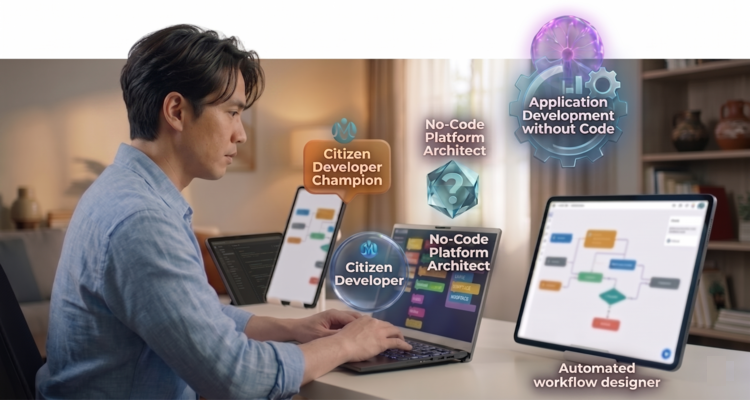
    A no code website is a website built using a visual website builder instead of writing HTML, CSS, JavaScript, or other programming languages. You create pages by dragging and dropping elements such as text, images, contact forms, and buttons into place. Platforms like Wix, Squarespace, Shopify, and WordPress with page builders let small businesses launch and manage websites without needing to code, although more advanced projects may still benefit from a developer.

    Don’t Just Ask “What Are the Best Website Builders?”

    Lists won’t match what you’re building. Most global comparisons for no code website builders lump “small businesses” together in one bucket, so they’re explaining to a general audience. They don’t differentiate between a tradie taking phone bookings and a consultancy firm that has offices in various Australian states and mainland territories.

    When an AU owner sinks into the rabbit hole of the best website builders for no code, they’re greeted by advertised pricing frequently shown in USD by default, for international visitors.

    Which means GST (Goods and Services Tax) and currency conversion aren’t counted in the price they’re posting.

    Tick on the conversion tab to get the AUD equivalent. That’s it, right? Well, currency’s a tiny component of it. The more pressing concern is not knowing what kind of no code you need. And many times, owners don’t.

    Illustration: Callum, an Adelaide-based electrician, follows a “top website builders 2026” list and signs up, assuming $17 covers everything. Then GST and a currency conversion fee show up on his card statement, and he’s left staring at the screen, surprised.

    But that’s just the first domino. The next piece is that the tool he’d purchased has nothing to do with his service-based company. He didn’t need a full-blown e-commerce no code builder.

    [rcb_show_form]

    Four Things to Check Before You Compare Any Website Builder in Australia

    Before comparing any builder by name, the following decide which one works for your business. Skip these, and you’ll end up picking based on price alone, which is how businesses end up locked into the wrong tool for a year’s subscription.

    Four Things to Check Before You Compare Any Website Builder in Australia

    Check the Currency the Price Is Shown In

    Global comparison sites are often the top pages on SERP. AI Overviews pull from them, unless you specifically prompt AI to convert the prices in AUD. Wix, Squarespace, and Shopify all bill Australian accounts in AUD, but only after you sign up. US-based reviews also rarely mention currencies; they’re generally, and automatically, in USD.

    Add GST (10%) on top of whatever price you’re quoted, since major builders don’t frequently include it in the advertised rate for Australian customers.

    Confirm .com.au Domain Support

    Major builders allow for custom domain linking. Sometimes, though, the catch is an additional fee after the first year on paid plans. Read the fine print. Read what the renewal guidelines include and don’t include.

    After the first year, domain renewal usually adds another AUD $12 to $17 annually. Wix does that, and similar ranges are advertised elsewhere.

    A small cost, but worth double-checking anyway.

    Match the Payment Gateway to How Your Customers Pay

    Everything might look similar up to this point. For online or e-commerce stores, this section can narrow your shortlist without having to think too hard about it:

    • Shopify has Afterpay and Zip built into its checkout; it provides a direct connection to Australia Post for shipping
    • Squarespace supports Stripe and PayPal in Australia; Afterpay’s available but works through a less integrated setup than Shopify’s; Zip support is limited
    • Wix supports Afterpay through app integrations rather than a fully native checkout.

    If your customers expect to pay in instalments at checkout, and a growing share of Australian shoppers do, this decides your shortlist before you check out design templates.

    Know Whether GST Gets Calculated For You (Or By You)

    GST is generally calculated automatically in Shopify and similar renowned e-commerce platforms. To give you a heads-up, it appears at checkout. You won’t immediately see it on the product page.

    Wix and Squarespace can both handle GST, but you’ll have to set it up yourself. Manageable for ten or fewer products.

    Extra Read: Understand what makes the Best No Code App Platforms, and what No Code or Vibe Coding is— No Code Development Australia Guide.

    operational excellence

    Find the Role Behind No Code Development.

    Hire a Remote Staff specialist to support operations while you take care of your business vision.

    Trusted by 3,000+ businesses to scale remotely since 2007.

    The Best No-Code Website Builder in Australia in 2026 (By Business Type)

    Quick disclaimer: there’s no single best builder that outshines them all. What is there is the best builder for your business. Let’s break down vibe-coding tools by business type.

    Wix: If you’re a tradie or run a local service business
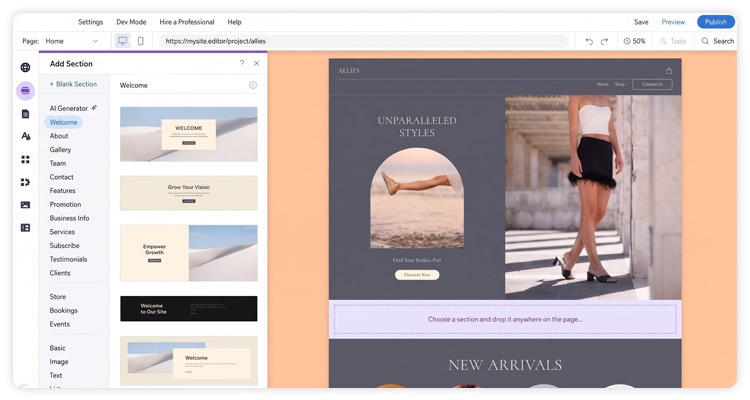
    For small to medium businesses, Wix is one of the Best No Code Website Builders in Australia

    The strongest starting point for electricians, plumbers, landscapers, and similar local service businesses. You get to quickly launch a mobile-friendly site, ready with features tailored to your services.

    Visual polish isn’t the main sell for Wix. It’s more about how people can reach you and avail of your services the easiest way possible: a clickable button when someone lands on a page. Location pages specific to the suburbs your service covers, with directions.

    Customers who reach your website want to get in touch with the professional, and aren’t there to skim photos. They’re more likely to go over customer feedback, too.

    Why it works for this business type:

    • Click-to-call setup takes minutes; traditional coding not needed
    • Templates are mobile-first by default; significant since research shows that local searches happen on a phone more often than not
    • Once you’ve built one service page, you don’t have to keep starting over for every suburb
    • Booking forms and quote request forms are built in (Core plan and above)

    Light plan: around $16-17 AUD/month, enough for a simple site with no booking form

    Core plan: around $29 AUD/month, unlocks booking tools and basic e-commerce (at least you know if ever you’ll need it, it’s there)

    A Perth-based electrician using Wix would create the home page, no frills. A separate page for each suburb they service. Nothing else. Just pages that let customers make the call as smoothly and redirect-less as possible.

    Shopify: If you sell physical products
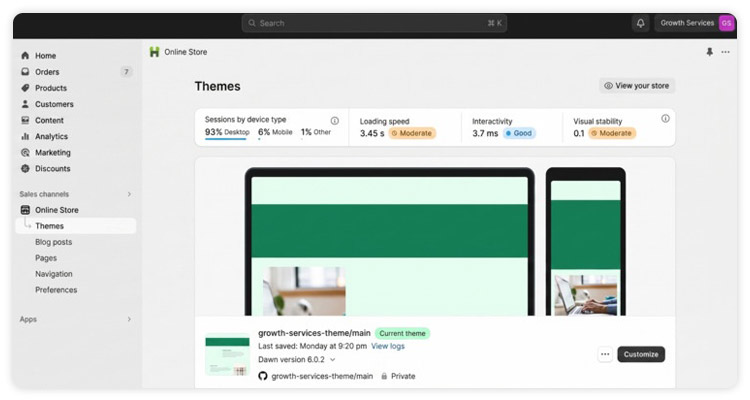
    One of the Best No Code Website Builders for E-Commerce is Shopify

    If you’re shipping products anywhere in Australia, Shopify is it. Don’t squeeze an online store into a website builder later.

    Shopify wears the crown for this category because of these things working together: Afterpay and Zip are built into checkout. GST is calculated automatically. Shipping connects to Australia Post.

    Why it works for this business type:

    • Customers can pay in instalments at checkout; any manual setting up not required
    • GST gets added and reported correctly; you don’t need spreadsheets
    • Shipping labels and rates connect to Australia Post; manual rate checks aren’t needed
    • Inventory, order tracking, and customer accounts are handled on the platform itself

    Basic plan: around $42 AUD/month on annual billing (around $56/month billed monthly)

    Grow plan: around $114 AUD/month on annual billing (for stores doing higher volume and wanting lower transaction fees)

    A homewares seller shipping nationally from Newcastle would move to Shopify; customers were abandoning carts when Afterpay wasn’t available at checkout on their old platform. A common enough pattern among those who use platforms with no BNPL (Buy Now, Pay Later) option.

    Squarespace or Wix Studio: If you run a consulting or service-based business:
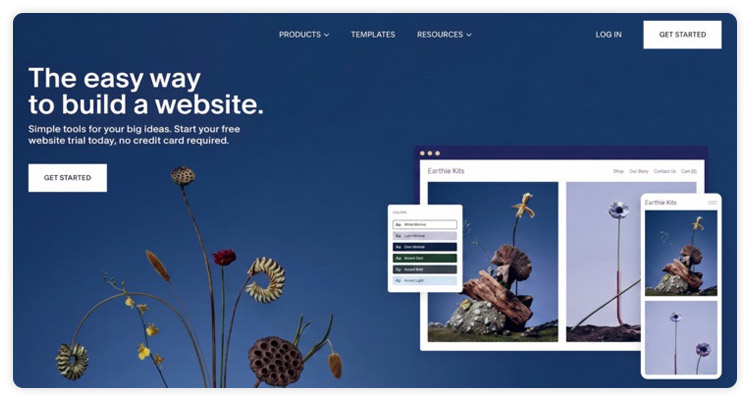
    Squarespace for Best No Code Website Builders for SMBs

    Anything service, consulting, or coaching-based is best supported with these two platforms. The website’s job is to earn and build trust. The bigger job is to get someone to place a booking. Squarespace‘s templates do more of that work for you, and won’t require you to have design skills of any sort.

    Why it works for this business type:

    • Templates naturally make room for storytelling, helping boost credibility; suits a service that needs further explaining
    • Adding online bookings is straightforward
    • Content publishing (blog posts, case studies, resources) is simple enough to manage yourself, even after the site goes live
    • A clean, professional, organized design entices people to keep scrolling

    Core plan: around $23-28 AUD a month on annual billing (covers booking integrations, lead capture forms, and content publishing)

    Transaction fees (around 2-3%) on Squarespace’s entry-level Basic plan go away once you upgrade to the Core plan and above.

    When to consider Wix Studio as an alternative? If you expect to need more layout flexibility down the line, services offered branching out, adding service packages, etc.

    All in all, Squarespace is the simpler choice for most consultants and coaches.

    Squarespace or Framer: If you’re a creative business, or if showing your work is a big part of winning customers

    For photographers, architects, interior designers, and visually-driven small businesses. You get more design quality for every AUD from Squarespace’s templates than from a general-purpose, standard drag-and-drop builder.

    Why it works for this business type:

    • Templates are designed by professional designers; nothing generic-looking
    • Image-heavy layouts (galleries, full-bleed photos, portfolios) are built in
    • Framer lets you add more motion without going over the top; has a smaller support community in Australia than Squarespace at present

    WordPress with WooCommerce: If you’re building your website with long-term growth in mind
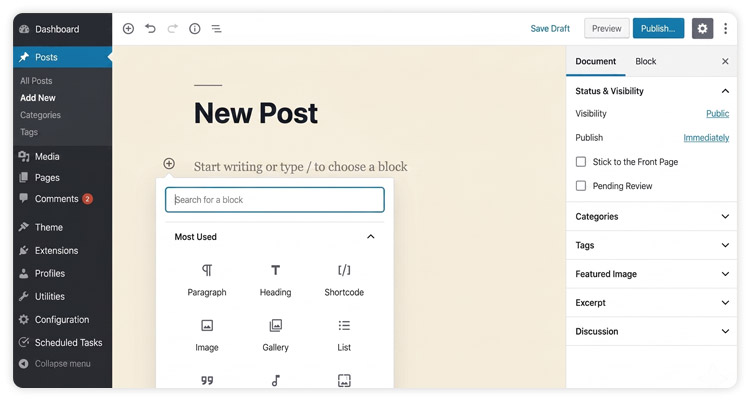
    WordPress is one of the Best No Code Website Builders for small businesses

    WordPress gives you more control over how your website performs in Google. It takes more work to set up, and you’ll spend more time getting everything right, since the learning curve’s steeper. Worth it, in the long run.

    Why it works for this business type:

    • More freedom to optimise your website for Google; other builders restrict or simplify away
    • You can add almost any feature later without rebuilding your website
    • Works with more Australian payment and shipping providers than most other platforms
    • Content and data can be exported and moved more easily than from a closed platform like Wix or Squarespace, since you own the hosting

    The software is free. You pay for a domain ($15-30 AUD a year) and hosting ($10-100+ AUD a month). Rates change depending on your provider and website traffic.

    WordPress is much easier to use today than it used to be. Tools like Elementor let you build pages without writing code. Even so, having someone who knows WordPress can save you a lot of time, especially if your site isn’t set up properly.

    Quick Comparison Table for the Best No Code App Platforms

    Builder
    Best For
    Approx. AUD Pricing
    Afterpay/Zip
    GST

    Wix
    Tradies, local services
    $16-49/month
    Via app integration
    Manual setup

    Shopify
    Product sellers, e-commerce
    $42-149/month
    Native at checkout
    Automatic

    Squarespace
    Coaches, consultants, creative brands
    $23-62/month
    Afterpay available, Zip limited
    Manual setup

    WordPress + WooCommerce
    Long-term SEO, content-heavy sites
    Domain + hosting, roughly $25-130/month all-in
    Widest support via plugins
    Via plugin

    When It’s Worth Bringing In Someone to Build and Maintain the Builder for You

    Pick the right platform, and you’re halfway there. But don’t throw in your lot, DIYing it. Many SMBs have tried, and they’ve not only failed. They paid more than they would’ve had they hired the specialist.

    You need a remote no-code developer, a.k.a. vibe coder. Remote Staff places these specialists with Australian businesses to work inside Wix, Shopify, Squarespace, and WordPress, setting sites up correctly the first time and maintaining them afterwards. The cost is a lower ongoing rate than that of a local freelancer or local retainer.

    Even better, any other remote professional you’ll need from here on out, we can match you up with.

    Whatever you need, whether you’re okay with templates or require something more custom, no matter the type of business you run and the platform you’ll be bringing, we’re here to provide you with the right specialists.

    We’ll also help you stay compliant in other parts of your business. Here’s something about the Payday Super Rules Guide and Modern Slavery Australia.

    FAQs

    What is the cheapest website builder for small business?

    Wix Light monthly subscription is AUD ~$16-17, and WordPress self-hosted offers theirs at $25-40/month all-in (domain with basic hosting). These are the best no-code tools in terms of budget. But note that WordPress needs more setup time in exchange for the lower ongoing cost.

    Do I need a developer if I use a no-code website builder? (Can I build my own website without a website builder?)

    Not for a simple website. But if your business needs online bookings or if you’re running a large online store, having someone who knows the platform will save you time and plenty of frustration. Regular updates are also better left to the specialist.

    Which website builder works best with Afterpay and Zip?

    Shopify, with integration at checkout. Squarespace supports Afterpay, but less seamlessly, and Zip support is limited.

    Can I move my website to a different builder later without losing everything?

    You can. On WordPress, moving content’s done quite smoothly, since it’s self-hosted. Moving a Wix or Squarespace website to another platform will take more work, like rebuilding pages, checking layouts, and reconnecting features.

    Is Wix or Squarespace better for SEO in Australia? (Does Squarespace or Wix have better SEO?)

    Both do a good job with SEO for most small businesses. WordPress gives you more flexibility if SEO is something you want to invest in over time.

    Extra Read: Before jumping in, learn about the Limitations of No Code, and match the benefits to what you need in your business.

    Even the Best No Code Website Builder Requires a No Code Developer

    Those platforms that top online lists? They’re great, but they’re not necessarily the best among the rest of the tools.

    And it’s not just the platform either. Because no code tools need the developer, and you, the owner, or anybody else currently on your team can’t DIY it away.

    Match the builder tool to what your business sells or offers and how your customers pay. Then match the tool with the right vibe coder.

    The setup and maintenance can be offshored. Choosing the wrong platform? That’s much harder to undo.

    Call us or Request a Callback to find the ideal no-code developer for your no-code website builder today.

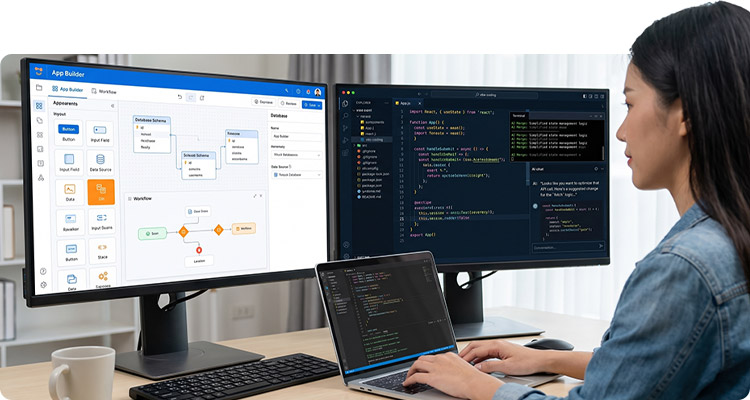
  • Disadvantages of No Code Platforms: Before You Hire a Vibe Coder or No-Code Developer, Read This

    Disadvantages of No Code Platforms: Before You Hire a Vibe Coder or No-Code Developer, Read This

    Someone in your network built an app in a weekend. Maybe you saw the LinkedIn post like so:

    “I vibe-coded my SaaS to $10K MRR in 30 days. No developers needed.”

    Now you’re looking at your own product idea, and hiring one no-code builder or vibe coder looks like the obvious move. Cheaper than a dev team. Faster than a traditional build. The way you see it, and with all those comments on socials, everyone’s trying it out.

    Then, you come across: “Limitations of no code platforms.” “Disadvantages of vibe coding.” Only, it’s not very clear what the pages meant by that.

    Here’s what isn’t explained just as much: you’d be handing your entire product (the thing your business will depend on) to one person and an AI tool. You’ll be betting they can single-handedly cover architecture, security, integrations, testing, and years of maintenance.

    Is it all hype then? Not really. What no code is? It’s exactly what they say it is. It does what they say it does.  There’s just a mismatch of expectations, or a less-than-clear description of what happens after.

    So what are you actually signing up for when you hire a vibe coder or no-code developer instead of a team? Should you use no-code platforms? Let’s break down what the vague statements leaves out.

    When should you use no-code platforms, and when are they not enough?

    Key Takeaway / Quick Answer

    No-code platforms are ideal for validating ideas, building internal tools, and launching simple applications quickly without a large development budget. They become less suitable when your project involves complex integrations, sensitive customer data, advanced workflows, or long-term growth that requires greater flexibility. The right choice depends on your business goals, the complexity of your app, and how much you’ll need it to evolve over time.

    What Are the Limitations of No Code? (Disadvantages of Vibe Coding)

    You’ve heard some version of this: let AI tools or no-code app development platforms generate the code, and ship a working product in days (mobile app, workflow automation tool, etc.). The no-code development approach. No computer science degree required. No expensive dev team on payroll. Just you and a chatbot. And your vision.

    That’s the development process.

    Vibe coding’s a real term coined in early 2025 to describe building software by describing intent to an AI without writing code by hand. It has genuinely compressed the time it takes to get a rough prototype in front of users.

    No-code platforms offer, and have done, the same for years. Platforms like Bubble, Webflow, and Glide have let non-technical founders assemble simple apps through drag-and-drop interfaces and visual development. Cost-wise, a freelance vibe coder or no-code builder typically runs a fraction of what a development team costs.

    The no-code solutions pitch is half true. (Here’s our insider take on the advantages of No-Code Development)

    It’s true for a landing page or an internal tool. True for a scrappy prototype you’re using to test demand. It stops being true the moment your product needs to handle real, from customers, to money, to data. Traditional development / traditional software development. Exactly the point at which most SMB owners make the hire in terms of what the platforms often provide or lack, and what their business actually needs.


    [rcb_show_form]

    What Are the Pros and Cons of No Code: What You’re Getting When You Hire a “Vibe Coder”

    Vibe Coder. No Code Developer. What do the terms mean in practice?

    A vibe coder guides an AI model through natural-language prompts, reviews what it generates, and nudges it toward a working result, without necessarily reading or understanding the underlying code line by line.

    A no-code developer does something similar using visual builders instead of a programming language.

    Neither is writing software the way a trained engineer does. Both are directing a tool.

    No Code Developer vs Software Developer

    A trained developer can tell you why a piece of code will break under load or where a security hole’s hiding. How a database schema will hold up at 10,000 users.

    Vibe coders are often reviewing AI output without the background to catch what’s wrong with it. A large share of people doing this work today are non-developers: marketers, founders, designers, and product managers who’ve never shipped production software before.

    Illustration: Maxine, who runs a 12-person accounting firm, hires a vibe coder off a freelance marketplace to build a client portal where customers upload tax documents. They chose from no-code applications, and the vibe coder went to work. The demo looks great in the interview.

    Three weeks later, the portal is live. A client accidentally sees another client’s uploaded documents because the access permissions weren’t properly scoped.

    Maxine finds out from an angry email instead of from a bug report. Nobody on the build was equipped to catch it before launch.

    Related Read: Learn more about the role and what tools they use: Best No-Code App Development Platforms.

    Layers the No Code Hype Conveniently Skips (Plus What to Ask a No Code Developer)

    Layers the No Code Hype Conveniently Skips in Understanding the Limitations of No Code

    Is a real software product one layer? What are the challenges and limitations of no code development tools? It’s several, stacked on top of each other, each one requiring a different kind of expertise.

    Here’s what a single vibe coder or no-code developer is being asked to cover alone, and why that’s a heavier lift than the pitch admits.

    1. Architecture and Data Modeling

    Every app is built on decisions about how data is structured, stored, and connected. Decisions that are cheap to make correctly on day one; brutally expensive to unwind later. A prototype doesn’t expose bad architecture, but growth does.

    What To Do: Before any building starts, ask whoever’s building your product to explain, in plain terms, how they’re structuring your core data (users, transactions, records). Ask why. If they can’t answer clearly, that’s your answer.

    Illustration: A retail startup’s no-code inventory app worked fine with 200 SKUs. At 3,000 SKUs and multiple warehouses, the flat data structure the builder used couldn’t represent stock-by-location. So, the founder had to pay for a full rebuild. This time, with a developer who modeled the data correctly from the beginning.

    2. Security and Compliance

    Recent analysis of AI-generated code found a large share contains real vulnerabilities. Hardcoded secrets. Injection flaws. Access-control gaps. That AI-written code is meaningfully more prone to these issues than code written by an experienced engineer who’s reviewing for them.

    What To Do: Require a security checklist before launch: encrypted data storage, proper authentication, role-based access controls, and a documented answer to “what happens if this account gets compromised?” If your build process has no answer to that question, don’t launch yet.

    Illustration: A wellness clinic’s booking app is built entirely through a no-code platform. However, it stored patient notes in a field visible via a public API endpoint nobody had locked down. It went unnoticed for four months, until a routine review by a new hire caught it.

    3. Integrations and Future Expansion

    Your app needs to talk to your payment processor, your CRM, your email tool, and maybe your accounting software. No-code platforms handle simple integrations well. The moment you need custom logic, real-time syncing, or high transaction volume, they struggle.

    What To Do: Map every system your product needs to connect to today. Include every system you’re likely to need in 18 months. If more than two or three involve custom business logic, you’re outside what one no-code builder can comfortably support.

    4. Quality Assurance and Testing

    Someone who builds fast rarely has the bandwidth or the training to test thoroughly. Formal testing (edge cases, load testing, regression checks after every change) is its own discipline, distinct from building.

    What To Do: Ask directly who is testing the product. Follow it up by asking who built it. “I tested it myself,” from the same person who wrote it, is not a QA process.

    5. Ongoing Maintenance and Technical Debt

    The build is the beginning, not the end. Every update, every new feature, every platform change creates a chance for something to break. Vibe-coded and no-code products in particular tend to accumulate what’s best called “invisible debt” — quick fixes stacked on quick fixes, invisible until the whole thing buckles.

    What To Do: Ask what happens when your builder is unavailable. If the honest answer is “nobody else can maintain this,” you don’t have a product. You have a dependency.

    Extra Read: No code is making waves. But so is Australia’s renewables sector. Find business opportunities in— Solar Farm Lease Australia Guide and Floating Solar Panels Australia.

    operational excellence

    Unsure Where to Start?
    Find the Role That Owns Support Work.

    Hire a Remote Staff specialist to support operations while you take care of your business vision.

    Trusted by 3,000+ businesses to scale remotely since 2007.

    What Are the Risks of Vibe Coding, Really? (Three Ways This Goes Wrong)

    The Weekend Wizard. This is the builder who’s genuinely talented at fast prototypes and gets hired for a production system anyway. The demo’s dazzling. But the foundation underneath is a house of cards. You find out the hard way that speed and durability aren’t the same skill.

    The Vanishing Vibe Coder. Freelance vibe coders and no-code builders are often solo operators juggling multiple clients. When they move on (and they do), you’re left with a system nobody else can read. A system no one in your team can understand, or safely modify.

    The No-Code Ceiling. This one doesn’t look like failure. Not at first. Everything works, right up until you need a feature that the platform simply can’t support. Real-time data processing. Custom machine learning logic. Complex permission structures. You discover the ceiling only after you’ve built your business on top of it.

    Your speed got you to market. Shortcuts, a working demo. But your ceiling? It’s what stops you from ever growing past it.

    Related Read: Find out what your numbers really are as you plan the hire. Use our Free Outsourcing Calculator below:

    When a Vibe Coder or No-Code Tool Is the Right Call

    What Are the Benefits of No-Code Platforms?

    None of this means the tools are bad, only that they’re being sold as something they’re not.

    Vibe coding and no code platforms are genuinely excellent for validating an idea before you spend real money. Before building an internal tool that nobody outside your team will ever touch. They’re the way in prior to standing up a marketing page in an afternoon.

    If the cost of that system failing is “we redo it,” a single builder is a smart, cheap way to move fast.

    When trying to get the right answers to “vibe coding vs traditional development” or “no-code developer vs software developer,” it boils down to this:

    The moment customer data, payments, compliance requirements, or business-critical operations enter the picture, the calculation changes. What was a smart shortcut for a prototype becomes a serious liability for a product.

    Find out what your numbers really are as you plan the hire. Use our Free Outsourcing Calculator below:

    Use the Remote Staff FREE VA Calculator and see real numbers, actual costs on your screen.

    OUTSOURCING CALCULATOR tool

    Annual Savings vs. Onshore

    $73,680

    Per VA • Per Year


    ONSHORE$7,040/MO
    FILIPINO VA$900/MO

    Cost Reduction: 87%

    VA CALCULATOR PRO

    Matching Your Projects With the Right Talent

    There’s a middle path most SMB owners never get shown when it comes to choosing between an expensive in-house engineering department and a solo vibe coder. In fact, choosing a side isn’t it at all.

    A properly staffed, fully managed remote team that covers the layers a single builder can’t. All without the overhead of a full local hire.

    That’s where Remote Staff comes in. Instead of betting your product on one person’s availability and one person’s blind spots, you get matched with vetted remote developers, QA specialists, and project managers built around what your app actually needs.

    At a fraction of the cost of a local team. With none of the recruitment legwork on your end.

    Extra Read: Stay compliant in all areas of your business. Find out about Modern Slavery Australia and Payday Super Rules.

    ↑ Back to Top


    FAQs About the Limitations of Vibe Coding Tools

    Can a vibe coder really build my entire app by themselves? (what are no-code platform limitations?)

    They can build a working version, especially for something simple. What they usually can’t do alone is secure it, scale it, integrate it properly with your other systems, and maintain it for years; those require different, often multiple, skill sets.

    What’s the difference between a no-code developer and a professional software developer? (Is a software developer the same as a coder?)

    A no-code developer assembles pre-built components inside a visual platform. A professional developer writes and architects custom code and understands what’s happening underneath the interface. Developers can diagnose problems drag-and-drop tool will ever surface.

    Is no-code good enough for a revenue-generating business? (Can no-code support any business?)

    It can be, for simple internal tools or early-stage MVPs. It’s rarely enough once you’re handling customer payments, sensitive data, or workflows that need to scale past a few hundred users.

    How do I know if I need to use no-code platforms or no-code solutions? (What are the disadvantages of no code platforms for businesses?)

    If your product touches money, personal data, multiple third-party integrations, or needs to serve more than a few hundred concurrent users, it’s past the point where one person on one tool can safely cover everything.

    What should I ask a vibe coder or no-code developer before hiring them? (Questions to ask when choosing a no code developer)

    Ask who handles security review. What happens if they become unavailable? How do they test before launch, and whether they’ve shipped something with similar requirements in size and complexity?

    What is low-code development? (What are low-code development platforms?)

    Low-code development or “low code development’ uses visual tools, drag-and-drop components, and a small amount of coding to build software faster than traditional development. Low-code development platforms help developers and technical teams create custom applications while still allowing them to write code when advanced features or integrations are needed. Unlike no-code platforms, low-code tools are designed for projects that require greater flexibility and customisation.

    What is the difference between low-code and no-code development? (Are low-code and no-code platforms the same?)

    No-code platforms are designed for users with little or no programming experience, building applications using visual, drag-and-drop tools. Low-code platforms also use visual builders but require some coding to customise features, integrations, or complex workflows. In general, no-code is best for simpler applications. Low-code offers more flexibility for larger or more complex projects.

    Related Read: No Code or Vibe Coding isn’t the only new thing making waves in and out of the tech market today. Explore these other topics— What Is a Marketing Automation Specialist and Queensland Construction Worker Shortage.

    Your App Isn’t a Weekend Project

    The no-code hype was never wrong about the demo. Everything after, possibly, because there isn’t one side.  It isn’t just about the limitations of no-code or the benefits of no-code. There’s middle ground in the confusion, and that’s your advantage.

    A vibe coder or no-code developer can get you a fast prototype; a real team is what turns that prototype into something your business can actually stand on.

    You’ve got the idea. Now make sure the team behind it can carry the weight.

    Request a Callback from Remote Staff to talk through what your project actually needs.

  • Floating Solar Arrays Guide Australia: Save Farm Dam Water

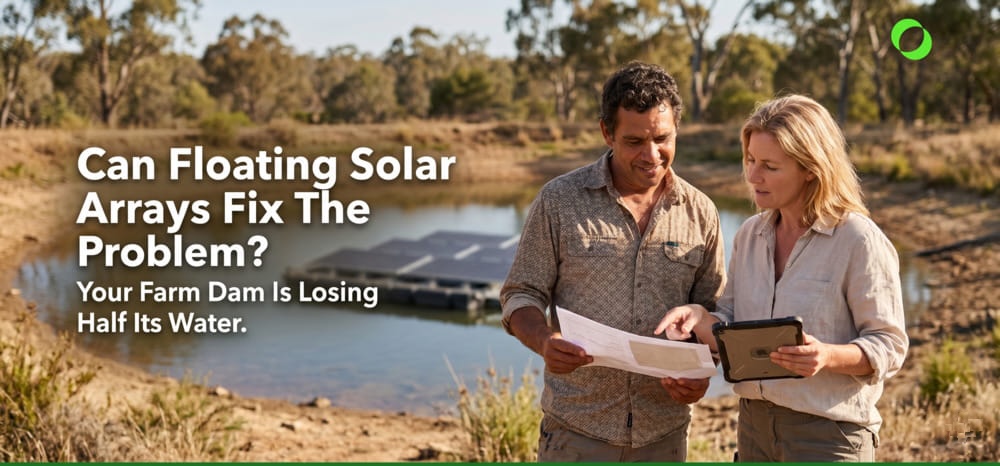
    Floating Solar Arrays Guide Australia: Save Farm Dam Water

    Water allocations in Australia are tightening. Energy costs are rising. And every year, around half of stored on-farm water may never reach productive use due to evaporation. (CRDC/NEESTI data)

    But there’s a niche, energy-generating technology that can both save the dam and give it a second function:

    Floating solar panels or floating solar arrays.

    As evaporation continues to draw water levels down, and nature, not always returning water as predictably as farms rely on, here’s what other farm owners are doing:

    They’re talking to the right people about transforming their agricultural irrigation dams into sites for floating photovoltaics.

    The on-farm dam becomes a part of the solar energy generation system. And that same energy it produces can power the farm’s own irrigation pumps.

    This article explains how an irrigation dam becomes a floating solar site to generate clean energy, protect stored water, and create a second source of income.

    What are floating solar panels in Australia? (Do floating solar panels work?)

    Key Takeaway / Quick Answer

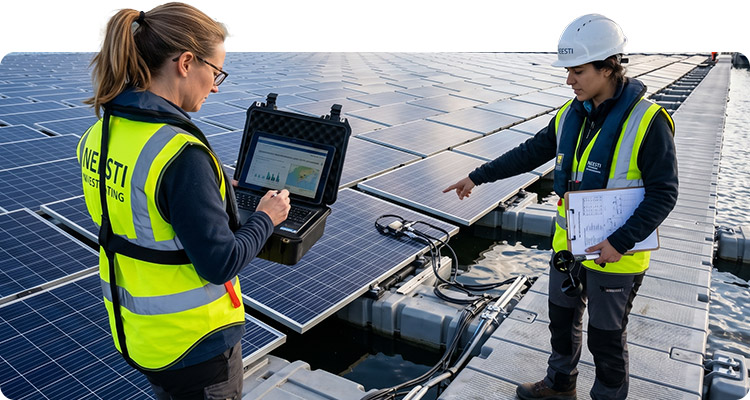
    Floating solar panels (also called floating solar arrays or floating photovoltaic systems (FPV) are solar energy systems installed directly on bodies of water instead of land. They sit on floating support platforms and generate electricity the same way conventional solar panels do: by converting sunlight into usable power through photovoltaic (PV) cells. Their main purpose is still energy generation, but floating arrays come with a second benefit: they shade the water beneath them, helping reduce evaporation while the water itself cools the panels and improves performance. Because they use existing water infrastructure rather than productive land, floating solar is becoming increasingly attractive for farms, reservoirs, and irrigation systems. Even land with lakes, ponds, and similar bodies of water.

    Evaporation Control Farm Dams Solar: What Is a Floating Solar Array? (What Are Floating Solar Panels?)

    50% of on-farm water storage volume dissipating into the atmosphere year after year doesn’t seem that alarming to some. Because, like evaporation, water replenishment is part of the natural hydrological cycle, too.

    The scientific explanation behind water movement suggests as much. Rainfall. Surface runoff. Channels. Diverted flows. These are a few of the inflows that refill agricultural irrigation dams.

    However, there’s a looming concern hidden in seemingly calm waters: replenishment isn’t happening as much as, nor as often as, farmers and agriculture businesses are counting on it to. And when water levels don’t rise back the way they once did, neither does the level of production the farm depends on.

    More numbers that shed light on the matter:

    • In NSW and Queensland, evaporative losses from irrigation water storage total approximately 1,320 gigalitres annually (The Energy)
    • For cotton growers whose operations rely heavily on storing and moving water, electricity, and diesel account for up to 50% of total input costs (energy.gov.au)
    • Irrigated crop farmers spend AU$150–280 per hectare, per year, on electricity for water pumping (Sustainable Future Australia)

    The Turn of the Tide

    But did you know that if farmers could prevent just 10% of on-farm storage evaporation loss and send that flow back to crop production, the economic benefits are enormous?

    AU$41 million-enormous.

    Installing an innovation in solar, floating photovoltaics (FPVs), also called “floatovoltaics,” on irrigation dams is one of the ways that can make it happen.

    More stored water → more water available for irrigation → more irrigated area → higher efficiency and crop yield → better capacity and agricultural returns

    FPVs typically add a second function to existing irrigation infrastructure rather than take farmland out of production.

    How much money can I make from floating solar panels Australia?
    Key Takeaway / Quick Answer

    Floating solar panels in Australia can generate income by lowering electricity bills, reducing water losses from evaporation, and, in some cases, exporting surplus solar power back to the grid. How much you can make depends on your dam size, system capacity, local electricity prices, and whether your property qualifies for renewable energy incentives. For many irrigators, the biggest financial gain comes from combining lower operating costs with more productive water storage rather than relying on electricity sales alone.

    What To Do: Multiply your on-farm storage capacity (in megalitres) by 0.5 to get a rough estimate of how much your on-farm dam loses water prior to the growing season. Multiply that by your water entitlement price today, and you arrive at an AU amount you can add to your seasonal or annual floating solar cost base.


    [rcb_show_form]

    What Is the Warrnambool Project? (Why Is It Important?)

    The Australian-owned developer, Enervest, completed a 500kW floating solar array at the Brierly Basin reservoir in Warrnambool, Victoria, in 2026. It did so on behalf of Wannon Water (a regional urban water corporation owned by the Victorian Government).

    The array uses 1,260 bifacial solar modules. That equates to 500kW capacity, which is estimated to generate over 600,000 kWh annually. It’s now the sole source that powers the water treatment plant entirely. The entire system is set to contribute to greenhouse gas emissions reduction by over 650 tonnes per year.

    Total project development and estimated cost is AU$2 million.

    This project is technically on public water infrastructure. Even so, the same technology is being tested on irrigation storage across five agricultural sectors:

    Cotton, rice, sugar, horticulture (fruit, vegetables, nuts, etc.), and dairy.

    Extra Read: Australia’s Solar Panel Recycling time bomb and Queensland Construction Worker Shortage are about to explode. Here’s how not to get caught in the impact, and what business opportunities await those who get to the starting line first.

    Get Matched AI Recruiter Banner

    Why the Government Is Backing Floating Solar on Farm Dams

    The Australian government is all-in on FPVs on agricultural irrigation dams. Otherwise, it wouldn’t have committed AUD 6 million in funding towards a research initiative under the NEESTI program. It wouldn’t have backed research programs for the technology if there weren’t plans to apply them in the field.

    What Is NEESTI? The Pioneering Project Behind It

    The Novel Energy and Evaporative Storage Technologies for Irrigators (NEESTI) project is a AU$13-million, five-year initiative that launched in June 2025. Of that amount, AU$6 million came from the Federal Government’s AU$5 billion Future Drought Fund Resilient Landscapes program. The other AU$7 million, from in-kind contributions from the project partners.

    It’s the first research project of its kind in Australia, focused specifically on farm-based irrigation storages.

    The project is led by AgEcon Australia, with support from the University of Southern Queensland and Macquarie University, and the main industry partner is the Cotton Research and Development Corporation (CRDC).

    Worth Noting: The NEESTI project points to something bigger: floating solar on irrigation dams is already being worked into real agricultural use cases.

    What Is NEESTI Investigating? (Or Isn’t)

    What Is NEESTI Investigating

    It isn’t testing whether floating solar works. That part’s been proven and tested. NEESTI is forming the AU-specific foundation for Australian farmland and agriculture. The frameworks, whether technical, economic, policy, or legal, that make it possible for an irrigator to approve and adopt the system on their own property.

    The idea is to evaluate whether floating solar behaves differently depending on how each of the five sectors stores and uses irrigation water. (CRDC)

    The research is looking at everything that would need to fall into place for irrigators to install it, from economics and approvals to insurance and grid access.

    What To Do: Track NEESTI outputs through crdc.com.au and arena.gov.au. The project aims to make it easier for irrigators to assess whether floating solar is worth installing.

    ARENA runs ongoing funding programs apart from NEESTI. The July 2025 announcement of AU$60 million for Ultra Low-Cost Solar PV R&D reveals long-term government investment in this area of solar. Set up funding alerts on arena.gov.au, so you stay up-to-date on application rounds.

    Which Farm Operations Are Best Positioned Right Now

    Floating solar isn’t one-size-fits-all. Not every irrigated farm is at the same stage. Research, funding frameworks, and regulatory pathways are tailored towards each of the five agricultural sectors.

    Floating Solar Fit by Agricultural Sector:

    Sector
    Why FPV Fits
    Key Opportunity
    Cotton
    Energy costs = up to 50% of input costs; large on-farm storages common
    Pumping cost offset; evaporation reduction in large flat storages
    Sugarcane
    High irrigation water demand; Queensland heat accelerates evaporation
    Water retention during dry season; energy for processing support
    Grains
    Large dam infrastructure already in place across Murray-Darling Basin
    Scalable FPV coverage; phased floating solar panel installation possible
    Rice
    Among the most water-intensive crops in Australia; storage dams essential
    Every megalitre saved directly improves yield economics
    Pecans
    Covered explicitly in NEESTI; high-value crop justifies infrastructure investment
    Dual income: energy generation and water savings


    The common thread across all five sectors? Large, existing water infrastructure that’s currently used as a single-purpose infrastructure.

    Since FPV adds a second purpose to the same surface, there’s no need for land clearing. No need to build new infrastructure to avoid competing with the crop for space.

    Note: Australia’s primary solar installation and safety standards (such as AS/NZS 5033) are legally required to align with international IEC (International Electrotechnical Commission) standards.

    What To Do callout: If your property has 5 megalitres or more of on-farm water storage, it may be worth exploring whether floating solar could work there. The NEESTI project outputs will eventually provide a standardised framework, but preliminary assessments from FPV installers with agricultural experience are readily available.

    As you plan to grow your team remotely, use the Remote Staff Free Outsourcing Calculator to punch in your numbers and see actual totals:

    Use the Remote Staff FREE VA Calculator and see real numbers, actual costs on your screen.

    OUTSOURCING CALCULATOR Tool

    Annual Savings vs. Onshore

    $73,680

    Per VA • Per Year


    ONSHORE$7,040/MO
    FILIPINO VA$900/MO

    Cost Reduction: 87%

    VA CALCULATOR PRO

    Who Runs the System After It’s Installed?

    Once a floating solar system is commissioned on an agricultural dam, there’s more to manage besides the generation of energy: an ongoing layer of administration and compliance that keeps the system operational and economically worthwhile.

    The talent is scarce in local market pools. So, Australian farm owners and irrigators are looking for specialists remotely.

    Remote Staff has been pairing technical and operations professionals with Australian businesses for over 18 years. For agribusinesses and renewable energy operators moving into FPV, the roles most needed are platform-based, output-measurable. They don’t require physical site presence.

    Grant and rebate administrators, energy project coordinators, compliance documentation specialists, data monitoring analysts, etc. All the roles you need for back office support, we vet for experience.

    You’re accessing the same standard of professional work at a materially lower total cost because the talent is based in a different market.

    Related Read: Here’s something about Agrisolar Hubs or Agrivoltaics Hubs, and Solar Farm Lease Guide Australia —how they, too, are changing Australia’s paddocks into power-generating sources of income.

    FAQs

    Can I put floating solar panels on my farm dam in Australia?

    Yes, and the technology is being actively trialled across Australian irrigation dams right now. The NEESTI project is testing floating PV feasibility in cotton, sugarcane, grains, rice, and pecan sectors. Regulatory and technical frameworks for farm-level deployment are soon to be deployed.

    How much water does floating solar actually save?

    Research shows floating solar panels reduce evaporation from water surfaces by 25 to 70%, depending on the proportion of surface area covered and local climate conditions.

    Does floating solar generate more power than ground-mounted solar?

    Yes, in most conditions. The water underneath keeps panel temperatures 5 to 15°C cooler than equivalent land installations, which translates to 5–15% higher annual energy output. In Australia’s high-heat agricultural regions, the efficiency advantage is at the higher end of that range.

    What is the 20% rule for solar?

    It’s a sizing guideline that recommends designing a solar power system to produce 20% more energy than your household’s average usage. This intentional 120% target creates a crucial safety buffer to offset cloudy weather, natural efficiency drops in wires and inverters, and seasonal spikes in power consumption (like running summer air conditioning). It ensures that your home remains reliably powered year-round without running short.

    What government funding is available for floating solar on Australian farms?

    The NEESTI project, backed by AU$6 million from the Federal Government’s Future Drought Fund Resilient Landscapes program, is the primary current initiative. ARENA (Australian Renewable Energy Agency) also funds broader solar and agricultural technology programs. Monitor arena.gov.au and the Future Drought Fund portal for upcoming grant rounds targeting irrigator adoption.

    Related Read: Stay compliant as you run your business internally and externally through the lens of the Modern Slavery Act Australia, as well as Payday Super Rules Guide.

    Dams Are Losing Water. Will You Lose Your Source of Income, Too?

    What is floating solar? Well, one thing’s for sure: there’s no going around what’s happening throughout farms and agricultural irrigation dams in Australia. The water’s getting depleted, and they’re not being replenished as fast, and as much, as they’re disappearing. It’s costing you money. And because it means less water for crops year after year, lower yields mean lower income as well.

    The research backing, the government funding and support, and the testing and deployments are telling farmers and irrigators that the technology’s ready.

    Save the dam, save your source of income, and the planet. Too idealistic? It’s more real now than it was a decade ago. All you have to do is make your irrigation dam available for a clean energy-generating system. As it happens, doing so even opens up a second and steady stream of income for you.

    The farm dam has always been infrastructure. FPVs are just going to make it a productive one.

    Ready to bring in remote specialists to your backend team? Call us or Request a Callback today.

  • Solar Panel Disposal Cost: PV Recycling Australia and the $7 Billion-Dollar Opportunity

    Solar Panel Disposal Cost: PV Recycling Australia and the $7 Billion-Dollar Opportunity

    50 million solar panels are about to enter their end-of-life in Australia.

    They’re calling it a “solar panel recycling Australia time bomb.”

    The term was coined to describe a waste problem long since predicted: there isn’t enough recycling capacity for all the AU solar panels about to be decommissioned by 2030.

    Australian households were among the first adopters of rooftop solar. In the world. 1 in every 3 homes. With solar rooftop design spanning 25 to 30 years, most panels that went up from 2005 to 2010 are now entering retirement.

    In a different part of the world, nobody would think twice about it. But when that means one million tonnes of solar PVs have nowhere to go in one of the world’s largest landmasses, it becomes a national-scale liability.

    There’s barely an industry to catch it. No nationwide system. No large-scale solution.

    Yet.

    Here’s what’s inside this massive environmental burden, and where the business opening is, before larger players and regulation crowd it out.

    What happens to solar panels at the end of their life in Australia?

    Key Takeaway / Quick Answer

    Australia is approaching a major wave of solar panel retirements, with an estimated 50 million panels expected to reach end-of-life by 2035. While up to 95% of a solar panel can be recycled by weight, the country currently lacks enough collection and processing infrastructure to handle the growing volume. As waste levels rise, solar panel recycling in Australia is emerging as both an environmental necessity and a significant business opportunity.

    Australia’s Solar Waste: What Happens to Solar Panels at the End of Life?

    Australia is a world leader in rooftop solar. That much is clear. What’s coming is less so.

    The 2000s were when it all began. Howard-era rebates, followed later by the STC (Small-scale Technology Certificates) scheme, drove mass residential adoption well ahead of most countries. But Australia now has around 4.6 million rooftop solar installations, many of them installed during the early adoption wave.

    No panel decommissioning system in place.

    This is the degradation curve:

    Clean Energy Council data states that AU panels commissioned during that period still produce around 85% of original capacity, with 30 years as the standard lifespan of a system.

    — Clean Energy Council
    AU Panel Degradation Data

    Wait. They’re still usable? Technically, yes. But replacement starts happening earlier because efficiency drops even if they’re still functioning.

    As of today, the lifespan of 2000’s panels is four years closer to replacement. The industry refers to it as voluntary early replacement, and it’s generating waste volume that the current Australian infrastructure can’t make room for.

    By 2028: It Gets Serious

    Residential panels are the first to slide downhill. There’s a bigger avalanche approaching: large, utility-scale solar farms built between 2008 and 2012. 200-500 MW facilities. Hundreds of thousands to more than a million panels. Those begin decommissioning from 2028 onward.

    Here’s what the timelines say:

    2030: PV waste will hit 100,000 tonnes annually (UNSW / ARC data)

    2035: Cumulative waste is projected at 1.0–1.3 million tonnes (roughly 50 million panels per government estimates)

    2035+: Annual waste volumes are projected to exceed 150,000–180,000 tonnes (IndexBox market data)

    Australia’s National Solar Panel Recycling Pilot: Solar Waste Year by Year

    Year
    Estimated Annual PV Waste (tonnes)
    Notes
    2026
    30,000–40,000
    Mostly residential + early commercial
    2028
    Growing sharply
    Utility-scale decommissioning begins
    2030
    100,000 (5 to 7 million solar panels)
    UNSW/ARC projection
    2035
    150,000–180,000 (8 to 12 million solar panels)
    Cumulative total: 1M+ tonnes

    What To Do callout: For Australian SMBs, if you want to enter the solar afterlife logistics and processing economy, your infrastructure needs to be operational now. By 2027 to early 2028, at most.

    Related Read: The renewables and clean energy sectors are creating more opportunities for SMBs. Learn about Agrivoltaics Hubs Australia a.k.a. Agrisolar Hubs, and Solar Farm Lease Australia.


    [rcb_show_form]

    What Is the Solar Panel Disposal Cost for Businesses?: Solar Panel Recycling and Urban Mining

    When a solar panel dies, what happens to it? Recycling has a crucial role in the chain. Some panels sit in storage yards waiting for processing. Others are stripped for parts. The rest, a much larger number, ends up in landfills because recycling is expensive.

    Landfill disposal is around AUD $1–$5 per panel in some areas. Proper recycling costs somewhere in between AUD $15–$45+ per panel, depending on transport, disassembly, materials recovery, and location)

    Recycling is labor-intensive and nowhere near widespread. As Australia’s early rooftop systems begin aging out together, few enterprising minds are asking, “How about turning this solar waste problem into an urban mine?”

    What is the Breakdown of a Solar Panel?

    The breakdown refers to the materials inside a solar panel once it’s taken apart. A panel can be broken down into glass, aluminum, silicon, copper wiring, plastics, and trace metals like silver.

    Understanding that breakdown is crucial to planning which materials can be recovered and which ones require special handling when the panel reaches the end of its life.

    95% of a solar panel by weight is recyclable. a remarkably high figure compared to most electronics.

    — Solar Recycling Dynamics
    Material Recovery Potential

    Material composition per panel (approximate):

    • Glass: 65-70% by weight; can be reused in new panels or construction
    • Aluminium frame: 15-20%; fully recyclable, high scrap value
    • Silicon solar cells: 3-5%; the highest-value material
    • Silver (conductive contacts): 0.1%; tiny by weight, enormous by value
    • Copper wiring: 1%; valuable, easy to recover
    • Plastic/encapsulant: 10%; the hardest to deal with, mostly incinerated or landfilled

    Urban Mining and the Valuable Side of Solar Waste

    Under the right processing conditions, newer recycling methods, such as advanced thermal and chemical delamination processes, can recover more than 90% of the usable materials inside old solar panels.

    What’s being retired from rooftops is becoming a new resource stream:

    • Output per tonne of input panels: high-purity silicon (99.5%+), silver concentrate, aluminium, copper
    • Value per tonne of input: AUD $400–800 (IndexBox market data) using advanced processing
    • AU government’s own estimate: a national product stewardship scheme could unlock up to $7.3 billion in economic benefits through reduced waste and material reuse

    It’s branching out, too. Researchers from the University of Newcastle have developed a more efficient method for high-grade silver recovery, specifically from PV cells.

    High-purity silicon recovery is described by IMARC (International Market Analysis Research and Consulting) as “the greatest economic opportunity” in the sector and “the industry’s biggest technical hurdle” simultaneously.

    Illustration: A facility processing 3,500 tonnes of retired panels a year no longer looks at this as dealing with abstract “waste.” It’s handling thousands upon thousands of panels. Those panels move through conveyors, glass separation systems, and more each week. From those come aluminium, copper wiring, silver concentrate, and high-purity silicon; materials already tied to active global supply chains.

    Urban mining via solar panel recycling becomes financially meaningful once enough panels are being processed consistently.

    Related Read: Solar and clean energy are changing what powers Australia. Read this Solar Farm Lease Guide and Agrivoltaics Hubs Australia (Agrisolar Hubs). Because farm owners and operators, as well as SMBs, have opportunities waiting. But the window’s narrow. And it’s now.

    Get Matched AI Recruiter Banner

    Fewer Than 5% of Australia’s Solar Panels Get Recycled

    Australian homes and businesses want to recycle their panels, but national-scale infrastructure is limited. These three things are holding solar recycling back:

    #1. Logistics Costs

    Moving retired panels across Australia is costly. A panel coming off a roof in Toowoomba or Kalgoorlie will need to travel hundreds, sometimes thousands, of kilometres before reaching a recycling facility. In many cases, sending it to a landfill is cheaper.

    The country’s too large, too spread out for a centralized, systematic collection system to work easily.

    What this means in numbers:

    Cost Component
    Range (per tonne)
    Gate fees (standard c-Si panels)
    AUD $150 – $350
    Logistics/transport
    AUD $50 – $120
    Landfill disposal (comparison)
    AUD $5 – $30 est.

    The 100 collection sites in the government’s $24.7M pilot program are meant to generate the transport cost data needed to design a logistics model that works at a national scale.

    #2. No Domestic Commercial-Scale Processing

    End-of-life panel material recovery is there. The technology’s available. Only, there’s not enough of it. Not enough facilities. Not enough equipment. Too-thin processing capacity to handle the growing number of retired and retiring PV solar panels.

    What the current system’s up against:

    Cost Component
    Range (per tonne)
    Gate fees (standard c-Si panels)
    AUD $150 – $350
    Logistics/transport
    AUD $50 – $120
    Landfill disposal (comparison)
    AUD $5 – $30 est.

    Estimated Solar Panel Waste Volume:

    30,000 to 40,000 tonnes by 2026

    100,000 tonnes by 2030

    The existing processing capacity versus projected solar waste is massively imbalanced. And Australia’s still dependent on imported recycling technology and specialised processing equipment.

    Domestic supply chains for the machines themselves? Zero.

    #3. Back-Office and Compliance Capacity

    Recycling operations are documentation-heavy by nature. Every panel that moves through a certified facility generates:

    • Waste tracking records
    • Chain-of-custody documentation
    • Recycling certificates
    • EPA compliance reports
    • Extended Producer Responsibility reporting (from 2028-2029 onward)

    Most operators currently in this space are small-to-mid-size businesses. Their workforce is lean. The compliance and administration infrastructure are just as important, but are afterthoughts. Many businesses only start putting up proper systems once the operational problems have begun.

    By then, the workload’s too messy and backed up to untangle easily. Volume will grow from 2028 onward. This part of the workforce should, too.

    What To Do: If you’re entering this market, or want to, logistics and compliance are your first operational hires. The processing technology for standard recovery is accessible. High-purity silicon recovery is coming. Reinforce your back-office infrastructure now.

    Regulations Are Catching Up, Rules Are Tightening

    So, hurry. Not to cause panic, but it’s a fact: the Australian government is beginning to take the afterlife of solar seriously. The grace period is now. The silver lining is that this is good news for early participants. Businesses can build proper compliance systems while the industry is young and rules are still taking shape.

    How Does Product Stewardship Work (What is the meaning of product stewardship for businesses)?

    The Productivity Commission has recommended a national solar panel recycling scheme. The pilot will begin mid-2026. 100 sites. 250,000 retired solar panels. The project’s aim is to generate data to be used as the basis for a mandatory permanent solar panel recycling scheme.

    Mandatory Extended Producer Responsibility (EPR)

    Industry observers expect mandatory Extended Producer Responsibility (EPR) requirements later in the decade. Mirroring EU WEEE-style (Waste Electrical and Electronic Equipment) frameworks, the EPR will mandate that producers (manufacturers and importers) be legally required to fund end-of-life management.

    In essence, it creates a government-backed, reliable stream of incoming work for recycling operators.

    In the U.S., Washington and California have state-level PV stewardship laws up and running; Australia is following the same legislative setup.

    Is EPR Compulsory? What’s About to Change?

    Extended Producer Reliability will rearrange gate fees and logistics cost distribution, shifting to producer-funded schemes. Manufacturers and importers would help pay for the collection and recycling of old solar panels. Recyclers won’t be carrying most of the cost themselves.

    Producers must route panels only through certified operators. It’s strict, but it guarantees volume.

    Other changes include:

    • Compliance documentation requirements increase substantially; operators who have systems in place hold a competitive advantage
    • Certification and chain-of-custody requirements become non-negotiable

    Before oversight tightens, treat this as a grace period for compliance. Businesses can build infrastructure, establish certification, and form relationships with producers before they become mandatory throughout the industry.

    Related Read: Another clean energy solution is catching industry attention—here’s what you need to know about Floatovoltaics Australia or Floating Solar Panels Australia, and how your agricultural dam can be turned into a new source of income.

    The Real Business Opportunities: Where They’re Wide Open

    There are three market entry points, each one a path that leads to the most significant business opportunity.

    Entry Point #1. Collection and Logistics Networks

    The least capital-intensive entry point, collection and logistics networks don’t belong to material recovery. They have to do with the movement of panels.

    The competitive advantage is geographic coverage. More so in regional and rural areas where no collection infrastructure exists.

    Where the opportunity is:

    • pickup routes
    • local installer relationships
    • storage sites
    • transport access
    • regional collection points

    The other advantage is coverage across more parts of Oz.

    The country’s 100-site panel recycling and collection pilot program is helping the government figure out the real cost of collecting and moving retired solar panels across Australia.

    Early participants will learn routes, costs, bottlenecks, and operational patterns long before newer entrants do. The quickest way to a steady panel supply is through partnerships with entities that presently have panel volume.

    Entry Point #2. Processing Facilities

    Higher capital requirement, but higher margin. Collection is one thing. Taking thousands of retired panels apart every week requires industrial sites, machinery, and coordinated transport systems. But unlike collection networks, they also generate revenue from recovered materials like aluminium, glass, copper, silicon, and silver.

    Where the opportunity is:

    • Standard mechanical recycling (aluminium frame + glass separation) is accessible with existing technology
    • Advanced delamination for silicon and silver recovery is where the margin is, and where research investment is currently focused (UNSW hub, University of Newcastle silver recovery)
    • Regional processing hubs reduce logistics costs and create local employment, a factor in government funding decisions

    The current market is too small and too thinly distributed. No single recycler holds more than 15-20% market share (IndexBox). No one’s dominating. That’s your opening.

    Entry Point #3. Material Recovery Value Chains

    The most mechanically complex. But the highest-margin of the three. You get a clean and short entry into manufacturing supply chains. If you’re a business that can produce high-purity silicon (99.5%+), silver concentrate, or high-grade aluminium, this is the express lane to manufacturing contracts on the premium side.

    Where the opportunity is:

    As Australia classifies silicon, silver, and copper as strategically important materials, locally recovered supplies will likely receive stronger government backing over time.

    Australia published its Critical Minerals Strategy 2023–2030 and updated its official critical minerals and strategic materials lists in February 2024. Silicon is included on the critical minerals list, while copper is treated as a strategic material.

    — Critical Minerals Strategy
    Official Resource Classification Update

    As of 2026, no Australian business is operating in this entry point commercially. It’s as open now as “open” will ever get from here on.

    What To Do callout: Choose from the market entry points based on your capital position and timeline. Collection networks can be operational in months. Processing facilities require a minimum of 12-24 months. Material recovery value chains take 3 to 5 years. All three need wheels turning now.

    All three also need a stable backend office infrastructure early. Ideally, before the solar panel retirement wave accelerates.

    As you plan to grow your team remotely, go over How to Calculate Outsourcing Cost and use the Remote Staff Free Outsourcing Calculator to punch in your numbers and see actual totals:

    Learn How to Calculate Outsourcing Cost in Australia

    Use the Remote Staff FREE VA Calculator and see real numbers, actual costs on your screen.

    OUTSOURCING CALCULATOR tool

    Annual Savings vs. Onshore

    $73,680

    Per VA • Per Year


    ONSHORE$7,040/MO
    FILIPINO VA$900/MO

    Cost Reduction: 87%

    VA CALCULATOR PRO

    The Backbone of Your Business: Assembling Your Team Before the Wave Crashes

    Early entrants. Lean operations. Both describe Australian SMBs in the solar recovery slice of the urban mining market. Most are focusing only on the infrastructure and the technology. But administration, compliance documentation, logistics coordination, and data management belong to the foundations as well. Something the local market pool doesn’t have enough of.

    This is where Remote Staff lays the next stone. We match Australian SMBs with remote professionals, from compliance documentation administrators and logistics scheduling coordinators, to regulatory research analysts, data entry specialists, and administrative support.

    We screen for skill and experience. We handle the HR work, onboarding, payroll, and admin.

    Businesses that staff these functions before the 2028 decommissioning surge are operationally ready when volume arrives.

    No matter the role, no matter the question, from What is a No Code Platform to what’s happening in the Queensland Construction Worker Shortage, and everything else that has to do with job search virtual assistant pooling, we’re here for you.

    FAQs

    How long do solar panels last in Australia? (When do solar panels need to be replaced?)

    Solar panels in Australia have a 25 to 30-year lifespan. But this can vary, since panels need earlier, voluntary replacement if performance gradually drops over time. If your panels were installed in the 2000s, they’re most likely approaching their final decade. Or less.

    Is it worth replacing 10 year old solar panels?

    Not immediately. Most 10-year-old solar panels can produce around 90% of their original output. However, usability is different from efficiency. Replace them if they’ve been heavily degraded due to weather or are no longer compatible with newer systems.

    What happens after 20 years of solar panels?

    Most solar panels work even after 20 years, at a lower efficiency. Depending on the system and conditions, output gradually declines to around 80-90% of the panel’s original capacity. Many owners keep using them. Others replace them for better performance or system upgrades.

    What materials are recovered from solar panels? What components of a solar panel can be recycled?

    Glass (65–70%), aluminium (15–20%), silicon (3–5%), silver, and copper can all be recovered from solar panel recycling. 95% are recyclable by weight. High-purity silicon is the highest-value but most technically complex material to recover.

    Since most solar panels’ are recyclable, the same goes for their components. The glass, aluminium frame, copper wiring, and silicon cells can be recovered and reused, while specialised recycling facilities can safely process or dispose of the remaining materials.

    Are solar panels being recycled in Australia?

    Yes. However, Australia currently recycles less than 5% of its retired solar panels. Most end up in storage or landfill because the country doesn’t have enough collection networks and processing facilities to handle the growing volume.

    Is solar panel recycling currently mandatory in Australia?

    Recycling is currently voluntary. The government’s $24.7 million solar panel recycling pilot will be in the works by mid-2026. It’s to test how old solar panels can be collected, transported, and recycled across the country before larger national recycling rules are introduced and made mandatory.

    How much does solar panel recycling cost in Australia? (How much does it cost to dispose of solar panels in Australia)

    Right now, recycling solar panels in Australia is relatively expensive. Facilities can charge roughly AUD $150–350 per tonne just to process the panels. Transport adds another AUD $50–120 per tonne, depending on distance. For homeowners, recycling a single panel often costs somewhere around AUD $20–40. These costs are expected to ease as more facilities open and larger panel volumes begin moving through the system.

    Related Read: Understand the Modern Slavery Act Australia and Payday Super 2026 changes to make sure every part of your business stays compliant.

    Solar Panel Recycling Is Your Opportunity. It’s Now.

    Australia’s the world’s most solar-dependent residential grid. Yet there’s almost no solid infrastructure to manage what happens at the panels’ end-of-life. And the countdown says “2030.”

    The government has acknowledged it. Funding is moving. Research hubs are opening. Mandatory legislation is taking shape. Solar panel recycling services in Australia are gearing up. The market is forming right now, and formation is the only period where first-mover advantage isn’t a hyperbole.

    50 million panels are coming off rooftops. The urban mine is already loaded.

    Businesses that treat 2026 to 2028 as a construction period, not a waiting period, are the ones who will own this market when volume arrives.

    When you’re ready to assemble the back-office team that makes this operation run, Call us or Request a Callback today.

  • Agrivoltaics Hubs in Australia: How Regional Agribusinesses Are Scaling Dual-Yield Farms

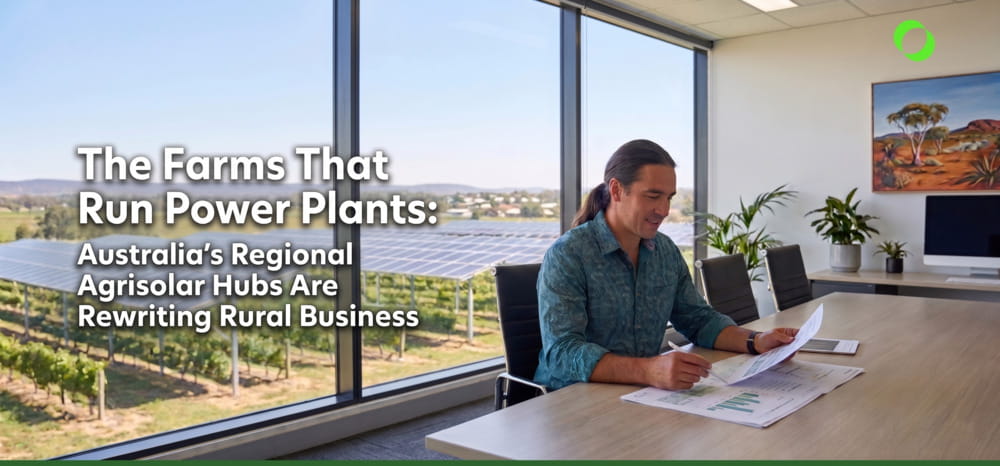
    Agrivoltaics Hubs in Australia: How Regional Agribusinesses Are Scaling Dual-Yield Farms

    Sheep grazing and utility-scale solar generation. Sounds like they don’t belong in the same sentence. They do now.

    Australia is pioneering a new type of operation that makes farms more than farms: the “agrivoltaics hub.” Also called the agrisolar hub.

    A cotton farm is building a facility that produces green hydrogen and ammonia using solar power. Regional farms are being transformed into integrated energy producers.

    It’s land use for farming and solar generation simultaneously. It’s landowners building these hubs on their own land to power themselves. What follows is a self-powered farm and a supply chain that’s independent of overseas logistics chains.

    But what does it actually take to build and run a hybrid operation?

    What does the back-office infrastructure look like when a farm becomes a regulated energy and chemical producer?

    What is an agrivoltaics hub? (What is an agrisolar hub?)

    KEY TAKEAWAY / Quick Answer

    An agrivoltaics, sometimes referred to as an “agrisolar hub,” is a facility that co-locates agricultural production with renewable energy infrastructure on the same land. In the most advanced current examples, like GEGHA in New South Wales, the energy produced on-site powers the agricultural operation, replacing imported fuels and fertilisers with locally generated alternatives.

    What is an Agrivoltaics Hub Australia a.k.a. Agrisolar Hub: Definition and Purpose

    Agrivolatics hubs are converted land so that they’re no longer used only for farming, but for solar farming Australia (systems) and solar energy generation. On the same plot. At the same time. Instead of replacing agriculture with renewable infrastructure, the two operate side by side.

    In Australia, the term is often interchanged with “agrivoltaics.” Same definition.


    [rcb_show_form]

    What Makes Agrivoltaics Research Hubs Unique?

    Besides crops growing beneath elevated panels and livestock grazing between solar arrays, the energy produced on agrivoltaics hubs can help power the farm itself. Solar grazing systems, if you will. It can even power nearby operations or larger industrial processes like hydrogen and ammonia production.

    No more costly freight chains stretching across oceans. No more weeks- to months-long waits for critical farm inputs to reach Australian shores.

    This one integrated system, through agricultural solar integration, is what the next generation of agrisolar hubs in Australia is hurtling toward.

    Where It Really Started

    This sustainable, regional farming tech Australia innovation began with sheep roaming under solar infrastructure. The first of the rest of the agrisolar projects. The Royalla Solar Farm introduced this operation in 2015, making it the baseline model since. It works because grazing stock fit naturally under standard panel mountings and don’t interfere with energy output. Low-tech, effective, and increasingly common across regional NSW, Victoria, and Queensland.

    Today, the category has grown well beyond the woolly and the merino. Elevated panel systems allow cropping underneath. Horticulture trials are being done on partial shade structures, and aquaculture testing on floating PVs (floating solar panel systems installed on bodies of water).

    At the more advanced end of this renewable energy agriculture shift is solar infrastructure, now being used to power hydrogen and ammonia production directly on-farm. That’s what this article will be diving into.

    Extra read: learn about the Modern Slavery Act Australia, guidelines, and how SMBs should stay compliant.

    Get Matched AI Recruiter Banner, encouraging offshoring agrivoltaics hub and agrisolar hub hiring.

    GEGHA: The Model Everyone Will Be Watching

    The Good Earth Green Hydrogen and Ammonia project, or GEGHA, broke ground in May 2026 and gave Agrisolar the momentum to push past the experimental.

    It’s a joint venture between New Zealand-based Hiringa Energy and Moree’s own Sundown Pastoral Company. The latter operates out of Keytah Farm, one of the largest cotton and cropping operations in the region.

    The farm used to import fossil fuel-based fertilisers from overseas or have them transported from Sydney, Brisbane, or Newcastle. With GEGHA, it will produce its own green hydrogen and ammonia on-site using solar power, which it then uses as fertiliser for its own land and neighbouring agricultural properties in the New England region.

    $71.6M combined with 65,000 acres, and the project is forecasted to produce 4,500 tonnes of low-carbon ammonia a year.

    An Isolated Project No More

    GEGHA is the most concrete example yet of a pattern forming across regional Australia: the merging of farming operations and renewable energy infrastructure.

    Agrisolar CRC is launching a 10-year, $100M industry-led research program running from 2026 to 2036; this will allow industry, landholders, government, and research partners to expand agrisolar commercially across Australia.

    — Agrisolar CRC
    10-Year Commercial Expansion Program (2026–2036)

    Here’s what’s being coordinated and funded for agrisolar, further signaling that it’s evolving into its own sector:

    • NSW Government has committed $45.2 million to GEGHA alone

    • NSW Hydrogen Hubs Initiative has invested $109.3 million into projects across Hunter, Port Kembla, and Moree since 2023

    • The initiative is targeting 700MW of green hydrogen capacity by 2030

    Most Australian SMEs reading about GEGHA and similar projects think this is all about the technology and the investment figures. But the more important question is what it takes to run one of these operations once the panels are up and the electrolyser comes alive.

    The Part Less Talked About: What Does It Take to Run An Agrisolar Hub in Australia?

    A “farm with solar panels” has always been too simplistic and slightly wrong as an understanding of AU agricultural solar hubs. Though the hype tends to circle around the tech and mechanisms, and they are impressive, there’s something else about self-powered agriculture that’s not getting as much attention:

    The back-office challenge. It’s as important as the front-end engineering and technology, and nobody’s talking about it.

    A regional agrisolar hub is an agricultural operation, a licensed energy generator, a chemical manufacturer in GEGHA’s case, and a participant in multiple regulatory frameworks, collectively. That’s a lot of hats, and a lot to juggle, for a pastoral business in regional NSW.

    The Regulatory Side Is A Major Undertaking

    When you run an agrisolar hub, you answer to multiple regulators at once. Each one has different rules and requirements. Each one holds a different ideal of what “compliance” is and isn’t.

    That stack looks something like this.

    The Four Regulators Agrisolar Hubs Answer To:

    Regulatory Framework
    Key Requirements
    Who Oversees It
    Clean Energy Regulator
    LGC creation, EGR reporting, STC claims (geotagged evidence from March 2026)
    Clean Energy Regulator
    NSW Planning Framework
    State significant development approvals, SEARs, EIS obligations
    NSW Dept of Planning
    Chemical Manufacturing
    Ammonia production compliance
    SafeWork NSW / EPA
    Climate Disclosure
    Mandatory reporting expanding July 2026 for larger entities
    ASIC / Treasury

    Australia’s regulatory landscape works on a higher standard at present, and expects hubs to be audit-ready. They should provide real-time visibility and evidence: if a hub claims a certain number of solar certificates, or reports a certain output to the regulator, they need to be able to prove it with timestamped and traceable records the moment a regulator asks.

    For a cotton farm in Moree, that’s a new and overwhelming side of the business that’s an entirely different professional lane.

    Data Demand Is Growing Fast

    A hub like GEGHA generates operational data across multiple systems: solar generation and battery storage. Then, electrolysis output, ammonia production, crop monitoring, irrigation, and transport logistics. A lot of data from a lot of systems, and they don’t automatically work together.

    These are cotton farms and pastoral properties. To expect software company-level outputs is too much to throw at a farming corporation, no matter the size. They don’t have data teams.

    Regulators put their foot down anyway. It’s the same standard of reporting regardless.

    Illustration: A regional NSW agrisolar operation receives a compliance query from the Clean Energy Regulator six months after commissioning. The owners and operators know the records are there. They know they have the ammonia logs. But they don’t have a strategy, nor do they have a data administrator, compliance officer, or operations coordinator in their workforce.

    It takes them weeks to consolidate everything, and consultant turnovers drag the process out further. With a dedicated back-office structure, that could have been completed in an afternoon.

    The Hiring Problem That Could Stall All of This

    The NSW Government calls GEGHA a template, and the plan is to roll this model out across regional NSW and beyond.

    But that requires very specific types of roles. The market pool in agriculture typically doesn’t share the same ground with these skills.

    As it turns out, that combination is rare anywhere. In Moree? Rarer still.

    GEGHA created 93 jobs in construction and operational roles alone. The compliance and management positions are where hiring gets tougher:

    • Regulatory coordinators

    • Compliance officers

    • Data administrators

    • Operations managers well-versed in both farming and energy

    These are in short supply, especially in regional centres. The Agrisolar CRC (Cooperative Research Centre) surfaced the problem, as the sector needs research, demonstration sites, supportive policy, and knowledge sharing if agrisolar is going to take root across regional Australia.

    The unexpected solution that’s growing in demand is remote staffing. These operations are turning to global specialists to fill the roles.

    Scaling Regional Agrivoltaics: Managing the Operational & Back-Office Burden

    Remote Staff connects Australian businesses with experienced offshore professionals across compliance, data administration, and operations coordination. The back-office roles that agrisolar hubs need most are the roles our team specialises in placing.

    The talent pool for this specific skill mix isn’t in Moree. Even when it exists in the cities, it comes at a cost most regional operations can’t justify.

    A compliance officer or data administrator working remotely can do the same job at a fraction of the local hiring cost. How? They’re in a different part of the globe with a different cost of living. Same high-quality, in-demand talent.

    If you’re in the agrisolar space, that’s the problem Remote Staff solves. Onboarding, payroll, HR, and admin are on us, too.

    As you plan for your next remote hires, read the Payday Super Rules Guide. Just to make sure you aren’t missing out on anything.

    Commercial Agrivoltaics: What the Next Wave of Agrisolar Hubs Looks Like

    GEGHA is a “Moree” of a much larger picture.

    The NSW Hydrogen Hubs Initiative is targeting 700MW of green hydrogen capacity by 2030, with projects already underway across Hunter, Port Kembla, and Moree. The Agrisolar CRC’s $100M research program running from 2026 to 2036 is meant to help Agrisolar settle into mainstream agriculture across Australia.

    Further west, the Australian Renewable Energy Hub in the Pilbara is proposing 26GW of wind and solar to produce green hydrogen for export. Whether it’s a few livestock plus farming under solar panels, crop production with solar, or utility-scale electrolysers with government funding, they’re moving towards the same direction.

    The Australian Journal of Agricultural and Resource Economics noted in 2026 to date that agrisolar here is still mostly sheep grazing and pilot projects. Commercial-scale agrisolar hubs are still the exception.

    — Australian Journal of Agricultural and Resource Economics
    State of Commercial-Scale Agrisolar (2026)

    What needs to happen? Funding certainty and stronger planning pathways.

    The federal government also needs to take a firmer stance on agrisolar and make it a standard, if not one of the standards, for regional farming. Australia has no unified policy integrating agriculture and renewable energy to date. There’s no existing legal definition or clear land-use rights for farms producing both crops and power on the same ground.

    The hubs are going up. The paperwork governing them is still being figured out. Climate-smart agriculture? Yes, to this. But for another blog.

    Extra Read: Learn about remote professionals SMBs are hiring fast: What is the Role of a Project Manager and Best Industries for Project Management.

    FAQs

    What is agrisolar? (What is agrivoltaics?)

    Agrisolar is the practice of using the same land for both farming and solar energy generation at the same time. It ranges from sheep grazing under solar panels to hydrogen and ammonia production on-farm, powered by solar.

    What is the GEGHA project in NSW?

    GEGHA stands for Good Earth Green Hydrogen and Ammonia. It’s a joint venture between Hiringa Energy and Sundown Pastoral Company. With a $71.6M budget, construction began in May 2026. Once operational, and it’s expected to be by 2027, it will produce up to 4,500 tonnes of low-carbon ammonia and 224 tonnes of green hydrogen annually. This will be done using a combined 35.65MW solar installation and 15MW electrolysis system.

    What is the difference between agrisolar vs agrivoltaics?

    The terms are used interchangeably in Australia in terms of integrated solar agriculture. “Agrivoltaics” is the more common technical and academic term, and “agrisolar” is used more widely in industry. Both describe the co-location of agricultural production and solar energy on the same land.

    What is the biggest problem with solar? (agrisolar context)

    Regulatory complexity and data management. Agrisolar hubs need to pass through a plethora of regulatory frameworks, from energy generation to planning. Being able to consistently deliver audit-ready data can be an operational burden, especially because these responsibilities don’t naturally overlap into agriculture.

    Is there an agrisolar policy in Australia?

    Not yet. Australia currently has no federal policy on integrating agriculture and renewable energy. The absence of a legal definition for agrisolar and unclear planning rights across dual land uses continues to be a challenge, especially for broader use and in expanding the industry.

    Extra Read: Find out what business opportunities lie in wait in the Queensland Construction Worker Shortage, and Best No Code Tools.

    The Farm Isn’t Just a Farm Anymore

    GEGHA is the first credible proof of turning agrisolar into a working industry model. There are operational complexities, with a shortage in role specialisations hanging over it. The systems for coordinating them are still being ironed out.

    Once again, the technology is ahead of the workforce and infrastructure.

    Panels and electrolysers are the easy part. The farms that run power plants will be won or lost on whether the back office is reinforced. And if the back office doesn’t keep up, the farm will spend more time and resources on compliance than operations.

    Australian farmers and land owners, as well as SMBs in the agriculture sector, are finding the right talent offshore. What about you?

    Looking at how to staff the operational side? Ready to grow your agrisolar offshore team? Call us or Request a Callback today.

  • Best No Code App Development Platforms for Australian Businesses: Unbiased Tips + Owner Guide

    Best No Code App Development Platforms for Australian Businesses: Unbiased Tips + Owner Guide

    Ready to crack those fingers and scour through the list of the best no code app development platforms? The ones Australian businesses are lunging toward, this not-so-new tech phenomenon that keeps quietly reshaping how small teams build software?

    Maybe you’re already running one. Or two. A few, even. Maybe you’ve just started reading up on them, warming up to the idea, wondering how far “no code” can actually go in 2026.

    There’s a pattern showing up across AU businesses this year, and subscriptions, active, tools are live. And yet the builds don’t ship. Workflows stay manual. Platforms quietly gather dust in the background while the monthly invoice keeps landing.

    The question isn’t whether the best no code tools work. They do. The question is whether the ones you’re paying for are the right category for what you’re actually trying to build. Most businesses find out they’re not, long after the free trial ended.

    Here’s a breakdown of the 11 best platforms worth your money in 2026, grouped by what they help you build. The tool is half the job, though. Someone still has to run it. More on that as you read on.
    For the HEADER:

    What is a no code platform?

    Key Takeaway / Quick Answer

    A no-code platform is a software development environment that allows you to build functional websites, mobile apps, databases, and automations without writing traditional programming code. Instead of manual line-by-line coding, users design software through visual drag-and-drop components, pre-built templates, and conversational AI prompts (a.k.a. “vibe coding”). These platforms translate human intent and plain-language instructions into production-grade systems complete with backend logic and data storage. While accessible to non-technical users, they are powerful tools heavily used by specialists to rapidly ship software, prototypes, and internal business workflows.

    What Are No Code App Development Platforms? (Not the List, The Definition)

    What such platforms do for you: no code app development platforms let you build software, from apps, websites, internal tools, to automations, with “no code.” No writing code at all levels, the way a software developer does. No-code development or vibe coding is cut from a different cloth, since it’s intent-driven and prompt-based.

    The no-code developer identifies what language to use in crafting the right instructions, essentially to “tell” AI how to behave, how to generate the expected output.

    💡

    Did You Know?

    2026 marks the year when the terms “no-code development” and “vibe coding” became one and the same, the latter being newer of the two. But because most, if not all, no code platforms now are AI-integrated, they now fit the “vibe coding” description.

    Scenario: In traditional development, the developer writes the entire line-by-line code that builds the software. The non code developer writes, not code, but the prompt—the instructions AI needs for it to start building.

    It’s in plain language, the vibe coder dialoguing with the AI tool. But it’s nowhere like how you type prompts in ChatGPT. This process requires technical knowledge and is skill-specific.

    After all, what’s being built is a moving, breathing app, website, or workflow that’s very much production-grade software. It runs with backend logic, user authentication, data storage, and integrations. All of these are to hold together with zero breakdowns, or as little as what’s acceptable, after launch.

    70% of new business applications will use low-code or no-code technologies by 2025 (up from 25% in 2020). Pairing your business operations and workflows with the right no code developer AUSMEs, a space Remote Staff can help fill.

    — No-Code Market Trends
    Global Technology Adoption Forecast

    The Platform Category Blind Spot

    Having the right vibe coding tools is where square one is. They don’t immediately work well the moment they’re switched on. The “platform category blind spot” is the mistake of picking a tool before identifying which category of problem you’re solving.

    Avoidable, when you identify what you need, and work with the ideal no code consultant.

    11 Best No Code App Development Platforms (What Are Examples of the Best No Code Platforms?)

    Enough setup. These 11 no code software below are grouped into five categories based on what software type they produce: what job they do. Use the categories to understand the general purpose, and skip straight to the 11 named platforms for the details.

    AI-Powered App Builders

    This one’s considered the newest in the growing sphere of no-code platforms. They generate full applications and build the full app. Through natural language prompts, the developer writes what they want (again, in a way the AI will understand).

    As in a conversation, the AI, if the language is understood, builds what’s being asked, and the build is polished and tweaked until the outcome is as the developer originally prompted.

    #1. Lovable

    Here’s an AI-first full-stack builder. It creates complete, ready-to-use apps you can “take with you” via exportable code. Normally, or at least for many no-code platforms, whatever’s built is locked within the platforms themselves.

    With builders like Lovable, you have the option to take what’s built out (the actual programming files created by AI), so that, should you decide to use a different platform, the next developer can continue the work.

    There’s a trade-off with this level of independence, of course. Complicated builds need to be overseen, ideally by a specialist who understands the output.

    Best for: SaaS prototypes and MVPs where you want code you can take with you. Starting cost (AUD): Free tier, paid plans from ~$30/month.

    #2. Bolt.new

    Browser-based, Bolt.new is fast, to put it simply and easily. It’s prompt-to-app, so you “describe” the tool that needs to be built.

    prompt-to-app, and fast. You describe the tool, it builds it, and you iterate or adjust it right there, same window. The benefit of speed is accompanied by a limitation, and it’s that for it to be production-ready, careful, meticulous validation is more than a must.

    Best for: Quick internal tools and functional prototypes you can ship in hours.

    Starting cost (AUD): Free tier, paid plans from ~$30/month.

    What To Do: If speed is your main goal at the moment, for a build that’s more on the less complex, less precise side, choose AI-first builders. Before it goes live, have the developer fully validate the output.


    [rcb_show_form]

    Visual App Builders

    This is considered one of the established categories, having been around since the early 2010s. Visual configurations are the main build operation through drag-and-drop canvas editors. Think of it like how you drag and drop elements in a slide on PowerPoint.

    It’s a go-to for many AU SMEs whose core businesses revolve around consumer-facing products.

    #3. Bubble

    Bubble is this category’s most flexible web app builder. It’s found across the pond of Australian commerce, from marketplaces to SaaS products, widely adopted throughout the spectrum.

    It handles more demanding setups. Apps that follow and work on different rules for different types of users, and custom data setup tailored to your workflow. It’s also great for processes that go through a series of steps.

    This is a specialised role, definitely best placed under the oversight of a specialist, and nowhere near self-building.

    Best for: Complex web apps with custom logic and databases.

    Starting cost (AUD): From ~$49/month.

    #4. Adalo

    Adalo goes onto iPhones and Android phones; directly to Google Play and the App Store. This mobile-first tool is for those whose products need to be found in an app store instead of a browser. Less powerful than Bubble when it comes to complex logic, but simpler when the project is a mobile app.

    Best for: Mobile-first apps where App Store and Play Store distribution matters.

    Starting cost (AUD): From ~$60/month.

    #5. FlutterFlow

    FlutterFlow uses Google’s open-source framework, Flutter, as its engine underneath. The build is visual, but it makes exporting clean Flutter code possible, so your app isn’t confined to the same platform.

    This is the most technical within its category.

    Best for: Cross-platform apps where you want the option to take the code with you.

    Starting cost (AUD): From ~$45/month.

    #6. Glide

    Clunky, unorganised spreadsheets can be transformed into polished apps through platforms like Glide. You link it to your Airtable or Google Sheets. It does the job in minutes, building you a straightforward, usable interface.

    The limitation is in customisation, especially in comparison to platforms like Bubble. However, for internal tools, it’s a reliable choice.

    Best for: Internal tools built on Google Sheets or Airtable data.

    Starting cost (AUD): Free tier, paid plans from ~$40/month.

    Understand How to Calculate Outsourcing Cost in Australia in this article. Then calculate using your own numbers and compare the results using our Free Outsourcing Calculator Tool below (click and type):

    Interactive Outsourcing Calculator Tool
    (Click, scroll inside, move the toggles, or change the numbers)
    Can’t see the numbers? Use a desktop browser or scroll within the box for the best experience.

    #7. Softr

    Softr is the customer-facing side of Airtable. The frontend layer. For data that’s already inside Airtable, it gives it a professional website-style interface. Speed? Fast. It’s strong suit? Membership sites, customer portals, and internal directories.

    There’s no catch. Just the obvious that Airtable should first be underneath.

    Best for: Customer portals and membership sites where your data’s already within Airtable.

    Starting cost (AUD): Free tier, paid plans from ~$75/month.

    What To Do: Visual app builders are the recommended category for customer-facing products with a polished UI. The way to choose is by starting with where your data’s currently stored.

    Website and CMS Platforms

    From a marketing site to a content-heavy one, you’re looking at the dominant option. Even for a blog. If you want less reliance on an on-call developer, this is it. Your team can make updates themselves in these platforms.

    #8. Webflow

    Webflow lets you build a beautifully designed website with a proper system for managing your content behind it. It gives you full design control, hence, the note about not being constantly dependent on an expert to execute changes.

    Weekly copy and content updates become easier here. There’s a learning curve that might take non-designers by surprise at first, but the hand-off and learning curve afterwards is manageable. Outputs appear highly professional.

    Best for: Marketing sites, blogs, and content-heavy sites your team can update without a developer.

    Starting cost (AUD): From ~$30/month.

    Operational Excellence

    What Is a No Code Platform? Find the Right No Code Developer / Vibe Coder, First.

    Hire a Remote Staff specialist to build the systems that work while you sleep.

    Trusted by 3,000+ businesses to scale remotely since 2007.

    Data and Internal Tools Platforms

    Problems in fragmented spreadsheets? Endlessly messy records? These are the storage behind the apps you build. Field teams stop working off paper with data and internal tools platforms that are built to consolidate and organise scattered data and sheets.

    #9. Airtable

    Airtable is a no-code database that gives the appearance and feel of a spreadsheet. It operates as the foundation of most of the tools in this list: Glide, Softr, and Zapier. It takes care of simple workflows, team collaboration, and reporting all on its own.

    Best for: The backend and data layer underneath most other tools on this list.

    Starting cost (AUD): Free tier, paid plans from ~$15/user/month.

    #10. Clappia

    Mining, construction, logistics, and agriculture businesses use Clappia, having been purposely built specifically for field operations, with available options for AU data residency: your data is stored on Australian servers.

    It digitises everything, from inspections to field team coordination. Your team can work offline through the mobile app, an important feature for remote Australian environments.

    Best for: AU businesses running distributed field teams in mining, construction, logistics, or agriculture.

    Starting cost (AUD): From ~$12/user/month.

    What To Do: If your problem is disconnected data or field teams on paper, don’t jump to any frontend builder just yet. Start here.

    Workflow Automation Platforms

    These don’t build apps. They connect the apps you already have, so your team don’t have to manually copy data while looking at one tool to the next.

    #11. Zapier

    The most widely used automation platform, not just in Australia, but in the U.S. and other parts of the globe, Zapier connects SaaS tools by the thousand, through trigger-action logic.

    Make (formerly Integromat) is accepted as the stronger alternative for multi-step workflows with conditional branching. n8n is another option. In case Zapier becomes too heavy on business cost, and when data residency or high-volume automation becomes the main concern, it’s a self-hostable platform worth considering.

    Best for: Connecting the SaaS apps you already use.

    Starting cost (AUD): Free tier, paid plans from ~$30/month.

    What To Do: Before building anything new, check whether automation between your existing tools is the solution, since in many cases, it usually is.

    Businesses deep in the Microsoft 365 or Google Workspace ecosystem are better paired with Microsoft Power Apps and Google AppSheet. Both are ecosystem-dependent rather than general-purpose picks, which is why they’re not listed above.

    Free app builders? You can try them out, too. Some features might be limited, but they’re a good place to start.

    How Much Do No Code App Development Platforms Cost in Australia? (No code App Builder Cost)

    Category
    Recommended Platforms
    Best For
    Starting Cost (AUD)
    AI-Powered Builders
    Lovable, Bolt.new
    MVPs, rapid prototypes
    Free / from ~$30/mo
    Visual App Builders
    Bubble, Adalo, FlutterFlow, Glide, Softr
    Customer-facing and internal apps
    From ~$40–75/mo
    Website / CMS
    Webflow
    Marketing sites, CMS content
    From ~$30/mo
    Data / Internal Tools
    Airtable, Clappia
    Databases, backends, field ops
    From ~$12–15/mo
    Workflow Automation
    Zapier (+ Make, n8n)
    Connecting existing apps
    Free / from ~$30/mo

    The Australian Compliance Layer (Yes, This Matters)

    No code app development platforms move a lot of business activity into one place. Customer forms. Booking systems. Internal dashboards. Automated emails and SMS flows. Payment collection. Team records. Connecting tools, storing information, and handling customer data across multiple systems are done under the hood.

    What is the Australian Privacy Act 1988?

    The Australian Privacy Act 1988 becomes relevant the moment personal information enters the workflow. Names, phone numbers, email addresses, payment details, staff records, customer enquiries. Australian businesses remain responsible for how that information is collected, stored, accessed, and transferred, including when the platforms underneath operate outside Australia.

    It’s one of the reasons experienced no-code developers matter beyond simply knowing how to use the tool itself.

    What is the Spam Act 2003?

    The same goes for the Spam Act 2003. Automated follow-ups, newsletters, promotional emails, SMS reminders, onboarding sequences, abandoned-cart flows. These are standard inclusions across modern no-code builds because they reduce manual admin work across teams. But commercial messaging still requires consent handling and unsubscribe functionality properly configured into the workflow.

    The automation doesn’t remove the business responsibility attached to it. Take note.

    The platform is the way towards the deliverable, and that’s the configured system inside it. Something many AU SMEs misunderstand, and the reason why no-code subscription keeps getting renewed when build’s don’t hit the mark, if they even work at all.

    You need a no-code developer along with the no code development platforms. They craft the prompts that direct the AI tools to build data models. They know what the AI responds to, to integrate the APIs and maintain the system as your business continues to grow or change.

    There’s also an Australian compliance layer that cannot be overemphasised, nor ignored. Builds that go through customer data or sends commercial messages should comply with the Spam Act 2003 and the Privacy Act 1988.

    The vibe coder knows how to build these mandatory requirements into the workflows, so your business steers clear of penalties.

    Related Read: When it comes to marketing automation Australia is advancing towards, learn about What Is a Marketing Automation Specialist first.

    ℹ️

    While no-code development and vibe coding are technically distinct approaches, the lines have blurred significantly in 2026 as every major no-code platform has integrated AI. For practical purposes, the two terms are used interchangeably across the industry and throughout this guide.

    The Support AU Businesses Need To Match the Right No Code Platform With

    With Remote Staff, every no-code developer in the candidate pool is screened for actual workflows, actual integrations. Our team ensures specialists know how to build production systems meant to work inside businesses.

    Remote Staff has spent 18 years placing technical professionals with Australian businesses. Your project, your business needs dictate the engagement model, from project-based and part-time to full-time. Even the administrative side of it, payroll, and onboarding stays off your plate and on ours.

    As you strategise around hiring remotely, here’s The Foreign Employer’s Guide to Payroll Taxes in the Philippines.

    FAQs

    What is a no code app development platform? (What is a no-code app builder?)

    A no code app development platform lets you build functional software through visual interfaces and drag-and-drop components. All without writing code. These platforms replace traditional programming with configuration and templates. In 2026, AI-powered generation from natural language prompts.

    Are no code development platforms suitable for small businesses in Australia? (Are no code platforms good?)

    Yes. Most AU SMEs use them for internal tools, MVPs, customer portals, and workflow automation successfully. High-concurrency apps serving thousands of simultaneous users, or highly regulated builds in finance or healthcare are the exception, as these are better build through traditional development.

    What is the difference between low-code and no-code platforms? (What is meant by no code platforms)

    No code platforms require zero programming. They’re built for non-technical business users. Low code platforms allow some customisation through code, which is useful when developers want faster delivery, without stretching the timeline to that of complete traditional coding.

    What is the difference between low-code and no coding?

    Low-code still involves coding at certain stages. Low code reduces how much manual programming developers need to write, but for custom logic, technical work remains part of the process. That includes integrations, or advanced functionality. No-code removes direct coding almost entirely, relying instead on visual builders, drag-and-drop systems, prompts, and prebuilt workflows.

    The simpler way to look at it: low-code helps developers build faster. No-code helps non-developers build without traditional code writing. In practice, many Australian businesses end up using a mix of both, depending on how complex the software needs to become.

    Can a no code platform replace a traditional software developer?

    For most AU SME use cases, that answer is yes. No for high-concurrency, mission-critical, or ownership-sensitive builds, no, because of the “Platform Prisoner” risk. What gets built inside a no-code platform usually can’t be exported elsewhere, an important detail when your business strategy or the vendor’s workflow changes.

    Stay compliant in all areas of your business with the Modern Slavery Act Australia and Payday Super 2026 Rules.

    The Best No Code Tools Aren’t The Only Solution

    Not on their own. Picking a no code app development platform is merely a part of the long game. Knowing which category fits your problem, and having the right person execute inside it, answers the problem.

    The research you’ve done about no-code already puts you ahead of most businesses that are still unable to use the tools they have because they don’t have the specialist.

    The platform is the easy part. The execution is the product.

    When you’re ready to match the right platform with the right specialist, and call us today or Request a Callback.

    Thinking of what role to start with, alongside Vibe Coders? Project Managers, Online Business Managers, and Chief of Staff positions are catching AU SMBs’ eyes. Go ahead and check our other offshore roles and take your pick.

    Trending, In-Demand Roles in Australia now
  • No Code Development Australia Guide: When You Don’t Need a Dev for Everything

    No Code Development Australia Guide: When You Don’t Need a Dev for Everything

    It’s real, and it’s a race Australian SMEs are only now catching up to:

    The rising demand for no-code development.

    You buy the tools and subscribe to the platforms. You tell your team to make like a developer and try building inside them.

    “No code,” so no writing code, right? How complicated can it be?

    It’s true that no-code development, or “vibe coding,” as it now goes by, does not require programming. But it isn’t so simple that anybody can watch a tutorial and build like it’s nobody’s business.

    This is intent-driven visual building. Instead of writing code, you work with visual interfaces, drag-and-drop tools, and pre-built logic that set the gears of your platform in motion.

    This is a specialisation. It requires a specialist.

    As you look deeper into no code development, understand the following: What does no-code development cover? What can it build? And why does your business need it?

    What is no code development?

    Quick Answer

    No-code development is the practice of building apps, automations, portals, and workflows using visual platforms and AI prompting, without writing traditional code. It encompasses everything from internal operational tools and client-facing portals to e-commerce automations and workflow systems that remove manual, repetitive work from your team. The practice now overlaps with vibe coding, where a specialist directs AI to generate the build.

    No Code Development Guide: What is No Code or Vibe Coding?

    No-code development is the process of building apps, automations, tools, and workflows with no traditional programming. It uses visual programming tools and drag and drop app builders, so that the no-code developer essentially “tells” the platform what to generate.

    The developer or “builder” handles the logic or instructions, while the platform carries them out.

    Today, “no-code development” and “vibe coding” are used interchangeably.

    While the former originally referred to building without code and the latter meant building without thinking in code through AI-prompting, they now largely overlap in practice.

    Although the main draw is that the approach requires “no code,” it isn’t always zero code. In limited cases, when you build apps without coding, a no-code developer can get behind what’s built and lightly modify the code.

    💡

    Did You Know?

    “No code” and “vibe code” were once recognised as related, but varied methods. As of 2025, the two have become synonymous, with “vibe coding” being the newer jargon, made popular by the creator of the phrase itself: AI researcher, engineer, founding member of OpenAI, and former Director of AI at Tesla, Andrej Karpathy.

    Low Code vs No Code (How Is No Code Different From Low Code?)

    In low-coding, coding is expected, especially for complex use cases, much less than its line-by-line counterpart. In no-code, coding is not part of the model, and is optional (i.e. conditional rules that go beyond what the no code website builders supports, unusual data structures).

    To understand the distinction better:

    No code = visual building with generally zero programming (with occasional coding in advanced customisation, and more complex setups)

    Low code = also visual building, but with more programming involved than no-code, and less than traditional coding

    What No-Code Development Isn’t

    No-code development is not a self-managing development model. It’s not just for simple tasks, though highly complex systems requiring custom backend logic or full source code ownership still belong with traditional developers.

    It’s not a developer shortcut.

    Yes, it’s a faster, simpler way of building, but a different route altogether.

    Illustration: Kai has been running his 20-person logistics company in Perth for almost five years. His operations team tracks driver assignments, job statuses, and delivery confirmations using two Google Sheets, updated by four people daily. A recipe for lost jobs and duplicate information.

    A traditional developer quoted AUD$55,000 to build a dispatch system within a five-month timeframe. A no-code developer presented a lower quote and a more conservative build schedule. Kai went with the latter.

    The vibe coder built an Airtable operations hub in four weeks. Driver assignments update in real time, and job status changes trigger automatic notifications. Overlaps and misaligned information, gone.

    [rcb_show_form]


    Best No Code Tools: What Vibe Coders Work With

    Here is a quick reference across the most common no code platforms and their primary use cases.

    Platform
    Category
    Best For
    Airtable
    Database and Internal Tools
    Operational databases, job trackers, asset registers
    Glide
    Internal Tools
    Mobile-first internal apps built from spreadsheet data
    Softr
    Internal Tools and Portals
    Client portals and internal dashboards
    Bubble
    Web Application Builder
    Custom web apps, booking systems, client portals
    Lovable
    AI App Builder
    Rapid web app prototyping via AI prompting
    Bolt.new
    AI App Builder
    Fast MVP and portal builds through AI prompting
    Webflow
    Website and CMS
    Marketing websites your team manages without IT
    Klaviyo
    E-Commerce Automation
    Post-purchase flows, abandoned cart, loyalty triggers
    Make
    Workflow Automation
    Multi-step trigger-action automations between platforms
    n8n
    Workflow Automation
    Self-hosted automation for teams that want full data control
    Zapier
    Workflow Automation
    Connecting apps and automating simple repeated tasks
    HubSpot
    CRM and Marketing
    AI features, lead scoring, workflow automation
    Salesforce
    CRM and Enterprise
    AI-powered features, pipeline automation, data management
    Cursor
    AI Code Editor
    Reviewing and lightly editing AI-generated code outputs
    Supabase
    Database and Backend
    Structured data storage for more complex no-code builds
    Firebase
    Database and Backend
    Real-time databases for apps built on Bubble or Glide
    Xano
    Backend and API
    No-code backend for web apps requiring more complex data logic

    A Note for AU Businesses: A no-code developer does not need to be experienced in all no code automation tools on this list. Hire for the platforms your business is already on or is moving toward.

    What Can You Build With No Code Development?

    What Can You Build With No Code Development?

    Most AU business owners underestimate the scope. This is not a tool for building simple contact forms or basic landing pages. What can vibe coding do for your business? Here is what actually gets built.

    #1. Internal Tools and Operational Databases

    Your team is tracking important details in a shared spreadsheet that multiple people edit. Much like in the earlier illustration about Kai, records conflict, overlap, and disappear by accident.

    A no code developer builds a purpose-focused system inside Airtable, Glide, or Softr that replaces it. From job trackers, asset registers, project status boards, to staff onboarding checklists, it becomes the one source of accurate data your whole team works from.

    What To Do: Name one or two internal processes your team currently tracks in a spreadsheet. That’s where you start.

    #2. Workflow Automation

    When customers fill out a form, does someone manually copy the information onto another system? Any other similar manual processes that take place within your team week after week?

    With a vibe coder, trigger-action logic that removes that laborious relay is built. When a form is submitted, your CRM updates. When a job is marked complete, your client is sent a notification. Next steps kick in automatically inside Make, n8n, or Zapier.

    Practical Note: Workflows handling personal customer data need to be held to the letter of the Privacy Act 1988. An expert vibe coder will know to plan for this at the outset.

    What To Do: Write down every task your team repeats more than three times a week that involves moving data from one place to another. Each task is a candidate for automation.

    #3. Client-Facing Portals and Web Applications

    Bubble, Lovable, or Bolt.new house client-facing systems like booking systems, brief submission portals, shared project trackers, and approval workflows. These give clients direct access without routing everything through email.

    The Spam Act 2003 applies even when it’s the portal, not a human being, who sends automated messages to clients. The same requirements are mandatory for properly acquiring consent, clear sender identification, and providing an option to unsubscribe, all of which should be built in beforehand.

    Illustration: Rachel runs her architecture firm from Sydney. With 12 people currently on her team, and new project briefs coming in via email, four members are assigned to copy the details into a shared folder. When information is missing, they talk to each other and manually trace what went wrong.

    This back-and-forth means projects are delayed for days before work can begin.

    A no code developer built a Bubble client portal in six weeks. Clients submit briefs directly, upload files, and track project milestones themselves. The email chain for new projects is now a thing of the past.

    #4. Websites Your Marketing Team Can Update Themselves

    The no code developer builds the capability in Webflow: your marketing team publishes pages, updates content, and makes changes on their own. Having IT or an external agency on call is done away with.

    What To Do: If your team sends requests to change something on your website frequently, or within the last 30 days, this is the fix that solves the dependency loop permanently.

    #5. E-Commerce and Post-Purchase Flows

    For AU direct-to-consumer (DTC) and Shopify-native brands, abandoned cart sequences, post-purchase follow-ups, loyalty triggers, and predictive segments are where recoverable revenue lies dormant if not acted upon.

    Klaviyo handles most of this, but it needs the person who’s built inside it to configure the flows correctly.

    #6. AI Features Already Inside Your Existing AI No Code Platforms

    HubSpot, Salesforce, and Klaviyo include AI-powered features for lead scoring, content personalisation, and send-time optimisation. Most AU SMEs have never switched them on.

    A no-code developer gets inside the platform and activates what is already there, without additional software spend or a traditional developer involved.

    Vibe Coding vs. Traditional Software Development: Where Each One Belongs

    Both have their place. This table helps you tell which one your situation actually calls for.

    Your Situation
    Right Approach
    Building an internal tool, portal, or MVP
    No code development
    Automating manual business processes
    No code development
    CMS-driven website your marketing team controls
    No code development
    Complex system with custom backend logic
    Traditional development
    IP-sensitive software you plan to sell or list for acquisition
    Traditional development
    Build where you need “full” source code ownership (i.e. custom products with unique logic or features)
    Traditional development

    By 2026, more than 75% of new enterprise applications are expected to include no-code or low-code components.

    What To Do: Before you accept the next developer quote, ask yourself and your team: Does this need to be custom-coded, or does it just need to work? If you need it to work, then vibe coding should be your direction.

    Ready to Audit?

    Free Cost Savings & ROI Calculator

    Compare local hire costs vs. Filipino VA rates in under 60 seconds. Type in your numbers and click.

    OPEN Interactive OUTSOURCING CALCULATOR

    Platform Ownership and the Set-Up-and-Forget Problem

    Platform ownership and initial set-up are ground zero. From there to where your platform should be today is a distance only a vibe coder can cover.

    Australia’s Documented Digital Skills Challenge

    There’s an increasing demand for technical talent and services, and a shortage that’s climbing alongside it. You’ll find that no-code development is one of the specialisations Australian businesses are gearing up for over the next decade, and the qualified local pool is lagging behind demand.

    What To Do: You already know that nothing’s been touched in your platform since it’s been set up. Audit your monthly tools and check which ones haven’t been revisited. This list is the no-code development backlog that requires specialised attention.

    Operational Excellence

    Build Faster Without Code.

    But don’t do it on your own. Hire a Remote Staff specialist to build the systems that work while you sleep.

    Trusted by 3,000+ businesses to scale remotely since 2007.

    You Need No-Code Development, We Have The No-Code Developer

    The market is becoming tighter and more competitive in the chase for no code developers. Even more so locally, where there is a growing supply-demand strain between specialists and the tools they work with. It’s why AU businesses are setting their sights on hiring offshore.

    You don’t have to force your way through that race. At Remote Staff, we take on the responsibility to do the search ourselves and qualify candidates within their market locations.

    We screen them for build experience, platform familiarity, and working knowledge of AU compliance.

    Full-time or otherwise, it’s your call. Through us, you’re getting the same-quality developer as you would locally, but at a more accessible price point, because of talent based in markets with a lower cost of living.

    FAQs

    Is no-code development only for simple projects?

    No. Modern no-code platforms support multi-step workflows that cover most of what an AU SME actually needs built: CRM integrations, client portals, and e-commerce automations. Large-scale systems requiring custom backend logic or full source code ownership are a cut above simple. For the majority of business tools, no-code development is sufficient.

    Can my existing team handle no-code development, or do I need a no-code developer?

    A team member can use no-code tools for basic personal tasks. But building a production-ready portal or a client-facing application is a scope that requires a developer. This developer will have built these systems in a live business environment before.

    What is the difference between a no-code developer and a team member who knows Zapier?

    Knowing Zapier is a tool skill. A no-code developer combines platform expertise and, in many cases, AI prompt fluency to build systems that hold up in a production environment. Someone who knows Zapier connects two apps. The developer builds the system your business runs on.

    How long does a no-code development project take compared to traditional development?

    Traditional software development in Australia typically runs three to twelve months. A no-code developer working on a defined scope delivers working prototypes in days, where production-ready builds take about four to ten weeks.

    Do no-code developers in Australia need to understand local compliance requirements?

    Yes. No-code developers working with Australian clients or business owners should know about the Spam Act 2003 and the Privacy Act 1988. This is mandatory.

    The Race Towards No Code Has Begun. Are You In?

    Before vibe coding, you needed separate tools for every workflow, and a developer on call. But “on-call” usually meant waiting months for an update, a fix, or a new build to get done.

    This is what we mean by no-code development or vibe coding changing the way businesses operate from within. With a vibe coder at the helm using intent-driven prompts, you get faster results at a cost that makes sense.

    A form that routes submissions automatically. A dashboard that your team logs into and can be updated without a developer. A portal your clients use. A sequence that fires emails based on customer response. No line-by-line code writing needed.

    Building is more accessible now than ever before. Don’t be a bystander in the race and join it: Call us and find your no code developer through Remote Staff today.

    ℹ️

    While no-code development and vibe coding are technically distinct approaches, the lines have blurred significantly in 2026 as every major no-code platform has integrated AI. For practical purposes, the two terms are used interchangeably across the industry and throughout this guide.

    Trending, In-Demand Roles in Australia now
  • Email Marketing Automation Specialist: The Hire Collecting $$$ Your Platform Has Been Ignoring

    Email Marketing Automation Specialist: The Hire Collecting $$$ Your Platform Has Been Ignoring

    Email platform? Check. List of contacts and potential leads? Check. You green-light the sequences, and campaigns go out on schedule.

    But it’s been months. There’s still no movement in open rates. After the first email, sometimes even more than just one, leads suddenly go quiet. Nobody can answer why that is, or why sequences are set up the way they are.

    Many businesses miss out on billions in potential revenue because a huge portion of their marketing emails never pay off, thanks to deliverability issues, low opens, and poor strategy. Even though email can be extremely profitable when it’s done well.

    Only around 83–86% of marketing emails actually land in the inbox:

    About 1 in 6 gets blocked by spam filters or bounces; businesses are paying to send messages that can never convert.

    Most Australian SMBs are paying for email platforms that are only being used at a fraction of their capability. They have the tools, but not the person who makes them work the way they’re designed to.

    An email marketing automation specialist.

    What does the role involve? What specific signals tell you it’s time to hire one?

    Learn about why you need this specialist, what the hire costs in Australia, and how to make the hire without the full weight of local employment overhead.

    What is an email marketing automation specialist?

    Quick Answer

    An email marketing automation specialist builds and manages the automated systems inside your email marketing platform. They configure the rules that determine what your platform does after a contact takes an action, from filling in a form to making a purchase. For Australian businesses, the role also covers compliance with the Spam Act 2003 and Privacy Act 1988. The result is a marketing system that runs, responds, and improves without your team having to manage it manually.

    What Is an Email Marketing Automation Specialist?

    An email marketing automation specialist builds and manages the automations within your email marketing platform. They create the rules and configure them so that your platform “knows” what to do next after a trigger or an action.

    This could be anything from filling in a form, clicking a button or a link, making a purchase, or disappearing when they’re inches away to a close.

    A specialist is not the same as a digital marketer. A digital marketer works within the sphere of scheduling campaigns and writing and creating content. This role is also not a developer or an IT expert.

    An email marketing automation consultant sets up the technical side of your email platform. That way, your marketing strategy fires away, the right way, without any manual push, every single day. Or according to the timetable you set.

    Illustration: Rachel owns and runs an 11-person B2B software company in Brisbane. She hired a marketing coordinator to manage HubSpot. Twelve months later, the coordinator is sending newsletters and updating contact records singlehandedly. But that’s how her team had been doing things even before this hire.

    She knows that the workflows are inside the platform. It’s just that none of them has been evaluated. At this point, she’s paying HubSpot AU$1,200 monthly for what’s operating as an overpriced email writing tool.

    What Rachel needs is a specialist who can build the system her coordinator was never trained to create.

    [rcb_show_form]

    What Does an Email Marketing Automation Specialist Actually Do?

    At the core of this role is email, and everything else that relates to how you use it as a tool. A tool that, ultimately, meaningfully reaches out to the right audience, strengthens your brand’s relationship with them, and turns that into returns.

    Does it have to do with sending emails?

    Is it that you need email marketing automation tips or email automation best practices?

    Yes. But that’s only a small part of it.

    Building Automated Email Campaigns and Sequences

    Most marketing teams work a fixed calendar, and nothing more. An email automation specialist puts together sequences that respond to contact behaviour. This allows the messaging to be tailored to where the contact is in the customer journey automation.

    If a lead turns silent for two weeks, the platform sends the appropriate re-engagement email. A customer completes a purchase? They’re moved into a retention flow, an email series that keeps them coming back.

    All of these are done automatically: nobody in your team has to hit send.

    Lead Nurturing and Drip Email Campaigns

    Assuming that first contact immediately opens a door that leads to a purchase is a mistake many sales teams make. So is assuming anything at all about a lead. That’s where the specialist makes a difference. They create drip campaigns where the messaging mirrors the buying process stage.

    The goal shifts away from blindly sending sequences to every contact, at random, to sending emails to targeted, qualified leads.

    Audience Segmentation and Personalized Email Automation

    Research proves that rolling out the same email to everyone on your list produces lacklustre results.

    Actually, it’s worse than that.

    Besides poor (zero, in some cases) open rates, doing this breaks the link to cold leads that could have been potentially warmed up with the right strategy.

    The specialist segments the database by: behaviour, industry, lifecycle stage, or purchase history. They transform campaigns so that it’s about the message, and it speaks to each group specifically.

    No more contacts receiving messages that have nothing to do with their situation, what they’re looking for, or what they’re not looking for. Sequences are made relevant to them. General formulas written for every average customer, many of whom probably have nothing to do with what your business offers, are done away with.

    A/B Testing and Campaign Optimisation

    A specialist isn’t afraid to run structured tests for subject lines, send times, calls to action, email length, and more. They examine the data and act decisively.

    Over time, you’ll notice open rates steadily improving, and click-throughs going up. Sequences that have long been abandoned are given a revamp to match current performance data.

    Compliance Under Australia’s Spam Act 2003

    This is mandatory for Australian businesses. It’s also where many are exposed, and frequently, unintentionally.

    The Spam Act 2003 requires that commercial electronic messages sent to or from Australia must have the following:

    • Recipient consent
    • Accurate sender identification
    • A working unsubscribe option processed within five business days

    The Privacy Act 1988 adds obligations around data collection, storage, and use.

    The Australian Communications and Media Authority (ACMA) enforces these rules and has been escalating enforcement significantly. In 2025, Tabcorp received a AU$4 million penalty, Betfair paid AU$871,660, and PointsBet was fined AU$500,800.

    What does this have to do with SMEs?

    It’s a reminder that compliance oversight exists at every business size and type.

    What To Do: Confirm your specialist fully understands both the Spam Act 2003 and the Privacy Act 1988. Ask them how they handle unsubscribe processing and consent documentation within their workflows. If they can answer clearly, you have your hire.

    Operational Excellence

    Unsure Where to Start?

    Check What Role You Need.

    Hire a Remote Staff specialist to build the systems that work while you sleep.

    Trusted by 3,000+ businesses to scale remotely since 2007.

    Four Signs Your Australian Business Needs This Hire

    When you recognise two or three of these in your business, it’s enough reason to start the search.

    #1. The Frozen Sequence: Workflows Built Once Are Never Revisited

    Your automation platform has workflows running. Some were set up so long ago that nobody remembers when. Nobody has gone over them since. You don’t know if any of it still makes sense with where your business is today.

    Do they match your current sales process or your current database? How about your contact list?

    What To Do: Log into your platform and pull a list of every active workflow. Check when each was last modified. Modification dates that are from a year ago or further mean the logic is outdated. Keeping things business-as-usual without updating will affect your engagement rates.

    #2. The Manual Follow-Up Loop: Sales Still Chasing Leads by Hand

    Your sales team is sending follow-up emails manually. When the person who’s supposed to send the emails is caught up with other projects, leads are left on their own. For days. For weeks.

    There are no behavioural trigger emails in place to automatically follow up on someone who submits a form.

    What To Do: What does your CRM say about your average lead response time? Two to four hours is a warning. If it’s consistent, then it’s a problem.

    #3. The Compliance Blind Spot: No One Is Accountable For Your Spam Act Obligations

    Have you tested your unsubscribe links recently? What’s your process for opt-outs within five business days like? And your database, have you removed those who were initially added without consent?

    Answers to these questions are a barometer for compliance.

    What To Do: Run a basic compliance check on your last four to five campaigns. Check on the following: a working unsubscribe link, sender identification, and consent from every contact. If any one of these is missing, address it immediately.

    Stop any scheduled campaign until this is resolved.

    #4. The Invisible Inbox: Unclear Performance Even If Emails Are Going Out

    Campaigns are going out according to schedule, but no one in the team knows which sequences are doing well and which aren’t. Nobody can tell you which contacts fell off the radar, or what email activity is attracting leads. The platform is generating reports nobody seems to be reading, let alone acting on.

    What To Do: Do a performance summary. Let your team give you a report on open rates, click-through rates, unsubscribe rates, and what those emails led to in terms of actual business. The report should encompass data over the last 90 days.

    If it takes more than a day to produce, or if the data isn’t there, that’s all you need to know.

    Email Marketing Automation Tools in Australia: What a Specialist Should Use

    Your first qualifier when hiring email automation specialists is platform knowledge. Here’s how the AU market breaks it down:

    • HubSpot is the most widely used platform at the AU SMB level. Candidates should have experience with email workflow automation branching, contact lifecycle email marketing, and reporting dashboards.
    • Klaviyo leads in Australia’s direct-to-consumer and Shopify-native market. It’s built around purchase behaviour data.
    • ActiveCampaign is a strong option for SMBs with email-first automation needs. It’s more accessible than HubSpot at the entry level and ideal for businesses new to building their automation foundation.
    • Salesforce Marketing Cloud is standard for larger AU businesses running complex, multi-channel campaigns. Specialists with SFMC experience are rarer, so expect them to command higher salaries.
    • Zapier and Make are integration tools rather than email platforms. A specialist who knows how to use them can connect your email platform to your CRM email automation and other tools; you’ll no longer need to involve a developer each time.

    What To Do: Confirm which platform your business is currently on and whether a migration is planned. Screen candidates from there.

    What to Look for When Hiring Email Marketing Automation Specialists in Australia

    The difference between a capable candidate and the right one for your business isn’t limited to building. They should understand why a workflow is built a certain way.

    Technical Skills to Assess

    These are the specific skills worth checking for:

      • Experience building multi-step automated workflows
      • CRM integration
      • Data management across different platforms
      • Audience segmentation, email segmentation strategy, and lifecycle stage mapping
      • Basic HTML and CSS for email template customisation
      • A/B testing methodology
    • Performance reporting
    • Knowledge of the Spam Act 2003 and Privacy Act 1988

    Soft Skills To Screen For

    The specialist will be working across teams. They should be able to explain technical decisions to your content team, your sales team, and often your developers or IT specialists.

    They need to translate what they encounter in plain language, properly documenting it, so the data and email automation tools can be maintained by other members.

    Clear communication and organisation matter here because the specialist jumps to and from multiple parts of your business at once. They also need to be consistent with their work, regardless of team or staff changes.

    Three Screening Questions Worth Asking

    1. Walk me through a workflow you built from scratch. What was the business problem behind it, and what did the results look like?
    2. How do you handle unsubscribe processing across multiple platforms to stay compliant with the Spam Act 2003?
    3. How do you decide what should be automated versus what should stay as a manual process?

    What To Do: Although certifications carry their own importance, they’re not a major screening factor. Instead, use them to ask more questions about the candidate’s platform knowledge.

    What Does an Email Marketing Automation Specialist Cost in Australia?

    Salary ranges for this role in 2024–2025 are based on data from Glassdoor AU, PayScale AU, and Brightbox Consulting:

    These are base salary figures only. From 1 July 2025, Australia’s Superannuation Guarantee rate is 12%. A AU$95,000 base hire becomes AU$106,400 before payroll tax, workers’ compensation, recruitment fees, and onboarding time are factored in.

    A realistic total first-year cost for a mid-level local hire sits between AU$125,000 and AU$140,000.

    For most AU SMBs, that total cost changes the conversation about where to source the hire from.

    Experience Level
    Experience in Years
    Base Salary Range (AUD)
    Junior
    0-2 years
    $70,000 – $90,000
    Mid-level
    2-5 years
    $90,000 – $120,000
    Senior
    5+ years
    $120,000 – $145,000+

    How Remote Staff Helps You Make This Hire Work

    Finding the right email marketing automation expert takes time. It also takes knowing what to look for. That’s the part Remote Staff has been doing for Australian businesses for over 18 years.

    Our screening process looks at what candidates have built and delivered in real business environments. They’ve set up workflows and managed integrations. They’ve kept workflows running while helping businesses stay compliant.

    Maybe you want a hire who’ll work with your team as a member, full-time. If you’re still figuring out the scope, a part-time arrangement works. If you need a specific build done and handed over, a project-based engagement is an option, too. The structure adjusts to your business.

    On the cost side, the difference between hiring locally and hiring through Remote Staff comes down to the location of our candidates. The price reflects a different job market, but you’re accessing the same level of experience.

    Payroll, onboarding, and HR are handled on the Remote Staff side. That part of the process doesn’t land on your desk.

    FAQs

    What does an email marketing automation specialist do in Australia?

    They build and manage the automated systems inside your email marketing platform. That includes trigger-based email sequences, lead nurturing emails and workflows, audience segmentation, A/B testing, CRM integration, performance reporting, and compliance with the Spam Act 2003 and Privacy Act 1988. This expert sees to it that your platform runs as it was designed to.

    Does my specialist need to know the Spam Act 2003?

    Yes. This is non-negotiable for any AU business. ACMA enforcement has escalated significantly, with multiple companies receiving penalties in the millions in 2025 alone; a reflection of how ACMA enforcement has escalated significantly. A specialist who does not understand the Spam Act 2003 and Privacy Act 1988 is a compliance risk. Be sure to confirm this knowledge before you hire.

    What platforms should an AU email automation specialist know?

    HubSpot for most AU SMBs. Klaviyo for direct-to-consumer and Shopify-native businesses. ActiveCampaign for email-first SMB operations. Salesforce Marketing Cloud for enterprise. The candidate you hire should have demonstrated depth in the specific platform your business is currently using or migrating toward.

    Is hiring a remote email marketing automation specialist cost-effective for AU businesses?

    Yes. A mid-level local hire at AU$95,000 base reaches AU$125,000 to AU$140,000 in total first-year cost once super, payroll tax, and onboarding are included. Remote specialists through Remote Staff deliver the same technical capability at a lower total cost due to candidate location and cost of living.

    The Email Platform Runs While The Email Marketing Automation Specialist Makes It Work

    You feel like emails should be the least of your worries in your company. It’s both a medium and a channel you and your team should already have a pretty good handle on by now. But despite efforts in creating out-of-the-ordinary campaigns and email content, nothing’s changed. Not even after you subscribed to the tool.

    Most Australian SMBs have the software. What many don’t have is the “who.” The person who configures it correctly.

    The specialist grows your business. The platform is just the tool they use to do it.

    If you’re ready, the next step is straightforward:

    Want to learn more about the role of a marketing automation specialist? Or planning to hire the right email marketing automation specialist? Call us or request a callback.

  • No Code Developer a.k.a Vibe Coder: Better Software for Less

    No Code Developer a.k.a Vibe Coder: Better Software for Less

    Your software developer quoted you $65,000 and six months. A no-code developer quoted less and had something working in seven weeks.

    That’s a variance, and it’s repeatable.

    No-code platforms, like Bubble, Lovable, Bolt.new, and Webflow, were built to cut development time and cost. But they don’t run themselves.

    Someone has to get inside them and drive the AI-assisted, prompt-driven development process: describing what needs to be built, and iterating until it works once it’s put to the test in a real business setting.

    Who is that person?

    A no code developer.

    In 2025, the industry started calling them “vibe coders.” Either way, same job.

    What they deliver spans no code web development, and no code automation, but way more: websites, apps, client portals, internal tools, dashboards, and workflows that do what they’re purposed to without manual input. Built in weeks, not quarters, at a cost that doesn’t need a business case the size of a software contract for validation.

    This guide covers what the role does day to day, which platforms they work across, what they cost in Australia, and which industries are already ahead on this hire.

    What is a no code developer?

    Key Takeaway / Quick Answer

    A no-code developer builds web applications, workflow automations, internal tools, business process automations, and client-facing digital products using AI-powered platforms, drag-and-drop app builders, and visual editors instead of traditional programming. They direct the build through prompts and platform logic, connect databases and third-party services, validate what the AI produces, and hand over something the business can actually use, typically in weeks rather than months.

    What Is No Code: What Does It Mean To Be A No-Code Developer?

    A no code developer or a “vibe coder” is someone who builds fully functional web applications, internal tools, automation workflows, and digital products. They do this using AI-powered platforms and visual development environments, without traditional programming as the foundation of the work.

    It’s a new way of building, shifting from writing code line by line (traditional development) to directing or “telling” AI tools and visual platforms what to do.

    The vibe coder prompts the AI, and the AI generates the output. The vibe coder re-prompts it, the cycle repeating until the intent is met.

    The no-code developer as a professional job title emerged around 2012, when platforms like Bubble and Webflow created demand for the role. The term itself has evolved significantly, so that in 2026, it has become loosely interchangeable with “vibe coder.”

    The process is conversational: app-building without coding. Vibe coders describe what they want built, much like a manager explaining a task to a very fast, very efficient superhuman. They connect what’s built to databases and third-party services, making sure it holds up against the demands of real business conditions.

    Illustration: Priya established her 12-person e-commerce business at the heart of Sydney. After some back and forth with her team about buying Bubble, she finally did. She tried prompting her way through the build, but to no avail, or to mediocre results.

    The development agency gave her a $AUD48,000 quote. After four months, the prompts produced something, but nothing her team could really use.

    She hires a vibe coder, and within weeks, her clients are tracking orders and submitting requests on their own.

    What Does a No-Code Developer Do? (What Is An Example of No-Code Development)

    More gets built by this non-traditional developer than most business owners anticipate. Here are some of their responsibilities.

    A business owner who's been helped by a no code developer or vibe coder.

    Building Web Applications, Dashboards, and Internal Tools

    Using AI app builders like Lovable, Bolt.new, and Replit, or visual app builders like Bubble, Softr, and Glide, a vibe coder builds the digital products your business runs on. These include client-facing portals, booking systems, dashboards, and internal tools your team uses daily.

    Turning Product Requirements Into Working Prototypes

    A vibe coder takes your product requirements and user stories and translates them into working prototypes using natural language prompts and visual editors. Once done, your team can immediately use what’s built upon handover.

    Automating Business Workflows

    Vibe coders connect your existing tools and build the trigger-based processes that put an end to manual work through Make, n8n, or Power Automate. They describe the logic. The AI builds the automation. They check that it works. End-to-end.

    After the integrations are built, everything takes care of itself.


    [rcb_show_form]

    Integrating Third-Party APIs, Databases, and Services

    Databases like Supabase, Firebase, and xano, payment gateways, CRMs, and any third-party service your business relies on are linked to the build. The vibe coder maps the steps that determine what happens when data is transferred between them, without writing the full backend code.

    Iterating on UI/UX Based on User Feedback

    After the first version goes live, the no code development professional refines it. They use no-code development tools like Cursor and v0 by Vercel, adjust interfaces, and improve flows. User feedback serves as the basis for what the initial build got right or not. The vibe coder responds to what users are doing inside the product accordingly.

    Since the build is in a platform that’s visual, changes are implemented quickly. No rebuilding from the ground up.

    Reviewing and Validating AI-Generated Outputs

    This is where the vibe coder’s expertise and judgment hold the center. Before anything goes live, the vibe coder evaluates what the AI produces for functional accuracy (if it behaves as designed), data integrity, and security risks.

    Studies show that 40-45% of AI-generated code contains security vulnerabilities.

    — Cybersecurity Research
    Code Quality & Risk Analysis

    Maintaining and Documenting the Build

    A vibe coder leaves your team with full visibility of what was built and how it works. They document what they build, the structure, the logic behind how things work, and how your team can maintain it themselves.

    Collaborating Across Teams

    Vibe coders clearly and plainly communicate the work done. They work alongside designers, engineers, and project managers to size up projects and translate what the business needs into what’s buildable on the platforms.

    What Are No-Code Tools List: Vibe Coding Platforms

    The platform choice usually comes before the hire. If your business is already on Airtable, look for someone who knows Airtable. The same applies across every category above.

    Vibe coders work across several platform categories depending on the build.

    Vibe Coding or No-Code Software Development Tools and Functions:


    Vibe coding or no code development software table.


    A vibe coder won’t cover every category, so hire according to the platforms your business is using.

    Types of No-Code Developers (Vibe Coders By Specialisation)

    The industry doesn’t follow a fixed taxonomy around the categories within this role. Vibe coders tend to specialise according to no-code development platform and use case.

    These are the most common specialisations AU businesses hire for:

    #1. No Code Automation Specialist

    Platforms They Use: Make, n8n, Power Automate

    This specialist spells out the automation logic in plain language and directs the tools to execute it. Trigger-action moments become automatic. A customer submits a form, and your CRM updates. You receive a notification for a product query, and the sender is sent a follow-up email.

    For many SMEs in Australia, this is the fastest hire-to-result timeline of any no-code specialisation.

    What To Do: Pick any tool your team uses daily and identify how many times a week someone manually copies data from it to another. More than five times means this hire should be on your team asap.

    #2. No Code Web Application Developer

    Platforms They Use: Lovable, Bolt.new, Bubble, Adalo

    In no-code app development, the developer builds client portals, booking systems, and SaaS MVPs using AI-powered builders and visual development environments. They detail product requirements using natural language prompts and visual editors in order to create working prototypes, completing the work that traditionally takes weeks to months.

    Data from 2025 and 2026 consistently reveal that developers complete tasks 25-55% faster with AI assistance.

    In Australia, it usually takes 3 to 12 months to build a fully functional one. A no-code web developer delivers a working, maintainable version in four to 10 weeks, at a friendlier cost.

    What To Do: Get a quote from a no-code web developer. The quote will be significantly different from what a software developer gives you.

    Illustration: Tom has a B2B consulting firm in Melbourne, and needs a portal where clients can submit briefs. His team would be tracking project status and approving deliverables on it.

    The developer’s quote was $AUD65,000, and a six-month timetable. The no-code web application developer’s quote was lower, and built a working Bubble portal in seven weeks.

    ℹ️

    While no-code development and vibe coding are technically distinct approaches, the lines have blurred significantly in 2026 as every major no-code platform has integrated AI. For practical purposes, the two terms are used interchangeably across the industry and throughout this guide.

    #3. No Code Website and CMS Developer

    Platforms They Use: Webflow

    For building design-precise, CMS-driven websites, a no-code website and CMS developer is the one to call in. This person directs the platform’s visual tools so your marketing team can update and publish content, and make changes on their own after launch.

    What To Do: Website update requests in backlogs are tasks your marketing team could’ve handled themselves without involving a developer. A vibe coder-configured Webflow site gives them that ability.

    #4. No Code Data and Internal Tools Specialist

    Platforms: Airtable, Supabase, Firebase, Xano, NocoDB

    No-code data and internal tools experts transform fragmented spreadsheets and systems into structured databases. They build the system and set up what each team sees inside it. They make sure the information stays current through automatic updates.

    This is a relevant hire for AU companies in the construction, logistics, professional services, and healthcare industries, because their operations are typically divided by function, across multiple disconnected spreadsheets.

    What To Do: Stop relying on a manual spreadsheet and avoid the risk of not knowing what to do next if items on it are deleted.

    Illustration: Daniel owns a freight logistics company. With a large main office in Brisbane, his dispatch team tracks jobs that are buried in three separate Google Sheets. Records are often duplicated, making real-time updating a problem. Jobs fall through during shift changes.

    A vibe coder prompts an Airtable build that consolidates all three sheets. They describe the job assignment logic in plain language and test that it works. It should be able to auto-assign jobs based on driver availability and send SMS notifications at status changes.

    No more lost jobs.

    #5. AI-First Developer

    Platforms: Cursor, Windsurf, GitHub Copilot, Claude Code

    An AI-first developer’s primary concern is the quality of what the AI produces. It’s the most technically specific specialisation within the vibe coder role, as they’re focused on output validation and security review.

    They update the interface as users engage with the platform.

    What To Do: If your business is building on Lovable, Bolt.new, or Replit, this expert does the final check before the build’s rolled out for real users.

    💡

    Did You Know?

    The term “vibe coder” was coined by AI researcher Andrej Karpathy in February 2025 and named Collins Dictionary’s Word of the Year for 2025.

    Where Do Vibe Coders Work? Industries That Hire This Role

    The demand for vibe coders is spreading across industries, business sizes, and use cases in Australia. Here’s where the hire is growing.

    Vibe Coders Across Industries:

    Table showing role of no code developers in different industries.


    When You Might Not Need a Vibe Coder

    There are two situations where a different approach, or a different hire, makes sense:

    You’re Building For Very Large Scale

    The key benefits of no-code development are accessibility and speed. If your platform is faced with thousands of users simultaneously at any given time, traditional development is the better option. And the specialist to do it is a software developer.

    You Want Full Independence From Any Single Platform

    What gets built in a no-code platform stays inside it. Businesses where technology has a stake in business valuation (e.g. businesses prepped for merging) will match up more ideally with a software developer, so your business owns the code.

    Operational Excellence

    Build Faster Without Code.

    But don’t do it on your own, without the right support or the right expertise. Hire a Remote Staff specialist to build the systems that work while you sleep.

    Trusted by 3,000+ businesses to scale remotely since 2007.

    No Code Developer Skills & Qualifications (What Skills Do You Need For No-Code Developers When Hiring)

    Let’s take a look at what separates a capable vibe coder from someone who merely knows how to give prompts to AI like ChatGPT or Gemini:

    Experience

    At least 1-4 years building products with no-code or low-code platforms, with a demonstrated portfolio of shipped apps or tools.

    Technical Skills

    • Proficiency in at least two AI app-building platforms, evidenced through live builds
    • Data modelling – how they structure information, tables, relationships, and queries across records
    • REST API and JSON familiarity – understanding how your tools pass data to each other
    • Basic HTML, CSS, and JavaScript – enough to review and lightly edit AI-generated code
    • An eye for what users see and interact with, particularly in Bubble, Webflow, and AI-generated interfaces from Lovable or Bolt.new
    • Version control basics – familiarity with Git and platform-native version history tools

    AI and Automation Skills

    • AI prompt fluency – crafting clear, specific, iterative prompts that guide AI tools toward production-quality outputs
    • Automation fluency – experience designing multi-step workflows with conditional logic and error handling
    • Product thinking – the ability to figure out what should be built first and what can wait, and when buying is the better option than building

    Soft Skills

    Beyond the technical side, a capable vibe coder communicates clearly across teams and manages stakeholder expectations. They work even without a perfect brief to get started. They keep up with fast-moving platforms and can adapt to changes along the way.

    AU Compliance Awareness

    Any vibe coder managing automations that handle customer data or send commercial messages needs working knowledge of the Spam Act 2003 and The Privacy Act 1988.

    What To Do: Ask every candidate to show you a live build. The ones worth putting through the hiring process can explain exactly why they built it the way they did.

    No-Code Developer Salary: How Much Does a No-Code Developer Earn in Australia?

    You’re asking, “How much should I pay for a no code developer?” Available salary data below are from online job platform averages, and here’s what the numbers say as of 2025 to 2026:

    Vibe Coder Salary Range:

    Vibe coder or no code developer salary comparison table.

    When you consider the Loaded Cost, you’re adding payroll tax obligations in higher-threshold states, workers’ compensation, and leave entitlement to the base salaries in the table above. This 25 to 35% on top of the premium includes the 12% Superannuation (stay up-to-date with Payday Super 2026 Rules and beyond).

    Local Vs Remote Hiring

    The salary range of this role is strapped to a heavy price tag. This is why AU businesses are choosing to hire remotely. Understandably, businesses are setting their sights on the practical with regard to overall spend. Let alone a new hire.

    Hiring remotely lightens that load, while bringing you talent that’s no different from what you’d come across locally.

    Calculate the cost using your own numbers with our Outsourcing Calculator Tool (click, scroll, and type your actual numbers):

    Interactive Outsourcing Calculator (Click, scroll inside, move the toggles, and change the numbers)
    Can’t see the numbers? Use a desktop browser or scroll within the box for the best experience.

    How Remote Staff Helps AU Businesses Find the Right No-Code Developer

    Many are learning that in Australia, the demand for no-code developers is increasing. However, the local talent pool hasn’t kept pace.

    As a business owner, you shouldn’t carry the weight of the hiring process. Our team has been pairing Australian businesses with technical professionals across industries and business sizes for 18 years.

    With Remote Staff, every no code developer in your candidate list has gone through a vetting process. They’ve done the work, with project histories supporting their applications.

    Geography is what makes the cost workable. And despite the difference in location, there’s a cultural adaptability that allows for naturally cohesive working relationships between our specialists and business owners.

    The paperwork, onboarding, and HR side of the hire? We’ve got them covered. Hiring full-time, part-time, or per-project is completely up to you.

    Learn How to Calculate Outsourcing Cost in Australia and stay compliant in all parts of your business through the Modern Slavery Act Australia.

    FAQs

    Is no-code development a real profession, or is it a workaround for businesses that can’t afford a developer?

    It’s a real, skilled profession, and vibe coding is its most current form or name. It works in a different sphere than traditional development, involving AI-powered building and visual platforms like Lovable, Bolt.new, Bubble, and Webflow to set up the systems and automations where traditional programming isn’t required.

    What is the no-code developer definition, and what’s the difference between a no-code developer and a team member who “knows Make”?

    A team member who uses Make has learned a tool for specific tasks. A vibe coder crafts AI prompts that produce production-quality outputs and builds the rules that allow features to run automatically.

    Can a no-code developer replace a traditional software developer for my AU business? (Will no-code replace developers?)

    For most AU SMEs, a no-code developer covers the majority of digital build requirements at a lower cost and faster timelines. Highly complex systems are still meant for large-scale operations and require traditional development.

    How long does it take to see results after hiring a no code developer?

    With AI-powered builders, prototypes can be live within days, whereas production-ready builds with proper data architecture and security review take four to ten weeks, or more.

    No Code Doesn’t Mean No Developer

    Most AU SMEs aren’t suffering from a lack of AI-powered development software. They have the platforms. What they’re missing is the person who knows how to direct the AI within.

    Every platform you’ve purchased has been waiting for this person. So have you and your team.

    We’re here to help you find the right vibe coder, so that searching for your hire doesn’t become another project in your timeline.

    Call us today or Request a Callback, and let the AI in your tools meet the person who knows how to direct it.

    Trending, In-Demand Roles in Australia now
  • 5 Ways to Spot an AI-written Resume

    5 Ways to Spot an AI-written Resume

    A recent trend is the increasing use of Artificial Intelligence (AI) tools for writing resumes.

    Besides spell checking and formatting, AI tools like Chat GPT can generate complete resumes too.

    This enables applicants to craft polished, keyword-optimized resumes quickly and efficiently.

    However, although AI-written resumes may look perfect, they may not fully (or honestly) reflect the applicant’s actual capabilities.

    This can lead to instances where your supposed “senior-level” virtual assistant can’t do basic administrative tasks.

    Thus, knowing how to spot an AI-written resume can help you maintain the integrity of your hiring process and selecting the right candidates.

    Here are some AI-written resume indicators to watch out for.

    Why Applicants Do It

    Before discussing how to spot an AI-written resume, it’s important to understand why applicants use AI this way.

    The most common are:

    • A lengthy application process: 
      • Some companies have such lengthy hiring processes and require a lot of paperwork like: “Submit a cover letter and answer 100 questions,” so applicants use AI to speed things up.

    Some companies have such lengthy hiring processes and require a lot of paperwork like: “Submit a cover letter and answer 100 questions,” so applicants use AI to speed things up

    • Simultaneous applications at different companies: 
      • Some applicants believe that applying to multiple companies is the best way to maximize their chances of landing a job.
      • Thus, instead of crafting a personalized application for each, they use a one-size-fits-all application via AI.
    • The increased use of AI by employers themselves:
      • Many companies use Applicant Tracking Systems (ATS) to help speed up their recruitment process.
      • These AI-powered systems scan resumes and pick those containing specific keywords that match the job description.
      • Because of this, some applicants game the system by having AI write and craft a resume that will get the ATS’s attention.

    How to Spot an AI-Written Resume

    So, how do you determine whether an applicant’s resume is AI-written? Here are some common signs to look out for:

    Overly-Generic Language

    A common sign that a resume is completely AI-written is it clearly lacks personality and a unique voice. In addition, you’ll notice a distinct lack of personal pronouns too.

    A common sign that a resume is completely AI-written is it clearly lacks personality and a unique voice

    This is because AI writing is optimized for efficiency and coherence rather than creativity. 

    Thus, while AI-written resumes are (for the most part) grammatically correct, they often sound monotonous and read like a collection of buzzwords.

    For example, AI-written resumes often repeat phrases like “results-driven professional” and “strong work ethic” all throughout.

    When reading a resume, look for a consistent tone and verify references on your job posting and company, as this shows they’ve done their research.

    Logical Inconsistencies

    Even though AI is capable of writing short paragraphs, it struggles with staying coherent when generating longer content. 

    Check your applicant’s skills and work experience section.

    If the skills listed don’t add up alongside their work history, it’s a clear sign their resume is AI-generated.

    Overuse of Optimized Keywords

    Another way to spot an AI-written resume is to count the number of times industry-specific keywords appear on it.

    Another way to spot an AI-written resume is to count the number of times industry-specific keywords appear on it

    This happens because applicants want to optimize their resumes to appear in a company’s Applicant Tracking System (ATS).

    While this may help a resume pass an ATS, it will sound forced and disjointed, especially if it lacks substantive examples or context.

    Therefore, carefully assess whether these keywords are integrated naturally within the content.

    Unusual Formatting

    AI tools can sometimes generate resumes with odd spacing or strange structures to better meet ASTs than human readers.

    So if you encounter a resume with too much bold text in the wrong places or inconsistent bullet point spacing, it could be a sign it’s AI-generated.

    Inconsistent Tone and Overly Complex Sentences

    AI tools like Chat GPT tend to generate verbose sentences or use unusual language.

    Although they’re grammatically correct, they often feel out of place or don’t fit the sentence’s context.

    In other instances, the AI tool might mix formal and informal language, making them sound unnatural.

    Are You A Robot?

    As recruitment relies increasingly on AI, businesses must remain vigilant towards applicants who abuse it.

    By keeping an eye on the points above, you’ll have an easier time differentiating human-made vs. AI-written resumes.

    Or, you can also skip the hassle of finding qualified candidates yourself by partnering with a trusted outsourcing company, like Remote Staff. Click here to see our full list of candidates.

    We have candidates for virtual assistants, admin assistants, and many more. Good luck!