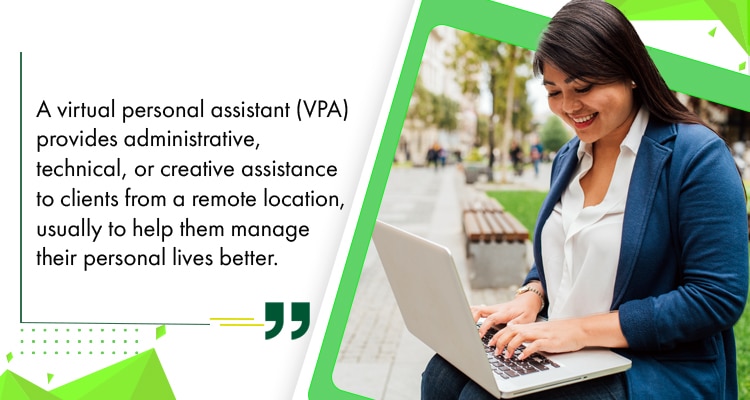
Category: Managing Your Online Team

  • The Art of Delegation: How to Empower Your Teams to Achieve More With Less Supervision

    The Art of Delegation: How to Empower Your Teams to Achieve More With Less Supervision

    As businesses navigate the ever-changing global market, practices that were once common in the workplace have become obsolete.

    In the past, many business owners took pride in doing every task themselves, considering it a badge of honor to be involved in every detail. But as businesses got bigger and more complex, this mindset became less effective.

    So, instead of micromanaging, many leaders now delegate tasks to their team. This shift comes from the belief that good leadership means creating more leaders, or at least helping teams work independently.

    In this article, we will explore the science and art of delegation to help you boost your team’s efficiency to the fullest.

    IN THIS BLOG

    Understanding Delegation — A Strategic Leadership Tool

    Many business owners often have to do everything themselves—marketing, sales, customer service, and more—especially in the early stages. But as the business grows, delegation shifts from being optional to essential.

    As John Maxwell says, “If you want to do a few small things right, do them yourself. If you want to do great things and make a big impact, learn to delegate.”

    good leader

    What Delegation Really Means

    Delegation is not just “task dumping.” A good leader assigns the work and also gives the authority and resources needed to do it well.

    For example, when you delegate a task, it’s not enough to just give instructions. You should also explain the context and purpose behind it. This helps employees understand what to do, how to do it, and why it matters, giving them a sense of autonomy and ownership.

    It Allows Scalability

    Successful businesses grow because they’re scalable. That’s why any business aiming to expand can’t rely on just one person, no matter how skilled or talented they may be.

    This is where true leadership and delegation come in. By assigning tasks and decision-making to different departments, each team can handle specific issues on its own. This allows business owners to focus on the bigger picture and core business priorities.

    Delegation in Hybrid & Remote Teams

    Delegating tasks becomes even more essential when working with distributed teams.

    As more Australian companies adopt remote work setups, business owners must become effective delegators. This involves:

    • Clearly defining deliverables;
    • Setting clear expectations; and
    • Establishing transparent accountability frameworks.

    Key Benefits for Australian Businesses

    Surveys show that CEOs considered to be “high delegators” reported an average three-year company growth rate of a whopping 1,751%.

    In the Australian context, many entrepreneurs delegate for the following benefits:

    • Increased Productivity and Innovation – When leaders empower their teams with meaningful responsibilities and decision-making authority, employees become more invested. This sense of ownership motivates them to work smarter, streamline their workflows, and come up with innovative solutions.
    • Improved Morale and Retention – Moreover, trust-based delegation boosts motivation and job satisfaction. When people are trusted with challenging tasks, chances to learn new skills, and meaningful roles, it not only improves performance but also supports their career growth.
    • Strategic Focus for Leaders – More importantly, by freeing managers and executives from routine administrative and operational tasks, they can focus on high-level strategic initiatives that truly drive the business forward, such as international expansion, negotiations, and major technical improvements.

    Common Delegation Challenges and How to Overcome Them

    Even though delegation has clear benefits, many business owners and managers still hesitate to do it.

    Here are some common reasons why – and how you can overcome them.

    Fear of Losing Control

    Leaders who worked their way up by being hands-on often find it hard to trust others with important tasks. They may worry about the quality of work, meeting deadlines, or losing control.

    Here’s how you can overcome this:

    • See It Differently – Delegation isn’t about avoiding responsibility. It’s about empowering your team, trusting their abilities, and providing guidance and support along the way.
    • Take a Strategic Approach – Begin by delegating smaller, low-risk tasks to build trust. Set clear checkpoints to track progress without hovering.

    Mismatched Expectations

    Delegation becomes more challenging when your team doesn’t clearly understand the task, its scope, or the expected result. This often happens when managers assign tasks without explanation or give unclear, overly technical instructions.

    You can improve this by:

    • Communicating Clearly – Always explain the task, why it matters, the context behind it, any required steps or resources, and the deadlines or key milestones.
    • Establish Follow-up Systems – Delegation doesn’t end after you assign tasks. It’s also important to have regular check-ins, progress reports, and feedback sessions.

    Cultural and Communication Barriers

    A global workforce brings in all the benefits of diversity.

    However, it all comes with a unique set of challenges. For instance, differences in communication styles, views on hierarchy, and cultural norms can all affect how messages are received.

    Aussie entrepreneurs with distributed teams often address this by:

    • Making Allowances for Cultural Nuances in Communication – They use simple words and avoid idioms, slang, or jargon that might confuse others. For example, instead of saying “Let’s touch base later” (which might be unfamiliar and confusing to non-native English speakers), they say “Let’s talk again tomorrow at 3 PM.” In presentations, they use visual summaries and pause to make sure everyone understands, especially in multicultural teams.
    • Hiring English-Speaking Professionals – Many Australian entrepreneurs hire a Filipino virtual assistant or two who can speak English well and communicate clearly with both onsite and remote teams.

    What to Do When The People You Delegate To Fail

    In some cases, business owners are able to hire the right virtual assistants, only to face challenges later on.

    This often occurs when an employee initially turns in an exceptional performance, but may have trouble maintaining such over time– prompting questions about what went wrong or where things started to slip.

    To prevent situations like this, it is essential to have systems in place for ongoing monitoring, support, and feedback.

    Regular check-insRegular check-ins are also helpful, especially when high-performing team members begin to fall behind. You can do this by:

    • Giving constructive and honest feedback;
    • Adjusting their workload or role temporarily;
    • Ask how they’re doing in a kind, non-judgmental way; and
    • Remind them of their goals and why their work matters.

    In many cases, they simply need guidance, flexibility, or additional support, not because they have become lazy or complacent.

    Choosing the Right People and Roles for Delegation

    Besides knowing how to delegate, business owners also need to decide who to delegate to. Fortunately, there are techniques to help you delegate tasks based on your goals.

    Let’s take a look.

    Identify High-Leverage vs. Low Leverage Tasks

    Time is valuable, and every leader must know which tasks need their special skills and attention—and which can be passed on to their teams.

    Hence, they usually divide tasks into:

    • High-Leverage Tasks (Non-Delegatable)
      • Strategic planning and vision setting;
      • High-stakes decision making;
      • Key stakeholder management;
      • Crisis management; and
      • Mentoring.
    • Low-Leverage Tasks (Delegatable)
      • Routine administrative duties;
      • Research;
      • Initial drafts and preparatory work; and
      • Coordination and logistics.

    Match Skillsets to Responsibilities

    After deciding which tasks to delegate, the next step is choosing the right people who can work on them. You can do this by:

    • Conducting a team skills inventory;
    • Assessing current workload and capacity; and
    • Identifying development opportunities.

    Every delegated task should support the organisation’s goals.

    At the same time, it’s important to avoid giving someone a task they aren’t ready for, to prevent burnout or costly mistakes.

    Delegation tools

    Delegation Mapping Tools and Frameworks

    After delegating the right tasks to the right people, cultivate structure through visual frameworks and tools to help your team track their tasks, roles, and responsibilities.

    Here are some samples you can build on:

    • RACI (Responsible, Accountable, Consulted, Informed) Matrix – This tool clarifies roles and responsibilities within projects or for specific tasks.
    • Delegation Continuum – This framework helps leaders deliberately decide how much freedom to give a team member, ranging from level 1 (low autonomy) to level 7 (high autonomy).
    • Competency Map – This visual tool defines each person’s role on the team and how skilled they are at key tasks.

    How to Delegate Effectively: A Step-by-Step Guide

    If you are still unsure how to start delegating, here’s a simple step-by-step guide to help you begin:

    #1. Set Clear Objectives and Outcomes.

    Be clear about what needs to be done.

    If the task is complex, break it into smaller, manageable parts. Furthermore, explain the purpose of the task, so your team understands the context and can further support company goals.

    Clear deadlines also help, including important milestones or checkpoints along the way.

    #2. Equip Team Members with the Right Tools.

    Make sure your team has all the necessary information, like data, reports, past work, and contact lists, to succeed at the task.

    If finances are involved, explain the budget and relevant spending limits.

    Lastly, designate a deputy or alternate they can contact if you’re unavailable.

    #3. Monitor Progress Without Micromanaging.

    After delegating, a manager moves from doing the work to overseeing it. Yet you don’t need to constantly hover to monitor your staff.

    Set regular, planned check-ins based on the task’s complexity, the person’s skills, and the urgency of the matter at hand. Give your team some leeway and autonomy, as long as the results meet your goals. If they need to abide by a specific method, provide clear instructions for such.

    managers

    Building a Culture of Trust and Accountability

    Proper delegation allows leaders to create more leaders.

    When you delegate tasks, you free up your time and give your team a chance to take responsibility and own their work. Here’s how:

    Create Performance Ownership at Every Level

    Many managers dislike it when employees only complain or bring up problems. Yet this often happens because employees aren’t allowed to make decisions on the same. When you delegate, they shift from being “Problem Presenters” to “Solution Seekers.”

    Thus, encourage team members to suggest solutions or next steps. To further enable this measure, managers should also support them with training, mentorship, and opportunities to work with other teams.

    Implement Feedback and Recognition Loops

    Feedback is necessary for growth. Praise your team when they do well, and provide specific and constructive comments as needed.

    When giving feedback, focus on the task, not the person. You can do this by:

    • Describing what happened, not who did it;
    • Using specific examples instead of general statements;
    • Highlighting the impact of the action on the team or outcome;
    • Offering clear suggestions for improvement; and
    • Keeping the tone respectful and supportive.

    Technology that Supports Smarter Delegation

    Aside from assigning tasks, leaders should also provide tools or apps that help team members stay organized and track their progress.

    These may include:

    • Project Management Software
      • ClickUp
      • Monday.com
    • Communication Tools
      • Slack
      • Microsoft Teams
      • WhatsApp
    • Real-Time Dashboards and Reporting
      • Trello
      • Google Workspace
      • Notion

    Delegation in Action – Australian Business Case Studies

    Many Australian companies outsource non-core tasks to third-party contractors so they can grow faster – while maintaining quality and productivity.

    Let’s take a look at some examples:

    Example #1: Sydney-Based Marketing Agency “BrandFlow Creative”

    Brandflow Creative is a strategic digital branding agency that builds cohesive brands and digital experiences. As the Sydney-based agency grew, they saw the need to expand, otherwise, they risked being stretched too thin or micromanaging client projects.

    Mid-level managers received intensive training in project management, team leadership, risk assessment, and client communication. They also started using Kanban boards to manage workflows, spot bottlenecks, and take on new tasks only when they had the capacity, helping reduce the risk of being stretched too thin.

    Example #2: Melbourne E-Commerce Business “AussiePaws”

    AussiePaws is an e-commerce business that specializes in pet supplies. As online shopping grew, they struggled to keep up with more customer inquiries, order processing, and website updates.

    To manage the workload, they turned to offshore administrative support by hiring English-speaking virtual assistants from the Philippines to:

    • Answer initial customer inquiries;
    • Check order status;
    • Verify orders; and
    • Update tracking information whenever needed.

    Metrics that Matter — Measuring Delegation Success

    Here’s how you can track if your current delegation efforts are successful:

    Key Performance Indicators (KPIs)

    KPIs track if certain tasks are completed on time, with tools like ClickUp or shared spreadsheets greatly assisting with the process.

    A high completion rate shows that delegation is on point and that the team members assigned have the right skills. On the other hand, a low rate may point to unclear instructions, lack of resources, or skill gaps.
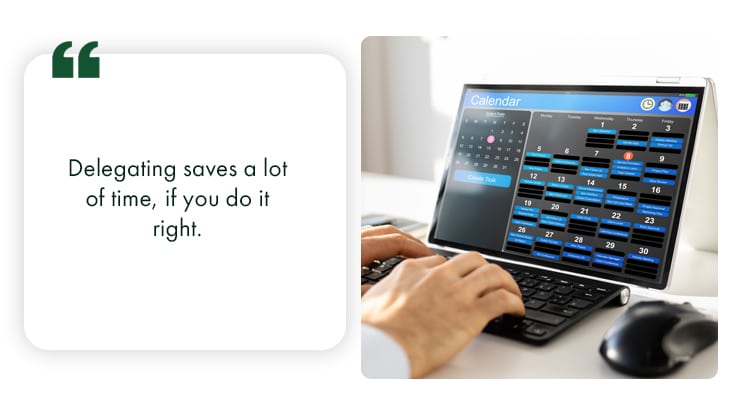
    delegating saves time

    Time and Cost Savings

    Delegating saves a lot of time, if you do it right.

    First, calculate how much time you’ve spent on tasks that you’re better off delegating. After assigning them to other people, re-evaluate how much time you’ve freed up for strategic, high-impact activities.

    If delegation involves third-party assistance, such as a Filipino virtual assistant, you can measure ROI by comparing the outsourcing cost (VA salary) to the cost of doing the work in-house (employee salary, overhead, and other expenses).

    Team Satisfaction and Performance Uplift

    Besides KPIs and ROI, it’s important to check how your team feels about their work, their level of autonomy, and their chances for development.

    You can do this by asking questions like:

    • Do you feel confident handling the tasks assigned to you?
    • Do you have enough freedom to make decisions in your work?
    • Are you getting enough opportunities to learn and grow?
    • What challenges do you face with your current tasks?

    By combining measurable KPIs with team feedback, leaders get a clearer picture of how well delegation is working and what they can do to improve things.

    Frequently Asked Questions

    Here are some frequently asked questions (FAQs) from managers and business owners about delegating tasks:

    #1. How Do I Delegate Creative or Subjective Tasks Like Content Creation or Branding?

    Provide a comprehensive brief that includes the following:

    • Objective
    • Target audience
    • Key message
    • Brand guidelines
    • Deliverables
    • Format
    • Timeline and Budget

    It’s also important to set structured review and feedback points before the final output, such as during:

    • Initial Planning – To align on goals and expectations;
    • Midway Checkpoints – To catch issues early and make adjustments;
    • Pre-delivery Reviews – To ensure the quality of the work before submission; and
    • Post-completion Debriefs – To reflect on what worked and what can be improved upon next time.

    #2. How Can I Delegate Without Losing Visibility?

    Use project management software with customizable dashboards so both leaders and team members can easily monitor the status of ongoing tasks, such as:

    • To Do
    • In Progress
    • Completed

    Encourage the use of project management tools for daily or weekly updates. This allows team members to post comments, update task statuses, and upload completed work, without managers having to follow up by email.

    delegation in remote organization

    #3. How Can I Delegate in a Flat or Non-Hierarchical Team?

    Leaders should view delegation as a shared responsibility that encourages self-organization and peer accountability. Here are some strategies to support that approach:

    • Project-Based Lead – Designate a temporary “lead” who takes on the delegation and coordination responsibilities for that specific effort.
    • Skill-Based Allocation – Encourage team members to volunteer for tasks that align with their strengths or areas they want to develop.
    • Volunteer-Based Tasks – Use shared digital boards like Trello or Notion to list tasks, and let team members choose the ones they want to work on.

    You can also pair team members to support each other on delegated tasks to spread accountability.

    Conclusion – Embracing Delegation as a Leadership Superpower

    Every business benefits when team members are trusted, trained, and empowered to work independently and do their tasks well.

    Thus, leaders should not see delegation as a loss of control or skill. Rather, it’s a sign of growth, a mark of a manager who’s confident enough to build more leaders.

    So, start delegating routine and admin tasks so you can focus on building your business. For more information on how to get started, call us today or request a callback now.

    [rcb_show_form]

  • Virtual Assistant: I Hired A VA And It Left A Bad Taste In My Mouth

    Virtual Assistant: I Hired A VA And It Left A Bad Taste In My Mouth

    So, I hired a VA or virtual assistant and it left a bad taste in my mouth.

    …but not for the reasons you’d think.

    My name is Cathy Banks* and I own an online travel agency.

    This is my story – and Sara’s* (my VA from the Philippines).

    Why I Thought Hiring a VA Would Change My Life

    I’ve been running my online travel agency for a little over six years now. What started as a side hustle during my maternity leave somehow turned into a full-time business with more spreadsheets than I can juggle – along with raising my baby daughter.

    Look, I love helping people discover hidden gems around the world, but between the client emails, itinerary adjustments, supplier follow-ups, and the never-ending admin tasks, I was running on caffeine and vibes. I needed a virtual travel assistant, stat.

    I kept hearing fellow business owners rave about their virtual assistants, especially ones from the Philippines. “Total game-changer,” they’d say. “She runs my inbox better than I do.”

    Intrigued, I went on some online platforms and started looking. It wasn’t long before I met Sara.

    It sounds cliche, but the moment we hopped on Zoom for the interview, I felt like I found “the one.”

    For starters, I could understand Sara perfectly. She had a neutral accent and expressed herself well, not in that overly polished, rehearsed way—but warm, intelligent, and precise.

    She seemed to have a lot of relevant virtual assistant experience too. Sara had looked up my company online, referenced a few of our Instagram posts, and even had ideas for improving my booking workflow after testing it herself.

    Unlike other candidates who gave very short answers, she also asked insightful questions.

    I was so impressed that I hired her on the spot and even messaged my husband right after the call saying, “I think I just hired someone who might organize my life better than I ever could.”

    I imagined sipping my morning coffee slowly for once, not frantically checking five tabs while replying to three emails (and overlooking at least five more).

    Hiring Sara felt like the first step towards a more well-oiled version of my business, and yes, more time with my little one since she won’t stay so little forever.

    Surprisingly, the biggest change wasn’t going to be in my calendar or inbox (although those were a VERY close second)—but in how I saw work, people, and myself.

    How It Started: The Many Hats My VA Wore (And Wore Well)

    How It Started The Many Hats My VA Wore (And Wore Well)

    From day one, Sara jumped in like she’d been with my agency for years.

    She took over flight bookings with ease, juggling multi-leg itineraries, tricky layovers, and those pesky airline restrictions like a pro. Hotels? Handled. Transfers? Smooth as silk.

    Sara managed the not-so-glamorous side of travel too—cancellations, rebookings, chasing down refunds like a polite bounty hunter. She even coordinated directly with clients and local tour operators, often in different time zones, without missing a beat. I’d be on a sales call while she was resolving a delayed airport pickup in Bangkok or sending a distressed honeymooner an updated itinerary. At midnight.

    A good follower too—when I gave her a client onboarding checklist, she not only learned it by heart but suggested three improvements by the second week.

    The bottomline? She got things done. Efficiently, quietly, and always with a polite “Done po” in Slack, which was a Filipino courtesy I grew to adore.

    After years of running myself ragged doing everything, I began to wonder: how did I ever survive without her?

    With Sara, I had a skilled, reliable, full-time virtual assistant for a fraction of the cost because my dollars went A LOT farther in the Philippines. I won’t divulge exactly how much I paid her, but sometimes, I felt a little guilty because I’d probably have to live on instant noodles on that same paycheck where I’m from.

    But just when I thought I had found my unicorn of a virtual travel assistant, something changed.

    The Honeymoon’s Over: When the Glitches Became Hard to Ignore

    The Honeymoon’s Over When the Glitches Became Hard to Ignore

    It started small—innocent, really. A missed Zoom call here, a few late task updates there.

    Sara would apologize, always gracious, always professional. “Sorry po, internet was down in our area.” I waved it off. I mean, who hasn’t had Wi-Fi issues? I once held a client consultation from my car because my own signal went rogue. These things happen, no big deal.

    But then it started happening a lot. One rescheduled meeting turned into three in a week. Sara rarely missed a deadline in the first few months—but she’d submit booking confirmations an hour late, send drafts of travel guides well past the agreed time, or respond to urgent client inquiries a tad slower than her usual speed.

    A client would ask for an updated itinerary, and I’d find myself refreshing our shared board and wondering, Did she forget again? And a couple of times, I found myself double-checking Sara’s work more than I should have.

    Initially, I shrugged it off. Yet, when three or four tasks piled up in a single week, I started to worry. My business relied on timeliness; those small lags might put off all the new customers we’d worked so hard to secure.

    I wasn’t angry—just confused. This wasn’t the same rockstar VA I’d hired. Or was it? Had I missed something early on? Was I expecting too much?

    So, I decided to sit Sara down for a proper one-on-one…


    ..and by the time we finished our little chat, I was left face to face with an ugly truth no one wants to talk about.

    Professionally Vetted, English-Speaking Virtual Staff through Various Industries

    What No One Prepared Me For: The Truth Behind the “Bad Connection”

    What No One Prepared Me For The Truth Behind the Bad Connection

    Our one-on-one started a little awkwardly.

    Sara kept smiling politely, her eyes darting nervously to the side like she was bracing for bad news or a really bad scolding.

    I had to reassure her—over and over—that she wasn’t in trouble. Just a conversation, I said. I wanted to understand where she was coming from.

    That’s when I realized that many Filipinos, especially in remote roles, hesitate to speak up. With so many of them supporting entire families, their first instinct is to grin and bear it, lest the wrong word could cost them their job.

    Eventually, the floodgates opened.

    Sara shared that she’s a single mom raising two kids—both in elementary school. While we were both moms, her days looked very different from mine.

    single mom raising two kids

    I had hired a nanny to look after my daughter when I started my company – and my husband does most of the chores in our house.

    Sara’s days were filled with breakfast prep, uniforms, school drop-offs, chasing down homework, and the never-ending cycle of dishes, laundry, tutoring, and tears (hers and theirs, I imagine).

    And somewhere in between, she was squeezing in client calls, building travel guides, troubleshooting hotel mix-ups, and dealing with me asking why a PDF was late.

    The $X an hour I paid her? She budgeted every cent of it to pay rent, buy groceries, cover school supplies, and keep the lights on.

    Book A Call with A Talent Strategist

    We’ll show you the ins and outs of getting top notch talent without breaking the bank!

    Sara also confessed that those “internet issues” weren’t always technical issues either. Sometimes, it was a sick kid. A power outage. Or just the sheer exhaustion of trying to be everything to everyone, all the time, while still showing up with a smile on a Zoom screen.

    I sat there, blinking at my laptop, feeling like someone had quietly turned the mirror on me in the most unflattering light.

    Everything I thought I understood about remote work challenges, outsourcing empathy, and professionalism suddenly felt… naive.

    And I wasn’t sure what to do with that realization.

    The Real Cost of Convenience: A Wake-Up Call As to Who REALLY Pays the Price

    The Real Cost of Convenience A Wake-Up Call As to Who REALLY Pays the Price

    So, here’s the plot twist. Hiring a VA left a bad taste in my mouth not because of Sara, but because of what it exposed about my own expectations – and how out of touch they were with the actual realities of global outsourcing.

    I wanted someone reliable, efficient, and low-maintenance. I got all that. What I hadn’t prepared for was the part where that someone was also a single mom, living halfway across the world, juggling more in a day than I’d want to handle in a week.

    I had been unknowingly holding Sara to a standard I wouldn’t hold a local employee to—let alone myself. Would I expect a single mom in my own city to never reschedule a call or miss a task update if her child was sick? Would I think less of her if she asked for a little grace?

    Then why did I feel so inconvenienced when Sara needed the same?

    It’s not about Sara. It never was. It’s about the system. The ease with which we hire a VA online and forget there’s a real life behind every deliverable. The way convenience can quietly numb compassion, especially when you never have to share a workspace or a cup of coffee with the person on the other end.

    I was so enamored by all the convenience that I forgot about who was really absorbing the costs: someone with fewer resources, less flexibility, and far more on their plate.

    And I had to ask myself: Would I accept these conditions for someone I cared about? Especially now that I had a daughter who would one day join the workforce (possibly as a parent herself) and might also face a very uneven playing field?

    What I Learned (So You Don’t Have To)

    What I Learned (So You Don’t Have To)

    That conversation with Sara didn’t just change how I worked with her—it changed how I thought about remote work altogether.

    I started showing up differently. I asked more questions, offered more flexibility, and stopped treating every minor delay like a red flag. I gave her room to be a person, not a tool.

    And funnily enough, once I did that, her performance improved—not because she worked harder, but because she felt safer. Trusted. Seen.

    We found a rhythm that worked for both of us. I adjusted deadlines where possible, built in buffers, and even encouraged her to block out time for her family during key hours. She, in turn, became even more communicative and proactive.

    Now, we work as a team—no longer just as an employer and her virtual assistant, but as two humans trying to make each other’s lives a little easier.

    If there’s one thing I hope you take away from my story, it’s this: The next time you’re frustrated with a VA, ask yourself—are you really upset with them, or with the uncomfortable truths they reveal about how we do business?

    That question changed everything for me. It might for you too.

    *Names have been changed to protect the privacy of the parties involved.

  • Personality Tests in the Workplace: How to Use Personality Assessments for Teams

    Personality Tests in the Workplace: How to Use Personality Assessments for Teams

    As companies strive to create dynamic, productive, and innovative environments, they are increasingly turning to personality tests as a tool to enhance team dynamics, improve hiring decisions, and foster employee growth. Personality tests have become a staple in many organisations, but their effectiveness is often debated.

    Some argue that these assessments provide invaluable insights into an individual’s behavioural traits, helping employers identify the right candidates and develop tailored development programs. Others contend that personality tests are too simplistic, failing to capture the full complexity of human behaviour and potentially leading to biased hiring decisions.

    However, the effectiveness of personality tests also depends on several factors, including their scientific validity, administration, and interpretation. For instance, some tests, like the Myers-Briggs Type Indicator (MBTI), got criticised for lacking empirical support, while others, such as the Big Five Personality Traits, are widely recognised for their reliability and predictive power.

    Despite these debates, the use of personality tests continues to grow. This is largely because they offer a structured approach to understanding individual differences, which can be particularly valuable in today’s diverse and globalised workforce. Therefore, it is crucial for organisations to carefully select and implement personality assessments that are grounded in robust psychological research and tailored to their specific needs.

    What is a Personality Test and Why is it Important?

    From the Factor Model to the Disc Personality Test, a personality test is a standardised method used to evaluate an individual’s behavioural traits, preferences, and tendencies. These assessments provide valuable insights into how individuals interact with others, approach challenges, and align with organisational cultures. The importance of personality tests lies in their ability to predict job performance, improve employee retention, and enhance team collaboration.

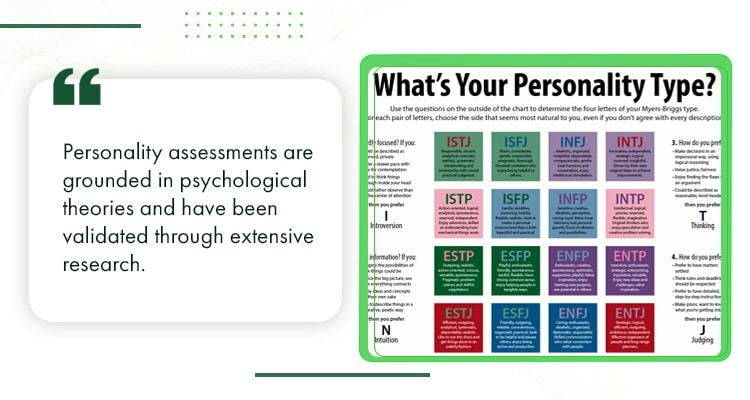
    Myers-Briggs personality type chart with psychological foundations.

    Understanding Personality Assessments

    Personality assessments are grounded in psychological theories and have been validated through extensive research. They help organisations understand the strengths and weaknesses of their employees, tailoring development programs and improving communication within teams.

    For instance, a study by the American Psychological Association found that employees who understand their personality traits are more likely to engage in fulfilling careers and collaborate effectively with colleagues.

    Benefits of Using Personality Tests in the Workplace

    The integration of personality tests into workplace dynamics offers several benefits:

    1. Enhanced Team Dynamics: By understanding individual personality traits, teams can work more cohesively, leading to increased innovation and productivity. This understanding helps in aligning tasks with strengths and improving communication among team members, which can resolve conflicts more effectively.

    2. Improved Employee Retention: Organisations that use personality assessments often see a significant reduction in turnover rates, as employees are better matched to roles that align with their strengths and preferences. This alignment supports career development and personal growth, making employees more likely to stay with the company.

    3. Better Hiring Decisions: Personality tests help employers identify candidates who fit the company culture and role requirements, reducing the risk of costly hiring mistakes. These assessments provide a more objective evaluation of candidates, promoting fairness and reducing unconscious bias in the hiring process.

    4. Streamlined Hiring Process: Personality assessments can streamline the hiring process by reducing the number of unqualified candidates who reach the interview stage. This is achieved by providing insights into a candidate’s workplace skills and typical work behaviours, ensuring that only the most suitable candidates are considered.

    5. Increased Employee Engagement and Productivity: By understanding employees’ motivations, strengths, and natural talents, managers can tailor challenges and tasks to align with these factors, leading to higher engagement and productivity. Employees feel valued when their personality traits are recognised and utilised effectively.

    6. Cultural Adaptability and Alignment: Personality testing helps guarantee that new hires are adaptable to the organisation’s evolving needs and align with its cultural values. This adaptability is crucial in today’s fast-changing business environment, where soft skills are increasingly important.

    7. Personal and Professional Growth: Personality assessments facilitate personal development and professional growth by identifying areas where employees need development. This targeted approach accelerates career advancement and enhances overall job satisfaction.

    8. Ethical and Equitable Hiring Practices: Personality testing promotes fairness and equity in hiring by evaluating candidates based on standardised criteria, reducing reliance on subjective factors like educational background or personal biases.

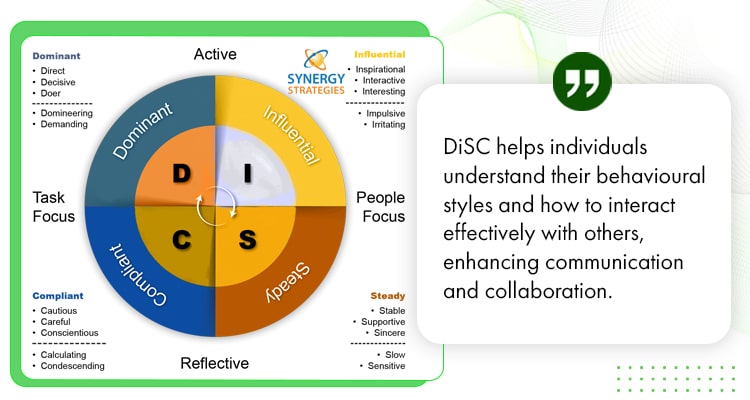
    DiSC personality test chart illustrating four behavioral styles.

    (How to Use Personality Assessments in the Workplace)

    There are several types of personality assessments, each with its unique approach:

    1. Myers-Briggs Type Indicator (MBTI): Focuses on categorising individuals into one of 16 personality types based on preferences for introversion or extroversion, sensing or intuition, thinking or feeling, and judging or perceiving.

    Best Use: Team building and communication. The MBTI helps understand individual preferences for communication and work styles, which can improve team collaboration and communication.

    2. Big Five Personality Traits: Evaluates openness, conscientiousness, extraversion, agreeableness, and neuroticism, providing a comprehensive view of an individual’s personality.

    Best Use: Roles requiring ethical decision-making and emotional control. It evaluates behavioural tendencies and ethical values, making it suitable for positions that demand high integrity and emotional stability.

    3. DISC Assessment: Measures dominance, influence, steadiness, and conscientiousness, helping to understand communication styles and work preferences.

    Best Use: Communication and teamwork. DISC helps individuals understand their behavioural styles and how to interact effectively with others, enhancing communication and collaboration.

    4. Hogan Personality Inventory: Assesses normal personality traits and potential performance risks, providing insights into leadership potential and interpersonal skills.

    Best Use: Leadership development and selection. It evaluates personality traits related to job performance, leadership potential, and career derailment risks, making it valuable for identifying and developing future leaders.

    5. StrengthsFinder: Focuses on identifying individual strengths rather than weaknesses, helping employees excel in roles that align with their talents.

    Best Use: CliftonStrengths identifies individuals’ top strengths and provides guidance on how to leverage them for success, enhancing team collaboration, productivity, and employee satisfaction by focusing on what employees do best.


    [rcb_show_form]
    6. NEO Personality Inventory (NEO PI-R): This inventory assesses individuals across five major dimensions of personality—neuroticism, extraversion, openness to experience, agreeableness, and conscientiousness—providing a comprehensive view of personality traits and their facets.

    Best Use: Leadership development, team building, and candidate selection. It provides a comprehensive view of personality traits, making it ideal for understanding individual strengths and areas for development in leadership roles and team dynamics.

    7. California Psychological Inventory (CPI): The CPI is a self-report inventory designed to assess everyday personality traits and behaviours, focusing on folk concepts that are cross-culturally relevant, and is commonly used in research and individual assessments.

    Best Use: Organisational development, coaching, and HR applications. The CPI offers practical insights into leadership styles and how individuals manage themselves and others, making it suitable for improving performance and leadership development.

    8. Thomas-Kilmann Conflict Mode Instrument (TKI): The TKI is a tool used to assess an individual’s conflict-handling modes, helping to identify how they manage and resolve conflicts in different situations, typically categorising responses into five modes: competing, collaborating, compromising, avoiding, and accommodating.

    Best Use: Conflict resolution and management. The TKI helps individuals understand their conflict-handling styles, which is beneficial for improving organisational productivity and facilitating effective conflict resolution strategies.

    9. Enneagram Personality Test: This test categorises individuals into one of nine distinct personality types, each with its own motivations, fears, and desires, aiming to provide insights into personal growth and self-awareness by understanding these core personality dynamics.

    Best Use: Teamwork, communication, and leadership development. The Enneagram provides insights into motivations and behaviours, helping teams understand why individuals act in certain ways, which can enhance collaboration and leadership effectiveness.

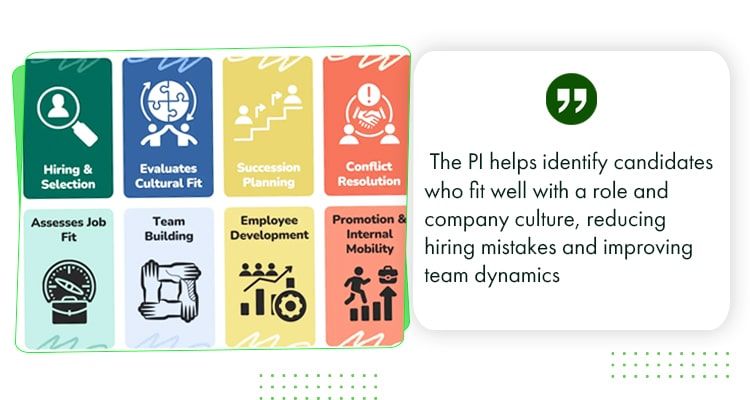
    10. The Predictive Index (PI): The Predictive Index is a science-backed HR software solution that uses behavioural assessments to help organisations hire, develop, and retain top talent by optimising the entire employee lifecycle, reducing hiring mistakes, and improving team performance through data-driven insights and intuitive software tools.

    Best Use: Hiring, talent optimisation, and team building. The PI helps identify candidates who fit well with a role and company culture, reducing hiring mistakes and improving team dynamics by aligning employees with their intrinsic motivations and strengths.

    Uses of The Predictive Index for hiring and team development.

    How to Choose the Best Personality Test for Your Needs

    When selecting a work personality test, consider the following factors:

    • Purpose: Determine whether the assessment is for hiring, employee development, or team building. Different tests are suited for different purposes. For example, the Predictive Index is excellent for hiring and talent optimisation, while CliftonStrengths is ideal for employee development and team building.

    • Validity: Make sure the test is scientifically validated and reliable. Tests like the Big Five Personality Traits are widely recognised for their scientific backing and reliability.

    • Ease of Use: Choose work personality assessments that are easy to administer and interpret. Consider user experience and whether the test provides clear instructions and minimal room for subjective interpretation.

    • Job Relevance: Select a test that directly evaluates traits crucial for the specific role you are filling. For instance, if you need to assess interpersonal skills, the Enneagram might be more suitable.

    • Contextualization: Consider whether the test is contextualised for your specific workplace needs. Contextualised tests tend to have higher validity in predicting job performance.

    • Combination with Other Tools: Consider using a multi-measure approach that combines personality assessments with cognitive tests, work-sample tests, and technical-skill exercises to get a comprehensive view of candidates.

    • Expertise and Validation Sample: Make sure the test is created by experts in psychometrics and validated on a sample similar to your candidate pool. This guarantees the test’s results are applicable to your specific needs.

    • Cost and Administration Time: Evaluate the cost and administration time of the test to make sure it fits within your organisational constraints.

    Computer screen showing the word "Limited" and "Cultural Bias" stamp.

    What are the Limitations of Personality Tests?

    Personality tests, while offering valuable insights into individual traits, have several limitations that must be considered. One significant issue is cultural bias, where assessments may not be equally effective across different cultures.

    For instance, personality tests can have reduced reliability in collectivist cultures, leading to potential misinterpretations in global workplaces. Additionally, misinterpretation of results can occur if tests are not administered or analysed correctly, which can lead to incorrect conclusions about a candidate’s suitability.

    Overreliance on personality tests for hiring decisions can also overlook other crucial factors like skills and experience, as these tests only provide a partial view of an individual’s capabilities. Furthermore, there are misconceptions about personality assessments, such as the belief that they can predict future behaviour with absolute certainty or that they are infallible tools for hiring.

    In reality, personality assessments should be used as part of a comprehensive hiring process. Ensuring the validity of personality test results is also critical, as it depends on the scientific rigor behind the assessment and how it is administered.

    Another important consideration is that personality tests should not be used to weaponise workplace conflicts or make biased decisions about employee interactions. They should be used constructively to enhance team dynamics and understanding, rather than to justify or exacerbate conflicts.

    Lastly, assessing personality across cultures poses challenges due to differences in cultural norms and values, highlighting the need for culturally sensitive and validated assessments.

    How Can Organisations Implement Personality Assessments?

    • Integrate Assessments into Hiring Processes: Use tests to identify cultural fit and predict job performance.

    • Tailor Development Programs: Align training with individual strengths and weaknesses.

    • Monitor Outcomes: Regularly evaluate the impact of personality assessments on team dynamics and employee satisfaction.

    • Professionalism: Ensuring that tests are administered by trained professionals, providing clear instructions to participants, and using results to inform hiring and development decisions rather than making them the sole basis for these decisions.

    As we continue to integrate personality tests into workplace dynamics, it is crucial to address a broader ethical concern—the potential for these assessments to be used as tools for social control rather than genuine team enhancement. By relying heavily on personality tests to manage employee interactions and conflicts, organisations risk creating a culture where individuality is suppressed in favour of conformity to predefined personality types.

    This could lead to a homogenisation of workplace environments, stifling creativity and innovation that often arise from diverse perspectives. Instead, personality tests should be used judiciously to foster a culture of understanding and inclusivity, where differences are celebrated and leveraged to drive organisational success.

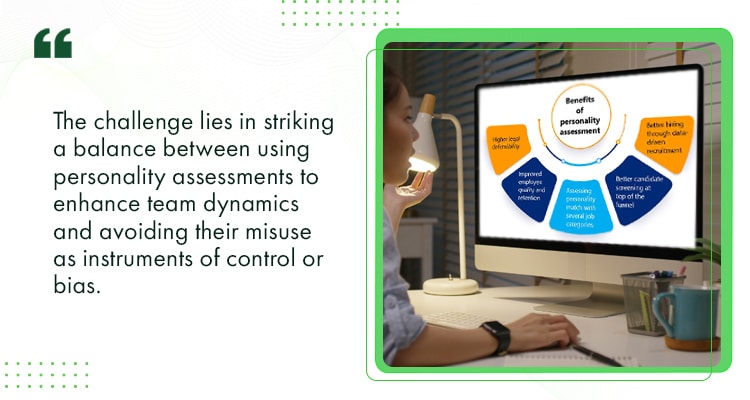
    Woman reviewing personality assessment benefits on a computer.

    Ultimately, the challenge lies in striking a balance between using personality assessments to enhance team dynamics and avoiding their misuse as instruments of control or bias.

    • Want FREE AI Prompts for Different Areas of Your Business? Check out these 100 AI prompts.

    • Curious About How to SAVE and Maximize on Taxes? Learn more here.

    • If you’re ready to experience the full advantages of working with a top global team, check out our 1,000 fully vetted and highly talented staff here.

    • Ready to boost your business potential? Check our virtual assistants.

  • Stand-up Meetings: How to Improve Team Collaboration and Productivity on Daily Basis

    Stand-up Meetings: How to Improve Team Collaboration and Productivity on Daily Basis

    Stand-up meetings, also called daily scrums or daily stand-ups, play a key role in project management and team collaboration. These short, focused get-togethers or meetings aim to keep teams on the same page, spot roadblocks, and boost clear communication on a regular basis. 

    Stand-up meetings are one of the most special, simple, yet impactful productivity tools to come out in the last 10 years. Practiced by teams all over the world–from startups, tech firms to SAAS, to marketing agencies to consulting outfits. Stand ups are here to stay.

    What is a Stand-up Meeting?

    A stand-up meeting brings a team together for a quick daily “stand-up” or chat that takes around 5 to 15 minutes. During it’s early days, people stand during these meetings, which keeps things short and sweet and gets everyone involved.

    The idea of “daily stand ups” comes from Agile methods made popular by software development teams, but lots of different industries now use it because it helps teams talk better and see what’s going on with their projects.

    In a stand-up meeting, each person on the team answers three main questions:

    1. What did you do yesterday?
    2. What will you do today?
    3. Is anything getting in your way (bottlenecks, roadblocks, pain points)

    This setup helps teams keep their eyes on what they’re doing now, what’s coming up, and any problems they might face.

    How Stand-up Meetings Differ from Traditional Meetings

    Stand-up meetings differ from traditional meetings in several key ways:

    1. Duration: Stand-ups are short lasting no more than 15 minutes, while traditional meetings often run for an hour or longer.
    2. Frequency: Teams hold stand-ups, but traditional meetings might happen or less often.
    3. Focus: Stand-ups zero in on immediate tasks and roadblocks, but traditional meetings might cover a wider range of subjects.
    4. Participation: Stand-ups require every team member to speak up, which ensures everyone stays involved.
    5. Format: Stand-ups stick to a set structure with specific questions, while traditional meetings might have more open-ended agendas.

    The main goal is to stick to the meeting's core ideas.

    Do You Need to Stand Up?

    Although the name implies standing during the meeting, this isn’t a hard and fast rule. The idea of standing symbolizes the meeting’s shortness and purpose. Still, standing can bring some advantages:

    1. It pushes people to keep their updates brief.
    2. It boosts alertness and involvement.
    3. It acts as a physical cue for the meeting’s intended quick pace.

    For teams working or in different locations, the act of standing doesn’t matter as much. The main goal is to stick to the meeting’s core ideas of being quick, focused, and communicating, whether people are on their feet or seated.

    Running Effective Daily Stand-up Meetings

    To get the most out of stand-up meetings, think about these tried-and-true methods:

    • Consistency: Have the meeting at the same time and place each day to create a routine.
    • Time Management: Keep to the 15-minute limit to stay focused and value everyone’s time.
    • Full Participation: Make sure all team members show up and chip in to build a sense of shared duty.
    • Stay on Topic: Keep talks centered on the three key questions and don’t start solving problems during the stand-up.
    • Address Blockers: Spot roadblocks fast and pick team members to help fix them after the meeting.
    • Encourage Teamwork: Use the stand-up as a chance to find ways team members can help each other out.
    • Adapt to Remote Work: If your team works from different places, use video calls or messaging apps to hold virtual stand-ups.

    Case Studies: How Daily Stand-ups Boost Productivity

    Many companies have seen big gains in productivity and teamwork after starting daily stand-ups:

    • Better Communication: Daily talks make sure everyone knows what’s going on, which leads to smoother teamwork and fewer mix-ups.
    • More Openness: Stand-ups show what each team member is doing, which makes people more responsible and stops work from being done twice.
    • Quicker Fix for Problems: By spotting roadblocks, teams can tackle issues faster, which cuts down on delays in projects.
    • Stronger Team Bonds: Meeting often helps team members get along better and creates a culture where people help each other out.
    • Smarter Use of Time: The short focused nature of stand-ups helps teams decide what’s most important and use their time well.

    Support Systems to Boost Daily Stand-up Meetings

    To make stand-up meetings more productive, think about putting these support systems into action:

    • Project Management Tools: Digital boards or task management software help teams see work progress and make it easier to “walk the board” during stand-ups.
    • Communication Platforms: Team chat tools enable quick follow-ups and talks after the stand-up.
    • Automated Stand-up Bots: Distributed teams can use bots in Slack or Microsoft Teams to gather updates at different times.
    • Time-tracking Software: These tools monitor how long tasks take to finish and spot areas to boost workflow productivity.
    • Knowledge Management Systems: Teams can use shared documentation tools to save and share key info discussed in stand-ups.
    • Video Conferencing Tools: Remote teams should invest in dependable video call software to keep face-to-face talks during online stand-ups.
    • Analytics and Reporting: Set up systems to monitor team performance metrics and sprint progress. This gives data-based insights to help teams get better over time.

    Teams should keep things short.

    Common Pitfalls to Stand Up Meetings

    Teams often face challenges in stand-up meetings. These include poor alignment meetings that drag on trying to solve problems during the meeting, losing focus on irregular schedules, not mentioning roadblocks, giving the same updates, including people who don’t need to be there sitting down, and not watching the clock.

    To dodge these problems, teams should keep things short, on-topic, and zeroed in. They should push for quick updates and tackle roadblocks right away. Any deep dives should wait until after the stand-up.

    Sticking to a set time, place, and format helps make these meetings work. By keeping an eye out for these common traps, teams can get the most out of their daily stand-ups. This leads to better talk, teamwork, and output.

    Adopting Daily Stand Up Meetings

    Stand-up meetings have a strong impact on keeping teams on the same page, zeroed in, and efficient. When teams stick to the main ideas of keeping things short, meeting and chatting about what matters, companies can get the most out of this nimble way of working.

    Whether teams meet face-to-face or online, these quick daily check-ins can boost how well people work together and what they achieve on projects.

    • Want FREE AI Prompts for Different Areas of Your Business? Check out these 100 AI prompts
    • Curious About How to SAVE and Maximize on Taxes? Learn more here
    • If you’re ready to experience the full advantages of working with a top global team, check out our 1,000 fully vetted and highly talented staff here
  • 2025 PH Holidays That Might Impact Your Filipino Remote Team (And Which Ones Actually Matter To Them)

    2025 PH Holidays That Might Impact Your Filipino Remote Team (And Which Ones Actually Matter To Them)

    The Philippines is known worldwide for providing top-notch services in customer support, virtual assistance, IT, creative design, and content creation.

    Thanks to technology, Filipino workers can work for just about anyone all over the world. In fact, many AU business owners and entrepreneurs hire skilled Filipino remote workers for their strong work ethic, excellent English language skills, and diverse abilities.

    With the growing number of Filipino remote teams, it’s essential to understand the cultural dynamics within these teams. A key starting point is recognising and celebrating Philippine holidays (whenever the workload allows), which helps foster loyalty and good will.

    Let’s dive in.

    Why Holidays Matter in a Remote Setting

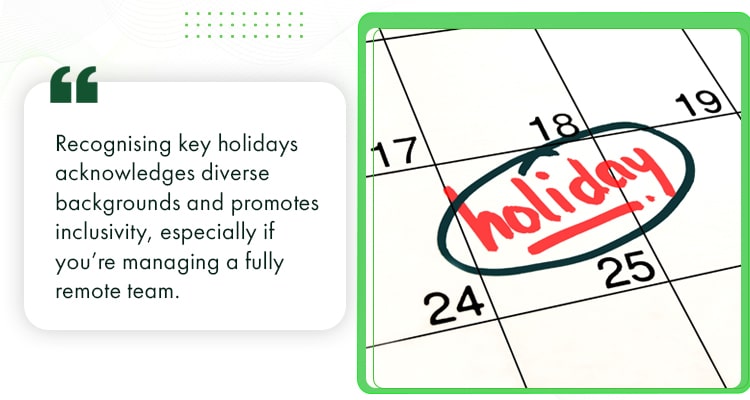
    Recognising key holidays acknowledges diverse backgrounds and promotes inclusivity, especially if you’re managing a fully remote team.

    For example, if you have Filipino remote workers, granting them paid leaves during important Philippine holidays would be a thoughtful gesture, showing respect for their culture and traditions.

    Overview of Philippine Public Holidays

    The Philippines observes numerous public holidays that reflect its rich history, culture, and traditions. These holidays are classified into two categories:

    1. Regular Holidays – These are widely celebrated across the country; and
    2. Special Non-Working Days – These vary in significance and observance depending on the region.

    As a predominantly Catholic nation, many Philippine holidays align with Christian traditions, such as Christmas and Holy Week, which hold tremendous significance in a country that holds both family and faith sacred. These holidays are often deeply rooted in religious practices and provide opportunities for reflection, prayer, and family gatherings.

    Why Holidays Matter in a Remote Setting

    Moreover, some holidays celebrate historical milestones and national pride, like Independence Day and Heroes’ Day.

    Why Some Holiday Observances Vary

    In general, most holidays occur on the same date every year.

    However, the Philippine government sometimes adjusts holiday dates through proclamations to create long weekends. This practice, known as “holiday economics,” encourages domestic travel and helps boost the economy.

    Additionally, some Filipino holidays are specific to certain regions or communities, reflecting the country’s diverse customs and historical influences.

    For example, festivals honoring local patron saints or commemorating significant regional events may result in localised holiday declarations, rather than nationwide observance.

    2025 Philippine Holidays That May Impact Productivity

    Unlike regular employees in PH-based companies, remote professionals work even on PH holidays since these don’t apply to foreign employers.

    As a result, some end up applying their paid leaves or even requesting unpaid leaves just to observe certain holidays.

    Major Holidays

    Some holidays have more cultural, religious, and familial significance than others, and these are typically widely observed throughout the country (and in most parts of the world):

    Holy Week

    Being a predominantly Catholic country, Holy Week (the week immediately preceding Easter) is particularly sacred to Filipinos. This period commemorates the passion, death, and resurrection of Jesus Christ and is a time for solemn rituals like processions, reenactments of the crucifixion, and prayerful reflection.

    2025 Philippine Holidays That May Impact Productivity

    Many workers also use this period to travel to their hometowns, participate in religious activities, or enjoy a vacation, especially with the extended weekend.

    In 2025, Holy Week will fall on April 13-20, spanning Palm Sunday to Easter Sunday. During this week, Maundy Thursday and Good Friday are considered public holidays.

    Locally, business operations may slow down as employees prioritise family time, church traditions, or spiritual retreats.

    Meanwhile, remote workers with foreign employers remain online for work. However, they face the challenge of balancing their work duties with the desire to participate in religious traditions.

    Thus, a number of AU entrepreneurs allow them to take some time off especially since Australia also observes Good Friday.

    Undas

    In the Philippines, Undas, or All Saints’ Day and All Souls’ Day, observed on November 1 and 2, holds a deep cultural and spiritual significance.

    These days are dedicated to honouring departed loved ones, with families visiting cemeteries to clean graves, light candles, and offer prayers. It’s also a time for reunions, often accompanied by large family gatherings and shared meals.

    Most businesses are closed during these days because employees travel to their home provinces. Some remote workers remain online but some may request time off to pay their respects.

    Christmas Season

    Filipinos also place significant importance on the Christmas Season, particularly the period from December 16-31.

    Christmas Eve and Christmas Day are public holidays in the Philippines (and in many places the world over), and many workers extend their breaks to spend quality time with family and participate in religious and social activities.

    Moreover, the lead-up to Christmas is filled with reunions and family gatherings. For many, this holiday season means traveling to their home provinces to spend quality time with relatives they haven’t seen all year.

    Thus, many Aussie employers offer Filipino remote workers flexible schedules or paid time-off during this time, especially since Australia also observes holidays like Christmas Day (25 Dec), Boxing Day (26 Dec), and New Year (1 January).

    Other Holidays

    The Philippines also have several notable holidays aside from Christmas, Holy Week, and Undas, though these aren’t nearly as significant, such as:

    • April 19, Araw ng Kagitingan (Day of Valor) – This holiday honours Filipino and American soldiers who fought during World War II, especially in the Battle of Bataan.
    • May 1: Labour Day – Filipinos also observe Labour Day to celebrate workers’ contributions across all industries.
    • June 12: Independence Day – This holiday marks the Philippines’ independence from Spanish colonial rule after 333 years and is celebrated with patriotic events and flag-raising ceremonies.
    • August 25: National Heroes Day – Filipinos pay tribute to national heroes who fought for the country’s freedom and democracy.
    • November 30: Bonifacio Day – This holiday honours Andres Bonifacio, a revolutionary leader and the Father of the Philippine Revolution.
    • December 30: Rizal Day – This holiday commemorates the life and works of Dr. Jose Rizal, a Philippine national hero who was executed for advocating reforms during Spanish rule.


    Do All Holidays Matter?

    While the Philippines has many holidays, Filipinos place the most importance on Christmas, Undas, and Holy Week, as these are times to reconnect with family. These holidays are deeply rooted in cultural and religious traditions, particularly in a country where the majority of the population is Catholic.

    Conversely, holidays like Independence Day, Labour Day, and Heroes’ Day also have historical significance, but most remote workers don’t mind working on these days (particularly if their clients are busy at this time), as they do not hold the same cultural or religious impact.

    Do All Holidays Matter

    Thus, if you have Filipino workers on your team, it’s fine to skip minor holidays as long as you’re more flexible with important ones like Christmas, Undas, and Holy Week, which hold greater cultural and religious significance.

    You may also want to consider allowing workers to submit work in advance or offering flexible schedules on these days, to ensure that operational needs are still met at this time.

    Cultural Sensitivity Tips for Australian Employers

    Understanding and respecting cultural differences is crucial for promoting inclusivity, better communication, and a harmonious workplace.

    It also means avoiding stereotypes and creating policies that respect different traditions and practices.

    Here are some tips to keep your business productive while respecting cultural differences within a remote team:

    #1. Plan for Flexibility

    Cultural sensitivity is a factor behind many successful diverse teams, ensuring smooth operations and better employee engagement.

    In line with this, employers often adjust work schedules or tasks to honor important cultural observances like Christmas, Undas, and Holy Week. This may include:

    • Offering leave options;
    • Creating floating holidays (flexible paid days off); or
    • Permitting alternative work hours.

    #2. Celebrate Diversity

    Employers can also organise virtual events, such as multicultural days for employees to share their traditions and stories.

    These events create opportunities for both remote workers and their office-based counterparts to share cultures and build stronger connections.

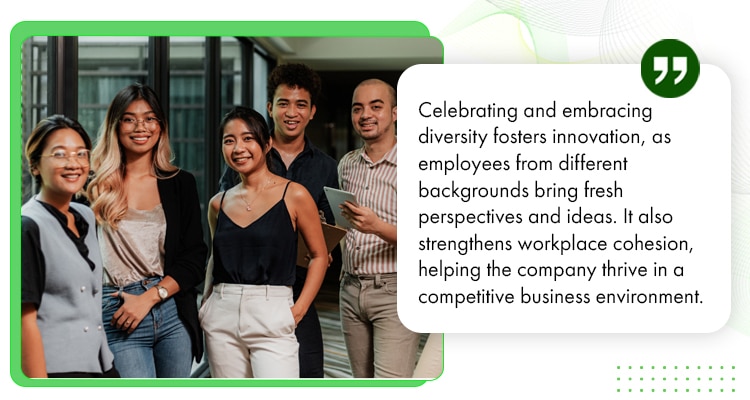
    Celebrating and embracing diversity fosters innovation, as employees from different backgrounds bring fresh perspectives and ideas. It also strengthens workplace cohesion, helping the company thrive in a competitive business environment.

    #3. Leverage Technology

    Thanks to technology, many communication platforms already have translation tools and multilingual chat options that minimise language barriers.

    Celebrate Diversity

    Moreover, virtual collaboration tools allow diverse teams to work seamlessly, regardless of location. They allow employees to work flexibly, enabling teams to maintain productivity while respecting cultural observances.

    For example, remote workers can complete tasks in advance before their paid holiday leaves. This allows other employees to review their progress and refer to their work, ensuring continuity even if a team member is out of the office for the holidays.

    How to Align Business Goals with Holiday Planning

    Holiday planning is a strategic approach to maintaining productivity while respecting employee needs. Here’s how to do it effectively:

    • Identify Critical Business Periods – Start by assessing your busy periods and identify which roles will need backup in case the employees occupying them request time off for holidays.
    • Create a Holiday Calendar – Include holidays like Christmas and New Year. If you have Filipino remote workers, consider adding 3-4 days at most, for Undas AND Holy Week.
    • Encourage Collaboration – Foster a culture where employees collaborate to balance workloads. For example, allow team members to voluntarily trade shifts or share responsibilities, helping reduce pressure during peak holiday times.

    FAQs: Addressing Employer Concerns

    Here are some frequently asked questions (FAQs) that Aussie employers often have about Philippine holidays:

    #1. What Steps Can I Take to Ensure Minimal Disruption During Major Philippine Holidays?

    Start by identifying the holidays most likely to impact your operations, i.e., Christmas season, Undas, and Holy Week, which are widely celebrated and observed by Filipino remote workers.

    After that, communicate with your team well in advance, encouraging them to submit leave requests early so schedules can be adjusted accordingly.

    In addition, cross-train employees for essential tasks, allowing flexibility if certain team members are unavailable.

    #2. Can I Expect Remote Employees to Work on Local Holidays?

    While some remote employees may agree to work on local holidays, employers need to approach this with a fair bit of consideration.

    Hence, it’s best to discuss holiday policies during onboarding or contract negotiations to set clear expectations. Friendly advice: flexibility is key.

    If you need them to work during local holidays like Undas, offer alternatives such as floating holidays or compensatory time off. This shows support for your remote workers and helps make it easier to attract and retain employees.

    #3. Should I Consider Aligning Australian Holidays with Philippine Ones?

    Aligning AU holidays with Philippine holidays can be beneficial, especially if you have a significant number of Filipino remote workers. However, it still depends on the nature of your operations and the flexibility of your workforce.

    You don’t have to align the holidays for both countries. It’s enough to recognize the most important ones and/or whether you can offer paid time off or floating holidays for those.

    Conclusion

    Filipino teams are often the best-kept secret of many Western employers, including Australian business owners. They have a strong work ethic, English language fluency, and are known for going the extra mile to provide incredible service – to their employers and their employers’ customers alike.

    More importantly, their dedication, ability to handle pressure, and loyalty make them a top choice for employers.

    Should I Consider Aligning Australian Holidays with Philippine Ones.jpg

    Offering flexibility for the most important Philippine holidays, which are only a few days a year, is a small price to pay for the immense value Filipino teams bring and the loyalty this can foster.

    For more information about Filipino remote workers (and how they can help grow your business), request a call back now.

    Tap world-class remote workers for your growing business this 2025. Click here.

    If you’re ready to experience the full advantages of working with a top global team, check out our 1,000 fully vetted and highly talented staff here.

  • Tech Interview Cheat Sheet: How to Conduct Effective Tech Interviews to Hire the Right People

    Tech Interview Cheat Sheet: How to Conduct Effective Tech Interviews to Hire the Right People

    Hiring the right tech talent can make or break a business – especially in the digital age, yet many companies still struggle with inefficient interview processes.

    In fact, research from Harvard Business Review shows that traditional hiring approaches often miss the mark, with bad hires costing businesses up to five times the employee’s annual salary.

    This is especially critical in tech interviews, where evaluating both technical skills and cultural fit is essential.

    Whether it’s coding interviews or behavioural assessments, a structured and well-thought-out interview process is key to avoiding costly mistakes – and to finally landing a valuable member of the team who can take your business to new heights.

    Keep reading to learn more about the proven strategies and interview tips for hiring tech talent effectively.

    From coding assessments to interview tools, discover how to streamline your interview process and increase your chances of hiring the right candidates.

    Common Tech Roles Most Businesses Hire For

    When it comes to building a strong tech team, understanding the specific roles your business needs is essential.

    Each position comes with its own set of technical and practical skills, which must be evaluated during the interview process to make sure you are bringing in the right talent.

    Let’s break down some of the most in-demand tech roles and how they contribute to a business’s success.

    Software Engineer/Developer

    Software engineers are the backbone of many tech-driven companies, specialising in coding, building, and maintaining applications.

    They commonly work with languages like Java, Python, and JavaScript.

    These professionals are important for companies that need to develop scalable, secure, and efficient software solutions.

    Global tech giant Atlassian, based in Australia, relies heavily on software engineers to develop its flagship products like Jira and Confluence.

    Software Engineer/Developer

    These engineers contribute to Atlassian’s ability to innovate and maintain a competitive edge in the software market.

    Frontend Developer

    Frontend Developers focus on creating engaging and functional user interfaces, making sure that websites and applications are both visually appealing and easy to use.

    They work with web technologies such as HTML, CSS, and JavaScript to design the look and feel of digital products.

    Australian fashion retailer The Iconic hires frontend developers to guarantee a smooth, responsive user experience for its online customers.

    Their team works on creating a seamless shopping interface that drives customer satisfaction and engagement.

    Backend Developer

    Backend Developers manage the server-side logic and databases that drive web applications.

    They typically work with programming languages like Python, Ruby, and Java, along with databases such as MySQL, making the infrastructure of web applications robust and efficient.

    US-based streaming service Netflix employs backend developers to handle the complex data processing required for video streaming, user management, and content recommendations.

    Their work guarantees smooth, reliable performance for millions of users globally.

    Full Stack Developer

    Full stack developers are versatile professionals who can manage both the frontend and backend aspects of a web application.

    They are skilled in a wide range of technologies, making them an asset to any company that needs flexible, all-around development expertise.

    Australian financial technology company Afterpay benefits from full stack developers who can manage everything from the customer-facing website to the back-end payment processing systems.

    This role is essential for a seamless customer experience and effective transaction handling.

    DevOps Engineer

    DevOps engineers work at the critical intersection of software development and IT operations for seamless collaboration between the two.

    They focus on automating tasks like deployment, scaling, and monitoring software applications, making it easier for companies to release and manage updates efficiently.

    DevOps plays a key role in maintaining system reliability and scalability, especially for organisations handling large-scale software products or platforms.

    Australian software company Canva, for instance, relies on DevOps engineers to manage and automate the deployment of their design platform.

    These engineers help Canva scale its services to millions of users globally for smooth performance and quick rollouts of new features.

    Data Scientist/Analyst

    Data scientists and analysts are key to making data-driven decisions within an organisation.

    They analyse large datasets to uncover insights, inform business strategies, and improve processes.

    These professionals are often familiar with Python, SQL, and machine learning models, which enable them to extract value from vast amounts of data and guide business decisions.

    Global online retailer Amazon employs data scientists to analyse customer behaviour, optimise pricing strategies, and improve product recommendations.

    This data-driven approach helps Amazon maintain its dominance in e-commerce by constantly refining the customer experience based on actionable insights.

    System Administrator

    System administrators are responsible for managing and maintaining a company’s IT infrastructure so systems run efficiently and securely.

    They handle tasks such as setting up servers, managing databases, and making sure security protocols are in place.

    This role is vital in preventing downtime and maintaining cybersecurity for the smooth operation of internal and external systems.

    Australian airline Qantas relies on system administrators to manage its extensive IT infrastructure, from ticketing systems to customer data storage.

    These professionals make sure that the airline’s IT systems are always running smoothly, supporting millions of customers and employees daily.

    UX/UI Designer

    UX/UI Designers focus on the user experience so that applications are both functional and visually appealing.

    They work closely with developers to create intuitive designs that align with the needs of users while enhancing the aesthetic appeal of the product.

    These designers play an important role in the overall success of any tech product, as user experience directly impacts customer satisfaction and retention.

    Spotify, the global music streaming platform, employs UX/UI designers to craft a seamless and enjoyable listening experience.

    These designers work on everything from the mobile app interface to the desktop version for a consistent and user-friendly experience across platforms.

    Identifying Hiring Needs

    Once you’ve identified the key tech roles required for your business, the next step is determining the specific hiring needs for each position.

    It is important to thoroughly define both the technical and soft skills necessary for the role, as well as establish clear role expectations and how the candidate will fit within your existing team.

    Identifying Hiring Needs

    By doing so, you’ll be in a better position to conduct effective tech interviews that assess both skill sets and cultural alignment.

    Technical and soft skills required for the role.

    When hiring for any tech position, it is important to evaluate both the technical and soft skills a candidate brings to the table.

    Here’s what to consider:

    • Proficiency in relevant programming languages like Python and Java
    • Experience with necessary tools and technologies such as Git, Docker, and Jenkins
    • Problem-solving abilities to handle complex technical challenges
    • Communication skills to collaborate effectively with team members and stakeholders
    • Adaptability to work in a fast-paced, ever-changing tech environment
    • Critical thinking for making data-driven decisions
    • Teamwork and the ability to collaborate within a cross-functional team

    Defining role expectations and team fit.

    Clearly defining what the role entails and how a candidate will integrate with your team is just as important as technical competence.

    Be specific about your expectations by addressing the following:

    • Job responsibilities that align with both short-term and long-term business goals
    • Daily tasks and deliverables the candidate will be expected to handle
    • Collaborative skills required to work across departments or with non-tech teams
    • Alignment with company culture to foster a positive work environment
    • Growth potential and how the role might evolve over time
    • Leadership and mentoring abilities if applicable to the role

    By outlining both technical requirements and team dynamics upfront, you’ll create a more structured and effective interview process that attracts candidates with the right mix of skills.

    Preparing the Interview Process

    Once you’ve clearly defined the role requirements and expectations, it is time to develop the structure of the interview process itself.

    A well-prepared interview strategy is essential to evaluate both technical and soft skills effectively.

    This involves crafting a comprehensive interview plan and selecting the right format that suits the specific tech role you are hiring for.

    Crafting an interview plan.

    Before you begin interviewing candidates, it is important to have a clear plan in place to guide the process.

    Crafting an interview plan

    A well-organised interview plan will help you assess candidates methodically and make better informed hiring decisions. Key steps include:

    • Developing a list of core skills to assess based on the job requirements (both technical and soft skills)
    • Creating a standardised set of interview questions to evaluate each candidate consistently
    • Assigning interview stages such as initial screening, technical evaluation, and cultural fit assessment
    • Involving the right team members in the interview process to provide diverse perspectives
    • Allocating time for follow-up questions and discussions to delve deeper into key areas

    Choosing the right interview format.

    Selecting the right interview format is important to assess the practical skills of tech candidates, while also evaluating how they will fit within your team.

    The format should be tailored to the complexity of the role and the level of interaction required. Consider the following formats:

    • Phone screens for initial conversations to gauge interest and basic qualifications
    • In-person or video interviews for a deeper discussion of the candidate’s experience and cultural fit
    • Coding tests to evaluate the candidate’s technical proficiency in real-world scenarios
    • Behavioural interviews to assess problem-solving abilities, teamwork, and communication skills
    • Take-home coding assignments to determine how candidates perform remotely and within a set deadline
    • Technical presentations or whiteboard exercises for roles that require explaining complex ideas or systems clearly

    By carefully crafting your interview plan and choosing the appropriate format, you’ll be in a strong position to evaluate tech candidates comprehensively.

    Creating Effective Technical Questions

    Once the interview format has been chosen, the next critical step is to create meaningful technical questions that will accurately assess a candidate’s abilities.

    These questions should be designed to evaluate both their coding proficiency and problem-solving skills, while also providing insight into their theoretical knowledge and practical application.

    Balancing these elements will help you hire tech talent who can thrive in real-world scenarios.

    Formulating relevant coding and problem-solving questions.

    To effectively evaluate a candidate’s technical skills, it is important to ask questions that test their coding abilities and how they approach solving complex problems.

    Here are some key considerations when formulating questions:

    • Focus on real-world coding problems that accurately reflect the tasks candidates will handle in the role.
    • Incorporate data structures and algorithms to assess their understanding of fundamental concepts.
    • Use open-ended problem-solving questions to evaluate their critical thinking and creativity in approaching challenges.
    • Ask questions related to specific technologies or frameworks relevant to your tech stack such as Python, Java, or AWS.
    • Include optimisation challenges to gauge how well candidates can improve code efficiency and performance.
    • Test debugging skills by presenting broken code and asking candidates to identify and fix issues.

    Balancing theory and practical skills.

    While it is important to assess a candidate’s practical coding abilities, evaluating their theoretical knowledge is equally vital.

    A balanced approach allows you to determine if the candidate understands the underlying principles that drive their coding decisions.

    Consider these strategies to strike the right balance:

    • Ask foundational theory questions related to algorithms, software architecture, and design patterns to evaluate depth of knowledge.
    • Incorporate practical coding challenges that require candidates to apply theoretical concepts to real-world scenarios.
    • Evaluate their knowledge of best practices in coding, such as writing clean, up-to-date code and following security protocols.
    • Discuss software development lifecycle principles to understand their approach to development, testing, and deployment.
    • Ask about past experiences where they had to make design decisions, showcasing their ability to apply theory in practice.

    By combining relevant coding questions with theoretical inquiries, you’ll gain a holistic view of a candidate’s technical strengths.

    Conducting Behavioural Interviews

    After evaluating a candidate’s technical skills, it is crucial to assess their problem-solving abilities and communication skills through behavioural interviews.

    This interview phase helps identify whether the candidate has the soft skills necessary to work effectively within your team, collaborate on projects, and handle challenges that may arise.

    By asking the right questions, you can get a sense of how the candidate approaches real-world problems and interacts with others.

    Importance of assessing problem-solving and communication skills.

    A behavioural interview allows you to evaluate how a candidate will function in a dynamic work environment.

    Focus on assessing their ability to solve problems under pressure, communicate effectively with team members, and adapt to changing situations.

    Key areas to assess include:

    • Problem-solving techniques used in past projects or situations
    • Communication style when discussing complex ideas with non-technical stakeholders
    • Ability to collaborate and work in a team environment on cross-functional projects
    • Handling feedback and learning from mistakes or challenges
    • Decision-making processes for navigating high-pressure situations

    Key behavioural questions to ask.

    To get a clearer picture of a candidate’s interpersonal skills, ask questions that delve into their past experiences and behaviour in various scenarios.

    Consider asking questions to evaluate how they’ve handled both success and setbacks:

    • Tell me about a time when you faced a difficult problem at work. What was your approach to solving it?
    • Describe a situation where you had to explain a technical concept to a non-technical person. How did you manage it?
    • Give an example of a project where you had to collaborate closely with other departments. What challenges did you encounter and how did you get past them?
    • Can you share a time when you received constructive feedback? How did you respond?
    • Talk about a situation where a project didn’t go as planned. How did you adjust your approach?

    Assessing Problem-Solving Skills

    Assessing how they approach coding challenges and algorithm testing will give you insight into their critical thinking, logical reasoning, and ability to write efficient code.

    Coding challenges and algorithm testing.

    To accurately measure a candidate’s problem-solving skills, you need to present them with coding challenges that mimic real-world situations.

    These tests reveal how well the candidate can apply their knowledge under pressure and within given constraints.

    Some key elements to consider include:

    • Presenting a complex coding problem that requires algorithmic thinking to solve
    • Asking the candidate to optimise a piece of code for efficiency
    • Testing their understanding of common data structures such as arrays, trees, and hash maps
    • Evaluating their ability to break down a large problem into smaller, manageable parts
    • Introducing time or resource constraints to simulate real-world scenarios

    Evaluating clean code, scalability, and efficiency.

    The quality of the code a candidate writes is just as important as their ability to solve problems.

    Clean, scalable, and efficient code contributes to the overall success of a project.

    Here are some key factors to look for when assessing code quality:

    • Cleanliness of the code (Is it readable, well-organised, and easy to maintain?)
    • Scalability (Can the code handle increased data loads or traffic without compromising performance?)
    • Efficiency (Is the code optimised to run with minimal resource usage?)
    • Use of best practices (Does the candidate follow established coding conventions and design patterns?)
    • Error handling (How well does the code manage unexpected inputs or edge cases?)

    By thoroughly assessing both behavioural and technical skills, you’ll have a much better chance at hiring tech talent who don’t just excel at coding but would also fit well within your company’s culture.

    Using Tech Interview Tools

    Once you’ve established a solid interview structure, leveraging the right tech interview tools can greatly enhance the efficiency and accuracy of your hiring process.

    These tools allow you to assess candidates’ coding skills and problem-solving abilities in real-time, providing deeper insights into their qualifications.

    Understanding the benefits and limitations of these tools will help you make the right decision when selecting the best platform for your tech hiring needs.

    Overview of popular coding platforms.

    There are several popular coding platforms available to help you evaluate technical skills during tech interviews.

    These platforms provide interactive environments for candidates to solve coding challenges while you assess their thought processes and technical abilities.

    Some widely-used options include:

    • HackerRank. A platform that allows you to create custom coding challenges, with support for various programming languages.
    • LeetCode. Known for its wide range of algorithmic problems, perfect for testing problem-solving skills.
    • CodeSignal. Offers a mix of technical assessments and live coding interview to evaluate real-world skills.
    • Codility. Focuses on remote coding challenges and provides reports to gauge a candidate’s proficiency.

    Pros and cons of automated interview tools.

    Automated interview tools can save time and streamline the evaluation process, but they also come with their own set of challenges.

    Here’s what to consider when incorporating these tools:

    Pros:

    • Time-efficient. Automates the initial stages of coding assessment, reducing time spent on manual evaluations.
    • Scalability. Easily evaluates large numbers of candidates, especially helpful for high-volume tech hiring.
    • Objectivity. Standardised assessments reduce potential biases in the initial screening process.

    Cons:

    • Lack of personalisation. May not fully capture a candidate’s unique problem-solving approach or creativity.
    • Limited soft skills assessment. Automated tools can’t evaluate communication or teamwork abilities.
    • Over-reliance on metrics. Focusing too much on scores or results may overlook important aspects of a candidate’s fit for the role.

    Avoiding Common Interview Mistakes

    Even with the best tools and strategies in place, there are common pitfalls that can negatively impact the effectiveness of tech interviews.

    To hire the right talent, it is important to avoid these mistakes, which can distort the evaluation process and lead to poor hiring decisions.

    Overemphasis on theory vs. practical skills.

    One frequent mistake in tech interviews is focusing too heavily on theoretical knowledge while neglecting practical skills.

    While theory is important, the ability to apply that knowledge in real-world scenarios is often more critical for success in a tech role. Make sure to:

    • Balance theory questions with coding challenges that test practical problem-solving abilities.
    • Focus on how candidates can use their knowledge to create scalable and efficient solutions.
    • Incorporate hands-on tasks like debugging or system design to evaluate practical skills.

    Avoiding unconscious bias in interviews.

    Unconscious bias can unintentionally affect hiring decisions, even in tech interviews.

    Avoiding unconscious bias in interviews

    It is essential to create a fair and unbiased environment during the evaluation process.

    Key tips to minimise this bias include:

    • Standardise interview questions to level the playing field for all candidates.
    • Use diverse interview panels to include different perspectives and mitigate bias.
    • Focus on objective criteria like skills and experience rather than personal preferences.
    • Train interviewers to recognise and reduce biases during the interview process.

    Post-Interview Evaluation

    After conducting interviews, the next step is to evaluate candidates holistically.

    The post-interview evaluation phase is important for determining whether the candidate is the right fit for the role, based on both technical and behavioural aspects.

    Effective candidate evaluation techniques.

    It is important to use a structured approach when evaluating candidates to ensure you’re making informed and balanced decisions.

    Effective techniques to assess candidates include:

    • Compare technical skills against job requirements using a standardised checklist.
    • Review coding challenges for the quality of code, efficiency, and problem-solving approach.
    • Assess cultural fit based on the candidate’s behavioural interview responses and alignment with company values.
    • Involve multiple team members in the evaluation process to gather diverse feedback and insights.

    Creating a scoring system for interviews.

    Using a scoring system can help quantify candidate performance, allowing for a more objective and structured comparison.

    Here are key elements to include when creating a scoring system:

    • Rate technical proficiency based on coding challenge results, code quality, and problem-solving efficiency.
    • Score behavioural responses using criteria such as communication skills, teamwork, and adaptability.
    • Evaluate experience and qualifications in relation to the job’s specific requirements.
    • Weigh the importance of each criterion based on its relevance to the role and company goals.

    By using tech interview tools effectively to avoid common mistakes, you can refine your hiring process and make better-informed decisions.

    Improving Candidate Experience

    A positive candidate experience is critical for attracting top tech talent. These people often have their pick of jobs, so it’s key to make things as pleasant as possible for all involved.

    Providing clear communication and a respectful interview process enhances the candidate’s perception of your company and helps you stand out in a competitive market.

    By focusing on these elements, you can elevate your tech hiring efforts and avoid common interview mistakes that may deter skilled candidates.

    Timely communication and feedback.

    Keeping candidates informed throughout the interview process is key to improving their overall experience.

    Make sure you:

    • Respond promptly to applications and interview requests to keep candidates engaged.
    • Provide timely feedback after each interview stage to keep candidates in the loop and show respect for their time.
    • Maintain transparency regarding the timeline and next steps in the hiring process.

    Ensuring a smooth and respectful interview process.

    Creating an interview experience that is also respectful of the candidate’s time and efforts can significantly improve your hiring success.

    Focus on the following aspects:

    • Be prepared and organised for each interview, out of respect for the candidate’s time.
    • Explain the interview process clearly from the get-go, so candidates know what to expect.
    • Allocate enough time for both technical and behavioural assessments, without rushing through important stages.
    • Create a comfortable environment, whether in person or remote, that fosters open communication and reduces stress for the candidate.

    FAQS

    Here are some of the most frequently asked questions employers have about the tech interview process:

    Should I include non-technical staff in the tech interview process?

    It depends on whether the candidate will be working closely with non-technical staff in question.

    If so, non-technical team members can provide valuable insights into the candidate’s communication skills and cultural fit, helping to assess how well they might integrate with other departments.

    How important are soft skills in tech interviews?

    Soft skills are essential, even in tech hiring where technical skills tend to be the priority.

    Skills like problem-solving, teamwork, and communication are essential for roles that require collaboration and interaction with non-technical stakeholders.

    A strong balance between technical expertise and soft skills can set candidates apart.

    Should remote interview techniques differ from in-person interviews?

    While the core elements of tech interviews should remain the same, remote interviews may require additional considerations.

    For example, testing a candidate’s remote work readiness, adjusting technical assessments for online platforms, and demonstrating clear communication during video calls are all important factors in the remote interview process.

    Final Thoughts

    To build an effective tech team, you need to continuously improve your interview methods.

    Structured interviews that combine technical assessments with behavioural insights can significantly enhance hiring outcomes.

    By focusing on creating a positive candidate experience, avoiding common interview mistakes, and applying the right interview evaluation techniques, you can refine your tech hiring process and consistently attract top talent.

    Ready to build a more effective tech interview process and hire the right talent for your team?

    Remote Staff is here to connect you with the best tech professionals – and to do most of the legwork needed to shortlist applicants for your business’ specific needs.

    Schedule a call today.

    Looking for more resources to help accelerate your business growth?— Take a look at these!

    • Want FREE AI Prompts for Different Areas of Your Business? Check out these  100 AI prompts.
    • Curious About How to SAVE and Maximize on Taxes? Learn more here.
    • Ready to Build a FULLY Remote Team with the Right People? Click here.
    • Check Out Our 1,000 Fully Vetted and Highly Talented Staff here.
  • Ultimate Guide to Hiring Software Developers in 2025

    Ultimate Guide to Hiring Software Developers in 2025

    By 2025, hiring top-tier software developers will become more crucial and challenging than ever. This comprehensive guide will walk you through the essential steps of recruiting, evaluating, and onboarding software developers, covering everything from talent acquisition strategies to remote hiring practices. 

    Whether you’re looking for full-time developers, freelancers, or contractors, this guide will help you explore the competitive tech talent market and build a strong development team.

    What to Look for When You Hire Software Developers?

    When hiring software developers in 2025, it is essential to evaluate a combination of technical skills, soft skills, and cultural fit to ensure developers share the same values as your team. Here are the key areas to focus on to meet your business needs for hiring back-end developers:

    Key Skills to Evaluate in a Software Developer

    1. Programming Languages. Proficiency in relevant languages such as Python, Java, JavaScript, C++, or Ruby is essential for hiring the best talent in software development.
    2. Software Engineering Skills. These skills are important in meeting the demand for software developers. Understanding of data structures, algorithms, and object-oriented programming.
    3. Cloud Computing. Experience with platforms like AWS, Google Cloud, or Azure is often required for hiring a web developer.
    4. DevOps Practices. Familiarity with continuous integration, continuous deployment, and containerisation.
    5. Version Control Systems. Proficiency in Git or other version control tools.
    6. Database Management. Knowledge of SQL and NoSQL databases.
    7. API Development. Experience in designing and implementing RESTful APIs.
    8. Front-end and Back-end Development. They are crucial skills to consider in the hiring process of hiring a software developer. Full-stack capabilities or specialisation in either area.
    9. Mobile App Development. Skills in iOS or Android development for mobile-focused roles.
    10. Emerging Technologies. These are crucial for companies looking to hire a software developer skilled in the latest advancements. Familiarity with AI, machine learning, blockchain, or IoT is crucial depending on your project requirements.

    Coding proficiency remains a cornerstone of software development.

    Importance of Coding Proficiency

    Coding proficiency remains a cornerstone of software development. When evaluating candidates, consider their understanding of software and how it aligns with your different software development project.

    • Code Quality. Clean, well-documented, and efficient code is essential for experienced software developers.
    • Problem-Solving Skills. Ability to approach complex issues systematically, especially when you are looking to hire top software developers.
    • Debugging Techniques. Skill in identifying and resolving software bugs is essential for any software development team during the hiring process of hiring a software developer.
    • Code Optimisation. Capability to improve performance and scalability is essential for meeting project requirements.

    Understanding Software Development Methodologies

    In 2025, familiarity with various software development methodologies is crucial. Look for candidates who understand:

    • Agile Methodologies. Scrum, Kanban, and other agile frameworks are essential methodologies for top software developers.
    • Project Management. It is crucial to make sure that offshore developers remain engaged throughout the development process, especially since many developers have never worked in such environments. Experience with agile project management tools and practices.
    • Test-Driven Development. Ability to write and maintain automated tests is crucial for hiring the best software programmer.
    • Continuous Integration/Continuous Deployment (CI/CD). These practices are essential for any software development team. Understanding modern development workflows is vital for highly skilled software developers to succeed in their roles.

    How to Write an Effective Job Description for Software Developers?

    Crafting a compelling job description is crucial for attracting successful software developers. Here’s how to create one that stands out:

    Essential Components of a Software Developer Job Description

    1. Clear Job Title. Be specific about the role (e.g., “Senior Full-Stack Developer” or “Machine Learning Engineer”).
    2. Company Overview. A vital part of the process of hiring a software developer. Briefly describe your company, its mission, culture, and the need to hire skilled software developers.
    3. Job Responsibilities. Outline the key tasks and expectations for the role in your software development hiring efforts.
    4. Required Skills and Qualifications. For hiring managers in the software development market, list both technical and soft skills needed for the type of software your team will be working on.
    5. Nice-to-Have Skills. Mention additional skills that would be beneficial but not mandatory.
    6. Project Information. It is crucial when you want to hire the right developer you need, as many freelance developers have never received clear project outlines. Provide a glimpse into the types of projects the developer will work on.
    7. Team Structure. Describe the team composition and reporting structure.
    8. Growth Opportunities. Freelance software developers can lead to exciting projects, especially if you are looking for a software that meets client needs. Highlight potential for professional development and career advancement.

    Be specific about the technical skills required for the position.

    Highlighting Required Technical Skills

    Be specific about the technical skills required for the position to make sure you hire the right software developer.

    • Programming languages (e.g., Python, Java, JavaScript)
    • Frameworks and libraries (e.g., React, Angular, Django) are essential for skilled software development and can help offshore developers ramp up quickly.
    • Database technologies (e.g., MySQL, MongoDB) are important skills for experienced software developers.
    • Cloud platforms (e.g., AWS, Azure)
    • Version control systems (e.g., Git) are vital tools for any software project.
    • DevOps tools (e.g., Docker, Jenkins)

    Defining Company Culture in Your Job Posting

    Emphasise your company’s unique culture to attract candidates who will be a good fit for your software development team, as developers have never experienced such alignment before.

    • Describe your work environment (e.g., collaborative, innovative, fast-paced) to attract the freelance software developers you want to hire.
    • Mention any remote work or flexible hours options
    • Highlight your commitment to diversity and inclusion when you look for when hiring software developers in 2024.
    • Showcase any unique perks or benefits (e.g., continuous learning opportunities, hackathons)

    Where to Find the Best Software Developers?

    In 2025, finding top software development talent requires a multi-faceted approach:

    Utilising Job Boards for Software Developer Recruitment

    Popular tech-focused job boards remain a valuable resource:

    • LinkedIn Jobs is another effective way to hire a developer for your software development project.
    • Stack Overflow Jobs is an excellent platform to hire the right talent for your software product, especially if you’re hiring experienced software developers.
    • GitHub Jobs is a great resource for finding software developers in 2024.
    • Dice
    • AngelList (for startups)

    Optimise your job postings with relevant keywords to improve visibility and attract qualified developers.

    Exploring Freelance Platforms to Hire Developers

    For project-based or flexible hiring, consider freelance platforms:

    • Toptal is a platform where you can hire someone from top developers across various fields, including software experts in niche areas.
    • Upwork is a popular platform to hire the best developers for various software development projects, including freelance software developers.
    • Freelancer.com
    • Gun.io is a great resource for finding vetted remote developers.
    • Remote Staff is another platform to find talented and experienced developers on various technologies. 

    These platforms often offer a global talent pool, allowing you to find specialised skills in the software development industry.

    Networking and Referrals in the Software Development Community

    Leverage your professional network and attend industry events to enhance your hiring efforts.

    • Tech conferences and meetups.
    • Hackathons and coding competitions are great ways to hire a developer for a software development project.
    • Developer forums and online communities (e.g., Stack Overflow, GitHub) are great places to find the right software developers across various specialties.
    • Employee referral programs.

    Engaging with the developer community can help you identify passive candidates and build relationships with potential hires.

    What is the Hiring Process for Software Developers?

    A structured hiring process is essential for identifying the best-qualified developers efficiently:

    Steps to Follow in the Hiring Process

    1. Resume Screening. It is vital, especially since many developers have never tailored their resumes for specific roles. Review applications and shortlist candidates based on qualifications.
    2. Initial Phone or Video Screening. Conduct a brief interview to assess basic qualifications and interest.
    3. Technical Assessment. Administer coding tests or take-home projects to evaluate technical skills in potential candidates.
    4. In-depth Technical Interviews. They can help to identify the best developers for your specific project requirements, ensuring you’re hiring the right talent that developers have never had the chance to showcase. Dive deeper into the candidate’s technical knowledge and problem-solving abilities.
    5. Behavioral Interview Questions. They can help you find the right software developer for your team.: Assess soft skills, cultural fit, and past experiences to ensure you hire software developers efficiently.
    6. Team Interview. A critical step in ensuring you find the right candidate for your software development project. Allow potential team members to meet and evaluate the candidate.
    7. Reference Checks. They are vital to ensure that you hire developers who will help your software development company succeed. Verify the candidate’s work history and performance.
    8. Offer Negotiation For Qualified Developers. Present a competitive offer and negotiate terms with hiring managers if necessary.

    Shape your hiring process to include questions that reveal how developers may fit into your company culture.

    How to Conduct Effective Interviews

    To get the most out of your interviews, shape your hiring process to include questions that reveal how developers may fit into your company culture.

    • Prepare a structured set of questions for consistency across candidates
    • Use a mix of technical and behavioral questions to ensure that developers have never encountered such a thorough evaluation.
    • Allow time for the candidate to ask questions about the role and company
    • Involve team members in the interview process for diverse perspectives
    • Provide a positive candidate experience, regardless of the outcome

    Evaluating Candidates: Tests and Challenges

    Implement a variety of assessment methods:

    • Coding Tests. Use platforms like HackerRank or CodeSignal for standardised assessments when you’re looking to hire top software developers.
    • Take-Home Projects. They can help you assess the skills of the developer you need. Assign realistic, time-boxed projects that reflect actual work.
    • Pair Programming Sessions. Collaborate with candidates on a coding task to assess their thought process and communication skills.
    • System Design Challenges. For senior roles, include questions about architecting complex systems.

    How to Evaluate Software Developers During Interviews?

    Effective evaluation during interviews is crucial for making the right hiring decisions, especially when developers have never been assessed properly.

    Technical Skills Assessment Techniques

    • Whiteboard Coding. It is a common practice in front-end development interviews. Ask candidates to solve problems on a whiteboard or shared online tool to assess their solid understanding of software.
    • Code Review. An important process to ensure the quality of the software product being developed. Present a piece of code and ask the candidate to review and improve it, assessing their understanding of software best practices.
    • Technical Discussion. Engage in in-depth conversations about past projects and technical decisions.
    • Scenario-Based Questions. Present real-world scenarios and ask how the candidate would approach them.

    Behavioral Interview Questions to Ask

    • “Describe a challenging project you worked on and how you overcame obstacles.”
    • “How do you stay updated with the latest technologies in your field?”
    • “Tell me about a time when you had to work with a difficult team member.”
    • “How do you handle tight deadlines and competing priorities?”

    Assessing Cultural Fit within Your Team

    • Ask questions that reflect your company values and work style when you’re hiring mobile app developers.
    • Involve team members in the interview process to gauge compatibility and understanding of software requirements.
    • Discuss the candidate’s preferred work environment and collaboration style
    • Consider a trial period or project to assess fit in practice when you need a software developer, as developers have never had this opportunity before.

    A smooth onboarding process is vital for new hire's success and retention.

    How to Integrate New Software Developers into Your Team?

    A smooth onboarding process is vital for new hires’ success and retention, particularly since developers have never faced such challenges.

    1. Pre-boarding. Send welcome materials and set up necessary accounts before the start date.
    2. First-Day Orientation. It should include an introduction to the development process and team dynamics, focusing on the type of software being developed. Provide a comprehensive introduction to the company, team, and projects to attract the right candidates, as developers have never had such insights before.
    3. Technical Setup. Ensure all necessary tools and access are ready from day one.
    4. Assign a Mentor. Pair the new hire with an experienced team member for guidance in the software development company.
    5. Gradual Project Integration. With an understanding of software development processes, start with smaller tasks that align with business needs and gradually increase responsibility for qualified developers.
    6. Regular Check-ins with Developers. This practice may help maintain motivation and performance throughout the project lifecycle. Schedule frequent one-on-ones with hiring managers to address questions and concerns.
    7. Team Integration Activities. They are vital when you are hiring experienced software developers. Organise team-building events to foster relationships.

    Creating a Supportive Environment for New Hires

    • Encourage open communication and questions to ensure alignment with business needs.
    • Provide clear documentation of processes and codebase to facilitate the onboarding of new software programmers.
    • Foster a culture of knowledge sharing and collaboration to support the development process.
    • Recognise and celebrate early wins and contributions

    Continuous Training and Development Opportunities

    • Offer access to online learning platforms and resources
    • Support attendance at relevant conferences and workshops
    • Encourage participation in internal tech talks and knowledge-sharing sessions to find the right skilled developers.
    • Provide opportunities for cross-functional projects and skill development

    By following this comprehensive guide, you’ll be well-equipped to manage the challenges of hiring software developers in 2025. Remember that the global tech industry is constantly evolving, so stay flexible and adapt your hiring strategies as needed.

    With the right approach, you can build a talented and diverse development team that drives your company’s success in 2025, especially if you hire software developers efficiently.

    For more references that will help you grow your business — read here!

    • Want FREE AI Prompts for Different Areas of Your Business? Check out these 100 AI prompts.
    • Ready to Build a FULLY Remote Team with the Right People? Click here.
    • Check Out Our 1,000 Fully Vetted and Highly Talented Staff here.
  • Understanding the Role of Estimators in Australia

    Understanding the Role of Estimators in Australia

    Construction projects require a careful balance between design and functionality.

    Builders must ensure that each structure meets the needs of its occupants. Achieving this balance starts with accurate budgeting, especially during the estimation phase.

    As such, online estimators play a critical role in this process, influencing various stages of construction. Read on to know more.

    IN THIS BLOG

    Why Australian Clients Need Professional Estimators

    Australia’s real estate market is expected to be worth a whopping AUD1.67 trillion by 2024. This makes it a significant contributor to the country’s national economy, providing jobs for over 142,000 people.

    These numbers are attracting more investors to Australia, where real estate options like houses, commercial buildings, and apartments are becoming increasingly popular. As a result, firms are seeking to hire professional estimators for their projects.

    Understanding the Importance of Estimators for Your Project

    Estimators are crucial in the construction industry, offering detailed estimates that help companies make quick adjustments and informed decisions.

    They bring expertise and flexibility to project planning and execution. They understand market regulations and material costs, ensuring estimates are accurate and tailored to each project’s needs.

    Estimators are crucial in the construction industry

    Since they work remotely, online estimators can provide timely updates through digital platforms, no matter where the project is located. This constant communication keeps all stakeholders aligned with the project’s timeline, resources, and budget expectations.

    How Estimators Contribute to Budgeting and Cost Control

    With their experience, online estimators can analyse project details remotely using comprehensive data.

    They use digital tools and artificial intelligence to track and adjust estimates in real-time, preventing cost overruns.

    Moreover, remote estimators efficiently handle multiple projects, ensuring material costs, labour needs, and market conditions are aligned to avoid unexpected expenses.

    Their assistance keeps construction projects, no matter the size or location, financially viable and within budget.

    Introduction of Estimators in Australia

    A growing number of Australian businesses are relying on online estimators for their project needs. Here’s why:

    Overview of the Estimator’s Role

    An online estimator often carries out the following tasks:

    • Cost Estimation – Provides reliable estimates for materials, overhead costs, and labour requirements;
    • Project Analysis – Reviews project plans and specifications to determine the scope and scale of work required;
    • Market Research – Keeps up with current market conditions, material prices, and labour rates;
    • Budget Management – Monitors and manages project budgets;
    • Coordination and Communication – Works with architects, engineers, and contractors; and
    • Risk Assessment – Identifies and evaluates potential risks that could impact project costs.

    Importance of Estimators in Australia’s Construction and Infrastructure Sectors

    Australia’s real estate industry requires careful planning, as estimators must account for remote locations and complex regulations.

    These professionals carefully plan resources and schedules, enabling them to manage large and high-profile infrastructure projects across Australia.

    Australia real estate industry requires careful planning

    They also help construction firms submit realistic and competitive proposals. This makes them essential for successful project delivery and execution.

    Key Responsibilities of Estimators in Australian Projects

    Estimators determine the financial feasibility of construction projects. Here are their key responsibilities:

    Cost Estimation and Budget Planning

    They review project plans and blueprints to determine the work needed and to identify all potential costs.

    They also create detailed budgets that include all costs and a buffer for unexpected expenses. They also work with architects, engineers, and project managers to adjust the budget if there are changes or new information.

    Overall, proper budget planning and estimation contribute to the success and profitability of construction or infrastructure projects.

    Risk Analysis and Financial Management

    Aside from setting budgets, they also identify, assess, and measure risks that could affect construction costs and timelines.

    They look at changing material prices, labour shortages, regulatory changes, and unexpected site conditions. These factors are included in cost estimates and contingency plans, helping stakeholders better understand their financial impact, so they can prepare strategies to manage risks.

    Online estimators also work with project managers to:

    • Track spending;
    • Compare actual costs to estimates; and
    • Adjust the budget as needed.

    Feasibility Studies and Project Planning

    Feasibility studies are essential to making a well-informed decision if a project should move forward. These involve checking the financial, technical, and practical aspects of a proposed project to determine its viability.

    Architects, engineers, and financial analysts help estimators understand the costs of different design and construction options, enabling better decisions about the project’s direction.

    Feasibility studies are essential to making a well informed decision

    Estimators then turn feasibility study findings into actionable plans by reviewing site conditions, material availability, and labour needs.

    These estimates and careful planning help avoid delays and issues from start to finish.

    Types of Estimators and Their Specialisations in Australia

    Estimators have different specialisations, so the expertise you need will depend on the areas you require assistance in. Let’s take a look at some types of estimators:

    General Construction Estimators

    They evaluate costs associated with building projects, assessing construction activities from residential homes to commercial buildings.

    Their primary responsibilities include:

    • Analysing project plans, blueprints, and specifications;
    • Determining the scope of work;
    • Identifying necessary materials, labour, and equipment; and
    • Estimating costs based on site conditions, material prices, and construction methods.

    General construction estimators also prepare detailed cost reports and budgets. Additionally, they prepare bids, assess project risks, and provide cost-saving recommendations throughout the construction process.

    Civil Engineering Estimators

    Meanwhile, civil engineering estimators specialise in costing highways, bridges, dams, and water treatment facilities.

    Their role involves analysing project plans with a focus on unique elements like soil stabilisation, drainage systems, and structural supports.

    In other words, civil engineering estimators handle infrastructure-specific challenges while general construction estimators deal with a broader range of building projects.

    Electrical and Mechanical Estimators

    Electrical and mechanical estimators focus on costing electrical and mechanical systems in construction projects.

    Electrical estimators handle costs for wiring, lighting, power distribution, and electrical panels. Mechanical estimators, on the other hand, focus on heating, ventilation, air conditioning (HVAC), plumbing, and fire protection systems.

    Electrical estimators handle costs for wiring

    Both types of estimators offer expert knowledge for their specific areas, leading to thorough and reliable project budgets.

    Qualifications and Skills Required for Estimators in Australia

    Professional estimators need specific skills and qualifications for a successful construction project, including:

    The Right Educational Background

    Candidates should have at least a bachelor’s degree in construction management, civil engineering, or a related field.

    Formal education gives estimators a solid understanding of construction processes, engineering principles, and project management techniques.

    Moreover, certifications from organisations like the Royal Institution of Chartered Surveyors (RICS) or the Australian Institute of Quantity Surveyors (AIQS) attest to an estimator’s credibility and advanced skills in cost estimation and budgeting.

    [aslcandidates id=’2000005′ subcat_id=’2000206′]

    The Right Skills

    Online estimators also need the following analytical and technical skills:

    Tools and Technologies Used by Estimators in Australia

    Estimator tools and advanced software are key to reliable cost estimates. They also improve precision, streamline workflows, improve collaboration, and ensure compliance with industry standards.

    The right tools help project estimators handle complex projects, reduce errors, and give stakeholders accurate financial forecasts.

    Estimator tools and advanced software are key to reliable cost estimates

    Common Estimation Software (CostX, PlanSwift)

    Software tools like CostX and PlanSwift help estimators do detailed takeoffs and manage complex data. Let’s take a closer look:

    CostX

    CostX lets estimators measure directly from 3D models and Building Information Modeling (BIM) data. It also has a centralised cost database to manage and update cost data across projects.

    Moreover, it provides strong reporting tools for detailed cost reports, comparisons, and what-if scenarios.

    PlanSwift

    This software lets you measure directly from digital plans, reducing manual errors. It also offers customisable templates for different construction projects, making estimates more consistent.

    Additionally, PlanSwift includes integrated tools for calculating material and labour costs based on set rates.

    The Role of Technology in Modern Estimation

    Advanced software and digital tools help estimators achieve high accuracy and efficiency.

    For instance, cloud-based solutions let teams share and update project data in real-time, keeping everyone informed with the latest information. This improves communication and maintains consistency across project phases.

    Technology also helps with data analysis, offering powerful reporting tools for generating detailed cost reports and forecasts.

    Key Challenges for Clients When Hiring Estimators in Australia’s Construction Sector

    Here are key challenges clients should consider when hiring online estimators for AU construction projects:

    Market Fluctuations and Labour Shortages

    Prices for materials and subcontractor services can change due to supply chain issues, geopolitical factors, and shifts in demand. This unpredictability means estimators must frequently update their figures, which can complicate the budgeting process for clients.

    Australia’s construction industry struggles with finding skilled labour, leading to higher labour costs and potential delays. Estimators factor in these market dynamics when calculating costs.

    Prices for materials and subcontractor services can change due to supply chain issues

    Navigating these issues requires careful planning and collaboration. Fortunately, professional construction estimators are skilled at adapting to changes and managing uncertainties, keeping budgets and timelines as accurate as possible.

    Environmental and Regulatory Compliance

    Australia’s environmental laws are strict and differ between states and territories, making it hard for clients to find estimators familiar with local requirements.

    Furthermore, laws and regulations are often updated to address new environmental issues, making it even harder to stay compliant with different certifications.

    Professional estimators simplify construction projects by applying their strong knowledge of environmental compliance, waste management, emissions control, and sustainable building practices.

    Complex and Sustainable Projects

    A lot of projects require advanced technologies, innovative materials, and sustainable practices, requiring specialised practices that local estimators may lack.

    If an estimator doesn’t fully understand the project’s complexity, it can result in inaccurate cost estimates, especially for sustainable projects that require knowledge of green building practices.

    Estimators must consider long-term impacts like energy efficiency and lifecycle costs, not just direct expenses, So, companies need to hire a professional estimator who is knowledgeable and adaptable to evolving sustainability standards.

    Online estimators have to get used to new tools, especially as the construction and real estate industry adapt to artificial intelligence, BIM, and data analytics.

    Online estimators have to get used to new tools

    Here are some trends AU clients have to take note of:

    Digital Transformation

    Online estimators now use digital tools to minimise errors from manual estimates.

    These tools centralise information and improve communication, making collaboration easier for everyone involved.

    More importantly, it helps estimators manage complex projects more efficiently. Automation frees up time for strategic and in-depth analysis, leading to faster and reliable estimates.

    Green Building Goals

    As the construction industry focuses more on sustainability, estimators need to assess the costs of eco-friendly materials, energy-efficient systems, and waste reduction strategies.

    They need to consider initial costs, energy savings, and maintenance. They should also collaborate with architects and engineers to integrate green building practices throughout the project.

    This teamwork makes it easier to come up with cost-effective solutions that meet sustainability goals while maintaining quality and performance.

    Changes in Australian Construction

    The Australian government updates its laws and regulations to keep up with the changes in the construction and real estate industries.

    Therefore, clients should hire estimators who stay ahead of these changes and are familiar with the latest compliance standards, building codes, and environmental regulations.

    The right estimator helps clients navigate modern construction challenges, leading to successful projects in a rapidly changing industry.

    Frequently Asked Questions (FAQs)

    Here are some of the frequently asked questions about hiring online estimators:

    #1: How Can My Remote Estimators Help Me Develop More Strategic Long-Term Plans for My Business?

    Remote estimators provide flexible, cost-effective, and data-driven insights.

    Using advanced software, they analyse market trends, large datasets, and past projects to deliver reliable forecasts and risk assessments.

    Additionally, their ability to work across different locations adds diverse perspectives and knowledge of various markets.

    #2: How Does Remote Work Impact an Estimator’s Ability to Deliver Accurate and Timely Results for My Project?

    Remote work have more control over working conditions that boost their productivity, which can lead to faster turnaround times.

    They can also use cloud-based platforms to quickly share data, updates, and reports in real-time, keeping everyone informed and aligned.

    When done right, remote work can help estimators to maintain, or even improve, their effectiveness and productivity.

    #3: What Opportunities for Growth Exist for a Remote Estimator in Australia?

    Online estimators can explore new markets across Australia, especially with the rise of sustainable building practices.

    Their remote setup lets them work for various companies in different locations using virtual platforms.

    By taking advantage of these opportunities, remote estimators can boost their careers and help Aussie clients fulfill more construction and real estate projects successfully and within the budget.

    Conclusion

    As Australia’s real estate industry becomes one of the country’s most profitable sectors, it’s crucial to invest in professionals who can provide reliable cost assessments.

    Their expertise in market changes and technology are essential in providing precise, timely, and strategic project estimates, even in a changing construction landscape.

    With the right estimator, you can navigate complex regulations while supporting AU’s sustainability goals.

    Click here for more information on how to find the right one.

    Still looking for sample AI prompts for your business? Click here.

    Check out our world-class remote workers and find out how they can help you. Click here.

    Experience the advantages of a top global team and check out our 1,000 fully vetted and highly talented staff here.

    [rcb_show_form]
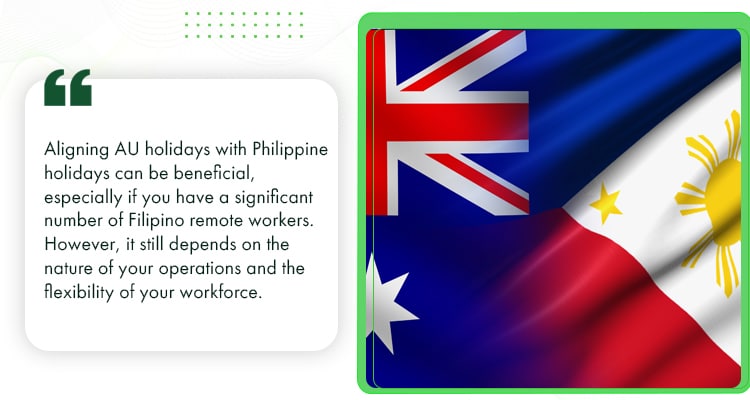
  • Assigning to A Virtual Personal Assistant Can Make Your Life Easier. Here’s How.

    Assigning to A Virtual Personal Assistant Can Make Your Life Easier. Here’s How.

    There are 24 hours in a day. But if you’re an entrepreneur, you’ll always need more.

    Between showing up for meetings, pitching to clients, or testing products, the hours just aren’t enough on most days.

    Hence, they delegate non-core tasks to a virtual personal assistant, enabling them to focus on business growth and a healthier work-life balance.

    Sounds simple enough, but how do you get started?

    Read on to find out.

    What is a Virtual Personal Assistant
    What is a Virtual Personal Assistant?

    A virtual personal assistant (VPA) provides administrative, technical, or creative assistance to clients from a remote location, usually to help them manage their personal lives better.

    From VAs to VPAs: Expanding The Scope of Virtual Assistance

    During its early days, virtual assistance was limited to administrative tasks such as scheduling, answering emails, and writing memos, among others.

    At that time, a virtual assistant referred to freelance secretaries who help businesses organise, file, and maintain documents and other records.

    However, virtual assistance has expanded to include specialised tasks such as digital marketing, IT support, and project management. VPAs who tackle a bigger variety of tasks these days, including their employer’s personal needs.

    Differences Between Traditional and Virtual Personal Assistants

    A traditional virtual assistant primarily takes on administrative tasks within a business. These include:

    • Email Management – responding to routine inquiries and flagging important messages;
    • Data Entry – maintaining records, updating databases, and managing spreadsheets;
    • Customer Service – handling customer inquiries, resolving issues, and providing information;
    • Document Preparation – creating, editing, and formatting reports, documents, and presentations;
    • Research – gathering information on competitors, compiling data for projects, and conducting market research.

    Meanwhile, a virtual personal assistant tends to various tasks, some of which aren’t always related to the business itself, including the following:

    • Personal Shopping – VPAs can order gifts, groceries, and other items online on your behalf;
    • Travel Arrangements – They can book your flights and accommodations, whether it’s for a business trip or family vacations;
    • Event Planning – A virtual personal assistant can also organise events, such as business conferences or even birthday parties or anniversary dinners;
    • Household Management – Some AU entrepreneurs even rely on their VPAs to schedule home maintenance tasks like paying bills and managing household staff; and
    • Health and Wellness – They can set up your medical appointments and fitness classes depending on your preferred schedule.

    Simply put, a VA helps take on administrative tasks at work. On the other hand, a VPA is more suitable if you want assistance with both professional and personal tasks.

    Benefits of a Virtual Personal Assistant in Australia

    Virtual assistants are the best-kept secret of many AU business owners for the following reasons:

    They Offer Cost-Savings and Efficiency

    Benefit #1: They Offer Cost-Savings and Efficiency.

    Virtual personal assistants can perform many functions of several full-time household staff.

    They can handle travel arrangements, stay on top of household bills, and coordinate family schedules, all while working remotely. This setup allows you to save on salaries, benefits, and other associated costs of hiring onsite, full-time employees.

    An efficient virtual personal assistant frees you up to enjoy more quality time with your family, pursue hobbies, or simply relax.

    Benefit #2: They Enable Flexibility and Scalability.

    Entrepreneurs deal with changing needs and schedules daily. Thus, they need virtual personal assistants who can help them manage tasks outside of business matters.

    For example, VPAs can handle last-minute flight bookings or surprise family events. They can also arrange for and manage household maintenance while you’re at work or on vacation.

    In essence, a virtual personal assistant takes over millions of tiny tasks at home so you can focus on the things that really matter to you.

    Benefit #3: You Get Access to Skilled VPAs Globally.

    Many VPAs are skilled professionals from different parts of the world. They are experts at scheduling and balancing personal appointments, supervising your household management, and various related tasks.

    You can even hire a VPA fluent in other languages to help you answer emails from international connections. You can also leverage their unique skill sets and cultural insights to get better ideas for personal projects or to help you grow your business.

    Benefit #4: You Can Focus on Core Business Activities – and Spend More Time With Your Family.

    Entrepreneurs are often bogged down by routine tasks and personal errands. This hinders them from concentrating on innovation, strategic planning, and business growth.

    You can offload these time-consuming tasks by delegating scheduling and personal email management to your VPA. They can also take other tasks off your plate like scheduling appointments, paying your bills, and coordinating important events and dates.

    This way, you can focus on running your business while spending more time with your family or pursuing your passions.

    Services Offered by Virtual Personal Assistants in Australia

    A virtual personal assistant services list covers a wide range of services tailored to the diverse needs of businesses and individuals.

    And the best part? They offer flexible, remote support allowing you to enhance productivity and streamline operations in the most cost-effective ways.

    Here are the services they offer:

    Service #1: Administrative Tasks

    Just like virtual assistants, VPAs are adept at handling various administrative tasks. These include the following:

    • Managing emails;
    • Scheduling appointments and organising calendars;
    • Organising meetings;
    • Handling data entry;
    • Compiling and preparing reports;
    • Assisting with event planning; and
    • Providing overall comprehensive support.

    Outsourcing these time-consuming administrative tasks enables you to focus more on client relationships and business growth initiatives.

    Personal Shopping and Errands

    Service #2: Personal Shopping and Errands

    Many virtual personal assistants take care of errands like online grocery shopping and gift purchasing.

    If you’re a busy entrepreneur, having a VPA who takes care of such things goes a long way. Some even have professional experience in selecting items for your exact needs!

    You can also delegate the logistical requirements for dropping off parcels, picking up prescriptions, and coordinating your other appointments to capable virtual personal assistants.

    Service #3: Travel Arrangements and Event Planning

    You can also ask your VPA to book your flights and accommodations. They can create and arrange detailed itineraries, whether it’s for business trips or family vacations.

    Furthermore, VPAs can organise parties and events by:

    • Selecting and booking the venue;
    • Coordinating with the catering services;
    • Managing the guest list; and
    • Planning and arranging for the speakers or the entertainment.

    Thus, whether you’re organising a corporate conference, wedding, or milestone celebration, your VPA can execute these flawlessly.

    Service #4: Household Management

    Unlike virtual assistants who mostly take care of business-related tasks, VPAs focus more on the employer’s personal and household needs.

    For instance, they help coordinate repairs and maintenance, oversee domestic staff, and even assist with meal planning. In some instances, you can also ask them to:

    • Manage household inventories;
    • Help organise your spaces; and
    • Implement systems to reduce clutter.

    By managing your household tasks, VPAs allow you to achieve a healthier work-life balance by alleviating the stress of daily responsibilities.

    Health and Wellness Coordination

    Service #5: Health and Wellness Coordination

    Lastly, VPAs can provide invaluable support in scheduling your medical appointments, coordinating healthcare services, and managing your prescriptions.

    Many business owners ask their virtual personal assistants to find reputable specialists or access relevant health resources. They can also schedule fitness classes, coordinate dietary plans, or arrange wellness retreats.

    This way, you can prioritise your health and well-being amidst your busy life as an entrepreneur.

    How to Hire the Right Virtual Personal Assistant in Australia

    A good virtual personal assistant can run your household so efficiently from miles away that you won’t need to worry about a thing – so you can save your time and energy for the things that only you can do.

    But, how do you make sure you’re hiring the right candidate? Here are tips on how to evaluate a virtual personal assistant applicant:

    Tip #1: Identify Your Personal Needs.

    VPAs need to understand which tasks you need help with. Therefore, it’s advisable to list the responsibilities of your virtual personal assistant.

    Do you need help in managing your household schedules? Are you looking for assistance in organising family events? Or do you need help coordinating your travel plans?

    Once you identify the tasks you want to delegate, it becomes easier to streamline the hiring process and ensure that your chosen VPA is equipped to meet all your needs.

    Tip #2: Know the Key Skills to Look For in a Virtual Personal Assistant.

    Your virtual personal assistant needs these skills to effectively manage your personal tasks:

    • Organisational Skills – They should be adept in managing calendars, scheduling appointments, and organising different events.
    • Communication Skills – Look for someone who can communicate clearly, written or verbal, to ensure clear and effective interaction.
    • Tech Savviness – Proficiency in digital tools and platforms is also crucial since they would be organising virtual meetings and/or managing online accounts.
    • Attention to Detail – VPAs should be meticulous since they usually manage household inventories and track expenses on their employer’s behalf.
    • Problem-Solving Ability – They have to demonstrate initiative and resourcefulness in resolving issues or challenges that may arise.
    • Discretion and Confidentiality – Given the personal nature of the tasks, VPAs should be able to handle sensitive information with utmost confidentiality.

    Tip #3: Interview and Select Candidates Carefully.

    Once you’ve identified your needs and required skill sets, it’s time to interview qualified candidates.

    Virtual personal assistant success stories usually include candidates who have both excellent technical abilities and soft skills. Hence, assess both during the interview process. Ask candidates about:

    • Their previous work experience;
    • Specific tasks they’ve handled; and
    • How they manage their workload.

    It’s also strategic to ask behavioural questions. For example, ask applicants about how they handle multiple urgent tasks at once. Which task would they prioritise, and how do they ensure quality work throughout?

    After the interview, you should also:

    • Check references thoroughly;
    • Speak with previous employers about the candidate’s work ethic; and
    • Confirm if their self-assessment during the interview aligns with their previous performance.

    Carefully interview and select candidates to find a VPA with the right technical and soft skills. This may take time, but it helps avoid mismatches and ensures a productive, long-term working relationship.

    The Impact of Virtual Personal Assistants on Australian Entrepreneurs

    Many AU entrepreneurs understand the need to delegate. Thus, there has been an increase in outsourcing non-core business functions as well as personal tasks to third-party providers.

    Thanks to technology, virtual personal assistants can now provide seamless support to AU entrepreneurs running businesses of all sizes, from startups to large enterprises.

    Personal Success Stories of AU Entrepreneurs with VPAs

    With the rise of remote work, many entrepreneurs are delegating personal and professional tasks. Here are some real-life success stories:

    • Kelvin N. – Aussie entrepreneur Kelvin appreciates the quality of candidates provided by outsourcing provider, Remote Staff. As early as day one, they already understood what their company needed and were very efficient.
    • Andrew B. – Meanwhile, Andrew admires how his assistant was proactive. The partnership has worked out really well and if there are issues, Remote Staff is always available to assist.
    • Michael – On the other hand, Michael prefers working with Filipino virtual personal assistants because of their honesty. According to him, they are “very very good workers” and are honorable.

    How Virtual Assistants Simplify the Daily Lives of Entrepreneurs

    Entrepreneurs often find themselves juggling multiple tasks such as meeting clients, developing products, and finding investors. However, despite their busy schedules, they still have personal errands to attend to.

    This is where virtual personal assistants come in. They take care of your personal tasks, be it online groceries, house repairs, and even sending out gifts and cards to close friends and family.

    With this support system, you can continue to grow your business while enjoying quality time with your loved ones.

    The Future of Virtual Personal Assistance in Australia

    The Future of Virtual Personal Assistance in Australia

    Virtual personal assistants are becoming more critical to organisations – thanks to the support they provide to business owners.

    Entrepreneurs are now delegating various tasks, particularly personal errands, to their VPAs. This gives them more time and resources to focus on important business matters.

    As artificial intelligence advances, VPAs are expected to be able to handle even more tasks, increasing their value to business owners running SMEs or even large companies.

    With the right VPA on their side, these business owners don’t need to worry about effectively running a household on top of growing their business.

    FAQs about Virtual Personal Assistants in Australia

    Here are some of the frequently asked questions related to virtual personal assistants:

    Question #1: What is the Average Cost of Hiring a Virtual Personal Assistant?

    Virtual personal assistants charge anywhere from AUD 20-50 per hour. However, experienced or specialised VPAs may charge higher rates, depending on the scope of work.

    Thus, many AU entrepreneurs tap outsourcing providers like Remote Staff for experienced VPAs at the most competitive rates.

    Question #2: How Do I Ensure the Security and Confidentiality of My Data?

    Virtual personal assistants have access to their employer’s personal information to carry out tasks like booking flights, ordering groceries, and paying bills.

    Due to the sensitive nature of these transactions, Non-Disclosure Agreements (NDAs) are essential. They clarify what information should stay confidential, who can access it, and for what purpose. This legal framework also protects both parties.

    Meanwhile, use secure communication channels, ideally with encrypted cloud storage to protect your data. Additionally, conduct thorough background checks before hiring a virtual personal assistant.

    Lastly, provide ongoing training to your VPA on data security practices to ensure compliance with data protection standards.

    Can a Virtual Personal Assistant Work on Multiple Time Zones

    Question #3: Can a Virtual Personal Assistant Work on Multiple Time Zones?

    Yes! Virtual personal assistants can work across multiple time zones. They offer flexible working hours to accommodate different client needs.

    Many Australians hire VPAs from the Philippines due to the relatively small time difference. This allows Aussie entrepreneurs to delegate tasks like scheduling appointments and handling correspondence to skilled professionals who can still accomplish these in real-time.

    This way, their personal tasks are completed promptly by the next day.

    Question #4: What Tools and Software are Essential for Managing a Virtual Personal Assistant?

    Communication platforms like Skype or WhatsApp are great for instant messages and calls. This makes it easier to deploy and receive quick updates and instructions despite the difference in time zone and the geographical distance.

    Project management tools like Trello or Asana are also useful for assigning tasks to VPA, such as booking flights, organising itineraries, and scheduling appointments. These platforms show real-time updates and help you track the progress of your virtual personal assistant.

    Conclusion

    Virtual personal assistants help business owners book flights, schedule repair services, shop for groceries, and even organise family events.

    By taking these errands off your plate, entrepreneurs like you can focus on growing your business and spending more time with loved ones.

    Thus, whether you run a small business or a large enterprise, a virtual personal assistant can free up your time so you can focus on the things that really matter.

    Click here to find the right one for YOU.

    Also looking for business-related AI prompts for more efficient operations? Click here.

    Searching for world-class remote workers and don’t know where to start? Click here.

    If you’re ready to experience the advantages of a top global team, check out our 1,000 fully vetted and highly talented staff here.

  • 5 Strategies for Building High-Performing Remote Teams

    5 Strategies for Building High-Performing Remote Teams

    Are you new to outsourcing remote workers or managing an online team?

    Better still, are you looking to make your company grow faster?

    You can achieve this by building high-performing remote teams in your company.

    A high-performing remote team has clear goals and defined roles, so everyone knows their responsibilities and how they contribute to the team’s overall objectives.

    For example, if you hired a virtual assistant to handle scheduling and communication and outsourced accounting staff for financial tasks, they should be able to work together seamlessly as part of a high-performing team.

    The virtual assistant would set up meetings and ensure all financial documents are ready, while the accounting staff would analyze these documents during the meetings and offer valuable insights.

    This kind of collaboration can potentially boost team output up to three times more than their separate individual efforts. Who wouldn’t want that productivity boost?

    However, it’s easier said than done. How do you create high-performing teams in your company in the first place?

    Here are 5 strategies you can follow.

    Establish Clear Communication

    Firstly, make sure everyone is aligned and working towards the same goals.

    Choose the right tools like Slack, Microsoft Teams, or Zoom for smooth communication. You can also resort to video calls for a more personal touch.

    5 Strategies for Building High-Performing Remote Teams, virtual assistant - Quote 1

    You can also schedule regular meetings, such as daily stand-ups, weekly progress updates, and monthly strategy sessions, to keep the team on track and address issues quickly.

    Finally, properly document all processes, decisions, and goals to ensure transparency and consistency across the team.

    You can also check these additional communication tips for further details.

    Set KPIs and Track Performance

    As the saying goes, what you don’t measure, you can’t improve. Tracking performance and KPIs helps reveal strengths and weaknesses.

    So, start by defining clear roles and performance metrics, and make sure everyone knows what is expected of them.

    Provide regular feedback and hold one-on-one meetings to discuss progress and concerns. You may also offer opportunities for growth through online courses, webinars, or mentorship programs.

    [aslcandidates id=’2000010′]

    Equip Your Team with the Right Tools

    Equipping your team with the right tools streamlines workflows, automates repetitive tasks, and reduces errors, enabling team members to focus on higher-value work.

    For example, using project management tools like Trello or Asana helps track tasks and deadlines, while cloud storage solutions like Google Drive or Dropbox facilitate file sharing and easier collaboration.

    By providing these tools, you help your team work more efficiently, adapt to changes faster, and reach their goals more effectively.


    Cultivate Trust and a Culture of Excellence

    Create an environment where team members feel valued and motivated by promoting inclusivity, respect, and support.

    Actively celebrate successes, recognize individual contributions, and provide constructive feedback.

    Leaders should also be transparent about goals, challenges, and changes to build trust and keep everyone aligned.

    5 Strategies for Building High-Performing Remote Teams, virtual assistant - Quote 2

    Additionally, encourage social interactions through virtual coffee breaks, team-building activities, or online games to strengthen connections, improve collaboration, and boost morale.

    By combining these strategies, you cultivate a positive work environment that enhances team collaboration and excellence.

    Recruit High Performers

    Lastly, recruit top talent.

    High performers not only contribute their advanced expertise and innovative ideas but also set a high standard of work that inspires and motivates others.

    With a global talent pool, you can find the best candidates worldwide, but the challenge is sorting through many applicants to find those high performers.

    To streamline this process, outsource your talent needs through Remote Staff.

    Whether you need a virtual assistant or bookkeeper, Remote Staff prequalifies skilled professionals who fit your specific requirements and help build your high-performing team.

    Call us or schedule a callback to find yours today!

    [rcb_show_form]