Blog

  • Marketing Automation Specialists For Australian SMEs: You Have the Tools, But You Need the Expert

    Marketing Automation Specialists For Australian SMEs: You Have the Tools, But You Need the Expert

    ​​Your automation platform has been live for months. Nobody’s been hired to run it.

    That’s the whole problem.

    85% of Australian SMEs are paying for tools they don’t realise are barely being used. More than half of local businesses owning marketing software that’s basically sitting in their systems.

    Is your business one of them?

    The answer usually isn’t a missing platform, but missing marketing automation specialists.

    Most business owners either underestimate the role or hire the wrong version of it.

    Here’s what you should know about marketing automation, and how to find the specialist that fits your operation.

    What is a marketing automation specialist?

    Key Takeaway / Quick Answer

    A marketing automation specialist takes your software, like HubSpot, Klaviyo, or ActiveCampaign, and builds the operational logic inside it. They configure the system to handle lead scoring, email sequencing, and behavioural triggers, such as post-purchase follow-up emails, abandoned shopping cart, downloading a resource, etc. Essentially, they ensure your marketing runs on its own based on exactly how your contacts interact with your brand.

    What Does a Marketing Automation Specialist Do? The Role In a Nutshell

    Marketing automation specialists take your marketing strategy and configure the technical logic inside your tools so it runs without manual input. They build email sequences triggered by contact behaviour rather than fixed send dates.

    The customer journey piece is where most businesses are weakest: a first-time visitor and a returning buyer need different messaging at different moments, and a specialist builds the system that delivers both.

    Most businesses don’t know how much depends on having this person until something cracks.

    Illustration: Oliver is a Sydney-based e-commerce founder. He purchased HubSpot, assuming that his marketing coordinator could handle it. Several months later, workflows are weakly built, and the CRM data is cluttered. The sales team is going after cold leads as if the software didn’t exist.

    Without someone who knows how to configure it for his specific operation, HubSpot isn’t supporting his business. Just another line item on his monthly expenses.

    Key Responsibilities: Marketing Automation Specialist Job Description

    What does a marketing automation manager do? This specialist oversees technical aspects like configuring systems and maintaining data integrity. They help ensure that the right message reaches the right contact at the right funnel stage.

    Here’s what that looks like in practice.

    Automated Email Workflows

    Product page visits, form submissions, or purchases are triggers of email sequences and drip email campaigns. Rather than inputting a fixed send date, a specialist configures your tools so that your contact’s actions or responses determine when they hear from you and what they receive.

    Lead Scoring and Prioritisation

    Not every contact in your database is at the same stage, and not all of them warrant the same amount of your sales team’s time. A specialist sets up lead scoring to rank contacts by their likelihood to convert, and your sales team works from a prioritised list.

    CRM Data Management

    Your CRM is only as useful as the data inside it. The data has to be “clean.” The records, accurate and consistent enough to be trusted. A specialist keeps them deduped (deduplicated) and synced across your marketing platform and sales tools so both teams are always working from the same information.

    A/B Testing and Optimisation

    Subject lines, send times, calls to action: a specialist regularly runs these tests and acts on the results. They make incremental improvements based on what the data shows.

    Over time, those small adjustments compound; Better open rates. Higher click-throughs. Sequences that convert.

    Customer Journey Automation and Mapping

    A first-time visitor needs different messaging than someone who has already purchased. The specialist maps out each stage of the customer journey and aligns your workflows accordingly, so every contact receives communication that matches where they actually are.

    More about what the role entails: ,What Is a Marketing Automation Specialist, and how do they fit in your team?

    Operational Excellence

    Manual Marketing Workflows Not Working?

    Start Automating.

    Don’t let your growth hit a technical ceiling. Hire a Remote Staff specialist to build the systems that work while you sleep.

    Trusted by 3,000+ businesses to scale remotely since 2007.

    Marketing Automation Tools: What Platforms Do Automation Specialists Use?

    Platform choice depends on where your business is:

    • SMB and mid-market: HubSpot, ActiveCampaign, Klaviyo, Mailchimp
    • Enterprise and larger SMEs: Salesforce Marketing Cloud, Marketo, Pardot
    • Integration layer: Zapier, Make, Segment

    A marketing automation consultant who has spent three years building inside Salesforce Marketing Cloud operates at a different level than one who has surface-level familiarity with five tools.

    One common mistake when hiring is screening candidates based on platforms they’ve previously used. Maybe you’re looking only at a HubSpot automation specialist or a Marketo automation expert. The right call is to match them to the platforms your business uses.

    How To Self-Diagnose Your Business: Are You Ready For Marketing Automation?

    Readiness for this person is rarely hire-and-go. The truth is, specific, recurring patterns are easy to dismiss individually. But collectively, they’re expensive to ignore. These are four to watch for.

    #1. Paid Platforms

    Your automation tool has been live for over a year. You’re charged for its subscription monthly. But most of the features that were set up once run with no oversight. Some haven’t been touched at all. You’re covering the cost of a capability your business isn’t using. In most cases, nobody on the team has been assigned to change that.

    #2. The Manual Funnel

    The sales team is still sending follow-up emails by hand. They copy campaign sequences whenever a new one is needed. They track leads and lead stages in a spreadsheet. They’ve been doing these tasks the same way they’ve done so before you purchased the software.

    Now that the platform exists, the processes haven’t changed. There’s no sales funnel automation. Both the manual effort and the tool are running side by side, and yet the latter is barely involved.

    #3. Data Disconnect

    Your CRM and automation platform do not reliably converse with each other. The handoff between marketing and sales doesn’t garner good results because contacts fall through.

    Someone asks where the lead is from. Someone asks why it wasn’t followed up on. Nobody’s got a clue about one or the other.

    #4. The Headcount Reflex

    Every time volume increases, your response is to hire another person to manage it. Operational costs grow in direct proportion to revenue; an unscalable model. It’s the same system copying itself at a higher cost.

    What To Do: Two or three of these patterns creeping into your business is enough to justify starting the search. You don’t need all four.

    [rcb_show_form]

    Types of Marketing Automation Specialists (and Which One You Need)

    A businessman thinking about the types of marketing automation specialists.

    The title “marketing automation specialist” covers more ground than most business owners are aware of. To hire a marketing automation specialist that fill your business needs, learn how to identify the ideal fit for your team.

    #1. Email Marketing Automation Specialist

    This specialist focuses on email sequences, from welcome flows, lead nurturing strategies, to re-engagement campaigns. If your primary conversion mechanism is email and your sequences were built by someone who has since left the business, this is where the problem starts.

    What To Do: Check your open rates over the last four to six months. If they haven’t moved, or if nobody on your team can explain why a sequence was structured the way it was, this is your specialist.

    #2. CRM Automation Specialist

    Managing contact lifecycle stages, lead routing, pipeline automation, and data integrity between your marketing and sales platforms is this specialist’s space. When your sales team regularly complains about lead quality, the issue is usually the scoring and handoff logic that hasn’t been set up properly.

    What To Do: Ask your sales lead or sales team what percentage of the leads coming from marketing are worth following up on. That answer will confirm your need for this lifecycle marketing automation expert.

    #3. AI Marketing Automation Specialist

    By configuring AI features inside your existing platforms, this specialist activates predictive lead scoring and segmentation, dynamic content, and optimises send-time.

    For most Australian SMEs, this doesn’t mean hiring someone who builds AI models from scratch. It means hiring someone who can switch on and configure the AI capabilities already sitting inside HubSpot or Salesforce that nobody has enabled or used since.

    What To Do: Log into your current platform and look for any AI or “smart” features. If none are active or configured, that tells you why you need a marketing automation lead.

    #4. E-Commerce Automation Specialist

    This is particularly relevant for Australia’s large DTC and Shopify-native market. The automation specialist understands abandoned cart logic, post-purchase sequences, predictive segments, and loyalty flows.

    The mindset is different from B2B automation, since the automation is built around purchase behaviour data as opposed to just lead scoring.

    What To Do: This specialist is for you if you sell direct-to-consumer, and your post-purchase or retention flows either don’t exist or are still running on default settings.

    #5. Compliance-Aware Automation Specialist

    Also specific to the Australian market. The Spam Act 2003 governs all commercial electronic messages sent to or from Australia. It requires consent. It requires clear sender identification and a functional unsubscribe option honoured within five business days.

    The Privacy Act 1988 and the Australian Privacy Principles govern how customer data is collected and stored. Repeat violations can carry penalties of up to AUD $2.2 million per day, enforced by the Australian Communications and Media Authority.

    A specialist who understands these requirements builds compliance into your workflows from the beginning. One who doesn’t leave your business exposed.

    What To Do: Before any automation system goes live, verify that your specialist has working knowledge of both the Spam Act and the Privacy Act.

    #6. Senior Marketing Automation Specialist

    From scoring models, lifecycle stage mapping, platform migrations, to attribution reporting, this specialist owns the architecture.

    It’s the right hiring choice for businesses that have had their automation programs running for quite some time. Something has already been built. The person who built it is no longer a part of the team, and none of your current employees understands what’s running.

    What To Do: If your existing setup was inherited and nobody on your team can fully explain how it works or why it was built that way, you’re looking at the role that fixes it.

    What Does a Marketing Automation Specialist Cost in Australia?

    Salary figures for this role vary depending on platform specialisation and industry. This is a straightforward breakdown based on 2024–2025 data from Glassdoor AU, PayScale AU, and Brightbox Consulting:

    Marketing Automation Salary By Experience Level:

    The “Loaded Cost”

    The number on the job posting is not what you spend the first year. Add superannuation (11.5% as of 2025), recruitment fees, onboarding, and the first 30–60 days of productivity ramp. An AUD $95,000 base salary becomes AUD $130,000–$140,000 in total year-one cost.

    What To Do: Build your budget against the loaded cost. If that number is beyond your current stage, the remote hiring model is where the math takes a different route.

    Why Australian Businesses Are Hiring Marketing Automation Specialists Remotely, With Remote Staff

    That loaded cost is what pushes most Australian businesses toward remote hiring. Qualified specialists are in short supply locally, and the ones with real platform depth know the demand is high, and, well, let’s just say their rates areome even more askew.

    A Filipino marketing automation specialist in the foreground and an Australian businessman in a floating screen.

    Remote Staff has been placing technical marketing professionals with Australian businesses for over 18 years. Candidates are screened for actual platform builds and measurable results. Engagements are structured around where your business is: full-time, part-time, or project-based, with payroll, onboarding, and compliance handled on your behalf.

    Marketing automation is the fastest-growing segment of Australia’s digital marketing software market. The qualified specialist pool hasn’t kept pace, and that lag is where Remote Staff operates.

    As you plan to grow your business and your team, stay updated about Payday Super 2026 Rules and the Modern Slavery Act Australia to stay compliant in all areas of your operations.


    FAQs

    Do I need a dedicated marketing automation specialist, or can my existing digital marketer handle it? (Do I need a marketing automation team?)

    It depends on what your digital marketer was hired to do. Most are focused on content, campaigns, and channel management, and not the technical configuration of workflows, lead scoring, and CRM integration. If your platform is underperforming and nobody on your team owns it technically, a dedicated specialist is the practical answer.

    How long before we see measurable results?

    For businesses with a clean CRM and an active platform, most see measurable movement within 60 to 90 days. If the foundation needs work first (unorganised, inaccurate data, disconnected tools, or sequences that have never been properly built), allow a full quarter before expecting consistent output.

    What’s the difference between a marketing automation specialist and a CRM manager?

    A CRM manager focuses on the database, including contact records and pipeline stages. A marketing automation specialist works with the logic that runs on top of that data, such as workflows, scoring models, and integrations. In smaller teams, the roles overlap, but they are distinct functions.

    Does Australia’s Spam Act Affect Automation Workflows?

    Yes, directly. Every commercial electronic message sent to or from Australia must meet three requirements: recipient consent, clear sender identification, and a functional unsubscribe option. A specialist builds these requirements into your workflows as standard.

    The System Is Already There and Needs Someone to Run It

    HubSpot, ActiveCampaign, Salesforce, Klaviyo: all capable platforms. What most Australian SMEs are missing isn’t better software. It’s the person who owns it.

    Marketing automation specialists are the reason your CRM stays clean, your leads get scored correctly, your sequences improve over time, and your sales team stops chasing contacts that were never ready to buy.

    Find that specialist, define the scope, and let the system do its job.

    Unsure where to start? Call us today or Request a Callback or fill out the form from earlier for your free consultation.


  • Don’t Let January Kill Your Sales: How to Beat the Post-Holiday Slump

    Don’t Let January Kill Your Sales: How to Beat the Post-Holiday Slump

    The holiday season is one of the most anticipated periods for business owners. The shopping rush, the spirit of generosity, and shoppers’ fear of missing out all help boost sales and revenue just before the end of the year.

    Because of this, many businesses invest heavily in marketing and promotional efforts to capture the attention of generous holiday shoppers. 

    However, everything comes to an end, and as with any other year, the next challenge is how to survive, or even thrive, during the post-holiday slump.

    So, as we approach 2026 and welcome January, let’s explore some post-holiday sales strategies to maintain the momentum.

    Read on to know more. 

    Why January Sales Feels Like a Sales Black Hole 

    While every new year brings new opportunities, it can be challenging for business owners coming off the highs of the holiday season. 

    In fact, for many businesses, January becomes a sobering wake-up call after the adrenaline rush of Christmas and Boxing Day.

    The Holiday Hangover Effect 

    The psychological shift from December 31 to January 1 can be jarring. 

    Customers are no longer excited to shop until they drop. The majority are no longer interested in gift bundles and other promotional stunts that worked so well during the holidays.

    Reduced Consumer Spending Power in January

    After months of making spending decisions on gifts, travel, and events, customers often enter a state of “spending paralysis” by January. By then, the need for new purchases is far less appealing, especially as many people adopt “No-Spend Challenges” during this month.

    It also doesn’t help that much of the festive season is fueled by credit. 

    When the holiday cheer fades and statements arrive in mid-January, reality sets in for many households. As a result, they often shift into a “repayment-only” mode, cutting back on dining out and “unnecessary” purchases.

    Why Q1 Sets the Tone for the Year 
    Customers’ fear of spending at the start of the year can be particularly challenging for small and medium-sized businesses (SMBs). For many, boosting Q1 sales serves as the strategic foundation for the rest of the year for the following reasons:

    • Inventory Correction – January is the “great clearing,” when businesses manage excess inventory and determine their cash flow for the rest of the year.
    • Data Gathering – The behavior observed during a slow January serves as a “stress test” for your marketing. If you can convert customers during this month, the same strategy can be applied in the succeeding quarters.
    • Pipeline Building – Although people don’t buy as much in January, they often use this time to research big-ticket items for later. Your visibility during this month puts your brand on their shortlist when they’re ready to make a purchase.

    10 Proven Strategies to Reignite Sales in January 

    The January slump is expected. However, it doesn’t – and shouldn’t – mean that businesses should simply wait it out. 

    While you can’t change customers’ natural tendency to hold back on spending, you can shift your focus. Instead of the hard-selling approach that worked during the holidays, reframe your efforts to emphasise problem-solving.

    Here are some strategies to do just that.

    #1. Launch a “New Year, New You” Promotion 

    Customers are focused on their New Year’s resolutions, so align your brand with their desire for self-improvement. Position your product or service as a tool for a fresh start.

    For example, if you run a local café, offer a “Healthy Habits” loyalty card, where every fifth green smoothie is free.

    #2. Push Gift Card Redemptions With Upsells 

    Many customers may still have gift cards remaining or have recently received them. Maximise this opportunity by running an email or social media campaign encouraging them to cash them in. 

    To keep it aligned with the “no-spend January” mindset, position the offer as a way for them to spend less – or avoid wasting their gift card – while it’s still valid.

    #3. Use Scarcity-Focused Flash Deals 

    At this time, month-long clearance sales are likely still ongoing. To stand out from the crowd, consider launching a 24-hour flash sale instead.

    Include a countdown timer in your social media posts or email headers to highlight the flash sale. For example: “30% off for the next four hours” – and provide a specific code customers can use to redeem the offer.

    #4. Offer Bounce-Back Post-Holiday Discounts 

    Beyond posting a message of gratitude, reward the customers who kept you busy over the holidays. Send a “Welcome Back” offer to anyone who made a purchase in December. 

    As a tip, make the discount valid only during the last two weeks of January, typically the slowest period of the month.

    #5. Target Repeat Buyers With Thank You Offers 

    Repeat customers generate more business, and it’s generally easier to retain them than to acquire new ones. Segment your email list, if you haven’t already, and identify your VIPs, typically those who shopped more than three times last year.

    Then, send a “Founder’s Thank You” note along with an exclusive credit. You can also ask your website developer to create “Members Only” landing pages to keep these deals private and high-value.

    #6. Pivot to “Back-to-School/Work” Essentials 

    January is also the peak of many Back-to-School promotions. If your business isn’t in the education sector, find an alternative angle that resonates with the need for new routines. 

    For example, a home décor brand could launch a “Home Office Refresh” bundle, while a beauty brand might promote a “5-Minute Work Morning Routine” makeup set.

    #7. Host an Interactive Social Media Challenge 

    Social media continues to be a key part of your New Year marketing campaigns, especially during the post-holiday slump. Use January to strengthen your community by running challenges related to your niche.

    For example, if you run a gym, start a fitness challenge. If you’re in real estate, launch a campaign featuring a 21-day checklist on how to do home improvements for the new year.

    #8. Optimise for “Near Me” Local SEO 

    Use this time to boost your local search engine optimisation (SEO), as many shoppers will still be searching for stores and services near them.

    Update your Google Business Profile with your post-holiday hours and information about any in-store exclusive clearance items.

    #9. Introduce “Buy Now, Pay Later” (BNPL) Options 

    Credit card debt can be a major source of stress for many customers in January. Thus, focus on addressing customers’ fear of overspending in January by highlighting flexible payment options. 

    This includes Buy Now, Pay Later packages, which let them pursue their New Year plans while spreading the cost over several months.

    #10. Run a “Mystery Bag” or “Warehouse Clear-out” 

    Lastly, clear your inventory. 

    Jump on the “Mystery Boxes” trend, where you package random items in a box at a fixed price. Showcase some of the possible product combinations to entice customers to take a chance, driving excitement and high open rates.

    When executed correctly, this approach can quickly clear shelves and make room for new inventory in the next quarter.

    Revamp Your Email and SMS for January Conversions 

    It’s also important to revisit and recalibrate your campaigns across different platforms, particularly email and SMS marketing.

    Here are some tips on how to do it. 

    Send “We Miss You” Campaigns to Holiday Buyers 

    A large portion of your December sales are from one-time holiday shoppers. Without deliberate touchpoints to engage them and build a connection, these customers are likely to churn.

    To address this, set up an automated “We Miss You” or “Checking In” sequence 15 to 30 days after a customer’s last December purchase. 

    You can also use engaging copy like: “The decorations are down, but the perks aren’t. Here’s a little something to brighten your January.”

    Include Product Reviews to Reinforce Trust 

    December is a high-sales month, while January serves as its high-research counterpart. This is when customers plan and prepare for their purchases for the year ahead.

    During this period, consumers are more cautious with their spending and prefer to purchase items that feel like an investment. Thus, pivot your email and SMS content from being sales-heavy to showcasing user-generated content and 5-star reviews. 

    You may send an email titled, “What Everyone’s Saying About Their New Year Gear,” featuring a carousel of your products or services alongside their top-rated reviews.

    Segment Lists Based on December Purchase Behaviour 

    It also helps to review your customer lists and segment them based on their holiday purchases. Typically, they fall into two groups: gifters and self-shoppers.

    For gifters, send personalised emails and suggest items they might want for themselves now that the holidays are over. 

    On the other hand, recommend “Complete the Look” items to self-shoppers to complement their December purchases.

    Leverage Returns Season as a Sales Opportunity

    Many businesses also view January as the “Returns Tsunami,” when customers return or exchange items. While this may seem stressful, it can actually present opportunities.

    Here’s how.

    • Offer Exchange Incentives (Not Refunds) – Your primary goal in January is revenue retention, and whenever possible, avoid issuing refunds. For example, instead of offering a cash refund, give customers the option to exchange the item or receive store credit. You can also include an additional $5–$10 store credit or a 10% discount on their next purchase.
    • Promote Clearance and Overstock from Holiday Inventory – Customers who frequently visit your site or store to initiate a return are still engaging with your brand. Use this moment as an opportunity to clear out your holiday overstock. You can place “Sale” bins near the returns counter, or feature them on your e-commerce site with copy like: “While you’re here, check out our Last-Chance Clearance items at discounted prices.”
    • Bundle Returns With Add-On Offers – If a customer is returning an item due to size or color preferences, use the exchange as an opportunity to increase their total basket value. You can create a “Perfect Pair” recommendation. For example, if a customer is exchanging a sweater, suggest a matching scarf or a cleaning kit at a one-time discounted rate.

    Social Media and Paid Ads: Start the Year with the Right Energy 
    Unlike most Western countries, which are blanketed in snow at the beginning of the year, January marks the peak of summer in Australia. 

    It’s the height of the tennis season and the final stretch of the school holidays. This creates numerous opportunities for social media campaigns, allowing brands to stay relevant after the holiday season.

    • Refresh Creatives with Summer + New Year Themes – Swap out tinsel and festive reds for poolside blues, beach yellows, and crisp whites. Shift away from gift-focused messaging and instead highlight “summer living” or “get things done” campaigns to start the year on a positive note.

    • Retarget Holiday Visitors with January-Specific Offers – Revisit your “window shoppers” from November and December. Show them the exact items they viewed and include a copy like: “Still thinking about it? Start your year right with the [insert product] you had your eye on—now at discounted rates.”
    • Launch January Giveaways to Boost Engagement – When spending is low, engagement becomes your next most valuable currency. This is where giveaways come in to keep your brand top of mind. For example, you can run a “Summer Essentials” or “Resolution Starter Kit” giveaway. Ask your followers to tag a friend, comment their #1 goal for the year, and share the post to opt in.

    Smart Move in Slow Months: Try Remote Staff to Power Growth 

    The new year, especially January, is also an ideal time to reflect on your growth and plan for the year ahead. 

    For many SMBs, this includes finding the right staff and securing the right support from outsourcing providers like Remote Staff.

    Access to Full-Service Ecommerce and Marketing Support 

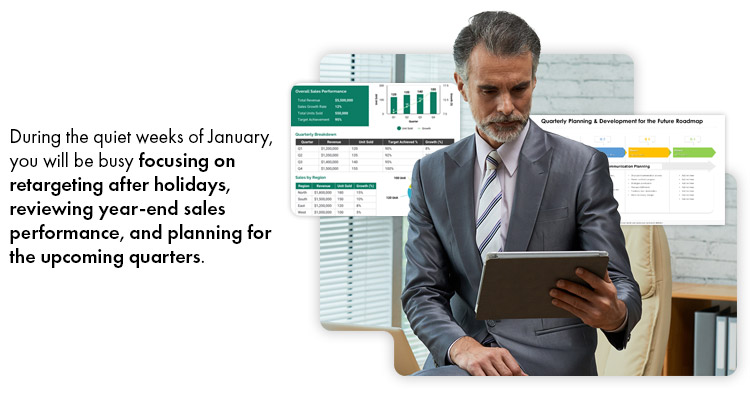
    During the quiet weeks of January, you will be busy focusing on retargeting after holidays, reviewing year-end sales performance, and planning for the upcoming quarters. Hence, it can be hard to track the non-core functions, especially the administrative part. 

    This is where Remote Staff comes in, providing you with skilled remote workers who can take care of the following tasks: 

    • Ecommerce order management; 
    • Customer service for returns; 
    • Campaign production; 
    • Data cleanup and inventory tagging; and 
    • Social media scheduling and moderation. 

    Remote Staffing Partner 

    For the past 18 years and counting, Remote Staff has partnered with over 3,000 Australian SMBs and business owners. They provide English-proficient Filipino professionals who are skilled and ready to help you prepare your business for the year ahead.

    With the four-hour time difference between the Philippines and Australia, your Filipino remote team is online exactly when you are. They’re also available based on your needs – whether for a one-off project, part-time work, or a long-term engagement.

    More importantly, Remote Staff offers transparent pricing and onboarding packages. 

    You can hire remote workers directly through them, or leverage their Employer of Record services. Either way, they provide upfront costs to help you determine which options best suit your needs and budget.

    Frequently Asked Questions

    Here are some of the frequently asked questions about the post-Christmas sales recovery.

    #1. Why Does Ecommerce Slow Down in January in Australia?

    Families are redirecting their remaining budgets toward essentials, such as back-to-school needs. Many Australians also receive their credit card statements in mid-January, which are often high, prompting an immediate slowdown of discretionary spending.

    #2. How Can I Improve January Conversion Rates? 

    Use the quiet period to showcase reviews from December shoppers. Seeing that others had a positive experience can help build the trust needed to convert hesitant January buyers.

    #3. Should I Lower My Prices or Focus on Customer Experience? 

    You can use price drops to manage inventory, such as excess holiday-themed items. 

    At other times, focus on value-added offers – free shipping, extended warranties, or flexible payment options – to ease the financial burden on customers without cutting into your margins.

    #4. What Kind of January Promos Work in AU Retail? 

    The AU market usually love: 

    • Bundle and Save – Bundle complementary products (e.g., yoga mat with a water bottle) to increase the average order value. 
    • Mystery Boxes – Aussies love a “deal” and the gamified nature of a mystery box can drive high engagement on social media. 

    #5. Can Remote Teams Really Help During Slow Sales Seasons? 

    Yes! Although sales are relatively low, your administrative and creative needs are often at peak due to returns and seasonal sales planning

    Fortunately, a Filipino remote team can help by: 

    • Handling the influx of January returns and customer inquiries; 
    • Building your marketing calendar for the rest of the year; 
    • Cleaning up your mailing list; and 
    • Optimising your SEO. 

    Conclusion: January Doesn’t Have To Be a Sales Graveyard 

    January doesn’t have to be a period of stagnation. It can be a fresh start and an opportunity for your business to plan for the year ahead.

    It’s the perfect time to stop working in your business and start working on it. Clear out your inventory, re-engage with your customers, invest in your local SEO, and personalise your marketing efforts.

    Every action you take now helps build the momentum needed for a successful first quarter – and, ultimately, a successful year.

    For more information on how to get all of this done quickly and efficiently, call us today or request a callback now.

  • Data Privacy and Security Made Simple for Australian SMEs with Remote Teams in the Philippines

    Data Privacy and Security Made Simple for Australian SMEs with Remote Teams in the Philippines

    Remote work has transformed how Australian businesses operate and scale, but it has also expanded the attack surface for data breaches, compliance failures, and cybersecurity threats.

    According to Harvard’s Privacy Office, remote environments significantly increase risks related to unauthorised access, unsecured networks, and poor device security, making strong security protocols essential for distributed teams.

    Similarly, the London Governance & Compliance Agency (LGCA) notes that remote setups amplify vulnerabilities because organisations lose direct oversight of networks, devices, and user activity when teams work offshore.

    This has direct implications for Australian SMEs outsourcing to the Philippines, especially those handling financial data, health information, customer records, or proprietary IP.

    If you want to protect your business and your client’s privileged information, stay compliant with the Australian Privacy Principles (APPs), and confidently outsource to the Philippines under Data Privacy and Security best practices, keep reading!

    Why Data Privacy Is Crucial When Outsourcing to the Philippines

    As more Australian businesses rely on remote offshore teams, the value and sensitivity of the data exchanged daily has skyrocketed.

    Data breaches now incur financial penalties, reputational damage, operation downtime, and long-term trust issues.

    With cyberattacks rising globally, including phishing, ransomware, and identity theft, outsourcing without strong protections or protocols is no longer an option.

    To outsource safely to the Philippines, leaders must understand the types of risk involved and the strict legal responsibilities tied to data governance.

    Data Sensitivity in Remote Work

    Industries like finance, healthcare, and SaaS manage high-risk information such as medical files, payment details, customer identities, and proprietary algorithms.

    Remote workers accessing this data from home networks or personal devices increases exposure, making remote work cybersecurity essential.

    Filipino remote teams must handle these datasets with strict secure remote access practices supported by encrypted communication tools and endpoint security solutions.

    What Can Go Wrong Without Security Protocols?

    Without structured cybersecurity measures, businesses expose themselves to threats that can quickly escalate into financial or legal crises.

    Examples of risks include:

    • IP theft, where unauthorized users copy or resell confidential or proprietary output
    • Ransomware attacks exploit unsecured devices or networks
    • Cloud storage misconfigurations are exposing confidential databases
    • Password sharing, which weakens identity controls
    • Unmonitored access enables harmful or accidental data changes

    These risks underscore why offshore teams must use VPN for remote employees, enforce a password management policy, and follow proven cybersecurity best practices daily.

    Overview of Philippine Data Privacy Laws (DPA 2012)

    The Philippines enforces robust data governance through the Data Privacy Act of 2012 (DPA)—legislation designed to regulate personal information collection, storage, transfer, and access.

    Australian companies outsourcing to the Philippines must understand how the DPA applies to offshore teams handling sensitive or regulated data.

    The DPA is enforced by the National Privacy Commission (NPC), which has the authority to audit, penalise, and sanction private entities for violations.

    Key Responsibilities for Foreign Employers

    Regardless of location, foreign employers must meet specific obligations when Filipino remote staff handle personal or sensitive data to minimize their risk and exposure.

    Key responsibilities include:

    • Implementing organisational, physical, and technical safeguards for all stored or transmitted data
    • Limiting access to only those whose job classification legitimately requires it
    • Making sure of lawful data collection, retention, and deletion practices
    • Protecting end-user privacy through encryption and secure storage
    • Reporting breaches to the NPC when required
    • Providing training on cybersecurity best practices for remote teams

    These obligations apply whether the company has a local entity or hires through compliant outsourcing partners like Business Process Outsourcing (BPO) entities) or Employers of Record (EoR).

    Comparison to Australian Privacy Principles (APPs)

    Let’s take a look at the similarities and distinctions between the Philippines’ DPA Laws and Australia’s 13 Australian Privacy Principles (APPs) under the Privacy Act:

    Key similarities include:

    • APP 1 & DPA: Accountability & Governance — Both require internal policies, documentation, and safeguards.
    • APP 6 & DPA: Use and Disclosure — Personal information must only be accessed for authorised purposes.
    • APP 11 & DPA: Security of Personal Information — Organisations must protect data using reasonable technical measures.
    • APP 12 & DPA: Access and Correction — Individuals can request access to or correction of their data.

    High-Level Comparison Table

    Requirement

    Australian APPs

    Philippines DPA 2012

    Governance

    High

    High

    Consent Requirements

    Strong

    Strong

    Security Measures

    Mandatory

    Mandatory

    Breach Notification

    Required

    Required

    Cross-Border Controls

    Strict

    Strict

    Filipino remote workers are also governed by a similar set of data privacy laws, which can give SMEs some peace of mind that outsourced teams must also adhere to a set of data security standards.

    A remote professional satisfied with strong Data Privacy and Security practices.

    Common Security Risks When Managing Offshore Teams

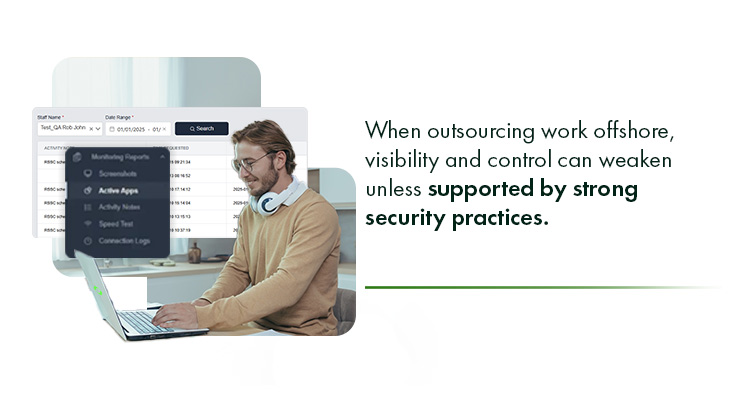
    When outsourcing work offshore, visibility and control can weaken unless supported by strong security practices.

    Many breaches happen not because of malicious intent, but because systems were unsecured or mismanaged.

    To cultivate a secure remote workforce, businesses must recognise common failure points and proactively prevent them.

    Unauthorized Access and Account Sharing

    Unauthorised access often occurs when remote workers share credentials, use weak passwords, or access sensitive files on unsecured devices.

    Without Zero Trust security models or multi-factor authentication (MFA) enforcement, it becomes difficult to verify who is accessing what, increasing exposure to insider threats or accidental misuse.

    Insecure Communication Channels

    Remote teams that rely on unencrypted messaging apps or public Wi-Fi expose data to interception.

    Without encrypted communication tools or a VPN for remote employees, messages, files, and login credentials can be easily compromised by cybercriminals monitoring unsecured traffic.

    Lack of Device or Network Monitoring

    Many offshore setups lack endpoint security solutions or device monitoring, leaving employers blind to risky behaviour such as unauthorised downloads, external drive usage, or access attempts at unusual hours.

    Without monitoring tools, it’s impossible to enforce data privacy and security consistently.

    How Remote Staff Protects Your Data and IP

    Remote Staff goes beyond standard outsourcing by embedding proactive, always-on security systems designed for distributed Philippine teams.

    Unlike unmanaged freelancers or generic global EORs, Remote Staff integrates technology, compliance, and HR oversight to give Australian SMEs continuous visibility and full legal protection.

    Encrypted Monitoring & Screen Capture Tools

    Remote Staff uses encrypted remote desktop security tools and DIWA monitoring software to help employers maintain compliance without invading privacy.

    These tools track productive hours, detect anomalies, and capture screens for accountability and to help prevent the misuse of sensitive information.

    Role-Based Access & Device Controls

    Role-based access guarantees that employees only view the information required for their duties. This aligns with secure remote access principles and the Zero Trust security model.

    Device requirements such as antivirus, patch updates, and VPN use help maintain consistent cybersecurity hygiene as well.

    Legal Protections (NDAs, CoR Contracts, Audit Trails)

    Every engagement includes NDAs, Contractor-on-Record agreements, and audit trails to protect confidential information and intellectual property.

    These legal protections reduce misclassification risks and secure the employment relationship with clear boundaries, benefits, and responsibilities.

    SOPs for Securing Data Privacy When Outsourcing to the Philippines

    Strong data security is not a one-time setup—it requires structured onboarding and ongoing compliance.

    The following SOPs help Australian SMEs build safe, predictable systems when working with Filipino remote teams:

    During Onboarding: Secure Setup Essentials

    Before work begins, businesses must guarantee their teams use protected systems and proper authentication.

    Best practices include:

    • Secure workstation configuration with endpoint security solutions

    • Enforced MFA

    • VPN setup for remote employees

    • Password management policy using encrypted vaults

    • Restrictions on BYOD (bring your own device) through approved BYOD security protocols

    • Cloud access segmentation by job classification

    Ongoing: Monitoring, Auditing, and Legal Coverage

    Long-term security requires continuous oversight, especially for remote workers handling sensitive data.

    Ongoing protections include:

    • Encrypted monitoring systems for secure visibility

    • Quarterly cybersecurity audits

    • Regular employee training on phishing and identity threats

    • Legal documentation updates (NDAs, access rights, termination procedures)

    • Audit logs documenting access, downloads, or policy violations

    • Encryption for all stored or transmitted work data

    Remote Staff vs Generic Freelancers and BPOs

    Choosing offshore talent is no longer just about cost savings—it’s about data privacy and security, legal compliance, and predictable outcomes.

    Australian businesses that rely on inexperienced freelancers or low-cost BPO vendors often face visibility gaps, vague accountability, and weak remote work cybersecurity standards.

    Remote Staff greatly mitigates (if not outright eliminates) these risks with structured oversight, secure remote access tools, and a compliance-first hiring ecosystem built for long-term stability.

    Remote Staff applying necessary Data Privacy and Security measures by using encrypted monitoring tools.

    Transparent Monitoring vs Unverified Workflows

    Many freelancers work without monitoring or supervision, so businesses may not be able to check how their data is accessed, stored, or shared.

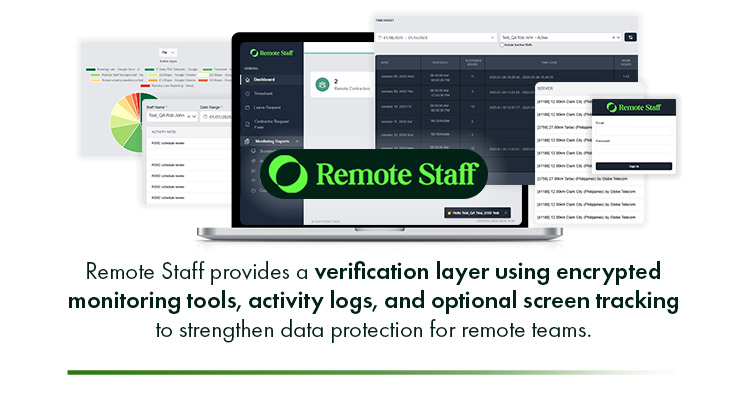
    Remote Staff provides a verification layer using encrypted monitoring tools, activity logs, and optional screen tracking to strengthen data protection for remote teams.

    This transparency supports stronger cybersecurity best practices and reduces exposure to unrecorded workflows or unsafe devices.

    Legal Accountability vs Risky Informal Contracts

    Freelancer agreements rarely meet the standards required for secure compliance for remote work, especially when handling sensitive information.

    In contrast, Remote Staff uses formal Contractor-on-Record and EOR-backed agreements that incorporate NDAs, intellectual property protection, and strict adherence to Philippine and Australian privacy standards.

    This protects businesses from misclassification risks and shields them from legal vulnerabilities tied to informal contractor setups.

    Scalable and Secure Hiring at Every Stage

    While BPOs may lock companies into rigid roles and long-term contracts, Remote Staff enables secure scaling across admin, finance, IT, marketing, and specialist roles.

    Each hire operates with secure remote access policies, MFA, endpoint security solutions, and clear data handling SOPs.

    Whether you need one worker or an entire team, you get a scalable system anchored in remote desktop security and Zero Trust security model principles.

    Frequently Asked Questions (FAQ)

    Hiring offshore talent raises understandable questions about data privacy and operational safety. Here are the concerns Australian SMEs bring up most often.

    Is it safe to outsource sensitive data to the Philippines?

    Yes. As long as you work with providers that follow the Philippine Data Privacy Act (DPA 2012), apply strict access controls, and implement cybersecurity best practices such as MFA, VPN for remote employees, and encrypted communication tools.

    Does outsourcing sensitive data to the Philippines violate Australian privacy laws?

    No. Cross-border processing is allowed under the Australian Privacy Principles (APPs) as long as the offshore provider provides the equivalent of required protections and the business establishes proper data handling agreements.

    How do I protect client data with offshore staff?

    Use secure remote access systems, enforce a password management policy, apply device restrictions or BYOD security protocols, and make sure staff operate under structured privacy SOPs paired with monitoring and audit trails.

    What’s the difference between Remote Staff and a BPO for security?

    BPOs centralise work but often limit visibility—Remote Staff provides individual hires with end-to-end compliance, activity monitoring, and role-based security controls, giving clients full oversight of their remote workforce.

    Can I monitor remote staff without violating privacy?

    Yes. Monitoring is allowed when workers provide consent, data is encrypted, and tools are designed for productivity tracking rather than personal surveillance, all of which Remote Staff incorporates into its processes.

    A remote VA following strict Data Privacy and Security protocols.

    Ready to Hire Securely and Stay Compliant?

    Modern remote hiring requires data privacy and security, airtight compliance, and strong cybersecurity frameworks that protect your business across borders.

    If you’re scaling a remote team, make sure you’re doing it with the right safeguards, policies, and partners in place.

    Request a call back to explore our privacy framework and see how Remote Staff keeps Australian businesses protected while giving them access to top-tier Filipino talent!

    • Want FREE AI Prompts for Different Areas of Your Business? Check out these 100 AI prompts
    • Curious About How to REDUCE Overhead Costs? Learn more here.
    • If you’re ready to experience the full advantages of working with a top global team, check out our 1,000 fully vetted and highly talented staff here.
  • Philippine Labour Law Guide for Foreign Employers: How to Avoid Costly Mistakes When Outsourcing Overseas

    Philippine Labour Law Guide for Foreign Employers: How to Avoid Costly Mistakes When Outsourcing Overseas

    Many Western countries prefer to hire Filipino workers in healthcare, hospitality, and customer service because they are skilled, hardworking, fluent in English, and known for their go-getter attitudes.

    As a result, they hire Filipinos abroad, open offices in the Philippines, or work with PH business process outsourcing (BPO) to handle administrative work, customer support, and other non-core functions. Meanwhile, a growing number of companies with distributed teams also hire Filipino remote workers directly.

    Regardless of the setup, understanding Philippine labour laws is essential, as it allows you to tap into skilled Filipino talent without risking fines, worker claims, or other administrative complications from misclassification.

    Read on to know more. 

    Can Foreign Companies Hire Workers in the Philippines Without a Local Entity?

    As a general rule, foreign companies that want to do business in the Philippines (PH) must register a local branch, subsidiary, or regional headquarters with the Securities and Exchange Commission (SEC).

    This approach gives the foreign company full operational control, including the ability to hire Filipino professionals directly for various business functions. 

    However, it can be very time-consuming and costly, as the PH government requires a substantial capital investment and extensive administrative compliance. In addition to the SEC, you must also register with several other government agencies, such as:

    • Bureau of Internal Revenue (BIR);
    • Social Security System (SSS);
    • Home Development Mutual Fund (HDMF) or Pag-IBIG Fund; and
    • Philippine Health Insurance Corporation (PhilHealth).

    Common Hiring Models Available to Foreign Employers 

    Due to the difficulty and cost of setting up a local entity or branch, many Australian small and medium businesses (SMBs) prefer alternative hiring models, such as:

    • Independent Contractor Model – They engage freelancers, also known as independent contractors, through a service contract. In this arrangement, the foreign company pays an invoice for services rendered, and the contractor is responsible for their own taxes and benefits.
    • Employer of Record (EOR) – They work with a third-party provider, the EOR, which acts as the legal employer of the remote worker in their home country. Under this setup, the EOR assumes all legal liability for local compliance, including payroll taxes, mandatory benefits, and employment contracts. 

    EOR v. Contractor: What’s Legally Permissible? 

    Both setups are legally allowed. However, the difference lies in who becomes liable if the worker’s status is questioned.

    • Contractor – A service contract with an independent contractor is legally permissible only when the relationship is genuinely a business-to-business arrangement. For example, this applies when you need specialised expertise for a short-term project that your company cannot provide.
    • EOR – On the other hand, if you plan to work with a remote worker long-term, an independent contractor arrangement may not be sufficient. You will need to engage an EOR to protect your company from potential liability for misclassifying a worker – even if they’re based in the Philippines.

    The first option may seem cost-effective, but the line between an independent contractor and a regular employee blurs very easily, as this distinction is determined by law based on a fixed set of conditions, regardless of what your contract actually says.

    For example, classifying a remote worker as an independent contractor when they are, under Australian law, performing the duties of a regular employee can lead to significant penalties from the Fair Work Commission (FWC) and the Australian Taxation Office (ATO).

    Thus, many AU companies prefer to partner with an Employer of Record instead. 

    foreign employer

    Overview of Philippine Labour Laws for Foreign Employers 

    The Philippine Labour Code defines the Filipino worker’s rights and employer prerogatives. 

    Foreign employers operating in the Philippines – whether through local branches or subsidiaries – generally abide by local labour standards as a guide for fair treatment, workplace policies, and employer responsibilities.

    While Australian SMBs with Filipino remote workers are not required to follow the Philippine Labour Code, it’s still helpful to understand Filipino workers’ legal entitlements under the Code for better context.

    Let’s take a closer look. 

    Core Labour Code Provisions

    The PH Labour Code is built on the principle of social justice and looks at the labour force as the backbone of the country’s economy. Hence, it mandates the following minimum standards: 

    • Security of Tenure 
    • Wages and Compensation
      • 13th Month Pay 
      • Overtime Pay 
      • Premium Pay for Holiday
      • Night Shift Differential
    • Working Conditions 
    • Paid Leaves 
    • Labour Relations 
      • Collective Bargaining
      • Right to Self Organization 

    What Applies to AU Employers Hiring Remotely?

    Australian employers are only required to provide these minimum benefits if they have a registered office in the Philippines. Without one, they are not covered by the Philippine Labour Code.

    However, SMBs must still follow AU’s National Employment Standards (NES) when hiring remote Filipino workers, especially if those workers qualify as regular employees under Australian law. These include:

    • Maximum of 38 hours per week
    • Leave Entitlements
      • Annual leave; 
      • Personal/carer’s leave; 
      • Family and domestic violence leave
      • Parental leave; 
    • Termination 
      • Minimum notice of termination
      • Redundancy pay 

    Employee Classification: Contractor v. Employee 

    An employee’s classification depends on several factors. In the Philippines, a worker is considered a regular employee if the Four-Fold Test is met, which looks at:

    • Selection/Engagement 
    • Payment of Wages 
    • Power of Dismissal 
    • Power of Control 

    So if the employer hires the worker, pays their salary, can dismiss them, and controls how the work is done, that worker is considered a regular employee under Philippine law.

    The Risk of Misclassifying a Worker 

    The Four-Fold Test does not apply to Australian SMBs hiring Filipino workers remotely under a service contract. However, the FWC may still classify your remote worker as an employee under Australian law. This was the issue in the infamous Joanna Pascua case.

    In 2025, Pascua made headlines when the Fair Work Commission ruled that she was an employee, not an independent contractor, for an Australian company. As a result, the company had to pay heavy fines, super charges, legal costs, and deal with public backlash.

    Thus, the question: how can you tell if your remote “independent contractor” is really one?

    Key Criteria Defined by the Fair Work Commission

    Because of the Pascua case, the FWC reminds Australian employers to carefully classify employees using the “Whole of Relationship Test,” which looks at the following:

    • Real Substance 
    • Practical Reality 
    • True Nature of the Relationship 

    To find out these three factors, the FWC will look at all parts of the relationship between the parties, including the terms of the contract and what actually takes place in practice.

    Hence, they will review: 

    • The amount of control over how work is performed; 
    • Financial responsibility and risk;
    • Who supplies the tools and equipment; 
    • Ability to delegate or subcontract work; 
    • Hours of work; and 
    • Expectation of work as a going concern. 

    If the worker meets all these criteria, they are considered an employee of the Australian business. The company must then provide all minimum benefits and withhold taxes under Australian law, even if the worker is based in another country.

    Mandatory Employee Benefits for Remote Workers 

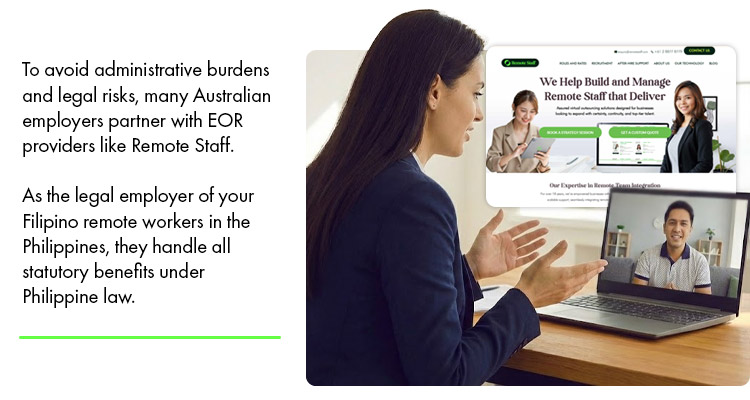
    To avoid administrative burdens and legal risks, many Australian employers partner with EOR providers like Remote Staff.

    As the legal employer of your Filipino remote workers in the Philippines, they handle all statutory benefits under Philippine law. The EOR cost will cover: 

    • Employee’s direct compensation; 
    • Statutory costs; and 
    • EOR service fee. 

    [wpforms id=”31142″ title=”false”]
    Here’s the breakdown of the statutory costs, as required by the PH Labour Code. 

    SSS, Pag-IBIG, and PhilHealth Contributions 

    SSS is the mandatory national insurance program that provides retirement, sickness, maternity, disability, and death benefits. Meanwhile, Pag-IBIG provides affordable housing loans, short-term cash loans, and a savings plan.

    PhilHealth, on the other hand, is the Philippines’ national health insurance, covering hospitalization, professional fees, and certain medical and surgical procedures.

    13th Month Pay and Leave Requirements 

    The statutory cost also includes the 13th-month pay, an extra payment for employees who worked at least one month in the year. It is paid annually, on or before December 24.

    Philippine employers (or in this case, the EOR) must provide five days of paid Service Incentive Leave (SIL) to employees who have worked for them for at least one year. Any unused SIL is converted to cash and paid at the end of the year.

    How Employer-of Record Services Handle These For You 

    Australian SMBs using EORs don’t need to worry about these statutory requirements. The EOR, as the legal employer, handles compliance, and the cost is included in their fees.

    Here’s a typical list of all the compliance matters they take care of so you won’t have to: 

    • Handle statutory contributions;
      • Registration
      • Calculation and Remittance 
      • Filing 
    • Administering 13th month pay; and
      • Accurate accrual 
      • Timely disbursement 
      • Tax compliance 
    • Managing leave requirements;
      • Service Incentive Leave 
      • Other statutory leaves 
        • Maternity 
        • Paternity 
        • Solo Parent 

    Simply put, the EOR handles most administrative and legal tasks, while SMBs focus on growing their core business, with the help of remote workers legally employed by the EOR.

    Payroll Tax Obligations for Foreign Employers Operating in the Philippines

    Foreign companies are only liable for Philippine taxes if they are considered to be doing business in the country. 

    Under the Foreign Investments Act, a company is “doing business” when it has a continuing commercial presence or carries out activities that show active business operations in the Philippines.

    Thus, an AU company is not liable for Philippine taxes just for hiring remote workers, as long as its operations remain based in Australia.  

    However, for AU companies that do operate there, here’s what they have to comply with: 

    • Withholding Taxes – Foreign companies with local branches are required to deduct the correct income tax amount from the employee’s monthly salary. The withheld taxes must then be remitted to the Bureau of Internal Revenue (BIR).
    • BIR Form 2316 & 2307 – Companies must file the employee’s annual tax return using BIR Form 2316, showing total pay and income tax withheld for the year.

    On the other hand, the BIR requires foreign companies to issue Form 2307 for payments to independent contractors, service providers, or suppliers in the Philippines. The recipients use the tax credit on this form to offset their own income tax.

    Labour Law Enforcement: What Foreign Employers Need to Know 

    The Department of Labour and Employment (DOLE) is the Philippine counterpart to Australia’s Fair Work Commission. It serves as the primary agency responsible for enforcing labour laws and protecting employees’ rights in the Philippines.

    When you partner with an EOR like Remote Staff, they handle all DOLE compliance requirements on your behalf.

    DOLE Inspections and Remote Worker Claims 

    The DOLE has the authority to conduct inspections in Philippine-based workplaces to ensure compliance with general labour standards, including wages, benefits, and leave.

    They also handle illegal dismissal complaints filed by aggrieved employees, including claims for backwages, reinstatement, and separation pay.

    How Remote Staff Minimises Your Legal Exposure 

    The benefit of partnering with an EOR is not to avoid Philippine laws – especially since AU employers with no business operations there are not directly liable for PH tax or labour regulations in the first place.

    Rather, the EOR acts as a legal safeguard that protects Aussie employers under Australian laws, particularly by preventing employee misclassification. 

    By formally designating your remote workers as employees of the EOR, you avoid the risk of the Fair Work Commission or the ATO probing your business for tax or labour compliance issues.

    Remote Staff’s Solution: Compliant Hiring Without an Entity 

    For the last 18 years and counting, Remote Staff has been supporting Australian employers with their remote staffing needs. As an EOR, they offer the following:

    Contractor-on-Record for Project-Based Talent 

    A Contractor-on-Record (COR) is a business-to-business arrangement where Remote Staff assists you with the payroll and documentation requirements of your independent contractor. The focus is primarily on compliance, including:

    • Managing payroll;
    • Issuing the necessary tax documents to assist the contractor with their tax returns; and
    • Fulfilling other administrative compliance requirements.

    Under this setup, the AU employer remains liable if the independent contractor is later deemed an employee under Australian law.

    EOR Basic for Long-Term, Full-Time Staff

    On the other hand, if you want a full-time arrangement with your remote workers, using Remote Staff’s EOR services is the better option. 

    Remote Staff becomes the legal employer of your staff in the Philippines. This means your Filipino remote workers are officially employees of Remote Staff, enjoying full job security and statutory rights under the Philippine Labour Code.

    They will handle and ensure compliance with the following:

    • Processing monthly payroll;
    • Calculating and remitting all taxes and mandatory contributions; and
    • Ensuring employees receive 13th-month pay and other mandatory paid leaves.

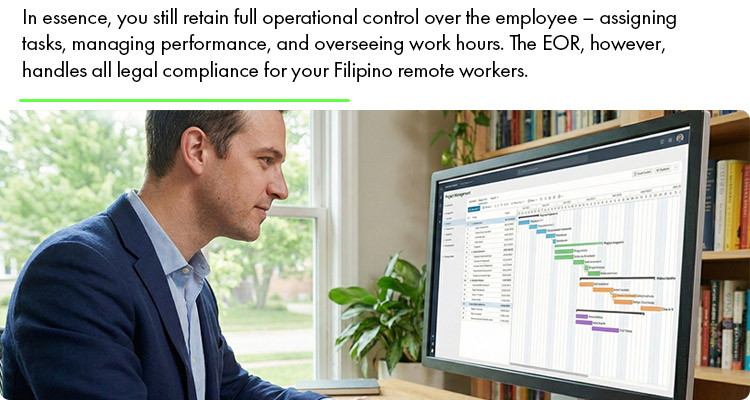
    In essence, you still retain full operational control over the employee – assigning tasks, managing performance, and overseeing work hours. The EOR, however, handles all legal compliance for your Filipino remote workers. 

    Fast Setup and Full Payroll Compliance 

    Since you already have remote workers, implementing an EOR setup is faster than an arrangement where Remote Staff would need to recruit and hire employees for you.

    Here’s how it works:

    1. Sign up and specify your requirements.
    2. Indicate the number of employees you need covered.
    3. Receive a quote from Remote Staff for a monthly or percentage-based EOR service fee per employee. 
    4. Choose the setup that works best for you.
    5. Remote Staff will then handle onboarding, administrative tasks, and payroll compliance. 

    Frequently Asked Questions (FAQs) 

    Here are some frequently asked questions regarding tax and labour matters for Australian employers hiring Filipino remote workers.

    #1. What Labour Laws Apply to Filipino Remote Workers Hired by AU Companies?

    If a remote worker is employed directly by an Australian company, Australian labour laws apply. However, if the worker is employed through an EOR, Philippine labour laws govern their employment.

    #2. Can I Hire a Contractor Instead of An Employee To Save Costs?

    Yes, however, this can expose your company to the risk of employee misclassification. In the recent Pascua case, the plaintiff was hired as a contractor, but the nature of her work resembled employment rather than a service contract.

    As a result, the Australian company that hired her was held legally liable for unpaid taxes and superannuation contributions, in addition to fines and legal costs. While hiring a contractor may seem cost-effective initially, it can become expensive over time if you aren’t careful.

    #3. Am I Responsible for Payroll Taxes as a Foreign Business?

    No, not if you have an EOR in place. As the legal employer, the EOR handles withholding and remittance of income taxes in the Philippines. 

    You also don’t need to worry about Australian laws, since the arrangement is between you and the EOR, not directly with the remote worker.

    #4. What Happens If I Misclassify a Remote Worker?

    Under Australian laws, you will be liable for the following: 

    • Penalties and fines; 
    • Back payments; 
    • Superannuation with administration fee and nominal interest; 
    • Leave entitlements; and
    • Unpaid payroll tax.

    These are on top of the reputational damage resulting from the negative media coverage and public backlash. 

    #5. How Can I Ensure I’m Compliant Without Opening a PH Entity? 

    Australian employers are increasingly shifting from direct hiring to partnering with an EOR like Remote Staff. Since the EOR is registered in the Philippines, this fulfills the legal requirement for an employer to operate within the country.

    Moreover, you can be confident that your Filipino remote workers are paid accurately and legally, without your company being liable for misclassification in either the Philippines or Australia.

    Stay Compliant with Labour Laws – Without the Legal Headaches 

    Filipino professionals continue to be among the most in-demand employees, regardless of their location. Despite the distance, many Australian employers prefer to work with them due to their quality and cost-effectiveness.

    Fortunately, there is a legal and ethical way to achieve this, without any undue hassle or stress on your part.

    Through Employers of Record such as Remote Staff, you can take comfort in knowing that you are providing your remote workers with job security under Philippine law, while simultaneously protecting your company from any legal issues under Australian law.

    For more information about EOR services, book a free consultation now

  • Philippine Contractor Payroll Compliance: A Guide for Foreign Businesses who want to outsource

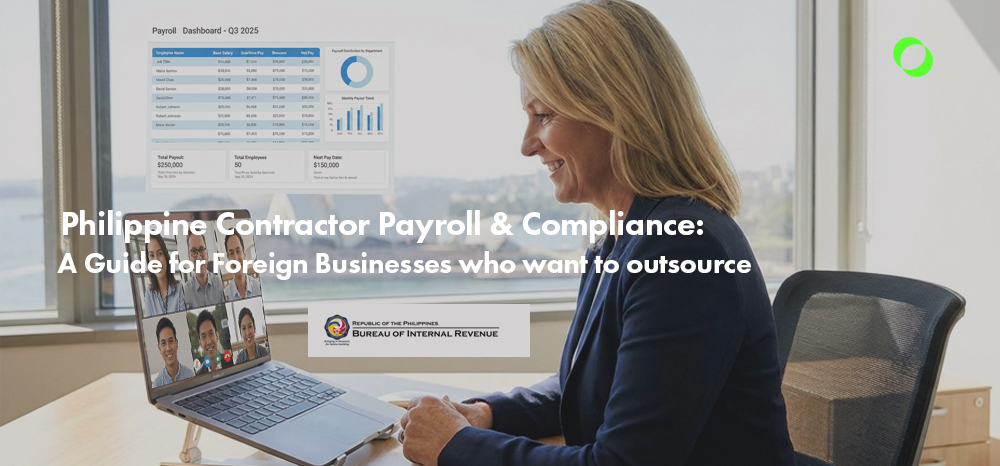
    Philippine Contractor Payroll Compliance: A Guide for Foreign Businesses who want to outsource

    Hiring in the PH provides skilled, cost-effective talent and easier team scaling. However, many foreign businesses struggle with compliance and contractor payroll in the Philippines, risking legal and financial issues.

    Misclassifying contractors, overlooking tax obligations, or ignoring statutory contributions can lead to disputes, fines, and unexpected costs.

    For example, in the high-profile Joanna Pascua case, a Filipino paralegal working remotely for an Australian firm was classified as an independent contractor, but the Fair Work Commission ruled she was in fact an employee, entitling her to full workplace protections.

    This guide explains what foreign companies need to know to legally hire independent contractors in the Philippines.

    Hiring Filipino Contractors- What You Need to Know

    Hiring Filipino Contractors: What You Need to Know

    Before engaging contractors, it’s important to understand the legal and compliance requirements that govern such arrangements in the Philippines:

    Are Independent Contractors Legal in the Philippines?

    Yes. Independent contractors are fully legal in the Philippines, provided the contractor has full control over how and when the work is done.

    The key is ensuring that their working arrangements do not satisfy the conditions that may qualify them as employees instead.

    If a contractor is treated like a regular employee—following fixed schedules, receiving direct supervision, or using company-provided tools—they MAY be legally reclassified, triggering statutory obligations and potential penalties.

    Contractor vs. Employee: What’s the Real Difference?

    Contractors are self-employed professionals who:

    • Determine their own workflow and schedule
    • Use their own tools and methods
    • Are usually paid per project, milestone, or deliverable
    • Do not receive statutory benefits such as SSS, PhilHealth, Pag-IBIG, or 13th-month pay

    Employees, in contrast:

    • Follow company rules, schedules, and supervision
    • Are entitled to statutory benefits and protections under Philippine labor law
    • Must have contributions made to government agencies and receive mandatory leaves and 13th-month pay

    Understanding this distinction early is essential.

    Misclassification can lead to legal challenges, fines, or retroactive payments—issues highlighted in cases like Joanna Pascua’s, where improper classification exposed the company to significant legal risk.

    Payroll Requirements for Contractors in the Philippines

    Payroll Requirements for Contractors in the Philippines

    When hiring Filipino contractors, understanding payroll obligations is crucial to stay compliant and avoid penalties.

    Contractors are generally responsible for their own taxes and benefits, but foreign companies must properly handle payments and reporting to meet Philippine regulations.

    Withholding Tax and Invoicing Rules

    Contractors in the Philippines typically issue official invoices for their services.

    Under Philippine tax law, the client (your company) is generally responsible for withholding a portion of the contractor’s income tax and remitting it to the Bureau of Internal Revenue (BIR).

    For foreign entities without a Philippine legal presence, you cannot remit directly to the BIR. In practice, this is often handled by:

    • Engaging a local partner or service provider (like an Employer of Record or payroll service) to manage withholding and tax remittances on your behalf.
    • Structuring the contract so the contractor is responsible for their own taxes, with clear terms in the agreement.

    Ensuring proper invoicing and tax handling, whether via a local partner or agreed to be handled directly by the contractor, prevents compliance issues and reduces the risk of fines.

    Should You Cover SSS, PhilHealth, and Pag-IBIG?

    Even though independent contractors are not employees, you can choose to offer benefits like SSS, PhilHealth, or Pag-IBIG as voluntary incentives or perks.

    For example, if you provide SSS contributions for a contractor, the safest way is to let the contractor remit the benefit themselves as voluntary contributions.

    However, your contract with them should explicitly state that they are responsible for their own SSS, PhilHealth, and Pag-IBIG payments.

    This ensures they remain legally independent and protects you from inadvertently qualifying as their de facto employer.

    To avoid confusion, your contract should clearly specify whether contributions are voluntary or the contractor’s responsibility, and that these benefits do not change their legal status as an independent contractor.

    Paying in PHP vs. Foreign Currency

    While contractors may prefer payment in foreign currency, local regulations generally require reporting income in Philippine pesos (PHP).

    Paying in PHP simplifies compliance with invoicing and tax rules, while foreign currency payments may require additional documentation and foreign exchange reporting.

    Contractor Compliance Risks for Foreign Employers

    Hiring Filipino contractors is straightforward, until compliance issues arise.

    Foreign companies, especially those without a local entity, face unique risks when contracts, tax handling, or working arrangements are not set up correctly:

    Misclassification Penalties

    Misclassifying a Filipino contractor as an independent worker when they function like an employee can lead to serious consequences.

    Penalties may include back pay, unpaid taxes, and potential legal or financial liabilities in your home country.

    Contractor Disputes and Legal Loopholes

    Contractors can raise complaints if they believe they were underpaid, misclassified, or unfairly terminated.

    While Philippine agencies like DOLE and the NLRC typically cannot enforce rulings against foreign companies without a local entity, these disputes can still create serious problems.

    Issues often escalate when a contractor presents evidence showing the setup resembled an employer–employee relationship. Red flags such as fixed schedules, daily supervision, long-term exclusivity, or company-provided tools can:

    • undermine the legitimacy of the contractor arrangement,
    • expose your business to claims for back pay, and unpaid taxes,
    • create compliance risks in your home country

    Clear contractor agreements and proper management practices are essential to avoid these loopholes.

    How to Stay Compliant Without a Philippine Entity

    Hiring Filipino contractors is possible even without setting up a local presence.

    However, staying compliant with tax rules, labor laws, service contractor requirements and payroll checklists in the Philippines would involve choosing the right setup.

    Below are the main options for hiring remote contractors in the Philippines:

    DIY Payroll

    You manage everything independently: contracts, contractor payroll, tax handling, and compliance with labor laws.

    In a DIY setup, the contractor is responsible for filing and remitting their own taxes because foreign companies generally cannot remit withholding taxes directly to the BIR.

    This option is risky because:

    • Foreign companies cannot legally remit taxes to the BIR without a Philippine entity, so the contractor must handle their tax compliance entirely.
    • One mistake in classification, invoicing, or documentation can still lead to penalties.
    • You must ensure the contractor agreements in the Philippines clearly state that the contractor is solely responsible for their tax filings.

    DIY only works if you already have strong legal and tax expertise in compliance laws in the Philippines.

    BPO (Business Process Outsourcing Provider)

    A BPO provides services through its own employees, managing their tasks, schedules, and performance internally, which keeps your business legally safe from employment risks for the workers provided by the BPO.

    However:

    • They do not take responsibility for any contractors you hire directly.
    • If you engage talents outside the BPO, you remain liable for classification, disputes, payroll, and tax compliance for contractors.
    • While a BPO can reduce administrative work, it does not shield your business from legal or tax risks for your independent contractors.

    Employer of Record (EoR)

    An Employer of Record is a third-party entity that postures as the official employer in the Philippines while you retain complete control over your remote team’s output and work.

    What Is an EoR?

    An EoR:

    • Handles contractor payroll, statutory benefits, and tax compliance on your behalf.
    • Ensures full alignment with labor laws in the Philippines, including proper employee classification.
    • Manages government registrations with SSS, PhilHealth, Pag-IBIG, and BIR.

    It’s the easiest and safest way to avoid misclassification, facilitate a smooth payroll process, and HR compliance in the Philippines.

    How an EoR Solves Your Tax and Legal Burdens

    Using an EoR such as Remote Staff removes nearly all compliance risks because we:

    • Become the legal employer on paper.
    • Handle all statutory benefits, government contributions, tax filings, and payroll regulations in the Philippines.
    • Prevent misclassification disputes like those seen in high-profile contractor cases.

    With Remote Staff as your EoR, you maintain control over day-to-day tasks and performance while the EoR carries the liability for the proper contractor payment process, documentation, and employee classification in the Philippines.

    When to Transition From Contractor to Employee (EOR Path)

    When to Transition From Contractor to Employee (EOR Path)

    As your team grows, it’s important to know when to transition contractors to employees under an EoR.

    Signs You’ve Outgrown Contractor Status

    You may need to move contractors to full employment if they:

    • Work full-time or exclusively for your company.
    • Follow a fixed schedule or detailed instructions from your team.
    • Require company-provided tools, systems, or training.
    • Need long-term stability or benefits to retain talent.

    These indicators show the relationship is more akin to that of full-time employment, and using an EoR ensures compliance while offering benefits and statutory protections.

    Hybrid Hiring Models (Contractor + EOR)

    Many businesses start with contractors and gradually move to a hybrid setup:

    Independent Contractors with Optional COR

    Independent contractors handle short-term, project-based work.

    Since there are still compliance risks, you can use a COR (Contractor-on-Record) provider to manage invoicing, tax reporting, and other administrative obligations on their behalf.

    A COR handles compliance and administration, but the main difference from an EOR is that the contractor remains an independent worker, not an employee under Philippine law.

    So they are not entitled to statutory benefits unless you voluntarily provide it to them.

    This makes COR a lower-cost solution, ideal for short-term contractors or project-based engagements.

    EOR-Managed Employees

    EOR-managed employees cover core functions, payroll, benefits, and full statutory compliance.

    This setup lets businesses scale flexibly while staying fully compliant with labor laws, payroll regulations, and tax compliance.

    Real Life Case Example: Scaling a 10-Person Remote Team

    Note: Real names have been withheld upon request.

    An Australian company started with three independent contractors in the Philippines for project-based work. As they expanded, they adopted a hybrid model:

    • Independent Contractors with COR: Short-term contractors managed through a Contractor-on-Record (COR) service to handle invoicing, tax reporting, and compliance without changing their employment status.
    • EOR-Managed Employees: Core roles transitioned under an Employer of Record (EOR) to handle payroll, statutory benefits, and labor law compliance.

    This setup allowed the company to scale to a 10-person remote team while maintaining proper classification and compliance.

    Why Choose Remote Staff for Contractor Payroll and Compliance

    Why Choose Remote Staff for Contractor Payroll and Compliance

    Looking for a reliable EOR or COR to manage your Filipino contractors? Remote Staff provides expert support to keep your team compliant and productive.

    Deep Local Experience and Infrastructure

    With 17+ years in the Philippines, Remote Staff has the local knowledge and systems to manage payroll, statutory contributions, and compliance efficiently.

    • Fully aligned with labor laws, payroll regulations, and tax compliance.
    • Trusted by 3,000+ SMEs across Australia and the US.
    • Local HR and legal team ensures smooth handling of contractor agreements.

    Seamless Contractor-on-Record Onboarding

    Remote Staff’s Contractor-on-Record model allows you to hire quickly while remaining compliant:

    • Onboard contractors within days.
    • Clear contracts specifying tax and statutory obligations.
    • Manage day-to-day work while Remote Staff handles payroll, benefits, and reporting.

    Designed for AU SMEs & Long-Term Compliance

    Tailored for Australian small and medium enterprises, Remote Staff ensures:

    • Long-term compliance with labor laws and tax compliance.
    • Efficient contractor payment process and payroll handling.
    • Reduced administrative burden, letting you focus on managing your remote contractors.

    Frequently Asked Questions (FAQ)

    Below are common questions foreign businesses ask about hiring Filipino contractors:

    Do I need to pay taxes for my Filipino contractor?

    Generally, contractors are responsible for their own taxes.

    As a foreign employer, you should specify this clearly in the contract to avoid being considered the de facto employer.

    Using an EOR or Contractor-on-Record service can help manage compliance safely.

    Is it legal to pay contractors via PayPal or Wise?

    Yes, paying through platforms like PayPal or Wise is legal, but you must ensure invoices are accurate, payments are properly documented, and any applicable taxes or reporting obligations are met.

    How can I prevent misclassification?

    Clarify in the contract that the worker is an independent contractor, set project, or output-based payments, avoid fixed schedules or daily supervision, and do not provide company tools unless necessary.

    An EOR can help enforce proper classification.

    What’s the difference between an EOR and Contractor-on-Record?

    An EOR and a COR are similar in that both handle payroll, tax reporting, and compliance, reducing your administrative and legal risks while letting you retain control over your team’s daily tasks.

    The main difference is that with an EOR, the worker becomes a legal employee under Philippine law and receives statutory benefits, whereas with a COR, the contractor remains independent and statutory benefits are optional.

    Do I need to file reports to BIR or DOLE?

    If you hire contractors directly, you may need to handle tax withholding and reporting.

    Using an EOR or Contractor-on-Record service ensures all BIR, DOLE, and other statutory obligations are properly managed, even without you establishing a legal entity in the country.

    Want a Hassle-Free Way to Stay Compliant When Paying Filipino Contractors_

    Want a Hassle-Free Way to Stay Compliant When Paying Filipino Contractors?

    Hiring Filipino contractors offers foreign businesses access to skilled, cost-effective talent and flexible team scaling.

    However, navigating contractor payroll, tax compliance, and labor laws can be complex, with risks of misclassification, fines, and legal disputes.

    Remote Staff provides a comprehensive contractor management guide for foreign businesses, offering both Employer of Record (EOR) and Contractor-on-Record (COR) services.

    We handle payroll, tax reporting, statutory contributions, and compliance with labor laws, while you maintain control over your team’s day-to-day work.

    This ensures a safe, efficient, and legally compliant setup for managing contractors or remote employees in the Philippines.

    Using these models lets you focus on growing your business while staying fully compliant, whether you’re hiring short-term contractors or scaling a remote team long-term.

    Take the next step: schedule a call with Remote Staff today

  • Remote Staffing vs BPO vs Employer of Record: Which Is Better for Your Business?

    Remote Staffing vs BPO vs Employer of Record: Which Is Better for Your Business?

    Hiring in the Philippines gives you access to a skilled, English-speaking workforce at competitive rates.

    However, before you bring someone on board, you need to choose the right hiring model.

    Your decision affects how much control you have, the ease or difficulty of compliance, and a good chunk of your daily operations, especially if you outsource a significant portion.

    Below is a clear guide comparing the three most common global team outsourcing options to choose from:

    Understanding the 3 Most Common Hiring Models in the Philippines

    Before choosing how to hire in the Philippines, it helps to understand how each model works.

    These three offshoring strategies differ in how much control the client has over the worker, the extent of legal responsibility, and how much control you keep over day-to-day operations on that side of the world:

    What Is Remote Staffing

    What Is Remote Staffing?

    Remote staffing lets you work with Filipino professionals in two ways: direct hire or through an agency like Remote Staff.

    Direct Hire

    You can hire talent directly as employees in the Philippines. This gives you full control over their tasks, schedule, and workflow.

    You are also responsible for payroll, benefits, and legal compliance, which requires understanding local labor laws and registration processes.

    However, handling legal compliance and taxes for a direct hire can be difficult without a legal entity in the Philippines.

    Through an Agency

    When hiring independent contractors through an agency (like Remote Staff), the provider recruits, screens, and matches candidates to your requirements.

    The contractor works directly with you on day-to-day tasks, while the agency supports onboarding, provides monitoring tools, and assists with administrative tasks.

    You manage performance and workflow, as you would with an internal team member, but without incurring the need for internal HR administration.

    What Is a Business Process Outsourcing (BPO) Company?

    Business process outsourcing (BPO) delivers a service using its own employees.

    You pay the BPO for the output based on agreed metrics or service levels, and they decide how the work is done internally.

    You don’t manage or control their staff. You don’t set their schedules, processes, or pay. The BPO oversees everything — hiring, training, supervision, and workflow — while you receive the final results.

    BPOs work best when you want a hands-off setup for standardized, high-volume tasks and prefer to focus on outcomes rather than managing individual workers.

    What Is an Employer-of-Record (EOR)?

    An Employer of record services (EOR) legally employs your Filipino worker on your behalf.

    You source and select the talent, and manage their tasks and day-to-day work, while the Employer-of-record handles all legal and administrative responsibilities.

    This includes:

    • Payroll and contracts
    • Taxes and statutory contributions
    • Compliance with DOLE and BIR regulations
    • Mandatory benefits and local labor documentation

    For example, Remote Staff offers two distinct services: supplying independent contractors or using an EOR for the talents you directly recruited.

    Using an EOR lets you directly recruit your team and control their workflow without setting up a Philippine company or worrying about legal compliance.

    It’s ideal if you want direct sourcing and management of talent while avoiding HR, administrative, and legal burdens.

    Key Differences Between remote staffing, BPO, and EOR

    Key Differences Between remote staffing, BPO, and EOR

    When deciding remote staffing solutions vs EOR vs BPO, comparison across key factors can help you choose the best model for your business:

    Cost Comparison

    • Remote Staffing: You can hire talent directly as employees or as independent contractors through an agency.

    Costs are generally lower than hiring full-time local employees directly, though pricing varies depending on skills and whether you manage HR/admin yourself or use the agency’s support.

    • BPO: You pay a flat service fee for output or metrics. Pricing can be higher for fully managed services since the BPO handles staff, training, and operations.
    • EOR: You cover salaries and benefits like a local employee, plus the EOR fee. Costs are slightly lower than remote staffing and it avoids the cost of setting up a local entity and ensures compliance.
    • Remote Staffing: If hiring directly, you are responsible for legal compliance, payroll, and benefits.

    If hiring through an agency, reputable providers like Remote Staff can help manage compliance, onboarding, and labor requirements.

    • BPO: The BPO handles employment compliance for their own staff. You’re only responsible for overseeing the results of the BPO contract.
    • EOR: The EOR assumes all legal employment responsibilities, including taxes, statutory benefits, and labor compliance. You focus solely on managing the work itself.

    Talent Control and Cultural Fit

    • Remote Staffing: High control — whether you hire directly or through an agency, you manage tasks, workflow, and communication, and can integrate them into your company culture.
    • BPO: Low control — you receive output but don’t direct how the staff arrive at them. Testing for cultural fit is limited.
    • EOR: Medium to high control — you manage daily tasks and team culture, but the EOR handles HR and compliance in the background.

    Setup Time and Scalability

    • Remote Staffing: Fast to set up, whether hiring direct employees or contractors through an agency.

    Scaling is easy, as you can add more team members as needed.

    • BPO: Moderate setup; scaling depends on the BPO’s capacity and processes. Adjusting team size or workflow can be slower.
    • EOR: Quick setup without a local entity; scaling is straightforward since you can still choose who you hire while the EOR manages legal employment.

    Which Model Is Best for Australian SMEs?

    Australian SMEs face unique challenges when hiring overseas: maintaining control, moving quickly, and supporting hybrid or remote teams. Choosing the right model depends on your priorities for compliance, management, and flexibility.

    Outsourcing Without a Local Entity

    If you want entity-free hiring and access to Filipino talent without registering a local company, Remote Staffing, BPO, and EOR can all be viable options:

    • Remote Staffing: You can hire talent directly as employees or through an agency as independent contractors.

    Hiring directly without a local entity gives you full control over tasks and workflow, but it can be risky. You are responsible for payroll, benefits, compliance with Philippine labor laws, and avoiding misclassification of workers.

    Hiring through a reputable agency reduces these risks. The agency handles sourcing, onboarding, and basic administrative support, while you retain control over day-to-day work.

    • BPO: Pay for services based on output or metrics. The BPO manages its own staff and operations, so you don’t deal with HR or employment compliance.
    • EOR: You source and manage the worker, while the EOR handles payroll, contracts, statutory compliance, and benefits — letting you oversee their work without legal risk.

    All three options allow quick access to talent, though direct hiring without a local entity carries legal and compliance risks.

    Using a reputable agency or an EOR helps you mitigate these risks while still gaining fast access to skilled workers.

    When You Need Flexibility + Compliance

    Australian SMEs that need control over daily work while staying compliant can choose:

    • Remote Staff contractors: Flexible for project-based or ongoing tasks without full employment obligations.
    • EOR services: Full-time talent can be integrated into your team, while the EOR ensures compliance with local labor laws.

    This approach is ideal for hybrid or distributed teams that require both oversight and legal security.

    Full-Time vs Project-Based Hiring

    • Remote Staffing and EOR: Whether hiring independent contractors (short-term or long-term) directly or through an agency, or engaging talent via an EOR, you retain control over workflow and can fully integrate them into your team.

    Using a reputable agency or EOR adds safeguards because both manage legal, payroll, and HR responsibilities, ensuring compliance and reducing risk.

    The main difference is an agency recruits for you, while you recruit your own in an EOR.

    • BPO: Suited for ongoing, standardized processes where results or output matter more than managing individual workers.

    Common Myths About BPOs and EORs

    Common Myths About BPOs and EORs

    Misconceptions about BPOs, EORs, and remote staffing can lead to costly errors in decision-making. Here are the most common myths — and the truth behind them.

    “BPOs Are Always Cheaper”

    Many assume BPOs cost less because they bundle services, but fully managed operations often come with higher fees.

    In some cases, other talent acquisition outsourcing like remote staffing and employer-of-record arrangements are more cost-effective, depending on the role/s and level of control you need.

    “Remote Teams Are Less Reliable”

    With proper vetting, monitoring tools, and structured workflows, remote professionals can match or even exceed the performance of in-office teams.

    Reliability depends on the remote workforce management systems and support you put in place, not the work setup.

    “EOR Gives You Full Control”

    An EOR lets you manage day-to-day work while taking care of the legal and administrative responsibilities behind the scenes.

    You control tasks, workflow, and team culture, while the EOR remains the official employer on paper in the Philippines, handling payroll, statutory benefits, taxes, contracts, and compliance in remote hiring laws.

    However, there are limitations within the employment framework itself.

    For example, you cannot skip statutory benefits, abruptly adjust employment contracts, or change payroll schedules to suit your preferences.

    It’s best to consult with the employer-of-record to ensure that adjustments comply with local laws while keeping your team protected and operations running smoothly.

    Remote Staff’s Hybrid Solution: The Best of All Worlds

    Remote Staff offers a flexible approach that combines compliance, control, and long-term relationship continuity.

    In addition to our standard remote staffing option, we provide a separate Contractor-on-Record (CoR) model and an EOR solution as well.

    If you already have remote staff, you can choose to start with a CoR setup or an EOR model, or transition from CoR to EOR later — giving you full oversight of work while minimizing legal and administrative risks.

    How Contractor-on-Record Works_

    How Contractor-on-Record Works

    The Contractor-on-Record (CoR) model is a hybrid setup where Remote Staff acts as the administrative employer for your contractor, while you retain full control over their day-to-day tasks and workflow.

    It is similar to an EOR, as Remote Staff handles contracts and payroll. The key difference is that under a CoR, your talents retain their independent contractor status.

    This means they are not reclassified as employees, so you are not required to pay statutory benefits.

    However, if you prefer, you can still provide statutory benefits voluntarily.

    When to Switch from CoR to EOR

    As your team grows, takes on more critical responsibilities, or becomes more integrated with your core operations, transitioning to an EOR setup can be a smart move.

    While the CoR model offers flexibility and administrative support, it has limitations for teams that are central to your business.

    Relying on contractors for key operations might be viewed by regulators in your country as misclassification, increasing legal and compliance risks.

    Switching to an EOR ensures your team has full employment rights, while you continue to retain control over their work.

    This provides a safer, legally compliant structure that supports long-term growth, stronger integration, and team stability.

    Full Transparency + Local Support

    Remote Staff ensures visibility into performance, hours, and workflow while providing local support for compliance and administrative matters.

    This combination allows businesses to manage their teams effectively, maintain culture, and reduce risk — all without setting up a local entity.

    How to Choose the Right Hiring Model for Your Business

    Choosing between a remote staffing, CoR, or EOR setup depends on the pace of your team’s growth, the roles you need to fill, and your comfort level with legal and compliance responsibilities.

    Unlike most agencies, Remote Staff can provide the talent you need for any team size — whether it’s a small group of contractors, a larger team, project-based, part-time, or full-time positions.

    So if you’re keen to avail a CoR and EOR service but need additional staff, Remote Staff can also find suitable talents for you.

    That said, here’s a look at the options if you want more control over recruitment or you already have remote talents in your team you want to transition to an EoR for compliance:

    Business Size and Growth Stage

    • Startups or small teams (1–3 hires): CoR through an agency is often enough if you need speed, flexibility, and low commitment.
    • Growing teams (4–10 hires): EOR is ideal when you need structure, payroll support, and smoother operations.
    • Scaling companies (10+ hires or long-term teams): EOR ensures statutory compliance, employee stability, and lower long-term risk.

    Type of Roles (Tech, Admin, Back Office)

    • Project-based or flexible roles: CoR through an agency works well for freelance-style work such as design, development sprints, or short-term admin.
    • Operational or ongoing roles: EOR fits back-office, admin, customer support, and roles that require consistent workflows.
    • Critical or core-business roles: EOR is the safest option for engineers, long-term tech talent, or staff managing sensitive processes where regulators may view contractor arrangements as misclassification.
    • Need to hire within days? CoR or Remote Staffing through an agency gives you the fastest onboarding.
    • Moderate urgency + moderate compliance needs? EOR provides payroll, government remittances, and a smoother structure.
    • Long-term hires with exposure to your internal systems? EOR reduces risks, especially if regulators in your home country might view contractors as de facto employees.

    Here are some questions you can answer to better decide:

    [wpforms id=”30797″ title=”false”]

    Frequently Asked Questions (FAQ)

    Below are quick answers to the most common questions when choosing between BPO, CoR, and EOR models.

    What’s the main difference between BPO and EOR?

    A BPO provides managed services where the provider controls the team, processes, and output.

    An EOR lets you manage the work directly while the provider handles local employment, payroll, taxes, government remittances, and statutory benefits.

    Is Remote Staff considered an EOR or a BPO?

    Remote Staff is neither a traditional BPO nor a pure EOR.

    We operate a hybrid model that offers:

    • COR for flexible arrangements
    • EOR for complete statutory compliance

    This gives you more control than a BPO and more flexibility than a standard EOR.

    Do I need a Philippine entity to use any of these models?

    No. You can hire in the Philippines through Remote Staff without setting up a local corporation.

    A CoR and EoR allow you to operate legally without forming a Philippine entity.

    How fast can I hire through Remote Staff’s hybrid model?

    You can typically hire within days, depending on the role.

    CoR is the fastest, while the EoR may take slightly longer because they include additional steps for compliance, but onboarding is still quick compared to forming your own entity.

    What’s more compliant: hiring a freelancer or using an EOR?

    An EOR is significantly more compliant, especially for long-term or integrated roles.

    Freelancer arrangements can raise misclassification risks—both in the Philippines and in your home country—if the contractor functions like an employee.

    An EOR structure protects you by ensuring statutory benefits, taxes, and labor regulations are properly managed.

    Need Help Choosing Between Remote Staffing, BPO, or EOR_

    Need Help Choosing Between Remote Staffing, BPO, or EOR?

    Hiring in the Philippines gives you access to skilled, English-speaking talent at competitive rates.

    However, before you bring someone on board, you need to choose the hiring model that fits your goals.

    Each option — Remote Staffing, BPO, or EOR — offers different levels of control, compliance, and involvement in daily operations.

    Choosing the right model is a crucial part of outsourcing partner selection, helping you stay compliant, manage your team effectively, and avoid unnecessary risks.

    So whether you’re exploring outsourcing models for SMEs, startup outsourcing solutions or other offshore team building strategies, Remote Staff can guide you through the options and recommend the best setup based on your business size, timeline, and legal risk appetite.

    Take the next step: schedule a call with Remote Staff today.

  • Planning to Outsource Work to the Philippines? A Guide to Independent Contractor vs. Employee

    Planning to Outsource Work to the Philippines? A Guide to Independent Contractor vs. Employee

    As more Australian SMEs turn to the Philippines for scalable remote talent, proper worker classification has become increasingly relevant—even critical.

    The stakes are high: the Australian Fair Work Commission (FWC) recently reaffirmed in Pascua v Doessel Group Pty Ltd (2024-2025) that overseas workers may still be considered employees, not contractors, if the employment relationship factors reflect employee-level control and integration.

    This case resulted in 15 weeks’ compensation for unfair dismissal, reinforcing how costly misclassification can be – even when the worker lives offshore.

    The Philippines also maintains certain enforcement standards under the Labour Code, DOLE, and BIR—each regulating benefits, taxes, and employment status.

    For Australian businesses, this means a worker engaged offshore must still be classified correctly under both jurisdictions to avoid liabilities.

    Let’s analyse how and why to truly determine whether your Filipino talent is an independent contractor or employee – and to avoid costly mistakes while still reaping the benefits of outsourcing global talent.

    IN THIS BLOG

    Why Worker Classification Matters – Even When You Hire From the Philippines

    Correct labour classification protects your business from penalties, backpay disputes, and compliance failures.

    It also determines whether the engagement is legally viewed as a contract for services (contractor) or a contract of service (employee).

    For Australian SMEs relying on Filipino talent, misclassification risks extend across both Australian and Philippine law.

    Misclassifying a Filipino worker who performs employee-like functions can expose Australian businesses to compliance issues, disputes, and financial liabilities.

    Key risks include:

    • Exposure to unfair dismissal claims if the worker is terminated without a valid reason or proper process
    • Liability for underpayment where contractor fees do not meet certain requirements
    • Requirement to pay entitlements normally owed to employees, such as leave, public holiday rates, or penalty rates, if the arrangement is deemed as misclassified
    • Breaches of contracting laws, leading to penalties

    Tax and Payroll Risks for Australian Employers Hiring in the Philippines

    Even if the overseas talent is based in the Philippines, some regulations Down Under will still apply if they’re found to be misclassified – creating risks around taxes, pay, and compliance.

    Australian SMEs face:

    • Incorrect tax treatment for payments classified as contractor fees but functioning as wages
    • Exposure during ATO audits if contractor arrangements resemble employment
    • Increased scrutiny under Australia’s sham contracting laws
    • FWC jurisdiction if the employment relationship factors tie the worker to Australia

    In Pascua v Doessel Group, Pascua successfully claimed unfair dismissal in Australia. The FWC ruled she was an employee, not a contractor, because:

    • Her hours followed Australian business schedules
    • The employer exercised day-to-day control over her tasks
    • She used company tools and systems
    • Her role was part of core business operations

    This ruling confirms that misclassification risks apply even when workers are offshore.

    What Is an Independent Contractor in the Philippines

    What Is an Independent Contractor in the Philippines?

    An independent contractor operates as a self-employed professional under a contract for services, offering their expertise with full autonomy and minimal supervision.

    They typically manage their own tools, taxes, and workflows. Contractors are appropriate only when the engagement type truly reflects independence.

    Indicators of a contractor engagement:

    • Paid per project, milestone, or invoice
    • Exercises control over schedule and execution
    • Works with multiple clients
    • Uses personal equipment and systems
    • No entitlement to government-mandated employee benefits

    Key Characteristics Under Labour Law

    According to most labour guidelines, a contractor must demonstrate independence from employer control.

    These typically include:

    • Autonomy over work methods and schedule
    • Responsibility for personal taxes and compliance
    • Ability to subcontract or delegate tasks
    • Operation as a business, not an individual employee
    • No integration into the client’s organisational structure

    When Is It Safe to Hire Contractors?

    Contractor engagements work best for projects that are:

    • Scope-based rather than hourly
    • Not central to core business deliverables
    • Flexible, creative, or specialised
    • Short-term or seasonal
    • Performed with minimal oversight or reporting obligations

    If your relationship requires daily supervision, fixed hours, or KPIs, your contractor likely functions as an employee, creating misclassification risks.

    What Defines an Employee in the Philippines?

    A worker becomes an employee when the company exerts control over their time, tasks, and work methods.

    This creates a contract of service, which mandates full labour benefits, proper payroll handling, and regulated termination processes.

    Labour Code Criteria for Employment

    When hiring offshore talent, Australian employers must follow Australian employment standards, not rely on contractor labels alone.

    The Pascua v Doessel Group Pty Ltd case proved this clearly: even a Filipino worker based overseas can be deemed an employee under Australian law if the business exercises control, sets fixed hours, or integrates the worker into core operations.

    This is where an Employer of Record (EOR) becomes essential. An EOR applies the correct classification from the start, making sure the engagement satisfies the standards set for contractors under the law, regardless of what the contract states.

    It also prevents sham contracting, protects the business from FWC disputes, and provides compliant employment conditions for the worker.

    Mandatory Benefits and Employer Duties

    Employees are entitled to statutory protections and benefits, including:

    • Contributions to government-mandated benefit or insurance programs
    • Guaranteed wage protections and minimum pay standards
    • Access to paid leave entitlements
    • Overtime and public holiday pay where applicable
    • Clear, lawful termination procedures
    • Compliance with local job classification and employment regulations

    Contractor vs Employee: What’s the Difference?

    Employee vs contractor differences influence payroll, taxation, benefits, operational control, and legal liability.

    The differences are significant and must match the actual employment relationship.

    Key distinctions include:

    • Legal Relationship: contract of service (employee) vs contract for services (contractor)
    • Control: employees follow employer-defined workflows; contractors retain autonomy
    • Tools: employees receive and utilize company tools; contractors use their own equipment
    • Payments: employees receive payroll with taxes withheld; contractors issue invoices and presumably take care of their own taxes
    • Benefits: mandatory for employees; none for contractors
    • Schedule: fixed hours for employees; flexibility for contractors

    Visual Comparison Table: Contractor vs Employee

    To make the distinction even easier to understand, here’s a side-by-side comparison that highlights the core differences between an independent contractor and an employee.

    Factor Independent Contractor Employee
    Engagement Type Contract for services Contract of service
    Control High autonomy Employer controls work
    Tools Uses own equipment Employer-provided tools
    Payment Invoice-based Payroll with taxes withheld
    Benefits None Mandatory benefits required
    Hours/Schedule Flexible Fixed or employer-set
    Risk for AU SMEs High misclassification risk Low risk under compliance

    Example Scenarios for Remote Teams

    Here are some examples of companies successfully running remote teams:

    • Atlassian has long embraced distributed teams and remote collaboration, proving remote work can scale globally.
    • Canva is an Australian-owned unicorn with staff across multiple countries, leveraging remote teams for design, tech development, and support.

    These global companies show remote teams work, but only when roles are classified correctly, tools are in place, and compliance is managed.

    Common Mistakes by Australian SMEs

    What Are the Risks of Misclassifying Remote Workers from the Philippines?

    Misclassification exposes Australian SMEs to liabilities even at home Down Under, where regulators increasingly scrutinise offshore contractor arrangements.

    Common Mistakes by Australian SMEs

    The Pascua v Doessel Group Pty Ltd case showed that certain practices commonly applied to offshore contractors can cause the FWC to classify them as employees instead.

    The most frequent misclassification mistakes include:

    • Imposing fixed daily working hours that follow Australian business hours
    • Supervising and directing daily work tasks as if managing an internal employee
    • Assigning ongoing operational or core business duties instead of project-based work
    • Providing company email accounts, signatures, or internal tools
    • Setting KPIs, performance metrics, or billable-hour requirements
    • Expecting exclusivity or long-term availability inconsistent with contractor autonomy
    • Integrating the contractor into the internal team structure, including training others

    Consequences may include:

    • FWC unfair dismissal claims (as seen in the Pascua case)
    • Breach of sham contracting provisions
    • Liability for backpay, leave, and superannuation (where applicable)
    • ATO penalties for incorrect tax treatment
    • Legal fees and reputational risk

    Penalties can include:

    • Retroactive benefit contributions under Philippine law
    • Salary differentials and overtime payments
    • Tax liabilities in both Australian and Philippine jurisdictions
    • DOLE compliance orders
    • FWC compensation or reinstatement
    • Contractual disputes escalating into cross-border litigation

    Contractor-on-Record: A Compliant Alternative

    The Contractor-on-Record model guarantees that arrangements with contractors remain legally compliant while maintaining their autonomy.

    A Contractor-on-Record model provides:

    • Legally compliant contract for services drafting
    • Contractor payments through compliant channels
    • Documentation and invoice record-keeping
    • Basic compliance checks to avoid wrongful control
    • Tax reporting support for contractors

    Benefits Over Direct Contractor Payments

    Advantages include:

    • Lower misclassification risk
    • Cleaner audit trails for both Philippine and Australian regulators
    • Consistent, accurate payment processes
    • Eliminates the need for international remittances
    • Scalability toward EOR if the role evolves

    Onboarding Process Through Remote Staff

    Remote Staff’s onboarding has speed, clarity, and proper job classification:

    • Role scoping to confirm whether the contractor status is valid
    • Skills and identity verification
    • Legally compliant contract preparation
    • Set up of local payment systems
    • Alignment on start dates and engagement type

    When Should You Use an EOR?

    EOR becomes essential when your engagement type begins to look less like an independent contractor arrangement and more like an employee setup.

    As soon as increased control over output, fixed hours, company tools, or ongoing responsibilities start reshaping the employment relationship, an EOR guarantees compliance while maintaining operational continuity.

    This section explains when it’s time to shift from contracting freelancers to a more structured and compliant model that protects both parties.

    Moving from Freelancers to Full-Time Remote Teams

    Many freelancers evolve into core contributors, taking on regular schedules, long-term responsibilities, and deeper integration into daily workflows.

    At this point, the employee vs contractor differences narrow, and the engagement begins reflecting a contract of service rather than a contract for services.

    Thus, an EOR makes sure the worker’s employment status is compliant – so that you won’t have to, even as you maintain control over their output and schedule.

    Combining Flexibility and Compliance

    Combining Flexibility and Compliance

    An EOR lets Australian SMEs maintain flexibility in how they build teams while conforming to proper labour classification.

    Companies still retain direct control over results and outcomes while the EOR manages legal obligations tied to employment.

    This creates a balanced structure where autonomy and compliance coexist safely.

    Case Example: AU SaaS Company Scaling Legally

    Here are real examples of Australian companies with remote teams, demonstrating legitimate distributed-work success:

    • Atlassian — Global Distributed Workforce. Atlassian is one of Australia’s largest SaaS companies and a global advocate for distributed teams. Their “Team Anywhere” policy allows them to hire remote talent across multiple countries, including the Philippines.
    • Xero — Remote Talent Across APAC. Xero, a leading accounting SaaS platform, operates with remote and hybrid teams throughout APAC, including offshore talent. They emphasise compliance and structured remote work arrangements in all hiring regions.

    These companies demonstrate that remote hiring still works, but always within the boundaries of proper worker classification, local labour laws, and well-advised compliance.

    How Remote Staff Helps You Stay Compliant

    Remote Staff provides the structure, guidance, and legal clarity needed to reduce misclassification risks when hiring Filipino remote workers.

    Our services help Australian businesses navigate the complex employee vs contractor landscape and select the right engagement type based on real employment relationship factors.

    Helping You Navigate Australian Compliance Around Remote Worker Misclassification

    We help businesses assess whether a role aligns with contractor autonomy or employee-level control, as with the Pascua case mentioned earlier.

    Our compliance checks make sure that job classification matches day-to-day realities, preventing disputes.

    By aligning workflows with Australian regulations, we help you avoid penalties linked to the misclassification of employment status.

    Tailored Hiring Models for AU Businesses

    Remote Staff offers multiple engagement options, from true independent contractor arrangements to hybrid EOR or full EOR employment, depending on your needs.

    We evaluate your operational structure, tools, supervision level, and workflow to recommend the right model.

    This guarantees your employment relationship remains compliant as your team grows.

    Our pricing models are designed to be simple and predictable, giving SMEs full clarity on payments, onboarding costs, and legal coverage.

    We manage contracts, payroll, and benefit administration, so you won’t have to.

    With our legal infrastructure in place, your business stays protected from the consequences of misclassification in Australia.

    Frequently Asked Questions

    Below are the most common questions Australian SMEs ask when navigating worker classification, remote hiring, and compliant cross-border engagements:

    How do I know if my Filipino worker is a contractor or employee?

    Look at how the work is actually performed. If you set hours, supervise daily tasks, provide tools, or integrate them into ongoing operations, the relationship resembles a contract of service.

    If they maintain autonomy and manage their own workflow, they may fit better into a contract for services arrangement.

    Can I hire a Filipino contractor through Upwork and be compliant?

    Yes, but only if the worker operates independently and the engagement reflects contractor-style control and autonomy.

    If your oversight or expectations resemble a full-time employee relationship, hiring through a platform does not remove misclassification risks.

    What are the penalties for misclassifying Filipino workers under Australian law?

    Penalties can include unpaid wages, backpay, incorrect taxes, sham-contracting fines, and exposure to FWC claims.

    If your “contractor” qualifies as an employee under the conditions set by the law, regulators may rule the arrangement invalid, regardless of their location.

    Can Remote Staff help with contractor payroll compliance?

    Yes. We manage compliant payments, documentation, and reporting through our Contractor-on-Record model.

    This reduces the risk of blurring the line between contractor and employee.

    What’s the difference between EOR and Contractor-on-Record?

    A Contractor-on-Record supports true contractors by managing invoicing and documentation while preserving their autonomy.

    An EOR becomes the legal employer when employment relationship factors indicate a contract of service, handling benefits, payroll, and compliance.

    Avoid Misclassification–Hire Legally with Remote Staff

    Avoid Misclassification–Hire Legally with Remote Staff

    Misclassification exposes your business to unnecessary financial, legal, and operational risks—especially when employee vs contractor differences are misunderstood.

    Whether you need an independent contractor, a compliance-managed contractor-on-record, or a fully supported EOR model, Remote Staff gives you the legal coverage and on-ground support to hire confidently.

    Request a call back now and build your Filipino team without the risk—and without the hassles and costs of setting up a local entity!

    • Want FREE AI Prompts for Different Areas of Your Business? Check out these 100 AI prompts.
    • Curious About How to REDUCE Overhead Costs? Learn more here.
    • If you’re ready to experience the full advantages of working with a top global team, check out our 1,000 fully vetted and highly talented staff here.
  • The Foreign Employers’ Guide to Payroll Taxes in the Philippines

    The Foreign Employers’ Guide to Payroll Taxes in the Philippines

    Table of Contents

    Many Australian employers prefer hiring Filipino professionals for several reasons.

    The Philippines is home to more than 115 million people, most of whom are proficient English speakers. Moreover, its predominantly young population offers a large pool of skilled and work-ready talent, providing SMEs the world over with a competitive and reliable labour force.

    However, hiring overseas involves substantial paperwork and legal processes. Australia and the Philippines, for instance, each have their own laws governing labour rights and taxation requirements.

    In this guide, we provide a comprehensive overview of the payroll taxes you must comply with when hiring employees directly from the Philippines — and how you can significantly reduce the stress and administrative burden involved.

    Payroll Taxes You Must Know When Hiring Filipino Workers

    The tax requirements and statutory contributions for individuals and companies in the Philippines differ significantly from those in Australia.

    Let’s take a closer look at some of them:

    Philippines’ Income Tax Withholding Requirements (BIR 2307)

    The Philippine Bureau of Internal Revenue (BIR), imposes the following tax obligations:

    • Employer as Withholding Agent – The employer is legally required to act as the withholding agent, deducting the correct amount of income tax from the employee’s salary before payment and remitting it to the Philippine government. This obligation underscores the need to register as a business entity in the country.
    • Progressive Tax Rates – Individual income tax in the Philippines is calculated based on a graduated, progressive tax schedule. Those with an annual income of Php 250,000 or less are exempt from paying taxes, while higher earners are subject to progressively increasing rates, up to 35%.
    • Taxable Income Basis – Withholding Tax on Compensation (WTC) is applied to the employee’s taxable income, which is calculated as the gross salary minus mandatory contributions required by the Philippine government.

    Mandatory Contributions: SSS, PhilHealth, Pag-IBIG

    In addition to withholding taxes, employers are required to deduct the following mandatory contributions from their Filipino employees’ gross income.

    • Social Security System (SSS) – The law requires employers to deduct approximately 4.5%–9.5% of the employee’s monthly salary as contributions for retirement, disability, sickness, maternity, and death benefits.
    • Philippine Health Insurance (PhilHealth) – Employers are required to contribute a portion of the employee’s salary—part of a 5% total contribution, shared between employer and employee—to the Philippine government’s mandatory health insurance program, which covers hospitalization and medical services.
    • Home Development Mutual Fund (Pag-IBIG Fund) – An additional 2% of the employee’s basic monthly salary must be contributed to Pag-IBIG, the Philippine government’s affordable housing program, which also provides short-term loans and tax-free savings.

    13th Month Pay and Other Statutory Benefits

    The Philippines is one of the few countries that legally requires employers to pay a bonus equivalent to one month’s salary, to be given no later than December 24 each year.

    This bonus is tax-exempt up to Php 90,000; any amount exceeding this threshold is subject to income tax.

    In addition to the 13th-month pay, the Philippine government also requires employers to provide the following benefits, subject to certain conditions:

    • Service Incentive Leaves (SIL) – Five days of paid leave annually for employees who have rendered at least one year of service;
    • Holiday Pay – Employees are entitled to pay for all regular holidays even if they do not work;
    • Overtime Pay – Work performed beyond 8 hours must be compensated at an additional rate of at least 25% of the regular hourly rate;
    • Night Shift Differential – An additional compensation of at least 10% of the regular rate must be paid for work performed between 10PM and 6AM.
    • Maternity Leave – Female workers are given 105 days of paid leave during or after pregnancy, plus an optional 30 days without pay. There is an additional 15 days if the worker is a solo parent.
    • Paternity Leave – Married male employees are also entitled to 7 days of paid leave for the first four deliveries of their legitimate wife.

    Tax Responsibilities for Independent Contractors

    Independent contractors, also known as freelancers, handle their own income tax filings and work directly with businesses through service contracts.

    Under this setup, the contractor works independently and is not considered an employee of the company. They generally control the means and methods of their work, while the client only specifies the output they require.

    Should Foreign Employers Withhold Tax from Contractors?

    Foreign companies that work with independent contractors are not legally required to withhold taxes on their behalf.

    Since there is no employer–employee relationship and the company has no legal presence in the Philippines, both parties are treated as separate and independent from each other.

    However, this does not protect the company from employee misclassification issues, especially since the line between an independent contractor and a regular employee can easily be blurred in many remote work set-ups.

    What Happens if Contractors Don’t File Properly?

    Filipino independent contractors are required to file and pay their taxes both quarterly and annually. If a contractor fails to file on time, they may incur a penalty equivalent to 25% of the tax due for late filing or payment.

    While the direct penalties fall on the contractor, the foreign employer may still face indirect risks.

    For example, authorities may scrutinise the contractor’s records and discover that they are receiving income from a foreign entity that is not registered in the Philippines – thus leading to further investigation.

    PayPal, Wise, and Bank Transfer: Are These Compliant?

    Foreign companies typically use international payment platforms such as PayPal, Wise, or direct bank transfers to pay their independent contractors.

    Thus, the obligation to pay income taxes arising from legitimate professional and business transactions remains solely with the contractor.

    Still, AU businesses should take precautions when hiring and/or compensating their remote Filipino workers, which brings us to….

    The Problem with Paying Contractors “Off the Books”

    It may be tempting to pay independent contractors without documentation, contracts, or proper tax reporting to avoid withholding obligations.

    However, this “off the books” approach can be far more detrimental and may significantly increase legal and financial risks.

    Risks of Misclassification and Non-Compliance

    The cost of directly hiring Filipino workers goes beyond the upfront payment of salaries and benefits. For some Australian employers, it can also mean incurring legal costs for failing to properly classify their independent contractors vis-à-vis their regular employees.

    A classic example is the infamous case of Joanna Pascua, a Filipino remote worker who was classified by the Doessel Group (her employer) as an independent contractor.

    During a legal dispute that closely examined the nature of their working relationship, the Fair Work Commission ruled in Pascua’s favor. She was declared a regular employee based on her work responsibilities, her relationship with the company, and several other factors.

    As a result, the foreign company was heavily fined and faced tax obligations arising from the misclassification. Worse, it suffered reputational backlash — which is arguably even more costly.

    Audit Risks and Employer Liability with Regulatory Bodies

    Following the Pascua controversy, the FWC has reminded AU employers about the importance of proper classification of their distributed teams.

    If the FWC deems a remote contractor to be an employee under Australian law, the AU company will be immediately exposed to:

    • Superannuation Liability – The employer would be liable for compulsory Superannuation Guarantee (SG) contributions for the entire period of employment;
    • Super Guarantee Charge (SGC) – If these payments were not made quarterly, the employer is subject to the punitive SGC, which includes:
      • Unpaid superannuation amount;
      • Nominal interest component;
      • Administration fee per employer per quarter.

    Business Reputation and Worker Trust Issues

    Failing to comply with labor and tax laws can result in serious consequences for any Australian company.

    For example, in the Pascua case, many disgruntled workers were highly vocal, often sharing negative experiences on social media, which can significantly impact their employer’s reputation.

    Left unchecked, this can damage your brand’s reputation, especially in the age of #cancelculture.

    Ultimately, any shady allegations pertaining to how you treat your workers makes it much harder and more costly to attract high-quality talent in the future.

    Can Foreign Companies Hire Filipino Workers Without a Local Entity?

    As a general rule, foreign companies must set up local branches or subsidiaries in the Philippines before they can hire Filipino employees.

    Various laws and regulations, such as the Foreign Investments Act, require foreign entities to obtain a License to Transact Business in the Philippines from the Securities and Exchange Commission (SEC) before they can legally operate a branch or representative office.

    However, this can be costly, if not time-consuming, especially if you’re only planning to hire one or two Filipino employees. So, what’s the appropriate legal remedy?

    Many Australian companies prefer hiring Filipino workers for their skills and professionalism — even without establishing a local branch in the Philippines — through the following arrangements:

    • Independent Contractor Agreement – They directly hire Filipinos through a service contract. In this setup, the worker is paid for a specific deliverable or service, and is responsible for filing and paying their own taxes.
    • Employer of Record – Other Australian employers prefer hiring through an Employer of Record (EOR), wherein the latter acts as the legal employer of the Filipino remote workers. In this arrangement, the EOR handles all official responsibilities, including payroll processing, taxes, and other mandatory government contributions.

    EOR and COR: Tax-Compliant and Commitment-Friendly Alternatives

    Partnering with an EOR allows foreign companies to hire skilled remote Filipino workers without the risk of legal complications.

    Aside from an EOR, companies may also choose a Contractor-on-Record setup.

    Let’s examine the difference between the two:

    What Is a Contractor-on-Record?

    A Contractor-on-Record (COR) is another solution for foreign companies looking to hire global talent. While an EOR operates under a statutory employment model, a COR facilitates a service contract. They:

    • Ensure the legal compliance of a business-to-business relationship; and
    • Manage invoicing and proper tax documentation.

    However, unlike an EOR setup, there is no employer–employee relationship between the COR and the remote workers. As a result, the foreign company may still be held liable for employee misclassification.

    What Does an EOR Handle for Foreign Employers?

    The EOR takes care of the following legal and administrative matters:

    • Legal and Contractual Compliance
      • Drafting employment contracts;
      • Ensuring accurate employee status;
      • Registering the employee with all necessary PH agencies; and
      • Handling all termination procedures with the mandatory due process.
    • Payroll and Tax Administration
      • Handling payroll;
      • Withholding and remitting the correct taxes;
      • Remitting all mandatory contributions;
      • Issuing the necessary year-end tax forms; and
      • Ensuring the 13th month pay is correctly calculated and paid.
    • Benefits and HR Administration
      • Managing mandatory employee benefits;
      • Administering optional benefits;
      • Constantly monitoring changes in PH labour and tax laws.

    When to Use EOR vs. Contractor-on-Record

    Both EORs and CORs have their place, but the right choice depends on your company’s needs. Here’s a quick guide to help you decide.

    Contractor Onboarding (1-5 Hires)

    If you’re a small business or a startup still testing the market, it’s best to start with the COR model for greater flexibility and lower upfront costs.

    For example, if you’re an Australian startup, you may need two specialised professionals: a freelance graphic designer for a three-month campaign and a part-time marketing consultant.

    With only two remote workers, it’s more practical to use a COR, which can handle invoicing, payment processing, and verifying that each contractor has the proper documents and tax identification.

    Full-Time Remote Team Expansion (5+ Hires)

    As your workforce grows, roles become more defined throughout the team. Consequently, risk mitigation and stability become increasingly important.

    Consider an Australian tech company with 10 full-time software developers and customer success managers based in the Philippines. Given the nature of their work and the company’s growing demands, these roles now require fixed schedules, company-provided equipment, and ongoing supervision.

    This is where the EOR model becomes valuable. The EOR assumes the complex employer liabilities for 10 or more staff, including payroll and the remittance of mandatory contributions.

    More importantly, this model ensures that your company remains free from legal liability related to compliance, as the EOR is the legal employer of the remote workers on paper.

    Hybrid Workforce Models for Growing Businesses

    For hybrid teams, this table shows which option works best.

    Workforce Segment Role Type Model Rationale
    Core Operations
    • Full-time managers
    • Developers
    • Sales staff
    EOR These roles require integration, control, and retention and the EOR will guarantee legal compliance on your behalf.
    Special Projects
    • One-off consultants
    • Specialised auditors
    • Translators
    COR The roles are temporary, results-focused, and fully independent, so a COR will generally be sufficient.
    Initial Market Entry
    • First 1-2 hires to gauge market
    COR The COR can help you guarantee compliance to establish legal clarity and attract top talent quickly.

    How Remote Staff Manages Payroll Taxes End-to-End

    As an EOR and COR service provider, Remote Staff offers Australian businesses a fast, legally compliant, and hassle-free way to pay their Filipino employees.

    Since they are the legal employer, they assume all payroll risk and liability and manage the entire deduction process. They also provide a single, consolidated invoice covering the employee’s salary, benefits, taxes, and service fee.

    This streamlines compliance into a single monthly payment so SMBs can focus on managing performance, not paperwork.

    Remote Staff’s 18-Year Expertise in Philippine Compliance

    Remote Staff has spent the last 18 years helping Australian companies connect with skilled Filipino professionals remotely.

    Designed for AU & US SMEs

    Remote Staff understands that most small and medium enterprises (SMEs) don’t have dedicated legal teams to set up local entities for hiring overseas professionals.

    Thus, they handle compliance requirements to protect SMEs from misclassification and other labor and tax-related legal issues.

    Compliance with Philippine labor and tax laws, in addition to Australian regulations, can be time-consuming and costly if Australian companies have to manage both themselves.

    Fortunately, Remote Staff has a dedicated team of Filipino accountants, HR managers, and legal professionals who are well-versed in Philippine labor laws, tax rates, and mandatory contributions.

    They handle all statutory requirements, including withholding taxes, statutory benefits, and other legally mandated entitlements for your Filipino remote workers under Philippine law – so you can focus on making the most out of your offshore team without worries.

    Transparent Pricing and Fast Setup

    Remote Staff’s EOR services are transparent, with a simple monthly fee that can be fixed or based on a percentage, according to your preference.

    This monthly fee covers the employee’s salary, statutory contributions (SSS, PhilHealth, Pag-IBIG), and the EOR service fee. Their upfront pricing also helps you plan and budget according to your requirements.

    [wpforms id=”31142″ title=”false”]

    Frequently Asked Questions (FAQ)

    Here are some frequently asked questions about tax responsibilities when directly hiring remote workers vis-a-vis using an EOR.

    #1. Do I Need to Pay Payroll Tax in the Philippines If I Hire a Remote Worker?

    No, you don’t have to pay PH payroll taxes when you work with an independent contractor. Under Philippine law, independent contractors are responsible for filing their own taxes quarterly and annually.

    #2. Am I Liable for SSS or PhilHealth If My Worker Is A Contractor?

    No. Just like filing income tax returns, Filipino independent contractors are required to voluntarily pay their SSS, PhilHealth, Pag-IBIG contributions.

    #3. Can I Deduct Tax From A Contractor’s Pay?

    As a foreign company without a local entity (non-resident foreign corporation), you are not legally required to withhold taxes from your Filipino contractor’s pay.

    However, if that independent contractor meets the AU labour law definition of a “regular” employee, you will be required to withhold Pay As You Go (PAYG) income tax.

    #4. What Are the Penalties for Non-Compliance?

    If the AU courts or the FWC find that your “independent contractor” qualifies as a regular employee, your company may face significant penalties from both the Australian Taxation Office (ATO) and the Fair Work Commission.

    Under the ATO rules, aside from PAYG, you will also be liable for the Superannuation Guarantee (SG) charge of 12% of the employee’s earnings for each missed quarter.

    The SGC includes:

    • Unpaid SG amount;
    • Nominal interest (10%); and
    • Administration fee.

    For FWC-related penalties, the Australian company will be required to pay the difference between the worker’s actual pay and the applicable minimum wage or award rate.

    In addition, the deliberate misclassification of an employee as an independent contractor may result in fines of up to AUD $99,000, and up to AUD $495,000 for major corporations.

    #5. How Do I Switch From Freelance for a Compliant Model?

    A lot of AU employers are shifting from direct hiring to partnering with an Employer of Record that becomes the legal employer of their remote workers.

    This process is generally faster because there’s no need for vetting or interviews since the employees are already in place. Remote Staff will:

    • Assess your need;
    • Provide a quote (fixed monthly fee or a percentage-based rate); and
    • Handle all administrative and regulatory responsibilities.

    Ready to Hire in the Philippines Without the Tax Headaches?

    The way we work is changing fast.

    Talent is no longer confined by location, giving you the opportunity to work with skilled professionals worldwide at the most competitive rates.

    By partnering with Employers of Record like Remote Staff, you can offer opportunities to your remote workers while ensuring compliance with both AU and PH laws. Most importantly, you can do so legally and ethically in both countries.

    So, what are you waiting for?

    Check out our EOR calculator or book a free consultation now for more information and assistance.

  • EOR Philippines: Your Guide to Hiring Legally Through an Employer of Record

    EOR Philippines: Your Guide to Hiring Legally Through an Employer of Record

    Remote hiring in the Philippines is a great opportunity to access skilled and cost-effective talent, but navigating local labour laws, government registrations, and mandatory benefits can be challenging.

    For foreign companies or businesses without a local entity, managing DOLE (Department of Labor and Employment) compliance, payroll, and statutory contributions can quickly become complex and time-consuming.

    For instance, a recent high-profile case illustrates just how risky things can get: Joanna Pascua, a Filipino paralegal working remotely for an Australian firm, was classified on paper as an independent contractor. However, the Fair Work Commission ruled that she was in fact an employee, entitling her to Australian workplace protections.

    This landmark ruling is a wake-up call for businesses that hire offshore workers, especially in Australia: misclassifying remote staff can lead to serious legal and financial exposure. That is where an Employer of Record (EOR Philippines) becomes not just useful, but essential — helping you structure remote employment, stay compliant, and protect your company as you reap all the benefits of offshoring.

    What Is an Employer of Record (EOR)?

    An Employer of Record (EOR) is a service provider that legally employs workers on behalf of your company.

    While your business supervises the employee’s daily tasks, the EOR takes care of all employment-related responsibilities, including contracts, payroll, benefits, and regulatory compliance.

    For companies hiring in the Philippines without a local legal entity, an EOR ensures full compliance with local labour laws and government requirements while reducing administrative burdens.

    How Does an EOR Work in the Philippines?

    An employer of record in the Philippines acts as the official employer and ensures adherence to all labour regulations.

    Here’s what that involves:

    1. Legal Employment and Government Registration

    The EOR signs the employment contract and handles registrations with all regulatory bodies:

    • DOLE (Department of Labor and Employment)
    • SSS (Social Security System)
    • PhilHealth
    • Pag-IBIG Fund
    • BIR (Bureau of Internal Revenue)

    This ensures your employees are fully recognized and protected under Philippine law.

    1. Payroll and Mandatory Benefits

    The employer of record in the Philippines manages:

    • 13th-month pay (required for all employees)
    • Overtime pay, night differential, and holiday pay
    • Leave benefits, including service incentive leave
    • Statutory contributions to government agencies
    • Tax withholding and reporting

    This protects your business from penalties for non-compliance.

    1. HR Compliance and Risk Management

    The EOR ensures:

    • Proper employee classification
    • DOLE-compliant contracts and termination procedures
    • Handling employee grievances or disputes
    • Safe and legal working conditions

    You maintain control over tasks, work hours, and performance, while the EOR handles the legal and administrative side.

    Why Choose an EOR When Hiring in the Philippines

    Why Choose an EOR When Hiring in the Philippines?

    When hiring in the Philippines, businesses often weigh different models: independent contractors, local direct hires, or through an employer of record.

    Each option has advantages and risks, especially around compliance, payroll, and labour law obligations:

    EOR vs. Contractor Model vs. Local Direct Hire

    Feature EOR Model Contractor Model Local Direct Hire
    Setup Time Hire within days; no local entity required Immediate; no legal setup needed Weeks to months to establish a local entity in the PH
    Legal Employer EOR is the legal employer You are technically a client, not the employer Your company is the legal employer
    Payroll & HR EOR manages payroll, taxes, and benefits Client pays the agreed fees, but because the contractor handles their own taxes, misclassification or errors can create compliance risks. Company manages payroll, statutory contributions, and HR in-house
    Compliance Fully DOLE- and BIR-compliant Risk of misclassification; limited protections Full compliance required; company responsible for all of it
    Benefits Paid 13th-month pay, SSS, PhilHealth, Pag-IBIG No statutory benefits, only contractually agreed perks 13th-month pay, SSS, PhilHealth, Pag-IBIG, leave, other statutory benefits
    Costs Lower upfront and operational costs Often lower initially, but with significant risk of fines or legal costs Higher costs due to HR staff, legal support, and local office
    Flexibility Easy to scale team up or down Flexible; but limited control and high legal risk Less flexible; tied to local entity and contracts
    Risk Low legal risk High legal and financial risk if misclassified Moderate risk; compliance errors possible without proper HR support

    Summary: Choosing employer of record services in the Philippines allows businesses to hire quickly, stay fully compliant with Philippine labor regulations, and reduce operational burden.

    Contractors carry high legal and compliance risks in Australia, while local direct hires require a more involved setup for HR and administrative resources.

    When hiring in the Philippines, compliance with labour and tax laws is critical. Let’s dive deeper into how each hiring model handles these obligations:

    Feature EOR Model Contractor Model Local Direct Hire
    DOLE Compliance Fully compliant; EOR ensures contracts and labour standards Limited; high risk of misclassification Company must ensure full compliance
    Tax Withholding & Reporting Managed by EOR Often not handled; client may be liable Company manages all BIR reporting and withholding
    Government Contributions SSS, PhilHealth, Pag-IBIG fully managed Not provided Company must manage in-house
    13th-Month Pay Included and managed Not provided Company responsible
    Risk of Penalties Low High Moderate; depends on HR/finance accuracy

    Summary: An EOR ensures full compliance with labour laws, taxes, and statutory contributions (SSS, PhilHealth, and Pag-IBIG contributions), and 13th month pay in the Philippines, reducing the risk of fines, penalties, or legal disputes.

    Contractors are high-risk due to misclassification, while local direct hires require dedicated HR and legal management to stay compliant.

    Philippines EOR vs PEO

    Philippines EOR vs. PEO

    In addition to comparing contractors and local direct hires, businesses may also encounter Professional Employer Organizations (PEOs) when hiring in the Philippines.

    How are they different?

    While PEOs and EORs sound similar, there are key differences that affect compliance, legal responsibility, and flexibility.

    An employer of record acts as the sole legal employer of your team. The EOR handles all payroll, benefits, statutory contributions, and labour law compliance.

    This makes it ideal for companies that want to hire in the Philippines without a legal entity while minimizing legal and administrative risk.

    Your business continues to manage day-to-day tasks and employee performance, while the EOR takes care of all employment matters related to regulatory and legal compliance.

    A PEO, by contrast, operates through a co-employment arrangement. The client company and the PEO share certain legal responsibilities.

    While the PEO manages payroll, benefits, and HR administration, the client usually still needs a local legal entity and retains partial responsibility for compliance.

    Because of this co-employment setup, the client still needs to establish a presence in the Philippines, such as a registered business or legal entity, to handle part of the legal obligations.

    This setup works well for companies that already have a local entity and want HR support while maintaining some legal control.

    In short, if your goal is fast, compliant hiring without setting up a local entity, an EOR Philippines is typically the safer and more flexible option.

    A PEO is better suited for businesses that already have a local entity and want to outsource HR functions while keeping some legal oversight and authority.

    Key Services Included in EOR Philippines Solutions

    Key Services Included in EOR Philippines Solutions

    An EOR handles the most time-consuming HR and compliance tasks so foreign employers can focus on operations.

    Payroll and Tax Filing Made Simple

    An EOR handles all payroll processing, salary disbursements, tax withholding, and BIR reporting on your behalf.

    By using this payroll outsourcing in the Philippines, foreign employers no longer need to navigate complex PH tax rules, submit monthly filings, or worry about penalties for incorrect remittances.

    Plus, the EOR ensures accurate, on-time payroll every cycle.

    Streamlined Onboarding and Locally Compliant Contracts

    The EOR prepares DOLE-compliant employment contracts, manages onboarding documents, and ensures employees are properly registered before work begins.

    This simplifies onboarding employees in the Philippines and removes the need for foreign companies to interpret local labour laws.

    Labour Law Compliance and DOLE Registration

    From keeping up with labour standards to managing DOLE requirements, the EOR keeps your employment practices compliant.

    This includes correct employee classification, lawful termination procedures, proper record-keeping, and adherence to wage, overtime, and holiday pay rules.

    Leveraged with the advantages of EOR with Philippine compliance, it ensures your team operates fully within the law.

    Administration of Government Benefits (SSS, Pag-IBIG, PhilHealth)

    An EOR fully manages all statutory contributions required under Philippine law.

    This includes enrollment, monthly payments, and reporting to:

    • SSS
    • PhilHealth
    • Pag-IBIG Fund

    For foreign employers, this removes the entire administrative and regulatory burden of learning how these systems work and ensuring employees receive their full benefits.

    When Should You Use an EOR in the Philippines

    When Should You Use an EOR in the Philippines?

    Using an EOR makes sense whenever you want to hire Philippine talent quickly and legally, while minimising administrative work and legal risk.

    It’s particularly useful when you’re:

    Expanding Without a Local Entity

    If you want to hire employees quickly, an employer of record in the Philippines is the fastest and safest route.

    You can onboard staff within days while staying fully compliant with DOLE, BIR, and all statutory requirements, without forming a corporation or navigating complex registration processes.

    You can onboard staff within days while ensuring adherence with DOLE, BIR, and full statutory compliance with an EOR in the Philippines.

    That’s without even forming a corporation or navigating complex registration processes.

    Converting Freelancers to Full-Time Staff

    Many businesses start with contractors, but over time may need more stability, control, and legal certainty.

    An EOR allows you to convert freelancers into legitimate employees, giving them full protections and benefits while safeguarding your company from misclassification risks.

    This ensures seamless compliance while taking advantage of global employment solutions in the Philippines.

    Testing a New Market Without Long-Term Commitment

    If you’re exploring the Philippines as a potential market, an EOR lets you build a small team, validate demand, and operate locally—all without the cost or obligations of setting up a permanent entity.

    It’s a low-risk way to scale up or wind down depending on results.

    Still not sure if an EOR is the right fit for your team? You can refer to the following flow chart to help you decide:

    EOR chart

    Remote Staff’s Advantage as Your Philippine-Based EOR

    When it comes to hiring in the Philippines, having a local partner with deep knowledge of labour laws, payroll, and HR practices is invaluable.

    Remote Staff combines experience, expertise, and a fully local team to make remote hiring seamless and compliant.

    17 Years of On-the-Ground Expertise

    With nearly two decades operating in the Philippines, Remote Staff understands the nuances of local labour regulations, government registrations, and employee benefits.

    This experience ensures your team is onboarded efficiently and correctly the first time.

    Specialized in AU & US SMEs

    Remote Staff has extensive experience working with small and medium enterprises in Australia and the United States.

    We know the expectations of international clients and can tailor solutions to meet your business needs while staying fully compliant with Philippine laws.

    Our in-house HR and legal specialists handle all statutory requirements, from DOLE registration and BIR filings to SSS, PhilHealth, and Pag-IBIG contributions.

    This means you can focus on business operations and workforce management in the Philippines while we take care of compliance, payroll, and employee administration.

    With Remote Staff as your employer of record in the Philippines, you get the confidence of local expertise, ensuring your Philippine-based team is managed legally, efficiently, and professionally.

    Frequently Asked Questions (FAQ)

    Frequently Asked Questions (FAQ)

    Here are some of the most common questions businesses ask when considering an employer of record in the Philippines.

    How much does an EOR cost in the Philippines?

    Pricing depends on factors like the number of employees, roles, and level of services required.

    Generally, fees cover payroll processing, statutory contributions, compliance management, and HR administration.

    What’s the difference between a BPO and an EOR?

    A BPO (Business Process Outsourcing) provides outsourced support for specific business functions, such as customer service, accounting, or IT operations, but you don’t have direct control over how their team performs day-to-day tasks.

    An EOR, by contrast, legally employs your team, managing payroll, contracts, benefits, and compliance, while you direct their day-to-day work.

    Can I convert my contractor into an employee via EOR?

    Yes. An EOR can transition freelancers or independent contractors into full-time employees, ensuring they receive proper contracts, statutory benefits, and full compliance under Philippine labour law.

    This makes it an ideal solution for international hiring in the Philippines while reducing legal and administrative risks.

    Do I need to register a business in the Philippines to hire?

    No. One of the main advantages of an EOR is that you can hire legally without forming a local entity.

    The EOR serves as the legal employer while you supervise and retain control over your team’s daily tasks.

    What does an EOR not cover?

    An EOR manages employment, payroll, benefits, and compliance, but does not oversee or evaluate the employee’s daily tasks or deliverables.

    You will retain full control over managing your team’s performance, assignments, and operational outcomes.

    Start Building Your Philippine Team with Confidence

    Start Building Your Philippine Team with Confidence

    An EOR lets you hire skilled talent quickly, maintain full statutory compliance, and reduce administrative burdens without setting up a local entity.

    With Remote Staff as your partner, you can focus on managing your team and growing your business while we handle payroll, contracts, benefits, and all regulatory compliance – all so you won’t have to.

    Take the next step: schedule a call with Remote Staff today!

  • Hire in the Philippines Without a Local Entity

    Hire in the Philippines Without a Local Entity

    Hiring in the Philippines has never been more attractive for Australian SMEs.

    With rich talent pools, strong English proficiency, and a mature remote work culture, Filipino teams power thousands of Australian businesses across industries like e-commerce, SaaS, healthcare, engineering, logistics, and financial services.

    But here’s the part many business owners don’t hear upfront: it’s no longer as easy to hire a Filipino worker without navigating Philippine labour laws, tax requirements, and classification rules. And regulators are tightening oversight.

    According to L&E Global (2024), foreign companies hiring Filipino workers without proper structures may still be held liable under Philippine labour standards – even without a physical presence in the country.

    Remote work may feel borderless, but employment law is not.

    If you want to build a Filipino workforce without incorporating locally, you’ll need a compliant hiring strategy that keeps operations smooth and risks low.

    The insights ahead show you exactly how smart and successful Australian businesses do it WITHOUT shortcuts, confusion, and ending up on the wrong side of Philippine regulations.

    Can You Hire in the Philippines Without Setting Up a Company?

    Yes—foreign companies can hire employees in the Philippines, but only if you follow lawful engagement models.

    Hiring directly without an entity is legal only in very specific scenarios, and missteps can lead to misclassification, tax liabilities, or labour disputes.

    Before diving into solutions, it’s important to clear up the myths.

    Common Misconceptions About Overseas Hiring

    Many Australian SMEs begin with assumptions like:

    • “If they’re remote hires, Philippine labour laws don’t apply.”

    • “Contractors are always the safest option.”
    • “I don’t need to worry about benefits if they’re offshore.”
    • “Hiring on freelancing platforms = compliant hiring.”

    These assumptions are wrong. Philippine law protects remote employees under the Telecommuting Act (RA 11165), which mandates equal rights and benefits for remote workers.

    Workers are treated like employees but paid like contractors

    Philippines Remote Workforce Legal Requirements

    Even without a Philippine entity, certain obligations still exist:

    • Philippine labour standards may apply depending on the employment arrangement
    • Income tax and withholding rules must be honoured
    • Mandatory benefits (SSS, PhilHealth, Pag-IBIG) may be required
    • Contracts must follow Philippine labour guidelines
    • Termination rules must comply with local regulations

    Direct hiring often creates grey area arrangements where workers are treated like employees but paid like contractors. This leads to:

    • misclassification disputes
    • tax compliance failures
    • underpayment of benefits
    • costly labour claims
    • unintentional creation of a permanent establishment

    It’s legal to employ Filipino workers abroad, but only if done through recognised, compliant structures.

    [wpforms id=”31142″ title=”false”]

    What Are Your Options for Hiring in the Philippines Without an Entity?

    Australian SMEs essentially have three paths. Each comes with different compliance obligations, cost structures, and risks.

    Contractor vs. Employee: What’s the Difference?

    Engaging Filipino talent as a contractor may work for some roles, but only if the working relationship fits.

    In the Philippines, contractors must:

    • control their own time
    • provide their own tools
    • work for multiple clients
    • operate independently

    If the worker follows your schedule, uses your systems, and works exclusively for you, regulators may classify them as an employee even if their contract says otherwise.

    Misclassification is one of the biggest compliance red flags.

    Third-Party BPO vs. Employer of Record

    A BPO hires workers and assigns them to you, but you lose control over recruitment, culture, systems, and workflows. It’s great for customer service, but restrictive for specialised roles.

    An Employer of Record (EOR) legally employs Filipino workers on your behalf, giving you full operational control while the EOR manages payroll, benefits, HR, and compliance

    EORs eliminate nearly all offshore compliance risks without requiring you to set up a company.

    Pros and Cons of Each Hiring Option

    Contractor, BPO, or Employer of Record (EOR), each of these options has benefits—and serious limitations—depending on what the business needs.

    Here’s a more detailed, business-owner-friendly breakdown to help guide strategic decisions.

    Contractor Model

    Hiring Filipinos as independent contractors is usually the first instinct for SMEs because it feels simple and flexible. But it’s also the option with the highest compliance risk.

    Pros

    • Flexible engagement. Perfect for short-term tasks, project-based work, or test hires.
    • Fast onboarding. You can engage a contractor in hours with minimal paperwork.

    Cons

    • High misclassification risk. If the contractor works full-time hours, uses your tools, follows your schedule, or receives ongoing supervision, Philippine authorities may consider them an employee, not a freelancer. This can expose Australian businesses to wage claims, benefits liabilities, and tax issues.
    • No structured benefits. Contractors do not receive SSS, PhilHealth, Pag-IBIG, or paid leave. This impacts retention and can create future disputes.
    • Challenging for long-term retention. Skilled contractors often juggle multiple clients. If they get a better offer, turnover is high.

    Best for: Short-term or one-off tasks.

    Not ideal for: Permanent roles, recurring work, or roles requiring daily oversight.

    BPO (Business Process Outsourcing) Model

    BPOs hire the staff on your behalf but assign them to your company.

    This structure suits call centres and large-volume teams, but it’s less flexible for specialised roles or companies wanting direct relationships with their staff.

    Pros

    • Easy to deploy large teams. BPOs specialise in customer support, data entry, and similar repeatable roles.
    • Good for bulk hiring. If you need 20 customer service reps tomorrow, a BPO can deliver.

    Cons

    • Less control over hiring. The BPO decides who to hire. You typically cannot handpick the talent on your team or customise job roles much further.
    • Higher cost markup. You pay a premium because BPOs charge operational markups (overheads, management fees, facility costs). In some cases, only a small portion of what you pay reaches the worker.

    Best for: Large teams, customer service, or heavily systemised tasks.

    Not ideal for: Startups, SMEs needing niche talent, or businesses wanting full control of their remote staff.

    The EOR model provides a happy medium, combining control, compliance, and cost-efficiency

    Employer of Record (EOR) Model

    The EOR model provides a happy medium, combining control, compliance, and cost-efficiency.

    The EOR becomes the legal employer, while you retain control over day-to-day management. This allows you to hire in the Philippines without setting up an entity and without the restrictions that come with a BPO.

    Pros

    • Full compliance. The EOR manages local labour laws, contracts, benefits, and statutory contributions, safeguarding you from misclassification and local labour disputes.
    • You choose and manage your talent. Unlike a BPO, you pick your staff directly, supervise them, integrate them into your workflows, and build long-term relationships.
    • Payroll + benefits handled for you. The EOR processes payroll, remits taxes, pays SSS/PhilHealth/Pag-IBIG, and handles leaves, HR matters, and documentation.

    Cons

    • Not ideal for physical office setups. If you want to operate a full Philippine office, incorporating locally may eventually be more appropriate.

    Best for: SMEs hiring 1 to 20 remote staff, long-term roles, skilled positions, compliance-conscious businesses.

    Not ideal for: Companies needing a physical Philippine branch or on-site workers.

    What Is an EOR in the Philippines?

    An EOR is a local organisation that legally employs your Filipino talent on your behalf. You retain full operational control, while the EOR handles compliance, payroll, contracts, benefits, and HR.

    Think of it as global hiring Philippines – no entity needed.

    How EOR Works for Foreign Employers

    EORs handle:

    • Employment contracts aligned with Philippine labour laws
    • Payroll processing and mandatory tax withholdings
    • SSS, PhilHealth, and Pag-IBIG contributions
    • Timekeeping and attendance monitoring
    • Government reporting and HR compliance
    • Local employee protections

    Benefits of EOR: Compliance, Payroll, HR, Legal Protection

    EORs remove the risk of misclassification and regulatory oversight by managing:

    • Philippines payroll compliance for foreign companies
    • Remote workforce Philippines employment law requirements
    • Local employee benefits and mandatory contributions
    • Termination procedures aligned with the Philippine Labour Code
    • Legal risk in case of disputes

    This guarantees you can hire remote Philippines staff legally and confidently.

    How Remote Staff Simplifies the EOR Experience

    Remote Staff has operated in the Philippines for 17+ years, supporting thousands of Australian SMEs with compliant offshore staffing.

    They provide:

    • End-to-end Philippines employer of record services
    • Pre-vetted Filipino talent across 150+ roles
    • Payroll, HR, and compliance handling
    • Local labour law expertise
    • Termination and dispute management
    • Real-time productivity tools
    • Transparent pricing — no hidden markups

    EOR offers fast hiring, legal certainty, and stable operations. It lets you test and leverage the Philippine talent market without committing to formal incorporation onsite.

    Key Compliance Considerations When Hiring Without an Entity

    Foreign businesses hiring in the Philippines must understand that local labour and tax rules may still apply, even without a physical presence.

    If a Filipino worker operates like an employee: with fixed hours, ongoing duties, and access to your systems, authorities may classify them as one and consider them qualified for tax withholding, SSS/PhilHealth/Pag-IBIG contributions, and proper termination procedures.

    Knowing these requirements helps Australian SMEs avoid misclassification, reduce legal risk, and build a compliant remote workforce.

    DOLE Registration, BIR Withholding, and SSS/PhilHealth Requirements

    Local compliance includes:

    • DOLE records and labour reporting
    • BIR tax withholding and monthly filings
    • Mandatory SSS, PhilHealth, and Pag-IBIG contributions
    • Proper computation of holiday pay, overtime, and 13th-month pay

    How EOR Eliminates Local Registration Headaches

    An EOR manages:

    • registering workers with government agencies
    • ensuring required contributions are paid
    • preparing compliant payslips
    • managing tax reporting
    • handling contract renewals and exits

    Basically, an EOR circumvents the need to register for a legal entity.

    What You’re Still Responsible For as an Employer

    You still call the shots for:

    • day-to-day tasks and performance
    • workload, KPIs, and training
    • culture, communication, and team integration
    • quality control and deliverables

    The EOR handles all legal and compliance matters, while you simply manage the team.

    Understanding Philippine labour law reduces perceived risk, builds trust, and prevents costly non-compliance errors.

    When to Use an EOR in the Philippines

    EOR is ideal for organisations that need speed, compliance, and flexibility when hiring in the Philippines. It allows Australian SMEs to build a remote team quickly without navigating the intricacies of a local entity setup, payroll rules, or labour regulations.

    Instead of juggling contracts, taxes, and government filings, an EOR handles the legal and administrative backbone while you stay focused on performance, training, and growth.

    This model gives businesses the freedom to scale up or down, test new roles, or enter new markets confidently—all while avoiding the misclassification and compliance risks that come with direct or contractor-based hiring.

    Hiring 1 to 20 Staff Quickly

    For many Australian SMEs, the real advantage of using an EOR is the operational stability it creates behind the scenes.

    Instead of juggling shifting labour rules, inconsistent contractor arrangements, or unfamiliar government processes, businesses gain a structured framework where employment, payroll, benefits, and HR administration are handled with precision from day one.

    This removes the bottlenecks that typically slow down offshore hiring, such as drafting compliant contracts, calculating statutory contributions, or resolving disputes.

    It also gives companies a smoother path to building long-term, high-performing teams.

    With less time spent troubleshooting admin issues, leaders can concentrate on integrating talent, strengthening culture, and driving projects forward.

    Exploring New Markets Before Committing

    Using an EOR makes it easy for Australian businesses to explore new markets because it removes the pressure to commit long-term before you’re ready.

    Instead of investing in incorporation, legal counsel, and local compliance systems, you can build a small team, run pilot projects, and validate whether the Philippine talent ecosystem supports your operational goals.

    This approach gives you real-time performance data: how fast work gets delivered, how well communication flows, and how effectively roles scale without locking your business into costly structural decisions.

    It’s a low-risk, high-learning model that lets you fine-tune your offshore strategy based on evidence, not guesswork.

    Converting Contractors to Compliant Employees

    Many Australian SMEs convert contractors to EOR-employed staff to avoid:

    • misclassification risk
    • incorrect tax treatment
    • benefit disputes
    • unstable retention

    Remote Staff has operated continuously in the Philippines since 2007

    How Remote Staff Helps You Hire in the Philippines

    Hiring in the Philippines without a local entity becomes dramatically simpler when you work with a partner that already has the infrastructure, legal presence, and operational maturity on the ground.

    Remote Staff has been supporting Australian businesses long before “borderless work” became a buzzword, giving SMEs a compliant, low-risk pathway to employ Filipino workers abroad without having to navigate the heavy regulations alone.

    With local HR teams, payroll specialists, and deep expertise in Philippine labour law for foreign employers, Remote Staff bridges the gap between global hiring and full compliance for each valued client.

    17+ Years of Experience with AU & US Businesses

    Remote Staff has operated continuously in the Philippines since 2007, supporting thousands of foreign companies that need offshore staffing for Filipino talents without establishing their own entity.

    Over this period, the company has become a trusted partner for Australian and US SMEs that want to scale quickly while staying compliant with the Philippines remote workforce legal requirements.

    Remote Staff’s long-term presence means it understands both the cultural nuances of Filipino professionals and the regulatory obligations facing foreign employers.

    This experience allows businesses to grow confidently, knowing they’re backed by a team that has mastered EOR Philippines hiring for foreign companies long before the model became mainstream.

    Legal Infrastructure, Local HR, and Payroll Teams

    Remote Staff provides the full Philippine infrastructure required to support a compliant remote workforce:

    • Local HR compliance experts who manage contracts, onboarding, and employee relations
    • Philippines payroll compliance for foreign companies, including tax withholding, SSS, PhilHealth, and Pag-IBIG
    • Labour law guidance for foreign companies that need clarity on benefits, leave, and termination rules
    • Real-time attendance and productivity monitoring tools
    • Dedicated account managers aligned with AU business hours

    This infrastructure allows you to leverage international recruitment in the Philippines with no setup cost or a lengthy entity formation process—a complete solution that lets you employ Filipino workers abroad safely and legally.

    Hybrid Models

    Remote Staff recognises that business needs vary, so it provides flexible hiring models beyond standard Philippines employer of record services:

    • Employer of Record (EOR) for full employees with complete benefits compliance

    • Contractor-on-Record for legally managed freelancers with optional HR support

    • Mixed teams for different departments (e.g., EOR for long-term staff, contractors for short projects)

    • Fast transitions from contractor status to full EOR employment to avoid misclassification risks

    These hybrid structures give businesses the freedom to scale while staying aligned with the remote workforce Philippines employment law.

    Frequently Asked Questions (FAQ)

    Hiring overseas can feel intimidating when you’re navigating it for the first time.

    Below are the most common questions Australian businesses ask when they want to hire Philippines without local entity requirements or legal worries.

    Can I legally hire someone in the Philippines without a company?

    Yes. Foreign companies can hire employees in the Philippines through a compliant structure such as an Employer of Record (EOR).

    This allows you to employ Filipino workers abroad without registering a Philippine entity.

    Do I need to pay Philippine taxes as a foreign business?

    Not directly. However, Filipino employees require tax withholding, mandatory contributions, and payroll compliance, which an EOR handles on your behalf to keep everything legal.

    What’s the fastest way to start employing from the Philippines?

    Using EOR services is the fastest method. You can onboard staff within days because the legal infrastructure already exists.

    No registration, no setup, and no waiting months for government approvals.

    Is hiring a freelancer the same as hiring an employee?

    No. Freelancers are not covered by mandatory benefits and follow different labour rules.

    Treating a freelancer like an employee can trigger hire Philippines contractors vs employees misclassification penalties. An EOR prevents this very issue.

    What is the cost of using an EOR?

    Costs vary based on role, seniority, and workload, but EOR pricing is generally far lower than establishing a local entity.

    You pay a transparent monthly fee that covers benefits, payroll, HR, and compliance. No hidden costs or government surprises.

    Building a compliant, high-performing Filipino team

    Ready to Hire Remotely in the Philippines?

    Building a compliant, high-performing Filipino team doesn’t require opening a company in the Philippines—just the right partner.

    With Remote Staff’s long-standing expertise, legal infrastructure, and proven EOR Philippines hiring solutions, Australian businesses can hire quickly, reduce risk, and scale confidently.

    Take the safer, smarter path to global hiring in the Philippines—with no entity required, no compliance headaches, and no uncertainty getting in the way of your company’s progress.

    • Want FREE AI Prompts for Different Areas of Your Business? Check out these 100 AI prompts.
    • Curious About How to REDUCE Overhead Costs? Learn more here.
    • If you’re ready to experience the full advantages of working with a top global team, check out our 1,000 fully vetted and highly talented staff here.